×

Romania🇷🇴 | best citiesTop-Rated 11 cities in Romania

Cities in Romania come in distinct flavors, and the country’s regions decide which one you get. Transylvania has Saxon squares, pastel facades and church bells over cobbles, with the Carpathians visible at the end of many streets. The south is louder: Bucharest has diesel traffic, grand Belle Époque boulevards and Communist blocks side by side. The northeast and Banat feel slower, with tram rattle, grilled meat smoke and few tour groups. Prices stay low by European standards, trains link most big stops, and independent travel is easy once you accept that timetables run slow and cobblestones are rough.

By Johan Kruseman 🇳🇱 | Updated October 18, 2026
Explore the best towns in Romania

Why go?Understanding Their Importance

Romania’s cities carry the layers of several empires, and you can read them in the streets. Habsburg, Ottoman, Saxon, Hungarian and Communist builders each left something, so one country gives you fortified medieval centers, Secession facades and concrete apartment districts within a few hours of each other. The Carpathian arc splits the country into regions that differ in language, food and architecture, so city character changes sharply from west to east.

Some things should be known before choosing Romania for its cities. Infrastructure is uneven. Highways are limited, so many journeys run on winding roads behind trucks, and trains are cheap but often slow and sometimes late. Pavements can be broken, and Communist-era redevelopment cut hard into old centers, so the historic cores are often … read more 👉
Romania’s cities carry the layers of several empires, and you can read them in the streets. Habsburg, Ottoman, Saxon, Hungarian and Communist builders each left something, so one country gives you fortified medieval centers, Secession facades and concrete apartment districts within a few hours of each other. The Carpathian arc splits the country into regions that differ in language, food and architecture, so city character changes sharply from west to east.

Some things should be known before choosing Romania for its cities. Infrastructure is uneven. Highways are limited, so many journeys run on winding roads behind trucks, and trains are cheap but often slow and sometimes late. Pavements can be broken, and Communist-era redevelopment cut hard into old centers, so the historic cores are often small islands surrounded by grey blocks. Summers are hot and winters cold, with woodsmoke in the air in colder months.

The upside is value and low crowds. Restaurants serve hearty meals of grilled sausages, sour soups and polenta at modest prices, and most centers are walkable. Romania suits travelers who want character over polish and can tolerate a few rough edges.
Our Approach to Ranking
The list of best cities in Romania is created based on culture, vibe, attractions, transport ease, and local charm. If you feel a city is missing in this list, please let us know.

When to go?When to Plan Your Trip

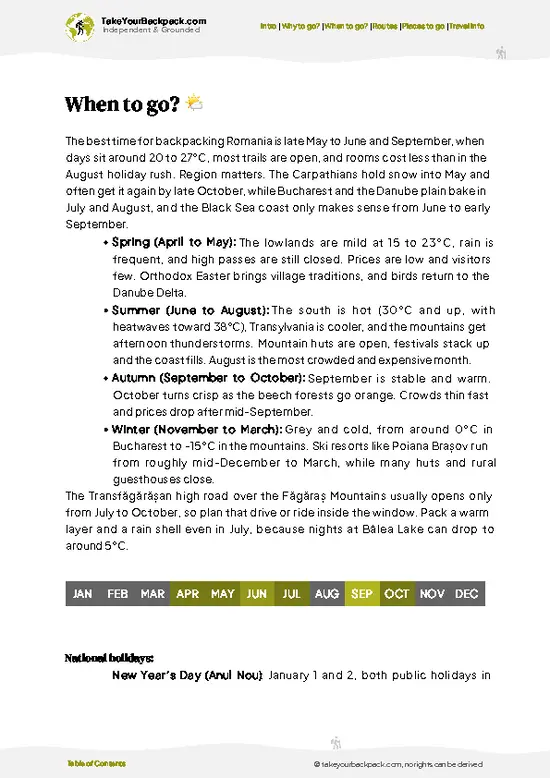
Best Months for City Travel: The best months are May to June and September to early October, when daytime highs sit around 18 to 27°C, cafe terraces are open and the light is soft on old facades. Rain is most likely in late spring, so a light jacket helps.

Summer: July and August bring heat of 28 to 36°C, especially in Bucharest and the south, where asphalt radiates warmth into the evening. Thunderstorms are common in the afternoon. Transylvanian cities stay a little cooler, with pleasant evenings around 15 to 18°C. Accommodation prices rise roughly 20 to 40 percent in popular spots on weekends and during festivals, so book ahead for those dates.

Winter and Shoulder Seasons: From November to March temperatures fall to around -10 to 3°C, and snow is regular in Transylvania and the northeast. … read more 👉
Best Months for City Travel: The best months are May to June and September to early October, when daytime highs sit around 18 to 27°C, cafe terraces are open and the light is soft on old facades. Rain is most likely in late spring, so a light jacket helps.

Summer: July and August bring heat of 28 to 36°C, especially in Bucharest and the south, where asphalt radiates warmth into the evening. Thunderstorms are common in the afternoon. Transylvanian cities stay a little cooler, with pleasant evenings around 15 to 18°C. Accommodation prices rise roughly 20 to 40 percent in popular spots on weekends and during festivals, so book ahead for those dates.

Winter and Shoulder Seasons: From November to March temperatures fall to around -10 to 3°C, and snow is regular in Transylvania and the northeast. Christmas markets in December give central squares the smell of mulled wine, roasted nuts and chimney smoke, and prices outside holiday periods are lowest. Some museums and castles shorten hours or close on Mondays, and in winter, outdoor sights can be icy underfoot. April can be gray and muddy, but crowds are thin and rooms are cheapest.

city hoppingSuggested Travel Strategies

How Many Days to Plan: A trip combining several Romanian cities needs 10 to 14 days, which is enough for four or five stops without constant packing. A week works for three if you stay tight.

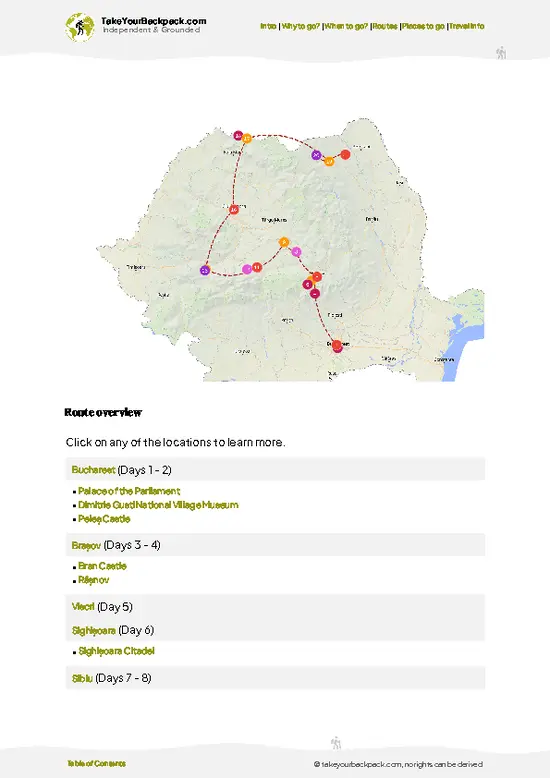
Regions and Direction: Group by region. Bucharest and the south can open or close the trip, since the main airport and rail hub are there. From the capital, trains reach the Transylvanian cluster in roughly 2.5 to 5 hours, depending on the city and service. The Transylvanian cities sit close together, often 1.5 to 3 hours apart by train, bus or minibus. The northwest and Banat in the west lie 4 to 7 hours further on. A rough loop works best: enter in one corner, travel through the center, exit through another airport. Plan 2 nights per smaller city and 2 to 3 for the capital or a large university city, … read more 👉
How Many Days to Plan: A trip combining several Romanian cities needs 10 to 14 days, which is enough for four or five stops without constant packing. A week works for three if you stay tight.

Regions and Direction: Group by region. Bucharest and the south can open or close the trip, since the main airport and rail hub are there. From the capital, trains reach the Transylvanian cluster in roughly 2.5 to 5 hours, depending on the city and service. The Transylvanian cities sit close together, often 1.5 to 3 hours apart by train, bus or minibus. The northwest and Banat in the west lie 4 to 7 hours further on. A rough loop works best: enter in one corner, travel through the center, exit through another airport. Plan 2 nights per smaller city and 2 to 3 for the capital or a large university city, which gives time for a full day on foot plus an evening.

Common Planning Mistakes: The first is underestimating transit time. Rural roads run slow, and a 200-kilometer trip can take 4 hours or more. Check train times on the national operator’s site and add buffer. The second is cramming a stop per day, which leaves you seeing station platforms rather than streets. The third is backtracking across the Carpathians, which burns half a day each time. Choose one direction and keep it. Overnight sleeper trains can save a night’s lodging, but book a berth early in summer.

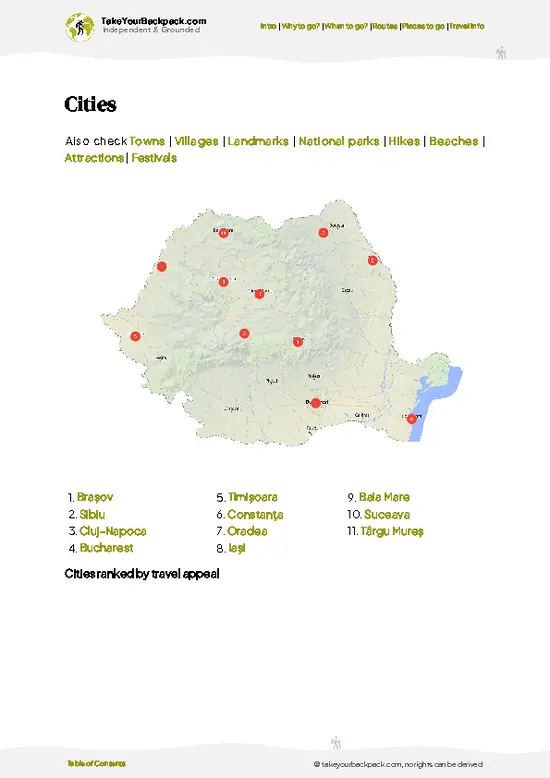
The ListTop cities of Romania

1 Brașov

medieval ramparts, mountain backdrop, Saxon squares

Walk between fortified walls and forested slopes, where centuries-old architecture meets hiking trails and a lively local scene.

2 Sibiu

cobblestone lanes, pastel facades, watchful rooftops

Stroll through winding streets lined with distinctive houses, discovering quiet courtyards and a strong sense of local tradition.

romania-city-sibiu
© Google |

3 Cluj-Napoca

student energy, art spaces, Transylvanian cafés

Experience a youthful pulse in a city where creative venues, academic life, and relaxed coffee spots shape daily rhythms.

romania-city-cluj-napoca
© Google | Jonathan Taviv

4 Bucharest

grand boulevards, eclectic architecture, urban parks

Navigate a city of contrasts, from monumental buildings and leafy gardens to neighborhoods shaped by both old and new influences.

romania-city-bucharest
© Google | Top Boy

5 Timișoara

Austro-Hungarian squares, riverside promenades, cultural festivals

Absorb a blend of Central European influences, open-air events, and riverside walks in a city known for its layered identity.

6 Constanța

Black Sea port, Roman mosaics, seafront promenade

Walk from ancient ruins to modern beaches, where maritime history and coastal life blend along the water’s edge.

7 Oradea

art nouveau buildings, thermal baths, borderland markets

Appreciate ornate facades and soak in mineral-rich pools, while exploring a city shaped by its crossroads location.

romania-city-oradea
© Google |

8 Iași

literary heritage, Orthodox monasteries, university quarter

Trace the city’s intellectual roots through libraries and churches, with leafy avenues connecting academic and spiritual landmarks.

romania-city-iasi
© Google |

9 Baia Mare

mining heritage, wooden churches, Carpathian foothills

Venture into a region marked by traditional crafts and mountain scenery, where the city serves as a gateway to rural Maramureș.

10 Suceava

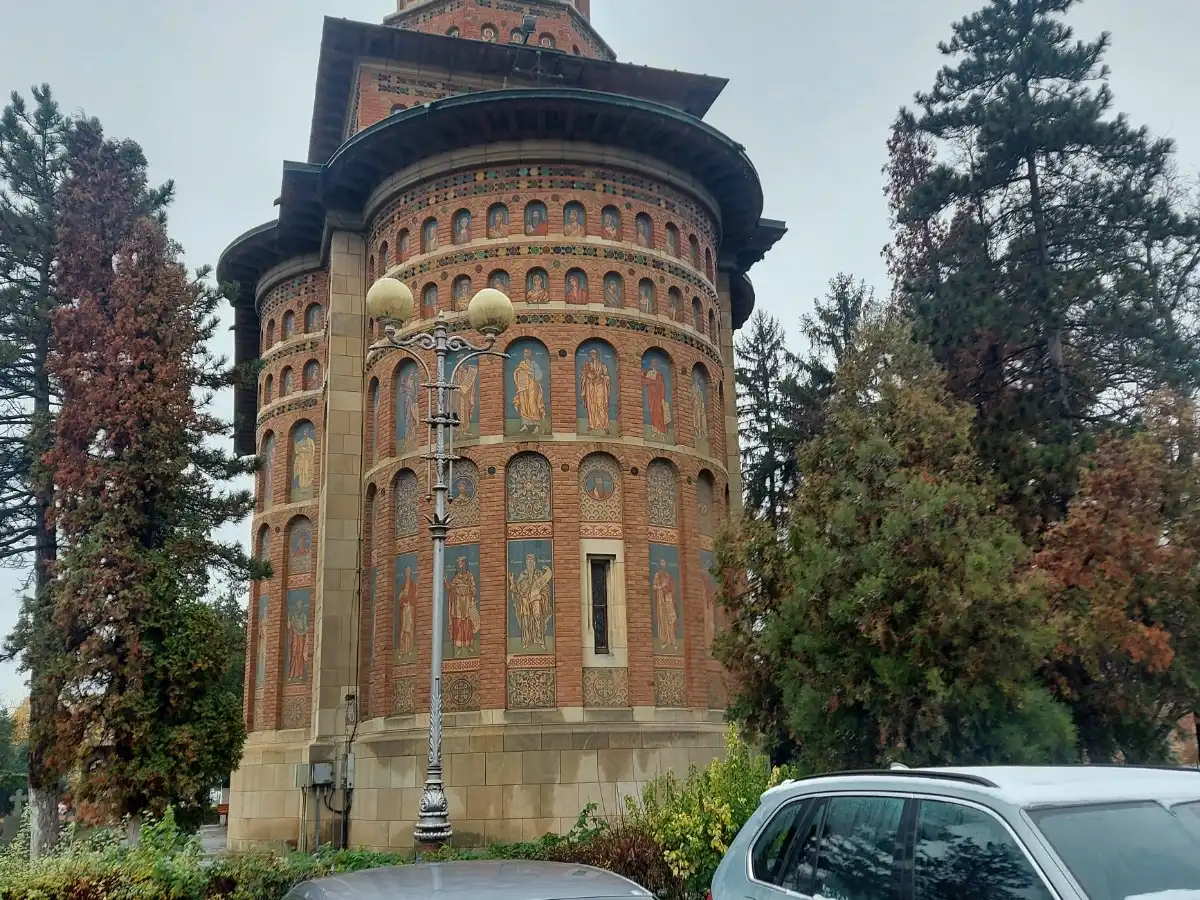
painted monasteries, fortress remains, regional market

Visit centuries-old churches with vivid frescoes, then explore bustling stalls and the remnants of a once-mighty Moldavian seat.

11 Târgu Mureș

Secessionist landmarks, bilingual culture, leafy boulevards

Notice Hungarian and Romanian influences in architecture and daily life, with tree-lined streets framing the city’s main sights.

Loading the map 🌍

Expert viewPro Tips for Exploring the Best

How Many Cities to Visit: I advise three to five cities in a two-week trip. Romanian distances look small on a map but run long on the ground, with slow trains, winding roads and mountain passes in between. Fewer stops mean more time for the things that make each place stick: a market stall of cheese and pickled peppers, a square at dusk, a coffee over cracked stone. More than five and you spend your trip in stations.

Choosing the Kind of City: Match the city type to your style. If you want atmosphere and photography, prioritize the medieval Transylvanian centers, where cobbled lanes and clock towers reward early morning walks before groups arrive. If you want nightlife, museums and big-city energy, give the capital and the large university cities extra time, where bars stay busy past midnight … read more 👉
How Many Cities to Visit: I advise three to five cities in a two-week trip. Romanian distances look small on a map but run long on the ground, with slow trains, winding roads and mountain passes in between. Fewer stops mean more time for the things that make each place stick: a market stall of cheese and pickled peppers, a square at dusk, a coffee over cracked stone. More than five and you spend your trip in stations.

Choosing the Kind of City: Match the city type to your style. If you want atmosphere and photography, prioritize the medieval Transylvanian centers, where cobbled lanes and clock towers reward early morning walks before groups arrive. If you want nightlife, museums and big-city energy, give the capital and the large university cities extra time, where bars stay busy past midnight and food spans everything from traditional canteens to craft coffee. If you want quiet and low prices, choose the northeast, Banat or the Danube side, where fewer travelers mean chatty locals and slow lunches.

What It Costs: Budget US$30 to 50 a day on a backpacker level, covering a hostel dorm bed (about US$12 to 22), local meals (US$6 to 12), and city transport. Mid-range travelers should plan US$60 to 100. Typical entry fees run US$3 to 10 for museums and fortresses, with castles at the upper end. Guided walking tours cost US$10 to 25, or operate on a tip basis. Intercity trains cost roughly US$8 to 25 per leg, buses are often similar, and the local currency, the leu (RON), is used everywhere, so pay in lei rather than accepting a dynamic card conversion.

Safety and Cultural Notes: Romanian cities are generally safe, and violent crime against visitors is rare. The usual issues are pickpockets on crowded trams, stations and the metro, taxi overcharging (use a ride app or a clearly marked cab), and stray dogs in some outskirts. Watch for uneven sidewalks and open manholes after dark. Uncovered shoulders and knees are not acceptable inside Orthodox churches and monasteries, and visitors should speak quietly. Locals tend to be warm once you greet them, and a few words of Romanian, such as “mulțumesc” for thank you, change the mood at once. Tipping around 10 percent in restaurants is standard.

✈️ The backpacker research shortcutRomania Travel Guide

An offline-friendly backpacking guide with optimized travel routes, ranked highlights, transport advice, and the best areas to stay.
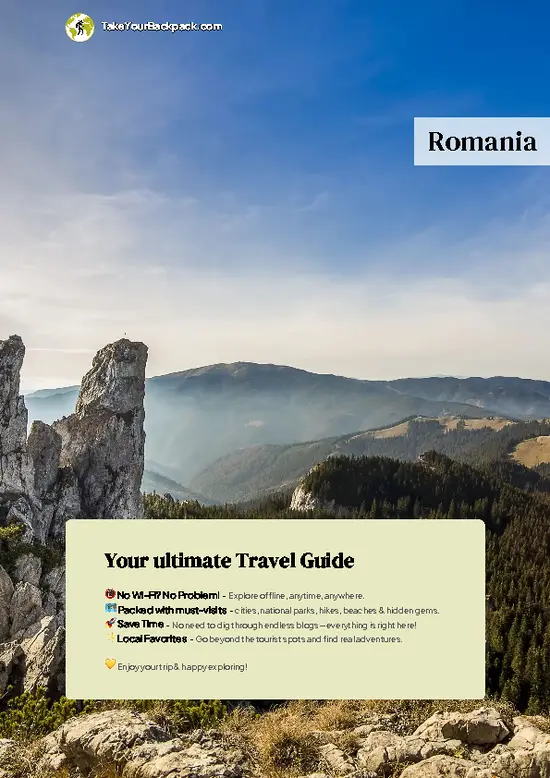
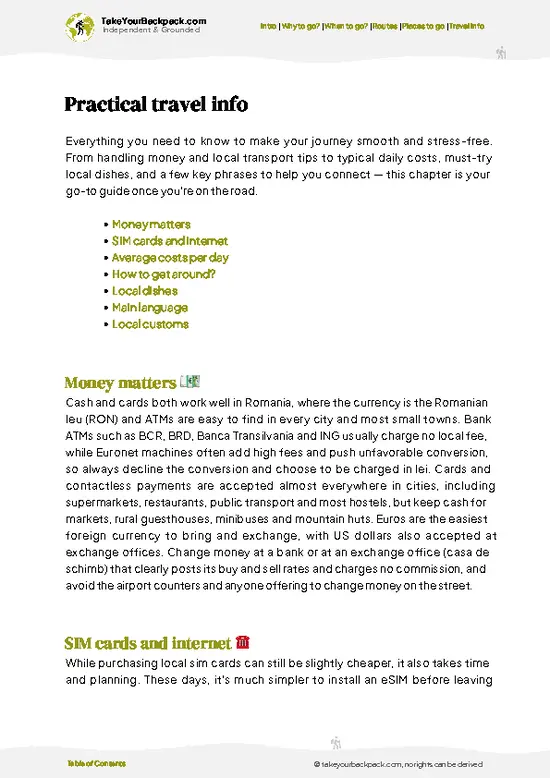
example page 0 from our offline Travel Guide for Romania
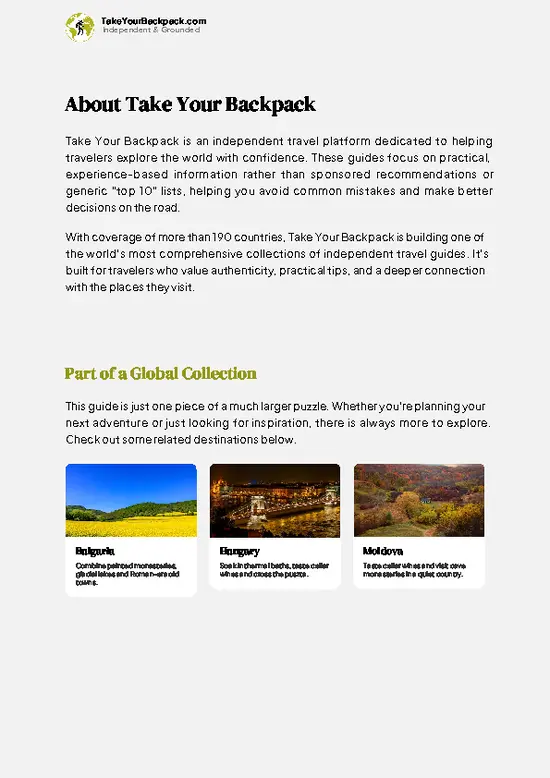
example page 1 from our offline Travel Guide for Romania
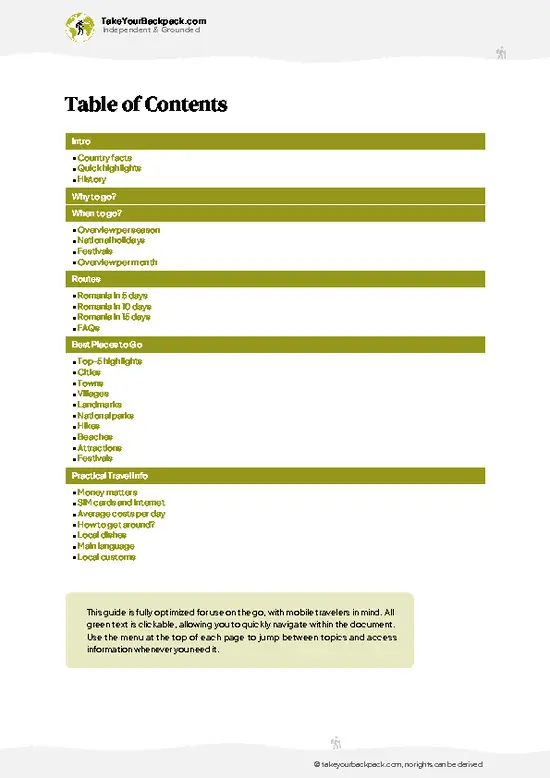
example page 2 from our offline Travel Guide for Romania
example page 3 from our offline Travel Guide for Romania
example page 4 from our offline Travel Guide for Romania
example page 5 from our offline Travel Guide for Romania
example page 6 from our offline Travel Guide for Romania
example page 7 from our offline Travel Guide for Romania
The digital guide (360 pages) contains:
✅ 94 highlights, ranked by travel appeal
✅ Optimized 5, 10 & 15-day travel routes
✅ Cities, national parks, landmarks, beaches
✅ How to get around
✅ Offline-friendly for travel without Wi-Fi
👉 Click to see all 30+ guide features

📅 Plan smarter in minutes, not weeks
✅ Month by month travel advice
✅ Festivals & national holidays
✅ Budget expectations

🗺️ Go to the right places, skip the overrated ones
✅ Honest pros & cons of destinations
✅ Top hikes, parks & viewpoints
✅ Lesser-known places most travelers miss
✅ Clear “worth it vs skip it” guidance

🛏️ Travel smoothly without rookie mistakes
✅ Best areas to stay
✅ Transport systems explained simply
✅ Common scams & safety advice
✅ SIM cards, money & practical tips

🌍 Understand the country, not just visit it
✅ Culture & traditions
✅ 52 Essential phrases & customs
✅ Festivals worth planning around
✅ Traveler-friendly historical context
✅ Insights that make places more meaningful

📱 Built for real travel conditions
✅ Fully downloadable PDF
✅ Works completely offline
✅ Optimized for phone use
✅ Useful in remote areas & buses
✅ Everything in one place
Stop searching, start planning
Get instant access to your full guide. 30‑day money-back guarantee.
+ Add another guide for just

By proceeding you agree to our terms.
Sent to your inbox immediately after payment • 100% Secure Checkout
Best Backpacking Travel Advisor 2025 tourism awardBest Backpacking
Travel Advisor
2025
What others say about Take Your Backpack Guides:
⭐⭐⭐⭐⭐
Fantastic, amazing amount of information!
⭐⭐⭐⭐⭐
My goodness this is amazing, it's what I've been looking for hats off too you!
⭐⭐⭐⭐⭐
I think this is absolutely BRILLIANT
⭐⭐⭐⭐
Very complete and informative. It's still missing places, but I gotta to commend you
⭐⭐⭐⭐⭐
This is truly amazing, thank you, can't wait to explore it with my kids!
⭐⭐⭐⭐⭐
Awesome resource, thank you!
⭐⭐⭐⭐⭐
This is amazing! Can't wait to explore the ones I haven't seen
⭐⭐⭐⭐
I love this! Well done, great idea.
⭐⭐⭐⭐⭐
Thanks for taking the time to make this gem!
⭐⭐⭐⭐⭐
This might be the best website I've ever seen.
⭐⭐⭐⭐⭐
Congratulations, and thank you so much for your work; it's incredibly valuable.
⭐⭐⭐⭐
In all seriousness I think you did a great job pointing out the important spots
⭐⭐⭐⭐⭐
10/10 very good
⭐⭐⭐⭐⭐
As someone who's only just starting to visit regularly this is awesome, thank you.
⭐⭐⭐⭐
Thank you very much! I'm going to visit my dad, it's going to be very useful!
⭐⭐⭐⭐⭐
This is really cool! We'll be travelling for the first time and this definitely come in handy.
⭐⭐⭐⭐⭐
You are now our minister of culture, congratulations 👨‍💼
⭐⭐⭐⭐⭐
Just wanted to tell you that this is a pearl! Going to follow your recommendations.
⭐⭐⭐⭐⭐
This is so cool. I'll definitely be using the resource for my travels soon.
⭐⭐⭐⭐⭐
This is very impressive! Good work.
⭐⭐⭐⭐⭐
This is an amazing and informative site. Very well done!

🛏️ Where to stay?Where to Base Yourself

Romania has plenty of hostels and budget guesthouses, with dorm beds typically running 50 to 90 lei (about US$11 to 20) a night and private doubles in family-run guesthouses from roughly 150 lei (US$33). In Bucharest, the Old Town (Lipscani) puts you right on top of the bars and walking distance from most sights, but weekend noise lasts until dawn. The streets around Piața Romană and Piața Victoriei are calmer and still on the metro. In Brașov, the medieval center and the quieter Șchei district sit at the foot of Tâmpa mountain, while central Cluj-Napoca is the pick for student nightlife and Sibiu’s Upper Town is compact, safe and quiet after dark.

If you enjoy meeting fellow travelers, consider … read more 👉
Romania has plenty of hostels and budget guesthouses, with dorm beds typically running 50 to 90 lei (about US$11 to 20) a night and private doubles in family-run guesthouses from roughly 150 lei (US$33). In Bucharest, the Old Town (Lipscani) puts you right on top of the bars and walking distance from most sights, but weekend noise lasts until dawn. The streets around Piața Romană and Piața Victoriei are calmer and still on the metro. In Brașov, the medieval center and the quieter Șchei district sit at the foot of Tâmpa mountain, while central Cluj-Napoca is the pick for student nightlife and Sibiu’s Upper Town is compact, safe and quiet after dark.

If you enjoy meeting fellow travelers, consider choosing hostels with high ratings for atmosphere. On the other hand, if you prefer having your own space, a hotel might be a better option.

RomaniaExpand Your Journey

👋 Meet the founderWho’s Behind Take Your Backpack?

Johan, backpacker and founder of TakeYourBackpackHi, I’m Johan (Netherlands 🇳🇱), the creator of TakeYourBackpack. Over the past 3 decades, I’ve backpacked through 90+ countries across six continents, gaining extensive experience with independent travel, long-term trips, and overland routes.

This site is built on a combination of firsthand travel experience and carefully curated insights from other backpackers. Many guides are based on places I’ve personally visited, while others bring together tips, observations, and practical advice shared by trusted travelers I’ve met along the way.

The goal is to provide realistic, experience-driven guidance — not generic itineraries — so you can explore destinations with better context, clearer expectations, and more confidence.