×

Romania🇷🇴 | best hikesTop-Rated 5 hikes in Romania

Hikes in Romania run through the Carpathian arc, a horseshoe of ranges where spruce resin hangs in the air, cowbells clank across alpine meadows and a shepherd’s dog may trot out to inspect you. The Southern Carpathians (Făgăraș, Retezat) bring granite ridges, glacial lakes and the longest days on foot. The Bucegi and Piatra Craiului ranges sit close to Brașov and Bucharest, so trails get busy and weekend huts fill up. Maramureș and the Rodna Mountains are quieter, with haystack-dotted valleys and rougher access. Independent travelers can manage most trailheads by train and local minibus, and huts cost far less than in the Alps.

By Johan Kruseman 🇳🇱 | Updated October 18, 2026
Explore the best beaches in Romania

Why go?Understanding Their Importance

Romania holds one of Europe’s largest stretches of unfragmented mountain forest, and that shapes every hike. The Carpathians were never heavily developed for skiing across their full length, so long ridges still run for days without a road. Communist-era forestry left a patchwork of marked trails, maintained today by hiking clubs, with colored stripes, crosses, triangles and dots painted on trees and rocks. Villages below the peaks still run working pastoral life: you hear sheep bells at dawn, smell woodsmoke and fresh sheep’s cheese, and share paths with hay carts.

Before choosing Romania, know that infrastructure is uneven. Mountain huts (cabane) range from comfortable chalets to basic bunk rooms, and many have no reliable booking system, so carry a tent or sleeping bag liner for the quieter … read more 👉
Romania holds one of Europe’s largest stretches of unfragmented mountain forest, and that shapes every hike. The Carpathians were never heavily developed for skiing across their full length, so long ridges still run for days without a road. Communist-era forestry left a patchwork of marked trails, maintained today by hiking clubs, with colored stripes, crosses, triangles and dots painted on trees and rocks. Villages below the peaks still run working pastoral life: you hear sheep bells at dawn, smell woodsmoke and fresh sheep’s cheese, and share paths with hay carts.

Before choosing Romania, know that infrastructure is uneven. Mountain huts (cabane) range from comfortable chalets to basic bunk rooms, and many have no reliable booking system, so carry a tent or sleeping bag liner for the quieter ranges. Trail signage can fade, mist closes in fast, and shepherd dogs guarding flocks are large and territorial. Brown bears live in these forests in significant numbers, which is part of the wildness and part of the responsibility. Mobile coverage disappears on ridges, so download offline maps. Costs stay low, but transport to remote trailheads takes planning, not money.
Our Approach to Ranking
The list of best hikes in Romania is created based on scenery, challenge, trail quality, landmarks, and overall enjoyment. If you feel a hike is missing in this list, please let us know.

When to go?When to Plan Your Trip

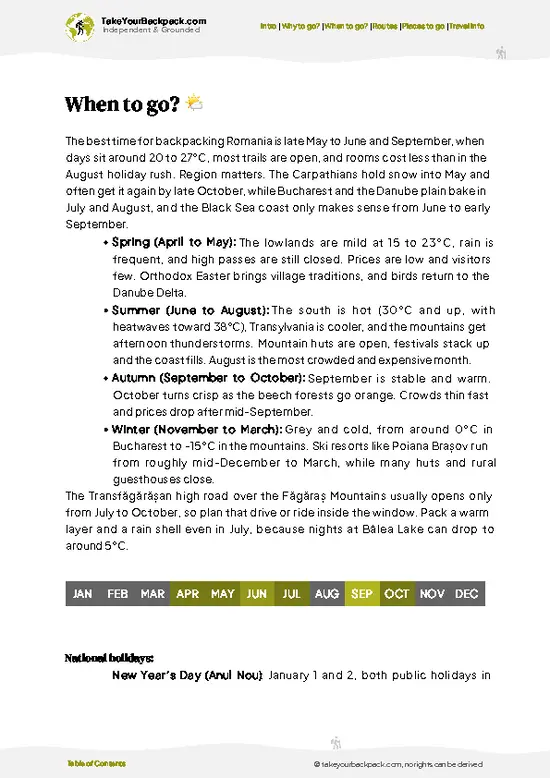
Best Months and Weather: The best months for hikes in Romania are July to mid-September, when high ridges are snow-free and daytime temperatures in the mountains run roughly 10 to 22°C. Valleys feel warmer, often 25 to 30°C, and afternoon thunderstorms are common, so start early and be off exposed ridges by early afternoon. Rain is heaviest in late spring and early summer, and rocky sections turn slick and muddy.
Shoulder Seasons: June and late September to October are quieter. In June, snow often lingers above 2,000 meters in the Făgăraș and Retezat, and meadows are loud with flowers and streams. In autumn the beech forests turn copper and gold, nights drop near freezing at altitude, and huts may close or reduce services after mid-September. Lower ranges near Brașov stay walkable into November. … read more 👉
Best Months and Weather: The best months for hikes in Romania are July to mid-September, when high ridges are snow-free and daytime temperatures in the mountains run roughly 10 to 22°C. Valleys feel warmer, often 25 to 30°C, and afternoon thunderstorms are common, so start early and be off exposed ridges by early afternoon. Rain is heaviest in late spring and early summer, and rocky sections turn slick and muddy.
Shoulder Seasons: June and late September to October are quieter. In June, snow often lingers above 2,000 meters in the Făgăraș and Retezat, and meadows are loud with flowers and streams. In autumn the beech forests turn copper and gold, nights drop near freezing at altitude, and huts may close or reduce services after mid-September. Lower ranges near Brașov stay walkable into November.
Crowds, Prices and Winter: Peak pressure falls in late July and August, especially on weekends and around the August 15 holiday, when huts near Bucharest and Brașov fill. Bunk and guesthouse prices rise modestly, often 10 to 20 percent, in this period. From November to May, deep snow and avalanche risk close most high routes, and winter belongs to experienced, equipped mountaineers.

hike hoppingSuggested Travel Strategies

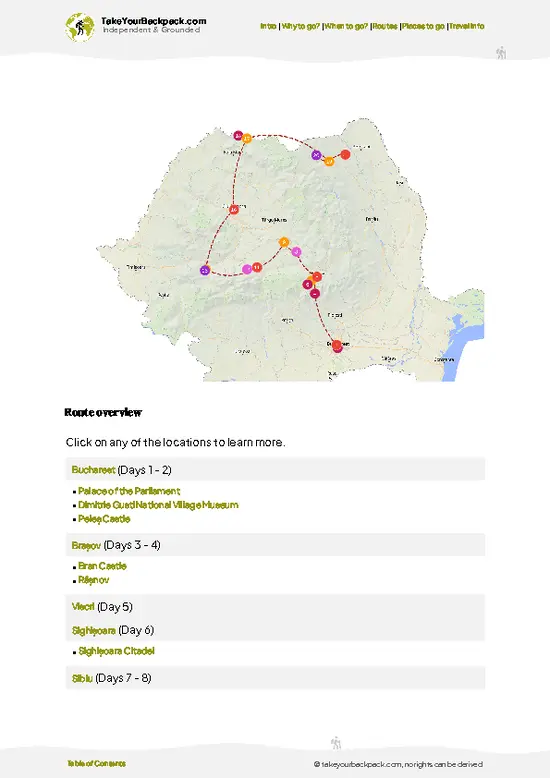
How Long and Which Regions: A trip combining several hikes in Romania needs 10 to 14 days, which allows two or three mountain areas without rushing. The most practical cluster links Brașov, the Bucegi and Piatra Craiului area, and the Făgăraș range, all within 1 to 2 hours by road or rail of each other. The Retezat in the southwest sits farther away, and Maramureș in the north is a separate leg altogether.
Direction and Timing: Start from Bucharest or Brașov, move west and then north, and finish in Cluj-Napoca, which has an airport with onward flights. Allow 2 to 4 days per mountain area, with a buffer day for weather. Brașov to Retezat gateways such as Hațeg takes roughly 4 to 6 hours via Sibiu by train and bus. Cluj to Maramureș takes about 4 to 5 hours by road, and rural minibus links are … read more 👉
How Long and Which Regions: A trip combining several hikes in Romania needs 10 to 14 days, which allows two or three mountain areas without rushing. The most practical cluster links Brașov, the Bucegi and Piatra Craiului area, and the Făgăraș range, all within 1 to 2 hours by road or rail of each other. The Retezat in the southwest sits farther away, and Maramureș in the north is a separate leg altogether.
Direction and Timing: Start from Bucharest or Brașov, move west and then north, and finish in Cluj-Napoca, which has an airport with onward flights. Allow 2 to 4 days per mountain area, with a buffer day for weather. Brașov to Retezat gateways such as Hațeg takes roughly 4 to 6 hours via Sibiu by train and bus. Cluj to Maramureș takes about 4 to 5 hours by road, and rural minibus links are sparse.
Common Planning Mistakes: Travelers often schedule hikes back to back with no rest day. Boots stay damp, calves protest on long stony descents, and one rainy day wrecks the plan. Build in one flexible day per region. Another mistake is underestimating transfers: mountain roads are slow and last buses leave early, so arrive at trailhead towns the afternoon before. Covering all of Romania in one short trip means more hours in vans than on ridges. Choose two regions and give them time.

The ListTop hikes of Romania

1 Făgăraș Mountains

glacial lakes, alpine ridgelines, steep ascents

Follow demanding trails over rugged peaks and narrow crests, passing cold tarns and exposed passes on Romania’s highest mountain range.

romania-hike-fagaras-mountains
© Google | G.a.b. Relu B.

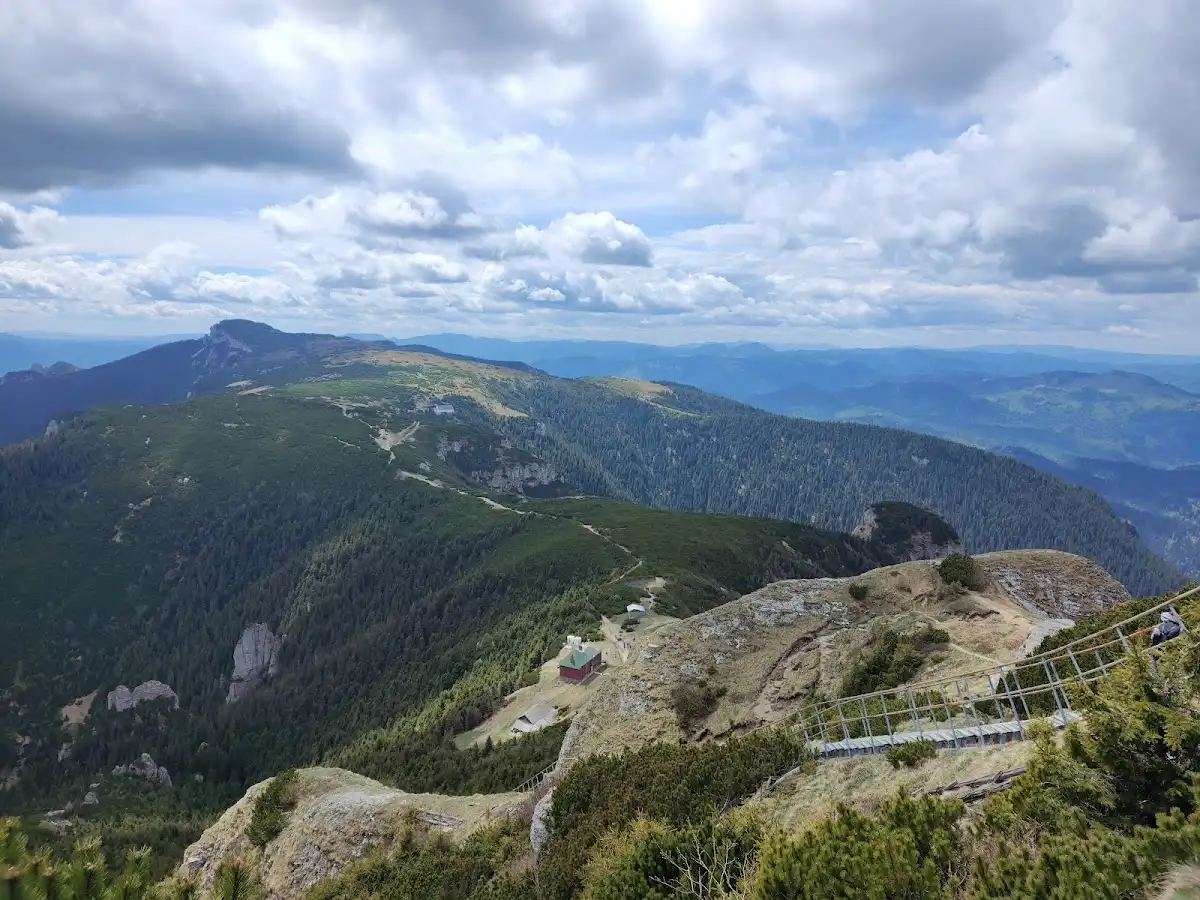
2 Bucegi Mountains

high plateaus, wind-carved rocks, panoramic cliffs

Ascend to broad summits and exposed ridges, encountering dramatic rock formations and open views that stretch far across the Southern Carpathians.

romania-hike-bucegi-mountains
© Google |

3 Ceahlău Massif

volcanic cliffs, ancient forests, pilgrimage routes

Climb through dense woodland to reach volcanic outcrops and spiritual sites, with trails offering views over the surrounding Moldavian plateau.

romania-hike-ceahlau-massif
© Google |

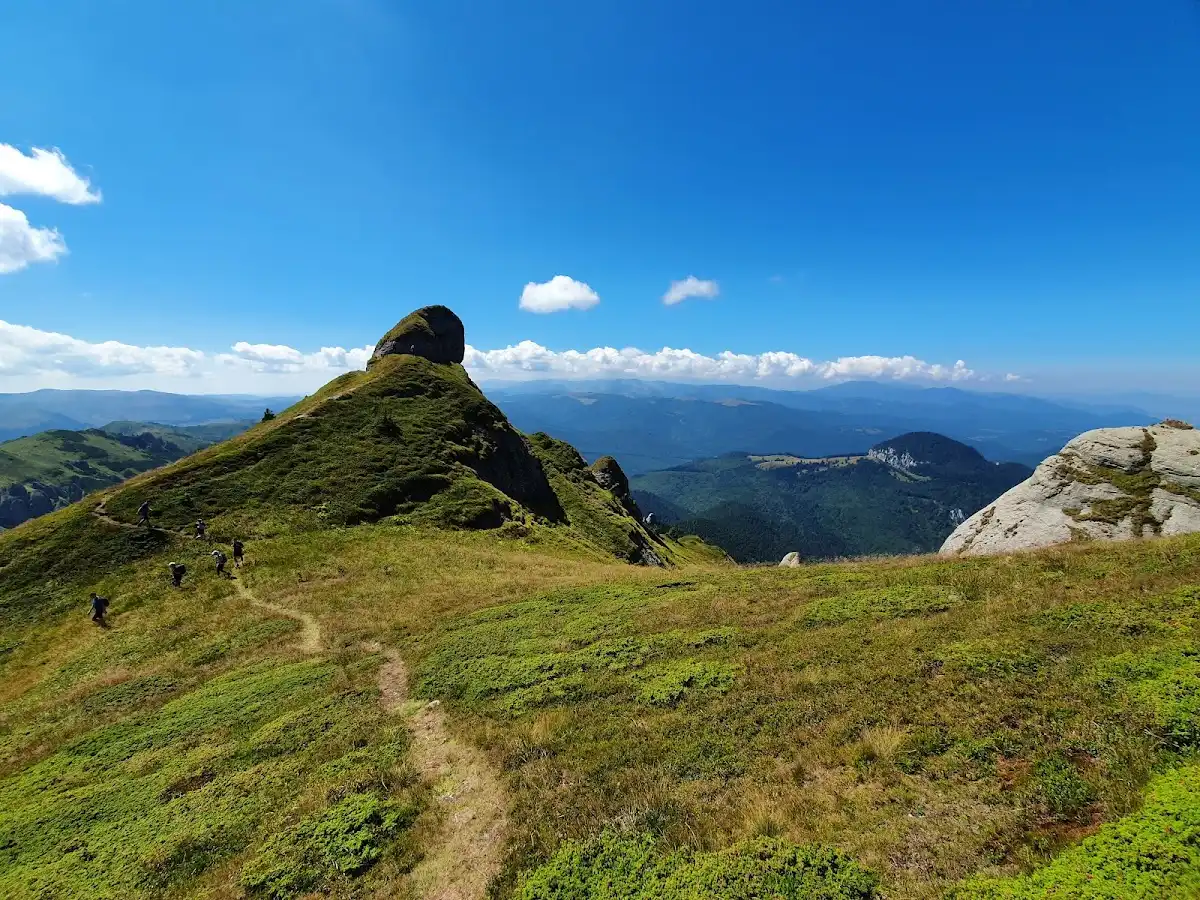
4 Ciucaș Mountains

sandstone towers, rolling hills, juniper thickets

Wander among oddly shaped rock pillars and gentle slopes, with paths weaving through aromatic shrubs and open grasslands.

romania-hike-ciucas-mountains
© Google |

5 Buila-Vânturarița

narrow limestone ridge, secluded valleys, karst springs

Follow quiet paths along a slender ridge, descending into forested hollows and discovering clear springs hidden in the rock.

romania-hike-buila-vanturarita
© Google |
Loading the map 🌍

Expert viewPro Tips for Exploring the Best

How Many Hikes to Plan: I advise three to five hikes on a first trip to Romania, spread over two mountain regions. That number lets you handle one or two bad-weather days without losing the trip, and leaves legs fresh for long ascents over loose scree and wet roots. You get the cool dawn air, the clatter of bells and a full ridge view instead of a blur of transfers.
Choosing Your Kind of Hike: If you want high alpine drama, pick the granite ridges and glacial lakes of the Southern Carpathians, which suit fit hikers comfortable with exposure. For easier access and a social atmosphere, choose the ranges near Brașov, where day hikes start from towns and finish with a hot meal. If you value solitude and village life, go north to Maramureș and the Rodna area, where trails are quieter and you end … read more 👉
How Many Hikes to Plan: I advise three to five hikes on a first trip to Romania, spread over two mountain regions. That number lets you handle one or two bad-weather days without losing the trip, and leaves legs fresh for long ascents over loose scree and wet roots. You get the cool dawn air, the clatter of bells and a full ridge view instead of a blur of transfers.
Choosing Your Kind of Hike: If you want high alpine drama, pick the granite ridges and glacial lakes of the Southern Carpathians, which suit fit hikers comfortable with exposure. For easier access and a social atmosphere, choose the ranges near Brașov, where day hikes start from towns and finish with a hot meal. If you value solitude and village life, go north to Maramureș and the Rodna area, where trails are quieter and you end the day with homemade plum brandy and a farmhouse bed. Multi-day trekkers get the most from huts and ridge camping, while casual walkers get more from valley loops and viewpoint trails.
What It Costs: Budget US$30 to 55 a day (about 140 to 250 lei) if you hike independently: hut bunks or hostel beds at 50 to 120 lei (US$11 to 26), hearty meals of soup, polenta and grilled meat at 30 to 60 lei, and local transport at 10 to 40 lei per hop. National and natural park fees are small, often a few lei, and some areas charge parking or access fees of 10 to 20 lei. A guide for a day costs roughly 300 to 600 lei (US$65 to 130) and is worth it for technical ridges or bear-heavy terrain. A typical trip of 10 days lands around US$350 to 600 excluding flights, and you get the extra cheese and fresh mountain air included.
Safety and Culture: Weather turns fast: fog can erase a trail in minutes, and summer storms bring lightning on exposed crests, so carry a map, a charged phone with offline maps, and layers. Bears are present in many forests. Make noise, store food away from your tent, and never approach cubs. Shepherd dogs guard flocks aggressively, so stop, stay calm, keep a wide berth and walk around the flock slowly. Mountain rescue is Salvamont, reached on 112, and signal can vanish in valleys. Locals greet hikers with “Bună ziua”, and returning it goes a long way. Carry cash, since many huts and village shops do not take cards, and leave gates closed behind you.

✈️ The backpacker research shortcutRomania Travel Guide

An offline-friendly backpacking guide with optimized travel routes, ranked highlights, transport advice, and the best areas to stay.
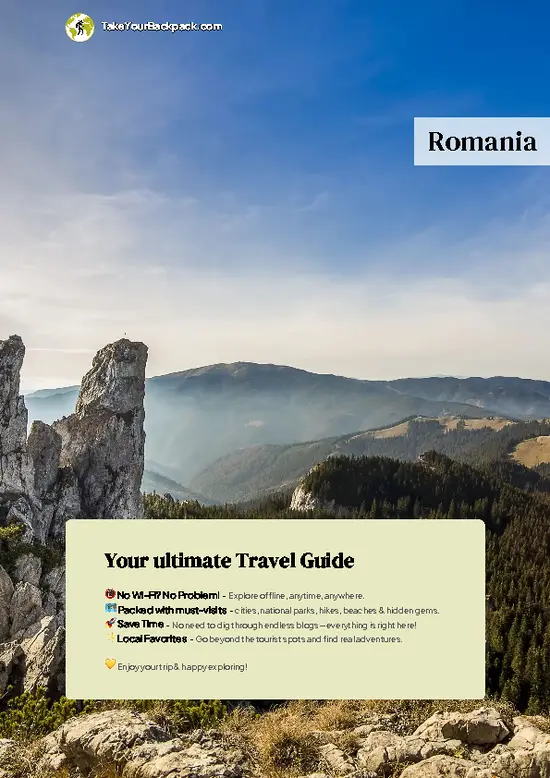
example page 0 from our offline Travel Guide for Romania
example page 1 from our offline Travel Guide for Romania
example page 2 from our offline Travel Guide for Romania
example page 3 from our offline Travel Guide for Romania
example page 4 from our offline Travel Guide for Romania
example page 5 from our offline Travel Guide for Romania
example page 6 from our offline Travel Guide for Romania
example page 7 from our offline Travel Guide for Romania
The digital guide (360 pages) contains:
✅ 94 highlights, ranked by travel appeal
✅ Optimized 5, 10 & 15-day travel routes
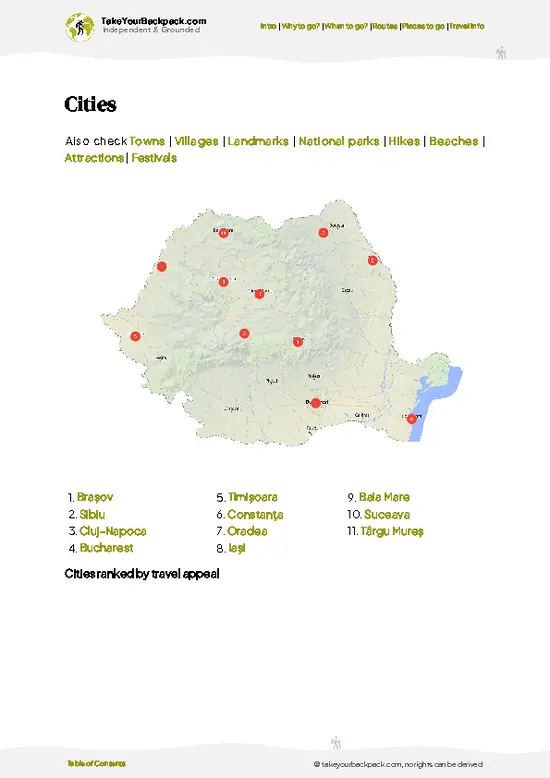
✅ Cities, national parks, landmarks, beaches
✅ How to get around
✅ Offline-friendly for travel without Wi-Fi
👉 Click to see all 30+ guide features

📅 Plan smarter in minutes, not weeks
✅ Month by month travel advice
✅ Festivals & national holidays
✅ Budget expectations

🗺️ Go to the right places, skip the overrated ones
✅ Honest pros & cons of destinations
✅ Top hikes, parks & viewpoints
✅ Lesser-known places most travelers miss
✅ Clear “worth it vs skip it” guidance

🛏️ Travel smoothly without rookie mistakes
✅ Best areas to stay
✅ Transport systems explained simply
✅ Common scams & safety advice
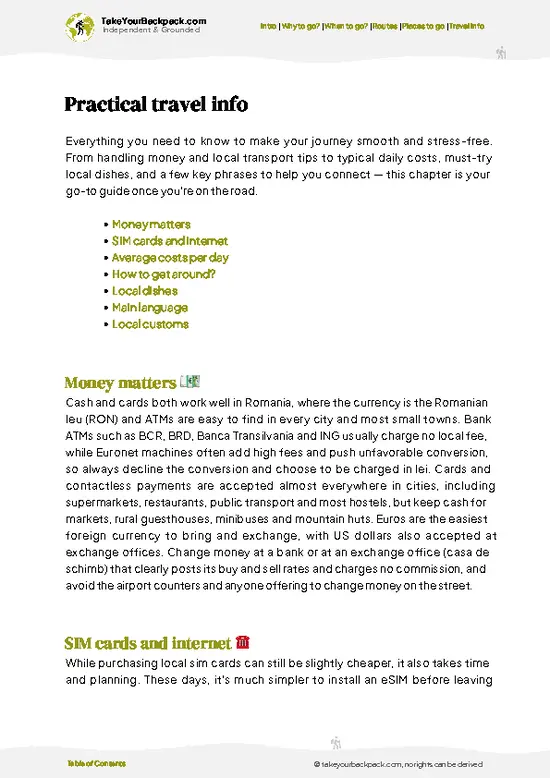
✅ SIM cards, money & practical tips

🌍 Understand the country, not just visit it
✅ Culture & traditions
✅ 52 Essential phrases & customs
✅ Festivals worth planning around
✅ Traveler-friendly historical context
✅ Insights that make places more meaningful

📱 Built for real travel conditions
✅ Fully downloadable PDF
✅ Works completely offline
✅ Optimized for phone use
✅ Useful in remote areas & buses
✅ Everything in one place
Stop searching, start planning
Get instant access to your full guide. 30‑day money-back guarantee.
+ Add another guide for just

By proceeding you agree to our terms.
Sent to your inbox immediately after payment • 100% Secure Checkout
Best Backpacking Travel Advisor 2025 tourism awardBest Backpacking
Travel Advisor
2025
What others say about Take Your Backpack Guides:
⭐⭐⭐⭐⭐
Fantastic, amazing amount of information!
⭐⭐⭐⭐⭐
My goodness this is amazing, it's what I've been looking for hats off too you!
⭐⭐⭐⭐⭐
I think this is absolutely BRILLIANT
⭐⭐⭐⭐
Very complete and informative. It's still missing places, but I gotta to commend you
⭐⭐⭐⭐⭐
This is truly amazing, thank you, can't wait to explore it with my kids!
⭐⭐⭐⭐⭐
Awesome resource, thank you!
⭐⭐⭐⭐⭐
This is amazing! Can't wait to explore the ones I haven't seen
⭐⭐⭐⭐
I love this! Well done, great idea.
⭐⭐⭐⭐⭐
Thanks for taking the time to make this gem!
⭐⭐⭐⭐⭐
This might be the best website I've ever seen.
⭐⭐⭐⭐⭐
Congratulations, and thank you so much for your work; it's incredibly valuable.
⭐⭐⭐⭐
In all seriousness I think you did a great job pointing out the important spots
⭐⭐⭐⭐⭐
10/10 very good
⭐⭐⭐⭐⭐
As someone who's only just starting to visit regularly this is awesome, thank you.
⭐⭐⭐⭐
Thank you very much! I'm going to visit my dad, it's going to be very useful!
⭐⭐⭐⭐⭐
This is really cool! We'll be travelling for the first time and this definitely come in handy.
⭐⭐⭐⭐⭐
You are now our minister of culture, congratulations 👨‍💼
⭐⭐⭐⭐⭐
Just wanted to tell you that this is a pearl! Going to follow your recommendations.
⭐⭐⭐⭐⭐
This is so cool. I'll definitely be using the resource for my travels soon.
⭐⭐⭐⭐⭐
This is very impressive! Good work.
⭐⭐⭐⭐⭐
This is an amazing and informative site. Very well done!

🛏️ Where to stay?Where to Base Yourself

Romania has plenty of hostels and budget guesthouses, with dorm beds typically running 50 to 90 lei (about US$11 to 20) a night and private doubles in family-run guesthouses from roughly 150 lei (US$33). In Bucharest, the Old Town (Lipscani) puts you right on top of the bars and walking distance from most sights, but weekend noise lasts until dawn. The streets around Piața Romană and Piața Victoriei are calmer and still on the metro. In Brașov, the medieval center and the quieter Șchei district sit at the foot of Tâmpa mountain, while central Cluj-Napoca is the pick for student nightlife and Sibiu’s Upper Town is compact, safe and quiet after dark.

If you enjoy meeting fellow travelers, consider … read more 👉
Romania has plenty of hostels and budget guesthouses, with dorm beds typically running 50 to 90 lei (about US$11 to 20) a night and private doubles in family-run guesthouses from roughly 150 lei (US$33). In Bucharest, the Old Town (Lipscani) puts you right on top of the bars and walking distance from most sights, but weekend noise lasts until dawn. The streets around Piața Romană and Piața Victoriei are calmer and still on the metro. In Brașov, the medieval center and the quieter Șchei district sit at the foot of Tâmpa mountain, while central Cluj-Napoca is the pick for student nightlife and Sibiu’s Upper Town is compact, safe and quiet after dark.

If you enjoy meeting fellow travelers, consider choosing hostels with high ratings for atmosphere. On the other hand, if you prefer having your own space, a hotel might be a better option.

RomaniaExpand Your Journey

👋 Meet the founderWho’s Behind Take Your Backpack?

Johan, backpacker and founder of TakeYourBackpackHi, I’m Johan (Netherlands 🇳🇱), the creator of TakeYourBackpack. Over the past 3 decades, I’ve backpacked through 90+ countries across six continents, gaining extensive experience with independent travel, long-term trips, and overland routes.

This site is built on a combination of firsthand travel experience and carefully curated insights from other backpackers. Many guides are based on places I’ve personally visited, while others bring together tips, observations, and practical advice shared by trusted travelers I’ve met along the way.

The goal is to provide realistic, experience-driven guidance — not generic itineraries — so you can explore destinations with better context, clearer expectations, and more confidence.