×

Singapore🇸🇬 | best attractionsExplore the 10 Best attractions in Singapore

Attractions in Singapore are compact, air-conditioned and engineered for easy access, because a city-state of about 730 square kilometers runs on one MRT network and one contactless payment system. The differences that matter are by district. The Marina Bay and Sentosa areas are polished, ticketed and crowded on weekends, with costs that climb quickly. Chinatown, Little India and Kampong Glam are mostly free to wander, with food that costs a fraction of resort prices. Parks, nature reserves and the northern wetlands sit further out but add little cost. For backpacking or independent travel, mixing the free districts with one or two paid headline sites keeps spending sensible.

By Johan Kruseman 🇳🇱 | Updated October 19, 2026
Explore the best festivals in Singapore

Why go?Why These attraction Stand Out

Singapore suits attractions differently from larger countries because everything is a short transit ride away. There are no long overland transfers, so travelers spend time at sites rather than getting to them. The country is a trading port that drew Malay, Chinese, Indian and Arab communities, and that layering is why temples, mosques, churches and shophouse streets sit within a few blocks of each other. Strong planning and high land values also explain the large, purpose-built developments: gardens, waterfront districts and themed parks are designed, funded and maintained to a high standard, so queues and opening hours run reliably.

Before choosing Singapore, know three things. First, it is expensive by Southeast Asian standards. Headline paid attractions often cost S$25 to 85 (about US$19 … read more 👉
Singapore suits attractions differently from larger countries because everything is a short transit ride away. There are no long overland transfers, so travelers spend time at sites rather than getting to them. The country is a trading port that drew Malay, Chinese, Indian and Arab communities, and that layering is why temples, mosques, churches and shophouse streets sit within a few blocks of each other. Strong planning and high land values also explain the large, purpose-built developments: gardens, waterfront districts and themed parks are designed, funded and maintained to a high standard, so queues and opening hours run reliably.

Before choosing Singapore, know three things. First, it is expensive by Southeast Asian standards. Headline paid attractions often cost S$25 to 85 (about US$19 to 64), while hawker centers keep daily food costs low. Second, the equatorial climate means heat and humidity year-round, with afternoon downpours, so indoor and outdoor options balance each other. Third, rules are strictly enforced, from dress codes at religious sites to fines for littering and for carrying vapes. Wild, remote landscapes are limited. What Singapore offers is convenience, cleanliness, cultural variety and easy combinations, which suits first-timers and stopover travelers well.
Our Approach to Ranking
The list of best attractions in Singapore is created based on cultural significance or entertainment value. If you feel a attraction is missing in this list, please let us know.

When to go?When to Plan Your Trip

Best months and why: February through April is the most comfortable window, because the northeast monsoon rains have eased and the haze season has not yet begun. Singapore sits one degree north of the equator, so temperatures barely change: daytime highs of 30 to 33°C, nights around 25 to 27°C, and humidity commonly above 80 percent. Rainfall is the real variable, at roughly 2,000 to 2,500 mm a year, with most days offering a dry spell for outdoor visits.
Shoulder seasons and wet months: November to January is the wettest period, with the northeast monsoon bringing long afternoon downpours and about 250 to 300 mm of rain a month. Outdoor sites remain open, but indoor attractions fill up when storms hit. May to September is drier overall but hotter, and from roughly August to October regional … read more 👉
Best months and why: February through April is the most comfortable window, because the northeast monsoon rains have eased and the haze season has not yet begun. Singapore sits one degree north of the equator, so temperatures barely change: daytime highs of 30 to 33°C, nights around 25 to 27°C, and humidity commonly above 80 percent. Rainfall is the real variable, at roughly 2,000 to 2,500 mm a year, with most days offering a dry spell for outdoor visits.
Shoulder seasons and wet months: November to January is the wettest period, with the northeast monsoon bringing long afternoon downpours and about 250 to 300 mm of rain a month. Outdoor sites remain open, but indoor attractions fill up when storms hit. May to September is drier overall but hotter, and from roughly August to October regional forest fires can occasionally cause haze that affects outdoor plans. Thunderstorms in the afternoons occur in most months, so schedule outdoor visits in the morning.
Peak periods and prices: School holidays in June and December, Chinese New Year (January or February), and the year-end festive season raise hotel rates, often by 20 to 50 percent, and increase crowds at paid attractions. Major events such as the Formula 1 night race in autumn can push accommodation prices sharply higher. Weekdays are quieter than weekends throughout the year.

attraction hoppingTips for Visiting Multiple Destinations

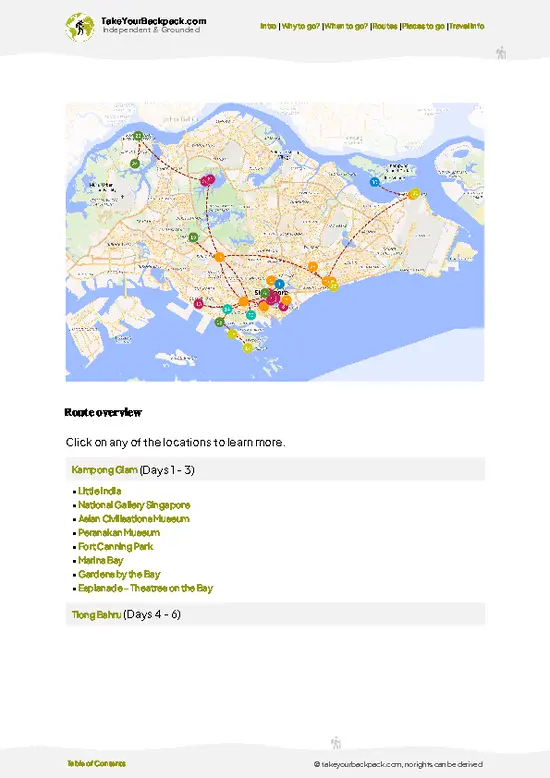
How many days and in what order: Combining several attractions in Singapore works well in 3 to 5 days, because transit is quick and the real limit is heat and energy. The island clusters naturally into the Civic District and Marina Bay in the south, the heritage quarters (Chinatown, Little India, Kampong Glam) just north and west of it, Sentosa and the southern ridges in the south-west, and the northern nature and wildlife zone around Mandai and Sungei Buloh. Moving from the center outward saves backtracking: start with central districts, then take one day each for the southern and northern outliers.
Time per stop and transfers: Allow 1 to 2 hours for a heritage district or waterfront area, 3 to 4 hours for a major garden or museum, and a full day (6 to 8 hours) for a theme park or the northern … read more 👉
How many days and in what order: Combining several attractions in Singapore works well in 3 to 5 days, because transit is quick and the real limit is heat and energy. The island clusters naturally into the Civic District and Marina Bay in the south, the heritage quarters (Chinatown, Little India, Kampong Glam) just north and west of it, Sentosa and the southern ridges in the south-west, and the northern nature and wildlife zone around Mandai and Sungei Buloh. Moving from the center outward saves backtracking: start with central districts, then take one day each for the southern and northern outliers.
Time per stop and transfers: Allow 1 to 2 hours for a heritage district or waterfront area, 3 to 4 hours for a major garden or museum, and a full day (6 to 8 hours) for a theme park or the northern wildlife precinct. Between central areas the MRT usually takes 10 to 25 minutes. Reaching Sentosa takes 25 to 40 minutes from the center, and the northern zone 45 to 75 minutes with a bus connection.
Planning mistakes: The most common error is stacking an outdoor site after lunch, when heat peaks and rain often arrives. Put outdoor sites in the morning and indoor ones in the afternoon. Another is zigzagging between the north and south in one day, which burns two or three hours on trains. Group by district, and leave one buffer half-day for weather.

The ListHighly Recommended attractions of Singapore

1 Gardens by the Bay

supertree grove, climate-controlled domes, waterfront parkland

Stroll among towering vertical gardens and explore biodomes that showcase rare plant species from different global ecosystems.

Singapore - Gardens by the Bay

2 Singapore Zoo

open enclosures, rainforest setting, animal encounters

Observe wildlife in naturalistic habitats, with opportunities for close-up experiences and educational presentations throughout the day.

Singapore - Singapore Zoo

3 Little India Arcade

spice stalls, goldsmiths, vibrant market

Immerse yourself in sensory overload as you navigate colorful corridors filled with aromatic spices, intricate jewelry, and bustling trade.

4 Night Safari

open-air tram, nocturnal wildlife, rainforest habitats

Venture into dimly lit enclosures to observe rare animals in action, experiencing the rhythms of the forest after dark.

5 Singapore Oceanarium

giant viewing panel, marine habitats, diverse sea life

Watch thousands of aquatic species glide past immersive tanks, highlighting the complexity and fragility of ocean ecosystems.

Singapore - Singapore Oceanarium

6 Marina Bay Sands SkyPark

rooftop platform, panoramic skyline views, infinity edge

Take in sweeping city vistas from a dramatic perch above the bay, with landmarks and urban lights stretching in every direction.

7 ArtScience Museum

futuristic lotus building, interactive exhibits, digital installations

Experience immersive displays that blend technology and creativity, offering insight into the intersection of science, art, and design.

9 Asian Civilisations Museum

riverfront colonial building, pan-Asian artifacts, cultural connections

Discover centuries of trade, migration, and belief systems through thoughtfully curated objects from across Asia’s diverse societies.

10 Peranakan Museum

heritage townhouse, ornate artifacts, hybrid traditions

Trace the evolution of Peranakan identity through textiles, ceramics, and personal stories in an intimate museum setting.

11 Chinatown Heritage Centre

restored shophouses, recreated living quarters, immigrant stories

Step into the daily realities of early Chinese settlers, exploring preserved interiors and personal histories along bustling Pagoda Street.

12 Esplanade – Theatres on the Bay

iconic durian domes, performance halls, waterfront arts complex

Attend live performances or wander public spaces where architecture, music, and visual arts converge beside Marina Bay.

13 Madame Tussauds Singapore

wax figures, themed zones, celebrity replicas

Pose with lifelike models of global icons and explore interactive sets that bring pop culture and history into sharp focus.

14 Haw Par Villa

mythological dioramas, Chinese folklore, outdoor sculpture park

Wander through vivid tableaux depicting moral tales and legends, offering a surreal journey through traditional beliefs and values.

Think you know Singapore?

Prove you’re a true local — uncover 4 lesser-known attractions in Singapore that locals tend to keep to themselves.
Loading the map 🌍

Expert viewInsights from Locals and Experts

How many to visit: Plan on one or two paid headline attractions and several free districts for a 3 to 4 day stay. Paid sites each take half a day to a full day, and the humidity makes a third in one day tiring. Free neighborhoods, parks and places of worship fill the gaps, so quantity is rarely the problem. Quality of timing is.
Prioritizing by travel style: Budget travelers should lean on free and low-cost heritage areas, waterfront promenades and public parks, adding a single ticketed site that interests them most. Families or travelers wanting spectacle can justify a theme park or wildlife precinct, but only one, because tickets are the biggest cost. Culture-focused travelers get the best value from museums and temples, many of which cost S$0 to 20. Nature-minded visitors should favor reserves … read more 👉
How many to visit: Plan on one or two paid headline attractions and several free districts for a 3 to 4 day stay. Paid sites each take half a day to a full day, and the humidity makes a third in one day tiring. Free neighborhoods, parks and places of worship fill the gaps, so quantity is rarely the problem. Quality of timing is.
Prioritizing by travel style: Budget travelers should lean on free and low-cost heritage areas, waterfront promenades and public parks, adding a single ticketed site that interests them most. Families or travelers wanting spectacle can justify a theme park or wildlife precinct, but only one, because tickets are the biggest cost. Culture-focused travelers get the best value from museums and temples, many of which cost S$0 to 20. Nature-minded visitors should favor reserves and boardwalks over manufactured sites. Skip duplicating similar paid experiences.
What it costs: A frugal backpacker can manage on US$45 to 70 a day including a dorm bed, hawker meals at S$4 to 7 (US$3 to 5), transit and one low-cost entry. A comfortable independent traveler spends US$90 to 150 a day. Typical entry fees: museums S$10 to 30 (US$8 to 23), observation decks and garden domes S$20 to 40 (US$15 to 30), major theme parks and wildlife parks S$50 to 85 (US$38 to 64). Local MRT and bus rides cost roughly S$1 to 2.50 per trip, so a day of transit is often S$5 to 10. Buying tickets online in advance often saves a few dollars and avoids queues. Foreign visitors usually pay more than residents at some sites, so check the tier before booking.
Safety and cultural considerations: Singapore is among the safest countries for solo travelers, with low street crime and well-lit public areas. The main risks are heat exhaustion and dehydration, so carry a refillable bottle (tap water is drinkable) and take indoor breaks between 12 and 3 pm. Thunderstorms can close outdoor areas briefly.
Dress modestly at temples, mosques and Hindu shrines: cover shoulders and knees, and remove shoes where signs indicate. Some mosques provide robes. Ask before photographing worshippers. Smoking is banned in most public areas, vaping is illegal, and littering fines start around S$300. Chewing gum sales are restricted, and eating or drinking on the MRT is fined. Durian is banned on transit and in many hotels. Respect these rules and the experience stays smooth.

✈️ The backpacker research shortcutSingapore Travel Guide

An offline-friendly backpacking guide with optimized travel routes, ranked highlights, transport advice, and the best areas to stay.
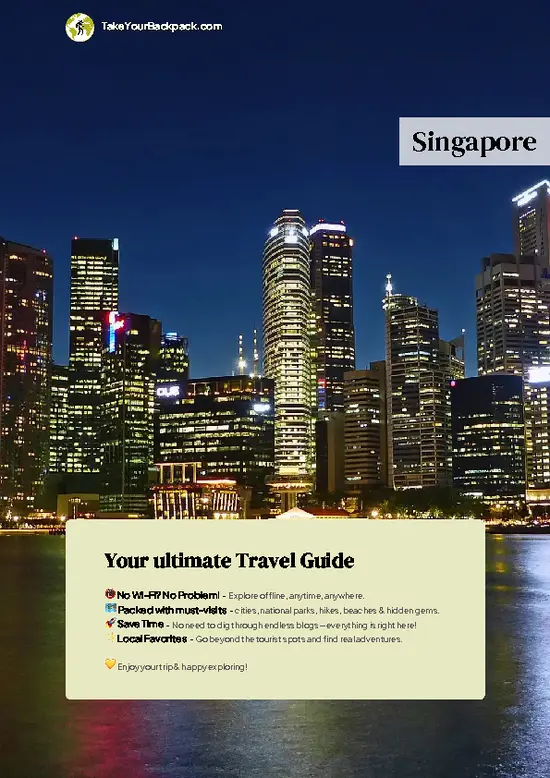
example page 0 from our offline Travel Guide for Singapore
example page 1 from our offline Travel Guide for Singapore
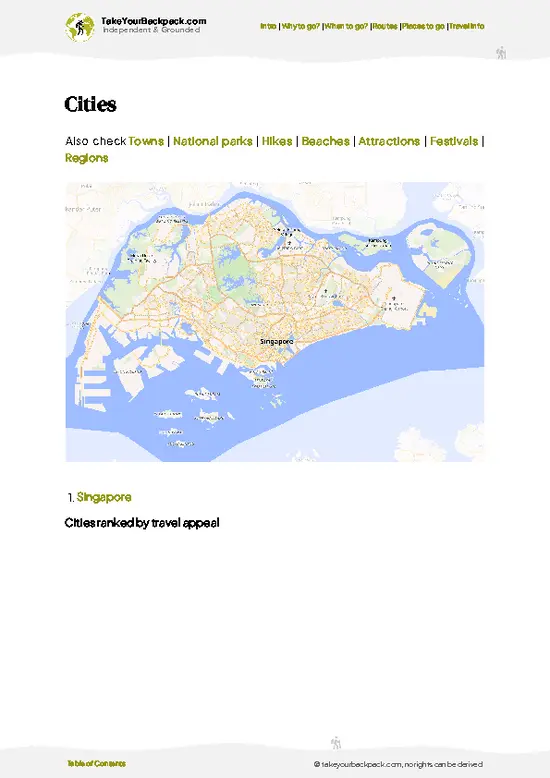
example page 2 from our offline Travel Guide for Singapore
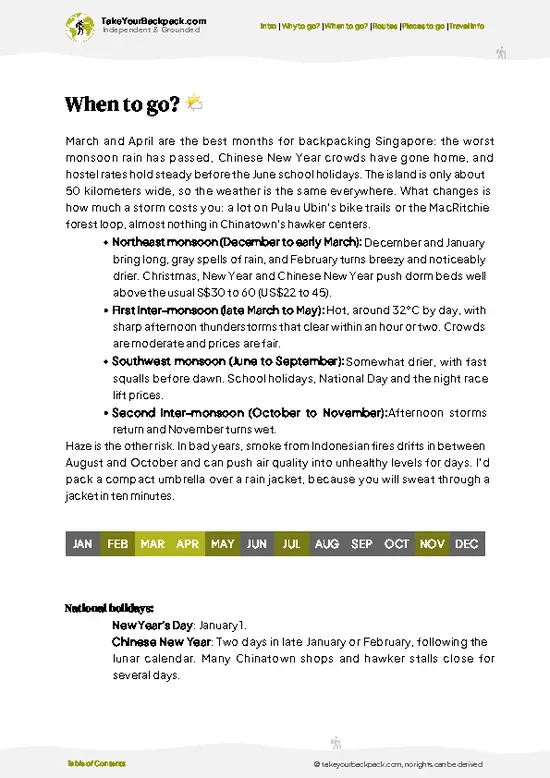
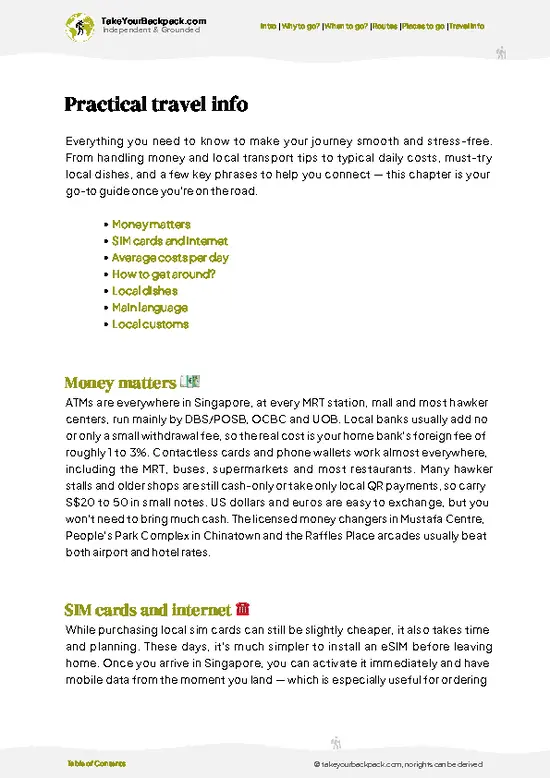
example page 3 from our offline Travel Guide for Singapore
example page 4 from our offline Travel Guide for Singapore
example page 5 from our offline Travel Guide for Singapore
example page 6 from our offline Travel Guide for Singapore
example page 7 from our offline Travel Guide for Singapore
The digital guide (246 pages) contains:
✅ 63 highlights, ranked by travel appeal
✅ Optimized 5, 10 & 15-day travel routes
✅ Cities, national parks, landmarks, beaches
✅ How to get around
✅ Offline-friendly for travel without Wi-Fi
👉 Click to see all 30+ guide features

📅 Plan smarter in minutes, not weeks
✅ Month by month travel advice
✅ Festivals & national holidays
✅ Budget expectations

🗺️ Go to the right places, skip the overrated ones
✅ Honest pros & cons of destinations
✅ Top hikes, parks & viewpoints
✅ Lesser-known places most travelers miss
✅ Clear “worth it vs skip it” guidance

🛏️ Travel smoothly without rookie mistakes
✅ Best areas to stay
✅ Transport systems explained simply
✅ Common scams & safety advice
✅ SIM cards, money & practical tips

🌍 Understand the country, not just visit it
✅ Culture & traditions
✅ Local customs
✅ Festivals worth planning around
✅ Traveler-friendly historical context
✅ Insights that make places more meaningful

📱 Built for real travel conditions
✅ Fully downloadable PDF
✅ Works completely offline
✅ Optimized for phone use
✅ Useful in remote areas & buses
✅ Everything in one place
Stop searching, start planning
Get instant access to your full guide. 30‑day money-back guarantee.
+ Add another guide for just

By proceeding you agree to our terms.
Sent to your inbox immediately after payment • 100% Secure Checkout
Best Backpacking Travel Advisor 2025 tourism awardBest Backpacking
Travel Advisor
2025
What others say about Take Your Backpack Guides:
⭐⭐⭐⭐⭐
Fantastic, amazing amount of information!
⭐⭐⭐⭐⭐
My goodness this is amazing, it's what I've been looking for hats off too you!
⭐⭐⭐⭐⭐
I think this is absolutely BRILLIANT
⭐⭐⭐⭐
Very complete and informative. It's still missing places, but I gotta to commend you
⭐⭐⭐⭐⭐
This is truly amazing, thank you, can't wait to explore it with my kids!
⭐⭐⭐⭐⭐
Awesome resource, thank you!
⭐⭐⭐⭐⭐
This is amazing! Can't wait to explore the ones I haven't seen
⭐⭐⭐⭐
I love this! Well done, great idea.
⭐⭐⭐⭐⭐
Thanks for taking the time to make this gem!
⭐⭐⭐⭐⭐
This might be the best website I've ever seen.
⭐⭐⭐⭐⭐
Congratulations, and thank you so much for your work; it's incredibly valuable.
⭐⭐⭐⭐
In all seriousness I think you did a great job pointing out the important spots
⭐⭐⭐⭐⭐
10/10 very good
⭐⭐⭐⭐⭐
As someone who's only just starting to visit regularly this is awesome, thank you.
⭐⭐⭐⭐
Thank you very much! I'm going to visit my dad, it's going to be very useful!
⭐⭐⭐⭐⭐
This is really cool! We'll be travelling for the first time and this definitely come in handy.
⭐⭐⭐⭐⭐
You are now our minister of culture, congratulations 👨‍💼
⭐⭐⭐⭐⭐
Just wanted to tell you that this is a pearl! Going to follow your recommendations.
⭐⭐⭐⭐⭐
This is so cool. I'll definitely be using the resource for my travels soon.
⭐⭐⭐⭐⭐
This is very impressive! Good work.
⭐⭐⭐⭐⭐
This is an amazing and informative site. Very well done!

🛏️ Where to stay?Where to Stay in Singapore

Singapore has plenty of hostels and capsule-style dorms, with beds typically running S$30 to 60 (about US$22 to 45) a night, and almost all of them sit in a few central districts. Chinatown puts you closest to hawker centers and a short walk or MRT ride from Marina Bay, Little India is the cheapest and noisiest, with crowded streets on weekend nights, and Kampong Glam (around Bugis) has the best bar scene on Haji Lane and Arab Street. If you want quiet, look a few blocks away from Clarke Quay, whose riverside clubs run late. Safety is excellent in every one of these areas.

If you enjoy meeting fellow travelers, consider choosing hostels with high ratings for atmosphere. On the other hand, if … read more 👉
Singapore has plenty of hostels and capsule-style dorms, with beds typically running S$30 to 60 (about US$22 to 45) a night, and almost all of them sit in a few central districts. Chinatown puts you closest to hawker centers and a short walk or MRT ride from Marina Bay, Little India is the cheapest and noisiest, with crowded streets on weekend nights, and Kampong Glam (around Bugis) has the best bar scene on Haji Lane and Arab Street. If you want quiet, look a few blocks away from Clarke Quay, whose riverside clubs run late. Safety is excellent in every one of these areas.

If you enjoy meeting fellow travelers, consider choosing hostels with high ratings for atmosphere. On the other hand, if you prefer having your own space, a hotel might be a better option.

SingaporeMore of Singapore

👋 Meet the founderWho’s Behind Take Your Backpack?

Johan, backpacker and founder of TakeYourBackpackHi, I’m Johan (Netherlands 🇳🇱), the creator of TakeYourBackpack. Over the past 3 decades, I’ve backpacked through 90+ countries across six continents, gaining extensive experience with independent travel, long-term trips, and overland routes.

This site is built on a combination of firsthand travel experience and carefully curated insights from other backpackers. Many guides are based on places I’ve personally visited, while others bring together tips, observations, and practical advice shared by trusted travelers I’ve met along the way.

The goal is to provide realistic, experience-driven guidance — not generic itineraries — so you can explore destinations with better context, clearer expectations, and more confidence.