×

Singapore🇸🇬 | best beachesExplore the 6 Best beaches in Singapore

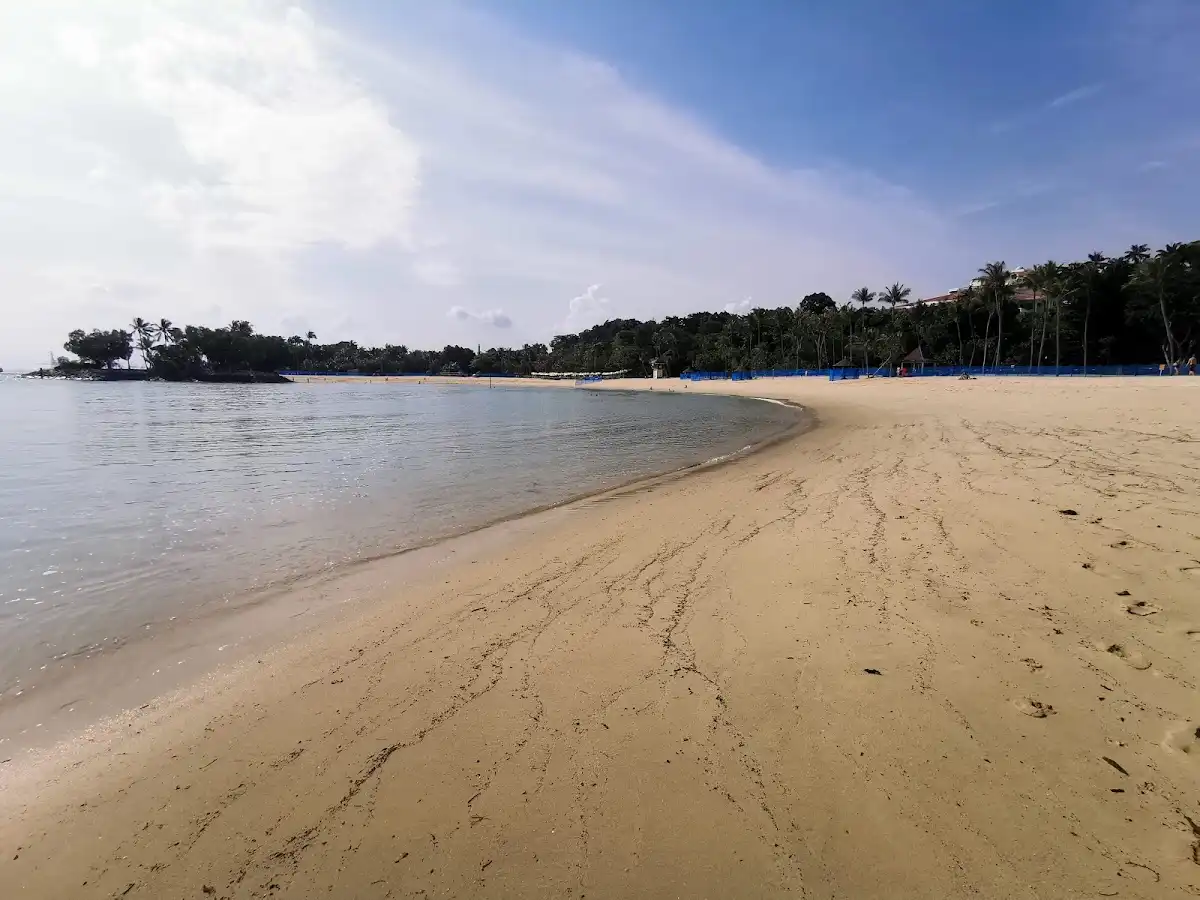
Beaches in Singapore are man-made or heavily engineered parks, because the island has little natural coastline left and sits beside one of the world’s busiest shipping lanes. Expect calm, brownish-green water, cargo ships on the horizon, and sand often imported from elsewhere. The East Coast is the local weekend scene, with cycling paths and barbecue pits. Sentosa is polished and commercial, so food and drinks cost more. The southern islands are quieter and need a ferry. For independent travelers, access is easy: the MRT and buses reach most beaches, and entry is free.

By Johan Kruseman 🇳🇱 | Updated October 19, 2026
Explore the best attractions in Singapore

Why go?Why These beach Stand Out

Singapore is an unusual beach destination because it is a dense city-state on a busy equatorial strait. The original shoreline was largely reclaimed, so most sand today is deliberately maintained by the government, which also manages parks, lifeguards and bins to a high standard. That gives you cleanliness, safety and easy public transport, but not wild coastline.

The water is shaped by geography. The Singapore Strait is crowded with anchored and passing ships, and the surrounding islands of Indonesia and Malaysia block open-ocean swell. Expect flat, warm, murky water and almost no surf. Visibility is usually low, so snorkeling is limited, with the better reef experiences on a few southern islands. Jellyfish and the occasional algae bloom can also affect swimming.

Singapore’s equatorial … read more 👉
Singapore is an unusual beach destination because it is a dense city-state on a busy equatorial strait. The original shoreline was largely reclaimed, so most sand today is deliberately maintained by the government, which also manages parks, lifeguards and bins to a high standard. That gives you cleanliness, safety and easy public transport, but not wild coastline.

The water is shaped by geography. The Singapore Strait is crowded with anchored and passing ships, and the surrounding islands of Indonesia and Malaysia block open-ocean swell. Expect flat, warm, murky water and almost no surf. Visibility is usually low, so snorkeling is limited, with the better reef experiences on a few southern islands. Jellyfish and the occasional algae bloom can also affect swimming.

Singapore’s equatorial climate means the water stays around 28 to 30°C all year, so there is no cold season to rule out a swim. Know before you choose it: this is a place for an easy, urban beach day with cheap hawker food nearby, not for dramatic scenery or remote seclusion. Rules are enforced, including no littering, restrictions on camping and limits on alcohol in some public areas. Singapore works best as a beach add-on to a city stay rather than the reason for a trip.
Evaluating the Top Choices
The list of best beaches in Singapore is created based on beauty, vibe, water quality, activities, and surrounding scenery. If you feel a beach is missing in this list, please let us know.

When to go?When to Plan Your Trip

Best months and why: The best months for Singapore’s beaches are February to early April and June to August, when rainfall is lower and the sea is at its calmest. Temperatures barely change, staying around 25 to 32°C year-round with humidity often above 80 percent, so rain and crowds matter more than heat.
Wet season and shoulder periods: The Northeast Monsoon from December to early March brings the heaviest rain, with December and January typically the wettest at around 250 to 300 mm a month. Showers are often short and heavy, and afternoon thunderstorms can close beaches, because lifeguards and park staff clear the water when lightning is detected. The Southwest Monsoon from June to September is drier, though early-morning squalls called Sumatras can pass through. April to May and October … read more 👉
Best months and why: The best months for Singapore’s beaches are February to early April and June to August, when rainfall is lower and the sea is at its calmest. Temperatures barely change, staying around 25 to 32°C year-round with humidity often above 80 percent, so rain and crowds matter more than heat.
Wet season and shoulder periods: The Northeast Monsoon from December to early March brings the heaviest rain, with December and January typically the wettest at around 250 to 300 mm a month. Showers are often short and heavy, and afternoon thunderstorms can close beaches, because lifeguards and park staff clear the water when lightning is detected. The Southwest Monsoon from June to September is drier, though early-morning squalls called Sumatras can pass through. April to May and October to November are shoulder months with thundery afternoons but warm, workable mornings.
Crowds and prices: Beaches are busiest on weekends and public holidays, when locals fill barbecue pits and car parks. Weekdays are noticeably quieter. School holidays in June and December push up hotel rates, often by 20 to 40 percent, especially on Sentosa. Go early, before 10 a.m., for cooler air, softer light and fewer people. Haze from regional fires can affect air quality between roughly August and October.

beach hoppingTips for Visiting Multiple Destinations

How many days to allow: A trip combining several beaches in Singapore needs 2 to 3 days, because the island is small and most beach areas are within 30 to 60 minutes of each other by public transport. The main planning question is not distance but weather and daylight.
Grouping and direction: The sensible grouping is by coast. The East Coast works as one block, reached from Bedok, Eunos or Marine Parade MRT areas, followed by a bus or taxi. Sentosa sits in the south, reached from HarbourFront MRT by monorail, bus or on foot over the boardwalk. The southern islands need a ferry from Marina South Pier, usually a 20 to 30 minute crossing. Travel from east to south, or the reverse, but keep each coast to a separate half-day or day.
Time per stop and transfers: Allow 2 to 4 hours per beach for swimming, … read more 👉
How many days to allow: A trip combining several beaches in Singapore needs 2 to 3 days, because the island is small and most beach areas are within 30 to 60 minutes of each other by public transport. The main planning question is not distance but weather and daylight.
Grouping and direction: The sensible grouping is by coast. The East Coast works as one block, reached from Bedok, Eunos or Marine Parade MRT areas, followed by a bus or taxi. Sentosa sits in the south, reached from HarbourFront MRT by monorail, bus or on foot over the boardwalk. The southern islands need a ferry from Marina South Pier, usually a 20 to 30 minute crossing. Travel from east to south, or the reverse, but keep each coast to a separate half-day or day.
Time per stop and transfers: Allow 2 to 4 hours per beach for swimming, food and a walk, and half a day for island trips including ferry waits. The journey between the East Coast and HarbourFront is typically 35 to 60 minutes.
Common planning mistakes: Travelers often cram three beaches into one day and spend it commuting. Choose one coast per half-day. Another mistake is ignoring ferry schedules and afternoon storms. Book the island trip for the morning, check ferry times, and keep the late afternoon flexible. Weekend crowds can also slow shared transport, so schedule far-flung stops on weekdays.

The ListHighly Recommended beaches of Singapore

1 Siloso Beach

beach bars, volleyball courts, water sports

Join a game of volleyball, rent a kayak, or unwind at a beachfront bar where the atmosphere stays lively into the evening.

2 Palawan Beach

family playgrounds, suspension bridge, islet views

Cross a rope bridge to a tiny offshore islet, let kids roam themed play zones, and enjoy gentle waters safe for swimming.

singapore-beach-palawan-beach
© Google |

3 Tanjong Beach

secluded cove, pet-friendly, relaxed lounging

Bring your dog for a swim, stretch out on quieter sands, and enjoy a slower pace away from Sentosa’s busier corners.

singapore-beach-tanjong-beach
© Google |

4 East Coast Park

cycling trails, barbecue pits, urban coastline

Cycle for miles along the waterfront, pause for a barbecue with friends, and experience Singapore’s most accessible stretch of open sand.

5 Changi Beach Park

heritage boardwalks, plane spotting, local picnics

Watch planes descend over quiet lawns, stroll shaded paths lined with history, and join families gathering for relaxed seaside afternoons.

singapore-beach-changi-beach-park
© Google |

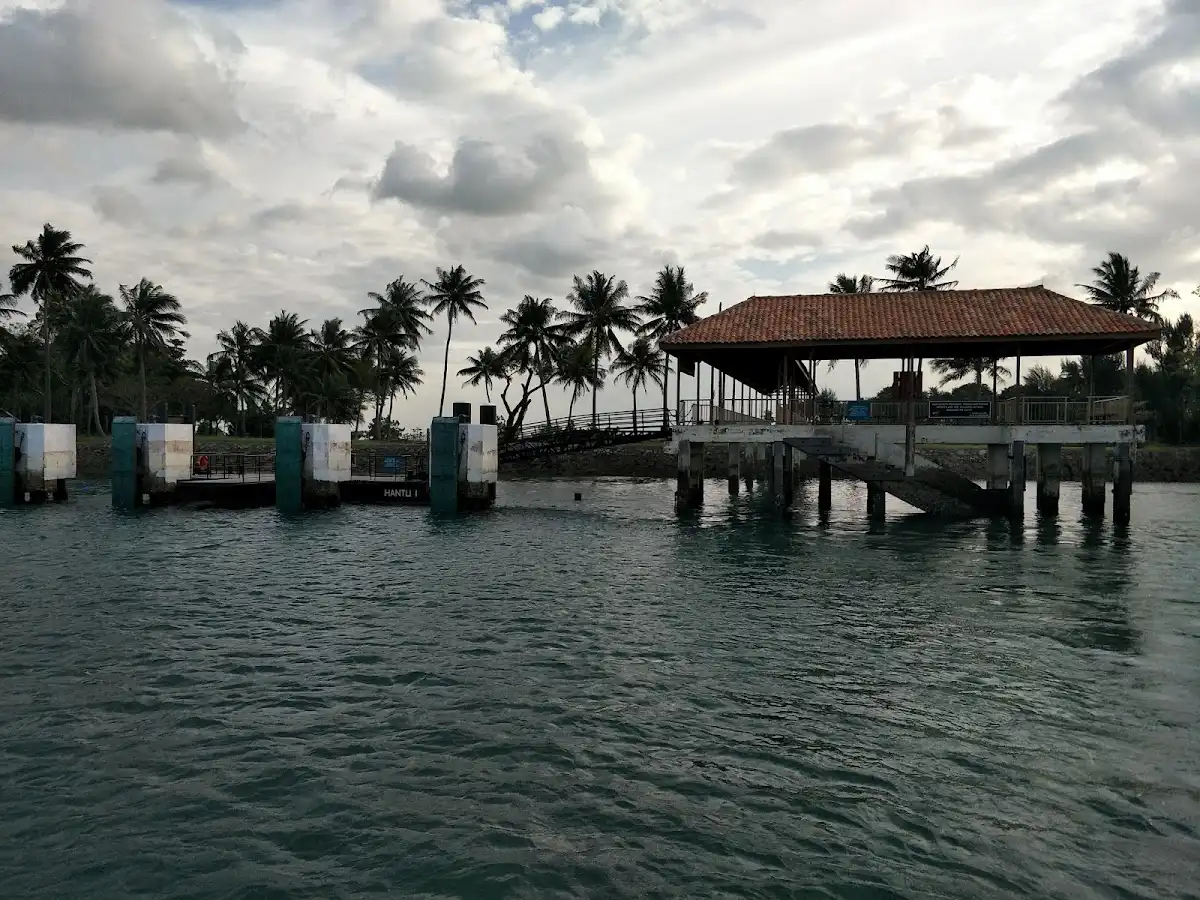
6 Pulau Hantu

coral reefs, dive sites, tidal lagoons

Dive among living reefs, explore tidal pools at low tide, and find rare marine life just a short boat ride from the city.

singapore-beach-pulau-hantu
© Google |
Loading the map 🌍

Expert viewInsights from Locals and Experts

How many beaches to visit: Visit two or three beaches in total. Singapore’s coastline is limited, and after two different types the experience repeats: flat water, ships offshore and tidy parkland. Three covers the main variety without making beaches the entire trip.
Which kind for which traveler: Pick by style. Budget travelers should prioritize a free public park beach, where you can cycle, eat at hawker centers and swim for almost nothing. Those wanting a resort-style day should choose Sentosa’s developed beaches, which have showers, lockers and beach bars. Travelers who want quiet or a little adventure should take a ferry to an outlying island for lower crowds, basic facilities and the chance of clearer water. Snorkelers should set expectations low: visibility is often under 3 meters, so … read more 👉
How many beaches to visit: Visit two or three beaches in total. Singapore’s coastline is limited, and after two different types the experience repeats: flat water, ships offshore and tidy parkland. Three covers the main variety without making beaches the entire trip.
Which kind for which traveler: Pick by style. Budget travelers should prioritize a free public park beach, where you can cycle, eat at hawker centers and swim for almost nothing. Those wanting a resort-style day should choose Sentosa’s developed beaches, which have showers, lockers and beach bars. Travelers who want quiet or a little adventure should take a ferry to an outlying island for lower crowds, basic facilities and the chance of clearer water. Snorkelers should set expectations low: visibility is often under 3 meters, so a dedicated dive or snorkel trip is the better route.
What it costs: Public beaches are free to enter. A realistic backpacker day is S$30 to 55 (about US$22 to 40), covering transport, hawker meals at S$4 to 8 each and drinks. MRT and bus fares are typically S$1 to 2.50 per ride. Sentosa adds an entry fee when arriving by bus or taxi (a few Singapore dollars), while walking over the boardwalk or taking the monorail is cheaper, around S$4 per monorail ride. Ferries to the southern islands usually cost about S$15 to 20 return. Lockers cost around S$2 to 8, bicycle rental about S$8 to 15 per hour at the East Coast, and beach club food or drinks can reach S$15 to 25 per item. Bring your own water and snacks if you are watching your budget.
Safety and local rules: Swim only in designated areas and where lifeguards are on duty, since currents from passing ships and tides can be stronger than the calm surface suggests. Leave the water immediately when lightning is announced, as staff enforce this. Jellyfish and sea urchins occur, so water shoes are useful on rocky shores. Sun is intense near the equator, so wear SPF 30+ and carry water.
Cultural considerations: Singapore enforces strict public rules. Littering carries fines, smoking is banned in many beach areas, and alcohol is restricted in some public places at night, so check signs. Barbecue pits often need advance booking through the National Parks Board. Camping is only allowed at designated sites with permits. Swimwear is acceptable on beaches, but cover up when walking through nearby neighborhoods, hawker centers and shops. Many local families visit on weekends, so respectful behavior and moderate music volume are expected.
Other practical points: Many beach areas have no 24-hour food outlets and facilities may close early in bad weather. Keep valuables to a minimum, although theft is uncommon. Arrive before midday to find shaded spots, and carry a small rain jacket for sudden showers.

✈️ The backpacker research shortcutSingapore Travel Guide

An offline-friendly backpacking guide with optimized travel routes, ranked highlights, transport advice, and the best areas to stay.
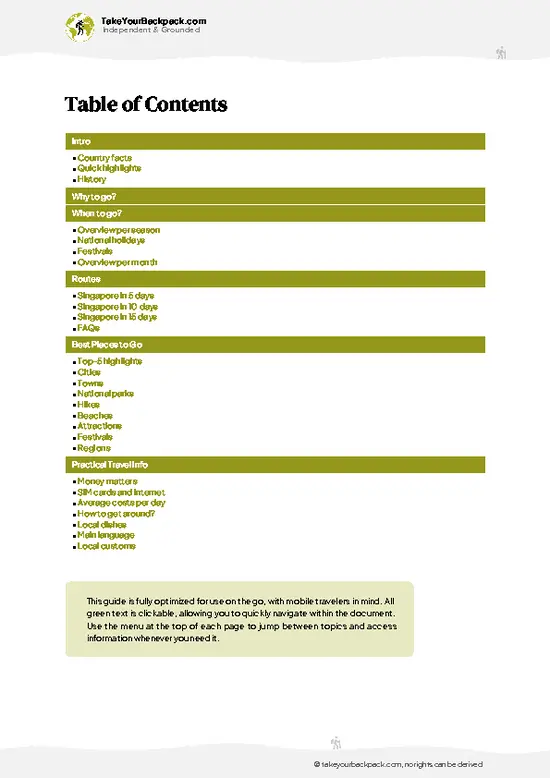
example page 0 from our offline Travel Guide for Singapore
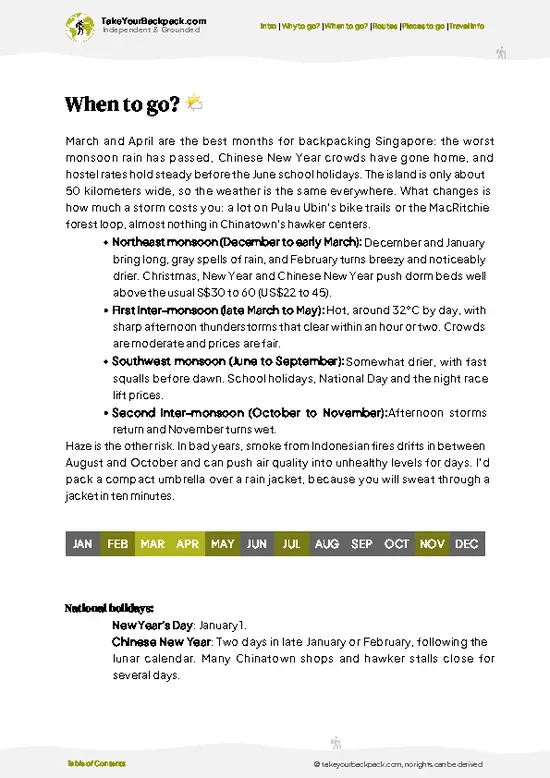
example page 1 from our offline Travel Guide for Singapore
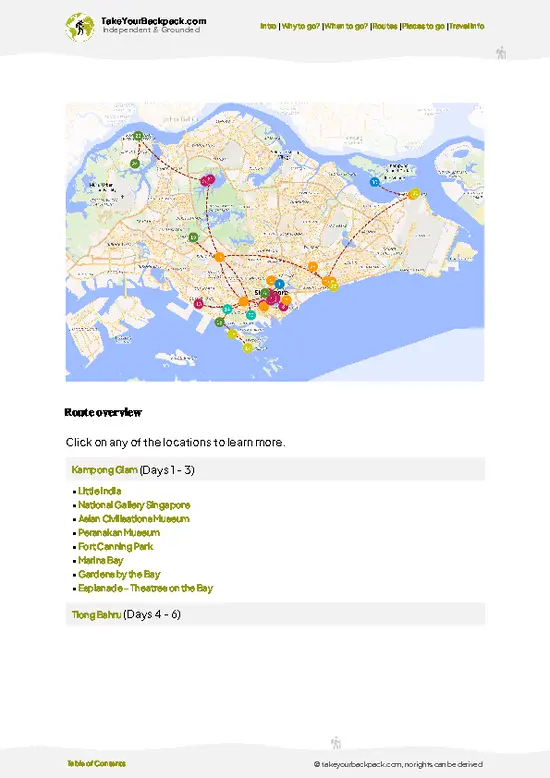
example page 2 from our offline Travel Guide for Singapore
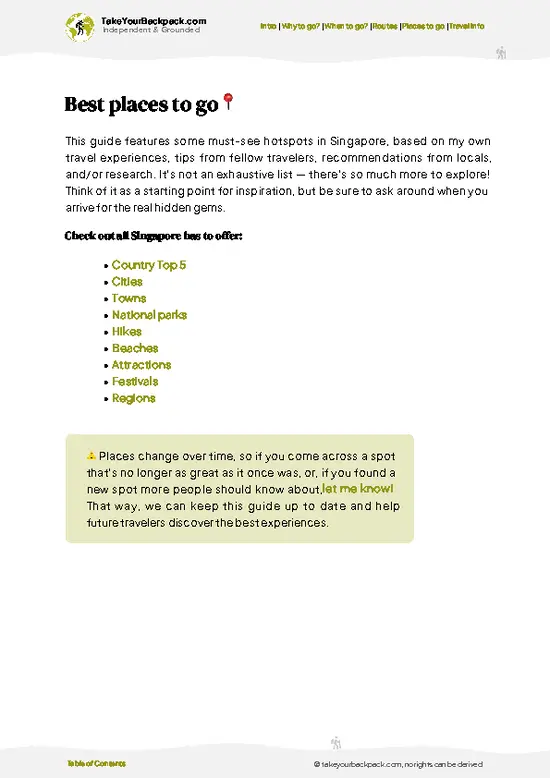
example page 3 from our offline Travel Guide for Singapore
example page 4 from our offline Travel Guide for Singapore
example page 5 from our offline Travel Guide for Singapore
example page 6 from our offline Travel Guide for Singapore
example page 7 from our offline Travel Guide for Singapore
The digital guide (246 pages) contains:
✅ 63 highlights, ranked by travel appeal
✅ Optimized 5, 10 & 15-day travel routes
✅ Cities, national parks, landmarks, beaches
✅ How to get around
✅ Offline-friendly for travel without Wi-Fi
👉 Click to see all 30+ guide features

📅 Plan smarter in minutes, not weeks
✅ Month by month travel advice
✅ Festivals & national holidays
✅ Budget expectations

🗺️ Go to the right places, skip the overrated ones
✅ Honest pros & cons of destinations
✅ Top hikes, parks & viewpoints
✅ Lesser-known places most travelers miss
✅ Clear “worth it vs skip it” guidance

🛏️ Travel smoothly without rookie mistakes
✅ Best areas to stay
✅ Transport systems explained simply
✅ Common scams & safety advice
✅ SIM cards, money & practical tips

🌍 Understand the country, not just visit it
✅ Culture & traditions
✅ Local customs
✅ Festivals worth planning around
✅ Traveler-friendly historical context
✅ Insights that make places more meaningful

📱 Built for real travel conditions
✅ Fully downloadable PDF
✅ Works completely offline
✅ Optimized for phone use
✅ Useful in remote areas & buses
✅ Everything in one place
Stop searching, start planning
Get instant access to your full guide. 30‑day money-back guarantee.
+ Add another guide for just

By proceeding you agree to our terms.
Sent to your inbox immediately after payment • 100% Secure Checkout
Best Backpacking Travel Advisor 2025 tourism awardBest Backpacking
Travel Advisor
2025
What others say about Take Your Backpack Guides:
⭐⭐⭐⭐⭐
Fantastic, amazing amount of information!
⭐⭐⭐⭐⭐
My goodness this is amazing, it's what I've been looking for hats off too you!
⭐⭐⭐⭐⭐
I think this is absolutely BRILLIANT
⭐⭐⭐⭐
Very complete and informative. It's still missing places, but I gotta to commend you
⭐⭐⭐⭐⭐
This is truly amazing, thank you, can't wait to explore it with my kids!
⭐⭐⭐⭐⭐
Awesome resource, thank you!
⭐⭐⭐⭐⭐
This is amazing! Can't wait to explore the ones I haven't seen
⭐⭐⭐⭐
I love this! Well done, great idea.
⭐⭐⭐⭐⭐
Thanks for taking the time to make this gem!
⭐⭐⭐⭐⭐
This might be the best website I've ever seen.
⭐⭐⭐⭐⭐
Congratulations, and thank you so much for your work; it's incredibly valuable.
⭐⭐⭐⭐
In all seriousness I think you did a great job pointing out the important spots
⭐⭐⭐⭐⭐
10/10 very good
⭐⭐⭐⭐⭐
As someone who's only just starting to visit regularly this is awesome, thank you.
⭐⭐⭐⭐
Thank you very much! I'm going to visit my dad, it's going to be very useful!
⭐⭐⭐⭐⭐
This is really cool! We'll be travelling for the first time and this definitely come in handy.
⭐⭐⭐⭐⭐
You are now our minister of culture, congratulations 👨‍💼
⭐⭐⭐⭐⭐
Just wanted to tell you that this is a pearl! Going to follow your recommendations.
⭐⭐⭐⭐⭐
This is so cool. I'll definitely be using the resource for my travels soon.
⭐⭐⭐⭐⭐
This is very impressive! Good work.
⭐⭐⭐⭐⭐
This is an amazing and informative site. Very well done!

🛏️ Where to stay?Best Places to Stay in Singapore

Singapore has plenty of hostels and capsule-style dorms, with beds typically running S$30 to 60 (about US$22 to 45) a night, and almost all of them sit in a few central districts. Chinatown puts you closest to hawker centers and a short walk or MRT ride from Marina Bay, Little India is the cheapest and noisiest, with crowded streets on weekend nights, and Kampong Glam (around Bugis) has the best bar scene on Haji Lane and Arab Street. If you want quiet, look a few blocks away from Clarke Quay, whose riverside clubs run late. Safety is excellent in every one of these areas.

If you enjoy meeting fellow travelers, consider choosing hostels with high ratings for atmosphere. On the other hand, if … read more 👉
Singapore has plenty of hostels and capsule-style dorms, with beds typically running S$30 to 60 (about US$22 to 45) a night, and almost all of them sit in a few central districts. Chinatown puts you closest to hawker centers and a short walk or MRT ride from Marina Bay, Little India is the cheapest and noisiest, with crowded streets on weekend nights, and Kampong Glam (around Bugis) has the best bar scene on Haji Lane and Arab Street. If you want quiet, look a few blocks away from Clarke Quay, whose riverside clubs run late. Safety is excellent in every one of these areas.

If you enjoy meeting fellow travelers, consider choosing hostels with high ratings for atmosphere. On the other hand, if you prefer having your own space, a hotel might be a better option.

SingaporeExplore Singapore

👋 Meet the founderWho’s Behind Take Your Backpack?

Johan, backpacker and founder of TakeYourBackpackHi, I’m Johan (Netherlands 🇳🇱), the creator of TakeYourBackpack. Over the past 3 decades, I’ve backpacked through 90+ countries across six continents, gaining extensive experience with independent travel, long-term trips, and overland routes.

This site is built on a combination of firsthand travel experience and carefully curated insights from other backpackers. Many guides are based on places I’ve personally visited, while others bring together tips, observations, and practical advice shared by trusted travelers I’ve met along the way.

The goal is to provide realistic, experience-driven guidance — not generic itineraries — so you can explore destinations with better context, clearer expectations, and more confidence.