×

Singapore🇸🇬 | best festivalsExplore the 12 Best festivals in Singapore

Festivals in Singapore run on a calendar set by its four main communities (Chinese, Malay, Indian and Eurasian), plus a state that schedules cultural and arts events well in advance. Because the island is small (about 50 km across) and covered by the MRT, access is easy and nothing requires a long transfer. Most celebrations are free to watch, concentrated in districts like Chinatown, Little India and Kampong Glam, so the main costs are food and accommodation. The trade-off is crowds: peak nights fill streets and push hostel prices up. For backpacking or independent travel, community festivals offer the most character, while ticketed events suit planners.

By Johan Kruseman 🇳🇱 | Updated October 19, 2026
Explore the best regions in Singapore

Why go?Why These festival Stand Out

Singapore’s festival scene exists because of planned multiculturalism. A trading port that drew Chinese, Malay, Indian and Arab settlers in the 19th century now gives public holidays to each major community’s religious calendar, so Lunar New Year, Hari Raya Puasa, Deepavali and Vesak are all official days off. That means festivals are woven into daily life rather than staged for visitors, and the neighborhoods tied to each group still hold the celebrations.

The tropical climate shapes everything. Temperatures sit around 25 to 32°C all year with high humidity, so there is no off-season in the way temperate countries have one, and outdoor events happen year-round, though sudden downpours can interrupt them. Infrastructure is a real advantage: reliable trains, buses, clean public spaces and … read more 👉
Singapore’s festival scene exists because of planned multiculturalism. A trading port that drew Chinese, Malay, Indian and Arab settlers in the 19th century now gives public holidays to each major community’s religious calendar, so Lunar New Year, Hari Raya Puasa, Deepavali and Vesak are all official days off. That means festivals are woven into daily life rather than staged for visitors, and the neighborhoods tied to each group still hold the celebrations.

The tropical climate shapes everything. Temperatures sit around 25 to 32°C all year with high humidity, so there is no off-season in the way temperate countries have one, and outdoor events happen year-round, though sudden downpours can interrupt them. Infrastructure is a real advantage: reliable trains, buses, clean public spaces and strong policing make large crowds easy to manage and easy to reach.

Before choosing Singapore for festivals, know that many dates move with the lunar or Islamic calendars, so they shift by days or weeks each year. Check dates before booking flights. Also note that the country is compact and heavily regulated, so expect organized, orderly events rather than spontaneous street chaos. Rules on drones, public gatherings and alcohol in some zones are strictly enforced.
Evaluating the Top Choices
The list of best festivals in Singapore is created based on energy, traditions, crowd experience, activities, and overall excitement. If you feel a festival is missing in this list, please let us know.

When to go?When to Plan Your Trip

Best months and weather: The best window for festivals in Singapore is January to March, when the Lunar New Year season and the drier northeast monsoon period combine, giving lower rainfall (roughly 100 to 200 mm a month) than the wetter months. Temperatures hold at 25 to 32°C year-round with humidity often above 80 percent, so the real difference between seasons is rain, not heat.
Shoulder seasons: The November to January stretch is the wettest, with monthly rainfall often 250 mm or more, and afternoon storms can interrupt open-air events. June to September is drier and slightly hotter, with occasional haze from regional fires, mostly August to October, which can affect outdoor plans. Hari Raya, Deepavali and Vesak fall at different points in the year because they follow lunar or Islamic calendars, … read more 👉
Best months and weather: The best window for festivals in Singapore is January to March, when the Lunar New Year season and the drier northeast monsoon period combine, giving lower rainfall (roughly 100 to 200 mm a month) than the wetter months. Temperatures hold at 25 to 32°C year-round with humidity often above 80 percent, so the real difference between seasons is rain, not heat.
Shoulder seasons: The November to January stretch is the wettest, with monthly rainfall often 250 mm or more, and afternoon storms can interrupt open-air events. June to September is drier and slightly hotter, with occasional haze from regional fires, mostly August to October, which can affect outdoor plans. Hari Raya, Deepavali and Vesak fall at different points in the year because they follow lunar or Islamic calendars, so no single month covers every community’s celebrations.
Peak periods and prices: Prices rise around Lunar New Year, school holidays (June and December) and major events. Hostel dorm beds typically run S$30 to 60 (about US$22 to 45) on ordinary nights and can climb 30 to 50 percent during peaks. Book two to three months ahead for those dates. Public holidays also close some shops and change transport schedules for a day.

festival hoppingTips for Visiting Multiple Destinations

How many days to allow: A trip combining several festivals in Singapore needs 4 to 7 days, because the island is small and the limiting factor is the festival calendar, not distance. Crossing the whole country by MRT takes about 45 to 75 minutes, so festival districts group by neighborhood rather than region.
Grouping and direction: The central cluster of Chinatown, Little India and Kampong Glam sits within a 15 to 25 minute train ride of each other, so these pair easily in a single stay. Marina Bay and the Civic District link by a short walk or one or two MRT stops. Start in the center, then move to outer areas such as Geylang Serai in the east or temple precincts in the north and west, each 20 to 40 minutes from the core. Staying central and making short trips out saves repacking.
Pacing and … read more 👉
How many days to allow: A trip combining several festivals in Singapore needs 4 to 7 days, because the island is small and the limiting factor is the festival calendar, not distance. Crossing the whole country by MRT takes about 45 to 75 minutes, so festival districts group by neighborhood rather than region.
Grouping and direction: The central cluster of Chinatown, Little India and Kampong Glam sits within a 15 to 25 minute train ride of each other, so these pair easily in a single stay. Marina Bay and the Civic District link by a short walk or one or two MRT stops. Start in the center, then move to outer areas such as Geylang Serai in the east or temple precincts in the north and west, each 20 to 40 minutes from the core. Staying central and making short trips out saves repacking.
Pacing and mistakes: Allow half a day to a full day per stop, since most community events peak in the evening. The common error is stacking two crowded evening events on one night: station exits close or queue during peaks, and a 20 minute ride can take twice as long. Build in a buffer, choose one major evening event per day, and check last train times, usually around 11:30 pm to midnight.

The ListHighly Recommended festivals of Singapore

1 Chinese New Year

Chinatown markets, lion dances, reunion dinners, red decorations

Experience festive crowds, lively performances, and the city’s transformation with symbolic colors and traditions marking the start of the lunar year.

2 Chingay Parade

street floats, multicultural costumes, pyrotechnics, crowd performances

Watch city streets transform with elaborate floats, costumed performers, and synchronized displays that highlight Singapore’s diverse communities and creative energy.

3 Singapore Food Festival

hawker stalls, culinary workshops, local chefs, tasting events

Sample regional specialties, join hands-on cooking sessions, and discover the city’s evolving food scene through curated tastings and chef-led experiences.

4 Singapore Night Festival

light installations, street art, late-night performances, heritage district

Experience the city’s historic core reimagined after dark with interactive art, pop-up shows, and illuminated landmarks.

5 Mid-Autumn Festival

lantern walks, moon-viewing, tea gatherings, traditional pastries

Join locals in lantern-lit parks, sample mooncakes, and take part in evening celebrations centered around family and lunar traditions.

6 Deepavali

Little India lights, rangoli art, festive bazaars, Hindu temples

Wander through streets lined with colorful lights, intricate floor designs, and markets selling sweets and traditional crafts during the Hindu festival of lights.

7 Hari Raya Aidilfitri

Geylang Serai bazaar, open houses, traditional attire, communal feasts

Join in post-Ramadan celebrations with bustling markets, family gatherings, and the sharing of Malay dishes in homes and public spaces.

8 Thaipusam

devotional procession, body piercings, Hindu rituals, temple routes

Observe intense acts of faith as devotees carry kavadis and walk barefoot between temples in a moving public display of religious devotion.

9 Vesak Day

Buddhist temples, candlelight processions, bathing Buddha, merit-making

Witness rituals and quiet ceremonies at temples as devotees commemorate Buddha’s birth, enlightenment, and passing with offerings and prayers.

10 Singapore International Film Festival

independent cinema, regional premieres, filmmaker talks, screenings

Attend film premieres, engage with directors, and experience a curated selection of Asian and global cinema in intimate venues across the city.

11 Hungry Ghost Festival

street offerings, getai shows, incense rituals, Chinese opera

Observe public rituals, temporary stages, and nightly performances as communities honor ancestors and appease wandering spirits throughout the lunar month.

12 Lantern Festival

lantern displays, mooncakes, family gatherings, evening strolls

Stroll through neighborhoods illuminated by intricate lanterns and join locals sharing mooncakes and stories under the full moon.

Loading the map 🌍

Expert viewInsights from Locals and Experts

How many to visit: I advise three to five festivals in one trip. Singapore is small, so travel time is not the limit. Crowds and heat are. Three lets you rest between events and spend real time in each neighborhood, while more than five tends to blur together and drains your budget on peak-season beds.
Choosing by travel style: Budget travelers should prioritize free community and religious festivals, which cost nothing to enter and offer the most local atmosphere. Food-focused travelers should choose events centered on hawker centers and temple stalls. Culture seekers who like organized programs suit the arts and light festivals, many of which are free but some of which sell tickets. Families and first-timers cope better with daytime and early-evening events, where heat and crowds are easier … read more 👉
How many to visit: I advise three to five festivals in one trip. Singapore is small, so travel time is not the limit. Crowds and heat are. Three lets you rest between events and spend real time in each neighborhood, while more than five tends to blur together and drains your budget on peak-season beds.
Choosing by travel style: Budget travelers should prioritize free community and religious festivals, which cost nothing to enter and offer the most local atmosphere. Food-focused travelers should choose events centered on hawker centers and temple stalls. Culture seekers who like organized programs suit the arts and light festivals, many of which are free but some of which sell tickets. Families and first-timers cope better with daytime and early-evening events, where heat and crowds are easier to manage.
Budget: A backpacker can manage on US$45 to 80 a day in Singapore: a dorm bed at about US$22 to 45, hawker meals at S$4 to 8 (US$3 to 6), and MRT rides at about S$1 to 2.50 a trip. Free festivals add nothing, while ticketed events and shows commonly cost S$20 to 150 (US$15 to 115). Festival snacks, drinks and souvenirs often add US$10 to 25 per visit. Expect to pay 30 to 50 percent more for beds on peak nights, so book early.
Safety and etiquette: Singapore is very safe, with low violent crime, but pickpocketing can occur in dense crowds, so keep bags zipped in front. Dress modestly for religious sites: cover shoulders and knees, and remove shoes before entering mosques, Hindu temples and some Buddhist halls. Ask before photographing worshippers. Public drinking is restricted after 10:30 pm in most places and banned from 10:30 pm to 7 am in public areas, and littering, smoking outside designated zones and flying drones without a permit carry heavy fines.
Practical points: Carry water and a light rain layer, since the heat and sudden showers are constant. Use the MRT after events rather than taxis, because surge pricing climbs sharply at closing time. Dates for lunar and Islamic festivals shift each year, so confirm them before you book flights or beds.

✈️ The backpacker research shortcutSingapore Travel Guide

An offline-friendly backpacking guide with optimized travel routes, ranked highlights, transport advice, and the best areas to stay.
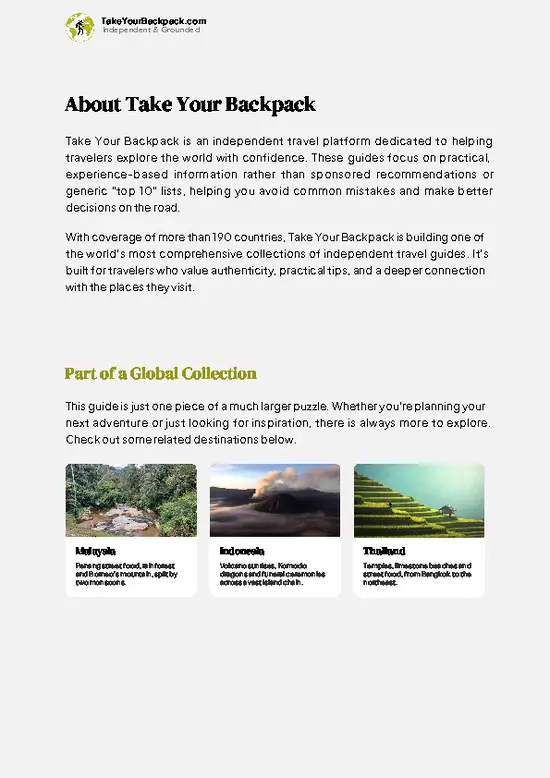
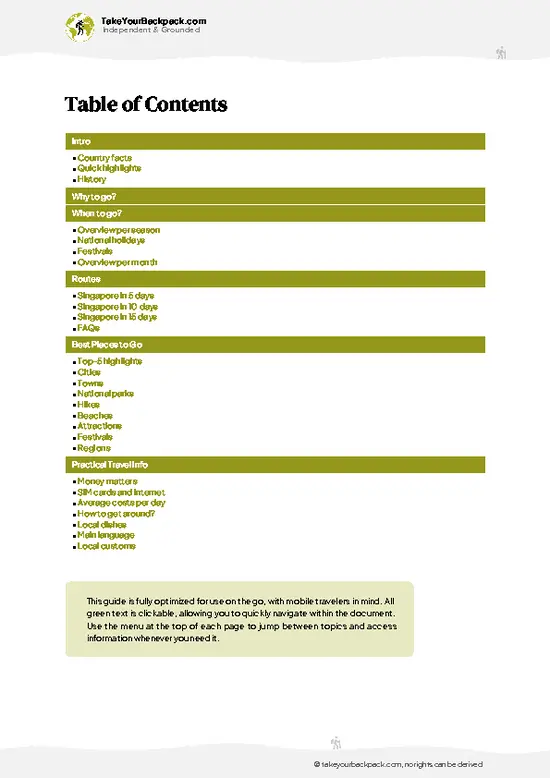
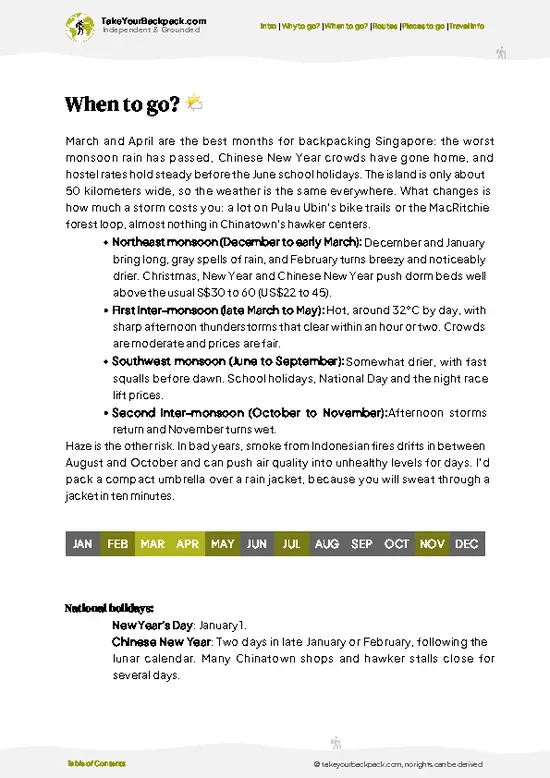
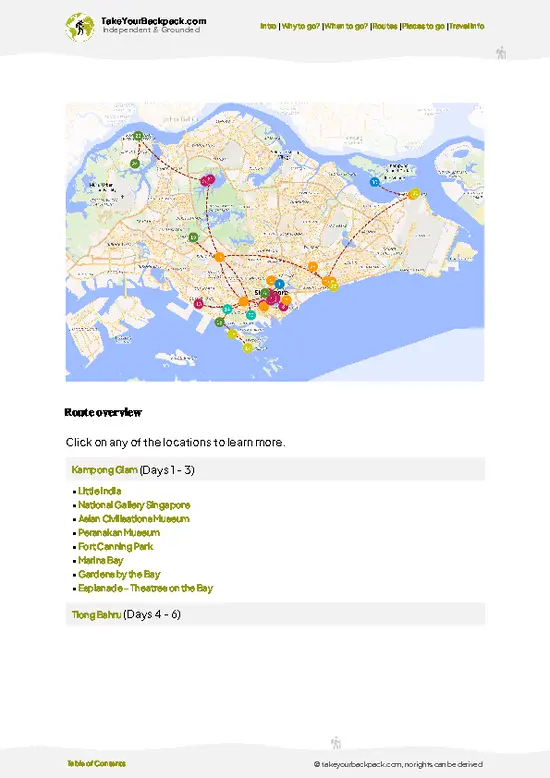
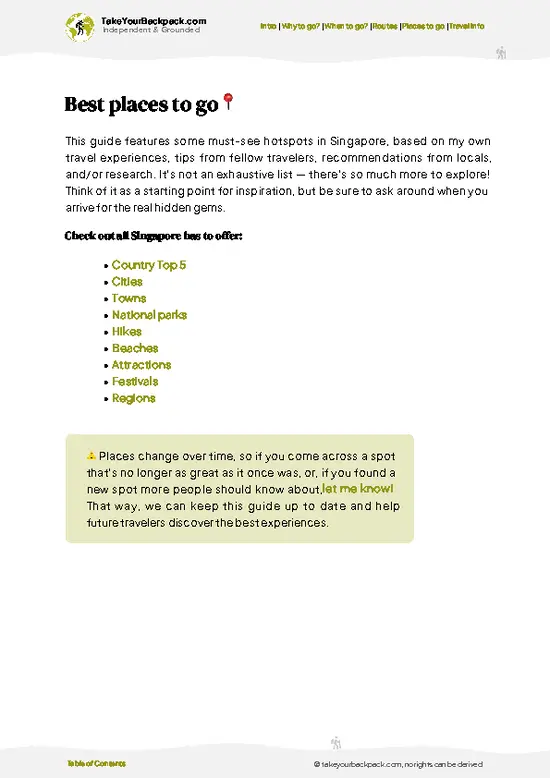
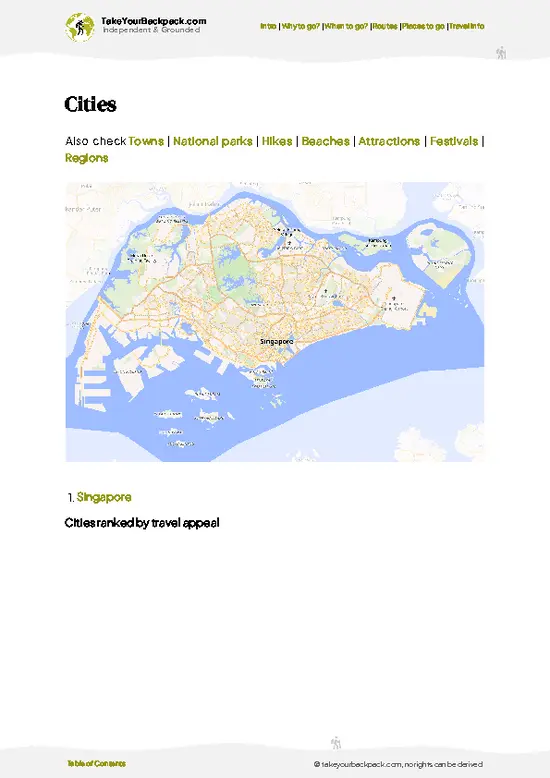
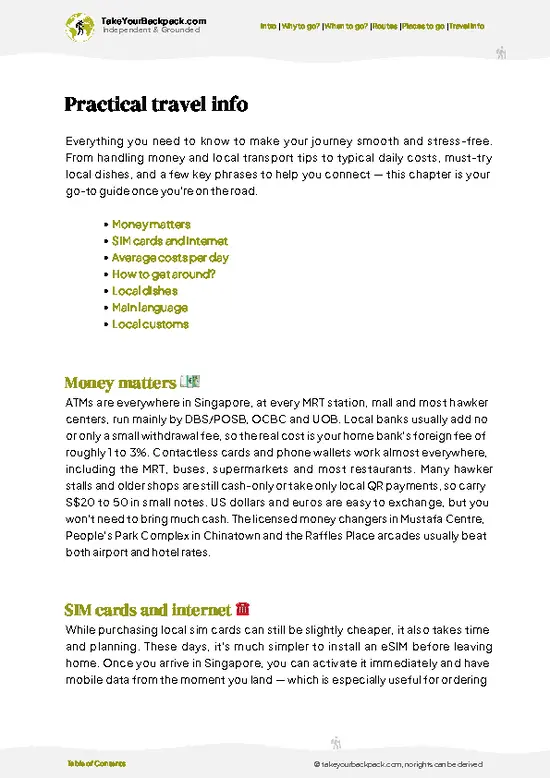
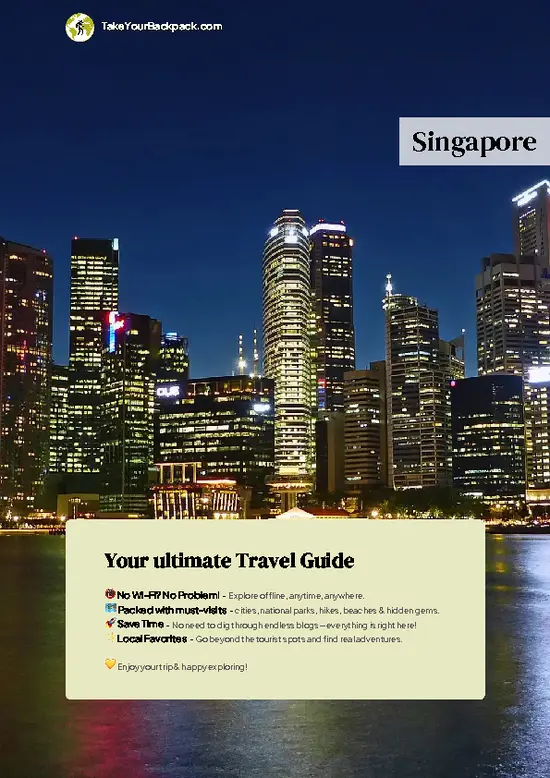
example page 0 from our offline Travel Guide for Singapore
example page 1 from our offline Travel Guide for Singapore
example page 2 from our offline Travel Guide for Singapore
example page 3 from our offline Travel Guide for Singapore
example page 4 from our offline Travel Guide for Singapore
example page 5 from our offline Travel Guide for Singapore
example page 6 from our offline Travel Guide for Singapore
example page 7 from our offline Travel Guide for Singapore
The digital guide (246 pages) contains:
✅ 63 highlights, ranked by travel appeal
✅ Optimized 5, 10 & 15-day travel routes
✅ Cities, national parks, landmarks, beaches
✅ How to get around
✅ Offline-friendly for travel without Wi-Fi
👉 Click to see all 30+ guide features

📅 Plan smarter in minutes, not weeks
✅ Month by month travel advice
✅ Festivals & national holidays
✅ Budget expectations

🗺️ Go to the right places, skip the overrated ones
✅ Honest pros & cons of destinations
✅ Top hikes, parks & viewpoints
✅ Lesser-known places most travelers miss
✅ Clear “worth it vs skip it” guidance

🛏️ Travel smoothly without rookie mistakes
✅ Best areas to stay
✅ Transport systems explained simply
✅ Common scams & safety advice
✅ SIM cards, money & practical tips

🌍 Understand the country, not just visit it
✅ Culture & traditions
✅ Local customs
✅ Festivals worth planning around
✅ Traveler-friendly historical context
✅ Insights that make places more meaningful

📱 Built for real travel conditions
✅ Fully downloadable PDF
✅ Works completely offline
✅ Optimized for phone use
✅ Useful in remote areas & buses
✅ Everything in one place
Stop searching, start planning
Get instant access to your full guide. 30‑day money-back guarantee.
+ Add another guide for just

By proceeding you agree to our terms.
Sent to your inbox immediately after payment • 100% Secure Checkout
Best Backpacking Travel Advisor 2025 tourism awardBest Backpacking
Travel Advisor
2025
What others say about Take Your Backpack Guides:
⭐⭐⭐⭐⭐
Fantastic, amazing amount of information!
⭐⭐⭐⭐⭐
My goodness this is amazing, it's what I've been looking for hats off too you!
⭐⭐⭐⭐⭐
I think this is absolutely BRILLIANT
⭐⭐⭐⭐
Very complete and informative. It's still missing places, but I gotta to commend you
⭐⭐⭐⭐⭐
This is truly amazing, thank you, can't wait to explore it with my kids!
⭐⭐⭐⭐⭐
Awesome resource, thank you!
⭐⭐⭐⭐⭐
This is amazing! Can't wait to explore the ones I haven't seen
⭐⭐⭐⭐
I love this! Well done, great idea.
⭐⭐⭐⭐⭐
Thanks for taking the time to make this gem!
⭐⭐⭐⭐⭐
This might be the best website I've ever seen.
⭐⭐⭐⭐⭐
Congratulations, and thank you so much for your work; it's incredibly valuable.
⭐⭐⭐⭐
In all seriousness I think you did a great job pointing out the important spots
⭐⭐⭐⭐⭐
10/10 very good
⭐⭐⭐⭐⭐
As someone who's only just starting to visit regularly this is awesome, thank you.
⭐⭐⭐⭐
Thank you very much! I'm going to visit my dad, it's going to be very useful!
⭐⭐⭐⭐⭐
This is really cool! We'll be travelling for the first time and this definitely come in handy.
⭐⭐⭐⭐⭐
You are now our minister of culture, congratulations 👨‍💼
⭐⭐⭐⭐⭐
Just wanted to tell you that this is a pearl! Going to follow your recommendations.
⭐⭐⭐⭐⭐
This is so cool. I'll definitely be using the resource for my travels soon.
⭐⭐⭐⭐⭐
This is very impressive! Good work.
⭐⭐⭐⭐⭐
This is an amazing and informative site. Very well done!

🛏️ Where to stay?Where to Stay in Singapore

Singapore has plenty of hostels and capsule-style dorms, with beds typically running S$30 to 60 (about US$22 to 45) a night, and almost all of them sit in a few central districts. Chinatown puts you closest to hawker centers and a short walk or MRT ride from Marina Bay, Little India is the cheapest and noisiest, with crowded streets on weekend nights, and Kampong Glam (around Bugis) has the best bar scene on Haji Lane and Arab Street. If you want quiet, look a few blocks away from Clarke Quay, whose riverside clubs run late. Safety is excellent in every one of these areas.

If you enjoy meeting fellow travelers, consider choosing hostels with high ratings for atmosphere. On the other hand, if … read more 👉
Singapore has plenty of hostels and capsule-style dorms, with beds typically running S$30 to 60 (about US$22 to 45) a night, and almost all of them sit in a few central districts. Chinatown puts you closest to hawker centers and a short walk or MRT ride from Marina Bay, Little India is the cheapest and noisiest, with crowded streets on weekend nights, and Kampong Glam (around Bugis) has the best bar scene on Haji Lane and Arab Street. If you want quiet, look a few blocks away from Clarke Quay, whose riverside clubs run late. Safety is excellent in every one of these areas.

If you enjoy meeting fellow travelers, consider choosing hostels with high ratings for atmosphere. On the other hand, if you prefer having your own space, a hotel might be a better option.

SingaporeMore of Singapore

👋 Meet the founderWho’s Behind Take Your Backpack?

Johan, backpacker and founder of TakeYourBackpackHi, I’m Johan (Netherlands 🇳🇱), the creator of TakeYourBackpack. Over the past 3 decades, I’ve backpacked through 90+ countries across six continents, gaining extensive experience with independent travel, long-term trips, and overland routes.

This site is built on a combination of firsthand travel experience and carefully curated insights from other backpackers. Many guides are based on places I’ve personally visited, while others bring together tips, observations, and practical advice shared by trusted travelers I’ve met along the way.

The goal is to provide realistic, experience-driven guidance — not generic itineraries — so you can explore destinations with better context, clearer expectations, and more confidence.