AccessibilityTraveling through Somalia’s villages requires a solid understanding of accessibility. Many rural areas are remote, and infrastructure can be hit-or-miss. Expect to navigate unpaved roads and limited public transport options. If you’re planning to visit three to five villages, consider renting a 4x4 vehicle. This will give you the flexibility to explore at your own pace, but be prepared for long drives. The trade-off? You’ll spend more time on the road, which can be exhausting. However, the payoff is the chance to experience the rich tapestry of local life and culture that unfolds along the way.
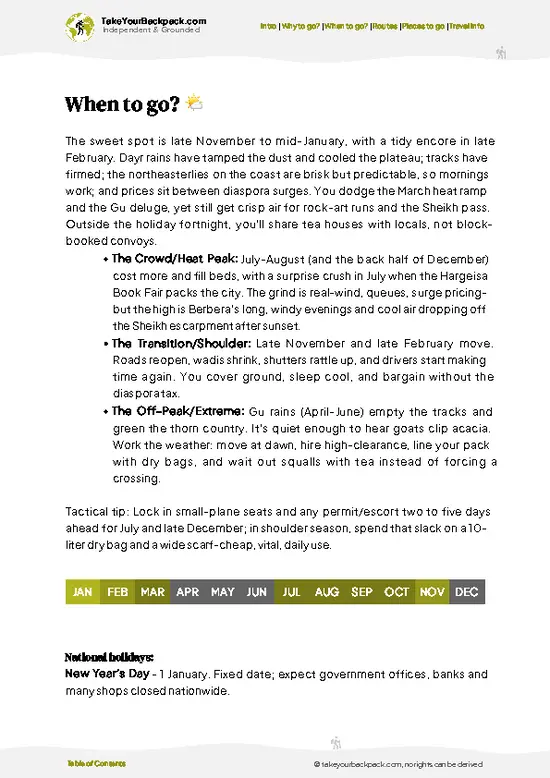
Seasonal VariationTiming is everything. Somalia has two main seasons: the dry and the rainy. The dry season, from October to April, is ideal for travel. Roads are more navigable, and …
read more 👉 AccessibilityTraveling through Somalia’s villages requires a solid understanding of accessibility. Many rural areas are remote, and infrastructure can be hit-or-miss. Expect to navigate unpaved roads and limited public transport options. If you’re planning to visit three to five villages, consider renting a 4x4 vehicle. This will give you the flexibility to explore at your own pace, but be prepared for long drives. The trade-off? You’ll spend more time on the road, which can be exhausting. However, the payoff is the chance to experience the rich tapestry of local life and culture that unfolds along the way.
Seasonal VariationTiming is everything. Somalia has two main seasons: the dry and the rainy. The dry season, from October to April, is ideal for travel. Roads are more navigable, and the weather is generally more pleasant. In contrast, the rainy season can turn paths into mudslides, making travel difficult and sometimes dangerous. If you find yourself in a village during the rains, expect delays and limited activities. Plan your visits accordingly, prioritizing the dry months for a smoother experience. This is not just about comfort; it’s about maximizing your time in the villages that matter.
AuthenticityAuthenticity is the heart of your journey. Each village has its own character, shaped by local customs and traditions. Engage with the community; this is where the real stories lie. However, be mindful of cultural sensitivities. Dress modestly and approach interactions with respect. Some villages may have specific customs regarding visitors, so it’s wise to do a bit of homework beforehand. The trade-off here is that while you may miss out on some touristy conveniences, the genuine connections you make will enrich your experience far beyond any superficial encounter.
Pacing Between Rural StopsWhen planning your itinerary, pacing is crucial. Don’t rush through villages just to tick them off your list. Instead, allow yourself to linger. Spend at least two to three days in each village to soak in the atmosphere and engage with locals. This slower pace not only enhances your experience but also gives you a chance to adapt to the local rhythm. The trade-off? You might not see as many places, but the depth of your experience will far outweigh the breadth.
Safety & Cultural ConsiderationsSafety is paramount. While many villages are welcoming, some areas may have security concerns. Stay informed about the regions you plan to visit and heed local advice. It’s also wise to travel in groups when possible. This not only enhances safety but also enriches your experience through shared stories and perspectives. Culturally, be aware that some topics may be sensitive. Approach discussions about politics or religion with caution. The trade-off here is that while you may feel the urge to dive deep into conversations, sometimes it’s better to listen and observe first.
In summary, visiting Somalia’s villages is a rewarding endeavor, but it requires careful planning and a willingness to adapt. By focusing on accessibility, timing, authenticity, pacing, and safety, you’ll not only preserve your energy and budget but also unlock the true essence of this remarkable country.
v2.webp)
 Best Backpacking
.jpg) Hi, I’m Johan (Netherlands 🇳🇱), the creator of TakeYourBackpack. Over the past decade, I’ve backpacked through 80+ countries across six continents, gaining extensive experience with independent travel, long-term trips, and overland routes.
Hi, I’m Johan (Netherlands 🇳🇱), the creator of TakeYourBackpack. Over the past decade, I’ve backpacked through 80+ countries across six continents, gaining extensive experience with independent travel, long-term trips, and overland routes.