×

South Korea🇰🇷 | townsYangdongConfucian academies, tiled-roof villages, folk heritage | things to do and best time to go

Explore SokchoExplore Namhae

Backpacking in Yangdong
UNESCO World Heritage site
👍 Recommendedtown ranked #9
By Johan Kruseman 🇳🇱 | Updated July 20, 2026

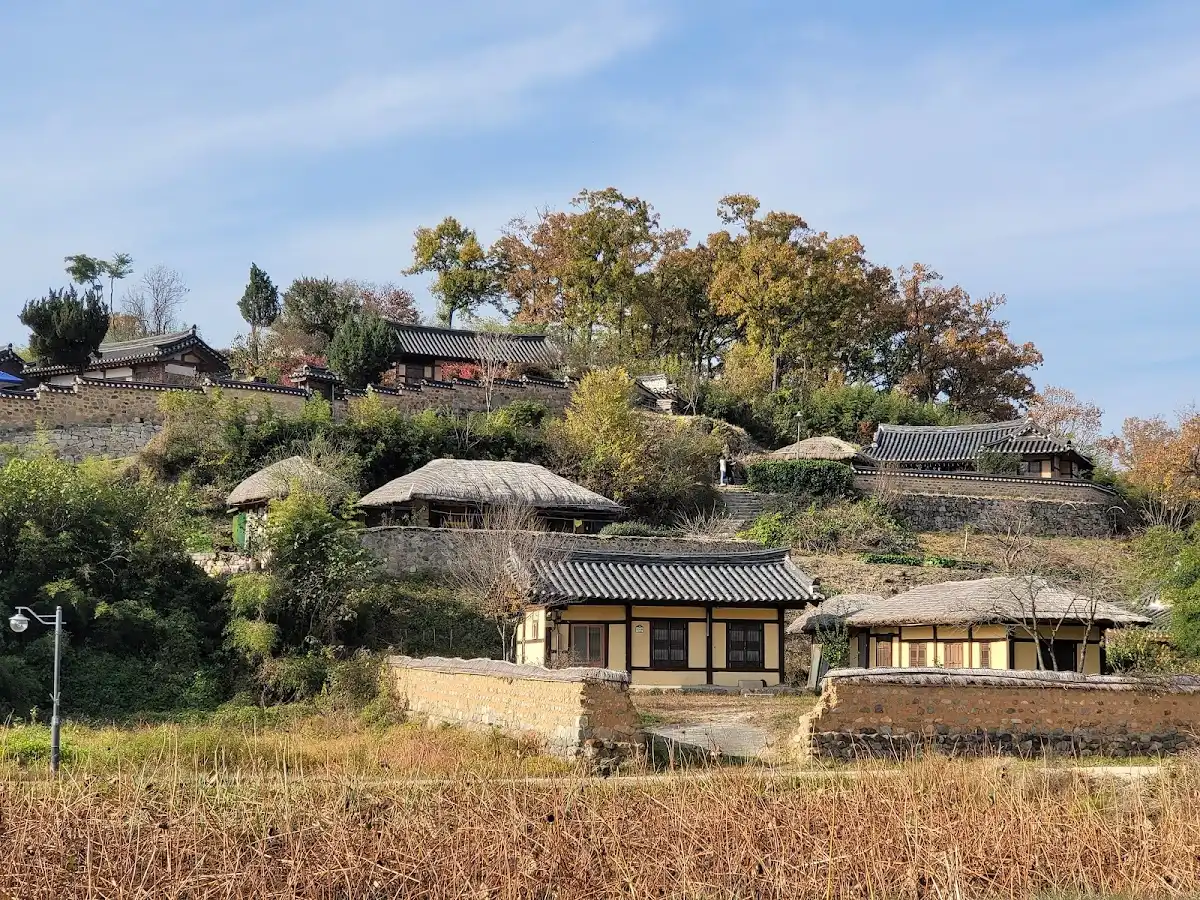
Most people online sell Yangdong as a quiet “folk village,” but the surprise is how lived-in it feels: this is a real community first, museum second, with laundry lines under tiled roofs and kids biking past 500‑year‑old houses. Yangdong sits just northwest of Gyeongju in South Korea’s southeast, close enough that you smell the rice fields before the city traffic. For backpackers it works best as a half‑day or day‑trip from Gyeongju, not a base: buses are infrequent, nights are very quiet, and there’s almost no hostel scene. The payoff is slow, crunchy‑gravel lanes, low hills, and hanok courtyards that feel less curated than central Gyeongju, cheaper snacks, and a safer, softer atmosphere than Busan or Daegu, but also fewer chances to meet other travelers.

Discover everything you want to know in the 📖 South Korea Travel Guide.
Loading the map 🌍
CLICK TO FILTER
cities
towns
villages
landmarks
national parks
hikes
beaches
attractions
festivals
regions
SHOW COUNTRY’S BESTSHOW ALL

✨ Why go?
Ranked #9 town in South Korea
Why visitors keep coming back

Yangdong draws backpackers for its convenience as a base for nearby hikes and cultural sites. The walkable streets invite exploration, with local eateries serving up hearty dishes that reflect the region’s flavors. You can grab a bowl of bibimbap or sample kimchi at a family-run spot, where the aroma of spices fills the air.

Accommodations range from cozy guesthouses to small-scale hostels, fostering a friendly atmosphere that encourages interaction among travelers. Here, you’ll find a mix of slow travelers and solo adventurers, often lingering for a few days to soak in the local vibe. The town feels relaxed, perfect for those who want to unwind after a day of hiking or cultural immersion.

While it’s not a nightlife hub, Yangdong offers a genuine glimpse into Korean life, making it a worthwhile … read more 👉
Yangdong draws backpackers for its convenience as a base for nearby hikes and cultural sites. The walkable streets invite exploration, with local eateries serving up hearty dishes that reflect the region’s flavors. You can grab a bowl of bibimbap or sample kimchi at a family-run spot, where the aroma of spices fills the air.

Accommodations range from cozy guesthouses to small-scale hostels, fostering a friendly atmosphere that encourages interaction among travelers. Here, you’ll find a mix of slow travelers and solo adventurers, often lingering for a few days to soak in the local vibe. The town feels relaxed, perfect for those who want to unwind after a day of hiking or cultural immersion.

While it’s not a nightlife hub, Yangdong offers a genuine glimpse into Korean life, making it a worthwhile stop for those seeking authenticity over urban distractions.
Want to include Yangdong in your South Korea route?
Create a personalized South Korea itinerary that includes Yangdong and the places that fit your trip — based on your travel style, budget, and available time. Get your route in seconds.

Generate my trip

💡 HighlightsPlaces and moments you shouldn't skip

  1. Yangdong Folk Village (Yangdong Historic Village) — The whole village is a living Joseon-era settlement and UNESCO World Heritage site, with intact traditional houses, clan layouts and lanes that show how rural aristocratic life was organized for centuries.
  2. Upper (Hillside) Hanok Cluster — A compact group of tiled-roof yangban houses perched on the slope; notable for preserved architectural features (maru floors, ondol heating) and great panoramic views over the valley.
  3. Lower (Lowland) House Cluster — The plain-side farmhouses with thatched roofs and working courtyards that illustrate everyday rural life and contrast neatly with the aristocratic homes uphill.
  4. Clan Ancestral Shrines and Jip (Family Houses) — Visitable ancestral shrines and the large clan houses used for rituals and generations
read more 👉
  1. Yangdong Folk Village (Yangdong Historic Village) — The whole village is a living Joseon-era settlement and UNESCO World Heritage site, with intact traditional houses, clan layouts and lanes that show how rural aristocratic life was organized for centuries.
  2. Upper (Hillside) Hanok Cluster — A compact group of tiled-roof yangban houses perched on the slope; notable for preserved architectural features (maru floors, ondol heating) and great panoramic views over the valley.
  3. Lower (Lowland) House Cluster — The plain-side farmhouses with thatched roofs and working courtyards that illustrate everyday rural life and contrast neatly with the aristocratic homes uphill.
  4. Clan Ancestral Shrines and Jip (Family Houses) — Visitable ancestral shrines and the large clan houses used for rituals and generations of family life; they give concrete insight into Confucian ritual practice and lineage culture.
  5. Village Streets, Stone Walls and Traditional Gates — The network of narrow lanes, earthen embankments and stone retaining walls that make for the best on-foot exploration and photography of authentic rural streetscapes.
  6. Rice Terraces, Streams and Rural Landscapes — Small irrigated fields and streamside scenery inside the village are integral to its character and show how settlement, agriculture and micro-topography are tightly linked.
  7. Traditional Craft and Local Houses Still Inhabited — Small workshops, home-based crafts and families still living in historic houses allow visitors to see living traditions rather than only museum pieces.
  8. Village Signs, Informational Panels and Historic Plaques — On-site interpretation, plaques and maps placed around the village give concrete historical context and make a self-guided walk meaningful and informative.
  9. Small Local Tea Houses and Refreshment Spots — Simple tea shops and stalls inside the village offering traditional snacks provide a real, visitable break where you can taste local flavors amid historic surroundings.
  10. Photography Vantage Points and Overlooks — Designated spots along the upper paths and near the cemetery slopes give the classic views of rooflines and valley that define Yangdong’s visual identity.
Bulguksa Temple and Seokguram Grotto in nearby Gyeongju, the Hahoe Folk Village in Andong, and the Gyeongju Historic Areas (tumuli park and museum) are all close, visitable day trips from Yangdong.
Spotted a mistake or missing something? Contact us.

Things to do around Yangdong

Ratings based on Tripadvisor reviews. When you book through this link, you support our work at no extra cost to you.

🏘️ NeighborhoodsNeighborhood guide to Yangdong

Yangdong is a charming slice of South Korea that feels like stepping into a living history book. Each neighborhood has its own character, making it essential to choose wisely for your backpacking adventure.

Yangdong Village: This is the heart of the area, where traditional hanoks line the streets. The vibe is serene, perfect for soaking in the culture. Walkability is high; you can easily explore on foot. Costs are moderate, with guesthouses that offer a taste of local life. Ideal for longer stays, as you’ll want time to absorb the history and tranquility.

Seonjae Village: A bit quieter, this area offers a more residential feel. It’s less touristy, which means lower prices and a chance to interact with locals. The atmosphere is peaceful, making it great for those seeking a retreat. Walkability … read more 👉
Yangdong is a charming slice of South Korea that feels like stepping into a living history book. Each neighborhood has its own character, making it essential to choose wisely for your backpacking adventure.

Yangdong Village: This is the heart of the area, where traditional hanoks line the streets. The vibe is serene, perfect for soaking in the culture. Walkability is high; you can easily explore on foot. Costs are moderate, with guesthouses that offer a taste of local life. Ideal for longer stays, as you’ll want time to absorb the history and tranquility.

Seonjae Village: A bit quieter, this area offers a more residential feel. It’s less touristy, which means lower prices and a chance to interact with locals. The atmosphere is peaceful, making it great for those seeking a retreat. Walkability is decent, but you might want a bike to explore further. Best for short stays, as it’s a perfect escape from the busier spots.

Yangdong Market: If you’re after nightlife and local eats, this is your go-to. The market buzzes with energy, especially in the evenings. Street food stalls tempt your taste buds, and prices are wallet-friendly. It’s walkable, but expect a lively crowd. Perfect for short visits, as the vibrant atmosphere is best experienced in bursts.

⌛️ 1 daySeeing the highlights in 24 hours

Yangdong, a UNESCO World Heritage site, is a living museum of traditional Korean culture. Its thatched-roof houses and serene rice paddies tell stories of a simpler time. The air is filled with the earthy scent of soil and the distant sound of a flowing stream, inviting you to explore its rich history.

Start your morning with a stroll through the Yangdong Folk Village. The sun filters through the trees, casting playful shadows on the narrow paths. Take your time to admire the hanoks—traditional Korean houses—each one a piece of art. Don’t miss the chance to visit the Yangdong Confucian Academy, where the scent of aged wood and ink lingers, whispering tales of scholars past.

After soaking in the morning light, grab a bite at a local eatery. Try some bibimbap, a colorful mix of rice and vegetables, … read more 👉
Yangdong, a UNESCO World Heritage site, is a living museum of traditional Korean culture. Its thatched-roof houses and serene rice paddies tell stories of a simpler time. The air is filled with the earthy scent of soil and the distant sound of a flowing stream, inviting you to explore its rich history.

Start your morning with a stroll through the Yangdong Folk Village. The sun filters through the trees, casting playful shadows on the narrow paths. Take your time to admire the hanoks—traditional Korean houses—each one a piece of art. Don’t miss the chance to visit the Yangdong Confucian Academy, where the scent of aged wood and ink lingers, whispering tales of scholars past.

After soaking in the morning light, grab a bite at a local eatery. Try some bibimbap, a colorful mix of rice and vegetables, bursting with flavor. The warmth of the meal will fuel your afternoon adventures.

In the afternoon, head to the nearby Gyeongju National Park. It’s a bit off the usual tourist path, but the hike up to the ancient tombs rewards you with panoramic views of the countryside. The crisp air and rustling leaves create a symphony of nature that feels rejuvenating.

As evening falls, return to Yangdong and find a cozy spot to watch the sunset over the rice fields. The golden light transforms the landscape, making it feel almost magical. Wrap up your day with a cup of traditional tea at a local teahouse, where the warmth of the tea mirrors the hospitality of the people. This day in Yangdong isn’t just about sights; it’s about connecting with the essence of Korea.
Turn your Yangdong visit into an South Korea adventure
Build a complete South Korea route with Yangdong, hidden gems, must-see destinations, and realistic travel times included.

Generate my trip

🌤️ When to go?Best time to visit Yangdong


  • Weather: Spring (April to June) and autumn (September to November) bring mild, dry conditions perfect for wandering Yangdong’s historic lanes without sweating through your shirt or dodging downpours. Summers hit 25-30°C (77-86°F) with sticky humidity, while winters dip below freezing, often under 0°C (32°F), making outdoor exploration less inviting.

  • Temperature: Spring and fall offer comfortable highs around 18-22°C (64-72°F), ideal for long hikes and photography when the light softens late afternoon shadows across traditional hanok rooftops.

  • Daylight Hours: Longer days in spring and early summer stretch daylight to 12-14 hours, giving you ample time to soak in the village’s atmosphere before dusk settles.

  • Crowds: Peak tourist season hits in autumn, especially during the colorful
read more 👉

  • Weather: Spring (April to June) and autumn (September to November) bring mild, dry conditions perfect for wandering Yangdong’s historic lanes without sweating through your shirt or dodging downpours. Summers hit 25-30°C (77-86°F) with sticky humidity, while winters dip below freezing, often under 0°C (32°F), making outdoor exploration less inviting.

  • Temperature: Spring and fall offer comfortable highs around 18-22°C (64-72°F), ideal for long hikes and photography when the light softens late afternoon shadows across traditional hanok rooftops.

  • Daylight Hours: Longer days in spring and early summer stretch daylight to 12-14 hours, giving you ample time to soak in the village’s atmosphere before dusk settles.

  • Crowds: Peak tourist season hits in autumn, especially during the colorful foliage rush, so expect busier paths and higher prices. Early spring offers a quieter, more intimate experience.

  • Seasonal Activities: Autumn hosts traditional festivals and harvest celebrations, adding cultural depth but also drawing crowds. Spring’s cherry blossoms and fresh greenery provide a softer, quieter backdrop.

  • Price Fluctuations: Accommodation and transport costs rise during autumn festivals and weekends; booking ahead or visiting midweek in spring can save money and stress.


Pro-tip: Aim for late April or early October mornings when the light hits the hanok walls just right, the air smells faintly of pine and earth, and you’ll have the village almost to yourself.


source: climatestotravel.comJANJanuary: below average for travelingFEBFebruary: below average for travelingMARMarch: good for travelingAPRApril: excellent for travelingMAYMay: excellent for travelingJUNJune: highly recommended for travelingJULJuly: fair for travelingAUGAugust: fair for travelingSEPSeptember: highly recommended for travelingOCTOctober: excellent for travelingNOVNovember: highly recommended for travelingDECDecember: fair for traveling
south-korea-city-yangdong
© Google |

✈️ The backpacker research shortcutSouth Korea Travel Guide

An offline-friendly backpacking guide with optimized travel routes, ranked highlights, transport advice, and the best areas to stay.
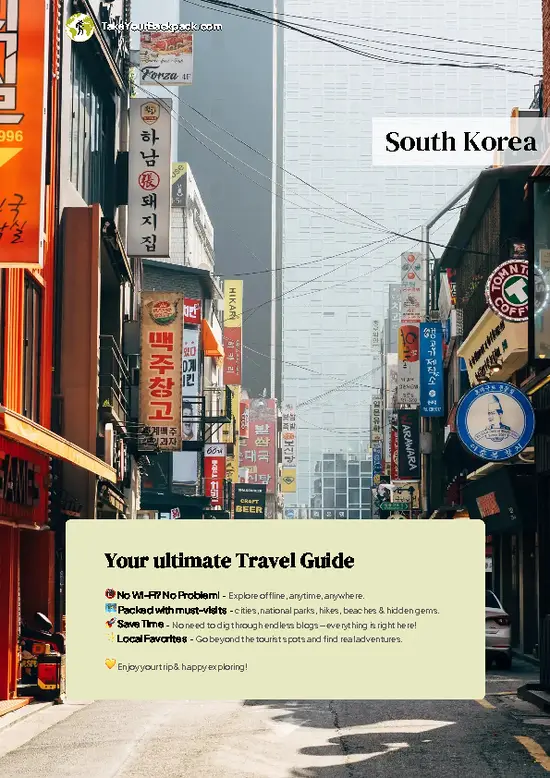
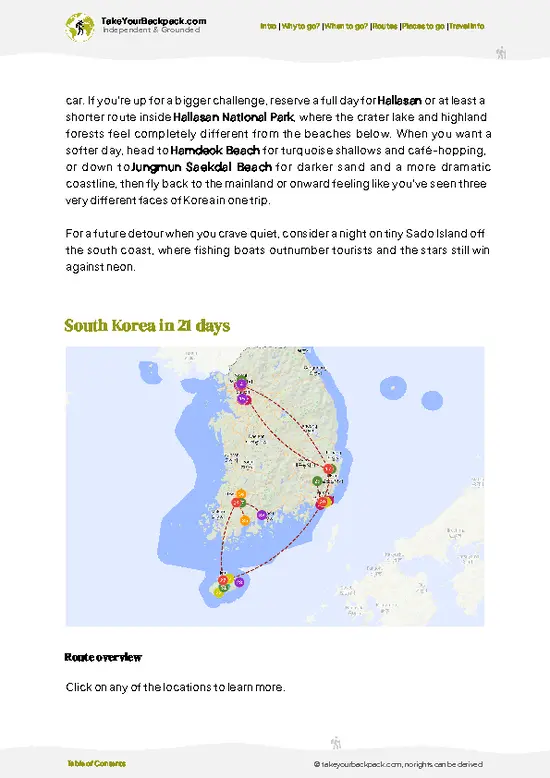
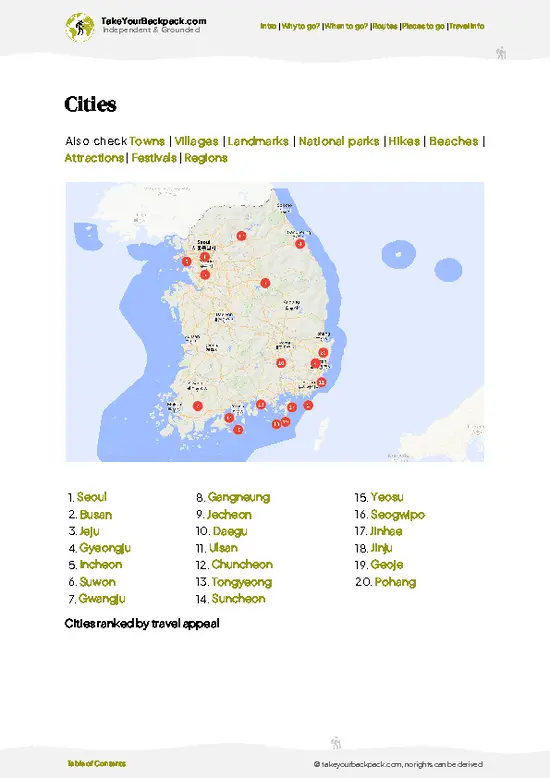
example page 0 from our offline Travel Guide for South Korea
example page 1 from our offline Travel Guide for South Korea
example page 2 from our offline Travel Guide for South Korea
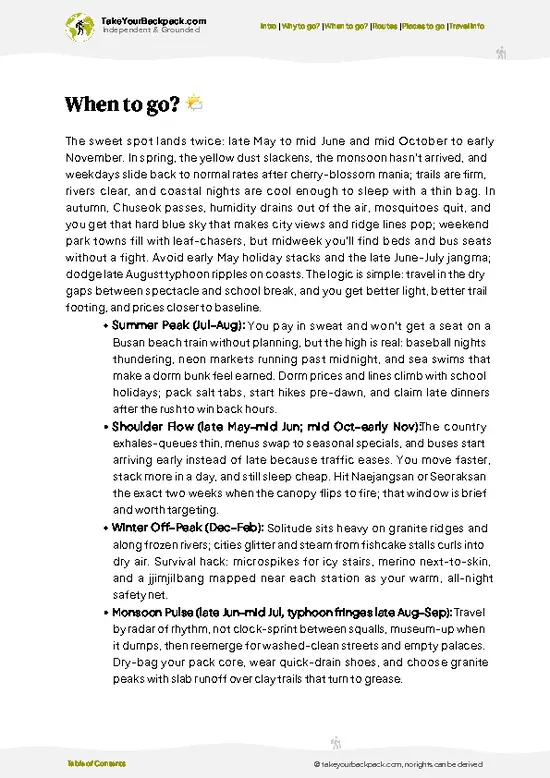
example page 3 from our offline Travel Guide for South Korea
example page 4 from our offline Travel Guide for South Korea
example page 5 from our offline Travel Guide for South Korea
example page 6 from our offline Travel Guide for South Korea
example page 7 from our offline Travel Guide for South Korea
The digital guide (439 pages) contains:
124 highlights, ranked by travel appeal
Optimized 7, 14 & 21-day travel routes
Cities, national parks, landmarks, beaches
How to get around
Offline-friendly for travel without Wi-Fi
👉 Click to see all 30+ guide features

📅 Plan smarter in minutes, not weeks
Month by month travel advice
Festivals & national holidays
Budget expectations

🗺️ Go to the right places, skip the overrated ones
Honest pros & cons of destinations
Top hikes, parks & viewpoints
Lesser-known places most travelers miss
Clear “worth it vs skip it” guidance

🛏️ Travel smoothly without rookie mistakes
Best areas to stay
Transport systems explained simply
Common scams & safety advice
SIM cards, money & practical tips

🌍 Understand the country, not just visit it
Culture & traditions
52 Essential phrases & customs
Festivals worth planning around
Traveler-friendly historical context
Insights that make places more meaningful

📱 Built for real travel conditions
Fully downloadable PDF
Works completely offline
Optimized for phone use
Useful in remote areas & buses
Everything in one place
Save weeks of stressful planning
Get instant access to your full guide. 30‑day money-back guarantee.


By proceeding you agree to our terms.
Sent to your inbox immediately after payment • 100% Secure Checkout
Best Backpacking Travel Advisor 2025 tourism awardBest Backpacking
Travel Advisor
2025
What others say about Take Your Backpack Guides:
⭐⭐⭐⭐⭐
Fantastic, amazing amount of information!
⭐⭐⭐⭐⭐
My goodness this is amazing, it's what I've been looking for hats off too you!
⭐⭐⭐⭐⭐
I think this is absolutely BRILLIANT
⭐⭐⭐⭐
Very complete and informative. It's still missing places, but I gotta to commend you
⭐⭐⭐⭐⭐
This is truly amazing, thank you, can't wait to explore it with my kids!
⭐⭐⭐⭐⭐
Awesome resource, thank you!
⭐⭐⭐⭐⭐
This is amazing! Can't wait to explore the ones I haven't seen
⭐⭐⭐⭐
I love this! Well done, great idea.
⭐⭐⭐⭐⭐
Thanks for taking the time to make this gem!
⭐⭐⭐⭐⭐
This might be the best website I've ever seen.
⭐⭐⭐⭐⭐
Congratulations, and thank you so much for your work; it's incredibly valuable.
⭐⭐⭐⭐
In all seriousness I think you did a great job pointing out the important spots
⭐⭐⭐⭐⭐
10/10 very good
⭐⭐⭐⭐⭐
As someone who's only just starting to visit regularly this is awesome, thank you.
⭐⭐⭐⭐
Thank you very much! I'm going to visit my dad, it's going to be very useful!
⭐⭐⭐⭐⭐
This is really cool! We'll be travelling for the first time and this definitely come in handy.
⭐⭐⭐⭐⭐
You are now our minister of culture, congratulations 👨‍💼
⭐⭐⭐⭐⭐
Just wanted to tell you that this is a pearl! Going to follow your recommendations.
⭐⭐⭐⭐⭐
This is so cool. I'll definitely be using the resource for my travels soon.
⭐⭐⭐⭐⭐
This is very impressive! Good work.
⭐⭐⭐⭐⭐
This is an amazing and informative site. Very well done!

🛏️ Where to stay?Where staying makes the most sense

Yangdong’s charm isn’t in sprawling urban buzz but in its quiet, historic pulse. For backpackers, the best spot to settle is the village core near the main entrance to the UNESCO heritage site. This area feels like stepping into a living museum, where wooden hanok houses breathe stories through their weathered beams. It’s safe, with locals accustomed to visitors, so you won’t feel like an outsider fumbling through unfamiliar streets.

Staying close to the entrance means easy access to the village’s main pathways, where you can catch the soft scent of pine and earth mingling with the faint smoke … read more 👉
Yangdong’s charm isn’t in sprawling urban buzz but in its quiet, historic pulse. For backpackers, the best spot to settle is the village core near the main entrance to the UNESCO heritage site. This area feels like stepping into a living museum, where wooden hanok houses breathe stories through their weathered beams. It’s safe, with locals accustomed to visitors, so you won’t feel like an outsider fumbling through unfamiliar streets.

Staying close to the entrance means easy access to the village’s main pathways, where you can catch the soft scent of pine and earth mingling with the faint smoke of cooking fires. Hostels here are modest but welcoming, often run by locals who double as informal guides. The vibe is low-key but social—perfect for solo travelers wanting to swap stories over a shared meal or a cup of tea without the noise of a big city.

Venture farther out, and you lose that communal warmth and convenience. The outskirts are quieter but isolated, making daily walks to the village center a chore rather than a pleasure. So, anchor yourself near the heart of Yangdong. It’s where the village’s soul is palpable, and your backpacking experience feels both grounded and connected.

🚌 Getting aroundMoving around without the hassle

Yangdong moves at the pace of a slow river, not a rushing torrent. The sunlight filters through ancient pine branches, casting dappled shadows on stone paths worn smooth by centuries of footsteps. Here, time isn’t dictated by clocks but by the rhythm of daily life—meals, market hours, and the soft murmur of neighbors greeting each other. It’s a place where schedules bend to the natural flow, and your best bet is to sync with the local pulse rather than impose a rigid itinerary. This means patience is your ally, and a sense of curiosity your compass.


  • Walking: The heart of Yangdong is best explored on foot. The village’s narrow lanes and uneven stone paths demand slow steps, letting you soak in the scent of pine and the creak of wooden gates. Walking is free, naturally, and the only way
read more 👉
Yangdong moves at the pace of a slow river, not a rushing torrent. The sunlight filters through ancient pine branches, casting dappled shadows on stone paths worn smooth by centuries of footsteps. Here, time isn’t dictated by clocks but by the rhythm of daily life—meals, market hours, and the soft murmur of neighbors greeting each other. It’s a place where schedules bend to the natural flow, and your best bet is to sync with the local pulse rather than impose a rigid itinerary. This means patience is your ally, and a sense of curiosity your compass.


  • Walking: The heart of Yangdong is best explored on foot. The village’s narrow lanes and uneven stone paths demand slow steps, letting you soak in the scent of pine and the creak of wooden gates. Walking is free, naturally, and the only way to catch the subtle details that motorized transport misses.


  • Local Bus: Buses connect Yangdong to nearby towns like Gyeongju and Andong. They run roughly every hour from early morning (around 6:30 AM) until early evening (6 PM). Tickets cost about 1,500 to 2,000 KRW. It’s a budget-friendly option but expect basic comfort and occasional delays—think of it as a chance to observe daily commuters and local chatter.


  • Shared Taxi (Jip-bul Taxi): These operate on a flexible schedule, often waiting until they fill up with passengers before departing. Prices hover around 5,000 KRW for short hops. It’s faster than the bus and more comfortable, but you’ll need to be patient and ready to negotiate a bit with the driver or locals.


  • Bicycle Rental: For the adventurous, renting a bike offers a perfect balance of speed and immersion. Rentals cost about 10,000 KRW per day. The terrain is gently rolling, with some steep patches, so bring water and a bit of stamina. The fresh air and quiet roads make this a rewarding way to explore beyond the village core.

👛 Costs (as of 2 April 2026)How expensive it really is

Backpacking in Yangdong, South Korea, offers a blend of rustic charm and cultural immersion, but knowing the daily costs helps you plan without surprises.
  • Dorm Accommodation: Expect to pay around $15 to $25 per night for a bed in a guesthouse dormitory. Options are limited and simple, often family-run, with basic amenities and a quiet, homey atmosphere that matches the village’s slow pace.
  • Meals: Local eateries serve up hearty Korean staples like bibimbap or kimchi stew for about $4 to $7 per meal. Street snacks and small bites can be even cheaper, around $1 to $3, but if you want a sit-down dinner with a few side dishes, budget closer to $10.
  • Local Transport: Yangdong is a small, walkable village, so transport costs are minimal. If you need to catch a local bus or taxi to nearby spots,
read more 👉
Backpacking in Yangdong, South Korea, offers a blend of rustic charm and cultural immersion, but knowing the daily costs helps you plan without surprises.
  • Dorm Accommodation: Expect to pay around $15 to $25 per night for a bed in a guesthouse dormitory. Options are limited and simple, often family-run, with basic amenities and a quiet, homey atmosphere that matches the village’s slow pace.
  • Meals: Local eateries serve up hearty Korean staples like bibimbap or kimchi stew for about $4 to $7 per meal. Street snacks and small bites can be even cheaper, around $1 to $3, but if you want a sit-down dinner with a few side dishes, budget closer to $10.
  • Local Transport: Yangdong is a small, walkable village, so transport costs are minimal. If you need to catch a local bus or taxi to nearby spots, expect to spend $1 to $3 per trip. Renting a bike for the day can run about $8 to $12, which is a great way to explore the surrounding countryside.
  • Basic Activities/Entry Fees: Entrance to the Yangdong Folk Village itself is around $3 to $5. Guided tours or cultural workshops, if you opt in, can add $10 to $20, but wandering the village and soaking in the traditional hanok houses and rural atmosphere is mostly free once inside.
  • Miscellaneous Expenses: This covers essentials like bottled water, snacks, or small souvenirs. Plan for about $3 to $7 daily here, depending on your habits. Wi-Fi is often free at guesthouses, so no extra cost there.

All told, a realistic daily budget for backpacking in Yangdong falls between $30 and $50. This range balances simple comfort with enough flexibility to enjoy local food, a bit of transport, and the cultural experiences that make the village worth the trip.


source: english.visitkorea.or.kr
⚠️ Prices can change and everyone travels differently, so take this as a rough guide. Hope it helps you plan your adventure!

🚌 Day tripsEasy escapes and nearby places

Yangdong is a fantastic base for backpackers eager to explore the heart of South Korea. With its rich cultural backdrop and proximity to stunning landscapes, you can easily dive into day trips that blend adventure with authenticity.

**Gyeongju: The Ancient Capital**
Just an hour away by bus, Gyeongju is a treasure trove of history. You’ll wander through ancient tombs, visit the serene Anapji Pond, and marvel at the vastness of Bulguksa Temple. The scent of street food wafts through the air, tempting you to try local delicacies like tteokbokki. Budget about 10,000 KRW for transport and snacks. Spring and fall are ideal for pleasant weather and fewer crowds, but be wary of trying to see everything in one day; pacing is key.
👉 Explore Gyeongju

**Busan: Coastal Vibes**
A two-hour train … read more 👉
Yangdong is a fantastic base for backpackers eager to explore the heart of South Korea. With its rich cultural backdrop and proximity to stunning landscapes, you can easily dive into day trips that blend adventure with authenticity.

**Gyeongju: The Ancient Capital**
Just an hour away by bus, Gyeongju is a treasure trove of history. You’ll wander through ancient tombs, visit the serene Anapji Pond, and marvel at the vastness of Bulguksa Temple. The scent of street food wafts through the air, tempting you to try local delicacies like tteokbokki. Budget about 10,000 KRW for transport and snacks. Spring and fall are ideal for pleasant weather and fewer crowds, but be wary of trying to see everything in one day; pacing is key.
👉 Explore Gyeongju

**Busan: Coastal Vibes**
A two-hour train ride lands you in Busan, where the salty breeze and vibrant markets await. Hit the famous Jagalchi Fish Market for fresh seafood, then stroll along Haeundae Beach. The contrast of the ocean’s roar against the bustling market is invigorating. Expect to spend around 20,000 KRW for transport and a meal. Summer is lively, but spring offers stunning cherry blossoms. First-timers often miss the local bus system, which can save you time and energy.
👉 Explore Busan

**Odaesan National Park: Nature’s Retreat**
In about 90 minutes, you can escape to Odaesan National Park. The trails here are less traveled, offering a peaceful hike through dense forests and stunning mountain views. Bring a packed lunch to enjoy at one of the scenic overlooks. Costs are minimal—around 5,000 KRW for transport and snacks. Autumn is breathtaking with foliage, but be prepared for variable weather. Many hikers underestimate the trail difficulty; check the maps and choose wisely.
👉 Explore Odaesan National Park

**Andong: Cultural Immersion**
A quick 90-minute bus ride brings you to Andong, known for its traditional hanok village. Here, you can step back in time, experiencing local crafts and the famous Andong jjimdak. The atmosphere is rich with history, and you’ll feel the warmth of the community. Budget around 15,000 KRW for transport and food. Late spring is perfect for festivals, but don’t rush through the village; savor the slower pace. Newcomers often overlook the small museums—don’t miss them!
👉 Explore Andong
Want to know what more South Korea offers?
The South Korea Travel Guide describes 124 highlights, from cities to national parks, from beaches to hikes

Get the Travel Guide -

🛡️ SafetyStaying Safe: What Travelers Should Know

Yangdong is generally safe, but a few practical tips can enhance your experience. The town’s charm lies in its narrow streets and traditional houses, but keep your wits about you, especially in busier areas where tourists gather.

If you’re solo, avoid wandering too far off the beaten path after dark. The streets can feel quiet, and while locals are friendly, it’s wise to stick to well-lit areas.

Scams are rare, but be cautious of overly eager vendors. If someone offers you a deal that seems too good to be true, trust your instincts. Everyday annoyances might include language barriers; a simple phrasebook can bridge that gap and open doors.

Stay aware, carry yourself confidently, and soak in the rich atmosphere without unnecessary stress.

Other South Korean towns near Yangdong

Explore more nearby:

  • Uljin—hot springs, rocky coast, seafood harbors| 111 km away
  • Taebaek—coal mining history, highland plateaus, snow festivals| 132 km away
  • Sancheong—herbal medicine, mountain trails, rural festivals| 140 km away

💡 Not sure where to go next?
Create a personalized itinerary for South Korea including Yangdong and the places that fit your trip.

Generate my itinerary

👉 Discover all towns

Or checkout all South Korea has to offer (think cities, towns, villages, national parks, hikes, beaches, festivals)
Country photo of South Korea

We 💚 feedbackParting advice and final tips

Yangdong feels like stepping into a living museum, where the air is thick with the scent of aged wood and the whispers of history. The best surprise? The locals’ warmth; they’ll share stories over tea that make the ancient homes come alive. Just a heads-up: the paths can be uneven, so watch your step. Embrace the imperfections; they’re part of the charm that makes this place resonate.

✍️ Help improve this page!
The information on this page is based on in-depth research, insights shared by experienced travelers, and feedback from the local travel community in South Korea. While every effort is made to keep the information accurate and current, conditions can change — so if you spot anything incorrect or outdated, please get in touch.


🙋‍♂️ Give feedback

👋 Meet the founderWho’s Behind Take Your Backpack?

Johan, backpacker and founder of TakeYourBackpackHi, I’m Johan (Netherlands 🇳🇱), the creator of TakeYourBackpack. Over the past decade, I’ve backpacked through 80+ countries across six continents, gaining extensive experience with independent travel, long-term trips, and overland routes.

This site is built on a combination of firsthand travel experience and carefully curated insights from other backpackers. Many guides are based on places I’ve personally visited, while others bring together tips, observations, and practical advice shared by trusted travelers I’ve met along the way.

The goal is to provide realistic, experience-driven guidance — not generic itineraries — so you can explore destinations with better context, clearer expectations, and more confidence.

Get full country guide •
Instant download • 124 highlights • Full Offline guide