×

South Sudan🇸🇸 | best national parksDiscover the 6 Best national parks Across South Sudan

South Sudan’s national parks are a wild tapestry of landscapes and wildlife, each offering a unique flavor for the adventurous backpacker. Defined by their diverse ecosystems, these parks range from the vast savannas of Boma to the lush wetlands of Sudd. Seasonal changes dramatically affect accessibility and wildlife visibility, making timing crucial for independent travelers.

Choosing the right park shapes your experience—impacting everything from vibe and budget to safety and cultural immersion. For instance, Boma is ideal for those seeking solitude and expansive views, while Nimule offers easier access and a chance to engage with local communities. Understanding these nuances ensures your journey through South Sudan is both enriching and efficient.

By Johan Kruseman 🇳🇱 | Updated September 4, 2026
Explore the best hikes in South Sudan

Why go?Key Factors That Shape the Experience

The national parks in South Sudan are a unique blend of untamed landscapes and rich biodiversity, setting them apart from parks in more developed countries. The vast savannas, dense wetlands, and rolling hills create a backdrop that feels both ancient and alive. This country is home to some of Africa’s most diverse wildlife, including species that are rarely seen elsewhere. However, the infrastructure is still developing, which means accessibility can be a challenge. Travelers should expect long travel times to reach these parks, but this often leads to a deeper, more immersive experience in the wild.

The climatic conditions also play a significant role in planning a visit. The wet season can make certain areas nearly impassable, while the dry season offers better access but can lead to crowded … read more 👉
The national parks in South Sudan are a unique blend of untamed landscapes and rich biodiversity, setting them apart from parks in more developed countries. The vast savannas, dense wetlands, and rolling hills create a backdrop that feels both ancient and alive. This country is home to some of Africa’s most diverse wildlife, including species that are rarely seen elsewhere. However, the infrastructure is still developing, which means accessibility can be a challenge. Travelers should expect long travel times to reach these parks, but this often leads to a deeper, more immersive experience in the wild.

The climatic conditions also play a significant role in planning a visit. The wet season can make certain areas nearly impassable, while the dry season offers better access but can lead to crowded conditions in popular spots. This trade-off between accessibility and experience quality is crucial; the more remote parks may require extra effort to reach, but they reward those who venture off the beaten path with solitude and a chance to connect with nature on a profound level.

Culturally, South Sudan’s parks are intertwined with the history and traditions of local communities. Understanding this context enriches the experience but also requires sensitivity and respect. Travelers must weigh the time and effort against the potential for unforgettable encounters with both nature and culture.
Why These Made the Cut
The list of best national parks in South Sudan is created based on landscapes, wildlife, adventure opportunities, facilities, and overall experience. If you feel a national park is missing in this list, please let us know.

When to go?Seasonal Guide to Visiting

Seasonality plays a crucial role in planning visits to national parks in South Sudan. The country experiences a tropical climate, characterized by a distinct wet and dry season. The dry season, typically from November to April, offers the best conditions for wildlife visibility. Animals congregate around water sources, making sightings more frequent and reliable. Temperatures can soar, especially in March and April, but the clear skies and lower humidity create ideal conditions for exploration.

Rainfall begins in May, peaking from June to September. During this wet season, trails can become muddy and challenging, limiting access to certain areas. Wildlife disperses as vegetation thickens, making sightings less predictable. However, the landscape transforms into a lush paradise, offering a … read more 👉
Seasonality plays a crucial role in planning visits to national parks in South Sudan. The country experiences a tropical climate, characterized by a distinct wet and dry season. The dry season, typically from November to April, offers the best conditions for wildlife visibility. Animals congregate around water sources, making sightings more frequent and reliable. Temperatures can soar, especially in March and April, but the clear skies and lower humidity create ideal conditions for exploration.

Rainfall begins in May, peaking from June to September. During this wet season, trails can become muddy and challenging, limiting access to certain areas. Wildlife disperses as vegetation thickens, making sightings less predictable. However, the landscape transforms into a lush paradise, offering a different kind of beauty.

Shoulder seasons, like late April and early October, present a mixed bag. These months can be less crowded and more affordable, but weather conditions may be unpredictable. Travelers might face lingering rains or the tail end of dry conditions, impacting trail accessibility and wildlife visibility.

Peak periods coincide with the dry season, drawing more visitors. While this enhances the chances of seeing wildlife, it also means busier trails and higher costs. Balancing the desire for optimal scenery with the potential for crowds is essential for a rewarding experience.

national park hoppingOptimizing Your Multi-Stop Itinerary

Combining national parks in South Sudan requires strategic planning and a clear understanding of the landscape. Start by clustering parks regionally. The northern parks, like Boma and Dinder, can be paired for a more immersive wildlife experience. In contrast, the southern parks, such as Nimule and Kidepo, offer a different vibe and should be explored together.

Traveling from north to south is often the most efficient route. Expect to spend at least two to three days in each park to truly appreciate the unique ecosystems. Rushing through will leave you frustrated and missing the essence of these areas.

Common mistakes include underestimating travel times between parks. Roads can be rough, and conditions may vary, so factor in extra time for unexpected delays. Balancing speed with depth
read more 👉
Combining national parks in South Sudan requires strategic planning and a clear understanding of the landscape. Start by clustering parks regionally. The northern parks, like Boma and Dinder, can be paired for a more immersive wildlife experience. In contrast, the southern parks, such as Nimule and Kidepo, offer a different vibe and should be explored together.

Traveling from north to south is often the most efficient route. Expect to spend at least two to three days in each park to truly appreciate the unique ecosystems. Rushing through will leave you frustrated and missing the essence of these areas.

Common mistakes include underestimating travel times between parks. Roads can be rough, and conditions may vary, so factor in extra time for unexpected delays. Balancing speed with depth of experience is crucial; a quick visit might save time but often sacrifices the richness of the journey.

Budget considerations also play a role. Some parks have limited facilities, which can affect comfort levels. Prioritize your spending on guided tours or accommodations that enhance your experience. Flexibility is key; be prepared to adjust your plans based on local conditions or personal interests. This approach ensures a rewarding adventure that respects both time and budget constraints.

The ListThe Best national parks of South Sudan

1 Nimule National Park

Nile riverbanks, forested islands, elephant sightings

Follow the Nile’s course through lush riverine forests, where elephants and hippos gather along the water’s edge in the early morning.

2 Boma National Park

vast grasslands, antelope herds, remote wilderness

Travel through open savannas where immense herds graze, and experience the isolation of one of Africa’s least-visited protected areas.

3 Bandingilo National Park

white-eared kob migration, acacia woodland, seasonal floodplains

Witness the spectacle of migrating antelope and shifting wetlands, where wildlife movements transform the landscape with each passing season.

4 Southern National Park

gallery forests, rolling savanna, river confluences

Venture into a diverse landscape where rivers meet, forests fringe open plains, and wildlife thrives in varied habitats.

5 Lantoto National Park

dense woodland, chimpanzee habitat, lowland terrain

Walk beneath thick canopy in search of primates, exploring a park where forest and grassland blend across gently undulating ground.

6 Shambe National Park

swampy wetlands, birdlife, seasonal lakes

Navigate a mosaic of marshes and shallow lakes, ideal for birdwatchers seeking rare species and shifting aquatic habitats.

Loading the map 🌍

Expert viewInsights from Locals and Experts

Terrain
South Sudan’s national parks are a mixed bag of landscapes that can challenge even seasoned backpackers. Expect vast savannas, dense wetlands, and rugged hills. The terrain varies significantly, which means your experience will depend on where you choose to trek. Some parks are easier to navigate, while others require serious effort and stamina. If you’re not prepared for muddy trails or unexpected river crossings, you’ll waste energy and time. Choose wisely based on your fitness level and willingness to tackle the unpredictable.

Park Infrastructure
Let’s get real: the infrastructure in South Sudan’s parks is not what you’d find in more developed countries. Roads can be rough, and facilities are basic. Some parks may have limited or no accommodations, which means you’ll need to … read more 👉
Terrain
South Sudan’s national parks are a mixed bag of landscapes that can challenge even seasoned backpackers. Expect vast savannas, dense wetlands, and rugged hills. The terrain varies significantly, which means your experience will depend on where you choose to trek. Some parks are easier to navigate, while others require serious effort and stamina. If you’re not prepared for muddy trails or unexpected river crossings, you’ll waste energy and time. Choose wisely based on your fitness level and willingness to tackle the unpredictable.

Park Infrastructure
Let’s get real: the infrastructure in South Sudan’s parks is not what you’d find in more developed countries. Roads can be rough, and facilities are basic. Some parks may have limited or no accommodations, which means you’ll need to be self-sufficient. Bring your own camping gear and be ready for a bit of discomfort. This isn’t luxury travel; it’s about immersing yourself in nature. If you’re looking for creature comforts, you might want to reconsider your expectations. The trade-off? You’ll experience the raw beauty of the wilderness, but you’ll need to be adaptable.

Wildlife Activity
Wildlife viewing can be hit or miss. Some parks are teeming with life, while others may leave you searching for signs of animals. The best time for wildlife activity is during the dry season when animals congregate around water sources. However, this is also when parks can get crowded, so you’ll need to balance your desire for wildlife encounters with the potential for a busier experience. If you’re keen on spotting specific species, do your homework. Timing and location are everything, and you may need to adjust your itinerary based on what you want to see.

Time Management
Visiting multiple parks is tempting, but it can stretch your time and energy thin. I recommend focusing on two to three parks to truly appreciate what they offer. Each park has its own character, and rushing through them means missing out on the nuances that make them special. Plan for at least a few days in each park to soak in the environment, and don’t underestimate travel time between them. The roads can be slow, and you’ll want to account for unexpected delays. Prioritize parks based on your interests—whether it’s wildlife, scenery, or cultural experiences—and stick to your plan.

Budget Considerations
Costs can add up quickly, especially if you’re self-catering or hiring local guides. While park fees are generally reasonable, the real expenses come from logistics—transportation, food, and gear. Factor in the cost of hiring a guide, which is often necessary for safety and navigation. It’s worth it, but it can strain your budget. Be strategic about where you splurge and where you save. If you’re on a tight budget, consider bringing your own food and camping gear to minimize costs.

Safety & Cultural Considerations
Safety is paramount. Always check local conditions and heed travel advisories. Some areas may have security concerns, so stay informed and flexible. Engaging with local communities can enrich your experience, but be respectful of cultural norms. Understand that you’re a guest in their land. This means being aware of local customs and practices, which can vary widely across regions. A little cultural sensitivity goes a long way in building trust and enhancing your adventure.

In summary, South Sudan’s national parks offer a unique blend of challenges and rewards. Approach your journey with an open mind and a willingness to adapt, and you’ll find that the effort is well worth it.

✈️ The backpacker research shortcutSouth Sudan Travel Guide

An offline-friendly backpacking guide with optimized travel routes, ranked highlights, transport advice, and the best areas to stay.
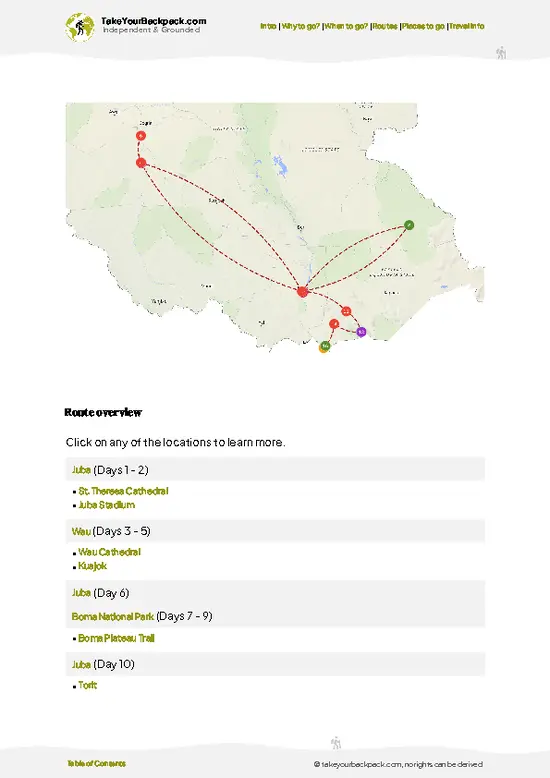
example page 0 from our offline Travel Guide for South Sudan
example page 1 from our offline Travel Guide for South Sudan
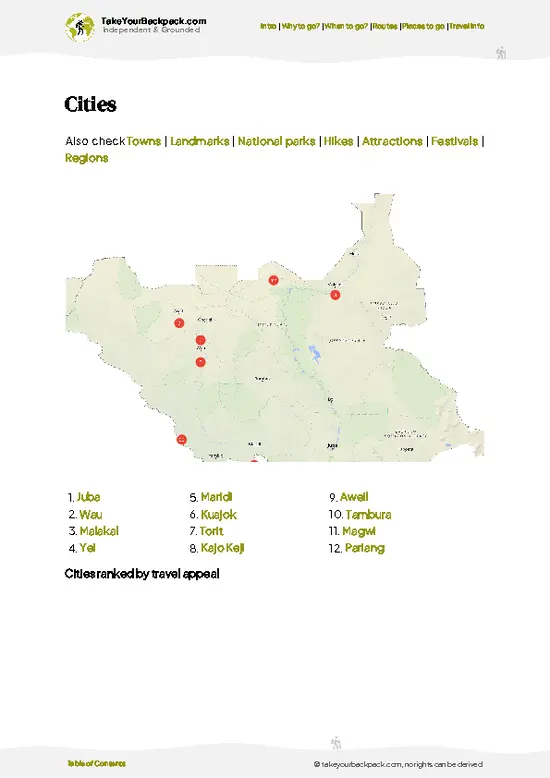
example page 2 from our offline Travel Guide for South Sudan
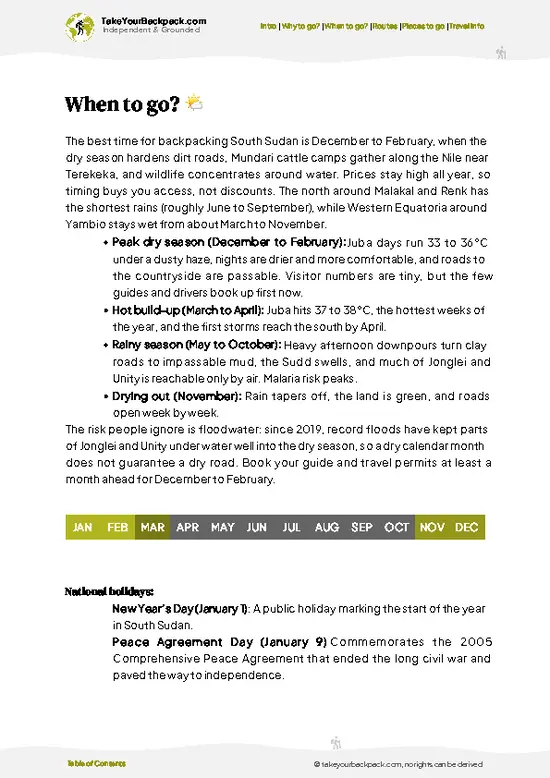
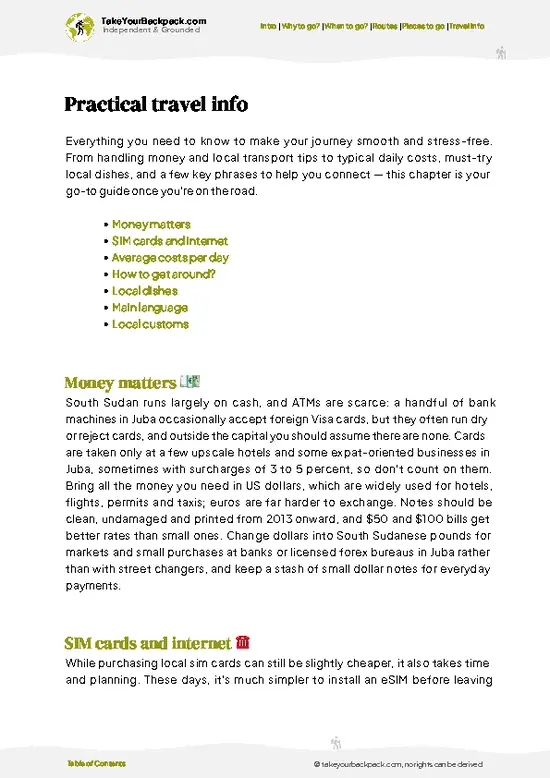
example page 3 from our offline Travel Guide for South Sudan
example page 4 from our offline Travel Guide for South Sudan
example page 5 from our offline Travel Guide for South Sudan
example page 6 from our offline Travel Guide for South Sudan
example page 7 from our offline Travel Guide for South Sudan
The digital guide (270 pages) contains:
68 highlights, ranked by travel appeal
Optimized 5, 10 & 15-day travel routes
Cities, national parks, landmarks, beaches
How to get around
Offline-friendly for travel without Wi-Fi
👉 Click to see all 30+ guide features

📅 Plan smarter in minutes, not weeks
Month by month travel advice
Festivals & national holidays
Budget expectations

🗺️ Go to the right places, skip the overrated ones
Honest pros & cons of destinations
Top hikes, parks & viewpoints
Lesser-known places most travelers miss
Clear “worth it vs skip it” guidance

🛏️ Travel smoothly without rookie mistakes
Best areas to stay
Transport systems explained simply
Common scams & safety advice
SIM cards, money & practical tips

🌍 Understand the country, not just visit it
Culture & traditions
52 Essential phrases & customs
Festivals worth planning around
Traveler-friendly historical context
Insights that make places more meaningful

📱 Built for real travel conditions
Fully downloadable PDF
Works completely offline
Optimized for phone use
Useful in remote areas & buses
Everything in one place
Save weeks of stressful planning
Get instant access to your full guide. 30‑day money-back guarantee.
+ Add another guide for just US$7.80

By proceeding you agree to our terms.
Sent to your inbox immediately after payment • 100% Secure Checkout
Best Backpacking Travel Advisor 2025 tourism awardBest Backpacking
Travel Advisor
2025
What others say about Take Your Backpack Guides:
⭐⭐⭐⭐⭐
Fantastic, amazing amount of information!
⭐⭐⭐⭐⭐
My goodness this is amazing, it's what I've been looking for hats off too you!
⭐⭐⭐⭐⭐
I think this is absolutely BRILLIANT
⭐⭐⭐⭐
Very complete and informative. It's still missing places, but I gotta to commend you
⭐⭐⭐⭐⭐
This is truly amazing, thank you, can't wait to explore it with my kids!
⭐⭐⭐⭐⭐
Awesome resource, thank you!
⭐⭐⭐⭐⭐
This is amazing! Can't wait to explore the ones I haven't seen
⭐⭐⭐⭐
I love this! Well done, great idea.
⭐⭐⭐⭐⭐
Thanks for taking the time to make this gem!
⭐⭐⭐⭐⭐
This might be the best website I've ever seen.
⭐⭐⭐⭐⭐
Congratulations, and thank you so much for your work; it's incredibly valuable.
⭐⭐⭐⭐
In all seriousness I think you did a great job pointing out the important spots
⭐⭐⭐⭐⭐
10/10 very good
⭐⭐⭐⭐⭐
As someone who's only just starting to visit regularly this is awesome, thank you.
⭐⭐⭐⭐
Thank you very much! I'm going to visit my dad, it's going to be very useful!
⭐⭐⭐⭐⭐
This is really cool! We'll be travelling for the first time and this definitely come in handy.
⭐⭐⭐⭐⭐
You are now our minister of culture, congratulations 👨‍💼
⭐⭐⭐⭐⭐
Just wanted to tell you that this is a pearl! Going to follow your recommendations.
⭐⭐⭐⭐⭐
This is so cool. I'll definitely be using the resource for my travels soon.
⭐⭐⭐⭐⭐
This is very impressive! Good work.
⭐⭐⭐⭐⭐
This is an amazing and informative site. Very well done!

🛏️ Where to stay?Top Areas to Stay

There are very few formal hostels in South Sudan; budget options are mostly basic guesthouses and small hotels concentrated in Juba with sporadic lodgings in regional centers like Malakal, Wau and Bentiu.
In Juba the most choices cluster in the Central Business District / Kator (closest to restaurants, government offices and NGO hubs but busier and subject to checkpoints), Gudele (near the airport and NGO compounds, quieter and often relatively secure but with fewer amenities) and the riverfront/Jebel areas (more scenic and quiet evenings but limited budget availability).
Outside the capital expect very basic facilities, intermittent water and power, strict security procedures and limited … read more 👉
There are very few formal hostels in South Sudan; budget options are mostly basic guesthouses and small hotels concentrated in Juba with sporadic lodgings in regional centers like Malakal, Wau and Bentiu.
In Juba the most choices cluster in the Central Business District / Kator (closest to restaurants, government offices and NGO hubs but busier and subject to checkpoints), Gudele (near the airport and NGO compounds, quieter and often relatively secure but with fewer amenities) and the riverfront/Jebel areas (more scenic and quiet evenings but limited budget availability).
Outside the capital expect very basic facilities, intermittent water and power, strict security procedures and limited nightlife, so arrive in daylight, carry cash, pack basic bedding and insect protection, and plan to use guesthouses that cater to foreigners rather than relying on backpacker-style hostels.

If you enjoy meeting fellow travelers, consider choosing hostels with high ratings for atmosphere. On the other hand, if you prefer having your own space, a hotel might be a better option.

South SudanDiscover the Country

👋 Meet the founderWho’s Behind Take Your Backpack?

Johan, backpacker and founder of TakeYourBackpackHi, I’m Johan (Netherlands 🇳🇱), the creator of TakeYourBackpack. Over the past decade, I’ve backpacked through 80+ countries across six continents, gaining extensive experience with independent travel, long-term trips, and overland routes.

This site is built on a combination of firsthand travel experience and carefully curated insights from other backpackers. Many guides are based on places I’ve personally visited, while others bring together tips, observations, and practical advice shared by trusted travelers I’ve met along the way.

The goal is to provide realistic, experience-driven guidance — not generic itineraries — so you can explore destinations with better context, clearer expectations, and more confidence.

Get full country guide •
Instant download • 68 highlights • Full Offline guide