×

South Sudan🇸🇸 | townsPochallaAnyuak villages, riverine forests, Ethiopian border | things to do and best time to go

Explore YirolExplore Lafon

Backpacking in Pochalla
👍 Recommendedtown ranked #10
By Johan Kruseman 🇳🇱 | Updated September 3, 2026

Most travelers only realize after arrival that Pochalla’s real advantage is its proximity to Boma National Park—one of Africa’s least-touristed wildlife frontiers, where the air smells of dry grass and woodsmoke at dawn. Tucked in South Sudan’s far east, near the Ethiopian border, Pochalla itself is a dusty, low-key town: basic, but honest. It’s not a destination for nightlife or urban buzz; think slow evenings, a handful of guesthouses, and the occasional market day. You come here to launch into the wild, not to linger for city comforts. Getting in is a mission—expect rough roads, limited public transport, and a need for patience. It’s quieter and more remote than Bor or Juba, with fewer travelers and a more frontier feel. Costs are higher than you’d expect for such a simple place, and safety depends on current local dynamics, so always check before you go. If you want a social backpacker scene, look elsewhere; if you want raw, unfiltered access to nature, Pochalla is the real deal.

Discover everything you want to know in the 📖 South Sudan Travel Guide.
Safety warning

The current risk level for South Sudan is high. Check the advice before going.


Get your South Sudan guide
68 ranked highlights, routes & tips, works offline (270 pages)
Loading the map 🌍
CLICK TO FILTER
cities
towns
landmarks
national parks
hikes
attractions
festivals
regions
SHOW COUNTRY’S BESTSHOW ALL

✨ Why go?
Ranked #10 town in South Sudan
Why visitors keep coming back

Pochalla serves as a gateway for backpackers seeking to explore South Sudan’s wild beauty. Its walkable streets make it easy to navigate, while small-scale hostels offer a cozy, communal vibe perfect for solo travelers or small groups. The town is close to hiking trails that lead into stunning landscapes, and the nearby beaches along the river provide a refreshing escape. Expect a friendly atmosphere where locals share stories over delicious street food. Most travelers stay a few days, soaking in the culture and scenery, making it an ideal stop for those who appreciate a slower pace.
Want to include Pochalla in your South Sudan route?
Create a personalized South Sudan itinerary that includes Pochalla and the places that fit your trip — based on your travel style, budget, and available time. Get your route in seconds.

Generate my trip

💡 HighlightsTop highlights of Pochalla

  1. Pochalla Main Market — The pulsing heart of the town where traders from town and border villages sell fish, sorghum, secondhand clothes and home-made goods; great for people-watching, bargaining, and sampling local snacks.
  2. Pochalla Border Crossing / Cross-Border Market — The border area with Ethiopia is active and informal: a practical spot to see cross-border trade, meet Anyuak traders, and observe how two communities interact (bring your paperwork and patience).
  3. Town Riverbank / Landing Point — The seasonal riverbanks just inside town are where locals fish, dry nets, and launch small boats; it’s low-key but gives a raw, on-the-ground view of daily life and river ecology.
  4. Cattle & Livestock Market — Livestock trading is a real social event here: see cattle commerce, meet herders, and
read more 👉
  1. Pochalla Main Market — The pulsing heart of the town where traders from town and border villages sell fish, sorghum, secondhand clothes and home-made goods; great for people-watching, bargaining, and sampling local snacks.
  2. Pochalla Border Crossing / Cross-Border Market — The border area with Ethiopia is active and informal: a practical spot to see cross-border trade, meet Anyuak traders, and observe how two communities interact (bring your paperwork and patience).
  3. Town Riverbank / Landing Point — The seasonal riverbanks just inside town are where locals fish, dry nets, and launch small boats; it’s low-key but gives a raw, on-the-ground view of daily life and river ecology.
  4. Cattle & Livestock Market — Livestock trading is a real social event here: see cattle commerce, meet herders, and watch traditional practices that drive the local economy.
  5. Local Chief’s Compound and Meeting Ground — Visiting (with permission) lets you meet community elders, hear oral histories, and witness dispute resolution and local governance — invaluable for understanding social structure.
  6. Anyuak Cultural Gatherings / Dance Grounds — When village ceremonies or dances happen, they’re the best way to experience language, music, and dress up close; ask locally about times and be respectful with photos.
  7. Mission Compound & Health Clinic — The church/mission area and its clinic are community hubs offering both faith and practical services; they can provide local history, health context, and a chance to meet long-term aid workers.
  8. Pochalla Airstrip — The small bush airstrip is often how outsiders arrive; it’s useful to visit to plan transport, watch charter operations, and get a sense of how remote-town logistics work.
  9. Town School and Community Education Center — Schools are lively places where you can see local priorities, meet teachers and children, and sometimes join or support community projects; bring small supplies rather than empty-handed curiosity.
  10. Local Crafts & Blacksmith Quarter — Scattered stalls and small workshops produce tools, jewelry and woven goods; watching a smith at work or buying a handmade item connects you directly to local skills and livelihoods.
A few worthwhile day trips nearby: Boma National Park for sweeping plains and wildlife, the riverine wetlands and fishing areas just over the border, and the Ethiopian Gambella plains/markets (border formalities permitting) — all reachable from Pochalla with local guidance.
Spotted a mistake or missing something? Contact us.

🏘️ NeighborhoodsUnderstanding the local layout

Pochalla offers a unique blend of culture and adventure, making it a fascinating stop for backpackers.

Central Market Area: This is the heartbeat of Pochalla. Bustling with vendors, the air is rich with spices and local chatter. It’s walkable and perfect for short stays. You’ll find affordable food and supplies, but nightlife is minimal.

Residential Zone: Quieter and more laid-back, this area is ideal for longer stays. The vibe is friendly, with locals often inviting you to share a meal. Transport options are limited, but you can soak in the community atmosphere.

Riverfront District: A scenic spot with stunning views of the river. It’s a great place to unwind after a day of exploring. While it’s not the most walkable, the tranquility makes it worth the trek.

⌛️ 1 day1-day itinerary for Pochalla

Pochalla, a lively town in South Sudan, pulses with the energy of its markets and the warmth of its people. Start your morning at the bustling local market, where the air is rich with the scent of spices and fresh produce. Engage with vendors selling everything from colorful fabrics to handmade crafts. This is a perfect way to soak in the local culture and pick up a few unique souvenirs.

As the sun climbs higher, head to the banks of the Pochalla River. The gentle flow of water and the rustling leaves create a serene backdrop for a leisurely stroll. You might spot fishermen casting their nets, a glimpse into daily life that many tourists miss.

In the afternoon, explore the vibrant neighborhoods, like the lively Kapoeta area, where you can chat with locals and enjoy a simple meal at a roadside … read more 👉
Pochalla, a lively town in South Sudan, pulses with the energy of its markets and the warmth of its people. Start your morning at the bustling local market, where the air is rich with the scent of spices and fresh produce. Engage with vendors selling everything from colorful fabrics to handmade crafts. This is a perfect way to soak in the local culture and pick up a few unique souvenirs.

As the sun climbs higher, head to the banks of the Pochalla River. The gentle flow of water and the rustling leaves create a serene backdrop for a leisurely stroll. You might spot fishermen casting their nets, a glimpse into daily life that many tourists miss.

In the afternoon, explore the vibrant neighborhoods, like the lively Kapoeta area, where you can chat with locals and enjoy a simple meal at a roadside eatery. Try some traditional dishes; the flavors are a revelation.

As evening falls, find a spot to watch the sunset over the river. The sky transforms into a canvas of oranges and purples, a fitting end to your day. Pochalla may not be on every tourist’s radar, but its charm lies in the authentic experiences waiting to be discovered.
Turn your Pochalla visit into an South Sudan adventure
Build a complete South Sudan route with Pochalla, hidden gems, must-see destinations, and realistic travel times included.

Generate my trip

🌤️ When to go?Best time to visit Pochalla


  • Topic: Weather – The dry season from November to February offers clear skies and manageable heat, with daytime temps around 28-32°C (82-90°F). The wet season, June to September, brings heavy rains that turn roads into mud traps, making travel tough and unpredictable.

  • Topic: Temperature – Nights can dip to 15°C (59°F) in the dry season, so pack layers. The wet season stays warmer but muggy, pushing highs near 35°C (95°F), which can sap your energy on hikes.

  • Topic: Daylight Hours – Near the equator, daylight stays steady around 12 hours year-round, so no need to adjust your schedule drastically.

  • Topic: Crowds – Pochalla sees few tourists year-round, but the dry season attracts local festivals and traders, adding lively energy without overwhelming crowds.

  • Topic: Seasonal Activities
read more 👉

  • Topic: Weather – The dry season from November to February offers clear skies and manageable heat, with daytime temps around 28-32°C (82-90°F). The wet season, June to September, brings heavy rains that turn roads into mud traps, making travel tough and unpredictable.

  • Topic: Temperature – Nights can dip to 15°C (59°F) in the dry season, so pack layers. The wet season stays warmer but muggy, pushing highs near 35°C (95°F), which can sap your energy on hikes.

  • Topic: Daylight Hours – Near the equator, daylight stays steady around 12 hours year-round, so no need to adjust your schedule drastically.

  • Topic: Crowds – Pochalla sees few tourists year-round, but the dry season attracts local festivals and traders, adding lively energy without overwhelming crowds.

  • Topic: Seasonal Activities – Dry months are prime for trekking and wildlife spotting; the wet season floods the rivers, opening up fishing and boat travel but limiting land access.

  • Topic: Price Fluctuations – Expect higher prices during the dry season when demand peaks; the wet season offers cheaper lodging but fewer services and rougher logistics.


Pro-tip: Aim for late dry season—February—when the air is crisp, the crowds are manageable, and the landscape is dusted with the first hints of green.


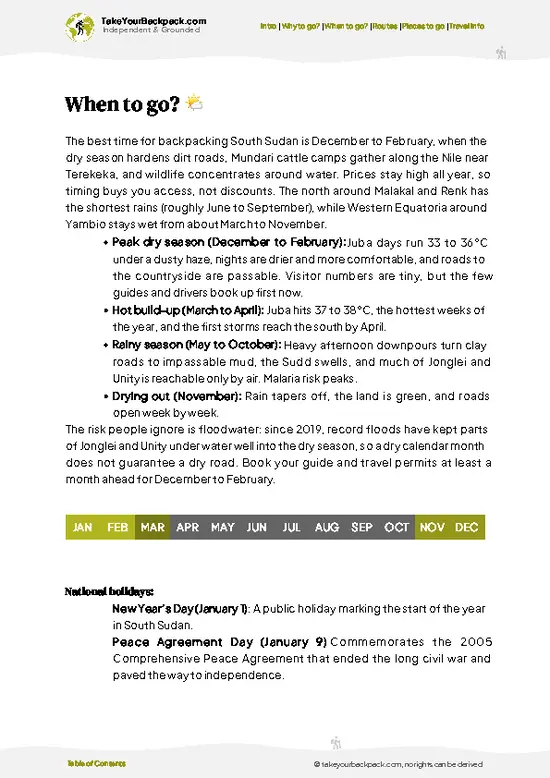
source: climatestotravel.comJANJanuary: excellent for travelingFEBFebruary: excellent for travelingMARMarch: highly recommended for travelingAPRApril: good for travelingMAYMay: good for travelingJUNJune: fair for travelingJULJuly: below average for travelingAUGAugust: below average for travelingSEPSeptember: fair for travelingOCTOctober: good for travelingNOVNovember: highly recommended for travelingDECDecember: excellent for traveling
when-to-go

✈️ The backpacker research shortcutSouth Sudan Travel Guide

An offline-friendly backpacking guide with optimized travel routes, ranked highlights, transport advice, and the best areas to stay.
example page 0 from our offline Travel Guide for South Sudan
example page 1 from our offline Travel Guide for South Sudan
example page 2 from our offline Travel Guide for South Sudan
example page 3 from our offline Travel Guide for South Sudan
example page 4 from our offline Travel Guide for South Sudan
example page 5 from our offline Travel Guide for South Sudan
example page 6 from our offline Travel Guide for South Sudan
example page 7 from our offline Travel Guide for South Sudan
The digital guide (270 pages) contains:
68 highlights, ranked by travel appeal
Optimized 5, 10 & 15-day travel routes
Cities, national parks, landmarks, beaches
How to get around
Offline-friendly for travel without Wi-Fi
👉 Click to see all 30+ guide features

📅 Plan smarter in minutes, not weeks
Month by month travel advice
Festivals & national holidays
Budget expectations

🗺️ Go to the right places, skip the overrated ones
Honest pros & cons of destinations
Top hikes, parks & viewpoints
Lesser-known places most travelers miss
Clear “worth it vs skip it” guidance

🛏️ Travel smoothly without rookie mistakes
Best areas to stay
Transport systems explained simply
Common scams & safety advice
SIM cards, money & practical tips

🌍 Understand the country, not just visit it
Culture & traditions
52 Essential phrases & customs
Festivals worth planning around
Traveler-friendly historical context
Insights that make places more meaningful

📱 Built for real travel conditions
Fully downloadable PDF
Works completely offline
Optimized for phone use
Useful in remote areas & buses
Everything in one place
Save weeks of stressful planning
Get instant access to your full guide. 30‑day money-back guarantee.
+ Add another guide for just US$7.80

By proceeding you agree to our terms.
Sent to your inbox immediately after payment • 100% Secure Checkout
Best Backpacking Travel Advisor 2025 tourism awardBest Backpacking
Travel Advisor
2025
What others say about Take Your Backpack Guides:
⭐⭐⭐⭐⭐
Fantastic, amazing amount of information!
⭐⭐⭐⭐⭐
My goodness this is amazing, it's what I've been looking for hats off too you!
⭐⭐⭐⭐⭐
I think this is absolutely BRILLIANT
⭐⭐⭐⭐
Very complete and informative. It's still missing places, but I gotta to commend you
⭐⭐⭐⭐⭐
This is truly amazing, thank you, can't wait to explore it with my kids!
⭐⭐⭐⭐⭐
Awesome resource, thank you!
⭐⭐⭐⭐⭐
This is amazing! Can't wait to explore the ones I haven't seen
⭐⭐⭐⭐
I love this! Well done, great idea.
⭐⭐⭐⭐⭐
Thanks for taking the time to make this gem!
⭐⭐⭐⭐⭐
This might be the best website I've ever seen.
⭐⭐⭐⭐⭐
Congratulations, and thank you so much for your work; it's incredibly valuable.
⭐⭐⭐⭐
In all seriousness I think you did a great job pointing out the important spots
⭐⭐⭐⭐⭐
10/10 very good
⭐⭐⭐⭐⭐
As someone who's only just starting to visit regularly this is awesome, thank you.
⭐⭐⭐⭐
Thank you very much! I'm going to visit my dad, it's going to be very useful!
⭐⭐⭐⭐⭐
This is really cool! We'll be travelling for the first time and this definitely come in handy.
⭐⭐⭐⭐⭐
You are now our minister of culture, congratulations 👨‍💼
⭐⭐⭐⭐⭐
Just wanted to tell you that this is a pearl! Going to follow your recommendations.
⭐⭐⭐⭐⭐
This is so cool. I'll definitely be using the resource for my travels soon.
⭐⭐⭐⭐⭐
This is very impressive! Good work.
⭐⭐⭐⭐⭐
This is an amazing and informative site. Very well done!

🛏️ Where to stay?Where staying makes the most sense

In Pochalla, the best spot for backpackers is the town center near the main market. It’s where the pulse of daily life beats strongest—vendors shouting, spices mingling with the dusty air, and locals gathering under acacia trees. This area feels safer because it’s busy, with a steady flow of people, which naturally deters trouble. It’s also the social hub for travelers on a budget, offering simple guesthouses and informal hostels where you can swap stories over a shared meal. Compared to quieter outskirts, staying here means you’re plugged into the town’s rhythm, making it easier to navigate and … read more 👉
In Pochalla, the best spot for backpackers is the town center near the main market. It’s where the pulse of daily life beats strongest—vendors shouting, spices mingling with the dusty air, and locals gathering under acacia trees. This area feels safer because it’s busy, with a steady flow of people, which naturally deters trouble. It’s also the social hub for travelers on a budget, offering simple guesthouses and informal hostels where you can swap stories over a shared meal. Compared to quieter outskirts, staying here means you’re plugged into the town’s rhythm, making it easier to navigate and connect without the isolation or risk of less populated neighborhoods.

🚌 Getting aroundHow to get around Pochalla

Pochalla moves at the pace of the river that skirts it—unhurried, with moments of sudden bustle when traders and locals converge. The sun casts long shadows by mid-afternoon, softening the dust that rises from the unpaved streets. Time here isn’t dictated by clocks but by the rhythm of daily needs: a boat’s arrival, a market opening, or the slow gathering of community under acacia trees. You’ll find that patience isn’t just a virtue; it’s the key to unlocking the town’s pulse.


  • Walking: The heart of Pochalla is compact enough to explore on foot. Walking lets you catch the scent of fresh earth and hear the chatter of children playing. It’s free, flexible, and the best way to absorb the town’s texture.

  • Motorbike Taxis: These dart through the dusty lanes with surprising speed. Expect to
read more 👉
Pochalla moves at the pace of the river that skirts it—unhurried, with moments of sudden bustle when traders and locals converge. The sun casts long shadows by mid-afternoon, softening the dust that rises from the unpaved streets. Time here isn’t dictated by clocks but by the rhythm of daily needs: a boat’s arrival, a market opening, or the slow gathering of community under acacia trees. You’ll find that patience isn’t just a virtue; it’s the key to unlocking the town’s pulse.


  • Walking: The heart of Pochalla is compact enough to explore on foot. Walking lets you catch the scent of fresh earth and hear the chatter of children playing. It’s free, flexible, and the best way to absorb the town’s texture.

  • Motorbike Taxis: These dart through the dusty lanes with surprising speed. Expect to pay around 100–200 SSP per short trip. They run from dawn until dusk but don’t count on strict schedules—flag one down when you need it.

  • Shared Minibuses: For trips to nearby villages or the border, minibuses offer a budget-friendly option, usually departing once they fill up. Prices hover around 300 SSP, and rides can be bumpy but are a window into local life.

  • River Boats: When the water level allows, small boats ferry people and goods along the Akobo River. They’re slower and less predictable but provide a unique vantage point and a break from the dust.

👛 Costs (as of 3 September 2026)Travel costs and budget guide for Pochalla

Backpacking in Pochalla, South Sudan, demands a mindset tuned to rugged simplicity and local rhythms, where every dollar stretches across sparse but essential services.
  • Dorm Accommodation: Options are extremely limited, often informal guesthouses or community lodgings rather than established hostels. Expect to pay around $5 to $10 USD per night. The rooms are basic—think mosquito nets, rough mattresses, and shared facilities—so pack your patience and a good headlamp.
  • Meals: Food costs hover around $3 to $7 USD daily if you stick to local markets and street vendors. Meals are simple—sorghum porridge, grilled fish, or beans—fresh but minimal in variety. Western-style or imported foods are rare and pricey, so embrace local flavors and the earthy aroma of open-fire cooking.
  • Local Transport:
read more 👉
Backpacking in Pochalla, South Sudan, demands a mindset tuned to rugged simplicity and local rhythms, where every dollar stretches across sparse but essential services.
  • Dorm Accommodation: Options are extremely limited, often informal guesthouses or community lodgings rather than established hostels. Expect to pay around $5 to $10 USD per night. The rooms are basic—think mosquito nets, rough mattresses, and shared facilities—so pack your patience and a good headlamp.
  • Meals: Food costs hover around $3 to $7 USD daily if you stick to local markets and street vendors. Meals are simple—sorghum porridge, grilled fish, or beans—fresh but minimal in variety. Western-style or imported foods are rare and pricey, so embrace local flavors and the earthy aroma of open-fire cooking.
  • Local Transport: Transport is mostly by shared motorbikes or walking. A motorbike ride within town can cost about $1 to $2 USD. Roads are rough, dust thick in the air, and travel times unpredictable. Budget extra time and a flexible attitude for getting around.
  • Basic Activities/Entry Fees: There are no formal tourist sites with entry fees here. Any cultural visits or local guides will be negotiated directly and cost around $5 to $10 USD for a half-day experience, often involving walking through villages or markets. This is more about connection than polished tours.
  • Miscellaneous Expenses: Think water, snacks, phone credit, and occasional tips. These add up to about $2 to $4 USD daily. Bottled water is a must, given the limited safe drinking options, and expect to carry your own refillable bottle to manage costs and hygiene.

The daily budget for backpacking in Pochalla typically ranges from $16 to $33 USD. This reflects the raw, off-the-grid nature of the town—where simplicity is the norm and every expense is a direct investment in an authentic, unvarnished experience.
⚠️ Prices can change and everyone travels differently, so take this as a rough guide. Hope it helps you plan your adventure!

🚌 Day tripsBest day trips from Pochalla

Pochalla is a vibrant hub for backpackers eager to explore the raw beauty of South Sudan. With its unique access to diverse landscapes and cultures, you can easily embark on memorable day trips.

Journey to the Nile
A short drive from Pochalla, the Nile offers a refreshing escape. Spend the day fishing or simply soaking in the riverside atmosphere. The scent of the river mingles with the earthy aroma of the surrounding bush. Aim for early morning to catch the sunrise over the water; it’s a sight that feels like a secret shared just with you. Expect to spend around $10 for transport and snacks. Avoid the midday heat; late afternoons can be sweltering.


Exploring the Kidepo Valley
This national park is a treasure trove of wildlife. A full day here means spotting elephants and giraffes … read more 👉
Pochalla is a vibrant hub for backpackers eager to explore the raw beauty of South Sudan. With its unique access to diverse landscapes and cultures, you can easily embark on memorable day trips.

Journey to the Nile
A short drive from Pochalla, the Nile offers a refreshing escape. Spend the day fishing or simply soaking in the riverside atmosphere. The scent of the river mingles with the earthy aroma of the surrounding bush. Aim for early morning to catch the sunrise over the water; it’s a sight that feels like a secret shared just with you. Expect to spend around $10 for transport and snacks. Avoid the midday heat; late afternoons can be sweltering.


Exploring the Kidepo Valley
This national park is a treasure trove of wildlife. A full day here means spotting elephants and giraffes against the backdrop of stunning savannah. The drive takes about two hours, and you’ll want to budget around $30 for entry and transport. The best time to visit is during the dry season when animals gather around waterholes. A common mistake? Forgetting to bring binoculars; you’ll want to see every detail.
👉 Explore Kidepo Valley

Local Market Day
Immerse yourself in the local culture by visiting Pochalla’s bustling market. The vibrant colors of fruits and textiles are a feast for the eyes, and the sounds of bargaining fill the air. Spend a few hours wandering, tasting local dishes, and chatting with vendors. This trip is free if you walk, but a $5 transport fee is worth it for the experience. Best visited on Saturdays, when the market is at its liveliest.
Want to know what more South Sudan offers?
The South Sudan Travel Guide describes 68 highlights, from cities to national parks, from beaches to hikes

Get the Travel Guide -

🛡️ SafetySafety Tips and Common Scams in Pochalla

Pochalla is generally safe, but awareness is key. Stick to well-lit areas at night; the streets can feel empty, and a little caution goes a long way. If you’re solo, blend in—avoid flashy gear that screams “tourist.”

Watch for common scams, like inflated prices from vendors. Always negotiate; it’s part of the culture. Be prepared for the occasional annoyance, like erratic transportation schedules. Carry yourself confidently, and engage with locals; they can offer invaluable insights and help you navigate the nuances of daily life here.

FAQFrequently asked questions about Pochalla

Pochalla is primarily a stopover rather than a destination for extended visits due to limited tourist infrastructure and attractions. It serves as a gateway for travelers heading to remote areas or crossing into Ethiopia. The town offers basic amenities but few cultural or natural highlights for tourists.
One to two days are sufficient to stay in Pochalla, mainly to rest and prepare for onward travel. This timeframe allows for basic exploration of the town and interaction with local markets. Longer stays are uncommon unless involved in specific humanitarian or research activities.
No, Pochalla cannot be easily visited as a day trip from a nearby city because it is remote and lacks reliable transport connections. The closest larger town is Boma, about 100 kilometers away, requiring a full day of travel each way on rough roads. Overnight stays are necessary for practical travel logistics.
⚠️ Things can change over time, so always validate details locally before you go.

Other South Sudanese towns near Pochalla

Explore more nearby:

  • Pibor—river confluence, Murle communities, remote outpost| 114 km away
  • Akobo—Ethiopian border, Lou Nuer area, floodplain villages| 137 km away
  • Kapoeta—Toposa settlements, dry savanna, livestock markets| 273 km away

💡 Not sure where to go next?
Create a personalized itinerary for South Sudan including Pochalla and the places that fit your trip.

Generate my itinerary

👉 Discover all towns

Or checkout all South Sudan has to offer (think cities, towns, villages, national parks, hikes, beaches, festivals)
Country photo of South Sudan

We 💚 feedbackParting advice and final tips

Pochalla pulses with raw energy. The sunsets paint the sky in fiery hues, while the scent of wood smoke lingers in the air. Embrace the chaos, but be wary of the heat—hydrate constantly. The warmth of the people makes every challenge worthwhile.

✍️ Help improve this page!
The information on this page is based on in-depth research, insights shared by experienced travelers, and feedback from the local travel community in South Sudan. While every effort is made to keep the information accurate and current, conditions can change — so if you spot anything incorrect or outdated, please get in touch.


🙋‍♂️ Give feedback

👋 Meet the founderWho’s Behind Take Your Backpack?

Johan, backpacker and founder of TakeYourBackpackHi, I’m Johan (Netherlands 🇳🇱), the creator of TakeYourBackpack. Over the past decade, I’ve backpacked through 80+ countries across six continents, gaining extensive experience with independent travel, long-term trips, and overland routes.

This site is built on a combination of firsthand travel experience and carefully curated insights from other backpackers. Many guides are based on places I’ve personally visited, while others bring together tips, observations, and practical advice shared by trusted travelers I’ve met along the way.

The goal is to provide realistic, experience-driven guidance — not generic itineraries — so you can explore destinations with better context, clearer expectations, and more confidence.

Get full country guide •
Instant download • 68 highlights • Full Offline guide