×

Sudan🇸🇩 | citiesEl Obeidgum arabic markets, sandy streets, central mosque | things to do and best time to go

Explore DongolaExplore Kassala

Backpacking in El Obeid
🌟 Highlightcity ranked #6
By Johan Kruseman 🇳🇱 | Updated June 8, 2026

If you crave backpacker hostels, craft beer, and a parade of fellow travelers, El Obeid will frustrate you. This isn’t a city for those who need a ready-made scene or Instagram-friendly landmarks every ten steps. But that’s exactly why it’s worth your time. El Obeid sits in central Sudan, a crossroads city where the desert’s edge meets the country’s agricultural heart. The city’s rhythm is slow, the architecture a sun-bleached mix of colonial relics and Sudanese practicality. There’s a surprisingly lively market, a few faded but fascinating museums, and the kind of street life that rewards patience—tea stalls, donkey carts, and the occasional camel. It’s safe by Sudanese standards, cheap, and refreshingly free of tourist hustle. Compared to Khartoum’s chaos or Kassala’s scenery, El Obeid is understated, but if you want to see Sudan as it is, not as it’s packaged, this is your move.

Discover everything you want to know in the 📖 Sudan Travel Guide.
Safety warning

The current risk level for Sudan is high. Check the advice before going.


Get your Sudan guide
72 ranked highlights, routes & tips, works offline (300 pages)
Loading the map 🌍
CLICK TO FILTER
cities
towns
landmarks
national parks
hikes
beaches
attractions
festivals
regions
SHOW COUNTRY’S BESTSHOW ALL

✨ Why go?
Ranked #6 city in Sudan
What sets this place apart

El Obeid is a strategic stop for backpackers weaving through Sudan. It’s not just a place to rest; it’s a basecamp for adventure. The city offers a mix of affordable hostels that cater to budget travelers, making it easy to find a cozy spot without breaking the bank. You’ll discover a vibrant local food scene, where you can savor authentic dishes that won’t dent your wallet.

The walkability of El Obeid is a game changer. You can explore the city on foot, soaking in the local culture and atmosphere without the hassle of transport. While nightlife might not rival major cities, there are enough local spots to unwind after a day of exploration.

What really sets El Obeid apart is its proximity to day trips. You can easily venture out to nearby attractions, maximizing your time without sacrificing … read more 👉
El Obeid is a strategic stop for backpackers weaving through Sudan. It’s not just a place to rest; it’s a basecamp for adventure. The city offers a mix of affordable hostels that cater to budget travelers, making it easy to find a cozy spot without breaking the bank. You’ll discover a vibrant local food scene, where you can savor authentic dishes that won’t dent your wallet.

The walkability of El Obeid is a game changer. You can explore the city on foot, soaking in the local culture and atmosphere without the hassle of transport. While nightlife might not rival major cities, there are enough local spots to unwind after a day of exploration.

What really sets El Obeid apart is its proximity to day trips. You can easily venture out to nearby attractions, maximizing your time without sacrificing comfort. This city fits seamlessly into a backpacking route, offering a blend of value and experience that makes it worth your while, whether you stay for a few days or just a quick stop.
Want to include El Obeid in your Sudan route?
Create a personalized Sudan itinerary that includes El Obeid and the places that fit your trip — based on your travel style, budget, and available time. Get your route in seconds.

Generate my trip

💡 HighlightsThe experiences that define the visit

  • El Obeid Central Souq — The city’s beating heart: a maze of stalls selling spices, textiles, phone SIMs, dried dates and everything in between. Great for people-watching, haggling and practicing basic Arabic; go early when the light is good and the vendors are most chatty.
  • Gum arabic market — El Obeid is a regional hub for gum arabic trade. Visiting the packed sacks, weigh-ins and traders gives a real feel for the local economy and seasonal rhythms you won’t get from guides alone. Best timed to market days or harvest season.
  • University of Kordofan campus — A lively student quarter with informal cafes, bookshops and campus culture. Walk around to see mid-sized Sudanese campus life, occasional cultural events, and good local food stalls frequented by students.
  • The Grand Mosque (Al-Jami’a)
read more 👉
  • El Obeid Central Souq — The city’s beating heart: a maze of stalls selling spices, textiles, phone SIMs, dried dates and everything in between. Great for people-watching, haggling and practicing basic Arabic; go early when the light is good and the vendors are most chatty.
  • Gum arabic market — El Obeid is a regional hub for gum arabic trade. Visiting the packed sacks, weigh-ins and traders gives a real feel for the local economy and seasonal rhythms you won’t get from guides alone. Best timed to market days or harvest season.
  • University of Kordofan campus — A lively student quarter with informal cafes, bookshops and campus culture. Walk around to see mid-sized Sudanese campus life, occasional cultural events, and good local food stalls frequented by students.
  • The Grand Mosque (Al-Jami’a) — The main Friday mosque is both an architectural focal point and a social hub. Even if you don’t pray, the courtyard and surrounding lanes show daily religious life and community rhythms up close (observe local customs when visiting).
  • Livestock souq — A noisy, fragrant, completely unfiltered experience: traders, herders and animals (cows, goats and camels) negotiating prices. Great for photos and to see how rural Kordofan connects to town—arrive early and dress sensibly.
  • Traditional crafts quarter — Small workshops around the market where leatherworkers, tailors and weavers still hand-make goods. You can watch craftsmen at work, buy a custom item for much less than in tourist shops, and get a sense of regional styles.
  • El Obeid Museum / Kordofan regional collection — A small regional museum with ethnographic objects and local history exhibits. It’s modest, but valuable for context on Kordofan’s cultures and the Mahdist-era history that shaped the region—check opening hours before you go.
  • The old railway station and colonial-era buildings — A handful of historic administrative and railway-era structures still stand and make for interesting photo stops. They tell the story of El Obeid’s role as a trading terminus in Sudan’s modern history.
  • El Obeid Stadium & local football scene — Catching an afternoon or evening match is one of the best ways to see everyday life and local pride in action. The atmosphere is informal, loud, and entirely local—bring curiosity, not high expectations of comfort.
  • Market-side tea houses and coffee stalls — These tiny, often roofless teahouses are where business is done, gossip spreads and deals are closed. Sit with a cup of Sudanese tea, listen, and enjoy the uncurated social pulse of the city.
A few easy day trips from El Obeid: nearby gum-arabic harvesting villages, the rural mud-brick villages and local weekly regional markets just outside town — my personal favourite is a visit to a gum-arabic collection village during harvest season for seeing the full production chain and meeting harvesters.
Spotted a mistake or missing something? Contact us.

🏘️ NeighborhoodsHow different areas shape the experience

El Obeid is a crossroads of culture and commerce in Sudan, offering a unique blend of experiences for backpackers. Here’s how the neighborhoods stack up:

Downtown El Obeid: This is the heart of the city. It’s bustling with markets and street vendors. Expect a lively vibe, especially in the evenings. Costs are moderate, and you can easily walk to most attractions. Perfect for short stays, but the noise might wear on you if you linger too long.

Al-Manshiya: A quieter residential area, Al-Manshiya offers a more laid-back atmosphere. It’s less touristy, making it ideal for those seeking an authentic experience. Prices for accommodations are lower here, and you can find local eateries serving delicious Sudanese dishes. Walkability is decent, but public transport is your best bet for longer distances. … read more 👉
El Obeid is a crossroads of culture and commerce in Sudan, offering a unique blend of experiences for backpackers. Here’s how the neighborhoods stack up:

Downtown El Obeid: This is the heart of the city. It’s bustling with markets and street vendors. Expect a lively vibe, especially in the evenings. Costs are moderate, and you can easily walk to most attractions. Perfect for short stays, but the noise might wear on you if you linger too long.

Al-Manshiya: A quieter residential area, Al-Manshiya offers a more laid-back atmosphere. It’s less touristy, making it ideal for those seeking an authentic experience. Prices for accommodations are lower here, and you can find local eateries serving delicious Sudanese dishes. Walkability is decent, but public transport is your best bet for longer distances.

Al-Hawash: This neighborhood is known for its vibrant nightlife. Cafes and small bars come alive after sunset, making it a great spot for socializing. Prices can vary, but you’ll find options for every budget. It’s walkable, but be cautious at night. Suitable for those wanting to mix with locals and enjoy the evening scene.

Al-Salam: A bit farther from the center, Al-Salam is more suburban. It’s peaceful and offers spacious accommodations. Ideal for longer stays, but you’ll need to rely on public transport to reach the city’s main attractions. Costs are generally lower, making it a good choice for budget-conscious travelers.

⌛️ 1 day1-day itinerary for El Obeid

El Obeid, the capital of North Kordofan, is a city where the pulse of Sudanese culture beats strong. It’s a place where you can feel the history in the air, from the bustling markets to the quiet corners of ancient mosques. The charm lies in its authenticity, far from the typical tourist trail, making it a rewarding stop for the curious traveler.

Start your morning at the vibrant Al-Mahdi Market. The aroma of spices fills the air as you weave through stalls brimming with colorful textiles and local produce. Grab a cup of sweet Sudanese tea from a vendor; it’s a delightful way to wake up and soak in the local vibe. Spend some time chatting with the vendors; they often have fascinating stories about their goods and the city itself.

In the afternoon, head to the nearby Kordofan Museum. It’s … read more 👉
El Obeid, the capital of North Kordofan, is a city where the pulse of Sudanese culture beats strong. It’s a place where you can feel the history in the air, from the bustling markets to the quiet corners of ancient mosques. The charm lies in its authenticity, far from the typical tourist trail, making it a rewarding stop for the curious traveler.

Start your morning at the vibrant Al-Mahdi Market. The aroma of spices fills the air as you weave through stalls brimming with colorful textiles and local produce. Grab a cup of sweet Sudanese tea from a vendor; it’s a delightful way to wake up and soak in the local vibe. Spend some time chatting with the vendors; they often have fascinating stories about their goods and the city itself.

In the afternoon, head to the nearby Kordofan Museum. It’s not the largest museum, but it offers a glimpse into the region’s rich heritage, showcasing artifacts that tell the story of the people. Afterward, take a leisurely stroll through the Al-Sahafa neighborhood, where you can admire traditional Sudanese architecture. It’s a quieter area, perfect for reflecting on your experiences so far.

As evening approaches, make your way to the local food stalls near the main square. Try a plate of ful medames, a popular dish made from fava beans, and enjoy the lively atmosphere as locals gather to share stories and laughter. For a unique experience, seek out the small, often overlooked Al-Mahdi Mosque. It’s a serene spot where you can appreciate the intricate designs and perhaps catch a glimpse of evening prayers.

By the end of the day, you’ll have tasted the essence of El Obeid, balancing time, money, and comfort in a way that leaves you feeling enriched and inspired.
Turn your El Obeid visit into an Sudan adventure
Build a complete Sudan route with El Obeid, hidden gems, must-see destinations, and realistic travel times included.

Generate my trip

🌤️ When to go?Weather, crowds, and seasonal trade-offs


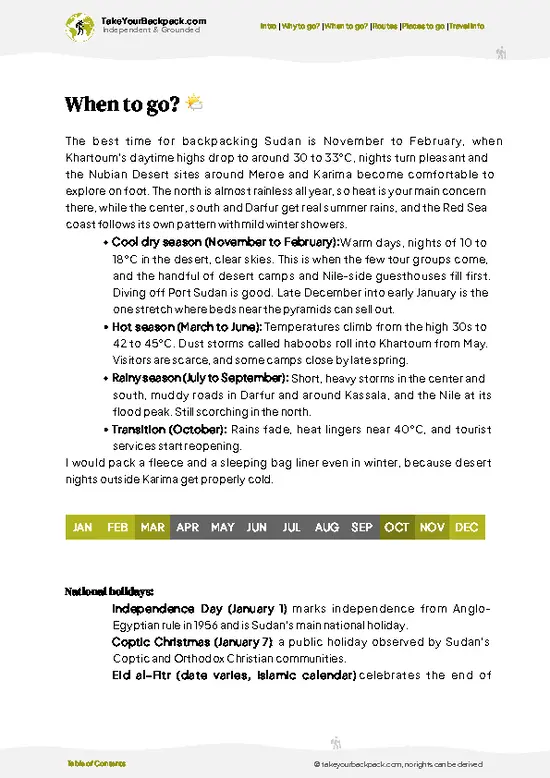
  • Weather: El Obeid’s climate is harshly hot and dry most of the year, with temperatures soaring above 40°C (104°F) in peak summer months. The best window is during the cooler season from November to February when highs drop to a more bearable 28-32°C (82-90°F).

  • Temperature: Nights can be surprisingly chilly in the cooler months, dipping to around 15°C (59°F), so pack layers. Avoid the April to September stretch when daytime heat regularly exceeds 40°C (104°F), making hiking and city exploration exhausting.

  • Daylight Hours: Daylight remains fairly consistent year-round, roughly 11 to 12 hours daily. This steadiness means you can plan your days without worrying about drastic shifts in sunset times.

  • Crowds: El Obeid isn’t a tourist hotspot, so crowds are minimal year-round. However, local
read more 👉

  • Weather: El Obeid’s climate is harshly hot and dry most of the year, with temperatures soaring above 40°C (104°F) in peak summer months. The best window is during the cooler season from November to February when highs drop to a more bearable 28-32°C (82-90°F).

  • Temperature: Nights can be surprisingly chilly in the cooler months, dipping to around 15°C (59°F), so pack layers. Avoid the April to September stretch when daytime heat regularly exceeds 40°C (104°F), making hiking and city exploration exhausting.

  • Daylight Hours: Daylight remains fairly consistent year-round, roughly 11 to 12 hours daily. This steadiness means you can plan your days without worrying about drastic shifts in sunset times.

  • Crowds: El Obeid isn’t a tourist hotspot, so crowds are minimal year-round. However, local markets and festivals peak during the cooler months, offering richer cultural encounters without the hassle of tourist throngs.

  • Seasonal Activities: The cooler months align with harvest festivals and traditional markets, providing authentic local experiences. The rainy season (July to September) is brief but can disrupt travel plans and muddy roads.

  • Price Fluctuations: Accommodation and transport costs dip slightly during the hot season due to low demand, but the discomfort often outweighs the savings. The cooler months see a modest price increase, justified by better conditions and more vibrant local life.


Pro-tip: Target November to February for a smart balance of comfort and cultural immersion—your body and wallet will thank you.


source: climatestotravel.comJANJanuary: excellent for travelingFEBFebruary: excellent for travelingMARMarch: highly recommended for travelingAPRApril: fair for travelingMAYMay: fair for travelingJUNJune: fair for travelingJULJuly: below average for travelingAUGAugust: below average for travelingSEPSeptember: fair for travelingOCTOctober: good for travelingNOVNovember: excellent for travelingDECDecember: excellent for traveling
when-to-go

✈️ The backpacker research shortcutSudan Travel Guide

An offline-friendly backpacking guide with optimized travel routes, ranked highlights, transport advice, and the best areas to stay.
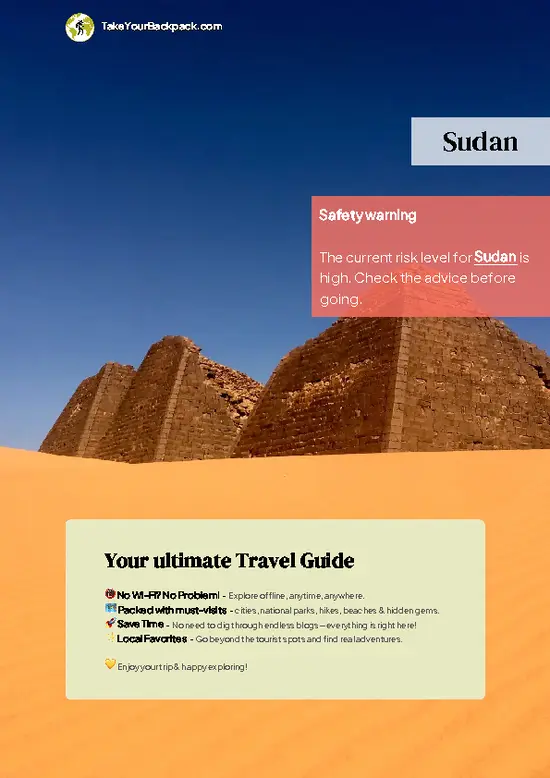
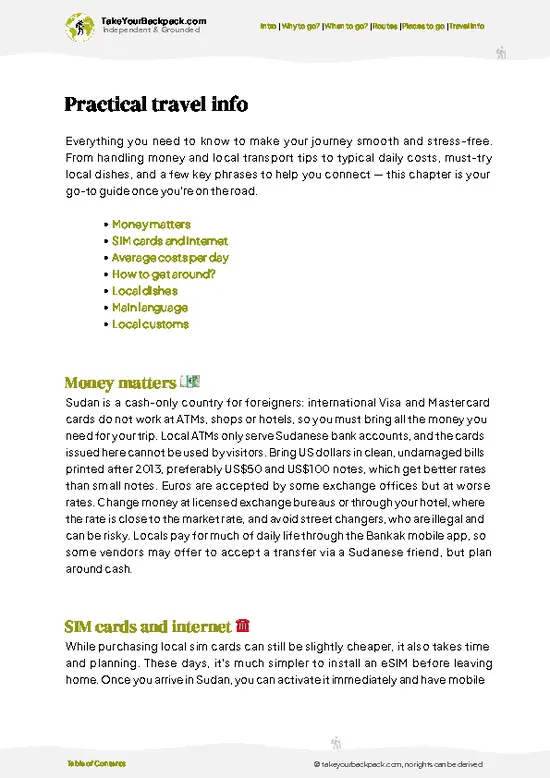
example page 0 from our offline Travel Guide for Sudan
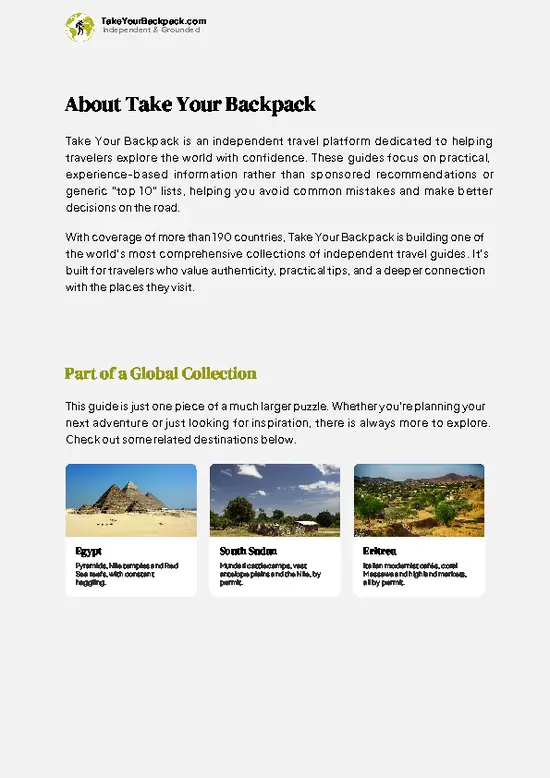
example page 1 from our offline Travel Guide for Sudan
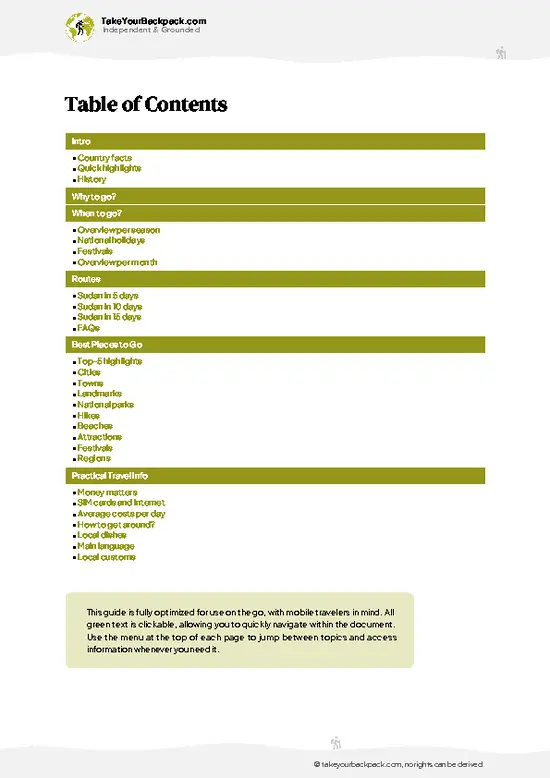
example page 2 from our offline Travel Guide for Sudan
example page 3 from our offline Travel Guide for Sudan
example page 4 from our offline Travel Guide for Sudan
example page 5 from our offline Travel Guide for Sudan
example page 6 from our offline Travel Guide for Sudan
example page 7 from our offline Travel Guide for Sudan
The digital guide (300 pages) contains:
72 highlights, ranked by travel appeal
Optimized 5, 10 & 15-day travel routes
Cities, national parks, landmarks, beaches
How to get around
Offline-friendly for travel without Wi-Fi
👉 Click to see all 30+ guide features

📅 Plan smarter in minutes, not weeks
Month by month travel advice
Festivals & national holidays
Budget expectations

🗺️ Go to the right places, skip the overrated ones
Honest pros & cons of destinations
Top hikes, parks & viewpoints
Lesser-known places most travelers miss
Clear “worth it vs skip it” guidance

🛏️ Travel smoothly without rookie mistakes
Best areas to stay
Transport systems explained simply
Common scams & safety advice
SIM cards, money & practical tips

🌍 Understand the country, not just visit it
Culture & traditions
52 Essential phrases & customs
Festivals worth planning around
Traveler-friendly historical context
Insights that make places more meaningful

📱 Built for real travel conditions
Fully downloadable PDF
Works completely offline
Optimized for phone use
Useful in remote areas & buses
Everything in one place
Save weeks of stressful planning
Get instant access to your full guide. 30‑day money-back guarantee.


By proceeding you agree to our terms.
Sent to your inbox immediately after payment • 100% Secure Checkout
Best Backpacking Travel Advisor 2025 tourism awardBest Backpacking
Travel Advisor
2025
What others say about Take Your Backpack Guides:
⭐⭐⭐⭐⭐
Fantastic, amazing amount of information!
⭐⭐⭐⭐⭐
My goodness this is amazing, it's what I've been looking for hats off too you!
⭐⭐⭐⭐⭐
I think this is absolutely BRILLIANT
⭐⭐⭐⭐
Very complete and informative. It's still missing places, but I gotta to commend you
⭐⭐⭐⭐⭐
This is truly amazing, thank you, can't wait to explore it with my kids!
⭐⭐⭐⭐⭐
Awesome resource, thank you!
⭐⭐⭐⭐⭐
This is amazing! Can't wait to explore the ones I haven't seen
⭐⭐⭐⭐
I love this! Well done, great idea.
⭐⭐⭐⭐⭐
Thanks for taking the time to make this gem!
⭐⭐⭐⭐⭐
This might be the best website I've ever seen.
⭐⭐⭐⭐⭐
Congratulations, and thank you so much for your work; it's incredibly valuable.
⭐⭐⭐⭐
In all seriousness I think you did a great job pointing out the important spots
⭐⭐⭐⭐⭐
10/10 very good
⭐⭐⭐⭐⭐
As someone who's only just starting to visit regularly this is awesome, thank you.
⭐⭐⭐⭐
Thank you very much! I'm going to visit my dad, it's going to be very useful!
⭐⭐⭐⭐⭐
This is really cool! We'll be travelling for the first time and this definitely come in handy.
⭐⭐⭐⭐⭐
You are now our minister of culture, congratulations 👨‍💼
⭐⭐⭐⭐⭐
Just wanted to tell you that this is a pearl! Going to follow your recommendations.
⭐⭐⭐⭐⭐
This is so cool. I'll definitely be using the resource for my travels soon.
⭐⭐⭐⭐⭐
This is very impressive! Good work.
⭐⭐⭐⭐⭐
This is an amazing and informative site. Very well done!

🛏️ Where to stay?Choosing the right base

In El Obeid, the real backpacker action centers around the city’s eastern districts, especially near the market areas. This is where you’ll find the pulse of local life without the inflated prices or the isolation of the more upscale neighborhoods. It’s a practical choice: these areas offer a balance of safety and social energy, crucial for solo travelers who want to connect without wandering into sketchy zones after dark.

Hostel options are limited but tend to cluster here, making it easier to meet fellow travelers and swap stories over a cup of Sudanese tea. The vibe is straightforward—no frills, … read more 👉
In El Obeid, the real backpacker action centers around the city’s eastern districts, especially near the market areas. This is where you’ll find the pulse of local life without the inflated prices or the isolation of the more upscale neighborhoods. It’s a practical choice: these areas offer a balance of safety and social energy, crucial for solo travelers who want to connect without wandering into sketchy zones after dark.

Hostel options are limited but tend to cluster here, making it easier to meet fellow travelers and swap stories over a cup of Sudanese tea. The vibe is straightforward—no frills, just a genuine slice of daily life with vendors shouting, kids playing, and the occasional call to prayer threading through the air. Compared to the quieter, more residential west side, staying east means embracing the city’s rhythm and cutting down on transport costs and time.

If you prioritize comfort and quiet, you’ll pay for it in taxis and missed social chances. But if you want to maximize your time and budget, the eastern market neighborhoods are your best bet—safe enough to relax, lively enough to keep you engaged, and budget-friendly enough to keep your trip sustainable.

🚌 Getting aroundHow to get from A to B

El Obeid moves at its own rhythm—neither a frantic rush nor a slow crawl. It’s a city where schedules exist but bend to the reality of dusty roads, market chatter, and the occasional power outage. You’ll find that time here is a flexible concept, shaped by the sun and the flow of people rather than strict timetables. The trade-off between time, money, and comfort becomes a strategic game: do you want to save a few pounds and endure a bumpy ride, or pay more for a smoother, faster trip? Understanding this flow lets you navigate El Obeid like a local, turning transit into a tactical advantage rather than a frustrating obstacle.


  • Walking: The ultimate budget option and the best way to absorb the city’s pulse. Most destinations within the central area are reachable on foot in 20-40 minutes.
read more 👉
El Obeid moves at its own rhythm—neither a frantic rush nor a slow crawl. It’s a city where schedules exist but bend to the reality of dusty roads, market chatter, and the occasional power outage. You’ll find that time here is a flexible concept, shaped by the sun and the flow of people rather than strict timetables. The trade-off between time, money, and comfort becomes a strategic game: do you want to save a few pounds and endure a bumpy ride, or pay more for a smoother, faster trip? Understanding this flow lets you navigate El Obeid like a local, turning transit into a tactical advantage rather than a frustrating obstacle.


  • Walking: The ultimate budget option and the best way to absorb the city’s pulse. Most destinations within the central area are reachable on foot in 20-40 minutes. Free, flexible, and healthy, but prepare for heat and dust—early mornings or late afternoons are prime walking times.


  • Local Minibuses: These are the backbone of El Obeid’s public transit. They run roughly from 6 AM to 7 PM, costing around 20-50 SDG depending on distance. Expect crowded, noisy rides with frequent stops. They’re slow but unbeatable for budget travelers who don’t mind sacrificing comfort for authenticity and price.


  • Shared Taxis: Faster and more comfortable than minibuses, shared taxis operate on fixed routes but leave only when full. Prices hover around 100-150 SDG. They run from early morning until about 9 PM. This option balances speed and cost but requires flexibility—you might wait a while for a full load.


  • Private Taxis: The quickest and most comfortable, private taxis offer door-to-door service. Expect to pay 500 SDG or more for typical city trips. They run 24/7, ideal for late arrivals or early departures. This is the choice if you value time and comfort over budget.


  • Bicycle Rentals: A niche but growing option for the adventurous. Rentals cost about 200 SDG per day. You get speed and freedom without the expense of motorized transport, but watch out for rough roads and traffic. Best for short to medium distances during daylight hours.

👛 Costs (as of 27 March 2025)What things cost and how to budget

Backpacking in El Obeid, Sudan, is a study in balancing essentials with local realities. Here’s how your daily budget breaks down, giving you a clear view of what you’re trading off.
  • Dorm Accommodation (High Season): Expect to pay around $10 to $15 per night. High season can push prices up slightly due to demand, but options remain basic—think simple beds, shared bathrooms, and limited amenities.
  • Dorm Accommodation (Off-Season): Prices drop to about $6 to $10. Off-season means fewer travelers and more bargaining power, but don’t expect luxury—comfort here is minimal, so pack accordingly.
  • Meals: Local eateries serve filling meals for $2 to $5. Street food and small restaurants offer the best value, with traditional Sudanese dishes that are hearty and affordable. Avoid tourist spots if you
read more 👉
Backpacking in El Obeid, Sudan, is a study in balancing essentials with local realities. Here’s how your daily budget breaks down, giving you a clear view of what you’re trading off.
  • Dorm Accommodation (High Season): Expect to pay around $10 to $15 per night. High season can push prices up slightly due to demand, but options remain basic—think simple beds, shared bathrooms, and limited amenities.
  • Dorm Accommodation (Off-Season): Prices drop to about $6 to $10. Off-season means fewer travelers and more bargaining power, but don’t expect luxury—comfort here is minimal, so pack accordingly.
  • Meals: Local eateries serve filling meals for $2 to $5. Street food and small restaurants offer the best value, with traditional Sudanese dishes that are hearty and affordable. Avoid tourist spots if you want to keep costs down.
  • Local Transport: Short rides on minibuses or shared taxis cost around $0.20 to $0.50. It’s cheap but expect crowded conditions and irregular schedules, so factor in some patience.
  • City Transport Pass: Not commonly available in El Obeid. Most travelers rely on pay-per-ride options, so no monthly or daily pass to simplify budgeting here.
  • Basic Activities/Entry Fees: Cultural sites and small museums charge nominal fees, typically under $2. Organized tours are rare and usually pricier, so independent exploration is your best bet.
  • Miscellaneous Expenses: Budget $1 to $3 for essentials like bottled water, snacks, or minor supplies. Keep some cash handy for unexpected small purchases or tips.

All told, you’re looking at roughly $10 to $25 per day, depending on season and your comfort threshold. El Obeid’s low-cost environment means you can stretch a modest budget, but the trade-off is simplicity and a bit of hustle in daily logistics. Knowing where your money goes lets you decide when to save and when to splurge on comfort or convenience.


source: sudan.gov.sd
⚠️ Prices can change and everyone travels differently, so take this as a rough guide. Hope it helps you plan your adventure!

🚌 Day tripsShort trips worth adding

El Obeid is a fantastic launchpad for day trips that dive deep into Sudan’s rich culture and stunning landscapes. Here are some high-value adventures to consider.

Kordofan Desert Exploration
Just a couple of hours from El Obeid, the Kordofan Desert offers a mesmerizing landscape of rolling dunes and unique rock formations. You can rent a local guide for around $20, which is worth every penny to navigate this vast terrain. The best time to visit is during the cooler months from November to February. A common mistake is underestimating the desert’s harshness; bring plenty of water and sun protection. The experience of watching the sunset paint the dunes in shades of orange and purple is something you won’t forget.


Nuba Mountains Adventure
A day trip to the Nuba Mountains is a must for … read more 👉
El Obeid is a fantastic launchpad for day trips that dive deep into Sudan’s rich culture and stunning landscapes. Here are some high-value adventures to consider.

Kordofan Desert Exploration
Just a couple of hours from El Obeid, the Kordofan Desert offers a mesmerizing landscape of rolling dunes and unique rock formations. You can rent a local guide for around $20, which is worth every penny to navigate this vast terrain. The best time to visit is during the cooler months from November to February. A common mistake is underestimating the desert’s harshness; bring plenty of water and sun protection. The experience of watching the sunset paint the dunes in shades of orange and purple is something you won’t forget.


Nuba Mountains Adventure
A day trip to the Nuba Mountains is a must for those seeking breathtaking views and cultural immersion. It’s about a three-hour drive, and you can expect to spend around $30 on transport and food. The best time to go is during the dry season, from November to April, when the trails are more accessible. Many first-timers miss out on local villages; don’t just stick to the main viewpoints. Engage with the communities; they’re welcoming and eager to share their traditions.
👉 Explore Nuba Mountains

Historical Sites of El Obeid
Stay local and explore the historical sites right in El Obeid. You can easily spend a day visiting the old market and the nearby mosques, all within walking distance. Costs are minimal—around $5 for food and drinks. The best time is early morning when the city is waking up. A common oversight is not taking the time to chat with local vendors; their stories add depth to the experience.


Omdurman Market Visit
A trip to the Omdurman Market, just a few hours away, is a sensory overload of colors, sounds, and smells. Expect to spend about $15 on transport and snacks. The market is best visited on Fridays, when it’s bustling with activity. Many travelers overlook the importance of bargaining; it’s part of the experience. Dive in and enjoy the vibrant atmosphere.


These trips provide a rich tapestry of experiences that make your time in Sudan truly rewarding.
Want to know what more Sudan offers?
The Sudan Travel Guide describes 72 highlights, from cities to national parks, from beaches to hikes

Get the Travel Guide -

🍲 FoodWhat to Eat & Drink

In El Obeid, food is a vibrant tapestry of flavors that tells the story of Sudanese culture. Dive into foul medames, a hearty dish of fava beans simmered with spices, often enjoyed for breakfast. Pair it with ta’amiya, Sudanese falafel made from fava beans, crispy on the outside and soft within.

Street food is where the magic happens. Vendors line the bustling markets, serving up kebabs and sambusas—savory pastries filled with spiced meat or vegetables. The aroma of grilled meats wafts through the air, drawing you in. Don’t miss the chance to sip on sugarcane juice, a refreshing treat that’s both sweet and energizing.

Dining here is a communal affair. Expect to share dishes, reflecting the Sudanese value of hospitality. When invited to eat, it’s customary to use your right hand—this is … read more 👉
In El Obeid, food is a vibrant tapestry of flavors that tells the story of Sudanese culture. Dive into foul medames, a hearty dish of fava beans simmered with spices, often enjoyed for breakfast. Pair it with ta’amiya, Sudanese falafel made from fava beans, crispy on the outside and soft within.

Street food is where the magic happens. Vendors line the bustling markets, serving up kebabs and sambusas—savory pastries filled with spiced meat or vegetables. The aroma of grilled meats wafts through the air, drawing you in. Don’t miss the chance to sip on sugarcane juice, a refreshing treat that’s both sweet and energizing.

Dining here is a communal affair. Expect to share dishes, reflecting the Sudanese value of hospitality. When invited to eat, it’s customary to use your right hand—this is a sign of respect.

Cafés buzz with chatter, offering a laid-back atmosphere to enjoy chai or coffee, often brewed strong and spiced. Embrace the local pace; meals are not rushed but savored, allowing you to soak in the lively ambiance of El Obeid.

🛡️ SafetySafety Tips and Common Scams in El Obeid

El Obeid is generally safe for backpackers, but a few situational awareness tips can enhance your experience. Stick to well-lit areas at night, especially if you’re solo. The streets can feel quiet, and while locals are friendly, it’s wise to keep your wits about you.

Watch for common scams, like overly enthusiastic guides who may expect a hefty tip after a brief chat. Politely decline offers for unsolicited assistance; a firm “no, thank you” usually suffices.

Annoyances can include persistent street vendors, but a friendly smile and a quick walk away often do the trick. Carry yourself confidently; locals appreciate travelers who respect their space. Overall, with a little mindfulness, you can navigate El Obeid smoothly and enjoy its unique charm without unnecessary stress.

Other Sudanese cities near El Obeid

Explore more nearby:

  • Umm Ruwaba—Central crossroads, millet trade, open savanna| 114 km away
  • El Rahad—Railway stop, gum arabic markets, agricultural hinterland| 139 km away
  • Ed Dueim—White Nile banks, university town, river ferries| 243 km away

💡 Not sure where to go next?
Create a personalized itinerary for Sudan including El Obeid and the places that fit your trip.

Generate my itinerary

👉 Discover all cities

Or checkout all Sudan has to offer (think cities, towns, villages, national parks, hikes, beaches, festivals)
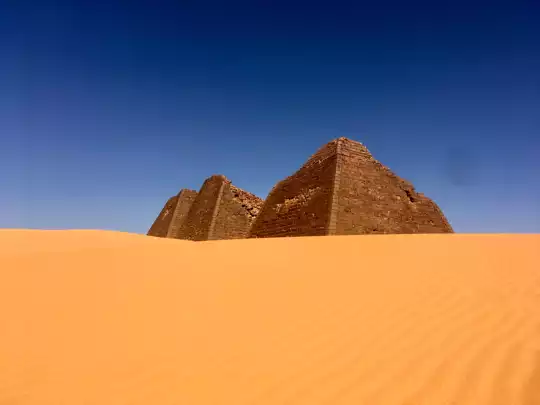
Country photo of Sudan

We 💚 feedbackParting advice and final tips

El Obeid is a fascinating crossroads of cultures, where the vibrant local markets pulse with life and the scent of spices fills the air. You’ll find genuine warmth from the people, making it a rewarding stop. However, be prepared for limited tourist infrastructure; amenities can be basic, and English isn’t widely spoken. Embrace the challenge, and you’ll walk away with stories that outshine any five-star experience.

✈️ When did I visit Sudan?
Sudan I visited back in October 2017. I combined the trip with a visit to Ethiopia.

✍️ Help improve this page!
The information on this page is based on my own backpacking experience in Sudan, supplemented with up-to-date research and feedback from other travelers. Travel details can change, so if you notice anything outdated or incomplete, feel free to let me know.


🙋‍♂️ Give feedback

👋 Meet the founderWho’s Behind Take Your Backpack?

Johan, backpacker and founder of TakeYourBackpackHi, I’m Johan (Netherlands 🇳🇱), the creator of TakeYourBackpack. Over the past decade, I’ve backpacked through 80+ countries across six continents, gaining extensive experience with independent travel, long-term trips, and overland routes.

This site is built on a combination of firsthand travel experience and carefully curated insights from other backpackers. Many guides are based on places I’ve personally visited, while others bring together tips, observations, and practical advice shared by trusted travelers I’ve met along the way.

The goal is to provide realistic, experience-driven guidance — not generic itineraries — so you can explore destinations with better context, clearer expectations, and more confidence.

Get full Sudan guide •
Instant download • 72 highlights • Full Offline guide