×
Sweden🇸🇪 | 10 days itinerary

How to Spend 10 Days in Sweden

By Johan Kruseman 🇳🇱 | Updated May 9, 2026
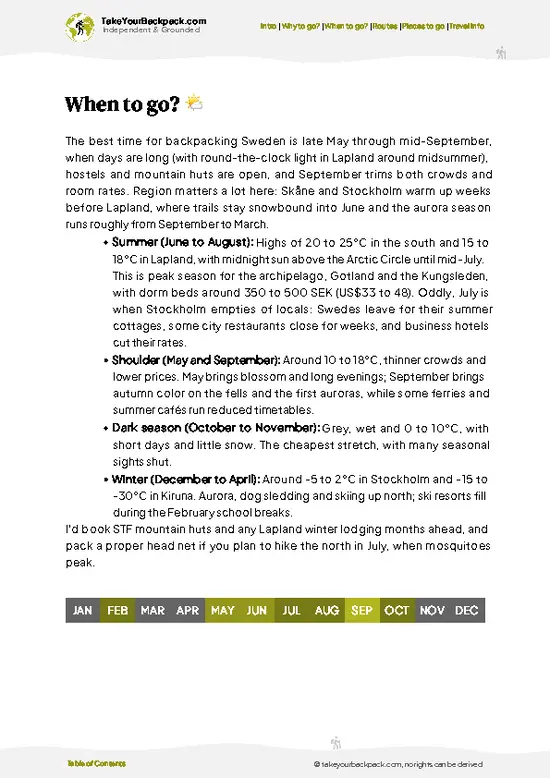
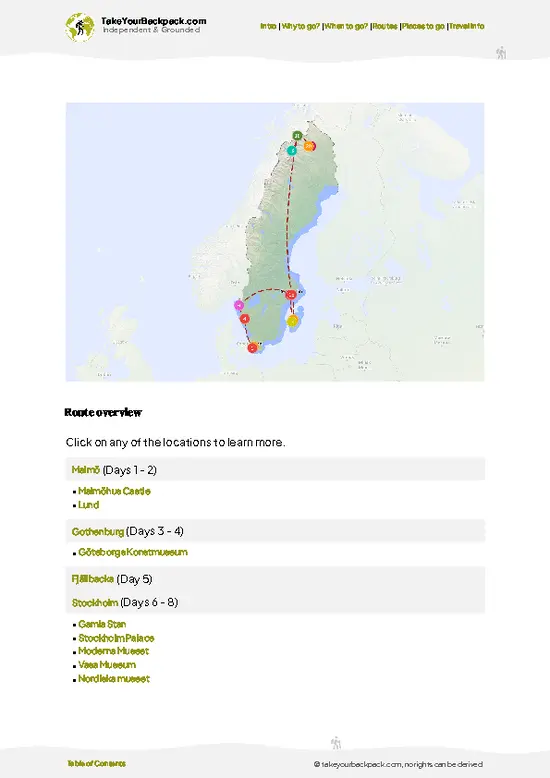
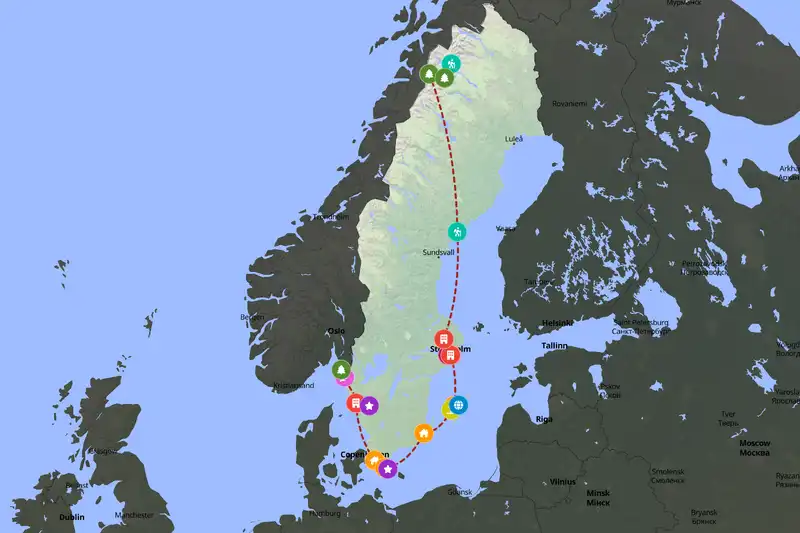
This 10-day Coast-to-Castles route is for travelers who want a mix of big-city culture, royal history, and easy west-coast island time at a moderate pace, using trains between cities plus local trams, buses, and ferries. You’ll connect Stockholm and Gothenburg with a quick taste of Malmö and Lund, trading constant motion for two solid city bases and one coastal stretch that feels like a proper holiday, not a checklist.

Days 1-3: Stockholm’s royal core and island museums

Start in Stockholm and give yourself three nights so you’re not sprinting through the capital. Use your first day to get oriented in Gamla Stan historic quarter, looping in the Stockholm Palace to see the ceremonial side of Swedish power while you’re already in the old town. On day two, head to Djurgården for the heavy hitters: the Vasa Museum for maritime drama and Skansen for open-air history, with time left to stroll the island’s leafy paths. Day three is your flex day: dive into Fotografiska Stockholm or Moderna Museetread more 👉
This 10-day Coast-to-Castles route is for travelers who want a mix of big-city culture, royal history, and easy west-coast island time at a moderate pace, using trains between cities plus local trams, buses, and ferries. You’ll connect Stockholm and Gothenburg with a quick taste of Malmö and Lund, trading constant motion for two solid city bases and one coastal stretch that feels like a proper holiday, not a checklist.

Days 1-3: Stockholm’s royal core and island museums

Start in Stockholm and give yourself three nights so you’re not sprinting through the capital. Use your first day to get oriented in Gamla Stan historic quarter, looping in the Stockholm Palace to see the ceremonial side of Swedish power while you’re already in the old town. On day two, head to Djurgården for the heavy hitters: the Vasa Museum for maritime drama and Skansen for open-air history, with time left to stroll the island’s leafy paths. Day three is your flex day: dive into Fotografiska Stockholm or Moderna Museet for contemporary culture, or take a slower lap through neighborhoods like Södermalm before an evening train the next day; the idea is to feel like you’ve actually lived in Stockholm for a few days, not just passed through.

Days 4-6: University charm and southern city life

On day four, ride the train south to Malmö, a compact city that gives you a different, more continental flavor of Sweden with its waterfront promenades and modern architecture. Use Malmö as your base for two nights so you can day-trip to Lund, whose cobbled streets and university vibe show off the country’s academic side in a way that’s easy to enjoy on foot. If you’re keen on history, fold in a visit to Malmöhus Castle and Malmö Museum, which adds a medieval-to-modern storyline without requiring another long transfer. The pace here is intentionally gentler than Stockholm: more café time, more wandering, less museum sprinting.

Days 7-8: West-coast city energy in Gothenburg

Take a daytime train up to Gothenburg on day seven, watching the landscape shift from flat south to rockier west coast, and settle in for two nights. Gothenburg is your chance to feel Sweden’s second-city energy: ride the trams, walk the canals, and pick one major attraction that fits your style, like Liseberg for classic amusement-park thrills or Universeum if you’re traveling with kids or just love science centers. With the extra day, you can also dip into local art at Göteborgs Konstmuseum, which is compact enough to enjoy without burning out, then spend your evenings in the city’s bar and café scene that feels more laid-back than Stockholm but just as creative.

Days 9-10: Bohuslän coast and island village life

For your final phase, head north along the coast into Bohuslän, where the granite islands and fishing villages give you that classic Swedish summer postcard in real life. Base yourself in or around Fjällbacka for one night to soak up the harbor views and cliff walks, then use the next day to hop over to Marstrand, whose fortress and car-free streets make it perfect for a slow wander and a long lunch. You’ll return to Gothenburg or continue onward from the west coast feeling like you’ve seen three very different Swedens—royal and historic, academic and southern, and finally salt-sprayed and coastal—without ever having to rush back-to-back long travel days.

My standout memory from this route is eating a simple harbor lunch in Fjällbacka after a morning cliff walk, watching the boats drift in and thinking, “Yep, this is exactly why you come to Sweden.”
Loading the map 🌍
film
0
0
0a
Stockholm
Pixabay
film
1
1
1a
Vasa Museum
Pixabay
film
2
2
2a
Gothenburg
film
3
3
3a
Bohuslän
film
4
4
4a
Marstrand
David Parkhill

🛏️ Where to stay?The Route Breakdown

✈️ The backpacker research shortcutSweden Travel Guide

An offline-friendly backpacking guide with optimized travel routes, ranked highlights, transport advice, and the best areas to stay.
example page 0 from our offline Travel Guide for Swedenexample page 1 from our offline Travel Guide for Swedenexample page 2 from our offline Travel Guide for Swedenexample page 3 from our offline Travel Guide for Swedenexample page 4 from our offline Travel Guide for Swedenexample page 5 from our offline Travel Guide for Sweden
The digital guide (383 pages) contains:
119 highlights, ranked by travel appeal
Optimized 5, 10 & 15-day travel routes
Best neighborhoods to stay
How to get around
Offline-friendly for travel without Wi-Fi
👉 See all 30+ guide features

📅 Plan smarter in minutes, not weeks
Month by month travel advice
Festivals & national holidays
Budget expectations

🗺️ Go to the right places, skip the overrated ones
Honest pros & cons of destinations
Top hikes, parks & viewpoints
Lesser-known places most travelers miss
Clear “worth it vs skip it” guidance

🛏️ Travel smoothly without rookie mistakes
Best areas to stay
Transport systems explained simply
Common scams & safety advice
SIM cards, money & practical tips

🌍 Understand the country, not just visit it
Culture & traditions
52 Essential phrases & customs
Festivals worth planning around
Traveler-friendly historical context
Insights that make places more meaningful

📱 Built for real travel conditions
Fully downloadable PDF
Works completely offline
Optimized for phone use
Useful in remote areas & buses
Everything in one place
Save weeks of stressful planning
Get instant access to the full guide directly. 30-day money-back guarantee.


Sent to your inbox immediately after payment • 100% Secure Checkout
Best Backpacking Travel Advisor 2025 tourism awardBest Backpacking
Travel Advisor
2025
What others say about Take Your Backpack Guides:
⭐⭐⭐⭐⭐
Fantastic, amazing amount of information!
⭐⭐⭐⭐⭐
My goodness this is amazing, it's what I've been looking for hats off too you!
⭐⭐⭐⭐⭐
I think this is absolutely BRILLIANT
⭐⭐⭐⭐
Very complete and informative. It's still missing places, but I gotta to commend you
⭐⭐⭐⭐⭐
This is truly amazing, thank you, can't wait to explore it with my kids!
⭐⭐⭐⭐⭐
Awesome resource, thank you!
⭐⭐⭐⭐⭐
This is amazing! Can't wait to explore the ones I haven't seen
⭐⭐⭐⭐
I love this! Well done, great idea.
⭐⭐⭐⭐⭐
Thanks for taking the time to make this gem!
⭐⭐⭐⭐⭐
This might be the best website I've ever seen.
⭐⭐⭐⭐⭐
Congratulations, and thank you so much for your work; it's incredibly valuable.
⭐⭐⭐⭐
In all seriousness I think you did a great job pointing out the important spots
⭐⭐⭐⭐⭐
10/10 very good
⭐⭐⭐⭐⭐
As someone who's only just starting to visit regularly this is awesome, thank you.
⭐⭐⭐⭐
Thank you very much! I'm going to visit my dad, it's going to be very useful!
⭐⭐⭐⭐⭐
This is really cool! We'll be travelling for the first time and this definitely come in handy.
⭐⭐⭐⭐⭐
You are now our minister of culture, congratulations 👨‍💼
⭐⭐⭐⭐⭐
Just wanted to tell you that this is a pearl! Going to follow your recommendations.
⭐⭐⭐⭐⭐
This is so cool. I'll definitely be using the resource for my travels soon.
⭐⭐⭐⭐⭐
This is very impressive! Good work.
⭐⭐⭐⭐⭐
This is an amazing and informative site. Very well done!

🧭 RouteGot More or Less Time?

Travel Sweden your way — from a quick highlights trip to a slow-paced adventure.

🙋 FAQCommon Questions

Sweden is very easy to backpack independently, even for a first big trip, as long as you respect that it’s expensive and plan around that. English is widely spoken, signage is clear, and people are generally helpful but not pushy, so you can navigate without feeling hustled. The main challenge is cost, not safety or logistics. To keep it budget-friendly, use hostel kitchens, cook most meals, and treat eating out as an occasional reward. Wild camping is legal under Allemansrätten (Right of Public Access) as long as you’re respectful, discreet, and follow Leave No Trace, which makes Sweden one of the best countries in Europe for tent-based backpacking. For city-to-city travel, book trains and long-distance buses in advance to catch cheaper fares; for hiking, use the well-marked trail systems like the Kungsleden and local regional trails that often have basic huts or shelters. Sweden is safe, solo-friendly, and structured enough that you don’t need a tour, but wild enough that you still feel like you’re actually out there, not just following a crowd.
For a tight budget trip, 7–10 days is enough to get a real taste of Sweden without burning cash on endless transport. With a week, focus on one main region plus Stockholm: for example, 3–4 days in Stockholm and its archipelago, then 3–4 days in either West Coast fishing towns and islands, or a short Lapland taster around Kiruna or Abisko if you can snag cheap transport. Two weeks is the sweet spot for backpackers: you can do Stockholm, a second city like Gothenburg or Malmö, plus a proper hiking segment such as part of the Kungsleden or Sarek’s edges, and still have a buffer day for bad weather or slow travel. A month lets you slow down, chase cheap grocery deals, and lean into wild camping and hut-to-hut trekking, which actually makes Sweden feel more affordable per day. If you only have 3–4 days, treat it as a Stockholm city-and-nature micro-trip rather than trying to ‘do Sweden’ and wasting money on long-distance tickets.
You can absolutely get around Sweden without a car, and for most backpackers it’s the smarter move. The rail network connects the main spine of the country, and long-distance buses fill in gaps and are usually cheaper than trains if you book early. For budget travel, mix and match: use slower regional trains and buses instead of high-speed options, and travel at off-peak times when tickets are often cheaper. In cities, public transport is efficient and safe; in Stockholm and Gothenburg, a single transit card covers metro, trams, and many commuter ferries, which saves money over single tickets. For rural areas and trailheads, you often combine a train to a regional hub with a local bus; in Lapland, there are dedicated buses to popular hiking areas like Abisko and Nikkaluokta in season. Hitchhiking exists but is slower than in some other countries, so treat it as a backup, not a plan. If you’re willing to walk a few extra kilometers and wild camp, you can reach a lot of nature spots using only public transport plus your feet.
For a first-time backpacker in Sweden on a budget, Stockholm is still a must, but you can do it cheaply by staying in hostels, using the metro as a sightseeing tool, and focusing on free or low-cost experiences like wandering Gamla Stan’s alleys, exploring Södermalm’s viewpoints, and taking the cheap public ferry to the islands closest to the city. The Stockholm archipelago itself is worth at least a day: pick one or two islands reachable by public ferry, pack your own food, and treat it as a DIY island-hopping picnic. In the west, Gothenburg plus the Bohuslän coast gives you laid-back harbor towns, rocky islands, and sea views without Stockholm prices; use local buses and ferries to hop between spots like Marstrand or the southern archipelago. For hikers, Swedish Lapland is the big-ticket experience: Abisko and the northern Kungsleden offer accessible multi-day treks with huts and wild camping options, and in summer you get long light and a real sense of wilderness. If you prefer forests and lakes to mountains, central Sweden’s lake districts and smaller national parks are cheaper to reach and less crowded, and you can combine them with a city like Uppsala or Örebro for a balanced route.
If you are short on time and money, skip trying to ‘cross the whole country’ from Skåne to deep Lapland in one trip; the long-distance transport will eat your budget and your days. Pick either a south-and-city focus or a north-and-nature focus. You can also skip expensive organized tours in Stockholm and Gothenburg; almost everything you want to see is walkable or reachable by public transport, and audio guides or self-guided walks give you the same context for a fraction of the price. Many smaller castles and manor houses are skippable unless you are a hardcore history fan; choose one solid castle or fortress experience and move on. If you are not specifically into winter sports or northern lights, skip deep winter travel, because gear, higher prices, and short daylight hours make it a tougher budget play; shoulder-season or summer gives you more value. Finally, skip over-scheduling museum days: pick one or two that really match your interests, then spend the rest of your time outside in parks, islands, and neighborhoods, which is where Sweden feels most alive and costs you almost nothing.

🇸🇪 SwedenWhere to Go Next

Ready to build a truly unique trip? Predefined routes are perfect for first-time visitors, but there is so much more to discover. Whether you are chasing a city trip, pristine national parks, local food scenes, or quiet beaches, pick a category to design your own path.