×

United States🇺🇸 | best beachesBest 10 beaches in the USA

The United States (USA) has three separate coastlines, a Gulf, a few thousand miles of Great Lakes shore and two Pacific archipelagos, so asking for “the American beach” is like asking for “the European meal.” The Atlantic and Gulf coasts hand you warm water, flat sand and boardwalks that smell like fried dough and sunscreen. The Pacific coast hands you fog, cliffs and water cold enough to make a wetsuit feel like a personality. Hawaii and Florida sit at the pricey, tropical end, while the Carolinas and Gulf shores run cheaper and more family-oriented.

Access is the quiet advantage. Most public sand is free or costs a modest parking fee, and a lot of it is reachable by bus, rideshare or a rented bicycle. The catch is that coastal lodging is where your budget goes to die in July. Independent travelers do best by pairing a hostel in a city with day trips to the shore, or by camping in state and national parks where a pitch costs far less than a motel room. Crowds follow the calendar and the interstate: Southern California and Florida are packed on weekends, while Oregon, Maine and the Outer Banks reward anyone willing to walk ten minutes past the last parking lot.

By Johan Kruseman 🇳🇱 | Updated October 21, 2026
Explore the best attractions in the USA

Why go?Why Travelers Love These Spots

The United States is less a beach country than a beach continent. It stretches across subtropical, temperate and near-Arctic latitudes, so one nation offers coral-fringed lagoons, dune-backed barrier islands, volcanic black sand and rocky headlands with tide pools. Few countries of this size give you that range without a passport stamp. Hawaii and the Florida Keys deliver truly tropical conditions, while the Northeast and Pacific Northwest deliver water that stays cold even in August.

The geography has an odd side effect. Long barrier islands along the Atlantic and Gulf coasts mean miles of walkable, gently sloping sand, ideal for swimming and for people who dislike surprises. The Pacific side is steeper, with strong currents, cold upwelling and fog banks that can turn a July afternoon into … read more 👉
The United States is less a beach country than a beach continent. It stretches across subtropical, temperate and near-Arctic latitudes, so one nation offers coral-fringed lagoons, dune-backed barrier islands, volcanic black sand and rocky headlands with tide pools. Few countries of this size give you that range without a passport stamp. Hawaii and the Florida Keys deliver truly tropical conditions, while the Northeast and Pacific Northwest deliver water that stays cold even in August.

The geography has an odd side effect. Long barrier islands along the Atlantic and Gulf coasts mean miles of walkable, gently sloping sand, ideal for swimming and for people who dislike surprises. The Pacific side is steeper, with strong currents, cold upwelling and fog banks that can turn a July afternoon into a sweater situation. Locals know this. Visitors often learn it by shivering in swim trunks.

Infrastructure is the other defining feature. Beach access is protected by law in many states, with public trust rules in places such as Oregon, where the entire wet sand is public. Lifeguard towers, rinse showers, restrooms and flag warning systems are standard on popular stretches, which makes beaches here easy for first-timers. Beach culture is also organized: parking lots, permits for fires, rules on alcohol and dogs, and posted hours are the norm, and they vary town by town.

Before choosing the country for sand and surf, know the costs. Distances are enormous, so combining coasts means flights, and a car is often the only practical way to reach quieter stretches. Lodging near famous shores jumps sharply in summer, and some of the best beaches require parking fees or reservations. Hurricane season affects the Atlantic and Gulf, and wildfire smoke or marine layer can affect the West. Sun is strong everywhere, and rip currents cause far more rescues than sharks do. The reward is choice: warm and busy, cold and wild, or somewhere in between, all with decent facilities and few language problems.
Behind the Scenes of Selection
The list of best beaches in the USA is created based on beauty, vibe, water quality, activities, and surrounding scenery. If you feel a beach is missing in this list, please let us know.

When to go?Seasonal Guide to Visiting

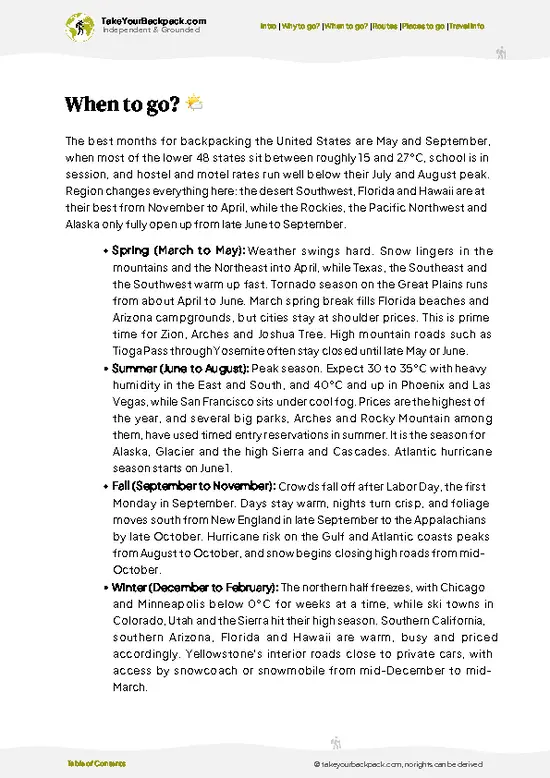
Best months by coast: The best months for beaches in the United States are June to September on the Atlantic, Gulf and Great Lakes coasts, when water runs 72 to 85°F (22 to 29°C) and air temperatures sit in the 80s and 90s°F (27 to 35°C), while Hawaii and South Florida work year-round and California peaks in September and October.
The country is big enough that “beach season” means four different things. The Northeast (Maine to Cape Cod) swims comfortably only from late June to early September, and the Atlantic off Massachusetts can still feel like a dare at 60 to 68°F (16 to 20°C). The Mid-Atlantic and the Carolinas stay pleasant from late May to early October. Gulf Coast water in Alabama and Florida's Panhandle is bathtub-warm by May and stays so into October.
The California exception: Summer … read more 👉
Best months by coast: The best months for beaches in the United States are June to September on the Atlantic, Gulf and Great Lakes coasts, when water runs 72 to 85°F (22 to 29°C) and air temperatures sit in the 80s and 90s°F (27 to 35°C), while Hawaii and South Florida work year-round and California peaks in September and October.
The country is big enough that “beach season” means four different things. The Northeast (Maine to Cape Cod) swims comfortably only from late June to early September, and the Atlantic off Massachusetts can still feel like a dare at 60 to 68°F (16 to 20°C). The Mid-Atlantic and the Carolinas stay pleasant from late May to early October. Gulf Coast water in Alabama and Florida's Panhandle is bathtub-warm by May and stays so into October.
The California exception: Summer on the California coast comes with fog locals call June Gloom, and the Pacific stays a brisk 55 to 68°F (13 to 20°C) even in August, with northern beaches colder still. Southern California is at its best from late August to October, when the fog thins and the water peaks. Oregon and Washington give you a real beach window only from July to early September, and wetsuits are common.
Warm-weather escapes: Florida and Hawaii are the winter answer. South Florida runs dry and sunny from November to April, with highs of 75 to 82°F (24 to 28°C) and little rain, whereas June to October brings daily afternoon thunderstorms and humidity that makes a towel feel optional. Hawaii holds 78 to 85°F (26 to 29°C) air all year. Its north-facing shores get huge surf from November to March that is for watching, not swimming, so winter swimmers should look for south and west shores.
Storms, crowds and prices: Atlantic hurricane season runs June 1 to November 30, with the peak in late August to early October. Gulf and Southeast coasts can close beaches and flood roads with a few days of notice, so keep dates flexible and a refundable booking handy. Crowds peak around Memorial Day, July 4 and Labor Day, and beach-town motel rooms can double or triple, often reaching US$200 to 400 a night against US$90 to 160 in shoulder weeks. Many Northeast towns shutter restaurants and rentals from mid-October to Memorial Day.
The best value is the shoulder: late May and September on the Atlantic and Gulf, when water is still warm, crowds thin out and rates drop 30 to 50 percent. Spring break in March fills Florida and Texas Gulf towns with students and surcharges, so skip those weeks unless that is exactly your plan.

beach hoppingOptimizing Your Multi-Stop Itinerary

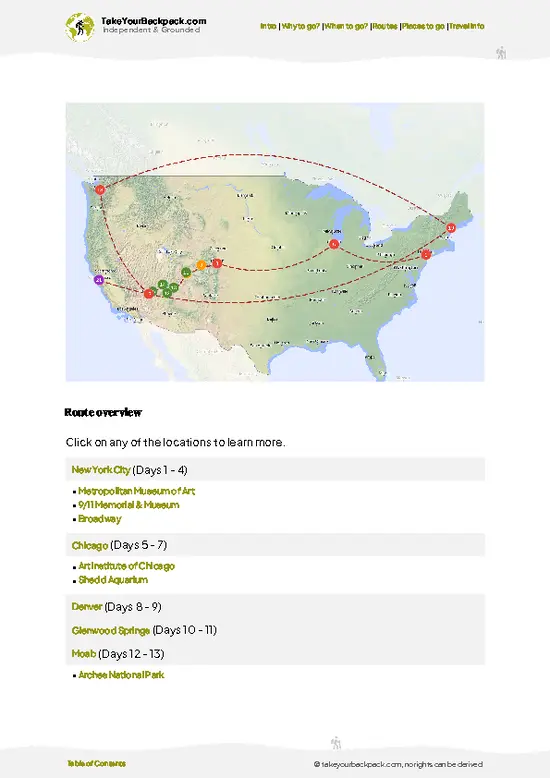
How many days to plan: A trip combining several beaches in the United States needs 10 to 21 days, and that range only works if you keep to one or two regions. The country is simply too large to treat like a string of weekend stops. A flight from Miami to Los Angeles takes about 5.5 to 6 hours, Los Angeles to Honolulu about 5.5 to 6.5 hours, and driving the full Pacific Coast from San Diego to Seattle runs about 1,250 miles (2,000 km) before you add a single stop.

Regions that cluster well: Group by coast. The Southeast loop works well from Miami or Orlando, running through the Florida Keys, the Gulf side and up toward Georgia and the Carolinas by car. The West Coast line flows best from south to north, starting in San Diego or Los Angeles and ending in Seattle or Portland, because you head … read more 👉
How many days to plan: A trip combining several beaches in the United States needs 10 to 21 days, and that range only works if you keep to one or two regions. The country is simply too large to treat like a string of weekend stops. A flight from Miami to Los Angeles takes about 5.5 to 6 hours, Los Angeles to Honolulu about 5.5 to 6.5 hours, and driving the full Pacific Coast from San Diego to Seattle runs about 1,250 miles (2,000 km) before you add a single stop.

Regions that cluster well: Group by coast. The Southeast loop works well from Miami or Orlando, running through the Florida Keys, the Gulf side and up toward Georgia and the Carolinas by car. The West Coast line flows best from south to north, starting in San Diego or Los Angeles and ending in Seattle or Portland, because you head toward cooler weather as your tan settles in. The Northeast strip from New Jersey up to Maine pairs with trains and buses along the Boston-New York corridor. Hawaii is its own trip, best attached to the West Coast by a single flight and then kept to one or two islands.

Time per stop and between regions: Give each beach area two to three nights. One night means you spend more time packing and parking than lying on sand. More than four is a lot unless surfing, hiking or a nearby national park fills the gaps. Between regions, count a full travel day for any flight, since airport transfers, security and bag claim eat up 4 to 6 hours even on a short hop. Driving legs along one coast should stay under 4 to 5 hours.

Planning mistakes to skip: The classic error is trying to do both coasts in one short trip, which turns a beach holiday into a loyalty program for airlines. Pick one coast and do it slowly. A second mistake is booking one-way rental cars without checking drop fees, which can add US$100 to 500 or more. Another is ignoring parking: popular lots in California, Florida and the Northeast can fill by 10 a.m. on summer weekends, so arrive early or take shuttles. Finally, travelers often schedule beach days around a single forecast. Build one spare day per region for fog, storms or surf closures, and you will actually get to swim.

The ListThe Best beaches of the USA

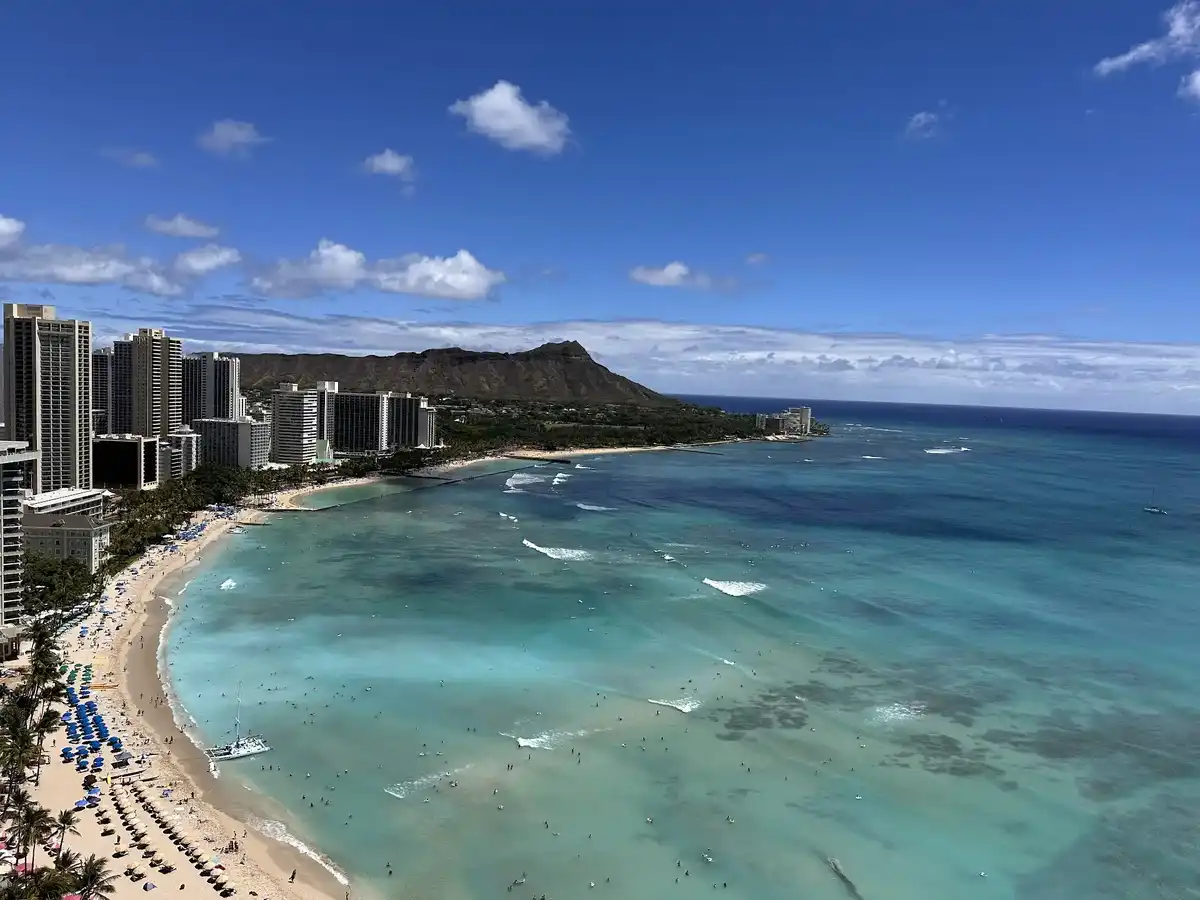
1 Waikiki Beach

Gentle surf breaks, Duke statue, outrigger canoes, Diamond Head views

Take a beginner surf lesson on forgiving waves, paddle out in an outrigger canoe, and walk east toward the crater at Kapiolani Park.

united-states-beach-waikiki-beach
© Google | L. Malynemec

2 Kaanapali Beach

Black lava rock, sunset cliff dive, beachwalk, winter humpbacks

Snorkel the reef at the lava headland in the morning, then return at dusk for the torch-lighting cliff dive.

3 Siesta Key Beach

Powdery quartz, lifeguarded shallows, Sunday drum circle, west-facing sunsets

Walk barefoot on cool, squeaking white sand, swim in clear shallow water, and join the Sunday drummers near the pavilion at sunset.

4 South Beach

Art Deco strip, painted lifeguard huts, Lincoln Road, South Pointe pier

Photograph the colorful lifeguard huts, stroll Ocean Drive’s pastel hotels, and watch cruise ships slide out from the southern pier.

5 Santa Monica Beach

Pier amusement park, coastal bike path, Muscle Beach, train access

Ride the paved coastal path south to Venice, then return for dusk lights on the solar-powered Ferris wheel.

united-states-beach-santa-monica-beach
© Google | Dhananjay Baghel

6 Clearwater Beach

Pier 60 sunsets, white quartz shallows, dolphin cruises, marine aquarium

Wade the calm, shallow Gulf over fine white sand, then join the nightly sunset gathering at the 1,080-foot pier.

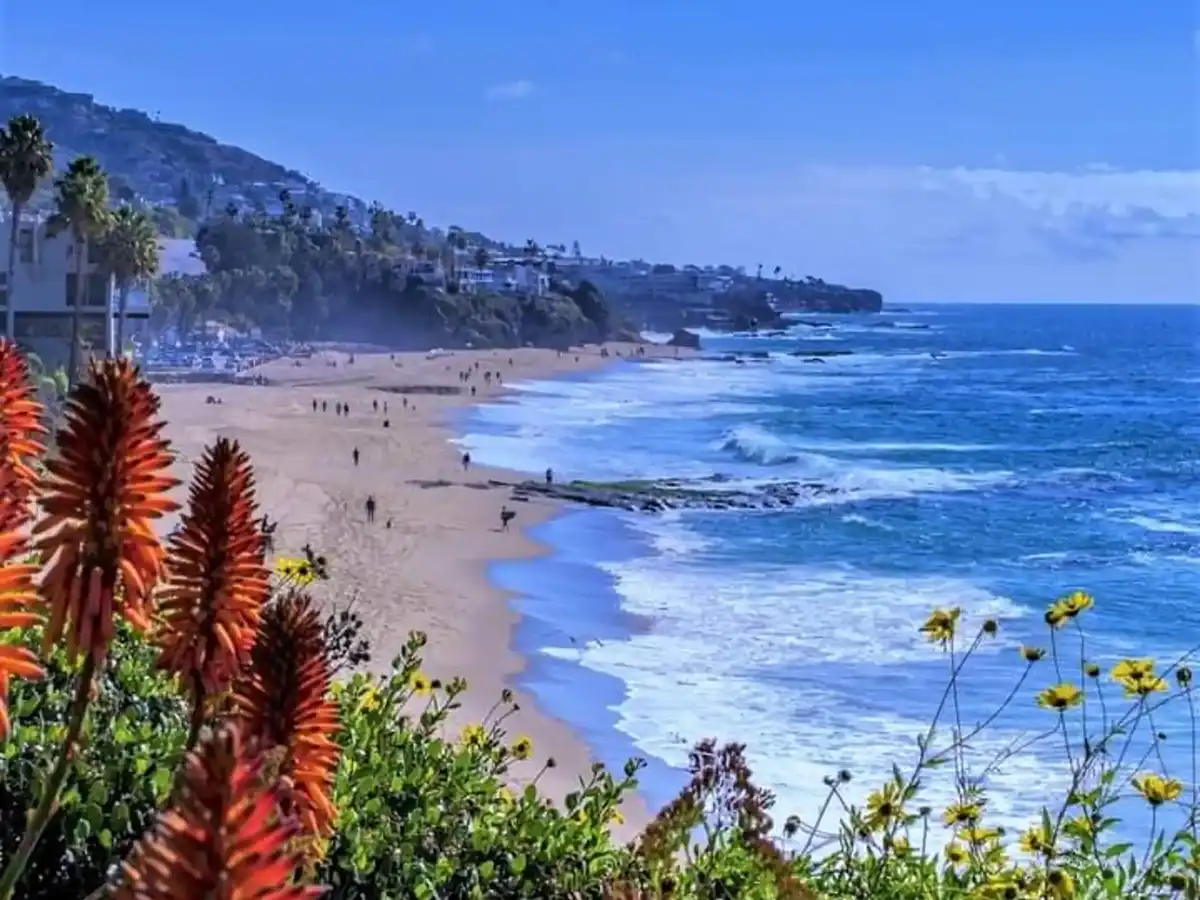
7 Laguna Beach

Bluff coves, tide pools, Heisler Park walk, pirate tower

Check the tide for anemones and crabs, snorkel Shaw’s Cove at calm high water, and walk the cliff path above the surf.

8 Malibu Beach

Wooden pier, longboard break, Adamson House, lagoon birds

Watch longboarders ride the break beside the pier at sunset, then tour a tile-covered Spanish house and the bird-filled lagoon.

united-states-beach-malibu-beach
© Google | Kevin

9 Kapalua Beach

Crescent cove, lava-point snorkeling, coastal trail, shade trees

Slip into a protected half-moon bay for easy snorkeling, then follow the paved coastal trail to neighboring coves facing Molokai.

10 Coronado Beach

Red-turret hotel, mica sparkle, dog beach, fire rings

Walk the wide, glittering sand toward the north end, swim in gentle waves, and claim a free fire ring at dusk.

united-states-beach-coronado-beach
© Google | Hotel Del Coronado

11 Venice Beach

Ocean Front Walk, skate bowls, outdoor weights, 1900s canals

Drift along the boardwalk’s street acts, watch skaters in the sand-side bowls, then escape inland to the quiet footbridges of the canals.

12 Daytona Beach

Drive-on sand, Speedway tours, wooden pier, coquina bandshell

Roll your car onto hard-packed sand, tour the banked turns of the Speedway, and end the evening on the lit-up boardwalk.

13 Virginia Beach

Oceanfront boardwalk, King Neptune, cypress trails, dolphin tours

Bike the three-mile boardwalk at dawn, then escape north to First Landing’s swamp and dune trails or a boat tour for dolphins.

14 Myrtle Beach

Mile-long boardwalk, SkyWheel, state park dunes, Broadway district

Walk the oceanfront promenade at sunrise, ride the 187-foot wheel at night, and find quieter dunes and maritime forest to the south.

15 Ocean City Beach

Three-mile boardwalk, fries and caramel corn, inlet jetty, carousel rides

Rent a bike for the morning boardwalk, walk the rock jetty to the inlet, and finish among the old rides at the south end.

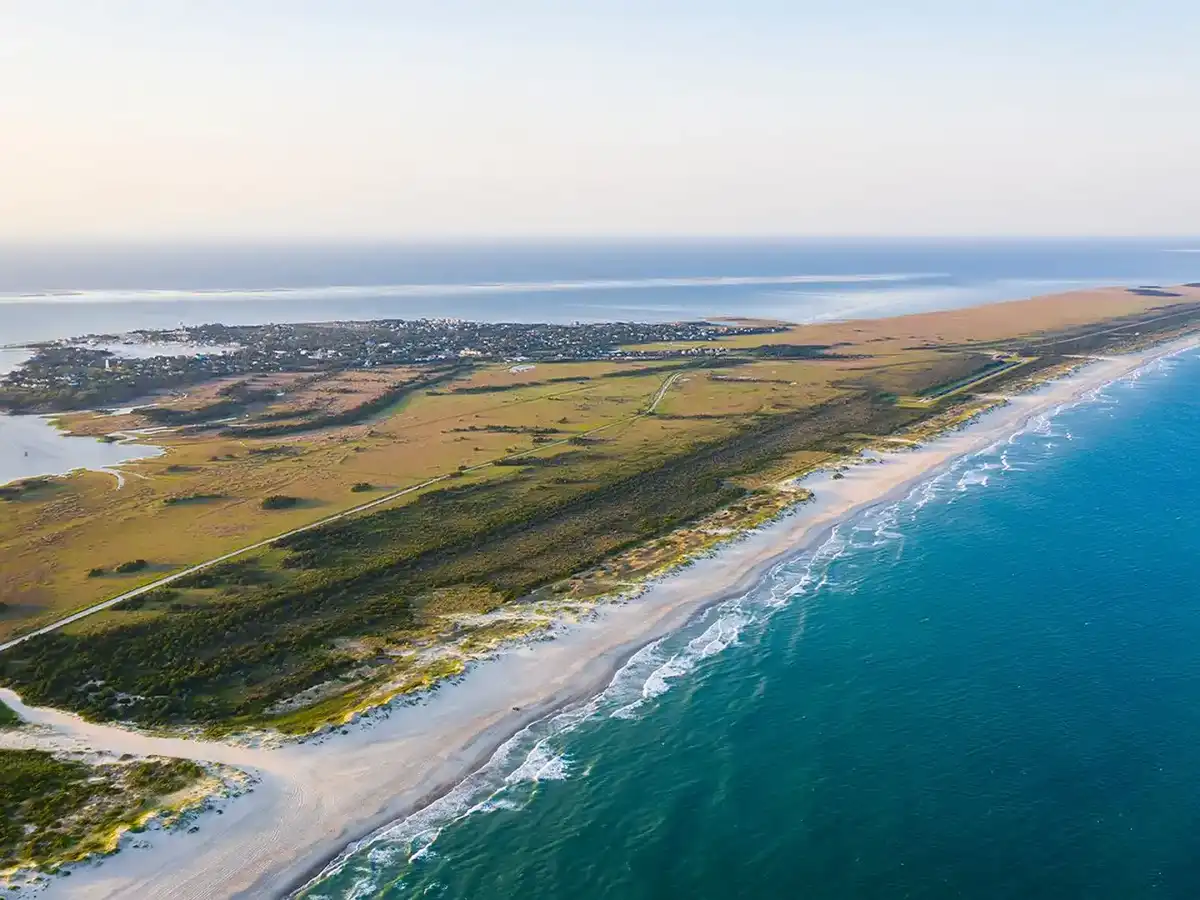
16 Ocracoke Island

Ferry access, 1823 lighthouse, Banker ponies, Springer’s Point, dark skies

Ride the ferry to a quiet island, then pair a swim at the lifeguarded beach with a forest walk to Pamlico Sound.

united-states-beach-ocracoke-island
© Google | Visit Ocracoke

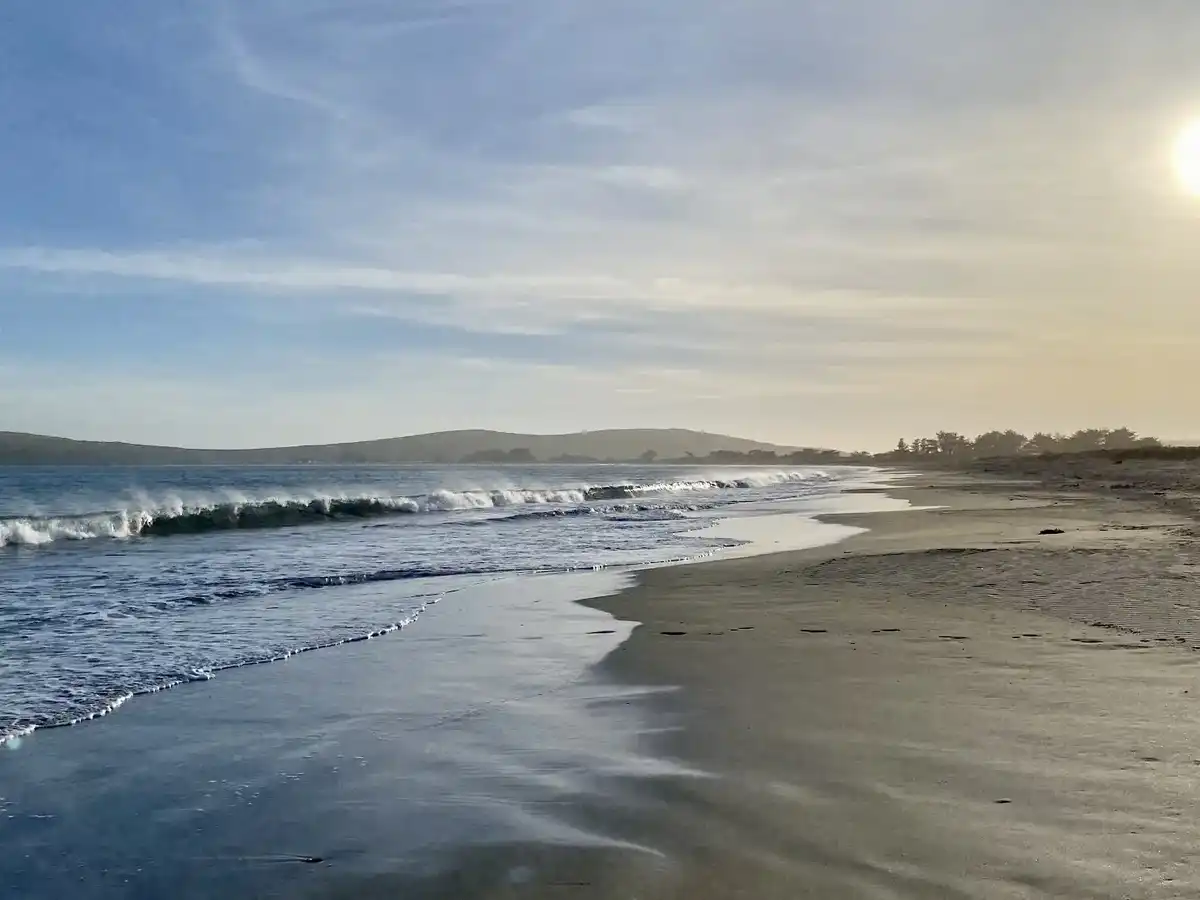
17 Bodega Bay

Whale-watching headland, sand spit, working docks, cold surf

Climb Bodega Head for winter whale sightings, then walk Doran’s sheltered spit and finish with chowder and crab sandwiches at the fishing docks.

united-states-beach-bodega-bay
© Google | Victor M

18 Cape May Beach

1859 lighthouse, concrete shipwreck, hawk watch, painted-lady streets

Climb 199 steps up the lighthouse, watch the flag lowered beside the half-sunken concrete ship, and wander Victorian streets a block from the sand.

Think you know the USA?

Prove you’re a true local — uncover 8 lesser-known beaches in the USA that locals tend to keep to themselves.
Loading the map 🌍

Expert viewWhat You Should Know

How many beaches to visit: Three to five beaches is the right number for most backpackers on a US trip, because distances are enormous and each region offers a different kind of coast. Going beyond five usually means more hours in a car or on a bus than on sand. A beach day also needs a full day to be worth the transport, so two beaches in one region is a reasonable cap per leg. Pick one beach per coastline you actually reach, and let the rest of your trip pay for itself in cities and parks.
Choosing the kind of beach: The main choice is between developed boardwalk beaches, wild protected shoreline and warm-water island or resort beaches. Boardwalk beaches (think Southern California, the Jersey Shore, Florida) give you food, lifeguards, showers and easy transit, and cost the least in time, … read more 👉
How many beaches to visit: Three to five beaches is the right number for most backpackers on a US trip, because distances are enormous and each region offers a different kind of coast. Going beyond five usually means more hours in a car or on a bus than on sand. A beach day also needs a full day to be worth the transport, so two beaches in one region is a reasonable cap per leg. Pick one beach per coastline you actually reach, and let the rest of your trip pay for itself in cities and parks.
Choosing the kind of beach: The main choice is between developed boardwalk beaches, wild protected shoreline and warm-water island or resort beaches. Boardwalk beaches (think Southern California, the Jersey Shore, Florida) give you food, lifeguards, showers and easy transit, and cost the least in time, but crowds and parking fees are the price. Protected shoreline in national and state parks gives you space and quiet, yet you need a car or a long shuttle, and the nearest cold drink may be 20 miles away. Island beaches in Hawaii or the Keys offer the best water but the highest bills, with flights of US$150 to 300 between islands or lodging at US$150 and up.
For a social traveler on a tight budget, boardwalk beaches near hostels give the most for the least. If you want solitude and hiking, protected coast is the better use of a day, provided you can share a rental car with two or three others. If water clarity matters above everything, spend on Hawaii or Florida rather than trying to find it in the Northeast, where the Atlantic is cold and brown-green even on good days.
What it costs: Plan on US$60 to 110 a day for a backpacker who does beaches on a budget, including a hostel dorm (US$35 to 70, higher in summer in beach towns), groceries and local buses. Add US$20 to 50 a day in a small rental car if you share it, plus gas around US$3.20 to 4.50 a gallon (US$0.85 to 1.20 a liter), varying by state.
Beach entry itself is often free, especially in California, Florida public beaches and Hawaii, where shoreline access is public. State park beaches charge US$5 to 15 per vehicle, national seashores US$15 to 30 per vehicle for a multi-day pass, and some Northeast and New Jersey towns sell seasonal badges at US$5 to 15 a day. Parking in hot spots runs US$10 to 40 a day, which is the hidden cost that wrecks a budget; arrive by bus, bike or rideshare in busy resort towns and the fee disappears. Gear is cheap if you buy it: a basic body board or umbrella costs US$20 to 40 at a drugstore, against US$15 to 30 a day to rent.
Food goes furthest at supermarkets and taco counters, at US$8 to 15 a meal, since boardwalk food often costs US$15 to 25 for something sandy. Tipping 18 to 20 percent applies in sit-down places and adds up quickly.
Safety on the sand: Rip currents are the biggest danger and cause most beach rescues nationwide. If you are caught in one, swim parallel to shore until the pull releases, then angle back in. Swim near a lifeguard tower, and treat red or purple flags as real instructions. Many beaches have no lifeguards outside summer weekends or after about 5 or 6 p.m., so a quiet beach in May can be riskier than a crowded one in July. Pacific beaches have cold water and sneaker waves that sweep people off rocks and logs, so keep your back off the ocean. Hawaii’s winter shorebreak injures more tourists than sharks ever will.
Sun is the other classic hazard: UV is strong from Florida to Hawaii, and sunburn on day one ruins day two. Jellyfish stings are common on the Atlantic and Gulf in summer, and vinegar or hot water works better than folklore. In the Southeast, heed any alligator signs near freshwater, which can be close to the sand. Marine layers, hurricane alerts and rip-current forecasts show up on weather.gov, and checking them takes under a minute.
Car break-ins at trailheads and beach lots, especially in California, are routine, so leave nothing visible and carry only a phone and a card in a waterproof pouch. Valuables should not stay on a towel when you swim. Stay solo-friendly by swimming where others do.
Local rules and etiquette: Rules vary state by state and sometimes town by town. Alcohol is banned on many public beaches, with fines of US$100 to 500, and glass is widely prohibited. Fires need permits or designated pits, and some beaches ban smoking. Topless sunbathing is legal in few places, and nude beaches are limited to a handful of designated spots, so default to a swimsuit. Dogs are restricted by season on many beaches, and nesting turtle and bird areas on the Atlantic and Gulf coasts are roped off with fines for crossing them; stay out of them, and turn off bright lights at night in turtle season. Hawaii’s reef-safe sunscreen law bans some chemical formulas, so buy mineral sunscreen before you land. Pack out all trash and give monk seals and sea turtles at least 10 feet (3 meters), since touching is illegal.

✈️ The backpacker research shortcutthe USA Travel Guide

An offline-friendly backpacking guide with optimized travel routes, ranked highlights, transport advice, and the best areas to stay.
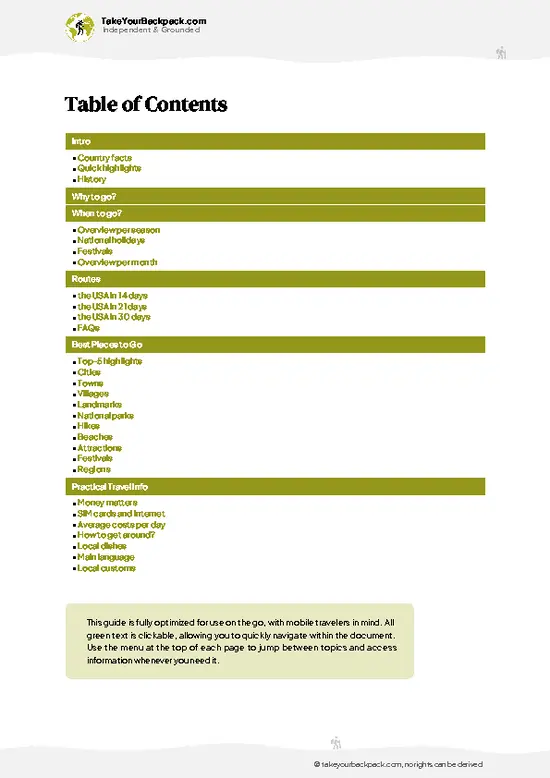
example page 0 from our offline Travel Guide for United States
example page 1 from our offline Travel Guide for United States
example page 2 from our offline Travel Guide for United States
example page 3 from our offline Travel Guide for United States
example page 4 from our offline Travel Guide for United States
example page 5 from our offline Travel Guide for United States
example page 6 from our offline Travel Guide for United States
example page 7 from our offline Travel Guide for United States
The digital guide (451 pages) contains:
✅ 159 highlights, ranked by travel appeal
✅ Optimized 14, 21 & 30-day travel routes
✅ Cities, national parks, landmarks, beaches
✅ How to get around
✅ Offline-friendly for travel without Wi-Fi
👉 Click to see all 30+ guide features

📅 Plan smarter in minutes, not weeks
✅ Month by month travel advice
✅ Festivals & national holidays
✅ Budget expectations

🗺️ Go to the right places, skip the overrated ones
✅ Honest pros & cons of destinations
✅ Top hikes, parks & viewpoints
✅ Lesser-known places most travelers miss
✅ Clear “worth it vs skip it” guidance

🛏️ Travel smoothly without rookie mistakes
✅ Best areas to stay
✅ Transport systems explained simply
✅ Common scams & safety advice
✅ SIM cards, money & practical tips

🌍 Understand the country, not just visit it
✅ Culture & traditions
✅ Local customs
✅ Festivals worth planning around
✅ Traveler-friendly historical context
✅ Insights that make places more meaningful

📱 Built for real travel conditions
✅ Fully downloadable PDF
✅ Works completely offline
✅ Optimized for phone use
✅ Useful in remote areas & buses
✅ Everything in one place
Stop searching, start planning
Get instant access to your full guide. 30‑day money-back guarantee.
+ Add another guide for just

By proceeding you agree to our terms.
Sent to your inbox immediately after payment • 100% Secure Checkout
Best Backpacking Travel Advisor 2025 tourism awardBest Backpacking
Travel Advisor
2025
What others say about Take Your Backpack Guides:
⭐⭐⭐⭐⭐
Fantastic, amazing amount of information!
⭐⭐⭐⭐⭐
My goodness this is amazing, it's what I've been looking for hats off too you!
⭐⭐⭐⭐⭐
I think this is absolutely BRILLIANT
⭐⭐⭐⭐
Very complete and informative. It's still missing places, but I gotta to commend you
⭐⭐⭐⭐⭐
This is truly amazing, thank you, can't wait to explore it with my kids!
⭐⭐⭐⭐⭐
Awesome resource, thank you!
⭐⭐⭐⭐⭐
This is amazing! Can't wait to explore the ones I haven't seen
⭐⭐⭐⭐
I love this! Well done, great idea.
⭐⭐⭐⭐⭐
Thanks for taking the time to make this gem!
⭐⭐⭐⭐⭐
This might be the best website I've ever seen.
⭐⭐⭐⭐⭐
Congratulations, and thank you so much for your work; it's incredibly valuable.
⭐⭐⭐⭐
In all seriousness I think you did a great job pointing out the important spots
⭐⭐⭐⭐⭐
10/10 very good
⭐⭐⭐⭐⭐
As someone who's only just starting to visit regularly this is awesome, thank you.
⭐⭐⭐⭐
Thank you very much! I'm going to visit my dad, it's going to be very useful!
⭐⭐⭐⭐⭐
This is really cool! We'll be travelling for the first time and this definitely come in handy.
⭐⭐⭐⭐⭐
You are now our minister of culture, congratulations 👨‍💼
⭐⭐⭐⭐⭐
Just wanted to tell you that this is a pearl! Going to follow your recommendations.
⭐⭐⭐⭐⭐
This is so cool. I'll definitely be using the resource for my travels soon.
⭐⭐⭐⭐⭐
This is very impressive! Good work.
⭐⭐⭐⭐⭐
This is an amazing and informative site. Very well done!

🛏️ Where to stay?Top Areas to Stay

The United States has hostels in nearly every major city and many national park gateway towns, with dorm beds usually running US$35 to 70 a night and basic motel rooms from about US$70 to 120 away from the main tourist strips. In New York, the Lower East Side and Williamsburg put you steps from late-night bars but cost the most, while Harlem is cheaper and calmer with a longer subway ride; in San Francisco, Union Square is central but rough after dark where it borders the Tenderloin, and Fisherman’s Wharf feels safer yet very touristy. Elsewhere, most hostels cluster in Hollywood and Venice Beach in Los Angeles (both lively, both sketchy on side streets late at night), Wicker Park in Chicago … read more 👉
The United States has hostels in nearly every major city and many national park gateway towns, with dorm beds usually running US$35 to 70 a night and basic motel rooms from about US$70 to 120 away from the main tourist strips. In New York, the Lower East Side and Williamsburg put you steps from late-night bars but cost the most, while Harlem is cheaper and calmer with a longer subway ride; in San Francisco, Union Square is central but rough after dark where it borders the Tenderloin, and Fisherman’s Wharf feels safer yet very touristy. Elsewhere, most hostels cluster in Hollywood and Venice Beach in Los Angeles (both lively, both sketchy on side streets late at night), Wicker Park in Chicago (great bars, 20 minutes from the Loop by train) and the French Quarter and Marigny in New Orleans, where easy nightlife comes with street noise until the small hours.

If you enjoy meeting fellow travelers, consider choosing hostels with high ratings for atmosphere. On the other hand, if you prefer having your own space, a hotel might be a better option.

the USADiscover the Country

👋 Meet the founderWho’s Behind Take Your Backpack?

Johan, backpacker and founder of TakeYourBackpackHi, I’m Johan (Netherlands 🇳🇱), the creator of TakeYourBackpack. Over the past 3 decades, I’ve backpacked through 90+ countries across six continents, gaining extensive experience with independent travel, long-term trips, and overland routes.

This site is built on a combination of firsthand travel experience and carefully curated insights from other backpackers. Many guides are based on places I’ve personally visited, while others bring together tips, observations, and practical advice shared by trusted travelers I’ve met along the way.

The goal is to provide realistic, experience-driven guidance — not generic itineraries — so you can explore destinations with better context, clearer expectations, and more confidence.