How many beaches to plan for: Two or three beaches is the right number for a trip to Yemen, and one stretch of coast is better than three. Getting around involves permits, checkpoints and drivers arranged in advance, so each extra coastline adds a day of paperwork and negotiation without adding much sand time. Anything beyond three is not worth the logistics. Most governments advise against all travel to Yemen, and standard travel insurance is usually void there, so confirm cover with a specialist insurer before booking anything.
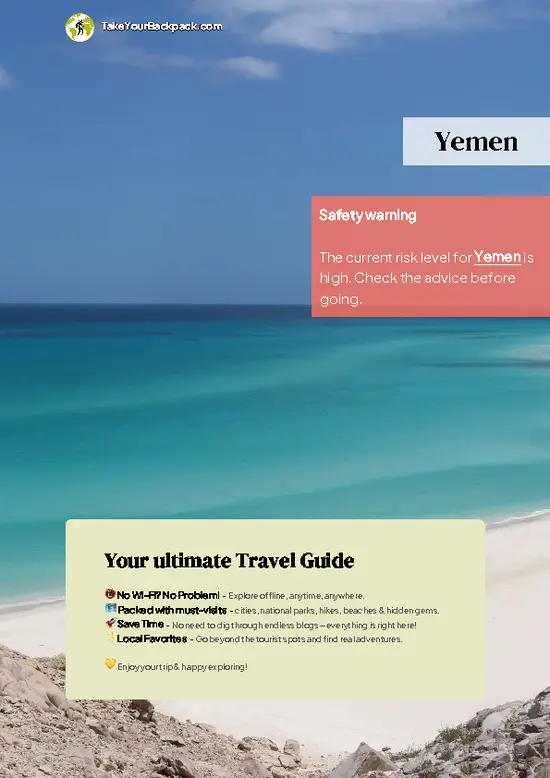
Which kind suits which traveler: Yemen offers three kinds of coast: the island, the Gulf of Aden shore and the Red Sea shore. For a first visit, the island is the one to prioritize. It has an established tourism setup, camping with local guides and the clearest water. …
read more 👉 How many beaches to plan for: Two or three beaches is the right number for a trip to Yemen, and one stretch of coast is better than three. Getting around involves permits, checkpoints and drivers arranged in advance, so each extra coastline adds a day of paperwork and negotiation without adding much sand time. Anything beyond three is not worth the logistics. Most governments advise against all travel to Yemen, and standard travel insurance is usually void there, so confirm cover with a specialist insurer before booking anything.
Which kind suits which traveler: Yemen offers three kinds of coast: the island, the Gulf of Aden shore and the Red Sea shore. For a first visit, the island is the one to prioritize. It has an established tourism setup, camping with local guides and the clearest water. The Gulf of Aden mainland shore suits travelers who want long empty stretches and fishing villages, but expect to rely on a driver and local contacts. The Red Sea shore is the weakest choice for a beach trip. Access is restricted, the water near towns and ports is often polluted, and the security picture is the least predictable. Skip it unless you are there for other reasons. Travelers wanting resort comforts should skip Yemen entirely, because there are no beach resorts, sunbed rental or beach bars.
What it costs: Budget US$100 to 150 a day on the island with a local operator, covering a 4x4 and driver, camping gear, food and permits. Mainland coast travel with a hired driver and a required escort or permit runs US$80 to 140 a day. Independent budget travel at US$25 to 40 a day is not realistic, because guided transport is mandatory in most areas and public transport does not reach the coast. Beach entry is free almost everywhere. Protected-area or village fees are small, typically US$2 to 10 a visit. Guides for snorkeling or local walks cost US$10 to 30 for a half day. Bring crisp US dollars in small bills. ATMs are unreliable, and exchange rates differ between regions, so agree prices in dollars before you start. Fuel shortages can push transport quotes up by 20 to 30 percent, so confirm the price in writing.
Delays and mistakes that cost you: Visa and permit delays are the biggest drain on a schedule. Apply for the visa and any regional permits at least four to six weeks ahead, and leave a buffer day on each side of flights, which are limited and often rescheduled. Do not book nonrefundable domestic transport until your operator confirms the permits. Another common mistake is choosing the wrong season, since the summer monsoon turns the island sea rough and flights can stop for weeks.
Safety and cultural rules: Swimming conditions are the practical danger. Strong currents, jellyfish and no lifeguards mean you swim only where local fishermen or your guide say it is safe. Landmines and unexploded ordnance remain a risk in parts of the mainland, so stay on tracks your driver knows and never wander into unmarked dunes. Dress conservatively. Men swim in shorts and a T-shirt. Women swim fully covered in loose, quick-dry clothing, and bikinis or going topless can cause serious offense or legal trouble. Many town beaches are used by families or segregated by gender, so ask before settling. Ask permission before photographing people, and never photograph checkpoints, ports or military sites. Drones are best left at home, since they draw suspicion and can be confiscated. Carry a printed copy of your permits at every checkpoint, and drink only bottled or boiled water.


 Best Backpacking
 Hi, I’m Johan (Netherlands 🇳🇱), the creator of TakeYourBackpack. Over the past 3 decades, I’ve backpacked through 90+ countries across six continents, gaining extensive experience with independent travel, long-term trips, and overland routes.