×

Yemen🇾🇪 | best regionsBest 3 regions in Yemen

Traveling in Yemen offers a rich tapestry of experiences shaped by its diverse regions. Each area has its own climate, landscapes, and cultural character, which significantly influence your backpacking journey. The rugged mountains of the north contrast sharply with the coastal plains of the south, affecting everything from safety to ease of travel.

Choosing the right region is crucial; it defines your vibe, impacts your budget, and determines the depth of your cultural immersion. Seasonal nuances also play a role—some areas are best visited in cooler months, while others thrive in the heat. Understanding these dynamics will help you navigate Yemen’s complexities and maximize your adventure.

By Johan Kruseman 🇳🇱 | Updated June 13, 2026
Explore the best cities in Yemen

Why go?Why Travelers Love These Spots

Yemen’s regions stand out due to their climatic diversity and cultural character. From the arid landscapes of the desert to the lush highlands, each area offers a unique experience that can’t be found elsewhere. This variety is not just scenic; it shapes the way people live, eat, and celebrate. The historical significance of Yemen, with its ancient trade routes and rich traditions, adds layers to every interaction.

However, this diversity comes with trade-offs. Travel distances can be significant, and while you might want to explore multiple regions, the time spent in transit can detract from deeper immersion. The infrastructure varies widely; some areas are well-connected, while others require careful planning and patience. This means that while you can access breathtaking landscapes and … read more 👉
Yemen’s regions stand out due to their climatic diversity and cultural character. From the arid landscapes of the desert to the lush highlands, each area offers a unique experience that can’t be found elsewhere. This variety is not just scenic; it shapes the way people live, eat, and celebrate. The historical significance of Yemen, with its ancient trade routes and rich traditions, adds layers to every interaction.

However, this diversity comes with trade-offs. Travel distances can be significant, and while you might want to explore multiple regions, the time spent in transit can detract from deeper immersion. The infrastructure varies widely; some areas are well-connected, while others require careful planning and patience. This means that while you can access breathtaking landscapes and vibrant cultures, you may also face challenges that demand flexibility and resilience.

Yemen is less suitable for those seeking a quick, easy trip. The rewards lie in the depth of exploration and the stories that unfold when you take the time to engage with local communities. Understanding these constraints is crucial; they can either drain your energy or enrich your experience. Choose wisely, and you’ll discover that Yemen’s regions are not just destinations but gateways to a profound journey.
Our Approach to Ranking
The list of best regions in Yemen is created based on landscapes, local culture, attractions, vibes, and overall appeal. If you feel a region is missing in this list, please let us know.

When to go?Timing Your Visit for the Best Experience

Climate Variation

Yemen’s climate varies significantly across regions. Coastal areas experience high humidity and heat, while the highlands enjoy milder temperatures. The summer months can be sweltering, especially in lowland regions, making travel uncomfortable. Winter brings cooler weather, ideal for exploration, but can also lead to rain in some areas.

Optimal Months

The best time to visit is typically from late fall to early spring. This period offers pleasant temperatures and clearer skies. However, the shoulder seasons—spring and late autumn—can also be rewarding. Expect fewer tourists and lower costs, but be prepared for variable weather.

Trade-offs

Traveling during peak seasons means vibrant local festivals and cultural experiences, but also larger crowds and higher prices. Conversely, … read more 👉

Climate Variation

Yemen’s climate varies significantly across regions. Coastal areas experience high humidity and heat, while the highlands enjoy milder temperatures. The summer months can be sweltering, especially in lowland regions, making travel uncomfortable. Winter brings cooler weather, ideal for exploration, but can also lead to rain in some areas.

Optimal Months

The best time to visit is typically from late fall to early spring. This period offers pleasant temperatures and clearer skies. However, the shoulder seasons—spring and late autumn—can also be rewarding. Expect fewer tourists and lower costs, but be prepared for variable weather.

Trade-offs

Traveling during peak seasons means vibrant local festivals and cultural experiences, but also larger crowds and higher prices. Conversely, visiting during shoulder seasons may provide a more intimate experience, though some attractions might have limited access or altered hours.

Seasonal Constraints

Consider the impact of the monsoon season, which can disrupt travel plans in certain regions. Heavy rains can lead to landslides and road closures, particularly in mountainous areas. Planning around these seasonal patterns is crucial for maximizing comfort and enjoyment.

region hoppingHow to Combine regions Into One Trip

Combining regions in Yemen requires strategic planning and a clear understanding of the country’s layout. Start by clustering regions based on proximity. The northern highlands, including Sana’a and Amran, can be explored together. Then, head south to the coastal areas like Aden and Mukalla. This route minimizes backtracking and maximizes time spent experiencing local culture.

Allocate at least two to three days in each major region. This allows for meaningful exploration without feeling rushed. Yemen’s charm lies in its depth, not just its sights. Rushing through will lead to missed connections and experiences.

A common mistake is underestimating travel times. Roads can be unpredictable, and local transport may not always align with schedules. Flexibility is key. If a local festival or read more 👉
Combining regions in Yemen requires strategic planning and a clear understanding of the country’s layout. Start by clustering regions based on proximity. The northern highlands, including Sana’a and Amran, can be explored together. Then, head south to the coastal areas like Aden and Mukalla. This route minimizes backtracking and maximizes time spent experiencing local culture.

Allocate at least two to three days in each major region. This allows for meaningful exploration without feeling rushed. Yemen’s charm lies in its depth, not just its sights. Rushing through will lead to missed connections and experiences.

A common mistake is underestimating travel times. Roads can be unpredictable, and local transport may not always align with schedules. Flexibility is key. If a local festival or event pops up, embrace it. It could be the highlight of the trip.

Consider trade-offs carefully. Speed might get you to more places, but depth offers richer experiences. Budget constraints can also dictate comfort levels. Opt for local accommodations to save money and immerse yourself in the culture. Ultimately, the reward lies in the stories you gather, not just the places you tick off a list.

The ListThe Best regions of Yemen

1 Socotra Archipelago

dragon blood trees, limestone plateaus, endemic wildlife

Hike through surreal landscapes where rare plants thrive, limestone cliffs drop to turquoise water, and wildlife exists nowhere else on earth.

2 Wadi Hadramaut

desert canyons, fortified towns, date plantations

Traverse a vast network of arid canyons, passing through fortified towns and green ribbons of date palms that trace the riverbeds.

3 Wadi Dawan

mudbrick villages, palm groves, ochre cliffs

Wander narrow valleys lined with ancient mudbrick settlements, where palm-dotted oases break the starkness of towering ochre canyon walls.

Loading the map 🌍

Expert viewTips and Advice from Travelers

Geographic Diversity
Yemen is a patchwork of landscapes, from the rugged mountains of the north to the coastal plains of the south. Each region offers a distinct flavor, shaped by geography and culture. You’ll want to experience at least three to four regions to grasp the country’s essence. The highlands, for instance, are a stark contrast to the arid deserts and lush coastal areas. This diversity is a double-edged sword; while it enriches your experience, it also demands careful planning. Expect to spend time traveling between regions, as distances can be deceptive. Roads may be in poor condition, and public transport can be unreliable. Factor in extra time for travel, and don’t underestimate the fatigue that comes with long journeys.

Transport Between Regions
Getting around Yemen is an … read more 👉
Geographic Diversity
Yemen is a patchwork of landscapes, from the rugged mountains of the north to the coastal plains of the south. Each region offers a distinct flavor, shaped by geography and culture. You’ll want to experience at least three to four regions to grasp the country’s essence. The highlands, for instance, are a stark contrast to the arid deserts and lush coastal areas. This diversity is a double-edged sword; while it enriches your experience, it also demands careful planning. Expect to spend time traveling between regions, as distances can be deceptive. Roads may be in poor condition, and public transport can be unreliable. Factor in extra time for travel, and don’t underestimate the fatigue that comes with long journeys.

Transport Between Regions
Getting around Yemen is an adventure in itself. While there are some domestic flights, they can be sporadic and expensive. Buses are the most common form of transport, but they can be slow and overcrowded. If you’re considering renting a car, be prepared for challenging driving conditions and a lack of clear signage. Always have a local guide if you can; they know the ins and outs of the roads and can help you navigate cultural nuances. The trade-off here is between speed and experience. Taking the bus might take longer, but it offers a chance to meet locals and soak in the scenery. If you’re pressed for time, consider flying between major hubs, but budget accordingly.

Cultural Variation
Cultural experiences vary dramatically from region to region. In the north, you’ll encounter a rich tapestry of traditions, influenced by centuries of history. The south, on the other hand, has a more laid-back vibe, with its own unique customs and dialects. This cultural mosaic means you’ll need to adjust your expectations and approach as you move from one area to another. Be mindful of local customs, especially in more conservative regions. Dress modestly and be respectful of social norms. The trade-off is between immersion and comfort; while you might feel out of your element at times, embracing these differences can lead to some of the most rewarding experiences.

Pacing Trade-Offs
When planning your itinerary, consider pacing carefully. It’s tempting to try to see everything, but this can lead to burnout. Prioritize regions based on your interests—whether it’s history, nature, or culture—and allow yourself time to truly absorb each place. A rushed trip can turn into a blur of experiences that you won’t remember. Instead, aim for a slower pace that allows for spontaneous exploration. This might mean spending more time in fewer regions, but the depth of experience will be worth it. Remember, Yemen is not just about ticking boxes; it’s about connecting with the land and its people.

Safety & Cultural Considerations
Safety is paramount in Yemen, and it’s essential to stay informed about the current situation. Some areas are more stable than others, so always check travel advisories and consult locals for the latest information. Be prepared for checkpoints and delays, and maintain a flexible attitude. Cultural sensitivity is crucial; Yemenis are generally hospitable, but understanding local customs will go a long way. Avoid discussing politics or sensitive topics, especially in rural areas. The trade-off here is between adventure and caution; while you want to explore freely, being respectful and aware will enhance your experience and keep you safe.

In summary, Yemen is a land of contrasts that rewards those who take the time to understand its complexities. Plan wisely, travel thoughtfully, and you’ll find that the journey is as enriching as the destination.

✈️ The backpacker research shortcutYemen Travel Guide

An offline-friendly backpacking guide with optimized travel routes, ranked highlights, transport advice, and the best areas to stay.
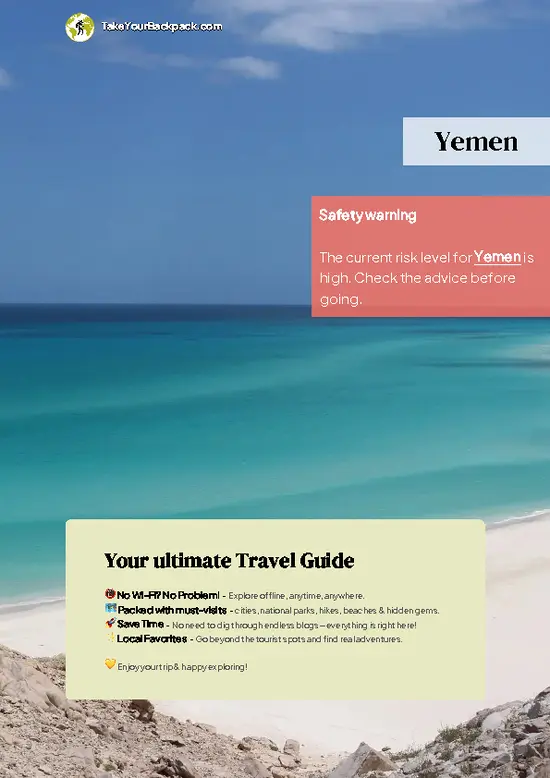
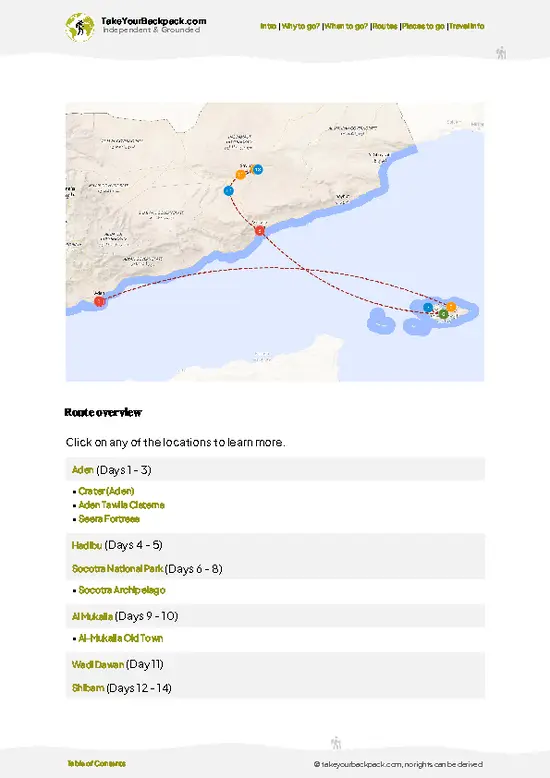
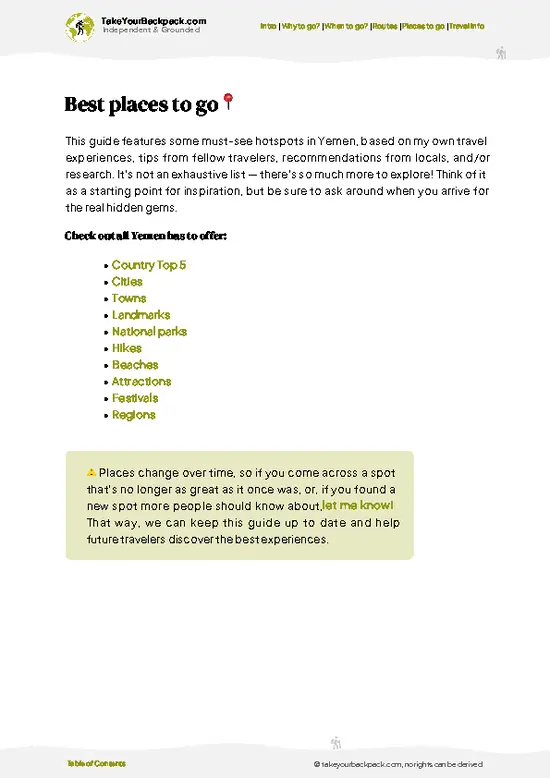
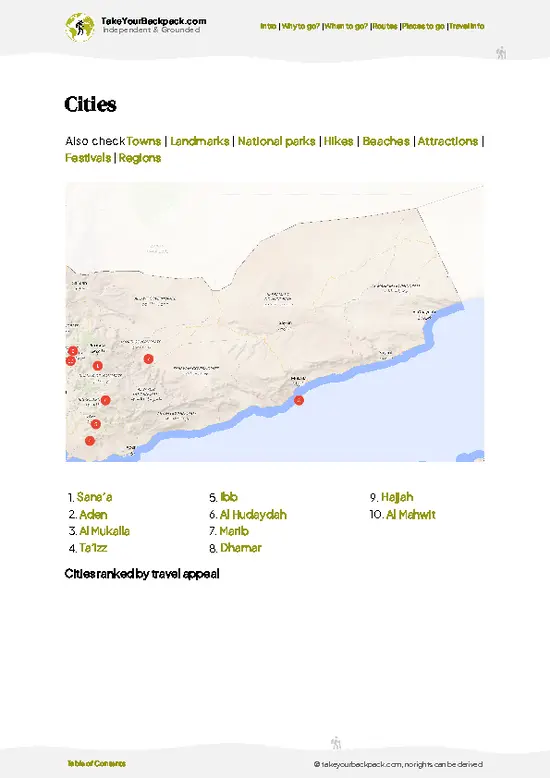
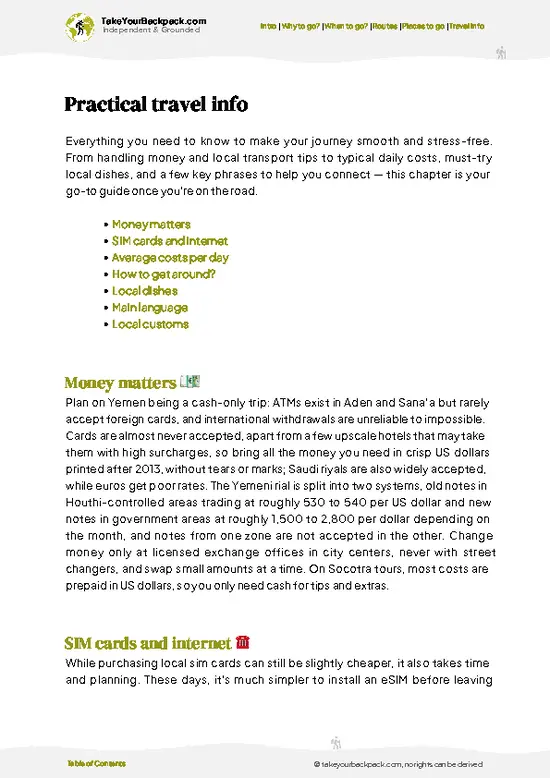
example page 0 from our offline Travel Guide for Yemen
example page 1 from our offline Travel Guide for Yemen
example page 2 from our offline Travel Guide for Yemen
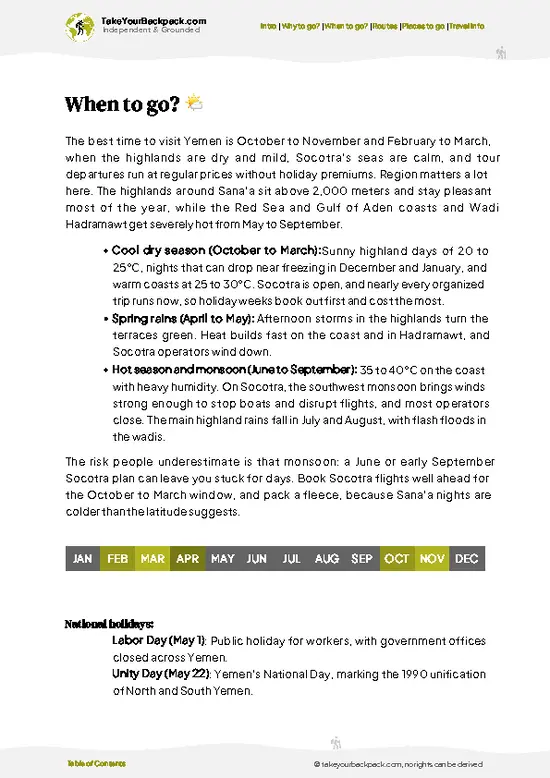
example page 3 from our offline Travel Guide for Yemen
example page 4 from our offline Travel Guide for Yemen
example page 5 from our offline Travel Guide for Yemen
example page 6 from our offline Travel Guide for Yemen
example page 7 from our offline Travel Guide for Yemen
The digital guide (290 pages) contains:
72 highlights, ranked by travel appeal
Optimized 5, 10 & 15-day travel routes
Cities, national parks, landmarks, beaches
How to get around
Offline-friendly for travel without Wi-Fi
👉 Click to see all 30+ guide features

📅 Plan smarter in minutes, not weeks
Month by month travel advice
Festivals & national holidays
Budget expectations

🗺️ Go to the right places, skip the overrated ones
Honest pros & cons of destinations
Top hikes, parks & viewpoints
Lesser-known places most travelers miss
Clear “worth it vs skip it” guidance

🛏️ Travel smoothly without rookie mistakes
Best areas to stay
Transport systems explained simply
Common scams & safety advice
SIM cards, money & practical tips

🌍 Understand the country, not just visit it
Culture & traditions
52 Essential phrases & customs
Festivals worth planning around
Traveler-friendly historical context
Insights that make places more meaningful

📱 Built for real travel conditions
Fully downloadable PDF
Works completely offline
Optimized for phone use
Useful in remote areas & buses
Everything in one place
Save weeks of stressful planning
Get instant access to your full guide. 30‑day money-back guarantee.


By proceeding you agree to our terms.
Sent to your inbox immediately after payment • 100% Secure Checkout
Best Backpacking Travel Advisor 2025 tourism awardBest Backpacking
Travel Advisor
2025
What others say about Take Your Backpack Guides:
⭐⭐⭐⭐⭐
Fantastic, amazing amount of information!
⭐⭐⭐⭐⭐
My goodness this is amazing, it's what I've been looking for hats off too you!
⭐⭐⭐⭐⭐
I think this is absolutely BRILLIANT
⭐⭐⭐⭐
Very complete and informative. It's still missing places, but I gotta to commend you
⭐⭐⭐⭐⭐
This is truly amazing, thank you, can't wait to explore it with my kids!
⭐⭐⭐⭐⭐
Awesome resource, thank you!
⭐⭐⭐⭐⭐
This is amazing! Can't wait to explore the ones I haven't seen
⭐⭐⭐⭐
I love this! Well done, great idea.
⭐⭐⭐⭐⭐
Thanks for taking the time to make this gem!
⭐⭐⭐⭐⭐
This might be the best website I've ever seen.
⭐⭐⭐⭐⭐
Congratulations, and thank you so much for your work; it's incredibly valuable.
⭐⭐⭐⭐
In all seriousness I think you did a great job pointing out the important spots
⭐⭐⭐⭐⭐
10/10 very good
⭐⭐⭐⭐⭐
As someone who's only just starting to visit regularly this is awesome, thank you.
⭐⭐⭐⭐
Thank you very much! I'm going to visit my dad, it's going to be very useful!
⭐⭐⭐⭐⭐
This is really cool! We'll be travelling for the first time and this definitely come in handy.
⭐⭐⭐⭐⭐
You are now our minister of culture, congratulations 👨‍💼
⭐⭐⭐⭐⭐
Just wanted to tell you that this is a pearl! Going to follow your recommendations.
⭐⭐⭐⭐⭐
This is so cool. I'll definitely be using the resource for my travels soon.
⭐⭐⭐⭐⭐
This is very impressive! Good work.
⭐⭐⭐⭐⭐
This is an amazing and informative site. Very well done!

🛏️ Where to stay?Best Places to Stay in Yemen

Hostels are rare in Yemen, but budget guesthouses and small local hotels exist in major cities; availability is limited and heavily affected by security, so expect basic rooms, intermittent services, and the need to arrange contacts or confirmations before arrival.

Most options cluster in Sana’a (Old City gives immediate access to souks and architecture but is crowded and sensitive; Hadda/modern districts are quieter, nearer international facilities and slightly more secure but farther from historic sights), Aden (Crater and Tawahi are closest to ports and the liveliest nightlife but carry higher unrest risk; Khormaksar is quieter and near the airport), Taiz city centre (close to markets and … read more 👉
Hostels are rare in Yemen, but budget guesthouses and small local hotels exist in major cities; availability is limited and heavily affected by security, so expect basic rooms, intermittent services, and the need to arrange contacts or confirmations before arrival.

Most options cluster in Sana’a (Old City gives immediate access to souks and architecture but is crowded and sensitive; Hadda/modern districts are quieter, nearer international facilities and slightly more secure but farther from historic sights), Aden (Crater and Tawahi are closest to ports and the liveliest nightlife but carry higher unrest risk; Khormaksar is quieter and near the airport), Taiz city centre (close to markets and cultural sites but services are limited and security can be unpredictable), and Mukalla on the coast (basic seaside guesthouses, calmer but with sparse transport and amenities).

If you enjoy meeting fellow travelers, consider choosing hostels with high ratings for atmosphere. On the other hand, if you prefer having your own space, a hotel might be a better option.

YemenExplore Yemen

👋 Meet the founderWho’s Behind Take Your Backpack?

Johan, backpacker and founder of TakeYourBackpackHi, I’m Johan (Netherlands 🇳🇱), the creator of TakeYourBackpack. Over the past decade, I’ve backpacked through 80+ countries across six continents, gaining extensive experience with independent travel, long-term trips, and overland routes.

This site is built on a combination of firsthand travel experience and carefully curated insights from other backpackers. Many guides are based on places I’ve personally visited, while others bring together tips, observations, and practical advice shared by trusted travelers I’ve met along the way.

The goal is to provide realistic, experience-driven guidance — not generic itineraries — so you can explore destinations with better context, clearer expectations, and more confidence.

Get full Yemen guide •
Instant download • 72 highlights • Full Offline guide