×

Yemen🇾🇪 | best hikesBest 8 hikes in Yemen

Yemen offers a unique tapestry of hiking experiences that cater to every backpacker’s taste, from rugged mountains to lush valleys. The difficulty of trails varies significantly, influenced by altitude and seasonal weather patterns. For instance, the highlands present challenging hikes that reward you with breathtaking views, while coastal routes are more forgiving but can be sweltering.

Choosing the right hike shapes your entire trip. It affects your budget, as some trails require permits or local guides, and influences your safety based on regional stability. The right trail can enhance your cultural immersion, allowing you to connect with local communities. Prioritize wisely to maximize your energy and ensure your adventure in Yemen is both memorable and manageable.

By Johan Kruseman 🇳🇱 | Updated June 17, 2026
Explore the best beaches in Yemen

Why go?Why Travelers Love These Spots

Hiking in Yemen is a unique experience, shaped by its diverse terrain and rich cultural backdrop. The country boasts everything from rugged mountains to arid deserts, offering a variety of landscapes that few places can match. This diversity means that hikers can encounter dramatic changes in scenery within a single trek, but it also presents challenges. The altitude in regions like the Haraz Mountains can reach over 3,000 meters, demanding a good level of fitness and acclimatization.

Trail infrastructure in Yemen varies significantly. While some paths are well-trodden and marked, others can be less defined, requiring navigation skills and local knowledge. This inconsistency can lead to rewarding discoveries or frustrating detours, depending on preparation.

Logistics are another critical … read more 👉
Hiking in Yemen is a unique experience, shaped by its diverse terrain and rich cultural backdrop. The country boasts everything from rugged mountains to arid deserts, offering a variety of landscapes that few places can match. This diversity means that hikers can encounter dramatic changes in scenery within a single trek, but it also presents challenges. The altitude in regions like the Haraz Mountains can reach over 3,000 meters, demanding a good level of fitness and acclimatization.

Trail infrastructure in Yemen varies significantly. While some paths are well-trodden and marked, others can be less defined, requiring navigation skills and local knowledge. This inconsistency can lead to rewarding discoveries or frustrating detours, depending on preparation.

Logistics are another critical factor. Travel times can be lengthy due to road conditions and limited transportation options, which can impact how deeply one can explore the landscape. The best hiking seasons are typically in the cooler months, but safety concerns, including political stability and weather conditions, must be carefully considered.

Ultimately, Yemen’s hikes offer a profound connection to its cultural and historical layers, but they come with trade-offs. The balance between accessibility and immersive experiences is delicate; the more remote the trail, the richer the experience, but also the more challenging the journey. Understanding these dynamics is essential for making the most of Yemen’s breathtaking hikes.
Our Approach to Ranking
The list of best hikes in Yemen is created based on scenery, challenge, trail quality, landmarks, and overall enjoyment. If you feel a hike is missing in this list, please let us know.

When to go?Timing Your Visit for the Best Experience

Altitude and Trail Access

Yemen’s diverse terrain means that altitude plays a significant role in hiking conditions. Higher elevations can bring cooler temperatures, but they also require acclimatization. The best hiking months typically fall between late autumn and early spring, when temperatures are milder and the risk of rain is lower.

Daylight Hours

Daylight varies throughout the year, impacting hiking schedules. In winter, shorter days mean less time on the trails. Plan hikes to maximize daylight, especially in the higher altitudes where temperatures drop quickly after sunset.

Rainfall Patterns

Rainfall can be unpredictable. The summer months often bring intense heat and occasional storms, while winter may see more consistent rain, particularly in the highlands. This can affect … read more 👉

Altitude and Trail Access

Yemen’s diverse terrain means that altitude plays a significant role in hiking conditions. Higher elevations can bring cooler temperatures, but they also require acclimatization. The best hiking months typically fall between late autumn and early spring, when temperatures are milder and the risk of rain is lower.

Daylight Hours

Daylight varies throughout the year, impacting hiking schedules. In winter, shorter days mean less time on the trails. Plan hikes to maximize daylight, especially in the higher altitudes where temperatures drop quickly after sunset.

Rainfall Patterns

Rainfall can be unpredictable. The summer months often bring intense heat and occasional storms, while winter may see more consistent rain, particularly in the highlands. This can affect trail conditions, making some paths muddy or inaccessible.

Optimal and Shoulder Seasons

The optimal hiking season generally spans from October to April. However, the shoulder seasons—late spring and early autumn—can offer fewer crowds and lower costs. Be prepared for variable weather; conditions can shift rapidly, and trails may be less maintained.

Seasonal Constraints

Travelers should consider the trade-offs of each season. Peak periods can lead to crowded trails and inflated prices, while off-peak times may present challenges like unpredictable weather or limited services. Balancing safety with scenic reward is essential for an enjoyable experience.

hike hoppingHow to Combine hikes Into One Trip

General Routing Logic

To combine the best hikes in Yemen, start by clustering regions. Focus on the western highlands, where the most rewarding trails lie. Begin in Sana’a, then head to the Hajjah and Amran regions. This keeps travel time short and maximizes scenic variety.

Typical Time Needed

Allocate at least two days per major hiking area. This allows for acclimatization, recovery, and exploration. Rushing through will drain energy and diminish the experience.

Common Planning Mistakes

Many underestimate the physical demands of Yemen’s terrain. Hikes can be steep and challenging. Don’t cram too many hikes into a short timeframe. This leads to fatigue and missed opportunities for deeper engagement with the landscape and culture.

Trade-offs and Constraints

Consider the balance between … read more 👉

General Routing Logic

To combine the best hikes in Yemen, start by clustering regions. Focus on the western highlands, where the most rewarding trails lie. Begin in Sana’a, then head to the Hajjah and Amran regions. This keeps travel time short and maximizes scenic variety.

Typical Time Needed

Allocate at least two days per major hiking area. This allows for acclimatization, recovery, and exploration. Rushing through will drain energy and diminish the experience.

Common Planning Mistakes

Many underestimate the physical demands of Yemen’s terrain. Hikes can be steep and challenging. Don’t cram too many hikes into a short timeframe. This leads to fatigue and missed opportunities for deeper engagement with the landscape and culture.

Trade-offs and Constraints

Consider the balance between speed and depth. Fast travel means less immersion. Budget constraints may push for cheaper accommodations, but comfort can enhance recovery. Prioritize rest days after strenuous hikes to recharge.

Pacing Strategies

Pace yourself. Mix challenging hikes with easier ones to maintain energy levels. Flexibility is key; be prepared to adjust plans based on weather or personal stamina. This approach ensures that each hike feels rewarding rather than exhausting.

The ListThe Best hikes of Yemen

1 Jebel Haraz

terraced slopes, fortified hamlets, misty mornings

Walk through a landscape shaped by centuries of cultivation, passing stone villages perched above cloud-filled valleys.

2 Jabal An-Nabi Shu’ayb

highest peak, alpine air, rocky summit

Reach Yemen’s tallest point, where thin air and exposed rock demand stamina and reward with far-reaching mountain vistas.

3 Jabal Bura

mist forest, steep stone terraces, endemic flora

Ascend through shifting cloud forest and ancient agricultural terraces, where rare plants and dramatic elevation changes define the route’s character.

4 Wadi Dhahr

palace outcrop, fertile valley, sandstone cliffs

Experience a short hike combining cultivated fields, dramatic rock formations, and the iconic Dar al-Hajar rising above orchards.

yemen-hike-wadi-dhahr
© Google |

5 Al-Mahwit to Al-Tawila Trail

mountain ridge, stone villages, deep valleys

Traverse a highland route connecting isolated communities, with constant elevation shifts and panoramic views across rugged terrain.

6 Wadi Hadhramaut

canyon floor, ancient settlements, towering bluffs

Journey along a broad valley floor, where mudbrick towns and sheer cliffs create a sense of scale unique to southern Arabia.

7 Al Hajarayn Trail

mudbrick villages, palm groves, desert escarpment

Follow a path linking remote settlements and oasis gardens, with sharp transitions between cultivated land and arid cliffs.

8 Al-Qahira Castle Trail

hilltop fortress, city panorama, winding stairways

Climb narrow steps to a strategic stronghold, gaining wide views over Taiz and glimpses into Yemen’s layered urban landscape.

Loading the map 🌍

Expert viewTips and Advice from Travelers

Trail Logistics

Yemen offers a range of hikes that can challenge even seasoned backpackers. Aim for three to five hikes to get a well-rounded experience without burning out. Each hike varies in altitude and terrain, so understanding your limits is crucial. Some trails can take you from sea level to over 3,000 meters in a matter of hours. This rapid ascent can lead to altitude sickness if you’re not acclimatized. Take your time; pacing is key. A good rule of thumb is to allow at least two days for acclimatization before tackling higher elevations.

Recovery

Recovery is often overlooked but vital. After a strenuous hike, give yourself at least a full day to rest and recharge. Hydration is non-negotiable; Yemen’s dry climate can dehydrate you faster than you think. Eat local foods rich in carbohydrates … read more 👉

Trail Logistics

Yemen offers a range of hikes that can challenge even seasoned backpackers. Aim for three to five hikes to get a well-rounded experience without burning out. Each hike varies in altitude and terrain, so understanding your limits is crucial. Some trails can take you from sea level to over 3,000 meters in a matter of hours. This rapid ascent can lead to altitude sickness if you’re not acclimatized. Take your time; pacing is key. A good rule of thumb is to allow at least two days for acclimatization before tackling higher elevations.

Recovery

Recovery is often overlooked but vital. After a strenuous hike, give yourself at least a full day to rest and recharge. Hydration is non-negotiable; Yemen’s dry climate can dehydrate you faster than you think. Eat local foods rich in carbohydrates and proteins to replenish your energy. If you’re hiking in remote areas, plan your meals carefully. Local markets may not always have what you need, so stock up on essentials in larger towns.

Difficulty

Difficulty levels can be deceptive. What looks like a moderate trail on a map can turn into a grueling trek due to loose rocks or sudden weather changes. Be honest with yourself about your fitness level. If you’re not used to hiking, start with easier trails and gradually work your way up. Some hikes may require technical skills or even local guides, especially in less-traveled areas. Don’t skimp on hiring a guide; they can provide invaluable local knowledge and ensure your safety.

Pacing

Pacing is everything in Yemen. The heat can be oppressive, especially in the summer months. Start early in the morning to avoid the midday sun, and plan to finish your hikes by early afternoon. This not only helps with safety but also allows you to enjoy the stunning landscapes without rushing. If you’re hiking with a group, keep an eye on everyone’s energy levels. It’s better to slow down and enjoy the journey than to push through and risk injury or exhaustion.

Planning and Prioritizing Hikes

When planning your hikes, consider the cultural context. Yemen is rich in history and local traditions, so factor in time to explore villages and interact with locals. This adds depth to your experience but can also slow your pace. Prioritize hikes that offer a mix of natural beauty and cultural significance. Some trails may lead you through ancient ruins or traditional markets, which can be just as rewarding as the hike itself.

Safety & Cultural Considerations

Safety is paramount. Always check local conditions before heading out. Political stability can vary, and some areas may be off-limits. Respect local customs, especially in rural areas. Dress modestly and be mindful of how you interact with locals. A friendly smile goes a long way, but be aware that not everyone may be open to conversation.

Yemen’s hiking trails are not just paths through the mountains; they are gateways to understanding a complex and beautiful culture. Approach each hike with respect, preparation, and an open heart. The rewards will be worth the effort.

✈️ The backpacker research shortcutYemen Travel Guide

An offline-friendly backpacking guide with optimized travel routes, ranked highlights, transport advice, and the best areas to stay.
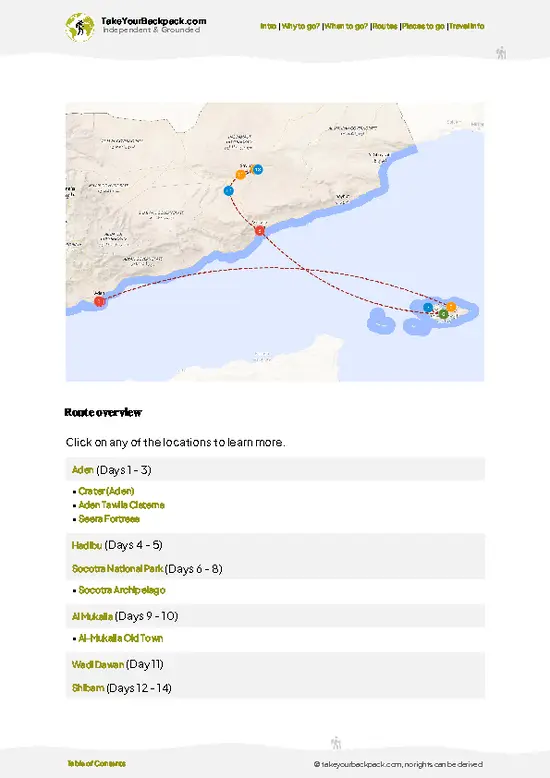
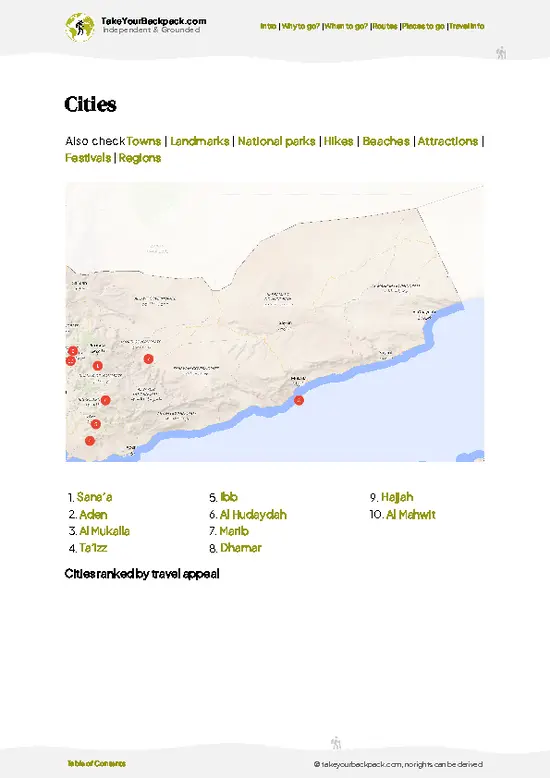
example page 0 from our offline Travel Guide for Yemen
example page 1 from our offline Travel Guide for Yemen
example page 2 from our offline Travel Guide for Yemen
example page 3 from our offline Travel Guide for Yemen
example page 4 from our offline Travel Guide for Yemen
example page 5 from our offline Travel Guide for Yemen
example page 6 from our offline Travel Guide for Yemen
example page 7 from our offline Travel Guide for Yemen
The digital guide (290 pages) contains:
72 highlights, ranked by travel appeal
Optimized 5, 10 & 15-day travel routes
Cities, national parks, landmarks, beaches
How to get around
Offline-friendly for travel without Wi-Fi
👉 Click to see all 30+ guide features

📅 Plan smarter in minutes, not weeks
Month by month travel advice
Festivals & national holidays
Budget expectations

🗺️ Go to the right places, skip the overrated ones
Honest pros & cons of destinations
Top hikes, parks & viewpoints
Lesser-known places most travelers miss
Clear “worth it vs skip it” guidance

🛏️ Travel smoothly without rookie mistakes
Best areas to stay
Transport systems explained simply
Common scams & safety advice
SIM cards, money & practical tips

🌍 Understand the country, not just visit it
Culture & traditions
52 Essential phrases & customs
Festivals worth planning around
Traveler-friendly historical context
Insights that make places more meaningful

📱 Built for real travel conditions
Fully downloadable PDF
Works completely offline
Optimized for phone use
Useful in remote areas & buses
Everything in one place
Save weeks of stressful planning
Get instant access to your full guide. 30‑day money-back guarantee.


By proceeding you agree to our terms.
Sent to your inbox immediately after payment • 100% Secure Checkout
Best Backpacking Travel Advisor 2025 tourism awardBest Backpacking
Travel Advisor
2025
What others say about Take Your Backpack Guides:
⭐⭐⭐⭐⭐
Fantastic, amazing amount of information!
⭐⭐⭐⭐⭐
My goodness this is amazing, it's what I've been looking for hats off too you!
⭐⭐⭐⭐⭐
I think this is absolutely BRILLIANT
⭐⭐⭐⭐
Very complete and informative. It's still missing places, but I gotta to commend you
⭐⭐⭐⭐⭐
This is truly amazing, thank you, can't wait to explore it with my kids!
⭐⭐⭐⭐⭐
Awesome resource, thank you!
⭐⭐⭐⭐⭐
This is amazing! Can't wait to explore the ones I haven't seen
⭐⭐⭐⭐
I love this! Well done, great idea.
⭐⭐⭐⭐⭐
Thanks for taking the time to make this gem!
⭐⭐⭐⭐⭐
This might be the best website I've ever seen.
⭐⭐⭐⭐⭐
Congratulations, and thank you so much for your work; it's incredibly valuable.
⭐⭐⭐⭐
In all seriousness I think you did a great job pointing out the important spots
⭐⭐⭐⭐⭐
10/10 very good
⭐⭐⭐⭐⭐
As someone who's only just starting to visit regularly this is awesome, thank you.
⭐⭐⭐⭐
Thank you very much! I'm going to visit my dad, it's going to be very useful!
⭐⭐⭐⭐⭐
This is really cool! We'll be travelling for the first time and this definitely come in handy.
⭐⭐⭐⭐⭐
You are now our minister of culture, congratulations 👨‍💼
⭐⭐⭐⭐⭐
Just wanted to tell you that this is a pearl! Going to follow your recommendations.
⭐⭐⭐⭐⭐
This is so cool. I'll definitely be using the resource for my travels soon.
⭐⭐⭐⭐⭐
This is very impressive! Good work.
⭐⭐⭐⭐⭐
This is an amazing and informative site. Very well done!

🛏️ Where to stay?Best Stay Options in Yemen

Hostels are rare in Yemen, but budget guesthouses and small local hotels exist in major cities; availability is limited and heavily affected by security, so expect basic rooms, intermittent services, and the need to arrange contacts or confirmations before arrival.

Most options cluster in Sana’a (Old City gives immediate access to souks and architecture but is crowded and sensitive; Hadda/modern districts are quieter, nearer international facilities and slightly more secure but farther from historic sights), Aden (Crater and Tawahi are closest to ports and the liveliest nightlife but carry higher unrest risk; Khormaksar is quieter and near the airport), Taiz city centre (close to markets and … read more 👉
Hostels are rare in Yemen, but budget guesthouses and small local hotels exist in major cities; availability is limited and heavily affected by security, so expect basic rooms, intermittent services, and the need to arrange contacts or confirmations before arrival.

Most options cluster in Sana’a (Old City gives immediate access to souks and architecture but is crowded and sensitive; Hadda/modern districts are quieter, nearer international facilities and slightly more secure but farther from historic sights), Aden (Crater and Tawahi are closest to ports and the liveliest nightlife but carry higher unrest risk; Khormaksar is quieter and near the airport), Taiz city centre (close to markets and cultural sites but services are limited and security can be unpredictable), and Mukalla on the coast (basic seaside guesthouses, calmer but with sparse transport and amenities).

If you enjoy meeting fellow travelers, consider choosing hostels with high ratings for atmosphere. On the other hand, if you prefer having your own space, a hotel might be a better option.

YemenWhere to Go Next

👋 Meet the founderWho’s Behind Take Your Backpack?

Johan, backpacker and founder of TakeYourBackpackHi, I’m Johan (Netherlands 🇳🇱), the creator of TakeYourBackpack. Over the past decade, I’ve backpacked through 80+ countries across six continents, gaining extensive experience with independent travel, long-term trips, and overland routes.

This site is built on a combination of firsthand travel experience and carefully curated insights from other backpackers. Many guides are based on places I’ve personally visited, while others bring together tips, observations, and practical advice shared by trusted travelers I’ve met along the way.

The goal is to provide realistic, experience-driven guidance — not generic itineraries — so you can explore destinations with better context, clearer expectations, and more confidence.

Get full Yemen guide •
Instant download • 72 highlights • Full Offline guide