Short version: yes, but it’s an “intermediate level” backpacking country, not a first-ever trip to Southeast Asia. If you’re comfortable with long bus rides, loose schedules, and basic guesthouses, Zambia is very doable on your own.
Why it’s doable:
- English is widely spoken, especially in towns and for anything official (bus stations, parks, banks).
- People are generally friendly and helpful if you ask direct, simple questions.
- There’s a clear backpacker trail around Livingstone, Lusaka, South Luangwa, and the Copperbelt/Great North Road.
Where it gets tricky:
- Distances are big, roads can be rough, and public transport is slow and sometimes overcrowded.
- National parks are expensive to enter and usually require a tour or lodge transfer, so “fully DIY” safaris are limited unless you’re very experienced.
- ATMs and card machines can be unreliable outside major towns, so you need to think ahead with cash.
Who will be comfortable:
- You’ve already backpacked in East or Southern Africa, or at least done some less-structured travel elsewhere.
- You’re okay with plans changing because a bus is late, a minibus won’t leave until it’s full, or a road is washed out in rainy season.
If it’s your first big trip, Zambia is still possible, but you’ll enjoy it more if you keep your route simple (Livingstone + one park + Lusaka) and lean on hostels and local tour operators for the complicated bits like safaris and remote areas.
For a solid backpacking trip that doesn’t feel rushed, 2–3 weeks is the sweet spot. You can do less, but you’ll be trading depth for bus time.
Rough timing guide:
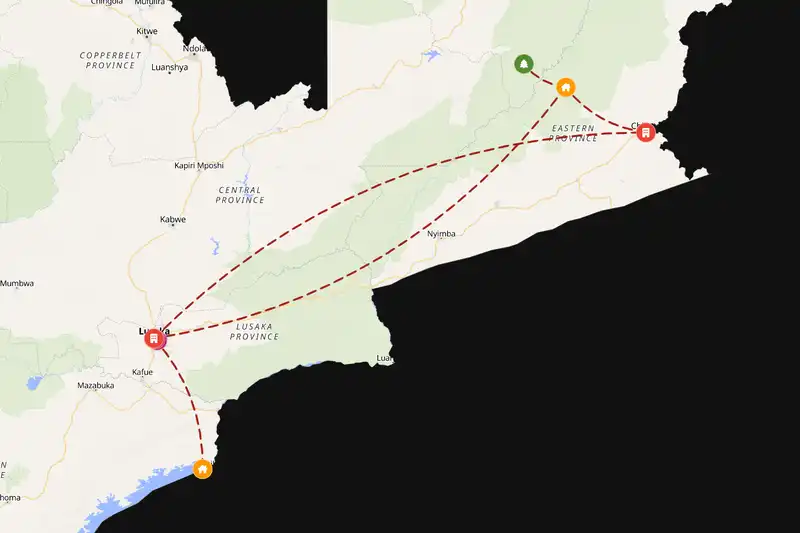
- 7 days: Focus trip. Example: 3–4 days in Livingstone (Victoria Falls, Zambezi, day trips) + 3–4 days in one park (South Luangwa or Kafue) if your budget allows. You’ll fly or do one long bus leg.
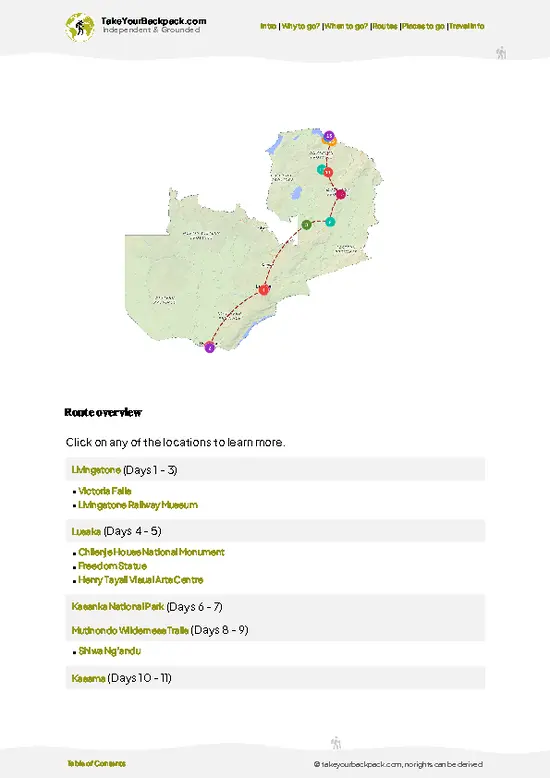
- 10–14 days: Classic backpacker loop. Livingstone → Lusaka → South Luangwa (or Kafue) → back to Lusaka. This gives you time for at least one overnight bus, a couple of rest days, and a mix of city and nature.
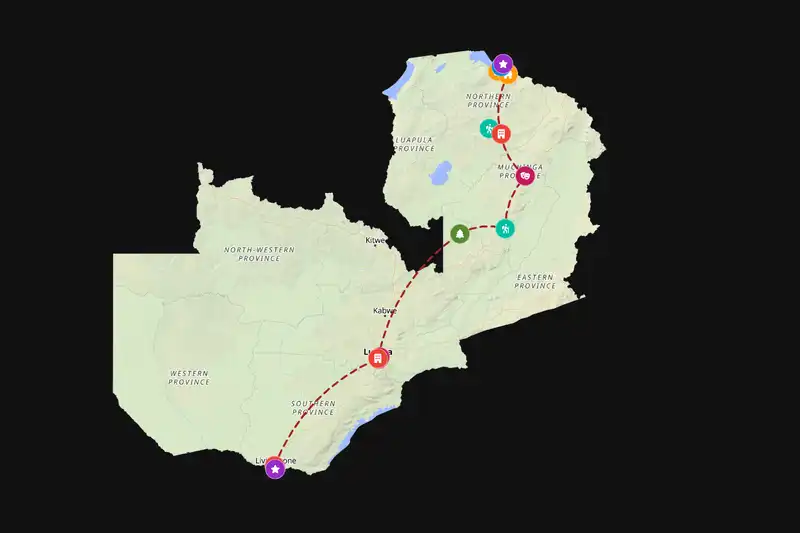
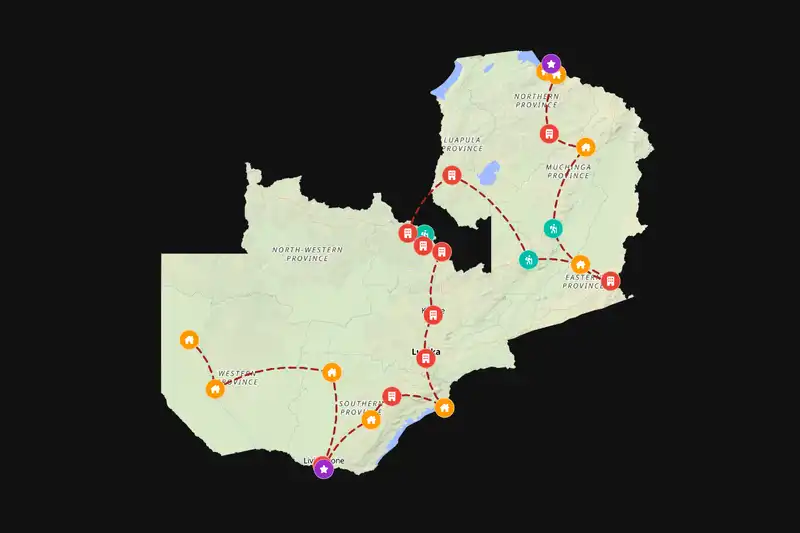
- 3+ weeks: Deeper dive. Add the northern lakes and waterfalls (Lake Tanganyika, Lake Bangweulu, or the waterfall belt around Mpika/Kasama), or spend more time in Kafue and smaller towns.
Time budgeting tips for budget travelers:
- Overland travel eats days. A “simple” move between hubs can easily be 8–12 hours door to door.
- Safaris are best in 3-night chunks. Anything less than 2 nights in a park feels rushed and poor value.
- Build at least one buffer day in Lusaka or Livingstone for laundry, errands, and recovering from night buses.
If you only have a week and you’re on a tight budget, it’s usually smarter to pick one base (Livingstone or one park) and explore around it rather than trying to cross half the country.
You can absolutely get around Zambia without a car, but you’ll need patience and a flexible mindset.
How budget travelers move:
- Intercity buses: Big coaches run between major cities (Lusaka, Livingstone, Ndola, Kitwe, Chipata). They’re cheap, reasonably safe, and usually leave in the morning. Buy tickets a day ahead when possible.
- Minibuses and shared taxis: Connect smaller towns and suburbs. They leave when full, not on a fixed schedule, so departure times are “approximate.”
- Lodge/hostel transfers: For national parks like South Luangwa or remote parts of Kafue, many budget lodges offer paid transfers from the nearest town or bus stop. This is often the only realistic way in without your own vehicle.
- Hitching with trucks: Common on major routes, but only for experienced travelers who are comfortable assessing safety on the spot. It’s slow and not guaranteed.
What’s hard without a car:
- Deep inside national parks: Game drives are almost always with a lodge or tour operator; self-driving is rare for backpackers.
- Very remote waterfalls and lakes: Places in the far north or off the Great North Road can require multiple changes of minibus and sometimes a motorbike taxi at the end.
Practical tips:
- Travel early in the day; buses and minibuses are more frequent and you avoid being stranded after dark.
- Ask at your hostel or guesthouse about the current best bus company and departure point; these can change.
- Keep small bills for local transport and snacks; change can be a headache in rural areas.
If you plan your route around bus corridors and use lodge transfers for the last mile into parks, you won’t need a car.
For a budget traveler, “must-visit” means places that give you a big experience payoff for the money and effort.
1. Livingstone & Victoria Falls
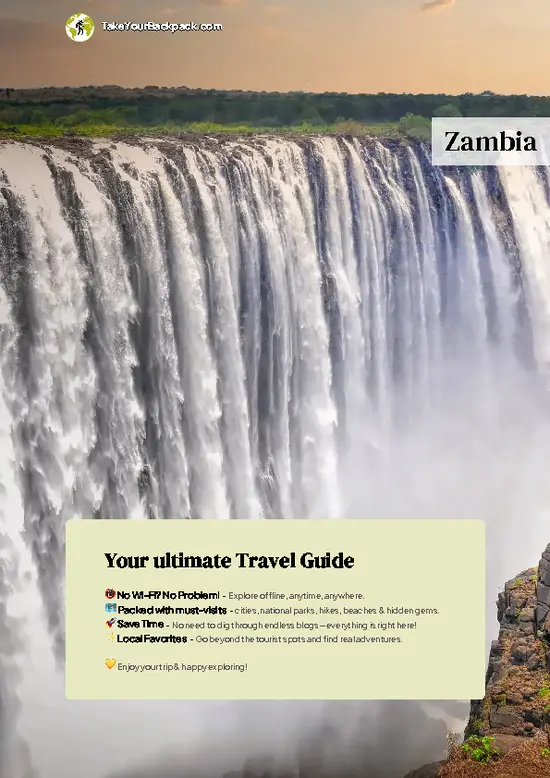
- Why go: It’s the easiest entry point to Zambia’s adventure side. You get the power of the Falls, river sunsets, and a real backpacker scene.
- Budget perks: Multiple hostels, walkable town, cheap local food, and you can see the Falls without an expensive tour. You can also cross to Zimbabwe if you want another angle on the Falls.
2. South Luangwa National Park (via Mfuwe)
- Why go: One of Africa’s best wildlife parks, especially for walking safaris and night drives. Leopard sightings are particularly good.
- Budget perks: A few camps and lodges near the park gate offer camping or budget chalets and sometimes backpacker-friendly safari packages. You get a top-tier safari experience without Botswana-level prices.
3. Kafue National Park (especially the cheaper southern/central areas)
- Why go: Huge, wild, and less crowded than many famous parks. Great for feeling like you’re actually in the bush, not on a safari conveyor belt.
- Budget perks: Some camps offer camping and shared activities. If you’re splitting costs with other travelers, it can be surprisingly good value for the remoteness.
4. Lusaka (1–2 days max)
- Why go: Not a classic “sightseeing” city, but useful and interesting as a real-life Zambian capital. Good for markets, street food, and logistics.
- Budget perks: Cheap guesthouses, local buses, and big supermarkets to restock. It’s your hub for buses to almost everywhere.
5. Northern waterfalls (if you have time)
- Why go: A chain of dramatic waterfalls along the Great North Road and beyond (e.g., around Mpika, Kasama, and Mbala). Less touristed, more DIY.
- Budget perks: Simple guesthouses, local buses, and low entry fees. Great if you like hiking and don’t need luxury.
If you’re short on cash but want the “Zambia highlight reel,” aim for: Livingstone (Falls + river) + one park (South Luangwa or Kafue). That combo gives you water, wildlife, and a feel for the country.
If you’re tight on time or money, skip anything that’s mostly long transit for a similar experience you can get elsewhere in your route.
1. Deep Copperbelt exploration (beyond a quick pass-through)
- Why skip: The Copperbelt (Ndola, Kitwe, etc.) is interesting for mining history and everyday urban life, but it’s not visually dramatic and doesn’t offer much for a short-term backpacker compared to the time and bus money it eats.
- When it’s worth it: If you have personal reasons (friends, family, work) or a specific interest in mining towns.
2. Trying to do multiple big parks in one short trip
- Why skip: South Luangwa, Kafue, and Lower Zambezi are all great, but each requires time and money for transfers and park fees. Doing two or three in under two weeks usually means you spend more time in transit than on actual game drives.
- Better move: Pick one park that fits your route and budget and do it properly (3–4 nights) instead of collecting park names.
3. Very remote northern lakes (Bangweulu, parts of Lake Tanganyika) on a short itinerary
- Why skip: Reaching these spots can take multiple days of buses and boats each way. They’re magical if you have time, but they’re a trap for anyone on a 1–2 week schedule.
- Better move: Use that time to add an extra day in a park or around Livingstone.
4. Overlong city time in Lusaka
- Why skip: Lusaka is useful and worth a quick look, but it’s not the main reason you came. Extra days here often turn into mall wandering and waiting for buses.
- Better move: 1–2 nights for errands and a market visit, then move on.
5. Expensive adrenaline activities you’re not truly excited about
- Why skip: Bungee jumps, microlight flights, and some river activities around Livingstone are pricey. If you’re only “mildly interested,” they’ll blow your budget fast.
- Better move: Pay park fees and a couple of quality game drives instead, or stick to cheaper activities like hiking viewpoints, local markets, and sunset spots.
If you’re short on time, build around: Livingstone (non-negotiable), one national park, and maybe a quick taste of Lusaka. Everything else is optional once those are locked in.