×

Zimbabwe🇿🇼 | townsChivhudairy farms, grain depots, highway rest stop | things to do and best time to go

Explore PlumtreeExplore Karoi

Backpacking in Chivhu
👌 Worth visitingtown ranked #15
By Johan Kruseman 🇳🇱 | Updated June 13, 2026

Steam rises from a chipped enamel mug as you wait for the bus in Chivhu, the air thick with the scent of roasting maize and red dust. Chivhu sits on the main Harare-Masvingo road, a crossroads town in central Zimbabwe. For backpackers, it’s rarely a destination—more a practical pause between the capital and the southern parks. The pace is slow, the market lively but compact, and the landscape rolls out in gentle, wheat-colored hills. You won’t find hostels or a buzzing café scene here; it’s more about catching your breath, grabbing a cheap meal, and watching rural life unfold. Compared to the bustle of Masvingo or the tourist polish of Harare, Chivhu feels honest, unhurried, and refreshingly unpretentious. Transport is easy—buses and shared taxis stop right in the center—but don’t expect much nightlife or backpacker camaraderie. Costs are low, safety is typical for rural Zimbabwe, and the real highlight is the feeling of being in the middle of the country, not just passing through.

Discover everything you want to know in the 📖 Zimbabwe Travel Guide.


Get your Zimbabwe guide
90 ranked highlights, routes & tips, works offline (356 pages)
Loading the map 🌍
CLICK TO FILTER
cities
towns
landmarks
national parks
hikes
beaches
attractions
festivals
regions
SHOW COUNTRY’S BESTSHOW ALL

✨ Why go?
Ranked #15 town in Zimbabwe
What makes this town worth visiting

Chivhu serves as a strategic waypoint for backpackers exploring Zimbabwe. Its walkable streets make it easy to navigate, while small-scale hostels and guesthouses offer a cozy, intimate atmosphere. Here, you can savor local food experiences that reflect the region’s culture, from street vendors to family-run eateries. Many travelers use Chivhu as a base for nearby hikes and cultural sites, making it ideal for slow travelers and hikers looking to immerse themselves in the landscape. The vibe is generally friendly and social, encouraging connections among solo travelers and small groups. Most visitors stay a few days, soaking in the local rhythm before moving on, but the town’s charm might just tempt you to linger a bit longer.
Want to include Chivhu in your Zimbabwe route?
Create a personalized Zimbabwe itinerary that includes Chivhu and the places that fit your trip — based on your travel style, budget, and available time. Get your route in seconds.

Generate my trip

💡 HighlightsKey sights and experiences for travelers

  1. Chivhu town center / main market — The heartbeat of the town: busy stalls selling fresh produce, basic crafts, household goods and street food. Great for people-watching, cheap eats and seeing daily life up close.
  2. Chivhu Hotel — The classic roadside hotel and bar on the main A3 route. It’s a practical stop for a meal, a cold drink and a taste of local hospitality in a building that’s been a waypoint for travelers for decades.
  3. Chivhu Railway Station — Functional, old-school railway station on the Harare-Masvingo line. Worth a quick visit to observe rail operations, historic station architecture and the slow rhythm of goods and passenger trains through town.
  4. Enkeldoorn settler remnants and cemetery area — The town’s Afrikaner settler past still shows in a scattering of older buildings,
read more 👉
  1. Chivhu town center / main market — The heartbeat of the town: busy stalls selling fresh produce, basic crafts, household goods and street food. Great for people-watching, cheap eats and seeing daily life up close.
  2. Chivhu Hotel — The classic roadside hotel and bar on the main A3 route. It’s a practical stop for a meal, a cold drink and a taste of local hospitality in a building that’s been a waypoint for travelers for decades.
  3. Chivhu Railway Station — Functional, old-school railway station on the Harare-Masvingo line. Worth a quick visit to observe rail operations, historic station architecture and the slow rhythm of goods and passenger trains through town.
  4. Enkeldoorn settler remnants and cemetery area — The town’s Afrikaner settler past still shows in a scattering of older buildings, memorials and grave sites tied to the Enkeldoorn era. Visiting gives real context to Chivhu’s colonial-era history and how the town evolved.
Nearby day-trip highlights include Harare, Marondera and Domboshava — Marondera is my personal favorite.
Spotted a mistake or missing something? Contact us.

🏘️ NeighborhoodsNeighborhood guide to Chivhu

Chivhu offers a unique blend of local culture and accessibility, making it a fascinating stop for backpackers.

Central Chivhu: This is the heartbeat of the town. The streets buzz with vendors selling fresh produce and local crafts. It’s walkable, with everything you need within a few blocks. Budget-friendly accommodations are plentiful, making it ideal for longer stays. The nightlife is low-key, with a few bars where you can sip on local brews and chat with friendly locals.

Chivhu East: A quieter area, perfect for those seeking a peaceful retreat. Here, you’ll find cozy guesthouses and a more residential vibe. It’s less walkable, so expect to rely on local transport. This neighborhood is great for short stays, especially if you want to recharge after a day of exploring.

Chivhu West: This … read more 👉
Chivhu offers a unique blend of local culture and accessibility, making it a fascinating stop for backpackers.

Central Chivhu: This is the heartbeat of the town. The streets buzz with vendors selling fresh produce and local crafts. It’s walkable, with everything you need within a few blocks. Budget-friendly accommodations are plentiful, making it ideal for longer stays. The nightlife is low-key, with a few bars where you can sip on local brews and chat with friendly locals.

Chivhu East: A quieter area, perfect for those seeking a peaceful retreat. Here, you’ll find cozy guesthouses and a more residential vibe. It’s less walkable, so expect to rely on local transport. This neighborhood is great for short stays, especially if you want to recharge after a day of exploring.

Chivhu West: This area is emerging, with new eateries and shops popping up. It’s a bit more upscale, catering to both locals and visitors. While it’s not as walkable, the transport links are solid. Ideal for those wanting a mix of comfort and local flavor, making it suitable for both short and longer visits.

⌛️ 1 dayWhat you can realistically do in a day

Chivhu, a small town in Zimbabwe, is a blend of rural charm and vibrant local culture. It’s not on every traveler’s radar, but that’s what makes it special. The air is filled with the scent of fresh earth and the sounds of daily life, offering a genuine glimpse into Zimbabwean life.

Start your morning at the bustling Chivhu Market. The colors of fresh produce and handmade crafts are a feast for the eyes. Grab a local breakfast of sadza and eggs from a vendor—simple but hearty. The market is alive with chatter, and you’ll feel the warmth of the community as you interact with locals.

In the afternoon, head to the nearby Chivhu Dam. It’s a short drive, and the tranquility of the water is a refreshing contrast to the market’s energy. Bring a book or just sit and soak in the scenery. If you’re … read more 👉
Chivhu, a small town in Zimbabwe, is a blend of rural charm and vibrant local culture. It’s not on every traveler’s radar, but that’s what makes it special. The air is filled with the scent of fresh earth and the sounds of daily life, offering a genuine glimpse into Zimbabwean life.

Start your morning at the bustling Chivhu Market. The colors of fresh produce and handmade crafts are a feast for the eyes. Grab a local breakfast of sadza and eggs from a vendor—simple but hearty. The market is alive with chatter, and you’ll feel the warmth of the community as you interact with locals.

In the afternoon, head to the nearby Chivhu Dam. It’s a short drive, and the tranquility of the water is a refreshing contrast to the market’s energy. Bring a book or just sit and soak in the scenery. If you’re lucky, you might catch a glimpse of local fishermen casting their nets.

As the sun sets, explore the neighborhoods around the town center. Stop by a local eatery for dinner; try the grilled chicken with a side of greens. The atmosphere is relaxed, and you’ll likely find yourself sharing stories with friendly locals.

Chivhu may not be a typical tourist destination, but its authenticity is what makes it worth the visit. Embrace the rhythm of the day, and you’ll leave with a deeper appreciation for Zimbabwean culture.
Turn your Chivhu visit into an Zimbabwe adventure
Build a complete Zimbabwe route with Chivhu, hidden gems, must-see destinations, and realistic travel times included.

Generate my trip

🌤️ When to go?Weather, crowds, and seasonal trade-offs


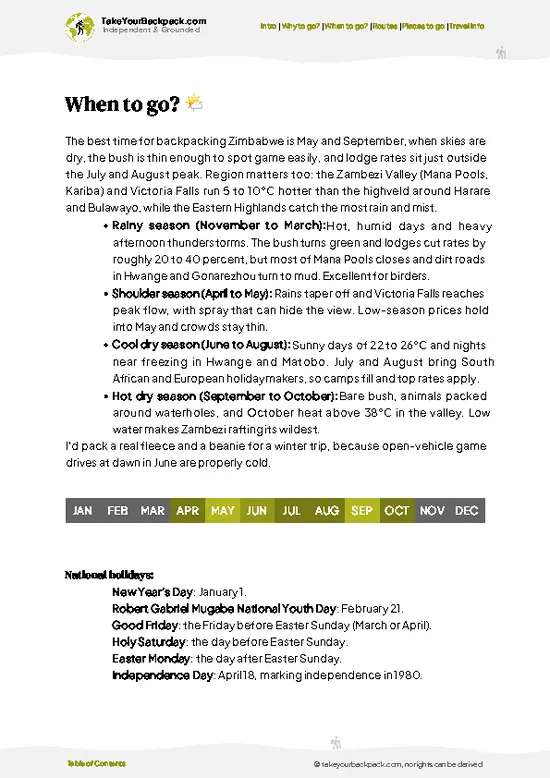
  • Topic: Weather – Chivhu’s dry season from May to October offers clear skies and crisp air, with daytime temps around 20-25°C (68-77°F). The wet season, November to April, brings heavy rains and humidity, turning trails into mud traps.

  • Topic: Temperature – Nights can dip to 10°C (50°F) in the dry season, so pack layers. The wet season stays warmer but sticky, often hitting 28-30°C (82-86°F), which can sap your energy on hikes.

  • Topic: Daylight Hours – Roughly 11-12 hours of daylight year-round, but the dry season’s clearer skies mean more reliable light for late-afternoon treks and photography.

  • Topic: Crowds – The dry season attracts more local visitors, especially around holidays, but Chivhu remains low-key compared to major hubs, so expect a quiet, authentic vibe.

  • Topic: Seasonal
read more 👉

  • Topic: Weather – Chivhu’s dry season from May to October offers clear skies and crisp air, with daytime temps around 20-25°C (68-77°F). The wet season, November to April, brings heavy rains and humidity, turning trails into mud traps.

  • Topic: Temperature – Nights can dip to 10°C (50°F) in the dry season, so pack layers. The wet season stays warmer but sticky, often hitting 28-30°C (82-86°F), which can sap your energy on hikes.

  • Topic: Daylight Hours – Roughly 11-12 hours of daylight year-round, but the dry season’s clearer skies mean more reliable light for late-afternoon treks and photography.

  • Topic: Crowds – The dry season attracts more local visitors, especially around holidays, but Chivhu remains low-key compared to major hubs, so expect a quiet, authentic vibe.

  • Topic: Seasonal Activities – Dry months are prime for wildlife spotting and exploring nearby reserves; the wet season’s lush greenery is great for birdwatching but less accessible for trekking.

  • Topic: Price Fluctuations – Accommodation and transport costs rise slightly in the dry season due to demand, but the trade-off is worth it for better trail conditions and safety.


Pro-tip: Aim for late dry season (August-September) when the air is fresh, the landscape is golden, and you’ll dodge both peak crowds and the mud.


source: climatestotravel.comJANJanuary: fair for travelingFEBFebruary: fair for travelingMARMarch: fair for travelingAPRApril: good for travelingMAYMay: highly recommended for travelingJUNJune: highly recommended for travelingJULJuly: highly recommended for travelingAUGAugust: excellent for travelingSEPSeptember: excellent for travelingOCTOctober: highly recommended for travelingNOVNovember: fair for travelingDECDecember: fair for traveling
when-to-go

✈️ The backpacker research shortcutZimbabwe Travel Guide

An offline-friendly backpacking guide with optimized travel routes, ranked highlights, transport advice, and the best areas to stay.
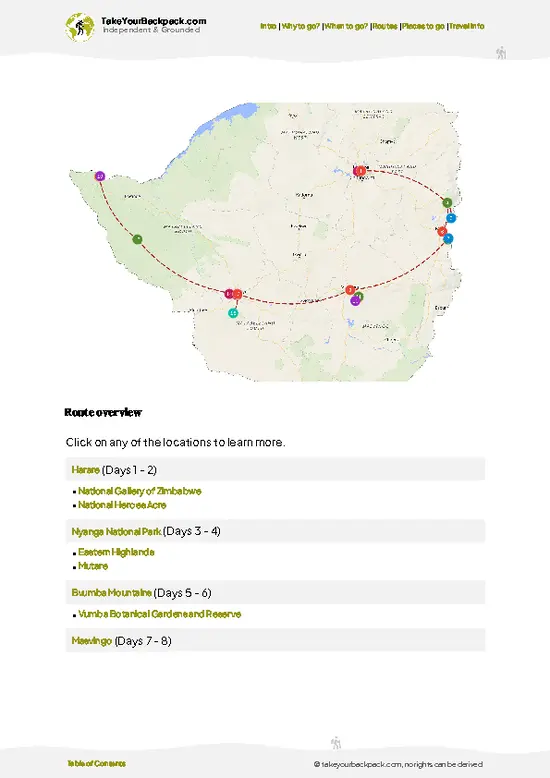
example page 0 from our offline Travel Guide for Zimbabwe
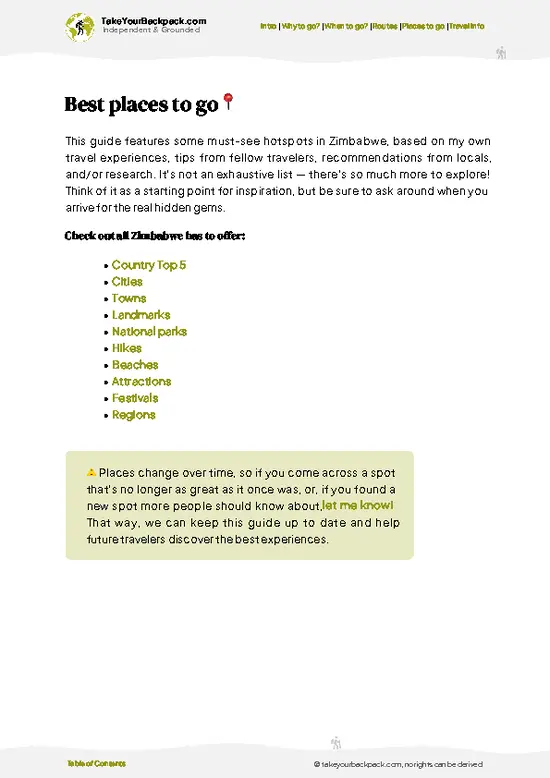
example page 1 from our offline Travel Guide for Zimbabwe
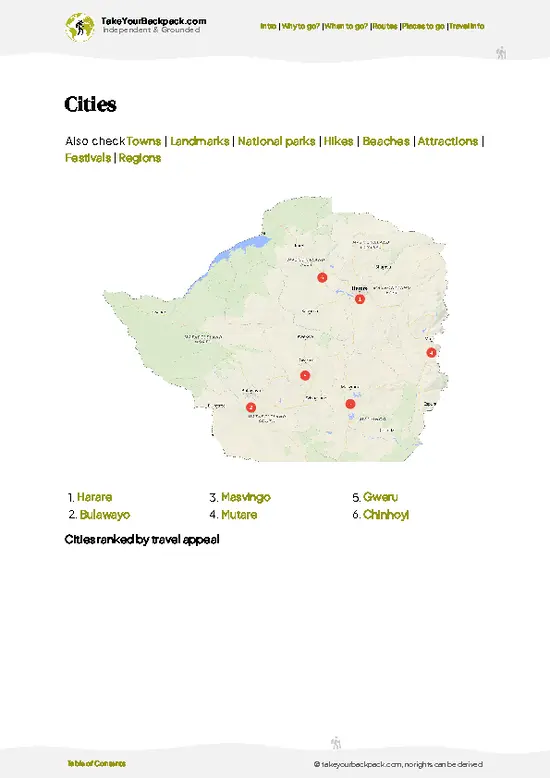
example page 2 from our offline Travel Guide for Zimbabwe
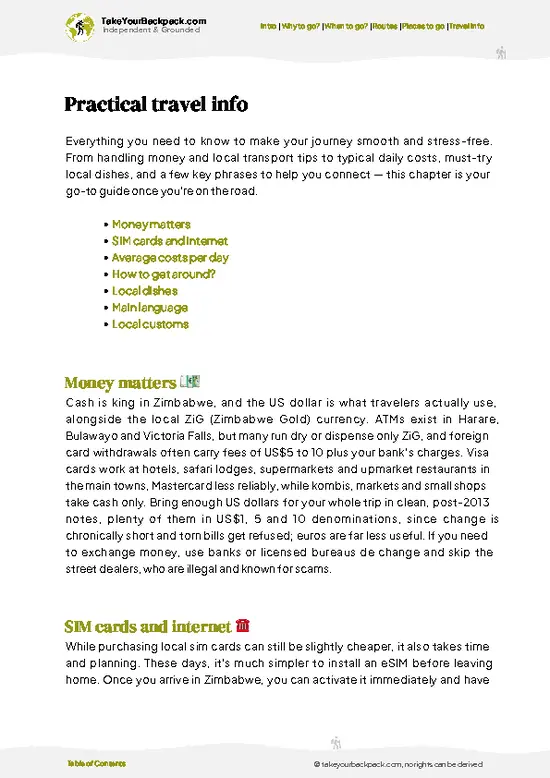
example page 3 from our offline Travel Guide for Zimbabwe
example page 4 from our offline Travel Guide for Zimbabwe
example page 5 from our offline Travel Guide for Zimbabwe
example page 6 from our offline Travel Guide for Zimbabwe
example page 7 from our offline Travel Guide for Zimbabwe
The digital guide (356 pages) contains:
90 highlights, ranked by travel appeal
Optimized 5, 10 & 15-day travel routes
Cities, national parks, landmarks, beaches
How to get around
Offline-friendly for travel without Wi-Fi
👉 Click to see all 30+ guide features

📅 Plan smarter in minutes, not weeks
Month by month travel advice
Festivals & national holidays
Budget expectations

🗺️ Go to the right places, skip the overrated ones
Honest pros & cons of destinations
Top hikes, parks & viewpoints
Lesser-known places most travelers miss
Clear “worth it vs skip it” guidance

🛏️ Travel smoothly without rookie mistakes
Best areas to stay
Transport systems explained simply
Common scams & safety advice
SIM cards, money & practical tips

🌍 Understand the country, not just visit it
Culture & traditions
52 Essential phrases & customs
Festivals worth planning around
Traveler-friendly historical context
Insights that make places more meaningful

📱 Built for real travel conditions
Fully downloadable PDF
Works completely offline
Optimized for phone use
Useful in remote areas & buses
Everything in one place
Save weeks of stressful planning
Get instant access to your full guide. 30‑day money-back guarantee.


By proceeding you agree to our terms.
Sent to your inbox immediately after payment • 100% Secure Checkout
Best Backpacking Travel Advisor 2025 tourism awardBest Backpacking
Travel Advisor
2025
What others say about Take Your Backpack Guides:
⭐⭐⭐⭐⭐
Fantastic, amazing amount of information!
⭐⭐⭐⭐⭐
My goodness this is amazing, it's what I've been looking for hats off too you!
⭐⭐⭐⭐⭐
I think this is absolutely BRILLIANT
⭐⭐⭐⭐
Very complete and informative. It's still missing places, but I gotta to commend you
⭐⭐⭐⭐⭐
This is truly amazing, thank you, can't wait to explore it with my kids!
⭐⭐⭐⭐⭐
Awesome resource, thank you!
⭐⭐⭐⭐⭐
This is amazing! Can't wait to explore the ones I haven't seen
⭐⭐⭐⭐
I love this! Well done, great idea.
⭐⭐⭐⭐⭐
Thanks for taking the time to make this gem!
⭐⭐⭐⭐⭐
This might be the best website I've ever seen.
⭐⭐⭐⭐⭐
Congratulations, and thank you so much for your work; it's incredibly valuable.
⭐⭐⭐⭐
In all seriousness I think you did a great job pointing out the important spots
⭐⭐⭐⭐⭐
10/10 very good
⭐⭐⭐⭐⭐
As someone who's only just starting to visit regularly this is awesome, thank you.
⭐⭐⭐⭐
Thank you very much! I'm going to visit my dad, it's going to be very useful!
⭐⭐⭐⭐⭐
This is really cool! We'll be travelling for the first time and this definitely come in handy.
⭐⭐⭐⭐⭐
You are now our minister of culture, congratulations 👨‍💼
⭐⭐⭐⭐⭐
Just wanted to tell you that this is a pearl! Going to follow your recommendations.
⭐⭐⭐⭐⭐
This is so cool. I'll definitely be using the resource for my travels soon.
⭐⭐⭐⭐⭐
This is very impressive! Good work.
⭐⭐⭐⭐⭐
This is an amazing and informative site. Very well done!

🛏️ Where to stay?How to pick the right area

In Chivhu, the best spot for backpackers is the town center and its immediate surroundings. This area hums with local life—markets, small eateries, and street vendors fill the air with the scent of grilled maize and fresh bread. It’s where you’ll find the few budget hostels that cater to solo travelers and small groups, offering a chance to swap stories over a shared fire or a cold drink. Safety here is noticeably better than in the outskirts, thanks to the steady presence of locals and a modest police patrol. The vibe is unpretentious and welcoming, a real slice of Zimbabwean daily rhythm without … read more 👉
In Chivhu, the best spot for backpackers is the town center and its immediate surroundings. This area hums with local life—markets, small eateries, and street vendors fill the air with the scent of grilled maize and fresh bread. It’s where you’ll find the few budget hostels that cater to solo travelers and small groups, offering a chance to swap stories over a shared fire or a cold drink. Safety here is noticeably better than in the outskirts, thanks to the steady presence of locals and a modest police patrol. The vibe is unpretentious and welcoming, a real slice of Zimbabwean daily rhythm without the tourist gloss. Avoid the more residential or industrial zones—they’re quieter but lack the social pulse and can feel isolating after dark. Staying central means you’re plugged into the town’s heartbeat, making every step outside your door part of the adventure.

🚌 Getting aroundHow to get around Chivhu

Chivhu moves at its own rhythm—less a clockwork town and more a place where time bends to the chatter of market vendors and the slow churn of dusty roads. The sun casts long shadows by mid-afternoon, and the air carries the scent of earth and wood smoke, grounding you in a pace that’s neither frantic nor lazy. Here, schedules are suggestions, not laws. You’ll find the best way to get around is to lean into the local flow, where patience and a keen eye for opportunity unlock the real ease beneath the surface.


  • Walking: The heart of Chivhu is compact enough to explore on foot. Streets are uneven, so sturdy shoes are a must. Walking lets you soak in the smells of fresh maize roasting and the calls of street vendors, making it the cheapest and most immersive option.


  • Shared Minibus Taxis
read more 👉
Chivhu moves at its own rhythm—less a clockwork town and more a place where time bends to the chatter of market vendors and the slow churn of dusty roads. The sun casts long shadows by mid-afternoon, and the air carries the scent of earth and wood smoke, grounding you in a pace that’s neither frantic nor lazy. Here, schedules are suggestions, not laws. You’ll find the best way to get around is to lean into the local flow, where patience and a keen eye for opportunity unlock the real ease beneath the surface.


  • Walking: The heart of Chivhu is compact enough to explore on foot. Streets are uneven, so sturdy shoes are a must. Walking lets you soak in the smells of fresh maize roasting and the calls of street vendors, making it the cheapest and most immersive option.


  • Shared Minibus Taxis (Combis): These are the town’s lifeline for budget travelers. They run from dawn until early evening, roughly 6 AM to 6 PM, with fares around a few Zimbabwean dollars. Expect crowded rides and frequent stops, but they’re the fastest way to cover longer distances without breaking the bank.


  • Bicycle Rentals: For a bit more speed and freedom, renting a bicycle is a smart move. Rentals cost a few dollars per day, and the flat terrain makes pedaling manageable. You’ll catch the breeze and see neighborhoods that minibuses can’t reach, all while avoiding the unpredictability of public transport schedules.


  • Motorcycle Taxis (Zebras): When time is tight but cash is limited, zebras offer quick, nimble rides through traffic. Prices vary but are negotiable; always agree before hopping on. They’re perfect for short hops, especially when the sun starts to dip and the streets get quieter.

👛 Costs (as of 4 July 2025)How expensive it really is

Backpacking in Chivhu, Zimbabwe, is a raw, grounded experience where every dollar counts and the pace feels unhurried, like the slow drift of dust in the late afternoon sun.
  • Dorm Accommodation: Expect to pay around $5 to $10 USD per night for a basic dorm bed. Options are limited and often rustic, with simple bedding and shared facilities. This is not about luxury but about a place to crash after a day of exploring.
  • Meals: Local eateries serve hearty, straightforward meals for about $2 to $4 USD. Think sadza (a thick maize porridge) with vegetables or meat stews. Street food is even cheaper, but hygiene can vary, so choose spots where locals gather.
  • Local Transport: Minibus taxis are the norm, costing roughly $0.50 to $1 USD per short trip within town. They’re crowded and noisy but the
read more 👉
Backpacking in Chivhu, Zimbabwe, is a raw, grounded experience where every dollar counts and the pace feels unhurried, like the slow drift of dust in the late afternoon sun.
  • Dorm Accommodation: Expect to pay around $5 to $10 USD per night for a basic dorm bed. Options are limited and often rustic, with simple bedding and shared facilities. This is not about luxury but about a place to crash after a day of exploring.
  • Meals: Local eateries serve hearty, straightforward meals for about $2 to $4 USD. Think sadza (a thick maize porridge) with vegetables or meat stews. Street food is even cheaper, but hygiene can vary, so choose spots where locals gather.
  • Local Transport: Minibus taxis are the norm, costing roughly $0.50 to $1 USD per short trip within town. They’re crowded and noisy but the best way to feel the pulse of daily life. For longer trips, prices rise but remain modest.
  • Basic Activities/Entry Fees: Chivhu isn’t a tourist hotspot, so entry fees are minimal or nonexistent. Visiting local markets or cultural spots might cost a dollar or two if there’s a small fee, but most experiences come free with a bit of curiosity and conversation.
  • Miscellaneous Expenses: Budget around $1 to $3 USD for essentials like bottled water, snacks, or a SIM card top-up. Internet access is patchy and often requires buying data bundles, which can add up if you’re online a lot.

All told, you’re looking at roughly $10 to $20 USD per day to get by in Chivhu. It’s a place where simplicity reigns, and the modest budget reflects the straightforward, unpolished charm of rural Zimbabwe. The payoff is in the quiet moments—the smell of earth after rain, the chatter at the market, the slow rhythm of life that feels like a reset from the usual rush.
⚠️ Prices can change and everyone travels differently, so take this as a rough guide. Hope it helps you plan your adventure!

🚌 Day tripsWhere to go beyond the main area

Chivhu, Zimbabwe, serves as a fantastic launchpad for day trips that blend adventure with authentic local experiences. Here are some worthwhile excursions that will enrich your journey.

Lake Chivero
Just an hour’s drive from Chivhu, Lake Chivero is a paradise for nature lovers. The lake is alive with the sounds of birds and the gentle rustle of reeds. You can rent a canoe or simply stroll along the shore, soaking in the sun and the scent of wet earth. Expect to spend around $10 for a canoe rental and a small entry fee. The best time to visit is during the dry season, from May to October, when wildlife is more active. A common mistake is underestimating the sun; bring plenty of water and sunscreen.


Gweru
A two-hour bus ride will take you to Gweru, where the historic Antelope Park awaits. … read more 👉
Chivhu, Zimbabwe, serves as a fantastic launchpad for day trips that blend adventure with authentic local experiences. Here are some worthwhile excursions that will enrich your journey.

Lake Chivero
Just an hour’s drive from Chivhu, Lake Chivero is a paradise for nature lovers. The lake is alive with the sounds of birds and the gentle rustle of reeds. You can rent a canoe or simply stroll along the shore, soaking in the sun and the scent of wet earth. Expect to spend around $10 for a canoe rental and a small entry fee. The best time to visit is during the dry season, from May to October, when wildlife is more active. A common mistake is underestimating the sun; bring plenty of water and sunscreen.


Gweru
A two-hour bus ride will take you to Gweru, where the historic Antelope Park awaits. This isn’t just a park; it’s a chance to walk alongside lions and learn about conservation efforts. The experience is immersive, with the earthy scent of the savannah and the thrill of being close to these majestic creatures. Entry fees hover around $30, and it’s best to go in the cooler months, from April to September. First-timers often miss the guided tours, which offer invaluable insights.
👉 Explore Gweru

Great Zimbabwe
About a three-hour journey from Chivhu, the Great Zimbabwe ruins are a must-see. These ancient stone structures whisper tales of a once-thriving civilization. The air is thick with history, and the panoramic views from the hilltop are breathtaking. Entry costs around $15, and the best time to visit is during the cooler months. Many backpackers overlook the guided tours, which provide context that enhances the experience.
👉 Explore Great Zimbabwe

Mtarazi Falls
For a more adventurous day, head to Mtarazi Falls, roughly three hours away. The falls cascade dramatically, and the surrounding forest is alive with the scent of damp foliage. Hiking trails lead you to stunning viewpoints, but be prepared for a bit of a trek. Costs are minimal, around $5 for entry, but the experience is priceless. The dry season is ideal for clearer views. A common mistake is not allowing enough time for the hike back; plan for a full day.
Want to know what more Zimbabwe offers?
The Zimbabwe Travel Guide describes 90 highlights, from cities to national parks, from beaches to hikes

Get the Travel Guide -

🛡️ SafetyTraveler Safety Guide

Chivhu is generally safe, but a bit of awareness goes a long way. Stick to well-lit areas at night, especially if you’re solo; the streets can feel quiet, and a little caution helps.

Watch for common scams, like overly friendly locals who might ask for money or offer unsolicited help. Politely decline and keep moving.

Everyday annoyances can include persistent vendors; a friendly smile and a firm “no, thank you” usually do the trick. Carry yourself confidently, and don’t flash valuables. The atmosphere is warm, but being mindful of your surroundings will enhance your experience, letting you soak in the local charm without distraction.

Other Zimbabwean towns near Chivhu

Explore more nearby:

  • Marondera—boarding schools, pine plantations, commuter town| 115 km away
  • Masvingo—Great Zimbabwe ruins, lakeside views, small-town pace, regional crossroads| 117 km away
  • Chegutu—grain silos, railway junction, roadside eateries| 126 km away

💡 Not sure where to go next?
Create a personalized itinerary for Zimbabwe including Chivhu and the places that fit your trip.

Generate my itinerary

👉 Discover all towns

Or checkout all Zimbabwe has to offer (think cities, towns, villages, national parks, hikes, beaches, festivals)
Country photo of Zimbabwe

We 💚 feedbackFinal thoughts on visiting Chivhu

Chivhu’s charm lies in its raw authenticity. You’ll feel the pulse of local life as you wander through bustling markets, where the scent of grilled maize fills the air. But be ready for limited amenities; it’s not a tourist hub. Embrace the simplicity, and you’ll find a deeper connection to Zimbabwe’s heart.

✈️ When did I visit Zimbabwe?
I have backpacked Zimbabwe all the way back in 2001.

✍️ Help improve this page!
The information on this page is based on my own backpacking experience in Zimbabwe, supplemented with up-to-date research and feedback from other travelers. Travel details can change, so if you notice anything outdated or incomplete, feel free to let me know.


🙋‍♂️ Give feedback

👋 Meet the founderWho’s Behind Take Your Backpack?

Johan, backpacker and founder of TakeYourBackpackHi, I’m Johan (Netherlands 🇳🇱), the creator of TakeYourBackpack. Over the past decade, I’ve backpacked through 80+ countries across six continents, gaining extensive experience with independent travel, long-term trips, and overland routes.

This site is built on a combination of firsthand travel experience and carefully curated insights from other backpackers. Many guides are based on places I’ve personally visited, while others bring together tips, observations, and practical advice shared by trusted travelers I’ve met along the way.

The goal is to provide realistic, experience-driven guidance — not generic itineraries — so you can explore destinations with better context, clearer expectations, and more confidence.

Get full Zimbabwe guide •
Instant download • 90 highlights • Full Offline guide