×

Austria🇦🇹 | best landmarksExplore the 3 Best landmarks in Austria

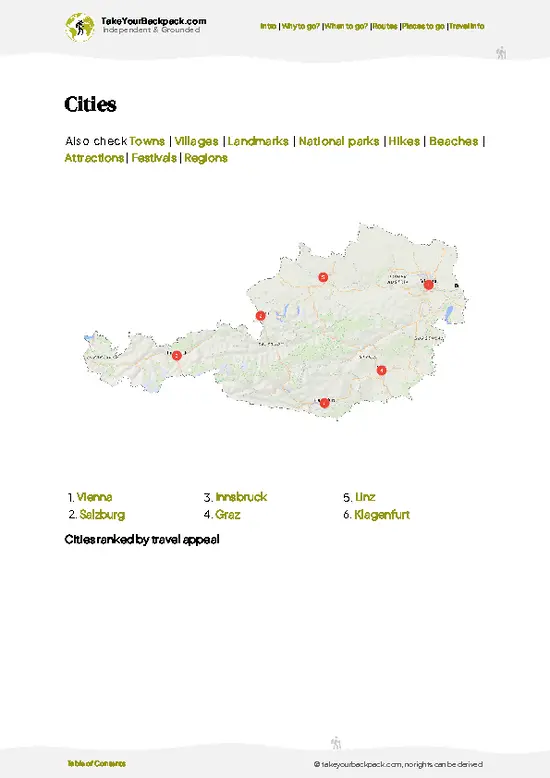
Landmarks in Austria split into imperial, alpine and Baroque provincial types, and the split decides what your trip feels like. Vienna’s palaces were built to impress an empire, so they are large, ticketed and crowded, with entry fees often €15 to 30. Salzburg and Tyrol pair castles and old towns with mountain settings, which means good rail and bus access but high summer prices. Carinthia, Styria and the Wachau valley are quieter and cheaper. For independent travel or backpacking, the dense rail network lets you mix city-scale grandeur with small-town sites without a car, but rural valleys need bus timetables.

By Johan Kruseman 🇳🇱 | Updated October 19, 2026
Explore the best national parks in Austria

Why go?Understanding Their Importance

Austria’s landmarks look the way they do because the country was the center of the Habsburg monarchy for roughly six centuries. That left an unusual concentration of court architecture, monasteries, fortresses and musical heritage in a country of only about 9 million people. The Alps shaped the rest: valleys isolated communities, so each region developed its own building traditions, from fortified hilltop castles to timber farmhouses and pilgrimage churches.

The country is exceptionally well suited to visiting landmarks without a car. Rail and regional buses connect most towns, and sites are usually compact and walkable from the station. Heritage is also well preserved and well run, with clear English signage and strict opening hours.

Before choosing Austria, know that costs run high compared … read more 👉
Austria’s landmarks look the way they do because the country was the center of the Habsburg monarchy for roughly six centuries. That left an unusual concentration of court architecture, monasteries, fortresses and musical heritage in a country of only about 9 million people. The Alps shaped the rest: valleys isolated communities, so each region developed its own building traditions, from fortified hilltop castles to timber farmhouses and pilgrimage churches.

The country is exceptionally well suited to visiting landmarks without a car. Rail and regional buses connect most towns, and sites are usually compact and walkable from the station. Heritage is also well preserved and well run, with clear English signage and strict opening hours.

Before choosing Austria, know that costs run high compared with Central and Eastern Europe. Major sites charge real admission, and guided tours are often fixed-time and in German or English only. Many regional passes and city cards (Vienna, Salzburg, Innsbruck) bundle transport with entry and can cut costs if you visit several sites. Many small museums and churches close on Mondays or off-season, and rural sites can shut for winter. Austria suits travelers who like planned, orderly sightseeing more than improvised wandering.
Our Approach to Ranking
The list of best unique sites in Austria is created based on history or culture, wow factor, atmosphere, quirks, and memorability. If you feel a unique site is missing in this list, please let us know.

When to go?Seasonal Guide to Visiting

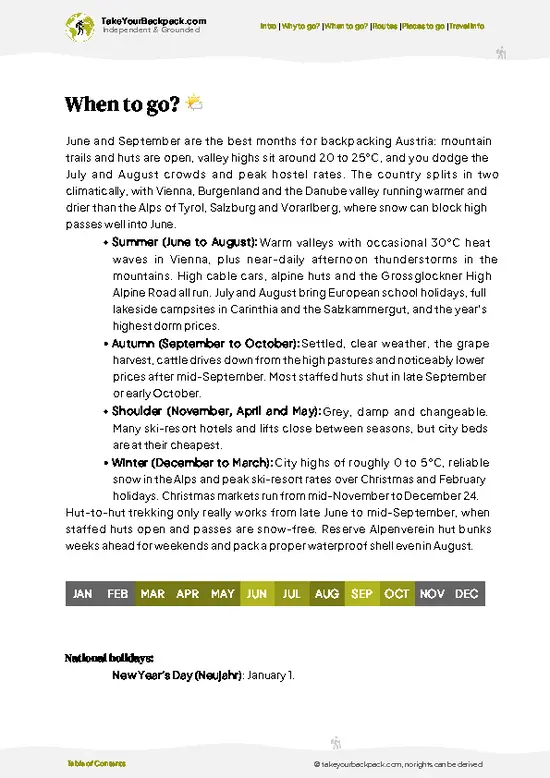
Best months and why: May to June and September are the best months for landmarks in Austria, because daytime highs sit around 15 to 24°C, most sites are open on full schedules, and crowds stay below the July and August peak. Summer is warmer, often 24 to 30°C in Vienna, but afternoon thunderstorms are common in the Alps and queues build at palaces and Salzburg’s old town.
Shoulder seasons and winter: April and October are cooler (6 to 15°C) with changeable rain, and some alpine sites and seasonal castles open late or close early. Rainfall is heaviest in summer in the mountains, often 100 to 200 mm a month in Tyrol and Salzburg province, while Vienna and the east are drier at roughly 50 to 70 mm. From November to March, temperatures drop to around 0°C or below in cities and well below in the … read more 👉
Best months and why: May to June and September are the best months for landmarks in Austria, because daytime highs sit around 15 to 24°C, most sites are open on full schedules, and crowds stay below the July and August peak. Summer is warmer, often 24 to 30°C in Vienna, but afternoon thunderstorms are common in the Alps and queues build at palaces and Salzburg’s old town.
Shoulder seasons and winter: April and October are cooler (6 to 15°C) with changeable rain, and some alpine sites and seasonal castles open late or close early. Rainfall is heaviest in summer in the mountains, often 100 to 200 mm a month in Tyrol and Salzburg province, while Vienna and the east are drier at roughly 50 to 70 mm. From November to March, temperatures drop to around 0°C or below in cities and well below in the Alps, and many hill-top and rural sites cut hours or shut entirely.
Peak periods and prices: December brings Christmas markets to Vienna, Salzburg and Innsbruck, which raises accommodation prices by 20 to 40 percent and fills hostels. Summer festival season in Salzburg has a similar effect. Alpine ski regions peak from late December to March, so Tyrol lodging is dearest then. For lower prices and open doors, book May, June or September.

unique site hoppingOptimizing Your Multi-Stop Itinerary

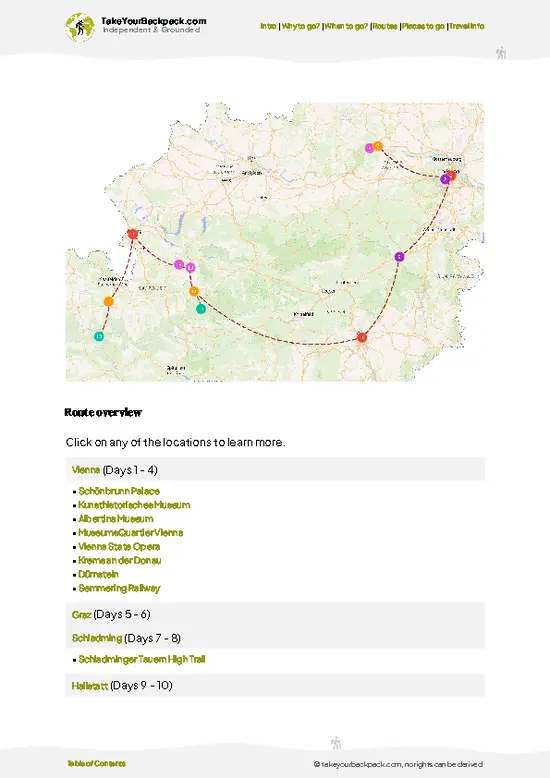
How long and in what order: A trip combining several landmarks in Austria needs 7 to 12 days, enough to cover two or three regions without rushing. The country’s east-west shape makes Vienna to Innsbruck the natural axis, and traveling west to east or the reverse both work, but starting in Vienna lets you finish in the Alps with cooler, scenic days. Vienna and the Wachau valley cluster well, as do Salzburg and the Salzkammergut lakes, and Tyrol around Innsbruck.
Time per stop and transit: Allow 2 to 3 days in Vienna, 1 to 2 in Salzburg, 1 to 2 in Innsbruck and a half to full day for smaller towns. The Vienna to Salzburg express train takes about 2.5 to 3 hours, Salzburg to Innsbruck 1.75 to 2 hours, and Vienna to Innsbruck 4 to 5 hours. Graz to Vienna is about 2.5 hours. Rural valleys and castles … read more 👉
How long and in what order: A trip combining several landmarks in Austria needs 7 to 12 days, enough to cover two or three regions without rushing. The country’s east-west shape makes Vienna to Innsbruck the natural axis, and traveling west to east or the reverse both work, but starting in Vienna lets you finish in the Alps with cooler, scenic days. Vienna and the Wachau valley cluster well, as do Salzburg and the Salzkammergut lakes, and Tyrol around Innsbruck.
Time per stop and transit: Allow 2 to 3 days in Vienna, 1 to 2 in Salzburg, 1 to 2 in Innsbruck and a half to full day for smaller towns. The Vienna to Salzburg express train takes about 2.5 to 3 hours, Salzburg to Innsbruck 1.75 to 2 hours, and Vienna to Innsbruck 4 to 5 hours. Graz to Vienna is about 2.5 hours. Rural valleys and castles often need a regional bus or taxi, adding 30 to 90 minutes.
Planning mistakes: Travelers often pack a new region into every day, losing hours to transfers. Base yourself two nights at a time instead. Another error is ignoring Monday closures and winter hours, so check opening days before fixing a sequence. Skipping advance tickets for the busiest palaces and tours in summer also wastes time; reserve timed entry online where offered.

The ListThe Best landmarks of Austria

1 Schönbrunn Palace

imperial residence, Baroque architecture, formal gardens, Gloriette

Wander through ornate halls and manicured grounds, tracing the daily life and ceremonial traditions of Austria’s former imperial family.

austria-unique-site-schonbrunn-palace
© Google | Tanja Paunovic

2 Semmering Railway

mountain viaducts, panoramic train route, 19th-century engineering

Ride a historic rail line that winds through alpine scenery, crossing dramatic bridges and tunnels built to conquer steep mountain terrain.

austria-unique-site-semmering-railway
© Google | Gabor Sagi

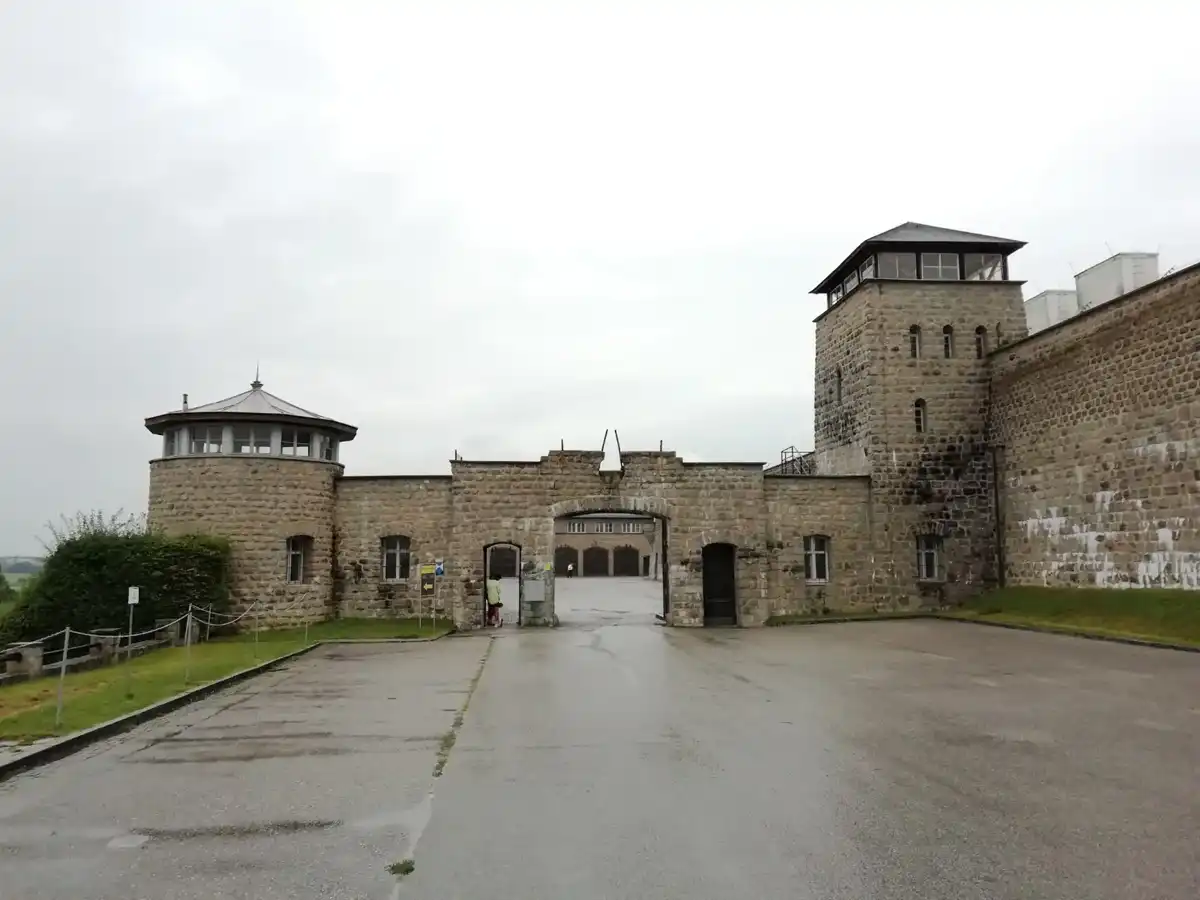
3 Mauthausen Memorial

granite quarry, memorial site, World War II history

Reflect on the realities of the past as you walk through preserved barracks, original camp structures, and a somber memorial landscape.

austria-unique-site-mauthausen-memorial
© Google | Bogo Stoyanov
Loading the map 🌍

Expert viewInsights from Locals and Experts

How many landmarks to visit: Plan on one major landmark per day, and no more than two on a city day. Austrian sites are large, with guided-tour slots, security queues and audio guides, so a visit commonly takes 2 to 3 hours, and trying for four a day leaves nothing but fatigue. Over a week, 5 to 7 landmarks plus free old-town walking is the level where each one registers.
Choosing by travel style: History and architecture fans should put the imperial sites first, because they are the most complete and best documented. If hiking matters more, prioritize alpine castles, monasteries and mountain sites, which pair a visit with a trail and are often cheaper or free. Travelers on a tight budget should weight old towns, churches and exteriors, since many are free to see and you can pay for interiors … read more 👉
How many landmarks to visit: Plan on one major landmark per day, and no more than two on a city day. Austrian sites are large, with guided-tour slots, security queues and audio guides, so a visit commonly takes 2 to 3 hours, and trying for four a day leaves nothing but fatigue. Over a week, 5 to 7 landmarks plus free old-town walking is the level where each one registers.
Choosing by travel style: History and architecture fans should put the imperial sites first, because they are the most complete and best documented. If hiking matters more, prioritize alpine castles, monasteries and mountain sites, which pair a visit with a trail and are often cheaper or free. Travelers on a tight budget should weight old towns, churches and exteriors, since many are free to see and you can pay for interiors selectively.
Budget: Backpackers typically spend US$70 to 110 (about €65 to 100) a day including dorm beds of €25 to 45, food and transport. Major palaces and fortresses charge roughly €15 to 30, smaller museums and churches €5 to 12, and guided tours add €5 to 15 above the base fee. Local transit in cities is €2.50 to 4 a ride, with day passes at €8 to 9. City cards (24 to 72 hours, around €20 to 100 depending on the city) pay off only when you plan four or more paid entries. Regional trains are costly point to point, so advance saver fares and a Klimaticket or rail pass often beat walk-up tickets for longer hops.
Safety and etiquette: Austria is very safe, and the main risk is pickpocketing in crowded Vienna and Salzburg sites and on tram lines. Keep bags zipped in queues. Many churches and monasteries are active places of worship, so cover shoulders and knees, keep voices low and skip photos during services. Some interiors ban flash or tripods. Mountain sites need real preparation: weather can turn within an hour at altitude, so carry a rain layer and check cable car hours, which stop earlier than expected. Quiet hours matter in towns, and a Sunday brings closed shops but open major sites. Carry some cash for small chapels and rural entry points that don’t take cards.

✈️ The backpacker research shortcutAustria Travel Guide

An offline-friendly backpacking guide with optimized travel routes, ranked highlights, transport advice, and the best areas to stay.
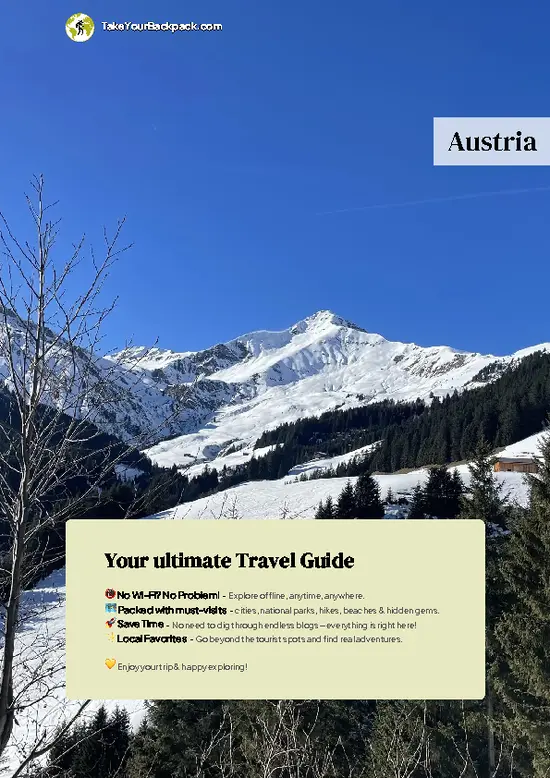
example page 0 from our offline Travel Guide for Austria
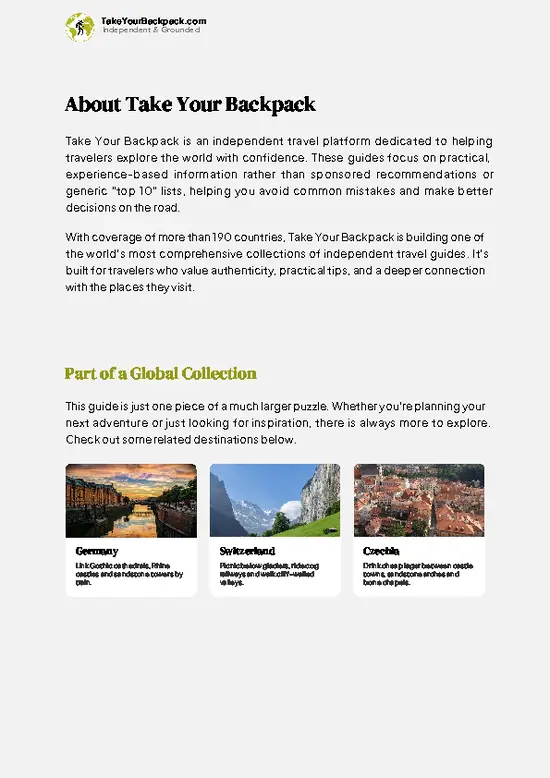
example page 1 from our offline Travel Guide for Austria
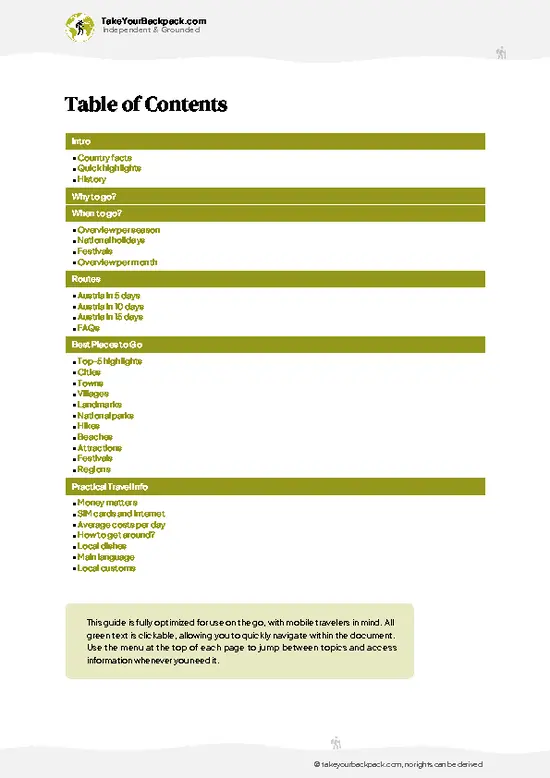
example page 2 from our offline Travel Guide for Austria
example page 3 from our offline Travel Guide for Austria
example page 4 from our offline Travel Guide for Austria
example page 5 from our offline Travel Guide for Austria
example page 6 from our offline Travel Guide for Austria
example page 7 from our offline Travel Guide for Austria
The digital guide (354 pages) contains:
✅ 90 highlights, ranked by travel appeal
✅ Optimized 5, 10 & 15-day travel routes
✅ Cities, national parks, landmarks, beaches
✅ How to get around
✅ Offline-friendly for travel without Wi-Fi
👉 Click to see all 30+ guide features

📅 Plan smarter in minutes, not weeks
✅ Month by month travel advice
✅ Festivals & national holidays
✅ Budget expectations

🗺️ Go to the right places, skip the overrated ones
✅ Honest pros & cons of destinations
✅ Top hikes, parks & viewpoints
✅ Lesser-known places most travelers miss
✅ Clear “worth it vs skip it” guidance

🛏️ Travel smoothly without rookie mistakes
✅ Best areas to stay
✅ Transport systems explained simply
✅ Common scams & safety advice
✅ SIM cards, money & practical tips

🌍 Understand the country, not just visit it
✅ Culture & traditions
✅ 52 Essential phrases & customs
✅ Festivals worth planning around
✅ Traveler-friendly historical context
✅ Insights that make places more meaningful

📱 Built for real travel conditions
✅ Fully downloadable PDF
✅ Works completely offline
✅ Optimized for phone use
✅ Useful in remote areas & buses
✅ Everything in one place
Stop searching, start planning
Get instant access to your full guide. 30‑day money-back guarantee.
+ Add another guide for just

By proceeding you agree to our terms.
Sent to your inbox immediately after payment • 100% Secure Checkout
Best Backpacking Travel Advisor 2025 tourism awardBest Backpacking
Travel Advisor
2025
What others say about Take Your Backpack Guides:
⭐⭐⭐⭐⭐
Fantastic, amazing amount of information!
⭐⭐⭐⭐⭐
My goodness this is amazing, it's what I've been looking for hats off too you!
⭐⭐⭐⭐⭐
I think this is absolutely BRILLIANT
⭐⭐⭐⭐
Very complete and informative. It's still missing places, but I gotta to commend you
⭐⭐⭐⭐⭐
This is truly amazing, thank you, can't wait to explore it with my kids!
⭐⭐⭐⭐⭐
Awesome resource, thank you!
⭐⭐⭐⭐⭐
This is amazing! Can't wait to explore the ones I haven't seen
⭐⭐⭐⭐
I love this! Well done, great idea.
⭐⭐⭐⭐⭐
Thanks for taking the time to make this gem!
⭐⭐⭐⭐⭐
This might be the best website I've ever seen.
⭐⭐⭐⭐⭐
Congratulations, and thank you so much for your work; it's incredibly valuable.
⭐⭐⭐⭐
In all seriousness I think you did a great job pointing out the important spots
⭐⭐⭐⭐⭐
10/10 very good
⭐⭐⭐⭐⭐
As someone who's only just starting to visit regularly this is awesome, thank you.
⭐⭐⭐⭐
Thank you very much! I'm going to visit my dad, it's going to be very useful!
⭐⭐⭐⭐⭐
This is really cool! We'll be travelling for the first time and this definitely come in handy.
⭐⭐⭐⭐⭐
You are now our minister of culture, congratulations 👨‍💼
⭐⭐⭐⭐⭐
Just wanted to tell you that this is a pearl! Going to follow your recommendations.
⭐⭐⭐⭐⭐
This is so cool. I'll definitely be using the resource for my travels soon.
⭐⭐⭐⭐⭐
This is very impressive! Good work.
⭐⭐⭐⭐⭐
This is an amazing and informative site. Very well done!

🛏️ Where to stay?Best Stay Options in Austria

Hostels are plentiful in Austria, with dorm beds typically running €25 to €45 a night and the widest choice in Vienna, Salzburg, Innsbruck and Graz, plus youth hostels and budget guesthouses in smaller towns and alpine resorts. In Vienna, Neubau and Mariahilf near Westbahnhof put you in walking distance of the MuseumsQuartier and plenty of bars, while Favoriten around the Hauptbahnhof is cheaper and has excellent transport links but little character after dark; Leopoldstadt sits between the two, close to the Prater and the center but quieter at night. In Salzburg, beds near the station in Elisabeth-Vorstadt cost noticeably less than anything in the Altstadt (a 15 to 20 minute walk away), and … read more 👉
Hostels are plentiful in Austria, with dorm beds typically running €25 to €45 a night and the widest choice in Vienna, Salzburg, Innsbruck and Graz, plus youth hostels and budget guesthouses in smaller towns and alpine resorts. In Vienna, Neubau and Mariahilf near Westbahnhof put you in walking distance of the MuseumsQuartier and plenty of bars, while Favoriten around the Hauptbahnhof is cheaper and has excellent transport links but little character after dark; Leopoldstadt sits between the two, close to the Prater and the center but quieter at night. In Salzburg, beds near the station in Elisabeth-Vorstadt cost noticeably less than anything in the Altstadt (a 15 to 20 minute walk away), and in Innsbruck the area around the main station keeps you close to the old town and the Nordkette cable car.

If you enjoy meeting fellow travelers, consider choosing hostels with high ratings for atmosphere. On the other hand, if you prefer having your own space, a hotel might be a better option.

AustriaWhere to Go Next

👋 Meet the founderWho’s Behind Take Your Backpack?

Johan, backpacker and founder of TakeYourBackpackHi, I’m Johan (Netherlands 🇳🇱), the creator of TakeYourBackpack. Over the past 3 decades, I’ve backpacked through 90+ countries across six continents, gaining extensive experience with independent travel, long-term trips, and overland routes.

This site is built on a combination of firsthand travel experience and carefully curated insights from other backpackers. Many guides are based on places I’ve personally visited, while others bring together tips, observations, and practical advice shared by trusted travelers I’ve met along the way.

The goal is to provide realistic, experience-driven guidance — not generic itineraries — so you can explore destinations with better context, clearer expectations, and more confidence.