×

Bolivia🇧🇴 | best beachesWhere to Find the Best beaches in Bolivia

Bolivia has no ocean, so its beaches are freshwater shores: sand along high Andean lakes, pale river bars in the Amazon basin and reservoir banks in the warm valleys. Know which one you are chasing before you pack.
The Altiplano delivers the drama. Lake Titicaca sits at 3,810 meters, the water stays cold, and you come for clean light, island trails and a sunbaked afternoon on a mountain shore. The Amazon lowlands flip the script with 30°C heat, river sandbars, caimans on the far bank and a hammock for a bed. Costs stay low in both, though lowland tours add up. The valleys and Santa Cruz region offer easy local swimming spots, with weekend crowds and little foreign traffic.
For backpacking and independent travel, Titicaca is the simplest to reach by bus, while the jungle takes more planning. Pick your altitude, then go.

By Johan Kruseman 🇳🇱 | Updated October 20, 2026
Explore the best attractions in Bolivia

Why go?What Makes Them Special

Bolivia lost its Pacific coastline to Chile in the War of the Pacific (1879 to 1884), and that single fact explains the whole beach picture. Bolivians turned to lakes and rivers, and the country still keeps a navy that trains on Lake Titicaca. Beach culture here means weekend swims, picnics and river outings, not resort strips, so you will find little beach infrastructure: few loungers, few bars on the sand, rarely a lifeguard.
Geography does the rest. Bolivia stacks three climates within a day or two of travel. The Altiplano is thin-aired and chilly, and the sun burns fast at that elevation. The tropical lowlands are humid, wet and wild. The central valleys sit between the two, mild and dry. Each gives a completely different kind of shoreline, which is the real draw. You get sand with a backdrop … read more 👉
Bolivia lost its Pacific coastline to Chile in the War of the Pacific (1879 to 1884), and that single fact explains the whole beach picture. Bolivians turned to lakes and rivers, and the country still keeps a navy that trains on Lake Titicaca. Beach culture here means weekend swims, picnics and river outings, not resort strips, so you will find little beach infrastructure: few loungers, few bars on the sand, rarely a lifeguard.
Geography does the rest. Bolivia stacks three climates within a day or two of travel. The Altiplano is thin-aired and chilly, and the sun burns fast at that elevation. The tropical lowlands are humid, wet and wild. The central valleys sit between the two, mild and dry. Each gives a completely different kind of shoreline, which is the real draw. You get sand with a backdrop of snowy peaks over 6,000 meters, or a river beach where the only footprints are capybara tracks.
Before you choose Bolivia for beaches, adjust your expectations. Water temperature at the lake runs roughly 10 to 14°C, so swimming is brisk and short, and altitude demands a day or two of acclimatization in La Paz or Copacabana first. In the lowlands, river currents and wildlife make swimming a local-knowledge decision, and many sandbars are only exposed in the dry season. Services are basic, cash in bolivianos still rules outside the cities, and ATMs are scarce in small towns.
Come for scenery, culture and low prices, not for surf and cocktails. Travelers who arrive curious and flexible get a country where a beach day can end with a mountain sunset or a jungle night sky.
Evaluating the Top Choices
The list of best beaches in Bolivia is created based on beauty, vibe, water quality, activities, and surrounding scenery. If you feel a beach is missing in this list, please let us know.

When to go?Timing Your Visit for the Best Experience

Best months: The best months are May to October, the dry season, when skies stay clear, rivers drop to expose sandbars and roads stay passable. June to August is the cleanest and sunniest window, though it also brings the coldest nights.
Altiplano and Lake Titicaca: Days in the dry season reach about 15 to 18°C at the lake, with strong UV, while nights often fall to around 0°C or below. Water stays cold all year. The rainy season runs November to March, with afternoon storms and January and February the wettest, though mornings are often still clear. Shoulder months of April, May, September and October offer calmer trails and lower prices.
Amazon lowlands: Dry season daytime highs sit at 28 to 35°C. Beach-friendly river bars appear from roughly June to September. From November to March, heavy … read more 👉
Best months: The best months are May to October, the dry season, when skies stay clear, rivers drop to expose sandbars and roads stay passable. June to August is the cleanest and sunniest window, though it also brings the coldest nights.
Altiplano and Lake Titicaca: Days in the dry season reach about 15 to 18°C at the lake, with strong UV, while nights often fall to around 0°C or below. Water stays cold all year. The rainy season runs November to March, with afternoon storms and January and February the wettest, though mornings are often still clear. Shoulder months of April, May, September and October offer calmer trails and lower prices.
Amazon lowlands: Dry season daytime highs sit at 28 to 35°C. Beach-friendly river bars appear from roughly June to September. From November to March, heavy rain pushes rivers up, buries the bars, turns dirt roads to mud and can ground flights to Rurrenabaque. Between June and August, a friagem cold front from the south can drop temperatures to 10 to 15°C for a few days, so pack a fleece even in the jungle.
Valleys and Santa Cruz region: The central valleys around Cochabamba are mild, around 22 to 28°C by day, and most swimming happens in the warmer months of September to December, before the heavy rains. Santa Cruz heats up fast and stays humid.
Crowds and prices: Bolivian holidays such as Carnival (February or March) and school breaks in July fill lakeside and valley spots, and accommodation prices can rise 20 to 50 percent in popular towns. Foreign backpacker traffic peaks in July and August, so book the first night ahead. Outside those windows, you will often get dorm beds at Bs 40 to 80 (US$6 to 12) and an empty shoreline.

beach hoppingOptimizing Your Multi-Stop Itinerary

How many days: A trip linking several beach regions in Bolivia needs 8 to 14 days, because distances are long and altitude changes force slower pacing.
Which regions group well: The Titicaca shore and the Amazon lowlands pair neatly through La Paz, the transport hub for both. Santa Cruz and the valleys are separate clusters that suit a longer trip or a different loop. A sensible direction is to start at altitude, then drop: La Paz, then Lake Titicaca, then return to La Paz and fly or ride down to the jungle. Finishing in the heat gives your body time to adjust and leaves you with a warm, easy end to the trip.
Time per stop and between regions: Allow 2 to 3 nights at the lake, since the bus from La Paz takes about 3.5 to 4 hours and includes a small ferry crossing at the Strait of Tiquina. The … read more 👉
How many days: A trip linking several beach regions in Bolivia needs 8 to 14 days, because distances are long and altitude changes force slower pacing.
Which regions group well: The Titicaca shore and the Amazon lowlands pair neatly through La Paz, the transport hub for both. Santa Cruz and the valleys are separate clusters that suit a longer trip or a different loop. A sensible direction is to start at altitude, then drop: La Paz, then Lake Titicaca, then return to La Paz and fly or ride down to the jungle. Finishing in the heat gives your body time to adjust and leaves you with a warm, easy end to the trip.
Time per stop and between regions: Allow 2 to 3 nights at the lake, since the bus from La Paz takes about 3.5 to 4 hours and includes a small ferry crossing at the Strait of Tiquina. The lowlands need 3 to 5 nights because river excursions run as multi-day tours. La Paz to Rurrenabaque takes about 45 minutes by short flight, or 16 to 20 hours by bus on a mountain road that sees landslides in the wet season. Santa Cruz to La Paz is about an hour by air, and 14 to 18 hours by road.
Planning mistakes: The first mistake is squeezing in too much on arrival. Spend your first night at around 3,600 meters in La Paz to adjust before heading higher. Another mistake is trusting overnight buses in the rainy season, which often arrive hours late, so fly or add a buffer day. Travelers also schedule tight flight connections to Rurrenabaque, where weather delays are common. Leave a spare day before any international flight. Finally, mixing altitude and lowland clothing is a headache, so pack in layers and buy cheap sandals locally for river days.

The ListTop beaches of Bolivia

1 Copacabana Beach

Lake Titicaca shore, Isla del Sol boats, pedal boats, trout grills, Cerro Calvario

Board a boat to Isla del Sol, climb Cerro Calvario for bay views at 3,800 meters, and finish with grilled lake trout on the waterfront.

bolivia-beach-copacabana-beach
© Google |
Loading the map 🌍

Expert viewExpert Commentary on beaches

Pick two beaches, three at the very most: I advise two beaches in Bolivia, and a third only if you are already in the right region. Bolivia is landlocked, so every “beach” is a lakeshore, a river bank or a sandbar, and each one sits hours from the next over mountain roads at 2,000 to 4,000 meters or through lowland heat. Two stops give you each stop's full character without turning your trip into a string of bus rides. A third fits only when it is a short hop from the first two.Choose the kind that matches your style: Lake beaches on the high plateau suit travelers who love thin air, cold clear water and long shoreline walks. You get a sunset over snowy peaks and a plate of grilled trout at a lakeside stall for your trouble. Do not expect to swim for long: the water is cold and the sun at … read more 👉
Pick two beaches, three at the very most: I advise two beaches in Bolivia, and a third only if you are already in the right region. Bolivia is landlocked, so every “beach” is a lakeshore, a river bank or a sandbar, and each one sits hours from the next over mountain roads at 2,000 to 4,000 meters or through lowland heat. Two stops give you each stop's full character without turning your trip into a string of bus rides. A third fits only when it is a short hop from the first two.Choose the kind that matches your style: Lake beaches on the high plateau suit travelers who love thin air, cold clear water and long shoreline walks. You get a sunset over snowy peaks and a plate of grilled trout at a lakeside stall for your trouble. Do not expect to swim for long: the water is cold and the sun at altitude burns fast.
Lowland river and lagoon beaches in the Amazon basin and the warm eastern valleys suit anyone who wants to swim, hang a hammock and feel heat on the skin. You wade into warm water, then drip-dry over a cold drink. Pick these when you want rest. Pick the plateau when you want views and a story.
Social travelers should lean toward weekend lakeside towns, where small restaurants and hostels cluster. Solo travelers who prefer quiet should go midweek, when the shore empties out.What it costs: Plan on roughly US$20 to 40 a day (about Bs 140 to 280) for a backpacker covering beach stops, including a basic bed, street meals and local transport. Hostel dorms usually run US$7 to 15, simple lakeside rooms US$12 to 25, and a trout lunch or river-fish plate US$4 to 8.
Per visit, count small entry or community fees of about Bs 5 to 30 (roughly US$1 to 4) at managed shores. A boat ride or a local guide costs about US$10 to 30 for a half day. Shared minivans from a nearby city usually cost US$1 to 5 for short hops. Carry small bills in bolivianos, because lakeside stalls and boat operators rarely change large notes and card machines are scarce. The payoff is a day that costs less than a dinner at home.Safety and local etiquette: Altitude comes first on the plateau. Arrive a day or two before you plan to hike or paddle, drink plenty of water, and skip the alcohol on the first night. Sunburn arrives early at that altitude, so wear a hat and strong sunscreen even on cloudy days. The reward is a clear head and a lake that looks like glass at dawn.
In the lowlands, mosquitoes and heat set the rules. Bring repellent, check with a clinic about yellow fever vaccination before you go, and swim only where locals do. Rivers rise quickly after rain and currents can be strong, so stay out of the water when it turns brown and fast. Piranhas and caimans live in some Amazon waters, so ask the boat operator which stretches are safe. That one question saves you a lot of worry and gets you a better swim.
Culturally, many shores are used by Indigenous communities for farming, fishing and ceremony. Ask before photographing people, and do not wade into reed boats or fishing nets. Dress modestly away from tourist strips, since swimwear in town draws stares. Pack out every wrapper, because rubbish collection at remote shores is thin.
Finally, watch for road blockades, which sometimes close routes to lakes and lowlands for a day or more. Leave a buffer before any flight or border crossing, and keep a little cash and a charged phone. Travelers who stay flexible usually end up with the better story, and a cold drink on a warm shore.

✈️ The backpacker research shortcutBolivia Travel Guide

An offline-friendly backpacking guide with optimized travel routes, ranked highlights, transport advice, and the best areas to stay.
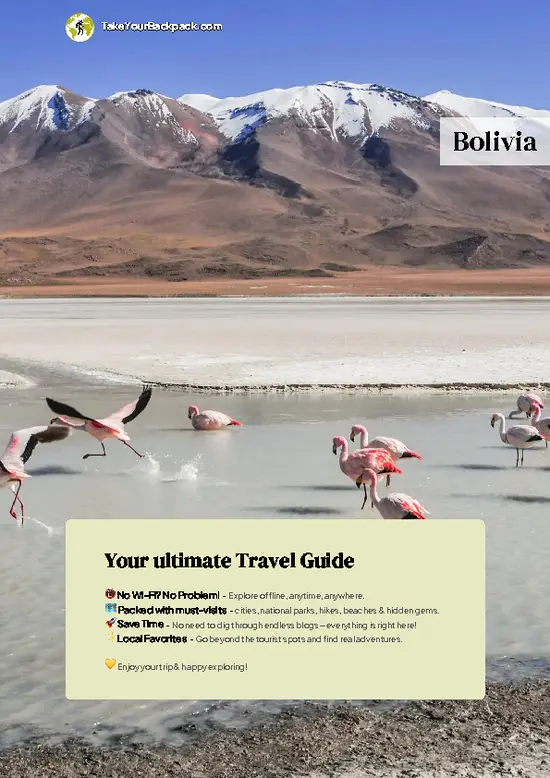
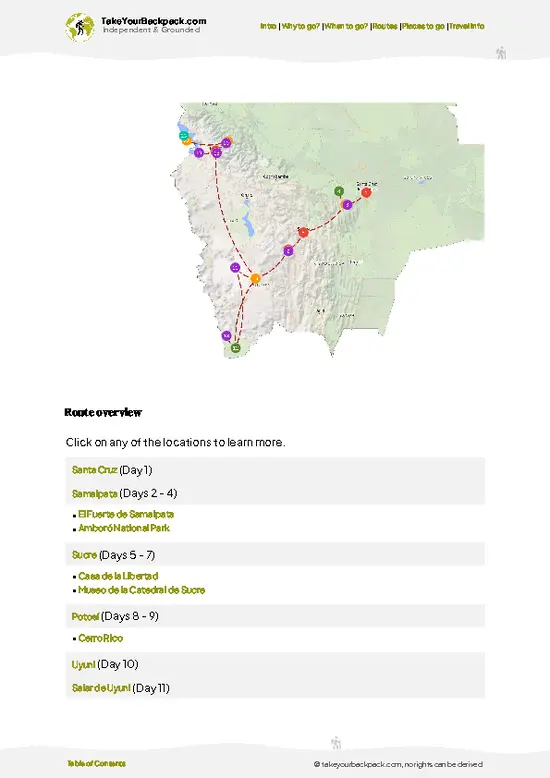
example page 0 from our offline Travel Guide for Bolivia
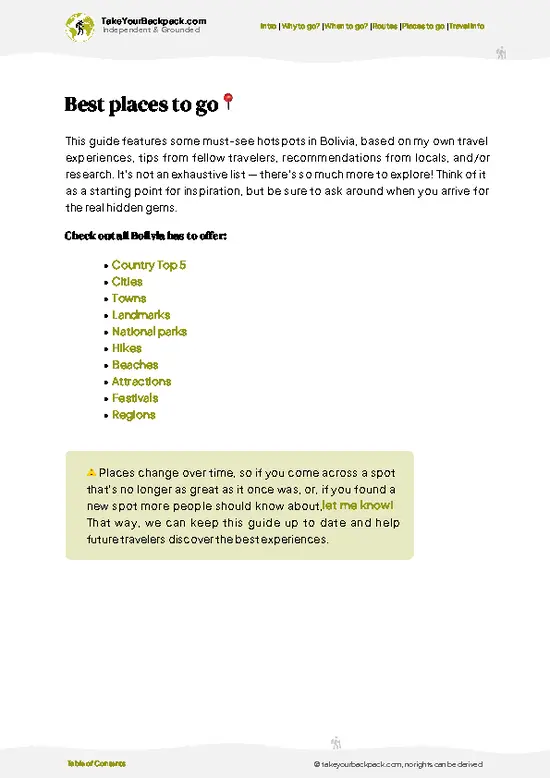
example page 1 from our offline Travel Guide for Bolivia
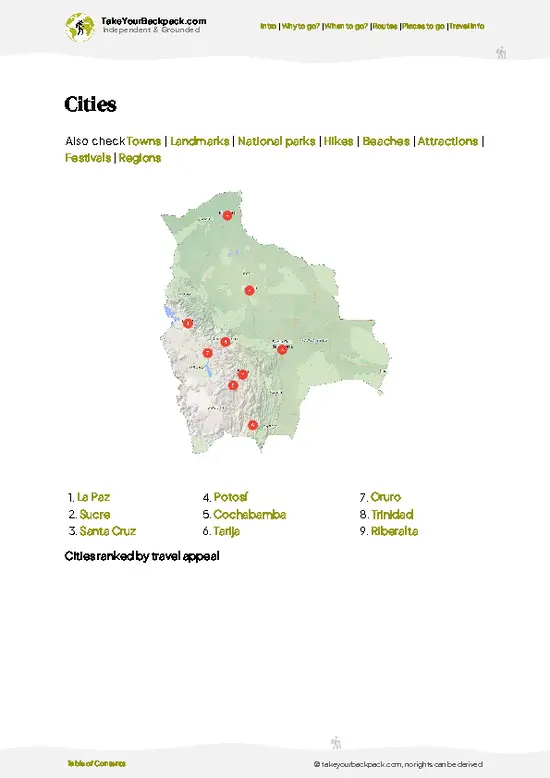
example page 2 from our offline Travel Guide for Bolivia
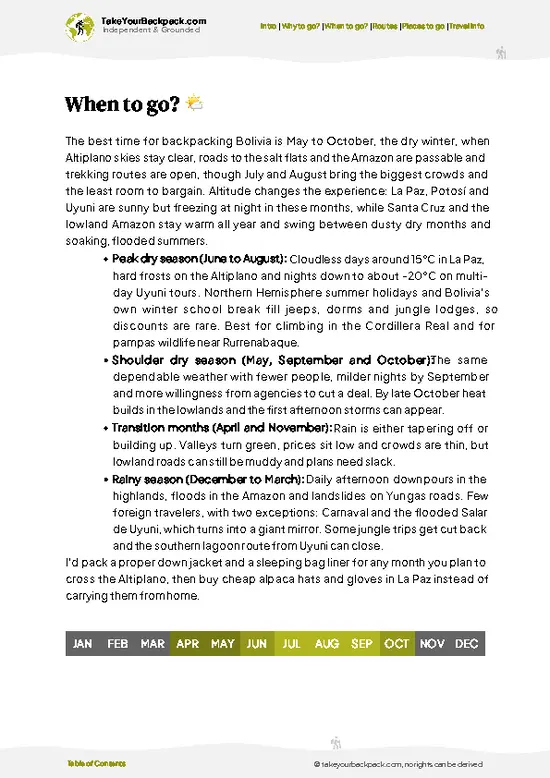
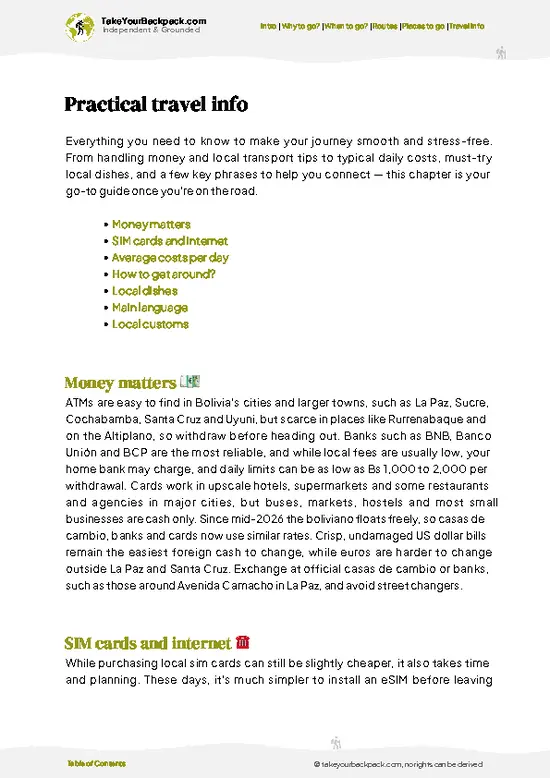
example page 3 from our offline Travel Guide for Bolivia
example page 4 from our offline Travel Guide for Bolivia
example page 5 from our offline Travel Guide for Bolivia
example page 6 from our offline Travel Guide for Bolivia
example page 7 from our offline Travel Guide for Bolivia
The digital guide (262 pages) contains:
✅ 76 highlights, ranked by travel appeal
✅ Optimized 7, 14 & 21-day travel routes
✅ Cities, national parks, landmarks, beaches
✅ How to get around
✅ Offline-friendly for travel without Wi-Fi
👉 Click to see all 30+ guide features

📅 Plan smarter in minutes, not weeks
✅ Month by month travel advice
✅ Festivals & national holidays
✅ Budget expectations

🗺️ Go to the right places, skip the overrated ones
✅ Honest pros & cons of destinations
✅ Top hikes, parks & viewpoints
✅ Lesser-known places most travelers miss
✅ Clear “worth it vs skip it” guidance

🛏️ Travel smoothly without rookie mistakes
✅ Best areas to stay
✅ Transport systems explained simply
✅ Common scams & safety advice
✅ SIM cards, money & practical tips

🌍 Understand the country, not just visit it
✅ Culture & traditions
✅ 52 Essential phrases & customs
✅ Festivals worth planning around
✅ Traveler-friendly historical context
✅ Insights that make places more meaningful

📱 Built for real travel conditions
✅ Fully downloadable PDF
✅ Works completely offline
✅ Optimized for phone use
✅ Useful in remote areas & buses
✅ Everything in one place
Stop searching, start planning
Get instant access to your full guide. 30‑day money-back guarantee.
+ Add another guide for just

By proceeding you agree to our terms.
Sent to your inbox immediately after payment • 100% Secure Checkout
Best Backpacking Travel Advisor 2025 tourism awardBest Backpacking
Travel Advisor
2025
What others say about Take Your Backpack Guides:
⭐⭐⭐⭐⭐
Fantastic, amazing amount of information!
⭐⭐⭐⭐⭐
My goodness this is amazing, it's what I've been looking for hats off too you!
⭐⭐⭐⭐⭐
I think this is absolutely BRILLIANT
⭐⭐⭐⭐
Very complete and informative. It's still missing places, but I gotta to commend you
⭐⭐⭐⭐⭐
This is truly amazing, thank you, can't wait to explore it with my kids!
⭐⭐⭐⭐⭐
Awesome resource, thank you!
⭐⭐⭐⭐⭐
This is amazing! Can't wait to explore the ones I haven't seen
⭐⭐⭐⭐
I love this! Well done, great idea.
⭐⭐⭐⭐⭐
Thanks for taking the time to make this gem!
⭐⭐⭐⭐⭐
This might be the best website I've ever seen.
⭐⭐⭐⭐⭐
Congratulations, and thank you so much for your work; it's incredibly valuable.
⭐⭐⭐⭐
In all seriousness I think you did a great job pointing out the important spots
⭐⭐⭐⭐⭐
10/10 very good
⭐⭐⭐⭐⭐
As someone who's only just starting to visit regularly this is awesome, thank you.
⭐⭐⭐⭐
Thank you very much! I'm going to visit my dad, it's going to be very useful!
⭐⭐⭐⭐⭐
This is really cool! We'll be travelling for the first time and this definitely come in handy.
⭐⭐⭐⭐⭐
You are now our minister of culture, congratulations 👨‍💼
⭐⭐⭐⭐⭐
Just wanted to tell you that this is a pearl! Going to follow your recommendations.
⭐⭐⭐⭐⭐
This is so cool. I'll definitely be using the resource for my travels soon.
⭐⭐⭐⭐⭐
This is very impressive! Good work.
⭐⭐⭐⭐⭐
This is an amazing and informative site. Very well done!

🛏️ Where to stay?Best Stay Options in Bolivia

Budget accommodation in Bolivia is plentiful, with dorm beds and simple private rooms in every city on the backpacker circuit. In La Paz, the streets around Calle Sagárnaga and the Rosario district put you steps from the Witches’ Market, tour agencies and party hostels but stay noisy and pickpocket-prone after dark, while Sopocachi is leafier, safer and quieter with better bars and cafés, at the cost of a steeper walk to the old town. In Sucre, the blocks around the Plaza 25 de Mayo combine colonial buildings, cheap Spanish schools and calm nights, and in Uyuni and Copacabana most budget beds cluster within a few blocks of the tour offices and the lakefront, handy for early departures but basic … read more 👉
Budget accommodation in Bolivia is plentiful, with dorm beds and simple private rooms in every city on the backpacker circuit. In La Paz, the streets around Calle Sagárnaga and the Rosario district put you steps from the Witches’ Market, tour agencies and party hostels but stay noisy and pickpocket-prone after dark, while Sopocachi is leafier, safer and quieter with better bars and cafés, at the cost of a steeper walk to the old town. In Sucre, the blocks around the Plaza 25 de Mayo combine colonial buildings, cheap Spanish schools and calm nights, and in Uyuni and Copacabana most budget beds cluster within a few blocks of the tour offices and the lakefront, handy for early departures but basic and often cold.

If you enjoy meeting fellow travelers, consider choosing hostels with high ratings for atmosphere. On the other hand, if you prefer having your own space, a hotel might be a better option.

BoliviaWhere to Go Next

👋 Meet the founderWho’s Behind Take Your Backpack?

Johan, backpacker and founder of TakeYourBackpackHi, I’m Johan (Netherlands 🇳🇱), the creator of TakeYourBackpack. Over the past 3 decades, I’ve backpacked through 90+ countries across six continents, gaining extensive experience with independent travel, long-term trips, and overland routes.

This site is built on a combination of firsthand travel experience and carefully curated insights from other backpackers. Many guides are based on places I’ve personally visited, while others bring together tips, observations, and practical advice shared by trusted travelers I’ve met along the way.

The goal is to provide realistic, experience-driven guidance — not generic itineraries — so you can explore destinations with better context, clearer expectations, and more confidence.