Short version: Botswana is doable independently, but it’s not a classic shoestring backpacker country like Thailand or Peru. It’s safe, politically stable, and people are friendly, but distances are big, public transport is thin in the wild areas, and most famous parks are set up for self-drive or pricey lodges.
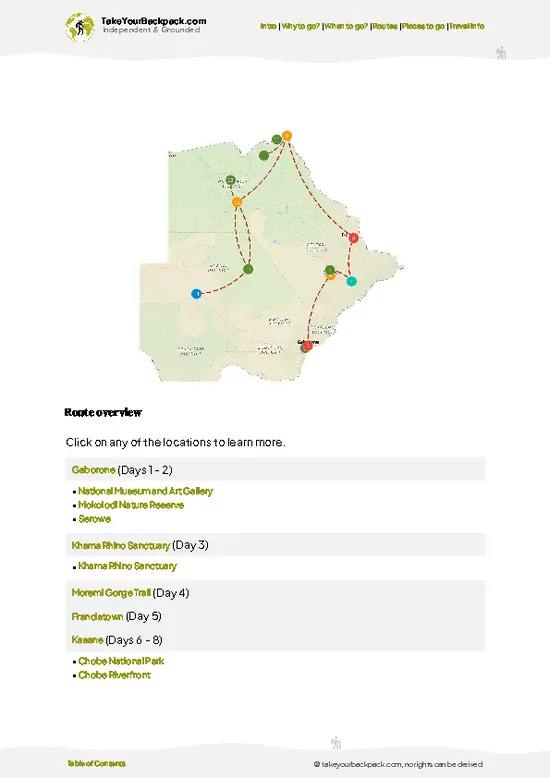
If you stick to towns and main routes (Gaborone–Francistown–Maun–Kasane), independent travel is straightforward: buses and shared taxis, cheap guesthouses, and basic supermarkets. Once you want to hit the Okavango Delta, Moremi, or Central Kalahari on a budget, the challenge starts. Park fees are high, and most budget options are camping-based. You either join a budget overland tour, team up with other travelers to share 4x4 and fuel costs, or accept that you’ll only see the edges of the big-name parks.
For a first-time backpacker, Botswana is easier if you’ve already done some overland travel in Africa or Latin America. You need to be comfortable with long, hot bus rides, planning ahead for cash and fuel gaps, and sometimes saying yes to group trips to keep costs down. The reward is huge wildlife with far fewer crowds than East Africa, but you pay in logistics and planning rather than in pure cash alone.
Bottom line: independent backpacking is absolutely possible, but you have to be flexible, willing to camp, and realistic that Botswana is a “value” destination more than a “dirt cheap” one.
If you only have 5–7 days, focus hard: pick either the north (Maun + Okavango area + maybe a quick Chobe/Kasane hop) or the south (Gaborone + Kalahari area). You’ll get a taste of the country but you’ll be moving fast and relying on flights or long bus hauls.
10–14 days is the sweet spot for a budget traveler. That gives you time to:
- Spend 3–4 days around Maun with at least one overnight mokoro or boat-based Delta trip.
- Add 3–4 days in the Chobe/Kasane area for riverfront wildlife and a day trip to Victoria Falls if you want.
- Use the remaining days for travel time between hubs and a buffer for delays or an extra night somewhere you love.
If you’ve got 3 weeks or more, you can slow down and save money by avoiding flights and expensive last-minute bookings. With 21 days you can:
- Do the Maun–Okavango–Moremi area properly.
- Add Chobe and the Caprivi/Vic Falls loop.
- Potentially include the Makgadikgadi Pans or Central Kalahari if you find a group or tour to share costs.
Because transport is slow and parks are remote, Botswana punishes rushed itineraries. It’s better to do one region well in 8–10 days than to try to “do the whole country” in the same time and spend half your trip on buses.
You can get around Botswana’s towns and main corridors without a car, but you cannot easily reach most prime wildlife areas purely on public transport.
Where public transport works:
- Gaborone, Francistown, Maun, Kasane, and major villages are linked by buses and combis (minibuses). They’re cheap, reasonably safe, and leave when full.
- Hitchhiking is common and semi-normalized, especially between smaller towns, but you should always have a backup plan and some cash for fuel contributions.
Where it breaks down:
- National parks like Moremi, Chobe interior, and Central Kalahari require 4x4, proper gear, and experience. There’s no regular public transport into the parks.
- Many budget campsites and lodges outside towns are several kilometers off the main road on sand tracks. Some offer paid transfers; factor that into your budget.
Budget-friendly workarounds:
- Base yourself in Maun and Kasane and use day trips or 1–3 night budget safaris that include transport, camping gear, and food. This is often cheaper and safer than renting your own 4x4 for a short visit.
- Team up with other backpackers to share a rental car or 4x4 from Maun or Kasane. Splitting fuel and rental four ways can bring costs down to a reasonable level.
So yes, you can cross the country without a car, but to actually see the wildlife areas you’ll usually need to pay for organized transport, join others, or rent wheels for at least part of the trip.
For a budget traveler, “must-visit” in Botswana means places where you get maximum wildlife and sense of place for each dollar and hour spent.
1. Maun & the Okavango Delta
Maun is the backpacker hub: hostels, campsites, and tour operators all in one place. From here, prioritize at least one of:
- An overnight mokoro (dugout canoe) trip with community guides: camping on an island, walking safaris, and that surreal feeling of gliding through reeds at hippo level.
- A budget motorboat or mokoro day trip if you’re short on time or cash.
2. Chobe Riverfront (Kasane)
Chobe is one of the best value wildlife experiences in Africa if you play it smart.
- Sunset boat cruises on the Chobe River are relatively affordable and deliver ridiculous elephant, hippo, and buffalo sightings.
- Shared game drives into Chobe National Park from Kasane are cheaper than deep-Delta safaris and still give you big-game action.
3. Makgadikgadi Pans (on a budget, if you can swing it)
If you can find a reasonably priced trip from Maun or Nata, the salt pans are otherworldly: endless white flats, big skies, and, in the right season, flamingos and migrating zebras. Even a simple overnight on the edge of the pans can feel like camping on another planet.
4. Cross-border add-ons (if you’re already nearby)
- Victoria Falls (from Kasane): Easy day or overnight trip to Zimbabwe or Zambia. Not in Botswana, but logistically tied to a Chobe stay and worth it if you’re already in the area.
If you’re on a tight budget, the core combo that gives you the best sense of Botswana is: Maun + at least one Delta experience, then Kasane + Chobe river cruise and game drive.
If you’re short on time or money, skip anything that eats days of travel or demands expensive 4x4 logistics without giving you a clearly different experience from what you’re already doing.
1. Deep self-drive safaris into multiple parks
If you’re not an experienced overlander with your own gear, trying to cram Moremi, Savuti, and Central Kalahari into one short trip will drain your budget and energy. Do one area well via organized trips from Maun or Kasane instead of racing through three.
2. Gaborone as a main destination
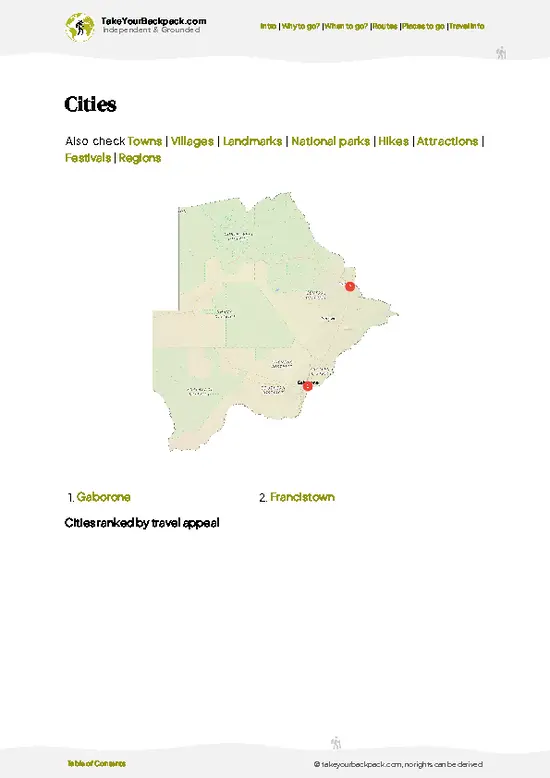
Gaborone is fine as a transit stop, but it’s not where Botswana shines for a backpacker. If your time is tight, don’t spend multiple days here; push north toward Maun or Kasane where your money buys actual wildlife and wilderness.
3. Too many internal flights
Flying Maun–Kasane–Johannesburg–Maun just to avoid buses will burn your budget fast. If you must fly, pick one strategic leg (for example, into Maun) and do the rest overland.
4. High-end Delta lodges
They’re incredible, but if you’re backpacking, one or two well-chosen budget or midrange Delta experiences from Maun will give you the essence of the place. You don’t need to blow a month’s rent on a single night.
5. Trying to “do the whole country” in under 10 days
Rushing to add Central Kalahari, Kgalagadi, or remote pans when you only have a week means you’ll spend more time in transit than in nature. If you’re short on time, skip the far south and deep Kalahari and focus on the Maun–Okavango–Chobe corridor, where logistics and costs are more backpacker-friendly.