×

Bulgaria🇧🇬 | best festivalsYour Guide to the 10 Best festivals in Bulgaria

Festivals in Bulgaria run on two speeds: mountain villages that wake up in winter wearing shaggy bell-covered costumes, and Black Sea towns that spend summer hosting music crowds who have not slept since Thursday. Folk traditions are rural, cheap and often free, but buses to them can be sparse and cheerfully unreliable. Coastal and Sofia events are easier to reach, pricier and busier. For independent travel, the trick is choosing between authenticity and convenience, because the villages with the best costumes rarely have a timetable that respects your onward ticket. Cash helps. So does patience.

By Johan Kruseman 🇳🇱 | Updated October 18, 2026
Explore the best regions in Bulgaria

Why go?Understanding Their Importance

Bulgaria packs an unusual amount of living ritual into a country smaller than Ohio. Orthodox calendar dates, pre-Christian folk customs and a long tradition of village chitalishte (community cultural centers) mean that many celebrations are still run by locals for locals, not staged for visitors. That gives you real atmosphere, but it also means schedules can shift, signage is often only in Cyrillic, and nobody is waiting with an English brochure.

Geography adds variety. The Balkan Mountains, the Rhodopes, the Thracian plain and the Black Sea coast each have their own dress, music and calendar, so the country feels like several festival scenes sharing one visa stamp. Costs stay low by European standards, with beer, food and basic rooms noticeably cheaper than in neighboring Greece or Croatia, … read more 👉
Bulgaria packs an unusual amount of living ritual into a country smaller than Ohio. Orthodox calendar dates, pre-Christian folk customs and a long tradition of village chitalishte (community cultural centers) mean that many celebrations are still run by locals for locals, not staged for visitors. That gives you real atmosphere, but it also means schedules can shift, signage is often only in Cyrillic, and nobody is waiting with an English brochure.

Geography adds variety. The Balkan Mountains, the Rhodopes, the Thracian plain and the Black Sea coast each have their own dress, music and calendar, so the country feels like several festival scenes sharing one visa stamp. Costs stay low by European standards, with beer, food and basic rooms noticeably cheaper than in neighboring Greece or Croatia, though coastal prices jump in peak summer.

Before choosing Bulgaria, know that infrastructure thins out fast beyond Sofia, Plovdiv, Varna and Burgas. Rural events may have no dedicated parking, no ticket office and one guesthouse for the entire village. Book beds early, carry some leva in cash, and learn to read a few Cyrillic place names. Sofia’s metro will not save you here, but a bus driver pointing firmly at your seat probably will.
Behind the Scenes of Selection
The list of best festivals in Bulgaria is created based on energy, traditions, crowd experience, activities, and overall excitement. If you feel a festival is missing in this list, please let us know.

When to go?When to Plan Your Trip

Best months and the weather behind them: The best months for festivals in Bulgaria are January to February for winter folk rituals and June to September for music and open-air events, because those are the periods when the country’s two festival types are in full swing. Winter days in Sofia and the mountains hover around -5 to 3°C, with snow common in the Rhodopes and Rila foothills. Dress for standing around in a field, not for a photo.
Summer and shoulder seasons: Summer is warm and mostly dry. Sofia and Plovdiv reach 28 to 35°C in July and August, while the Black Sea coast sits near 26 to 30°C with water around 23 to 26°C. Rain is light, but thunderstorms do appear in the mountains. Coastal prices peak from mid-July to the end of August, when beds in Varna, Burgas and smaller resorts can … read more 👉
Best months and the weather behind them: The best months for festivals in Bulgaria are January to February for winter folk rituals and June to September for music and open-air events, because those are the periods when the country’s two festival types are in full swing. Winter days in Sofia and the mountains hover around -5 to 3°C, with snow common in the Rhodopes and Rila foothills. Dress for standing around in a field, not for a photo.
Summer and shoulder seasons: Summer is warm and mostly dry. Sofia and Plovdiv reach 28 to 35°C in July and August, while the Black Sea coast sits near 26 to 30°C with water around 23 to 26°C. Rain is light, but thunderstorms do appear in the mountains. Coastal prices peak from mid-July to the end of August, when beds in Varna, Burgas and smaller resorts can run 30 to 60 percent above June or September rates.

Spring (April to May) and early autumn (late September to October) are quieter shoulder seasons, with 12 to 22°C days and cheaper rooms, though fewer big outdoor events. Easter and early May bring local travel surges, so intercity buses fill up. November is the dull stretch, damp and gray, when even the pigeons look unenthusiastic.

festival hoppingTips for Visiting Multiple Destinations

How long a multi-festival trip needs: A trip combining several festivals in Bulgaria needs 10 to 14 days, because the distances are modest but the transport is not always quick. Group by region: Sofia, the Rila and Pirin foothills and Plovdiv form one cluster, while Varna, Burgas and the northern and southern coast form another. The Rhodopes and rural villages sit best as a detour from Plovdiv.

A sensible direction is west to east. Start in Sofia, move to Plovdiv (about 2 to 2.5 hours by bus or train), then cross to the coast through Burgas or Varna (roughly 5 to 7 hours from Sofia or Plovdiv by bus). Finishing on the coast suits summer events and gives you a beach for recovery. In winter, reverse the logic and keep to Sofia, the mountains and Plovdiv.

Allow 2 to 3 days per stop so you have … read more 👉
How long a multi-festival trip needs: A trip combining several festivals in Bulgaria needs 10 to 14 days, because the distances are modest but the transport is not always quick. Group by region: Sofia, the Rila and Pirin foothills and Plovdiv form one cluster, while Varna, Burgas and the northern and southern coast form another. The Rhodopes and rural villages sit best as a detour from Plovdiv.

A sensible direction is west to east. Start in Sofia, move to Plovdiv (about 2 to 2.5 hours by bus or train), then cross to the coast through Burgas or Varna (roughly 5 to 7 hours from Sofia or Plovdiv by bus). Finishing on the coast suits summer events and gives you a beach for recovery. In winter, reverse the logic and keep to Sofia, the mountains and Plovdiv.

Allow 2 to 3 days per stop so you have time to arrive, attend and sleep. The common mistakes are squeezing two events into one day, assuming village buses run on weekends, and booking tight connections out of small towns. Many routes have only one or two departures daily. Build in a spare day between regions, confirm the last bus back, and treat a rental car as a serious option for rural areas.

The ListMust-Visit festivals in Bulgaria

1 Kazanlak Rose Festival

rose fields, Kazanlak, harvest rituals

Take part in early morning rose picking and see parades, folk performances, and distillation demonstrations in the Valley of Roses.

2 Kukeri Festival

ritual masks, village processions, winter folklore

Observe villagers donning elaborate costumes and masks to ward off evil spirits in a centuries-old tradition rooted in rural Bulgaria.

3 Surva Festival

masked rituals, folk costumes, winter parade

Witness masked groups from across Bulgaria and beyond as they fill Pernik’s streets with bells, fire, and ancient ritual performances.

4 Bansko Jazz Festival

mountain town, open-air stage, jazz legends

Enjoy free concerts in Bansko’s main square, where local and international jazz artists play against a backdrop of alpine scenery.

5 Sofia International Film Festival

cinema premieres, filmmaker Q&As, urban screenings

Watch new films from Bulgaria and around the world, attend discussions, and meet directors in venues across the capital.

6 Varna Summer International Music Festival

Black Sea coast, classical concerts, open-air venues

Attend orchestral and chamber performances in historic halls and seaside spaces, drawing musicians and audiences to Bulgaria’s maritime capital.

7 Apollonia Festival of Arts

Sozopol, multidisciplinary arts, seaside stages

Experience a blend of theater, music, film, and visual arts in intimate venues and open-air settings along the Black Sea.

8 Pirin Sings Folklore Festival

mountain meadows, regional costumes, folk choirs

Join thousands gathering in the Pirin foothills to celebrate traditional music, dance, and crafts unique to southwestern Bulgaria.

9 A to Jazz Festival

city parks, international jazz, Sofia summer

Relax on the grass in central Sofia as jazz musicians from Bulgaria and abroad perform in a laid-back, urban setting.

10 Beglika Fest

Rodopi forest, eco-camping, alternative music

Camp lakeside in the forest and take part in workshops, concerts, and community activities focused on sustainability and creative expression.

Loading the map 🌍

Expert viewInsights from Locals and Experts

How many to attend: Plan for three to four festivals in a trip of two weeks or so. That number leaves a day on either side of each event for travel and recovery, which matters because Bulgarian buses seldom operate on the same optimism as festival schedules. More than four turns the trip into a relay race; fewer than three, and you miss the contrast between rural, urban and coastal events. A backpacker gets the most from this middle path, since it keeps the cost of transport and accommodation manageable without wasting time.
Which kind suits you: For culture and atmosphere, choose folk and ritual events in villages and small towns. They cost the least, often nothing to enter, but they take more effort: unclear timetables, Cyrillic signage and limited rooms. Music festivals on the coast and … read more 👉
How many to attend: Plan for three to four festivals in a trip of two weeks or so. That number leaves a day on either side of each event for travel and recovery, which matters because Bulgarian buses seldom operate on the same optimism as festival schedules. More than four turns the trip into a relay race; fewer than three, and you miss the contrast between rural, urban and coastal events. A backpacker gets the most from this middle path, since it keeps the cost of transport and accommodation manageable without wasting time.
Which kind suits you: For culture and atmosphere, choose folk and ritual events in villages and small towns. They cost the least, often nothing to enter, but they take more effort: unclear timetables, Cyrillic signage and limited rooms. Music festivals on the coast and in cities are the comfortable choice, with easy English, simple booking and plenty of beds, but you pay with higher prices and bigger crowds. If time is short, a city event gives the best return. If you have more days than money, the village route wins.
What it costs: Budget US$30 to 55 a day (roughly 55 to 100 leva) for dorm or guesthouse, food, local transport and entry to smaller events. Folk events are usually free or under 10 leva, local guides run 40 to 100 leva for a few hours, and village taxis or shared transfers add 20 to 60 leva. Larger music festivals can cost 100 to 300 leva for entry, plus camping or accommodation, so a single visit may reach US$80 to 200. Summer coastal rooms can double the daily figure.
Safety and etiquette: Festivals here are generally friendly, but petty theft in crowds and on night buses does happen, so keep a phone and wallet in front pockets. Carry cash, since village events rarely accept cards, and keep a bit of change for public toilets. Ask before photographing people in ritual costume, and do not treat masked performers as props, because the ceremonies often carry real meaning for the community. Rakia is strong and generously offered, so accept a small glass and pace yourself. Drivers at big events may have been celebrating too, so choose a licensed taxi or arranged ride.

✈️ The backpacker research shortcutBulgaria Travel Guide

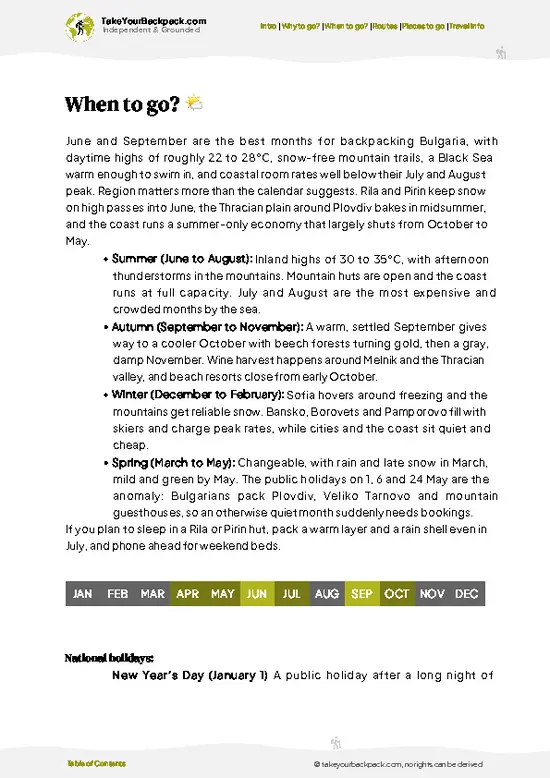
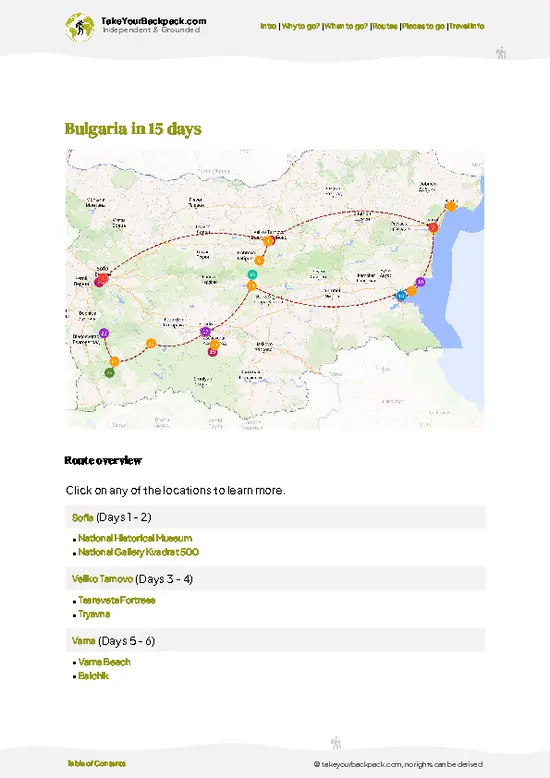
An offline-friendly backpacking guide with optimized travel routes, ranked highlights, transport advice, and the best areas to stay.
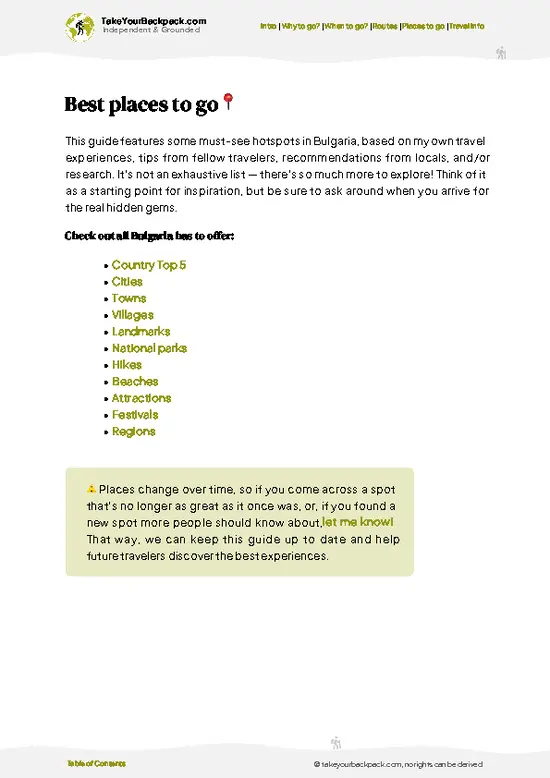
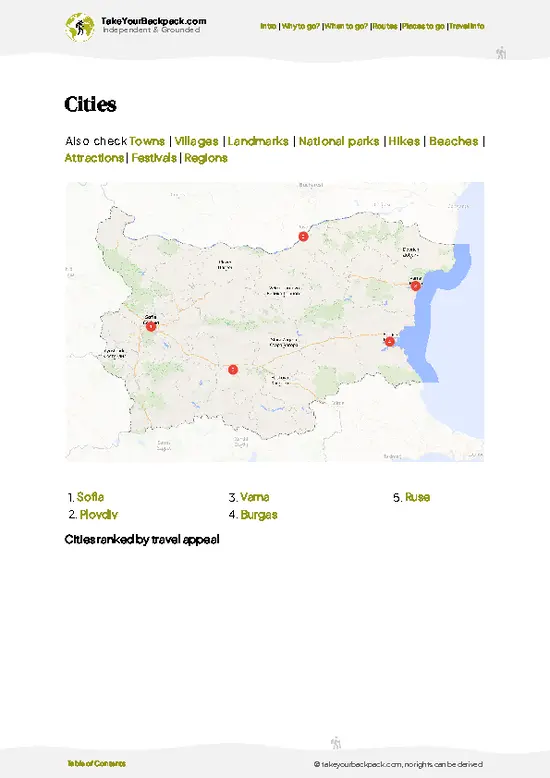
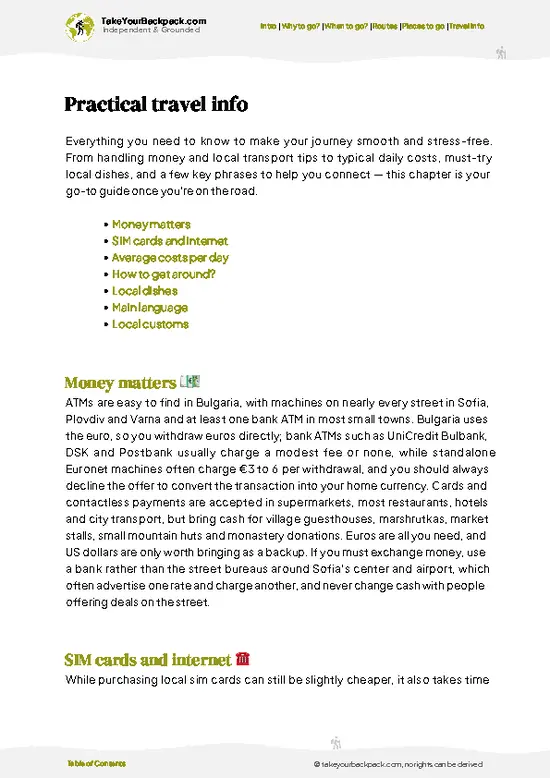
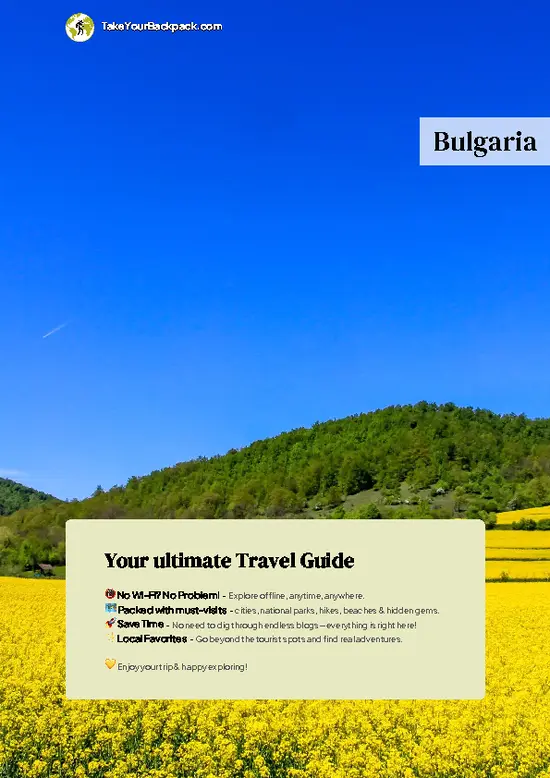
example page 0 from our offline Travel Guide for Bulgaria
example page 1 from our offline Travel Guide for Bulgaria
example page 2 from our offline Travel Guide for Bulgaria
example page 3 from our offline Travel Guide for Bulgaria
example page 4 from our offline Travel Guide for Bulgaria
example page 5 from our offline Travel Guide for Bulgaria
example page 6 from our offline Travel Guide for Bulgaria
example page 7 from our offline Travel Guide for Bulgaria
The digital guide (349 pages) contains:
✅ 92 highlights, ranked by travel appeal
✅ Optimized 5, 10 & 15-day travel routes
✅ Cities, national parks, landmarks, beaches
✅ How to get around
✅ Offline-friendly for travel without Wi-Fi
👉 Click to see all 30+ guide features

📅 Plan smarter in minutes, not weeks
✅ Month by month travel advice
✅ Festivals & national holidays
✅ Budget expectations

🗺️ Go to the right places, skip the overrated ones
✅ Honest pros & cons of destinations
✅ Top hikes, parks & viewpoints
✅ Lesser-known places most travelers miss
✅ Clear “worth it vs skip it” guidance

🛏️ Travel smoothly without rookie mistakes
✅ Best areas to stay
✅ Transport systems explained simply
✅ Common scams & safety advice
✅ SIM cards, money & practical tips

🌍 Understand the country, not just visit it
✅ Culture & traditions
✅ 52 Essential phrases & customs
✅ Festivals worth planning around
✅ Traveler-friendly historical context
✅ Insights that make places more meaningful

📱 Built for real travel conditions
✅ Fully downloadable PDF
✅ Works completely offline
✅ Optimized for phone use
✅ Useful in remote areas & buses
✅ Everything in one place
Stop searching, start planning
Get instant access to your full guide. 30‑day money-back guarantee.
+ Add another guide for just

By proceeding you agree to our terms.
Sent to your inbox immediately after payment • 100% Secure Checkout
Best Backpacking Travel Advisor 2025 tourism awardBest Backpacking
Travel Advisor
2025
What others say about Take Your Backpack Guides:
⭐⭐⭐⭐⭐
Fantastic, amazing amount of information!
⭐⭐⭐⭐⭐
My goodness this is amazing, it's what I've been looking for hats off too you!
⭐⭐⭐⭐⭐
I think this is absolutely BRILLIANT
⭐⭐⭐⭐
Very complete and informative. It's still missing places, but I gotta to commend you
⭐⭐⭐⭐⭐
This is truly amazing, thank you, can't wait to explore it with my kids!
⭐⭐⭐⭐⭐
Awesome resource, thank you!
⭐⭐⭐⭐⭐
This is amazing! Can't wait to explore the ones I haven't seen
⭐⭐⭐⭐
I love this! Well done, great idea.
⭐⭐⭐⭐⭐
Thanks for taking the time to make this gem!
⭐⭐⭐⭐⭐
This might be the best website I've ever seen.
⭐⭐⭐⭐⭐
Congratulations, and thank you so much for your work; it's incredibly valuable.
⭐⭐⭐⭐
In all seriousness I think you did a great job pointing out the important spots
⭐⭐⭐⭐⭐
10/10 very good
⭐⭐⭐⭐⭐
As someone who's only just starting to visit regularly this is awesome, thank you.
⭐⭐⭐⭐
Thank you very much! I'm going to visit my dad, it's going to be very useful!
⭐⭐⭐⭐⭐
This is really cool! We'll be travelling for the first time and this definitely come in handy.
⭐⭐⭐⭐⭐
You are now our minister of culture, congratulations 👨‍💼
⭐⭐⭐⭐⭐
Just wanted to tell you that this is a pearl! Going to follow your recommendations.
⭐⭐⭐⭐⭐
This is so cool. I'll definitely be using the resource for my travels soon.
⭐⭐⭐⭐⭐
This is very impressive! Good work.
⭐⭐⭐⭐⭐
This is an amazing and informative site. Very well done!

🛏️ Where to stay?Where to Stay in Bulgaria

Bulgaria has plenty of hostels and budget guesthouses, with dorm beds typically running €10 to 20 a night and private doubles from about €30 to 50. In Sofia, the streets around Vitosha Boulevard and Serdika put you within walking distance of the main sights, metro lines and bars, though weekend nights get loud, while Plovdiv splits between the cobbled Old Town (quiet, atmospheric, hilly) and the Kapana district (craft beer, late cafés, more noise). In Veliko Tarnovo, the Old Town along Gurko and Samovodska streets gives you cliffside views and a calm, safe base, and in Varna the center near the Sea Garden keeps you close to the beach and summer nightlife, at peak-season prices.

If you enjoy meeting … read more 👉
Bulgaria has plenty of hostels and budget guesthouses, with dorm beds typically running €10 to 20 a night and private doubles from about €30 to 50. In Sofia, the streets around Vitosha Boulevard and Serdika put you within walking distance of the main sights, metro lines and bars, though weekend nights get loud, while Plovdiv splits between the cobbled Old Town (quiet, atmospheric, hilly) and the Kapana district (craft beer, late cafés, more noise). In Veliko Tarnovo, the Old Town along Gurko and Samovodska streets gives you cliffside views and a calm, safe base, and in Varna the center near the Sea Garden keeps you close to the beach and summer nightlife, at peak-season prices.

If you enjoy meeting fellow travelers, consider choosing hostels with high ratings for atmosphere. On the other hand, if you prefer having your own space, a hotel might be a better option.

BulgariaMore of Bulgaria

👋 Meet the founderWho’s Behind Take Your Backpack?

Johan, backpacker and founder of TakeYourBackpackHi, I’m Johan (Netherlands 🇳🇱), the creator of TakeYourBackpack. Over the past 3 decades, I’ve backpacked through 90+ countries across six continents, gaining extensive experience with independent travel, long-term trips, and overland routes.

This site is built on a combination of firsthand travel experience and carefully curated insights from other backpackers. Many guides are based on places I’ve personally visited, while others bring together tips, observations, and practical advice shared by trusted travelers I’ve met along the way.

The goal is to provide realistic, experience-driven guidance — not generic itineraries — so you can explore destinations with better context, clearer expectations, and more confidence.