×

Bulgaria🇧🇬 | best hikesYour Guide to the 6 Best hikes in Bulgaria

Hikes in Bulgaria come in three moods, and picking the wrong one is how you end up in flip-flops on a ridge. The Rila and Pirin mountains deliver alpine lakes, granite and the busiest trails, with easy access from Sofia by bus. The Rhodopes are softer, emptier and so cheap the bill feels like a clerical error. The Balkan Range, which runs across the whole country, suits long independent treks between huts. Expect hut beds, shepherd dogs with opinions and trail signs that vary from excellent to philosophical.

By Johan Kruseman 🇳🇱 | Updated October 18, 2026
Explore the best beaches in Bulgaria

Why go?Understanding Their Importance

Bulgaria is one of Europe’s best-value places to hike, mainly because it packs three mountain systems into a country smaller than Ohio. Musala in Rila reaches 2,925 meters, the highest summit in the Balkans, and the ranges sit within a few hours of Sofia, so there are no endless approaches. Mountain hiking here grew out of a century-old tourist society tradition, which left a network of marked trails and mountain huts (hizha) across most ranges. Huts range from comfortable to quietly feral, and many serve a decent bean soup (bob chorba) that tastes better at 2,000 meters.

Know before you choose it: infrastructure is uneven. Waymarks are good in popular areas and fade elsewhere, so a downloaded offline map is not optional. Public transport reaches mountain towns but rarely trailheads, which … read more 👉
Bulgaria is one of Europe’s best-value places to hike, mainly because it packs three mountain systems into a country smaller than Ohio. Musala in Rila reaches 2,925 meters, the highest summit in the Balkans, and the ranges sit within a few hours of Sofia, so there are no endless approaches. Mountain hiking here grew out of a century-old tourist society tradition, which left a network of marked trails and mountain huts (hizha) across most ranges. Huts range from comfortable to quietly feral, and many serve a decent bean soup (bob chorba) that tastes better at 2,000 meters.

Know before you choose it: infrastructure is uneven. Waymarks are good in popular areas and fade elsewhere, so a downloaded offline map is not optional. Public transport reaches mountain towns but rarely trailheads, which makes buses, shared taxis and a bit of walking part of the plan. Shepherd dogs guard flocks seriously, and the weather turns quickly above the tree line. English is common in resort towns and thin in villages. Prices stay low by European standards, and crowds thin out fast once you leave the lakes near the car parks.
Why These Made the Cut
The list of best hikes in Bulgaria is created based on scenery, challenge, trail quality, landmarks, and overall enjoyment. If you feel a hike is missing in this list, please let us know.

When to go?When to Plan Your Trip

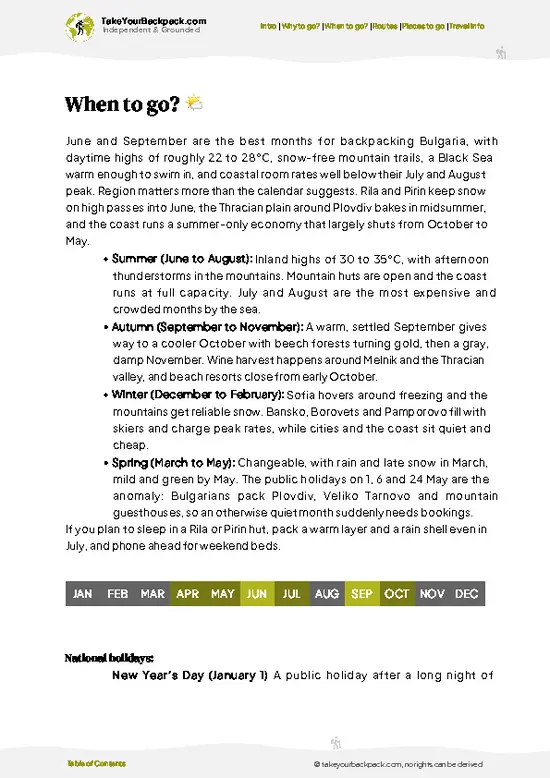
Best months and why: The best months for hikes in Bulgaria are July to September, when high trails in Rila, Pirin and the central Balkan are usually clear of snow and huts are open. Daytime highs in the valleys run 25 to 30°C, while summits sit around 8 to 15°C, and nights near 2,500 meters can drop close to freezing.

Shoulder seasons and peak crowds: June is lovely and green but snow often lingers above 2,300 meters in Rila and Pirin until late June, and afternoon thunderstorms are common. Late September to October brings crisp air, golden beech forests and far fewer people. Many huts reduce service or close from October.

The Rhodopes and lower Balkan foothills work from April to October, and the south is milder than the north. Weekends in late July and August are the busiest, especially … read more 👉
Best months and why: The best months for hikes in Bulgaria are July to September, when high trails in Rila, Pirin and the central Balkan are usually clear of snow and huts are open. Daytime highs in the valleys run 25 to 30°C, while summits sit around 8 to 15°C, and nights near 2,500 meters can drop close to freezing.

Shoulder seasons and peak crowds: June is lovely and green but snow often lingers above 2,300 meters in Rila and Pirin until late June, and afternoon thunderstorms are common. Late September to October brings crisp air, golden beech forests and far fewer people. Many huts reduce service or close from October.

The Rhodopes and lower Balkan foothills work from April to October, and the south is milder than the north. Weekends in late July and August are the busiest, especially near Rila’s lakes, and hut beds can fill, so book ahead. Accommodation in mountain resorts costs more in winter ski season, but hut and guesthouse prices otherwise stay steady. Winter hiking means snow, short days and a different set of skills, and the mountains politely do not care about your schedule.

hike hoppingTips for Visiting Multiple Destinations

How long you need: A trip combining several hikes in Bulgaria needs 10 to 14 days, which allows 2 to 3 days per mountain area plus buffers for weather and buses.

Which regions pair well: Sofia is the natural hub. Rila and Pirin group together, since the towns of Dupnitsa, Bansko and Blagoevgrad link them by road, with transfers of about 2 to 3 hours from the capital. The Rhodopes sit southeast, around Smolyan and Plovdiv, roughly 3 to 4 hours from Rila by bus with a change. The Central Balkan lies north, reached via Gabrovo, Kazanlak or Karlovo, about 3 to 4 hours from Sofia.

A sensible direction runs west to east or south to north without doubling back: start in Rila and Pirin, drop into the Rhodopes, then finish in the Balkan, ending in Plovdiv or Sofia for flights. Allow 2 to 3 days per … read more 👉
How long you need: A trip combining several hikes in Bulgaria needs 10 to 14 days, which allows 2 to 3 days per mountain area plus buffers for weather and buses.

Which regions pair well: Sofia is the natural hub. Rila and Pirin group together, since the towns of Dupnitsa, Bansko and Blagoevgrad link them by road, with transfers of about 2 to 3 hours from the capital. The Rhodopes sit southeast, around Smolyan and Plovdiv, roughly 3 to 4 hours from Rila by bus with a change. The Central Balkan lies north, reached via Gabrovo, Kazanlak or Karlovo, about 3 to 4 hours from Sofia.

A sensible direction runs west to east or south to north without doubling back: start in Rila and Pirin, drop into the Rhodopes, then finish in the Balkan, ending in Plovdiv or Sofia for flights. Allow 2 to 3 days per stop, plus a rest day after each long trek.

Planning mistakes: The classic error is trusting a map distance. Mountain roads are slow, and some bus links run once or twice a day, so a 100 kilometer hop can swallow half a day. Check timetables the day before and keep one flexible day per region. Another is stacking high-altitude days back to back with no weather margin. Instead, place the highest, most exposed hiking early in the trip, when the forecast is still a theory.

The ListMust-Visit hikes in Bulgaria

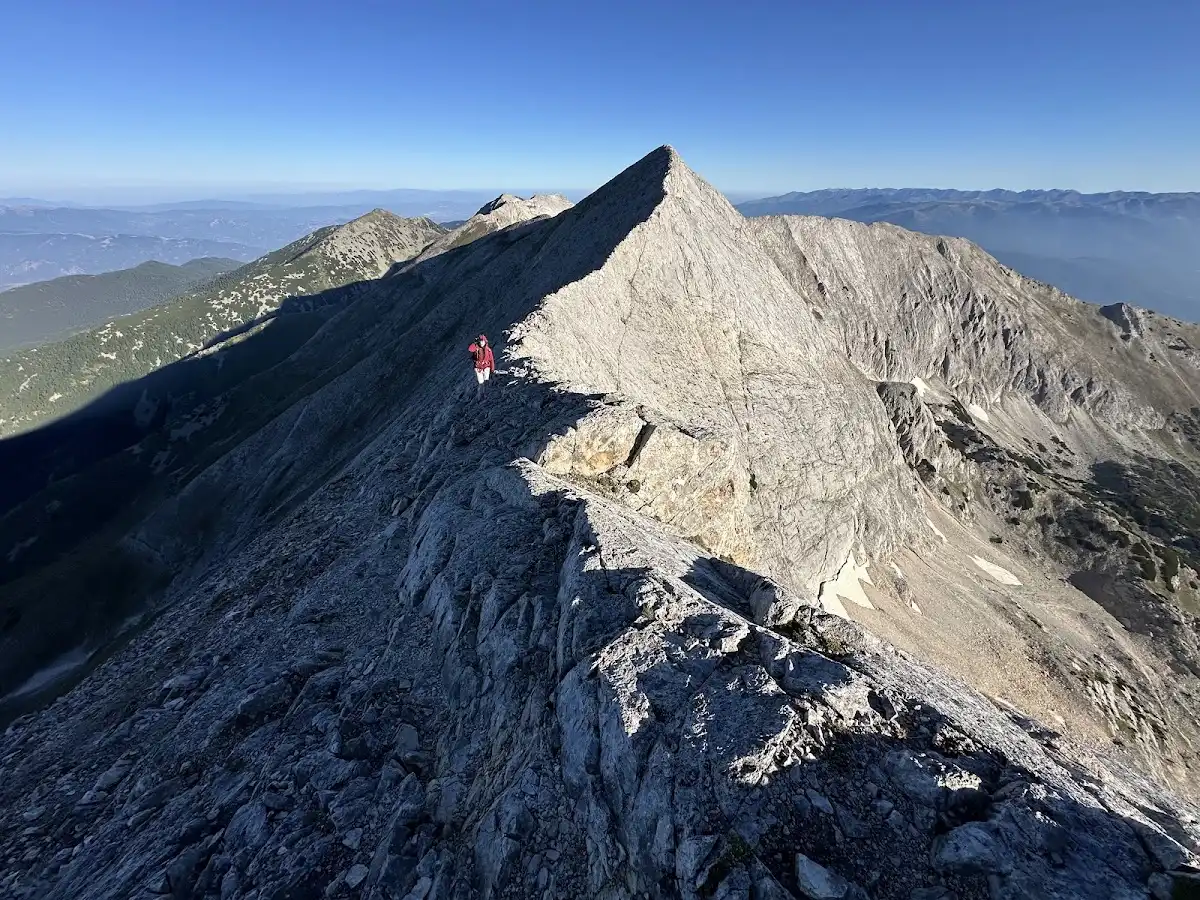
1 Koncheto Ridge

knife-edge traverse, alpine exposure, limestone crest

Cross a narrow ridge with steep drops on both sides, where every step reveals the stark drama of Pirin’s high peaks.

bulgaria-hike-koncheto-ridge
© Google |

2 Kom–Emine Trail

long-distance traverse, Balkan spine, hut-to-hut route

Follow the main ridge of the Balkan Mountains from west to east, experiencing changing landscapes and the rhythm of multi-day trekking.

bulgaria-hike-kom-emine-trail
© Google |

3 Waterfalls Canyon

cascading streams, wooden bridges, mossy ravine

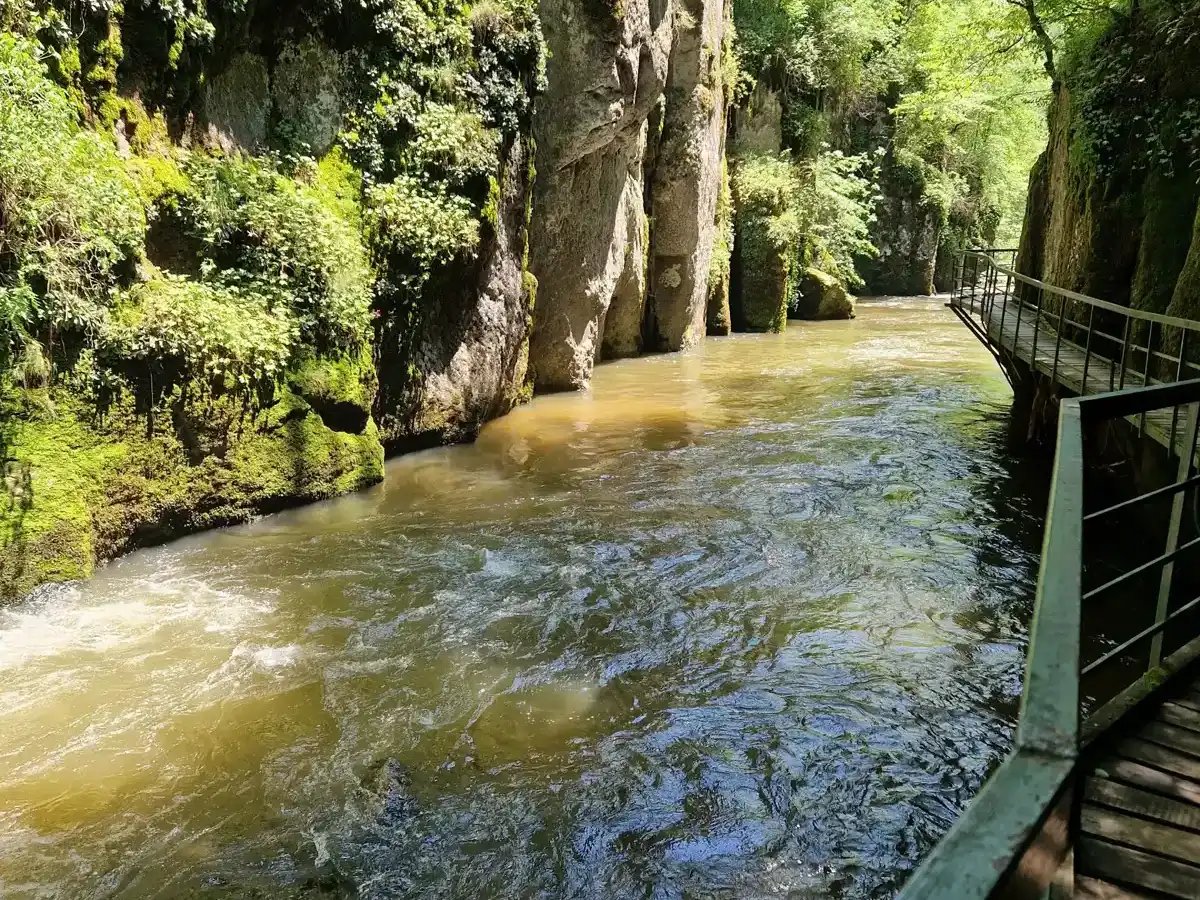
Climb a winding path beside a series of waterfalls, crossing rustic bridges and entering a cool, green gorge carved by water.

bulgaria-hike-waterfalls-canyon
© Google | Kalin Bonev

4 Buzludzha Monument Trail

abandoned monument, windswept plateau, socialist relic

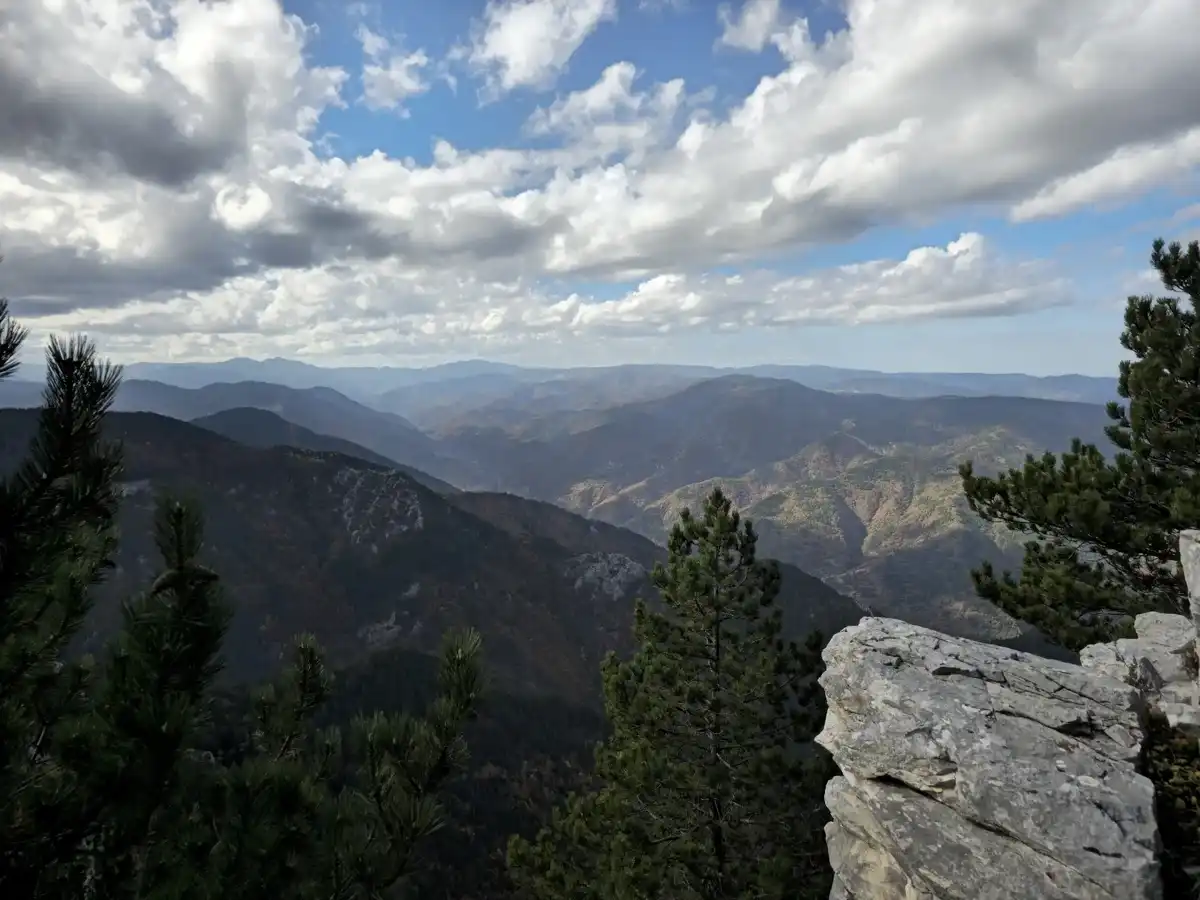
Ascend through open meadows to a concrete landmark, passing relics of Bulgaria’s past and panoramic views of the Balkan range.

5 Red Wall

limestone cliffs, rare flora, nature reserve

Hike beneath towering rock faces and through protected habitats, where endemic plants and dramatic geology define the landscape.

bulgaria-hike-red-wall
© Google | Sarkis Burgazliyan

6 Struilitsa

river valley, mineral springs, forested paths

Walk along a shaded riverbank, passing bubbling springs and quiet woods, with opportunities for a restorative soak at the end.

Loading the map 🌍

Expert viewInsights from Locals and Experts

How many hikes to do: Plan on four to six hikes across a two-week trip. That number gives you a spread of mountain types without turning the trip into a series of bus stations, and it leaves room for the weather days that every range in Bulgaria will hand you. Fewer than four feels thin for the travel involved. More than six means you are mostly commuting, which is a hobby, but not this one.

Which kind to prioritize: For first-timers or short visits, choose one alpine day hike in Rila or Pirin, since it has the best access and the most dramatic terrain per hour. Travelers who want solitude should put the Rhodopes or Balkan Range first, where trails are quieter and villages come with home cooking. Experienced hikers with 10 days or more can link huts on a multi-day trek, which costs less per … read more 👉
How many hikes to do: Plan on four to six hikes across a two-week trip. That number gives you a spread of mountain types without turning the trip into a series of bus stations, and it leaves room for the weather days that every range in Bulgaria will hand you. Fewer than four feels thin for the travel involved. More than six means you are mostly commuting, which is a hobby, but not this one.

Which kind to prioritize: For first-timers or short visits, choose one alpine day hike in Rila or Pirin, since it has the best access and the most dramatic terrain per hour. Travelers who want solitude should put the Rhodopes or Balkan Range first, where trails are quieter and villages come with home cooking. Experienced hikers with 10 days or more can link huts on a multi-day trek, which costs less per day than hopping between towns and gives the best return on your time. Comfort-focused travelers can base in a guesthouse and take day hikes, which costs more but saves carrying a heavy pack.

What it costs: Budget US$30 to 55 a day (roughly €28 to 50) when hiking independently. Hut beds typically cost 25 to 50 lev (US$14 to 28), meals in huts 10 to 25 lev (US$6 to 14), and guesthouses in mountain towns 50 to 120 lev (US$28 to 67) per room. Intercity buses are about 10 to 30 lev (US$6 to 17) per leg, and shared transfers to trailheads from towns run 20 to 60 lev (US$11 to 34). Cable cars and lifts, such as those in Bansko, cost roughly 30 to 60 lev (US$17 to 34) return. National park entry is largely free, though some zones charge small fees. A local guide for a day typically costs 150 to 300 lev (US$84 to 168), and is worth the money on exposed ridges or in uncertain conditions. Over a two-week trip, plan on US$450 to 800 for everything except flights.

Safety and local etiquette: The biggest hazard is weather. Afternoon storms build quickly above the tree line in summer, and fog can erase a path in minutes, so start early and be off ridges by early afternoon. Carry a rain layer, a warm layer and an offline map even for day hikes. Shepherd dogs are large and take their jobs seriously. Stop, avoid eye contact, walk around the flock slowly and do not wave a trekking pole. Call 112 for emergencies and use the Bulgarian Mountain Rescue Service, which responds across the main ranges. Carry cash for huts, since cards are unreliable. Greet people with a smile, and remember that Bulgarians nod for no and shake for yes, a habit that produces many confusing hut orders.

✈️ The backpacker research shortcutBulgaria Travel Guide

An offline-friendly backpacking guide with optimized travel routes, ranked highlights, transport advice, and the best areas to stay.
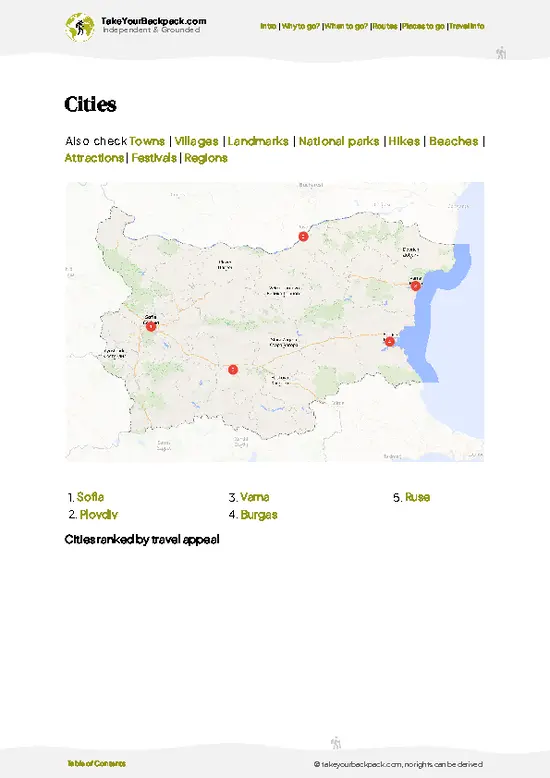
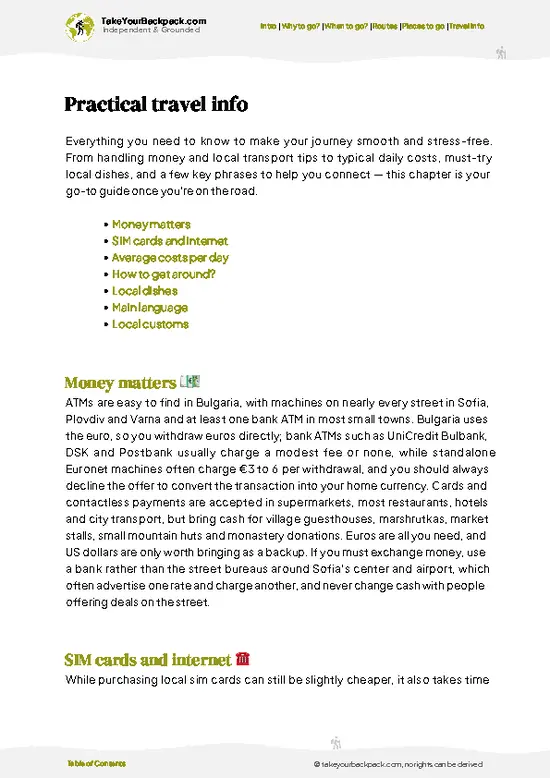
example page 0 from our offline Travel Guide for Bulgaria
example page 1 from our offline Travel Guide for Bulgaria
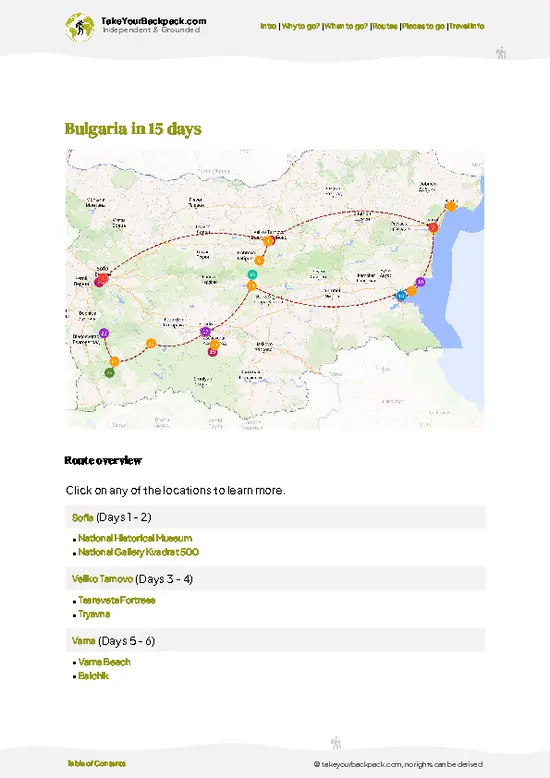
example page 2 from our offline Travel Guide for Bulgaria
example page 3 from our offline Travel Guide for Bulgaria
example page 4 from our offline Travel Guide for Bulgaria
example page 5 from our offline Travel Guide for Bulgaria
example page 6 from our offline Travel Guide for Bulgaria
example page 7 from our offline Travel Guide for Bulgaria
The digital guide (349 pages) contains:
✅ 92 highlights, ranked by travel appeal
✅ Optimized 5, 10 & 15-day travel routes
✅ Cities, national parks, landmarks, beaches
✅ How to get around
✅ Offline-friendly for travel without Wi-Fi
👉 Click to see all 30+ guide features

📅 Plan smarter in minutes, not weeks
✅ Month by month travel advice
✅ Festivals & national holidays
✅ Budget expectations

🗺️ Go to the right places, skip the overrated ones
✅ Honest pros & cons of destinations
✅ Top hikes, parks & viewpoints
✅ Lesser-known places most travelers miss
✅ Clear “worth it vs skip it” guidance

🛏️ Travel smoothly without rookie mistakes
✅ Best areas to stay
✅ Transport systems explained simply
✅ Common scams & safety advice
✅ SIM cards, money & practical tips

🌍 Understand the country, not just visit it
✅ Culture & traditions
✅ 52 Essential phrases & customs
✅ Festivals worth planning around
✅ Traveler-friendly historical context
✅ Insights that make places more meaningful

📱 Built for real travel conditions
✅ Fully downloadable PDF
✅ Works completely offline
✅ Optimized for phone use
✅ Useful in remote areas & buses
✅ Everything in one place
Stop searching, start planning
Get instant access to your full guide. 30‑day money-back guarantee.
+ Add another guide for just

By proceeding you agree to our terms.
Sent to your inbox immediately after payment • 100% Secure Checkout
Best Backpacking Travel Advisor 2025 tourism awardBest Backpacking
Travel Advisor
2025
What others say about Take Your Backpack Guides:
⭐⭐⭐⭐⭐
Fantastic, amazing amount of information!
⭐⭐⭐⭐⭐
My goodness this is amazing, it's what I've been looking for hats off too you!
⭐⭐⭐⭐⭐
I think this is absolutely BRILLIANT
⭐⭐⭐⭐
Very complete and informative. It's still missing places, but I gotta to commend you
⭐⭐⭐⭐⭐
This is truly amazing, thank you, can't wait to explore it with my kids!
⭐⭐⭐⭐⭐
Awesome resource, thank you!
⭐⭐⭐⭐⭐
This is amazing! Can't wait to explore the ones I haven't seen
⭐⭐⭐⭐
I love this! Well done, great idea.
⭐⭐⭐⭐⭐
Thanks for taking the time to make this gem!
⭐⭐⭐⭐⭐
This might be the best website I've ever seen.
⭐⭐⭐⭐⭐
Congratulations, and thank you so much for your work; it's incredibly valuable.
⭐⭐⭐⭐
In all seriousness I think you did a great job pointing out the important spots
⭐⭐⭐⭐⭐
10/10 very good
⭐⭐⭐⭐⭐
As someone who's only just starting to visit regularly this is awesome, thank you.
⭐⭐⭐⭐
Thank you very much! I'm going to visit my dad, it's going to be very useful!
⭐⭐⭐⭐⭐
This is really cool! We'll be travelling for the first time and this definitely come in handy.
⭐⭐⭐⭐⭐
You are now our minister of culture, congratulations 👨‍💼
⭐⭐⭐⭐⭐
Just wanted to tell you that this is a pearl! Going to follow your recommendations.
⭐⭐⭐⭐⭐
This is so cool. I'll definitely be using the resource for my travels soon.
⭐⭐⭐⭐⭐
This is very impressive! Good work.
⭐⭐⭐⭐⭐
This is an amazing and informative site. Very well done!

🛏️ Where to stay?Top Areas to Stay

Bulgaria has plenty of hostels and budget guesthouses, with dorm beds typically running €10 to 20 a night and private doubles from about €30 to 50. In Sofia, the streets around Vitosha Boulevard and Serdika put you within walking distance of the main sights, metro lines and bars, though weekend nights get loud, while Plovdiv splits between the cobbled Old Town (quiet, atmospheric, hilly) and the Kapana district (craft beer, late cafés, more noise). In Veliko Tarnovo, the Old Town along Gurko and Samovodska streets gives you cliffside views and a calm, safe base, and in Varna the center near the Sea Garden keeps you close to the beach and summer nightlife, at peak-season prices.

If you enjoy meeting … read more 👉
Bulgaria has plenty of hostels and budget guesthouses, with dorm beds typically running €10 to 20 a night and private doubles from about €30 to 50. In Sofia, the streets around Vitosha Boulevard and Serdika put you within walking distance of the main sights, metro lines and bars, though weekend nights get loud, while Plovdiv splits between the cobbled Old Town (quiet, atmospheric, hilly) and the Kapana district (craft beer, late cafés, more noise). In Veliko Tarnovo, the Old Town along Gurko and Samovodska streets gives you cliffside views and a calm, safe base, and in Varna the center near the Sea Garden keeps you close to the beach and summer nightlife, at peak-season prices.

If you enjoy meeting fellow travelers, consider choosing hostels with high ratings for atmosphere. On the other hand, if you prefer having your own space, a hotel might be a better option.

BulgariaDiscover the Country

👋 Meet the founderWho’s Behind Take Your Backpack?

Johan, backpacker and founder of TakeYourBackpackHi, I’m Johan (Netherlands 🇳🇱), the creator of TakeYourBackpack. Over the past 3 decades, I’ve backpacked through 90+ countries across six continents, gaining extensive experience with independent travel, long-term trips, and overland routes.

This site is built on a combination of firsthand travel experience and carefully curated insights from other backpackers. Many guides are based on places I’ve personally visited, while others bring together tips, observations, and practical advice shared by trusted travelers I’ve met along the way.

The goal is to provide realistic, experience-driven guidance — not generic itineraries — so you can explore destinations with better context, clearer expectations, and more confidence.