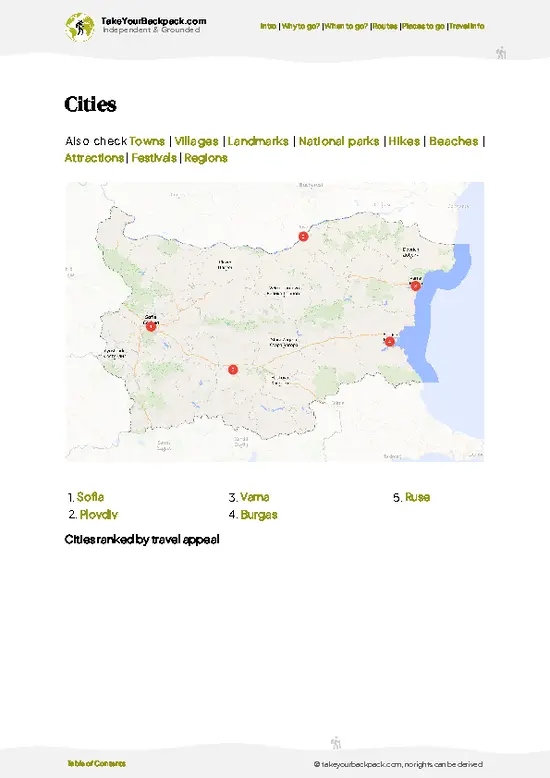
How many cities to visit: Three to five cities is the right number for most backpackers, and four is the sweet spot for a 10-day trip. That gives you two or three nights in each, which is enough time to see the main sights, find a good neighborhood restaurant and still have an afternoon with nothing planned. More than five turns the trip into an exercise in packing and unpacking, and the buses between them eat the hours you saved by moving fast.
Choosing between the kinds: Bulgarian cities fall into three types: the capital, the historic inland towns and the coastal cities. If you like museums, nightlife and the widest choice of hostels and transport, prioritize the capital. If you like old stone streets, quiet cafés and a slower pace, the inland historic towns offer the best value, as everything …
read more 👉 How many cities to visit: Three to five cities is the right number for most backpackers, and four is the sweet spot for a 10-day trip. That gives you two or three nights in each, which is enough time to see the main sights, find a good neighborhood restaurant and still have an afternoon with nothing planned. More than five turns the trip into an exercise in packing and unpacking, and the buses between them eat the hours you saved by moving fast.
Choosing between the kinds: Bulgarian cities fall into three types: the capital, the historic inland towns and the coastal cities. If you like museums, nightlife and the widest choice of hostels and transport, prioritize the capital. If you like old stone streets, quiet cafés and a slower pace, the inland historic towns offer the best value, as everything is walkable and cheaper. If you want beaches plus a city, the coast makes sense, but only from late May to September, as many things shut down out of season. A mix of one from each group gives variety without stretching the budget or the schedule.
What it costs: A budget backpacker can manage on roughly 60 to 100 leva a day (about US$35 to 55), using hostel dorms at 25 to 45 leva, a hearty meal at 10 to 20 leva and public transport. Mid-range travelers with private rooms and restaurant dinners should plan on 150 to 250 leva (about US$85 to 140). Museum entry usually runs 5 to 15 leva, and walking tours are often tip-based, so 10 to 20 leva is a reasonable thank-you. City buses and trams cost about 1.50 to 2 leva a ride, while intercity buses cost 10 to 30 leva depending on distance. Cash still matters in smaller places, so keep some leva on hand.
Safety and culture: Cities in Bulgaria are generally safe, with petty theft in crowded areas, on public transport and at coastal nightlife spots the main concern. Keep valuables out of back pockets and use a licensed taxi or app rather than hailing one on the street, since unmarked cabs may overcharge. The most important cultural point is the head gesture: a nod can mean no, and a shake can mean yes, so confirm with words. Dress modestly in monasteries and churches, and remove hats inside. Smoking is still common in some cafés and bars despite the indoor ban, so expect some haze. Stray dogs are usually calm and mostly ignore tourists. Pedestrian crossings are an optimistic suggestion to some drivers, so cross with eye contact and a bit of faith.
v2.webp)


 Best Backpacking
.jpg) Hi, I’m Johan (Netherlands 🇳🇱), the creator of TakeYourBackpack. Over the past 3 decades, I’ve backpacked through 90+ countries across six continents, gaining extensive experience with independent travel, long-term trips, and overland routes.
Hi, I’m Johan (Netherlands 🇳🇱), the creator of TakeYourBackpack. Over the past 3 decades, I’ve backpacked through 90+ countries across six continents, gaining extensive experience with independent travel, long-term trips, and overland routes.