×

Eswatini🇸🇿 | townsKaphungatraditional homesteads, rural tourism, community stays | things to do and best time to go

Explore HholoExplore Kwaluseni

Backpacking in Kaphunga
👍 Recommendedtown ranked #11
By Johan Kruseman 🇳🇱 | Updated June 11, 2026

Most travelers only realize after leaving: Kaphunga’s real advantage is how it slows you down, forcing you to notice the small things—smoke curling from cooking fires at dawn, the hush of distant cattle bells, the way dusk settles over the hills. Set in the southwest of Eswatini, Kaphunga is a rural village, not a town, and it’s a world apart from the paved bustle of Manzini or the tourist gloss of Ezulwini. For backpackers, it’s a base for village walks, homestays, and learning how Swazi life actually feels—mud underfoot, maize porridge for breakfast, stories shared by lantern light. You’ll need a local minibus or a bumpy ride in, and there’s no hostel strip—just family-run stays, which means fewer travelers but deeper connections. Costs are low, nightlife is a rooster’s crow, and safety is as good as your common sense. Kaphunga isn’t a stop for urban thrills; it’s where you trade convenience for authenticity, and the reward is a kind of quiet you can’t buy in Mbabane.

Discover everything you want to know in the 📖 Eswatini Travel Guide.


Get your Eswatini guide
46 ranked highlights, routes & tips, works offline (202 pages)
Loading the map 🌍
CLICK TO FILTER
cities
towns
landmarks
national parks
hikes
attractions
festivals
regions
SHOW COUNTRY’S BESTSHOW ALL

✨ Why go?
Ranked #11 town in Eswatini
Why Kaphunga should be on your travel list

Backpackers flock to Kaphunga for its strategic location along popular hiking routes and proximity to cultural sites. The town serves as a convenient base for exploring the lush landscapes of Eswatini, with trails that lead to breathtaking views and hidden waterfalls. You’ll find small-scale hostels and guesthouses that foster a friendly atmosphere, perfect for solo travelers or small groups looking to connect. The walkable streets are lined with local eateries where you can savor authentic dishes, adding to the experience. Most travelers stay a few days, soaking in the laid-back vibe before moving on, making it a great pit stop for those seeking both adventure and community.
Want to include Kaphunga in your Eswatini route?
Create a personalized Eswatini itinerary that includes Kaphunga and the places that fit your trip — based on your travel style, budget, and available time. Get your route in seconds.

Generate my trip

💡 HighlightsPlaces and moments you shouldn't skip

    Good nearby day trips to consider are Mlilwane Wildlife Sanctuary, Mantenga Cultural Village, and Malolotja Nature Reserve.
    Spotted a mistake or missing something? Contact us.
    🏘️ NeighborhoodsUnderstanding the local layout

    Kaphunga is a vibrant hub in Eswatini, offering a mix of local culture and practical amenities for backpackers.

    Town Center: This is the heartbeat of Kaphunga. You’ll find bustling markets and street food stalls that fill the air with the aroma of grilled meats and spices. It’s walkable, with affordable accommodations and easy access to public transport. Perfect for short stays, but the nightlife is limited to a few local bars.

    Ngwenya Heights: A quieter area with stunning views of the surrounding hills. It’s ideal for those seeking a peaceful retreat after a day of exploration. Accommodations here are slightly pricier, but the tranquility is worth it. Great for longer stays, with fewer transport options, so plan to walk or bike.

    Mbabane Road: This area buzzes with energy, especially in … read more 👉
    Kaphunga is a vibrant hub in Eswatini, offering a mix of local culture and practical amenities for backpackers.

    Town Center: This is the heartbeat of Kaphunga. You’ll find bustling markets and street food stalls that fill the air with the aroma of grilled meats and spices. It’s walkable, with affordable accommodations and easy access to public transport. Perfect for short stays, but the nightlife is limited to a few local bars.

    Ngwenya Heights: A quieter area with stunning views of the surrounding hills. It’s ideal for those seeking a peaceful retreat after a day of exploration. Accommodations here are slightly pricier, but the tranquility is worth it. Great for longer stays, with fewer transport options, so plan to walk or bike.

    Mbabane Road: This area buzzes with energy, especially in the evenings. It’s more touristy, with a mix of restaurants and shops. While it’s lively, it can get noisy, making it less suitable for light sleepers. Good for short stays, with plenty of transport links.

    ⌛️ 1 dayA smart one-day plan

    Kaphunga, a charming town in Eswatini, offers a blend of rich culture and stunning landscapes. Its vibrant markets and welcoming locals create an atmosphere that feels both alive and intimate.

    Start your morning at the bustling Kaphunga Market. The scent of fresh produce mingles with the earthy aroma of spices. Grab a local breakfast of porridge or a sweet bun from a vendor. Engage with the friendly sellers; their stories add depth to your experience. After fueling up, take a stroll through the nearby neighborhoods, where traditional Swazi homes dot the landscape, each telling a story of its own.

    In the afternoon, head to the Kaphunga Cultural Center. This spot often flies under the radar but offers an authentic glimpse into local traditions. Participate in a craft workshop or watch a dance … read more 👉
    Kaphunga, a charming town in Eswatini, offers a blend of rich culture and stunning landscapes. Its vibrant markets and welcoming locals create an atmosphere that feels both alive and intimate.

    Start your morning at the bustling Kaphunga Market. The scent of fresh produce mingles with the earthy aroma of spices. Grab a local breakfast of porridge or a sweet bun from a vendor. Engage with the friendly sellers; their stories add depth to your experience. After fueling up, take a stroll through the nearby neighborhoods, where traditional Swazi homes dot the landscape, each telling a story of its own.

    In the afternoon, head to the Kaphunga Cultural Center. This spot often flies under the radar but offers an authentic glimpse into local traditions. Participate in a craft workshop or watch a dance performance. The vibrant colors and rhythmic movements will leave you inspired.

    As evening approaches, find a cozy spot at a local eatery. Savor a plate of pap and stew while the sun sets, casting a warm glow over the town. The laughter and chatter around you create a sense of belonging. This day in Kaphunga isn’t just about sights; it’s about connecting with the heart of Eswatini.
    Turn your Kaphunga visit into an Eswatini adventure
    Build a complete Eswatini route with Kaphunga, hidden gems, must-see destinations, and realistic travel times included.

    Generate my trip

    🌤️ When to go?Best time to visit Kaphunga


    • Weather: Kaphunga’s dry season, from May to September, offers crisp mornings and warm afternoons, with temperatures hovering between 15°C and 25°C (59°F to 77°F). This is when the air feels clean and the landscape sharp, perfect for hiking without the sticky heat or sudden downpours of the wet season.

    • Temperature: Avoid the wet season’s humidity and 30°C+ (86°F+) highs from October to April. The dry season’s cooler nights mean you’ll want a warm layer, but the daytime warmth is just right for long treks and outdoor meals under clear skies.

    • Daylight Hours: Around the dry season, daylight stretches to about 11-12 hours, giving you plenty of time to explore before dusk settles in with a golden glow that’s worth lingering for.

    • Crowds: Peak tourist months align with the dry season, especially
    read more 👉

    • Weather: Kaphunga’s dry season, from May to September, offers crisp mornings and warm afternoons, with temperatures hovering between 15°C and 25°C (59°F to 77°F). This is when the air feels clean and the landscape sharp, perfect for hiking without the sticky heat or sudden downpours of the wet season.

    • Temperature: Avoid the wet season’s humidity and 30°C+ (86°F+) highs from October to April. The dry season’s cooler nights mean you’ll want a warm layer, but the daytime warmth is just right for long treks and outdoor meals under clear skies.

    • Daylight Hours: Around the dry season, daylight stretches to about 11-12 hours, giving you plenty of time to explore before dusk settles in with a golden glow that’s worth lingering for.

    • Crowds: Peak tourist months align with the dry season, especially July and August, so expect more fellow travelers but also a livelier vibe and better access to local guides and events.

    • Seasonal Activities: The dry months coincide with cultural festivals and wildlife spotting, as animals gather near waterholes, making this period a jackpot for immersive experiences.

    • Price Fluctuations: Accommodation and tours peak in price during the dry season’s high months. Booking early or aiming for shoulder months like May or September can save you cash without sacrificing the experience.


    Pro-tip: Time your visit for early dry season—May or September—when the weather is solid, crowds thin, and prices ease, letting you soak in Kaphunga’s raw charm without the hassle.


    source: climatestotravel.comJANJanuary: fair for travelingFEBFebruary: fair for travelingMARMarch: fair for travelingAPRApril: fair for travelingMAYMay: highly recommended for travelingJUNJune: highly recommended for travelingJULJuly: excellent for travelingAUGAugust: excellent for travelingSEPSeptember: highly recommended for travelingOCTOctober: fair for travelingNOVNovember: fair for travelingDECDecember: fair for traveling
    when-to-go

    ✈️ The backpacker research shortcutEswatini Travel Guide

    An offline-friendly backpacking guide with optimized travel routes, ranked highlights, transport advice, and the best areas to stay.
    example page 0 from our offline Travel Guide for Eswatini
    example page 1 from our offline Travel Guide for Eswatini
    example page 2 from our offline Travel Guide for Eswatini
    example page 3 from our offline Travel Guide for Eswatini
    example page 4 from our offline Travel Guide for Eswatini
    example page 5 from our offline Travel Guide for Eswatini
    example page 6 from our offline Travel Guide for Eswatini
    example page 7 from our offline Travel Guide for Eswatini
    The digital guide (202 pages) contains:
    46 highlights, ranked by travel appeal
    Optimized 2, 3 & 5-day travel routes
    Cities, national parks, landmarks, beaches
    How to get around
    Offline-friendly for travel without Wi-Fi
    👉 Click to see all 30+ guide features

    📅 Plan smarter in minutes, not weeks
    Month by month travel advice
    Festivals & national holidays
    Budget expectations

    🗺️ Go to the right places, skip the overrated ones
    Honest pros & cons of destinations
    Top hikes, parks & viewpoints
    Lesser-known places most travelers miss
    Clear “worth it vs skip it” guidance

    🛏️ Travel smoothly without rookie mistakes
    Best areas to stay
    Transport systems explained simply
    Common scams & safety advice
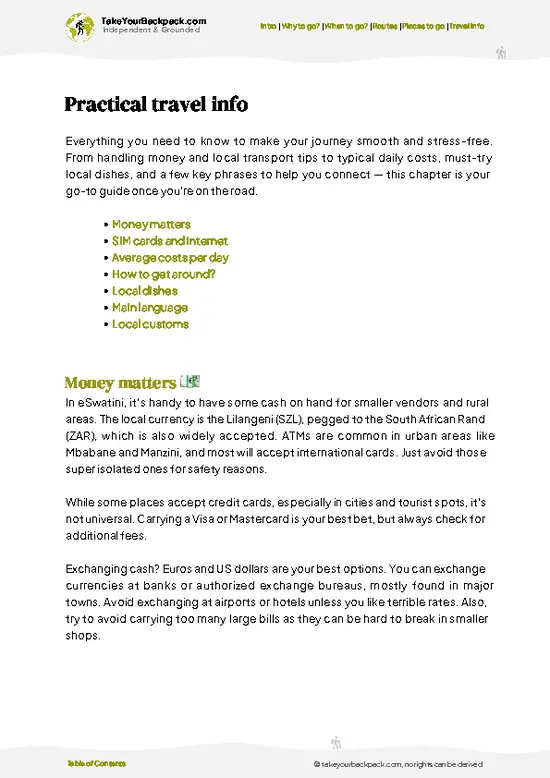
    SIM cards, money & practical tips

    🌍 Understand the country, not just visit it
    Culture & traditions
    52 Essential phrases & customs
    Festivals worth planning around
    Traveler-friendly historical context
    Insights that make places more meaningful

    📱 Built for real travel conditions
    Fully downloadable PDF
    Works completely offline
    Optimized for phone use
    Useful in remote areas & buses
    Everything in one place
    Save weeks of stressful planning
    Get instant access to your full guide. 30‑day money-back guarantee.


    By proceeding you agree to our terms.
    Sent to your inbox immediately after payment • 100% Secure Checkout
    Best Backpacking Travel Advisor 2025 tourism awardBest Backpacking
    Travel Advisor
    2025
    What others say about Take Your Backpack Guides:
    ⭐⭐⭐⭐⭐
    Fantastic, amazing amount of information!
    ⭐⭐⭐⭐⭐
    My goodness this is amazing, it's what I've been looking for hats off too you!
    ⭐⭐⭐⭐⭐
    I think this is absolutely BRILLIANT
    ⭐⭐⭐⭐
    Very complete and informative. It's still missing places, but I gotta to commend you
    ⭐⭐⭐⭐⭐
    This is truly amazing, thank you, can't wait to explore it with my kids!
    ⭐⭐⭐⭐⭐
    Awesome resource, thank you!
    ⭐⭐⭐⭐⭐
    This is amazing! Can't wait to explore the ones I haven't seen
    ⭐⭐⭐⭐
    I love this! Well done, great idea.
    ⭐⭐⭐⭐⭐
    Thanks for taking the time to make this gem!
    ⭐⭐⭐⭐⭐
    This might be the best website I've ever seen.
    ⭐⭐⭐⭐⭐
    Congratulations, and thank you so much for your work; it's incredibly valuable.
    ⭐⭐⭐⭐
    In all seriousness I think you did a great job pointing out the important spots
    ⭐⭐⭐⭐⭐
    10/10 very good
    ⭐⭐⭐⭐⭐
    As someone who's only just starting to visit regularly this is awesome, thank you.
    ⭐⭐⭐⭐
    Thank you very much! I'm going to visit my dad, it's going to be very useful!
    ⭐⭐⭐⭐⭐
    This is really cool! We'll be travelling for the first time and this definitely come in handy.
    ⭐⭐⭐⭐⭐
    You are now our minister of culture, congratulations 👨‍💼
    ⭐⭐⭐⭐⭐
    Just wanted to tell you that this is a pearl! Going to follow your recommendations.
    ⭐⭐⭐⭐⭐
    This is so cool. I'll definitely be using the resource for my travels soon.
    ⭐⭐⭐⭐⭐
    This is very impressive! Good work.
    ⭐⭐⭐⭐⭐
    This is an amazing and informative site. Very well done!

    🛏️ Where to stay?How to pick the right area

    In Kaphunga, the heartbeat for backpackers pulses strongest around the town center and the nearby Mbabane Road corridor. This area is your best bet for safety and social energy. Streets here hum with local markets, street food stalls, and small cafés where you can swap stories with fellow travelers over steaming cups of rooibos tea. The vibe is relaxed but lively, a perfect balance for solo adventurers who want to connect without the noise of tourist traps.

    Hostels cluster near this zone, offering communal spaces that invite conversation and shared plans for exploring Eswatini’s wild edges. Compared … read more 👉
    In Kaphunga, the heartbeat for backpackers pulses strongest around the town center and the nearby Mbabane Road corridor. This area is your best bet for safety and social energy. Streets here hum with local markets, street food stalls, and small cafés where you can swap stories with fellow travelers over steaming cups of rooibos tea. The vibe is relaxed but lively, a perfect balance for solo adventurers who want to connect without the noise of tourist traps.

    Hostels cluster near this zone, offering communal spaces that invite conversation and shared plans for exploring Eswatini’s wild edges. Compared to the quieter, more residential outskirts, staying here means you’re never far from transport links or the buzz of local life. The light in the late afternoon filters through jacaranda trees, casting a warm glow that makes wandering the streets feel like stepping into a lived-in postcard. This is where you get the real pulse of Kaphunga—safe, social, and authentically local.

    🚌 Getting aroundMoving around without the hassle

    Kaphunga moves at its own rhythm—less a clockwork city and more a pulse you learn to feel. The streets hum with a mix of purposeful strides and spontaneous detours, where schedules exist but bend to the day’s mood. Morning light filters through dusty alleys, carrying the scent of fresh bread and diesel fumes, while afternoons stretch lazily under a sun that insists you slow down. This town rewards those who read its tempo: a blend of patience and quick decisions, where the best way to get around is to match its flow rather than fight it.


    • Walking: The heart of Kaphunga’s transit. Streets are compact and packed with life, making walking the cheapest and most immersive option. Expect uneven sidewalks and occasional street vendors, but the payoff is a sensory overload of local sounds, smells,
    read more 👉
    Kaphunga moves at its own rhythm—less a clockwork city and more a pulse you learn to feel. The streets hum with a mix of purposeful strides and spontaneous detours, where schedules exist but bend to the day’s mood. Morning light filters through dusty alleys, carrying the scent of fresh bread and diesel fumes, while afternoons stretch lazily under a sun that insists you slow down. This town rewards those who read its tempo: a blend of patience and quick decisions, where the best way to get around is to match its flow rather than fight it.


    • Walking: The heart of Kaphunga’s transit. Streets are compact and packed with life, making walking the cheapest and most immersive option. Expect uneven sidewalks and occasional street vendors, but the payoff is a sensory overload of local sounds, smells, and sights. Best for short hops and exploring neighborhoods at your own pace.


    • Minibus Taxis: These are the lifeblood of Kaphunga’s public transit, running from dawn until late evening. Fares hover around a dollar or less, making them perfect for budget travelers. They’re cramped and noisy, but fast enough to cover longer distances. Flag one down anywhere on the main roads—no fixed stops, so be ready to signal your exit.


    • Motorcycle Taxis (Boda Bodas): When time is tight and you want to slice through traffic, boda bodas are your go-to. They operate 24/7, with fares negotiable but generally affordable. The wind in your face and the city’s chaos rushing past can be thrilling, but helmets aren’t always guaranteed—bring your own if you’re picky about safety.


    • Shared Vans: Slightly more comfortable than minibuses, these vans run on fixed routes and schedules, usually starting early morning and tapering off by early evening. Tickets cost a bit more but offer a smoother ride and air circulation, which is a blessing in Kaphunga’s heat. They’re ideal for medium-distance trips to outskirts or nearby towns.


    • Local Bicycle Rentals: For those who want control without the noise, renting a bike is a quiet, flexible option. Streets can be rough, so a sturdy bike is essential. Rentals are cheap and usually come with a helmet. Early mornings and late afternoons are the best times to pedal, avoiding the midday sun and traffic spikes.

    👛 Costs (as of 6 May 2026)What things cost and how to budget

    Backpacking in Kaphunga, Eswatini, offers a raw, authentic experience where every lilting bird call and dusty road feels like a step back to simpler rhythms. But knowing what to expect financially keeps your focus on soaking it all in, not scrambling for cash.
    • Dorm Accommodation: Expect to pay around $8 to $15 per night for a bed in a basic guesthouse dorm. These places are modest but clean, often with a fan and shared bathroom. The vibe is communal, with the occasional scent of wood smoke drifting in from outside.
    • Meals: Local eateries serve hearty, no-frills meals for about $3 to $6. Think maize porridge, grilled meats, and fresh greens—simple flavors that fill you up without emptying your wallet. Street food snacks like fried dough or roasted corn go for under $1, perfect for quick energy.
    read more 👉
    Backpacking in Kaphunga, Eswatini, offers a raw, authentic experience where every lilting bird call and dusty road feels like a step back to simpler rhythms. But knowing what to expect financially keeps your focus on soaking it all in, not scrambling for cash.
    • Dorm Accommodation: Expect to pay around $8 to $15 per night for a bed in a basic guesthouse dorm. These places are modest but clean, often with a fan and shared bathroom. The vibe is communal, with the occasional scent of wood smoke drifting in from outside.
    • Meals: Local eateries serve hearty, no-frills meals for about $3 to $6. Think maize porridge, grilled meats, and fresh greens—simple flavors that fill you up without emptying your wallet. Street food snacks like fried dough or roasted corn go for under $1, perfect for quick energy.
    • Local Transport: Minibus taxis dominate here, costing roughly $0.50 to $1 per trip within town. The rides are bumpy and lively, windows down to catch the warm, dusty air and the chatter of locals. For short distances, walking is often the best way to absorb the town’s texture.
    • Basic Activities/Entry Fees: Small cultural sites or community-run attractions charge between $2 and $5. These fees support local guides and upkeep, giving you a genuine glimpse into Eswatini’s traditions without the tourist gloss.
    • Miscellaneous Expenses: Budget around $1 to $3 daily for essentials like bottled water, occasional snacks, or a local SIM card top-up. These small buys keep you comfortable and connected without surprises.

    Altogether, a realistic daily budget for backpacking in Kaphunga falls between $15 and $30. This range covers the essentials while leaving room to savor the town’s unpolished charm without rushing or cutting corners.


    source: thekingdomofeswatini.com
    ⚠️ Prices can change and everyone travels differently, so take this as a rough guide. Hope it helps you plan your adventure!

    🚌 Day tripsEasy escapes and nearby places

    Kaphunga is a backpacker’s dream base, offering easy access to some of Eswatini’s most captivating spots. Each day trip is a chance to dive deeper into the culture and landscapes that make this country unique.

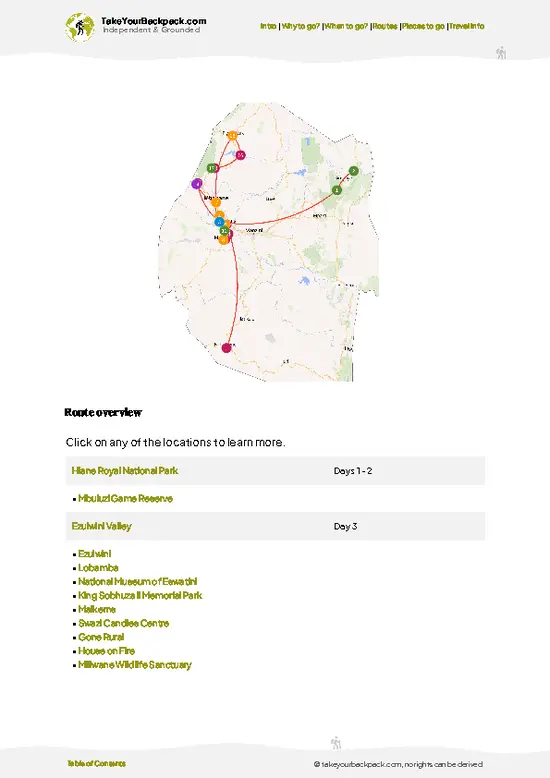
    Hlane Royal National Park
    Just an hour’s drive from Kaphunga, Hlane is a wildlife lover’s paradise. You’ll find yourself surrounded by the sounds of rustling leaves and distant animal calls. The park is home to elephants, rhinos, and a variety of birds. A day here costs around $10 for entry, plus a bit more for a guided tour if you want insider knowledge. Early mornings are best for spotting wildlife, so set your alarm! Many first-timers underestimate the importance of a guide; they can help you spot animals you might miss on your own.
    👉 Explore Hlane Royal National Park

    Ngwenya read more 👉
    Kaphunga is a backpacker’s dream base, offering easy access to some of Eswatini’s most captivating spots. Each day trip is a chance to dive deeper into the culture and landscapes that make this country unique.

    Hlane Royal National Park
    Just an hour’s drive from Kaphunga, Hlane is a wildlife lover’s paradise. You’ll find yourself surrounded by the sounds of rustling leaves and distant animal calls. The park is home to elephants, rhinos, and a variety of birds. A day here costs around $10 for entry, plus a bit more for a guided tour if you want insider knowledge. Early mornings are best for spotting wildlife, so set your alarm! Many first-timers underestimate the importance of a guide; they can help you spot animals you might miss on your own.
    👉 Explore Hlane Royal National Park

    Ngwenya Glass Village
    About 45 minutes away, this village is a testament to local craftsmanship. Watch artisans transform recycled glass into beautiful art pieces. The vibrant colors and the heat of the furnaces create a sensory experience that’s hard to forget. Entry is free, but you might want to budget for a unique souvenir. Visit in the cooler months, as the heat can be intense in summer. A common mistake is rushing through; take your time to appreciate the artistry and maybe even try your hand at glassblowing.
    👉 Explore Ngwenya Glass Village

    Malolotja Nature Reserve
    A bit further afield, about an hour and a half from Kaphunga, Malolotja offers breathtaking views and challenging hikes. The air is crisp, and the trails wind through lush valleys and rocky outcrops. A day pass is around $5, and the best time to visit is during the dry season when trails are more accessible. Many backpackers overlook the importance of good footwear here; the terrain can be tricky, so sturdy boots are a must.
    👉 Explore Malolotja Nature Reserve

    Mbuluzi Game Reserve
    Just under an hour away, Mbuluzi is less crowded than Hlane but equally rewarding. The reserve offers self-drive options, allowing you to explore at your own pace. Expect to see zebras and antelopes grazing in the golden light of late afternoon. Entry is about $8, and the best time to visit is during the cooler months. A common mistake is not bringing enough water; the heat can sneak up on you, especially during midday.
    👉 Explore Mbuluzi Game Reserve
    Want to know what more Eswatini offers?
    The Eswatini Travel Guide describes 46 highlights, from cities to national parks, from beaches to hikes

    Get the Travel Guide -

    🛡️ SafetyScams, Hazards, and Annoyances

    Kaphunga is generally safe, but like any place, a bit of awareness goes a long way. Stick to well-lit areas at night, especially if you’re solo. The local vibe is friendly, but keep your belongings close in crowded spots, as pickpocketing can happen.

    Watch for overly eager vendors; they might try to upsell you on tours or crafts. A polite “no, thank you” usually suffices. Embrace the local pace, but don’t hesitate to ask questions—most people are happy to help. This openness can turn minor annoyances into genuine connections.

    Other Swazi towns near Kaphunga

    Explore more nearby:

    • Mbabane—capital city, government offices, hillside neighborhoods| 3 km away
    • Ezulwini—valley resorts, craft markets, casino complex| 11 km away
    • Lobamba—royal residences, parliament buildings, national museum| 16 km away

    💡 Not sure where to go next?
    Create a personalized itinerary for Eswatini including Kaphunga and the places that fit your trip.

    Generate my itinerary

    👉 Discover all towns

    Or checkout all Eswatini has to offer (think cities, towns, villages, national parks, hikes, beaches, festivals)
    Country photo of Eswatini

    We 💚 feedbackIs it worth it?

    Kaphunga has a rhythm all its own. The air is thick with the scent of earth after rain, and the laughter of locals fills the streets. Don’t miss the evening market; it’s a sensory overload in the best way. Just be ready for the hills—your legs will thank you later.

    ✍️ Help improve this page!
    The information on this page is based on in-depth research, insights shared by experienced travelers, and feedback from the local travel community in Eswatini. While every effort is made to keep the information accurate and current, conditions can change — so if you spot anything incorrect or outdated, please get in touch.


    🙋‍♂️ Give feedback

    👋 Meet the founderWho’s Behind Take Your Backpack?

    Johan, backpacker and founder of TakeYourBackpackHi, I’m Johan (Netherlands 🇳🇱), the creator of TakeYourBackpack. Over the past decade, I’ve backpacked through 80+ countries across six continents, gaining extensive experience with independent travel, long-term trips, and overland routes.

    This site is built on a combination of firsthand travel experience and carefully curated insights from other backpackers. Many guides are based on places I’ve personally visited, while others bring together tips, observations, and practical advice shared by trusted travelers I’ve met along the way.

    The goal is to provide realistic, experience-driven guidance — not generic itineraries — so you can explore destinations with better context, clearer expectations, and more confidence.

    Get full Eswatini guide •
    Instant download • 46 highlights • Full Offline guide