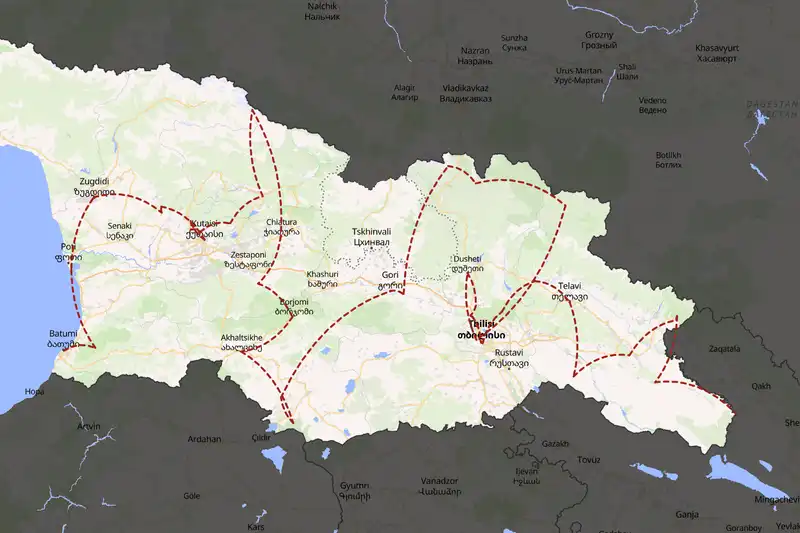
Short answer: yes, Georgia is one of the easiest countries on earth to backpack independently, especially on a budget.
Why it’s easy:
- Visa & entry: Many nationalities get long visa-free stays (often up to a year), so you’re not racing a 30‑day clock.
- Costs: Dorm beds, guesthouses, and food are cheap compared to Western Europe. You can eat out daily and still stay on a backpacker budget.
- Safety: Street crime is relatively low in most areas. Usual city awareness is enough: watch your phone, don’t get blackout drunk with strangers, keep valuables close on marshrutkas.
- People: Georgians are direct but warm. You’ll get invited for homemade wine, bread, and cheese more than once. English is common with younger people and in touristy areas; Russian is widely understood with older generations.
- Infrastructure: Hostels exist in all main hubs and most trekking bases. Booking platforms cover the main spots, but you can also just walk in outside peak season.
Things that are slightly tricky but manageable:
- Language: The script looks alien at first, but you only really need a few words and screenshots of place names in Georgian to show drivers.
- Marshrutkas: Minibuses are cheap and frequent but not always clearly signed. You often pay the driver in cash, and schedules can be loose. Ask your hostel to write your destination in Georgian.
- Mountains & weather: In places like Svaneti, Racha, and Tusheti, trails can be snowed in or washed out early/late in the season. Always ask locally about current trail conditions and avoid solo off‑trail adventures.
If you’ve backpacked anywhere in the Balkans, Caucasus, or Central/Eastern Europe, Georgia will feel very doable. Even as a first‑time backpacker, it’s friendly enough that you can figure it out on the fly.
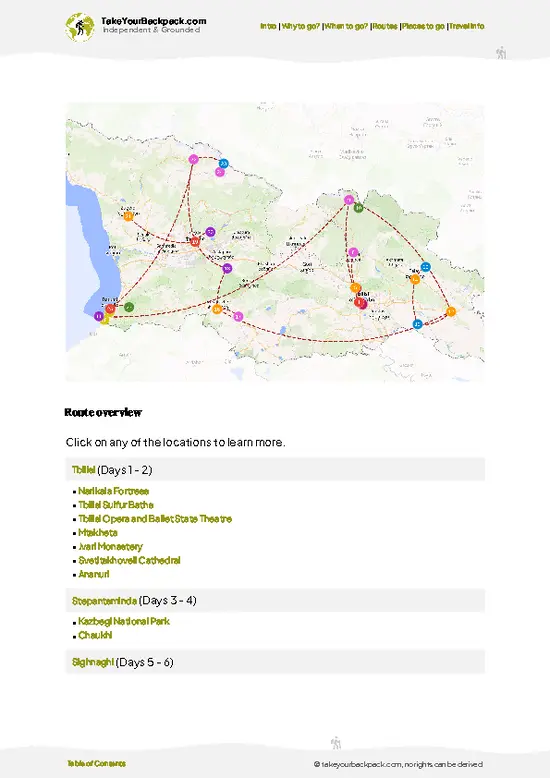
If you’re backpacking, the sweet spot is 2–3 weeks, but you can do a solid intro in 7–10 days.
Rough timing tiers:
- 4–5 days (ultra‑short): Tbilisi + one side trip
- 2–3 days Tbilisi (old town, sulfur baths, food, day hikes around the city)
- 1–2 days in either Kazbegi (mountains) or Kakheti (wine region)
This is a teaser, not a full Georgia experience.
- 7–10 days (good first trip): City + wine + one mountain area
Example flow:
- 3 days Tbilisi
- 2–3 days Kazbegi (Stepantsminda) for easy-access Caucasus views
- 2–3 days Kakheti (Telavi or Sighnaghi) for wine and countryside
Optional: squeeze in 1–2 days in Kutaisi or Mtskheta/Gori as you transit.
- 2 weeks (strong backpacking route): Mix of regions without rushing
Example:
- 3 days Tbilisi
- 2 days Kakheti (wine)
- 3–4 days Svaneti (Mestia + Ushguli, trekking if in season)
- 2 days Kutaisi area (canyons, caves, monasteries)
- 2–3 days Kazbegi or Racha
- 3+ weeks (ideal for hikers and slow travelers):
- Everything above, plus: Tusheti or Khevsureti (if roads are open), more time in Racha, a Black Sea break in Batumi or quieter coastal towns, and multi‑day treks.
Season matters:
- Summer (June–September): Best for high‑mountain trekking (Svaneti, Tusheti, Khevsureti). You’ll want at least 2 weeks if you’re chasing trails.
- Shoulder seasons (May, October): Great for cities and wine regions; some high passes may be snowed in.
If you’re a budget traveler, more time usually means better value: weekly apartment deals, slower overland moves, and fewer rushed, expensive transfers.
You can absolutely get around Georgia without a car; most backpackers do.
Main options:
- Marshrutkas (minibuses):
- Backbone of local transport. Cheap, frequent between major towns.
- Depart from specific bus stations in each city (e.g., Didube in Tbilisi for Kazbegi, Kutaisi, etc.).
- Often leave when full rather than at a strict time; go earlier in the day for better chances.
- Comfort is basic: tight seats, no toilets, but distances are usually manageable.
- Trains:
- Useful on a few key routes: Tbilisi–Batumi, Tbilisi–Kutaisi, sometimes night trains.
- Comfortable and cheap, but not as extensive as the bus network.
- Shared taxis:
- Common for places with fewer buses or for last‑mile connections.
- Prices are negotiable; ask your hostel for a ballpark rate so you don’t overpay.
- Good for splitting costs with other backpackers to reach trailheads or remote villages.
- Hitchhiking:
- Widely practiced by budget travelers and generally considered safe during the day.
- Easy in rural areas and mountain regions where locals are used to picking people up.
- Always trust your gut; if a car feels off, politely decline.
- City transport:
- Tbilisi has a simple metro, city buses, and cheap ride‑hailing apps.
- Walking covers most of the old town and central neighborhoods.
Where a car helps but isn’t mandatory:
- Remote mountain regions like Tusheti, Khevsureti, and some parts of Racha.
- Access roads can be rough 4x4 tracks; most travelers go with shared jeeps arranged via guesthouses.
For a typical backpacking loop (Tbilisi–Kazbegi–Kakheti–Kutaisi–Svaneti–Batumi–Tbilisi), public transport plus the occasional shared taxi is completely sufficient.
For a budget backpacker, these are the places that give you the best mix of culture, mountains, and food without draining your wallet.
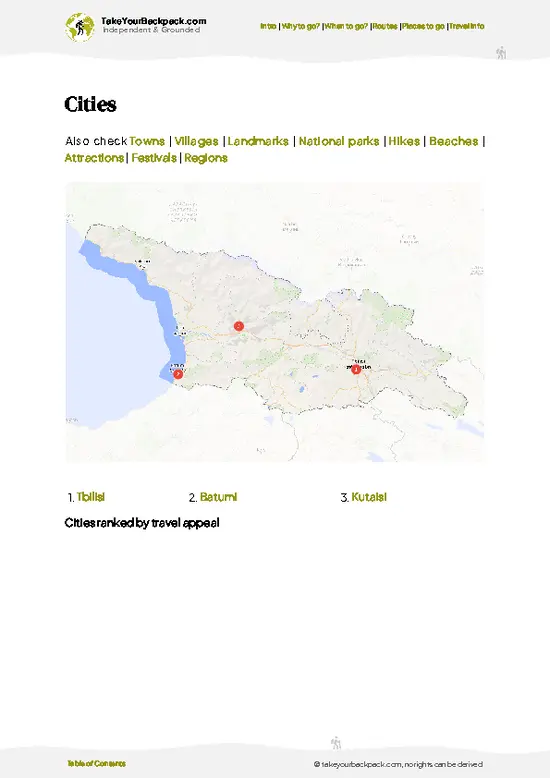
1. Tbilisi
- Why: Character-filled capital with layers of history, street art, wine bars, and sulfur baths.
- Highlights: Old town, Narikala Fortress viewpoints, Abanotubani baths, Fabrika (hostel + creative space), Mtatsminda viewpoints.
- Value tip: Eat at local bakeries and small family restaurants; skip overpriced tourist menus in the most polished old-town streets.
2. Kazbegi (Stepantsminda) and the Georgian Military Highway
- Why: Easy-access Caucasus scenery without hardcore logistics.
- Highlights: Gergeti Trinity Church hike, viewpoints along the Military Highway, day hikes to Truso Valley or Juta.
- Value tip: Base in Stepantsminda and use shared taxis or hitchhike to trailheads.
3. Svaneti (Mestia & Ushguli)
- Why: One of the most dramatic mountain regions in the country, with medieval stone towers and excellent trekking.
- Highlights: Mestia–Ushguli multi‑day trek, day hikes to Chalaadi Glacier or Koruldi Lakes, wandering among Svan towers.
- Value tip: Guesthouses usually include huge breakfasts and dinners, which can be cheaper than eating out.
4. Kakheti (Telavi or Sighnaghi)
- Why: Wine region with rolling hills, monasteries, and homestays.
- Highlights: Qvevri (clay pot) wine tastings, Alaverdi Monastery, countryside walks.
- Value tip: Choose a family winery or small guesthouse over big commercial tastings; you get more stories and often more generous pours.
5. Kutaisi & surroundings
- Why: Laid‑back city with easy access to caves, canyons, and monasteries.
- Highlights: Gelati Monastery, Prometheus or Sataplia caves, Okatse and Martvili canyons.
- Value tip: Use Kutaisi as a cheap base and join local tours or shared taxis to nearby sights.
6. Racha (Oni, Ambrolauri, Shovi area)
- Why: Quieter, less touristed mountain region with forests, lakes, and chilled villages.
- Highlights: Shaori Reservoir, Nikortsminda Church, hiking and homestays.
- Value tip: Great place to slow down for a few days and save money by cooking or eating simple local food.
Optional but worthwhile if you have time:
- Batumi & the Black Sea coast: Good for a rest day or two after trekking, especially in summer.
- Mtskheta (near Tbilisi): Easy half‑day trip for important churches and views, cheap to reach by marshrutka.
If you’re short on time, focus on mountains, wine, and Tbilisi, and skip places that are either similar to what you’ll see elsewhere in Georgia or require long detours for limited payoff.
1. Long beach time in Batumi (if you’re not a beach person)
- Why skip: The city is fun for a night or two, but the main beach is pebbly and crowded in season. If you’re coming for mountains and culture, a full beach holiday here is not the best use of limited days.
- When to still go: If you specifically want nightlife and a sea break after trekking.
2. Overdoing day trips from Tbilisi
- Why skip: Mtskheta, Gori/Uplistsikhe, and David Gareja are interesting, but stacking too many day trips can eat time and money on transport while all feeling a bit similar (churches, monasteries, viewpoints).
- What to do instead: Pick one or two that fit your interests and spend the rest of your time actually living in Tbilisi or heading to the mountains.
3. Big commercial wine tours in Kakheti
- Why skip: Large, polished wineries can be pricier and feel more generic, especially if you’ve done wine tours elsewhere in the world.
- What to do instead: Stay at a small family winery or guesthouse that makes its own wine; you get more culture for less money.
4. Trying to squeeze in both Svaneti and Tusheti on a short trip
- Why skip: Both are remote mountain regions. Tusheti in particular requires a long, rough 4x4 approach and is very seasonal. Doing both in under two weeks means you’ll spend more time in vehicles than on trails.
- What to do instead: Choose one major mountain base (Svaneti or Kazbegi or Racha) and actually hike there.
5. Extra nights in generic transit cities
- Why skip: Places like Zugdidi or some smaller industrial towns are useful for connections but don’t need more than a quick stop unless you have a specific reason.
- What to do instead: Push on to your next mountain or wine base and give yourself an extra full day there.
If you only have 7–10 days, a high‑value route is: Tbilisi (3 days) + one mountain region (Kazbegi or Svaneti, 3–4 days) + Kakheti or Kutaisi area (1–3 days), skipping deep detours and long beach stays.