×

Ghana🇬🇭 | best hikesExplore the 9 Best hikes in Ghana

In Ghana, hiking is a vibrant tapestry of lush landscapes, cultural encounters, and varying difficulties. From the steep ascents of the Akwapim-Togo mountain range to the gentle trails of Kakum National Park, each hike offers a unique experience shaped by the region’s altitude and seasonal weather.

Choosing the right trail can transform your journey, influencing everything from your budget to your safety. For instance, the dry season invites longer treks, while the wet season can make trails slippery and challenging. Independent travelers will find that the right hike not only enhances the scenery but also deepens cultural immersion, making every step a connection to Ghana’s rich heritage.

By Johan Kruseman 🇳🇱 | Updated September 4, 2026
Explore the best beaches in Ghana

Why go?Understanding Their Importance

Hiking in Ghana offers a unique blend of terrain variety and cultural richness. The country’s landscape ranges from rolling hills to dense rainforests, with trails that wind through lush vegetation and past cascading waterfalls. This diversity allows hikers to experience different ecosystems within a single journey, making each hike a new adventure.

However, the altitude is generally moderate, which means that while the trails can be challenging, they are accessible to a wider range of fitness levels. The infrastructure varies; some trails are well-marked and maintained, while others may require navigation skills and a sense of adventure. This inconsistency can be a double-edged sword: it offers the thrill of exploration but also demands preparation and awareness of trail conditions.

Seasonal read more 👉
Hiking in Ghana offers a unique blend of terrain variety and cultural richness. The country’s landscape ranges from rolling hills to dense rainforests, with trails that wind through lush vegetation and past cascading waterfalls. This diversity allows hikers to experience different ecosystems within a single journey, making each hike a new adventure.

However, the altitude is generally moderate, which means that while the trails can be challenging, they are accessible to a wider range of fitness levels. The infrastructure varies; some trails are well-marked and maintained, while others may require navigation skills and a sense of adventure. This inconsistency can be a double-edged sword: it offers the thrill of exploration but also demands preparation and awareness of trail conditions.

Seasonal considerations are crucial. The rainy season can make trails slippery and less navigable, while the dry season provides clearer paths but can lead to heat exhaustion. Travelers must weigh the trade-offs between accessibility and the depth of experience. Shorter hikes may be easier to access but often lack the immersive qualities found in more remote areas.

Ultimately, Ghana’s hikes are not just about the physical challenge; they are a gateway to understanding the country’s rich history and vibrant culture, making each step a meaningful part of the journey.
Our Approach to Ranking
The list of best hikes in Ghana is created based on scenery, challenge, trail quality, landmarks, and overall enjoyment. If you feel a hike is missing in this list, please let us know.

When to go?Optimal Periods for Travel

Seasonality and Hiking Conditions


Ghana’s hiking conditions shift dramatically throughout the year, influenced by its tropical climate. The dry season, typically from November to March, offers the most favorable hiking conditions. Expect clear skies and lower humidity, making trails more accessible and enjoyable. Daylight hours are longer, providing ample time to explore without the pressure of fading light.

The rainy season, from April to October, brings challenges. Trails can become muddy and slippery, especially in the lush regions. Rainfall can be heavy, leading to swollen rivers and potential trail closures. However, this season also transforms the landscape into a vibrant green, with waterfalls at their fullest.

Shoulder seasons, particularly late March and early April, can be … read more 👉

Seasonality and Hiking Conditions


Ghana’s hiking conditions shift dramatically throughout the year, influenced by its tropical climate. The dry season, typically from November to March, offers the most favorable hiking conditions. Expect clear skies and lower humidity, making trails more accessible and enjoyable. Daylight hours are longer, providing ample time to explore without the pressure of fading light.

The rainy season, from April to October, brings challenges. Trails can become muddy and slippery, especially in the lush regions. Rainfall can be heavy, leading to swollen rivers and potential trail closures. However, this season also transforms the landscape into a vibrant green, with waterfalls at their fullest.

Shoulder seasons, particularly late March and early April, can be a mixed bag. Crowds are thinner, and costs may drop, but unpredictable weather can complicate plans. Hikers should be prepared for sudden downpours and muddy paths.

Peak periods, such as major holidays, can lead to busier trails and higher accommodation prices. Balancing safety with scenic reward is crucial; always check trail conditions before heading out. Understanding these seasonal patterns will enhance the hiking experience, ensuring that the effort put into each trek is met with breathtaking views and memorable moments.

hike hoppingSuggested Travel Strategies

General Routing Logic

To efficiently combine hikes across Ghana, focus on regional clusters. Start in the south with the lush trails of the Akwapim-Togo mountain range, then move north to the rugged terrain of the Volta Region. This routing minimizes backtracking and maximizes scenic variety.

Typical Time Needed

Plan for at least two to three days per major hiking area. This allows time for recovery and exploration. Each hike can range from a few hours to a full day, depending on difficulty and personal stamina.

Common Planning Mistakes

Travelers often underestimate the physical demands of the trails. Pushing too hard can lead to fatigue, diminishing the experience. It’s crucial to balance ambition with realistic pacing.

Trade-offs and Constraints

Consider the trade-off between speed … read more 👉

General Routing Logic

To efficiently combine hikes across Ghana, focus on regional clusters. Start in the south with the lush trails of the Akwapim-Togo mountain range, then move north to the rugged terrain of the Volta Region. This routing minimizes backtracking and maximizes scenic variety.

Typical Time Needed

Plan for at least two to three days per major hiking area. This allows time for recovery and exploration. Each hike can range from a few hours to a full day, depending on difficulty and personal stamina.

Common Planning Mistakes

Travelers often underestimate the physical demands of the trails. Pushing too hard can lead to fatigue, diminishing the experience. It’s crucial to balance ambition with realistic pacing.

Trade-offs and Constraints

Consider the trade-off between speed and depth of experience. Rushing through hikes can lead to missed moments—like the scent of wet earth after rain or the sound of rustling leaves. Budget constraints may also affect comfort; opting for local accommodations can enhance the experience but may require more planning.

Flexibility and Strategic Planning

Stay flexible. Weather can change quickly, and trails may vary in difficulty. Prioritize hikes that resonate with personal interests, whether it’s wildlife, waterfalls, or panoramic views. This approach ensures that the effort put into each hike pays off with memorable rewards.

The ListThe Best hikes of Ghana

1 Wli Waterfall

tropical gorge, twin cascades, butterfly swarms

Hike through lush forest and across footbridges to reach Ghana’s tallest waterfall, where mist and butterflies fill the air.

2 Mount Afadja

steep ascent, panoramic Volta views, borderland forest

Climb Ghana’s highest peak for shifting perspectives, passing through dense greenery and open ridges with glimpses into neighboring Togo.

3 Amedzofe Mountain Trail

misty highlands, colonial church, valley vistas

Ascend through cool uplands, pausing at a hilltop church and open viewpoints that reveal the undulating Volta landscape below.

ghana-hike-amedzofe-mountain-trail
© Google |

4 Busua to Butre

coastal path, sandy beaches, colonial fort

Follow a shoreline trail linking two fishing villages, with stretches of empty sand and a final climb to a weathered fort above the sea.

ghana-hike-busua-to-butre
© Google |

5 Ankasa Conservation Area Trail

rainforest canopy, river crossings, rare wildlife

Venture into dense rainforest, crossing streams and listening for elusive birds and primates in one of West Africa’s most biodiverse reserves.

ghana-hike-ankasa-conservation-area-trail
© Google |

6 Tafi Atome Monkey Sanctuary Trail

sacred forest, Mona monkeys, village edge

Walk shaded trails where protected monkeys roam freely, and observe the close relationship between local communities and their natural environment.

7 Lake Bosomtwe Trail

crater lake shore, fishing villages, forested slopes

Circle a tranquil crater lake, moving between quiet waterside communities and wooded hills that frame the only natural lake in Ghana.

8 Kwahu Plateau Trail

rocky escarpment, breezy grasslands, cliffside villages

Traverse a plateau marked by dramatic drops, open fields, and settlements perched along the edge, with far-reaching views on clear days.

9 Aburi Botanical Gardens

historic gardens, exotic trees, hilltop lawns

Stroll manicured paths lined with rare plant species, enjoying cooler air and open lawns above the bustle of Accra.

ghana-hike-aburi-botanical-gardens
© Google |
Loading the map 🌍

Expert viewExpert Commentary on hikes

Trail Logistics

Ghana offers a variety of hikes that cater to different skill levels and preferences. I’d recommend tackling at least three to five hikes to truly appreciate the country’s diverse landscapes. Each hike presents its own unique challenges and rewards, so pacing yourself is key. Expect to spend anywhere from a few hours to a full day on the trails, depending on the terrain and your fitness level.

The trails can vary significantly in altitude, with some leading you through rolling hills while others take you up steep inclines. For instance, the Akwapim Ridge offers a moderate climb with stunning views, but it can be slippery after rain. Always check the weather before heading out; a sudden downpour can turn a manageable trail into a muddy slog.

Recovery and Difficulty

Recovery … read more 👉

Trail Logistics

Ghana offers a variety of hikes that cater to different skill levels and preferences. I’d recommend tackling at least three to five hikes to truly appreciate the country’s diverse landscapes. Each hike presents its own unique challenges and rewards, so pacing yourself is key. Expect to spend anywhere from a few hours to a full day on the trails, depending on the terrain and your fitness level.

The trails can vary significantly in altitude, with some leading you through rolling hills while others take you up steep inclines. For instance, the Akwapim Ridge offers a moderate climb with stunning views, but it can be slippery after rain. Always check the weather before heading out; a sudden downpour can turn a manageable trail into a muddy slog.

Recovery and Difficulty

Recovery is crucial, especially after a long day on the trails. You might find yourself sore, particularly if you’re not acclimated to the humidity and heat. Bring plenty of water and some snacks to keep your energy up. The difficulty level can range from easy to challenging, so assess your own fitness and experience before choosing a hike.

For instance, while some trails are well-marked and frequented by locals, others may require a bit of navigation. If you’re not comfortable with map reading or navigating through dense vegetation, consider hiring a local guide. This not only enhances your experience but also supports the community.

Pacing and Planning

When planning your hikes, consider the time of year. The dry season, from November to March, is generally the best time for hiking. Trails are less muddy, and the weather is more predictable. However, this is also peak tourist season, so expect more foot traffic. If you prefer solitude, aim for early morning hikes or explore less popular trails during the week.

Budget-wise, you’ll find that many trails are free or have a minimal entrance fee. However, if you opt for guided hikes, factor in the cost of hiring a local guide. This can range from a small fee to a more substantial amount depending on the length and complexity of the hike.

Regional Variation and Cultural Considerations

Ghana’s regional variations can greatly affect your hiking experience. The northern regions are generally flatter and hotter, while the south features lush greenery and more elevation changes. Each area has its own cultural nuances, so take the time to engage with locals. They can provide insights into the best trails and hidden spots, enriching your journey.

Safety is another consideration. While most trails are safe, it’s wise to hike in groups and inform someone of your plans. Be aware of local wildlife and respect cultural sites along the way. In some areas, you may encounter sacred groves or traditional lands; approach these with respect and curiosity.

Final Thoughts

Ultimately, the beauty of hiking in Ghana lies in the effort you put in. The sweat on your brow and the burn in your legs are just prelude to the breathtaking views and the sense of accomplishment that awaits you at the summit. Each trail tells a story, and by immersing yourself in the experience, you’ll walk away with more than just photos—you’ll have memories that linger long after the hike is over.

✈️ The backpacker research shortcutGhana Travel Guide

An offline-friendly backpacking guide with optimized travel routes, ranked highlights, transport advice, and the best areas to stay.
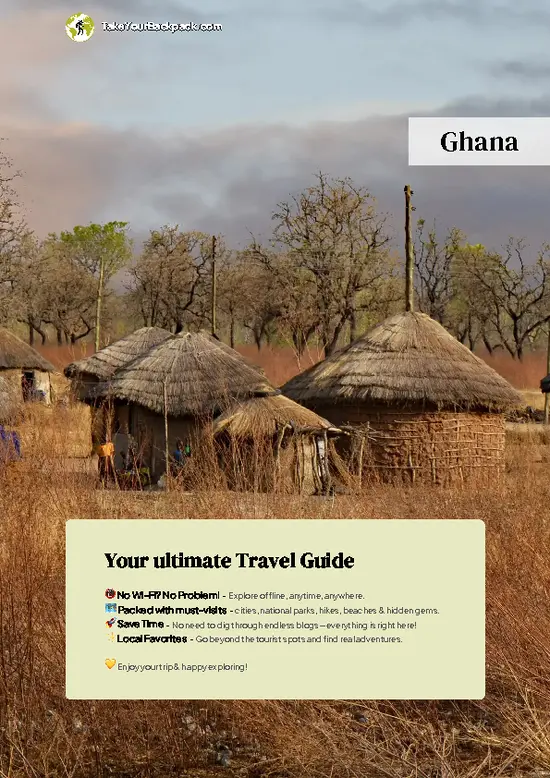
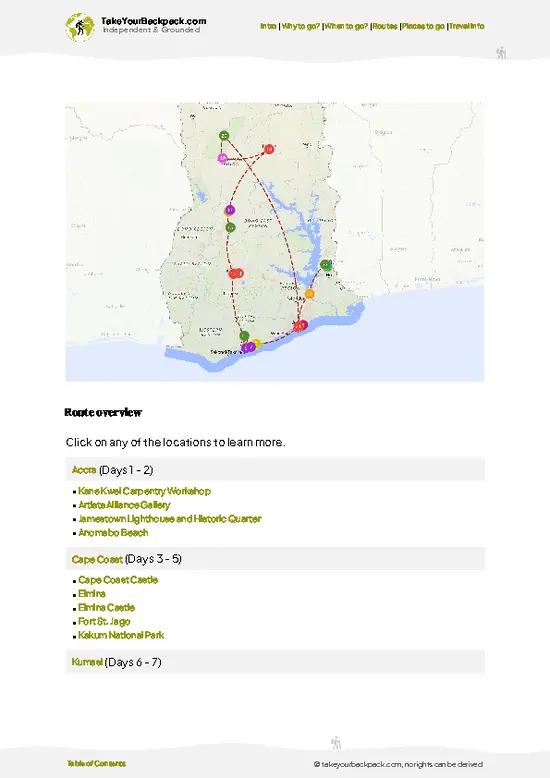
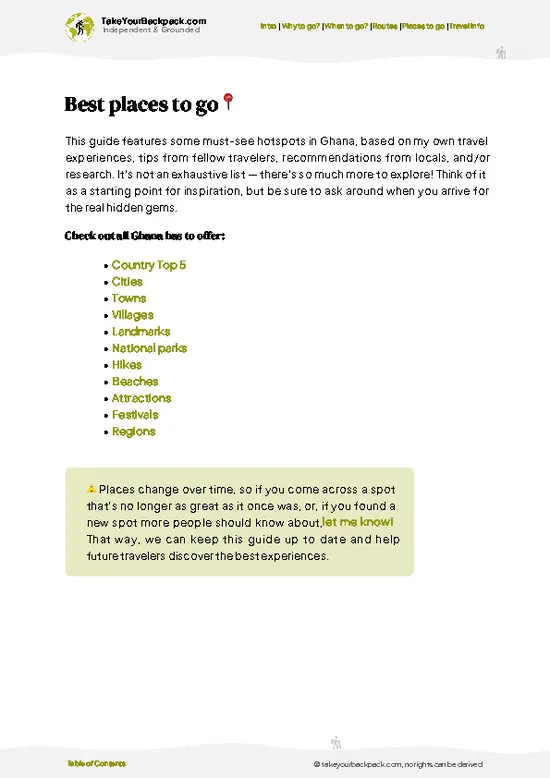
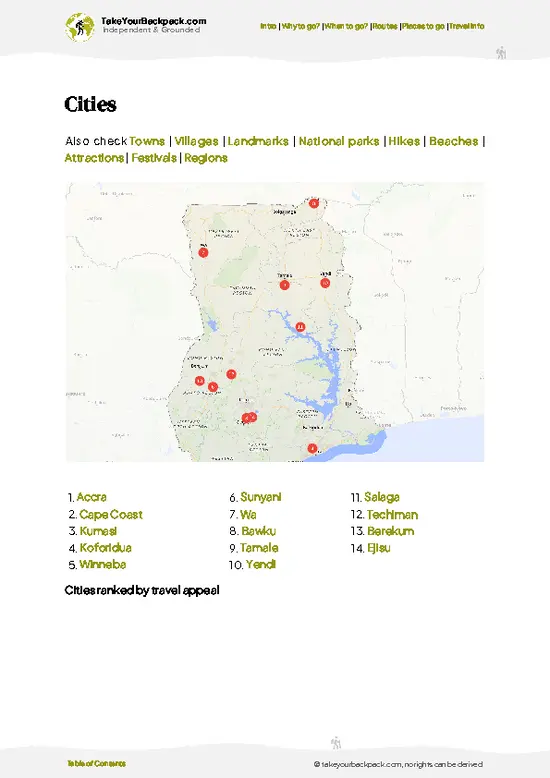
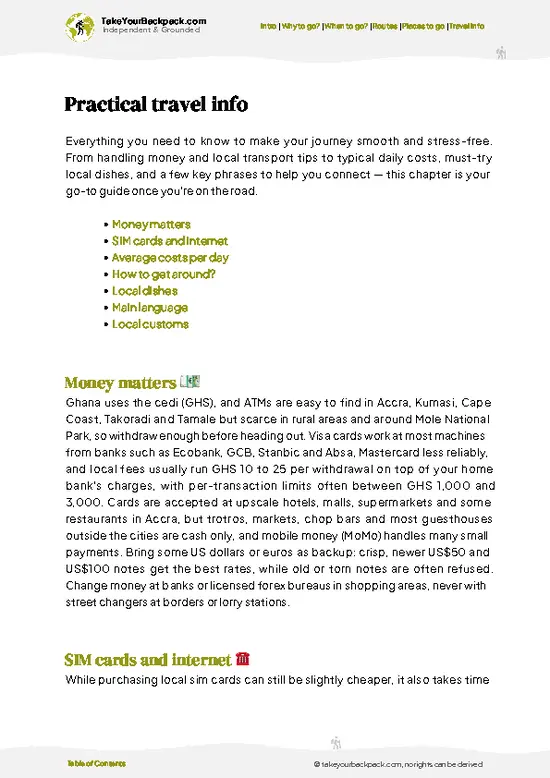
example page 0 from our offline Travel Guide for Ghana
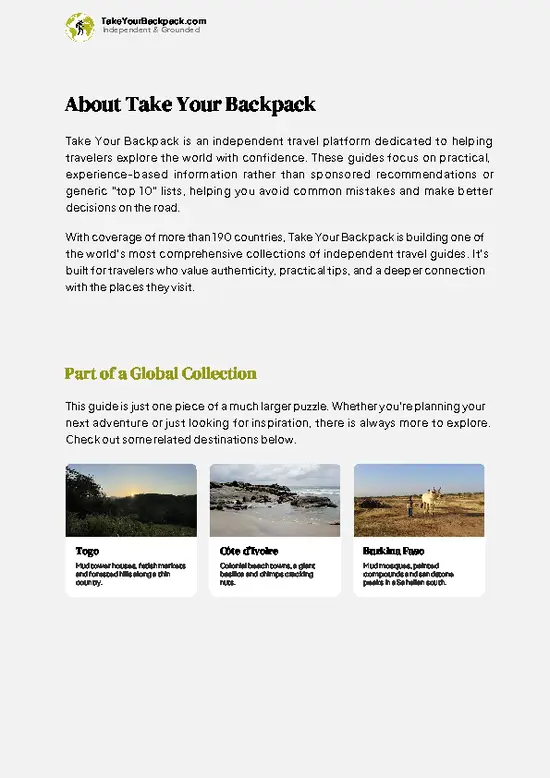
example page 1 from our offline Travel Guide for Ghana
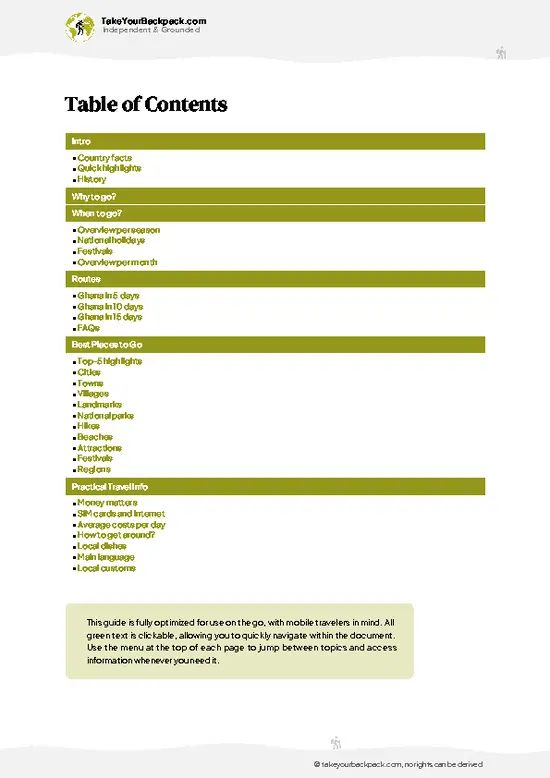
example page 2 from our offline Travel Guide for Ghana
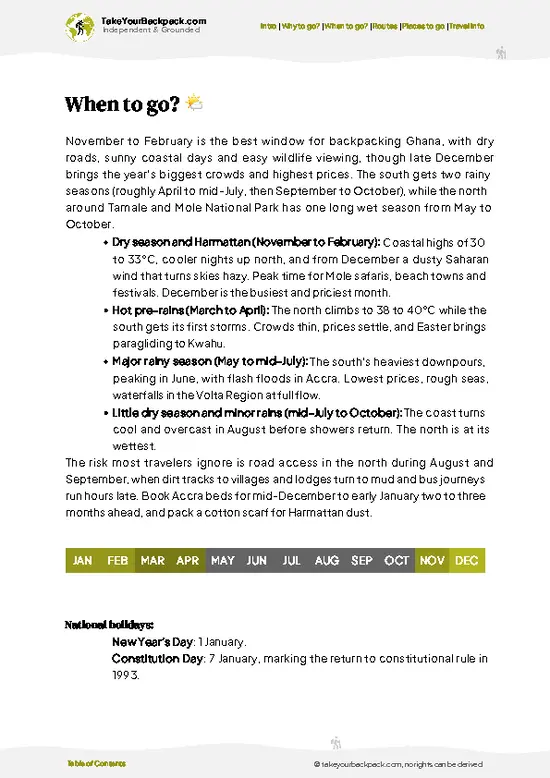
example page 3 from our offline Travel Guide for Ghana
example page 4 from our offline Travel Guide for Ghana
example page 5 from our offline Travel Guide for Ghana
example page 6 from our offline Travel Guide for Ghana
example page 7 from our offline Travel Guide for Ghana
The digital guide (399 pages) contains:
108 highlights, ranked by travel appeal
Optimized 5, 10 & 15-day travel routes
Cities, national parks, landmarks, beaches
How to get around
Offline-friendly for travel without Wi-Fi
👉 Click to see all 30+ guide features

📅 Plan smarter in minutes, not weeks
Month by month travel advice
Festivals & national holidays
Budget expectations

🗺️ Go to the right places, skip the overrated ones
Honest pros & cons of destinations
Top hikes, parks & viewpoints
Lesser-known places most travelers miss
Clear “worth it vs skip it” guidance

🛏️ Travel smoothly without rookie mistakes
Best areas to stay
Transport systems explained simply
Common scams & safety advice
SIM cards, money & practical tips

🌍 Understand the country, not just visit it
Culture & traditions
52 Essential phrases & customs
Festivals worth planning around
Traveler-friendly historical context
Insights that make places more meaningful

📱 Built for real travel conditions
Fully downloadable PDF
Works completely offline
Optimized for phone use
Useful in remote areas & buses
Everything in one place
Save weeks of stressful planning
Get instant access to your full guide. 30‑day money-back guarantee.
+ Add another guide for just US$7.80

By proceeding you agree to our terms.
Sent to your inbox immediately after payment • 100% Secure Checkout
Best Backpacking Travel Advisor 2025 tourism awardBest Backpacking
Travel Advisor
2025
What others say about Take Your Backpack Guides:
⭐⭐⭐⭐⭐
Fantastic, amazing amount of information!
⭐⭐⭐⭐⭐
My goodness this is amazing, it's what I've been looking for hats off too you!
⭐⭐⭐⭐⭐
I think this is absolutely BRILLIANT
⭐⭐⭐⭐
Very complete and informative. It's still missing places, but I gotta to commend you
⭐⭐⭐⭐⭐
This is truly amazing, thank you, can't wait to explore it with my kids!
⭐⭐⭐⭐⭐
Awesome resource, thank you!
⭐⭐⭐⭐⭐
This is amazing! Can't wait to explore the ones I haven't seen
⭐⭐⭐⭐
I love this! Well done, great idea.
⭐⭐⭐⭐⭐
Thanks for taking the time to make this gem!
⭐⭐⭐⭐⭐
This might be the best website I've ever seen.
⭐⭐⭐⭐⭐
Congratulations, and thank you so much for your work; it's incredibly valuable.
⭐⭐⭐⭐
In all seriousness I think you did a great job pointing out the important spots
⭐⭐⭐⭐⭐
10/10 very good
⭐⭐⭐⭐⭐
As someone who's only just starting to visit regularly this is awesome, thank you.
⭐⭐⭐⭐
Thank you very much! I'm going to visit my dad, it's going to be very useful!
⭐⭐⭐⭐⭐
This is really cool! We'll be travelling for the first time and this definitely come in handy.
⭐⭐⭐⭐⭐
You are now our minister of culture, congratulations 👨‍💼
⭐⭐⭐⭐⭐
Just wanted to tell you that this is a pearl! Going to follow your recommendations.
⭐⭐⭐⭐⭐
This is so cool. I'll definitely be using the resource for my travels soon.
⭐⭐⭐⭐⭐
This is very impressive! Good work.
⭐⭐⭐⭐⭐
This is an amazing and informative site. Very well done!

🛏️ Where to stay?Best Places to Stay in Ghana

Yes — hostels and budget accommodation are widely available across Ghana, concentrated in Accra, Kumasi and Cape Coast with smaller clusters in Sekondi‑Takoradi and popular beach towns.
In Accra the best budget choices cluster in Osu for nightlife and social hostels (expect noise and slightly higher rates), Labone and nearby areas for quieter stays with easier taxi access to attractions (fewer dorms), and Jamestown or market districts for the cheapest, most authentic options that require extra caution after dark.
Cape Coast offers cheap guesthouses near the castle and beach for daytime sightseeing and calm nights; Kumasi’s Adum/Bantama areas put you by markets and transit but are busy and … read more 👉
Yes — hostels and budget accommodation are widely available across Ghana, concentrated in Accra, Kumasi and Cape Coast with smaller clusters in Sekondi‑Takoradi and popular beach towns.
In Accra the best budget choices cluster in Osu for nightlife and social hostels (expect noise and slightly higher rates), Labone and nearby areas for quieter stays with easier taxi access to attractions (fewer dorms), and Jamestown or market districts for the cheapest, most authentic options that require extra caution after dark.
Cape Coast offers cheap guesthouses near the castle and beach for daytime sightseeing and calm nights; Kumasi’s Adum/Bantama areas put you by markets and transit but are busy and sometimes chaotic; western coastal towns give cheaper seaside stays with limited hostel-style social life and fewer transport links.

If you enjoy meeting fellow travelers, consider choosing hostels with high ratings for atmosphere. On the other hand, if you prefer having your own space, a hotel might be a better option.

GhanaExplore Ghana

👋 Meet the founderWho’s Behind Take Your Backpack?

Johan, backpacker and founder of TakeYourBackpackHi, I’m Johan (Netherlands 🇳🇱), the creator of TakeYourBackpack. Over the past decade, I’ve backpacked through 80+ countries across six continents, gaining extensive experience with independent travel, long-term trips, and overland routes.

This site is built on a combination of firsthand travel experience and carefully curated insights from other backpackers. Many guides are based on places I’ve personally visited, while others bring together tips, observations, and practical advice shared by trusted travelers I’ve met along the way.

The goal is to provide realistic, experience-driven guidance — not generic itineraries — so you can explore destinations with better context, clearer expectations, and more confidence.

Get full Ghana guide •
Instant download • 108 highlights • Full Offline guide