×

Greece🇬🇷 | best national parksThe 10 Top national parks in Greece

Greece has 10 national parks on paper, but they feel nothing alike. In the north, Pindus and the Vikos area mean beech forest, stone bridges, woodsmoke and cold river water, with almost no one else on the trail. In the Peloponnese and central mainland, limestone gorges and fir slopes smell of resin and thyme. The island and marine parks are all salt, wind and heat. Entry is usually free, there are rarely gates or ticket booths, and public transport thins out fast, so independent travelers need a plan for buses, trailheads and water. Crowds gather on the coast and stay away from the high mountains.

By Johan Kruseman 🇳🇱 | Updated October 19, 2026
Explore the best hikes in Greece

Why go?Why These national park Stand Out

Greece is unusual because its parks protect working landscapes, not empty wilderness. Shepherd paths, mule tracks, Byzantine monasteries and chapels sit inside the boundaries, so a hike can cross a stone threshold or pass a bell-clanking flock. Mountains cover roughly 80 percent of the country, and the Mediterranean climate means dry summers where cicadas drone, rock throws back the heat and the air smells of oregano and pine. The sea is never far, which allows alpine and coastal parks within one country.

Before choosing Greece for parks, know that the infrastructure is light. Visitor centers are small and often open limited hours, signage can be faded, and trail marking varies from clear red-and-yellow paint to a vague hint. Many trails are rocky, steep and exposed, with little shade and … read more 👉
Greece is unusual because its parks protect working landscapes, not empty wilderness. Shepherd paths, mule tracks, Byzantine monasteries and chapels sit inside the boundaries, so a hike can cross a stone threshold or pass a bell-clanking flock. Mountains cover roughly 80 percent of the country, and the Mediterranean climate means dry summers where cicadas drone, rock throws back the heat and the air smells of oregano and pine. The sea is never far, which allows alpine and coastal parks within one country.

Before choosing Greece for parks, know that the infrastructure is light. Visitor centers are small and often open limited hours, signage can be faded, and trail marking varies from clear red-and-yellow paint to a vague hint. Many trails are rocky, steep and exposed, with little shade and few water points. Rural bus services can run once a day or not at all, so a rental car or taxi is often the practical answer. Managing bodies are regional, so information is patchy online. Villages near the parks have family-run guesthouses and tavernas that make the logistics worth the effort.
Our Approach to Ranking
The list of best national parks in Greece is created based on landscapes, wildlife, adventure opportunities, facilities, and overall experience. If you feel a national park is missing in this list, please let us know.

When to go?When to Plan Your Trip

Best months and why: The best months for national parks in Greece are May to June and September to early October, when daytime temperatures sit around 18 to 28°C, wildflowers or warm sea are at their best, and the midday sun is bearable on exposed trails. Spring brings green slopes, running streams and the smell of wild herbs, though high passes in the Pindus can hold snow into May.

Summer and the heat: July and August bring 30 to 38°C in lowlands, with hot rock, cicada noise and little shade. Start walks at dawn and finish by 11 a.m. Higher mountain parks stay cooler, with nights near 8 to 15°C, so they work best in midsummer. Coastal and island areas fill with domestic holidaymakers in August, and guesthouse prices can rise 30 to 60 percent over shoulder season.

Winter and shoulder seasons: … read more 👉
Best months and why: The best months for national parks in Greece are May to June and September to early October, when daytime temperatures sit around 18 to 28°C, wildflowers or warm sea are at their best, and the midday sun is bearable on exposed trails. Spring brings green slopes, running streams and the smell of wild herbs, though high passes in the Pindus can hold snow into May.

Summer and the heat: July and August bring 30 to 38°C in lowlands, with hot rock, cicada noise and little shade. Start walks at dawn and finish by 11 a.m. Higher mountain parks stay cooler, with nights near 8 to 15°C, so they work best in midsummer. Coastal and island areas fill with domestic holidaymakers in August, and guesthouse prices can rise 30 to 60 percent over shoulder season.

Winter and shoulder seasons: From November to March, the mountains of the north and center get cold, wet weather and snow, with 600 to over 1,000 mm of rain a year in the west. Gorge paths can flood, some mountain roads close, and some guesthouses shut. The south and islands stay milder at 10 to 16°C, but ferries run less often and many seasonal businesses close from November until Easter.

national park hoppingHow to Combine national parks Into One Trip

How long you need: A trip combining several national parks in Greece needs 10 to 16 days, because the mountains are slow to cross even when the distances look short. Plan 2 to 3 nights per stop so you have one full day on the trail and one buffer day for weather or tired legs.

Grouping and direction: The regions that cluster well are the northwest (Epirus and Pindus), the central mainland around Delphi and Mount Parnassos, and the Peloponnese. Fly into Athens or Thessaloniki, then travel in one direction. A north-to-south line from Ioannina through central Greece to Athens and the Peloponnese avoids backtracking. Typical drives are 2 to 3 hours between neighboring areas, and 4 to 6 hours from the northwest to Athens, longer on winding mountain roads. Intercity KTEL buses link hubs such as … read more 👉
How long you need: A trip combining several national parks in Greece needs 10 to 16 days, because the mountains are slow to cross even when the distances look short. Plan 2 to 3 nights per stop so you have one full day on the trail and one buffer day for weather or tired legs.

Grouping and direction: The regions that cluster well are the northwest (Epirus and Pindus), the central mainland around Delphi and Mount Parnassos, and the Peloponnese. Fly into Athens or Thessaloniki, then travel in one direction. A north-to-south line from Ioannina through central Greece to Athens and the Peloponnese avoids backtracking. Typical drives are 2 to 3 hours between neighboring areas, and 4 to 6 hours from the northwest to Athens, longer on winding mountain roads. Intercity KTEL buses link hubs such as Ioannina, Lamia, Tripoli and Kalamata, but connections to villages are thin, so a rental car saves a lot of time.

Planning mistakes: The common error is reading the map instead of the road: 100 km can take 2.5 hours on switchbacks, with narrow lanes and goats on the asphalt. Another is packing hiking into hot afternoons or booking ferries without allowing a spare day. Build slack, start early and check seasonal ferry timetables.

The ListThe Best national parks of Greece

1 Zakynthos Marine Park

loggerhead turtles, sandy beaches, underwater caves

Witness nesting turtles on protected shores, and dive into blue waters to discover submerged rock formations and marine life.

2 Alonissos Marine Park

protected waters, monk seals, island coves

Snorkel or kayak in Greece’s largest marine reserve, where endangered seals and clear waters define the experience.

greece-national-park-alonissos-marine-park
© Google |

3 Parnassos National Park

karst plateaus, ski slopes, juniper thickets

Ski in winter or hike in summer across high ridges and plateaus, with ancient junipers and mountain views stretching to Delphi.

4 Parnitha National Park

oak groves, wild deer, mountain trails

Roam a network of marked paths close to Athens, where red deer graze and forested slopes offer cool respite from the city.

5 Dadia-Lefkimi-Soufli Forest National Park

raptor nesting sites, mixed woodland, observation towers

Watch rare vultures and eagles from dedicated hides in a mosaic of forests and open glades, ideal for birdwatchers.

greece-national-park-dadia-lefkimi-soufli-forest-national-park
© Google |

6 Ainos National Park

fir forest, mountain summit, endemic wildflowers

Climb to Kefalonia’s highest point through rare black pine woods, with panoramic views and springtime blooms unique to the island.

7 Sounion National Park

sea cliffs, ancient ruins, coastal pine

Walk coastal trails beneath the Temple of Poseidon, with sweeping Aegean views and pockets of Mediterranean forest.

greece-national-park-sounion-national-park
© Google |

8 Schinias National Park

maritime pine forest, freshwater marsh, sandy bay

Swim or paddle along a long natural beach, then explore inland wetlands that attract herons and turtles in spring and autumn.

greece-national-park-schinias-national-park
© Google |

9 Rhodope National Park

mixed forests, mountain lakes, wolf territory

Venture into a remote region of northern Greece, where forested slopes and hidden lakes support wolves, lynx, and rare birds.

10 Tzoumerka

deep gorges, waterfalls, stone villages

Traverse dramatic ravines and cascading streams, then rest in mountain villages that preserve traditional architecture and local crafts.

greece-national-park-tzoumerka
© Google |

11 Axios-Loudias-Aliakmonas National Park

river delta, mudflats, pelican colonies

Cycle or walk levees through a sprawling delta, where flocks of pelicans and waders gather in shallow, nutrient-rich waters.

greece-national-park-axios-loudias-aliakmonas-national-park
© Google |

12 Messolonghi-Etoliko Lagoons

salt lagoons, migratory birds, reed beds

Observe seasonal bird migrations and shifting light across vast wetlands, where fishing huts and shallow waters dominate the horizon.

13 Pindus

dense forests, alpine meadows, bear habitat

Hike through thick woodland and high pastures where brown bears roam, and experience the remote, rugged terrain of northern Greece.

greece-national-park-pindus
© Google | Russ Guajardo

Think you know Greece?

Prove you’re a true local — uncover 3 lesser-known national parks in Greece that locals tend to keep to themselves.
Loading the map 🌍

Expert viewTips and Advice from Travelers

How many to visit: I advise three or four national parks on one trip. That is enough for contrast between a mountain, a gorge and a coastal or island area, and few enough that you spend your time walking, not driving on switchbacks. Squeezing in six means long transfers, tired legs and little chance to notice resin-scented air or the clank of goat bells. A single park for a week costs the least and gives the deepest experience, but you miss how much the country changes.

Which kind for which traveler: For hikers on a tight budget, the northern mountain parks give the most. Guesthouses in villages cost about €30 to 60 for a double, with a hearty breakfast, and trails are free and quiet. For sea and light walking, coastal and island areas offer swimming and easy paths, but accommodation costs … read more 👉
How many to visit: I advise three or four national parks on one trip. That is enough for contrast between a mountain, a gorge and a coastal or island area, and few enough that you spend your time walking, not driving on switchbacks. Squeezing in six means long transfers, tired legs and little chance to notice resin-scented air or the clank of goat bells. A single park for a week costs the least and gives the deepest experience, but you miss how much the country changes.

Which kind for which traveler: For hikers on a tight budget, the northern mountain parks give the most. Guesthouses in villages cost about €30 to 60 for a double, with a hearty breakfast, and trails are free and quiet. For sea and light walking, coastal and island areas offer swimming and easy paths, but accommodation costs 30 to 60 percent more in summer and boat access adds money. For travelers without a car, pick areas near a KTEL bus hub, because a rental car, at around €30 to 60 a day, makes the biggest difference to what is reachable but cuts into a budget quickly.

What it costs: Expect €45 to 80 a day for a backpacker mixing guesthouses, tavernas and some buses, or €30 to 45 with dorms, camping where legal and self-catering. Park entry is usually free. Some visitor centers or sites inside them charge about €2 to 12. Local guides run roughly €100 to 250 for a day, worth it for canyon routes, wildlife or poor trail marking. Boat transfers to coastal areas range from €10 to 40 a person. A rough budget for a visit of two or three nights is €100 to 250, mostly lodging and transport.

Safety and etiquette: The main risks are heat, dehydration and loose rock. Carry 2 to 3 liters of water per person in summer, because springs are unreliable, and wear shoes with grip. Mountain weather turns fast, with afternoon storms in the high peaks, so check the forecast and carry a rain layer. Wildfire season runs roughly June to October, and fire bans are strict. Never light fires or smoke on trails, and obey closures, since fines are heavy. Shepherd dogs guard flocks and can be aggressive, so stop, stay calm, and walk around the flock slowly. In villages and chapels, dress modestly, ask before photographing people and greet locals with a kalimera. Emergency number 112 works across Greece, though mobile signal drops in gorges and high valleys, so download offline maps.

✈️ The backpacker research shortcutGreece Travel Guide

An offline-friendly backpacking guide with optimized travel routes, ranked highlights, transport advice, and the best areas to stay.
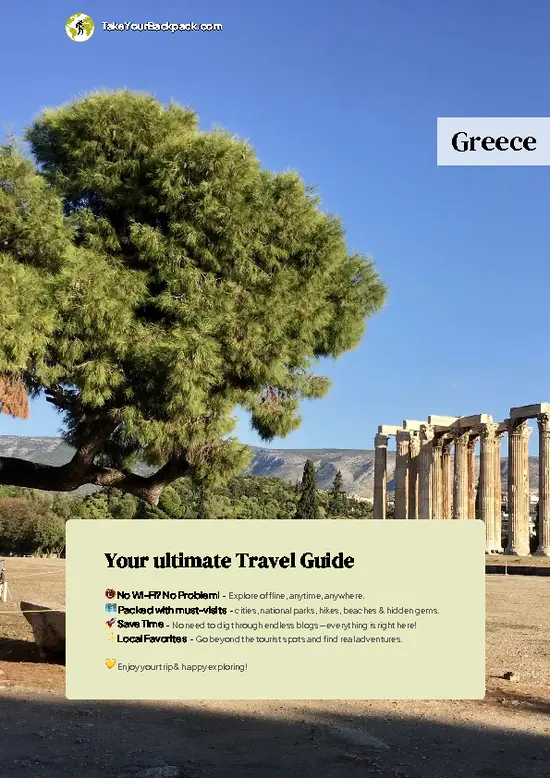
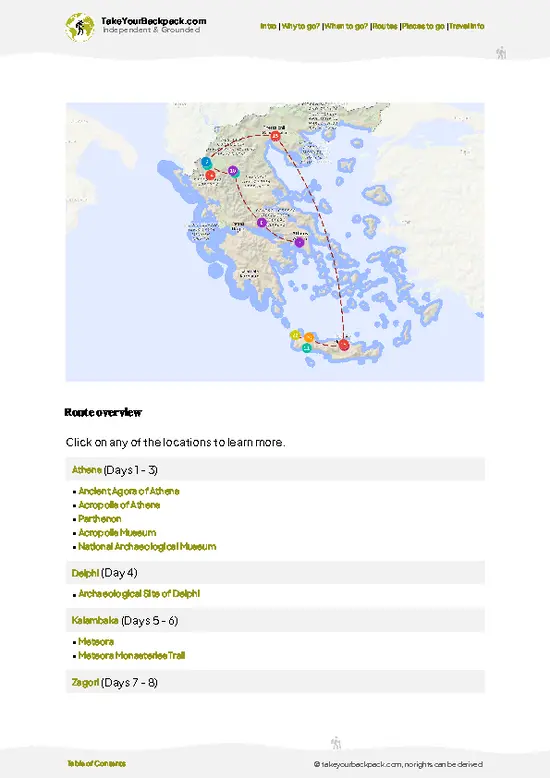
example page 0 from our offline Travel Guide for Greece
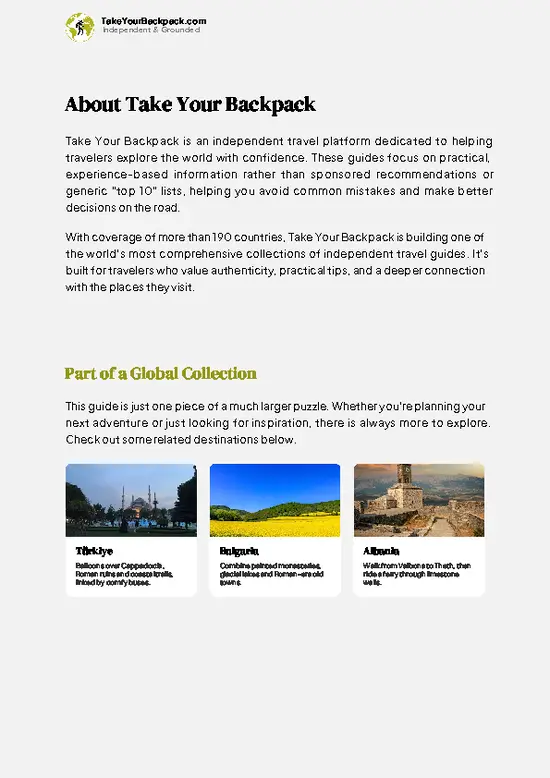
example page 1 from our offline Travel Guide for Greece
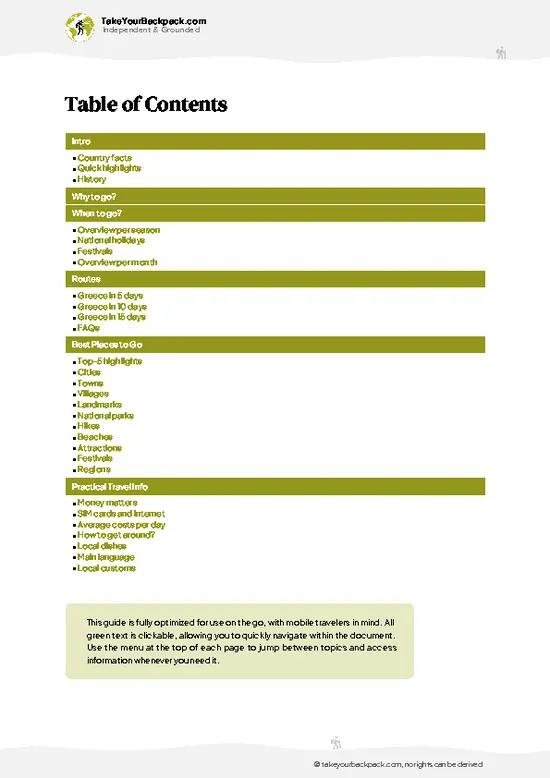
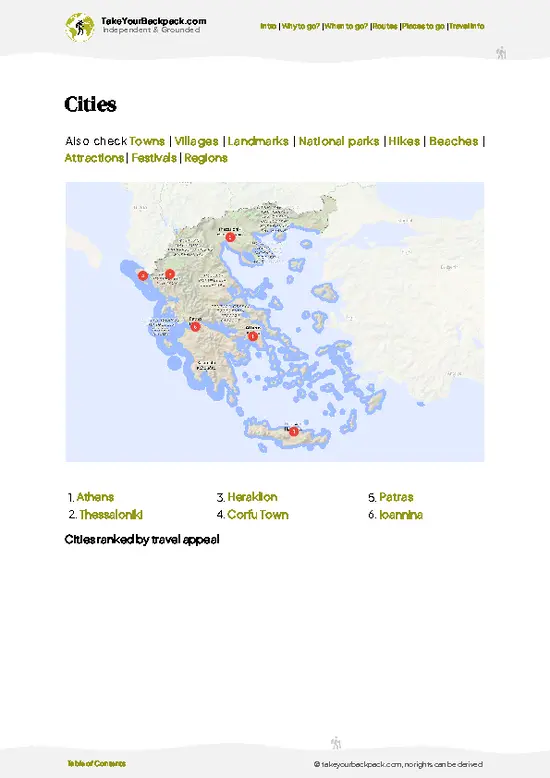
example page 2 from our offline Travel Guide for Greece
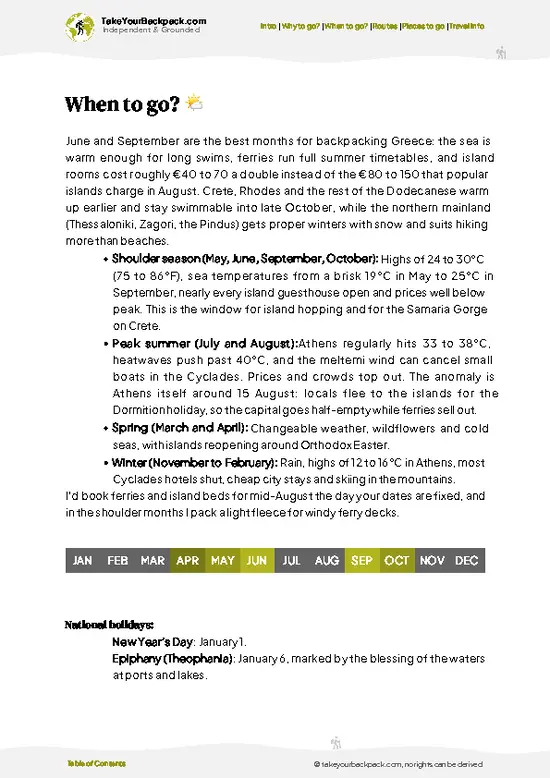
example page 3 from our offline Travel Guide for Greece
example page 4 from our offline Travel Guide for Greece
example page 5 from our offline Travel Guide for Greece
example page 6 from our offline Travel Guide for Greece
example page 7 from our offline Travel Guide for Greece
The digital guide (417 pages) contains:
✅ 114 highlights, ranked by travel appeal
✅ Optimized 5, 10 & 15-day travel routes
✅ Cities, national parks, landmarks, beaches
✅ How to get around
✅ Offline-friendly for travel without Wi-Fi
👉 Click to see all 30+ guide features

📅 Plan smarter in minutes, not weeks
✅ Month by month travel advice
✅ Festivals & national holidays
✅ Budget expectations

🗺️ Go to the right places, skip the overrated ones
✅ Honest pros & cons of destinations
✅ Top hikes, parks & viewpoints
✅ Lesser-known places most travelers miss
✅ Clear “worth it vs skip it” guidance

🛏️ Travel smoothly without rookie mistakes
✅ Best areas to stay
✅ Transport systems explained simply
✅ Common scams & safety advice
✅ SIM cards, money & practical tips

🌍 Understand the country, not just visit it
✅ Culture & traditions
✅ 52 Essential phrases & customs
✅ Festivals worth planning around
✅ Traveler-friendly historical context
✅ Insights that make places more meaningful

📱 Built for real travel conditions
✅ Fully downloadable PDF
✅ Works completely offline
✅ Optimized for phone use
✅ Useful in remote areas & buses
✅ Everything in one place
Stop searching, start planning
Get instant access to your full guide. 30‑day money-back guarantee.
+ Add another guide for just

By proceeding you agree to our terms.
Sent to your inbox immediately after payment • 100% Secure Checkout
Best Backpacking Travel Advisor 2025 tourism awardBest Backpacking
Travel Advisor
2025
What others say about Take Your Backpack Guides:
⭐⭐⭐⭐⭐
Fantastic, amazing amount of information!
⭐⭐⭐⭐⭐
My goodness this is amazing, it's what I've been looking for hats off too you!
⭐⭐⭐⭐⭐
I think this is absolutely BRILLIANT
⭐⭐⭐⭐
Very complete and informative. It's still missing places, but I gotta to commend you
⭐⭐⭐⭐⭐
This is truly amazing, thank you, can't wait to explore it with my kids!
⭐⭐⭐⭐⭐
Awesome resource, thank you!
⭐⭐⭐⭐⭐
This is amazing! Can't wait to explore the ones I haven't seen
⭐⭐⭐⭐
I love this! Well done, great idea.
⭐⭐⭐⭐⭐
Thanks for taking the time to make this gem!
⭐⭐⭐⭐⭐
This might be the best website I've ever seen.
⭐⭐⭐⭐⭐
Congratulations, and thank you so much for your work; it's incredibly valuable.
⭐⭐⭐⭐
In all seriousness I think you did a great job pointing out the important spots
⭐⭐⭐⭐⭐
10/10 very good
⭐⭐⭐⭐⭐
As someone who's only just starting to visit regularly this is awesome, thank you.
⭐⭐⭐⭐
Thank you very much! I'm going to visit my dad, it's going to be very useful!
⭐⭐⭐⭐⭐
This is really cool! We'll be travelling for the first time and this definitely come in handy.
⭐⭐⭐⭐⭐
You are now our minister of culture, congratulations 👨‍💼
⭐⭐⭐⭐⭐
Just wanted to tell you that this is a pearl! Going to follow your recommendations.
⭐⭐⭐⭐⭐
This is so cool. I'll definitely be using the resource for my travels soon.
⭐⭐⭐⭐⭐
This is very impressive! Good work.
⭐⭐⭐⭐⭐
This is an amazing and informative site. Very well done!

🛏️ Where to stay?Where to Stay: Greece Edition

Greece has a solid spread of hostels, budget guesthouses and family-run rooms, with dorm beds in Athens typically running €18 to 35 in summer and the densest choice found in the capital, Thessaloniki and party-friendly islands like Ios and Corfu. In Athens, Psyri and Monastiraki put you a short walk from the Acropolis and the city’s busiest bar streets but stay loud until 3 a.m., Koukaki is calmer, residential and right below the Acropolis’ south slope, while Exarchia is the cheapest and most lively, though its late-night street scene can feel edgy. In Thessaloniki, Ladadika sits by the port with the best nightlife, and on the islands you’ll save money and ferry stress by staying in the main … read more 👉
Greece has a solid spread of hostels, budget guesthouses and family-run rooms, with dorm beds in Athens typically running €18 to 35 in summer and the densest choice found in the capital, Thessaloniki and party-friendly islands like Ios and Corfu. In Athens, Psyri and Monastiraki put you a short walk from the Acropolis and the city’s busiest bar streets but stay loud until 3 a.m., Koukaki is calmer, residential and right below the Acropolis’ south slope, while Exarchia is the cheapest and most lively, though its late-night street scene can feel edgy. In Thessaloniki, Ladadika sits by the port with the best nightlife, and on the islands you’ll save money and ferry stress by staying in the main port town rather than out at the beaches.

If you enjoy meeting fellow travelers, consider choosing hostels with high ratings for atmosphere. On the other hand, if you prefer having your own space, a hotel might be a better option.

GreeceExplore Beyond This Category

👋 Meet the founderWho’s Behind Take Your Backpack?

Johan, backpacker and founder of TakeYourBackpackHi, I’m Johan (Netherlands 🇳🇱), the creator of TakeYourBackpack. Over the past 3 decades, I’ve backpacked through 90+ countries across six continents, gaining extensive experience with independent travel, long-term trips, and overland routes.

This site is built on a combination of firsthand travel experience and carefully curated insights from other backpackers. Many guides are based on places I’ve personally visited, while others bring together tips, observations, and practical advice shared by trusted travelers I’ve met along the way.

The goal is to provide realistic, experience-driven guidance — not generic itineraries — so you can explore destinations with better context, clearer expectations, and more confidence.