×

Greece🇬🇷 | best hikesThe 11 Top hikes in Greece

Hiking in Greece means limestone, thyme and sea within the same day. Trails climb through resinous pine and scree where cicadas drone at noon and goat bells clank somewhere out of sight. The mainland north and the Peloponnese offer alpine ridges and gorges with cold, loud water. The islands trade that for mule paths and coastal tracks between whitewashed villages. Crete sits apart with its deep gorges and long, hot descents to the sea. Access is easy by bus and ferry, and independent travelers can base themselves in small villages where rooms run about €30 to 60. Crowds gather only at a few famous gorges and on Olympus in July and August.

By Johan Kruseman 🇳🇱 | Updated October 19, 2026
Explore the best beaches in Greece

Why go?Why These hike Stand Out

Greece is about 80 percent mountain, and almost all of it sits within sight of the sea. That geography produces big vertical gain close to the coast: you can start a day among salt-crusted rocks and finish above the tree line with your ears popping. The rock is mostly karst limestone, pale and sharp underfoot, which means dramatic gorges and caves, and also ankle-twisting scree and very little surface water in summer.

The country has a deep layer of old footpaths: Byzantine kalderimia (cobbled mule tracks), shepherd routes and pilgrimage trails to monasteries. Many link villages that still have a taverna with a wood oven and a kafeneio where coffee costs about €2 to 3. Waymarking is the weak point. Red-and-white paint and the European E4 markers appear on popular routes, but many paths fade … read more 👉
Greece is about 80 percent mountain, and almost all of it sits within sight of the sea. That geography produces big vertical gain close to the coast: you can start a day among salt-crusted rocks and finish above the tree line with your ears popping. The rock is mostly karst limestone, pale and sharp underfoot, which means dramatic gorges and caves, and also ankle-twisting scree and very little surface water in summer.

The country has a deep layer of old footpaths: Byzantine kalderimia (cobbled mule tracks), shepherd routes and pilgrimage trails to monasteries. Many link villages that still have a taverna with a wood oven and a kafeneio where coffee costs about €2 to 3. Waymarking is the weak point. Red-and-white paint and the European E4 markers appear on popular routes, but many paths fade into goat tracks, and signs can be bleached or missing.

Travelers should know that heat and water set the terms. Summer sun on bare rock is relentless, springs can be dry, and mobile signal drops in gorges. Public transport reaches trailheads unevenly, with buses thinning to a few a day or none on weekends. In return, Greece offers a rare mix of mountain, island and archaeological landscapes, with food and lodging that stay affordable compared with the Alps.
Evaluating the Top Choices
The list of best hikes in Greece is created based on scenery, challenge, trail quality, landmarks, and overall enjoyment. If you feel a hike is missing in this list, please let us know.

When to go?When to Plan Your Trip

Best Months for Hiking in Greece: The best months are May to June and September to October, when daytime highs on trails sit around 18 to 28°C, wildflowers or warm sea are still on offer, and the sun does not hammer bare limestone. In May the hills smell of sage and wild oregano, and streams still run in the gorges.
Summer Heat and Crowds: July and August bring 30 to 40°C at low elevation, with cicadas deafening by midmorning and little shade on the coast. Start at dawn and finish by 11:00 to 12:00. High mountains such as Olympus stay far cooler, often 10 to 20°C at altitude, but July and August also bring the biggest crowds and the highest prices. Island accommodation can double in August compared with May, and ferries book out.
Winter and Shoulder Seasons: From November to March, rain is frequent … read more 👉
Best Months for Hiking in Greece: The best months are May to June and September to October, when daytime highs on trails sit around 18 to 28°C, wildflowers or warm sea are still on offer, and the sun does not hammer bare limestone. In May the hills smell of sage and wild oregano, and streams still run in the gorges.
Summer Heat and Crowds: July and August bring 30 to 40°C at low elevation, with cicadas deafening by midmorning and little shade on the coast. Start at dawn and finish by 11:00 to 12:00. High mountains such as Olympus stay far cooler, often 10 to 20°C at altitude, but July and August also bring the biggest crowds and the highest prices. Island accommodation can double in August compared with May, and ferries book out.
Winter and Shoulder Seasons: From November to March, rain is frequent in the west and the Peloponnese, and snow closes mountain refuges and higher routes in the north and central ranges, often from late October until May or June. Many gorges in Crete close in winter and spring because of flood risk, with Samaria generally open from about May to mid-October. Island hotels and tavernas often shut from November to March. April can be lovely at low altitude but muddy higher up.

hike hoppingHow to Combine hikes Into One Trip

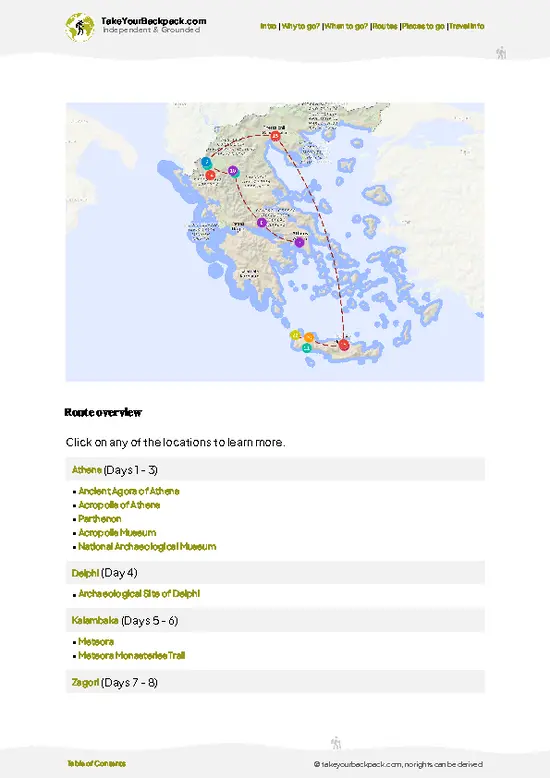
How Many Days to Combine Greek Hikes: A trip linking several hikes in Greece needs 10 to 14 days, enough for three or four bases without living on buses. Mainland mountains, the Peloponnese and Crete cluster naturally, since Athens works as the hub with flights and long-distance buses (KTEL) fanning out from it.
Regions and Direction: The north (Olympus area, Zagori and Pindus) pairs well with central Greece, and the Peloponnese sits within 2 to 4 hours of Athens by road. Moving north to south is sensible because it lets higher ranges be done in settled late-spring or early-autumn weather, finishing at the coast. Crete or an island adds a 45-minute flight from Athens or a ferry of about 6 to 9 hours to Heraklion from Piraeus. Between Athens and Thessaloniki, buses take about 6 hours, trains … read more 👉
How Many Days to Combine Greek Hikes: A trip linking several hikes in Greece needs 10 to 14 days, enough for three or four bases without living on buses. Mainland mountains, the Peloponnese and Crete cluster naturally, since Athens works as the hub with flights and long-distance buses (KTEL) fanning out from it.
Regions and Direction: The north (Olympus area, Zagori and Pindus) pairs well with central Greece, and the Peloponnese sits within 2 to 4 hours of Athens by road. Moving north to south is sensible because it lets higher ranges be done in settled late-spring or early-autumn weather, finishing at the coast. Crete or an island adds a 45-minute flight from Athens or a ferry of about 6 to 9 hours to Heraklion from Piraeus. Between Athens and Thessaloniki, buses take about 6 hours, trains 4 to 5.
Pacing and Common Mistakes: Allow two to three nights per base, so one full hiking day plus a rest or buffer. The usual error is stacking a hard summit day right after an overnight ferry or a long bus ride. Another is trying to cover mainland, Peloponnese and islands in under a week, which turns a trip into transfers. Rural buses often run once or twice daily, so check return times before heading out, or hire a car for the trailhead-heavy stretches. Leave a spare day for weather, since winds can stop ferries and storms can close gorges.

The ListThe Best hikes of Greece

1 Samaria Gorge

narrow chasm, towering cliffs, riverbed walk

Follow a descending route through a deep, narrow gorge, passing sheer rock faces and shaded pine woods before reaching the Libyan Sea.

greece-hike-samaria-gorge
© Google | Julien L.09

2 Mount Olympus

alpine meadows, mythic peaks, forested slopes

Climb through dense forests and open plateaus to reach the rugged heights of Greece’s legendary mountain, where shifting weather and steep trails demand respect.

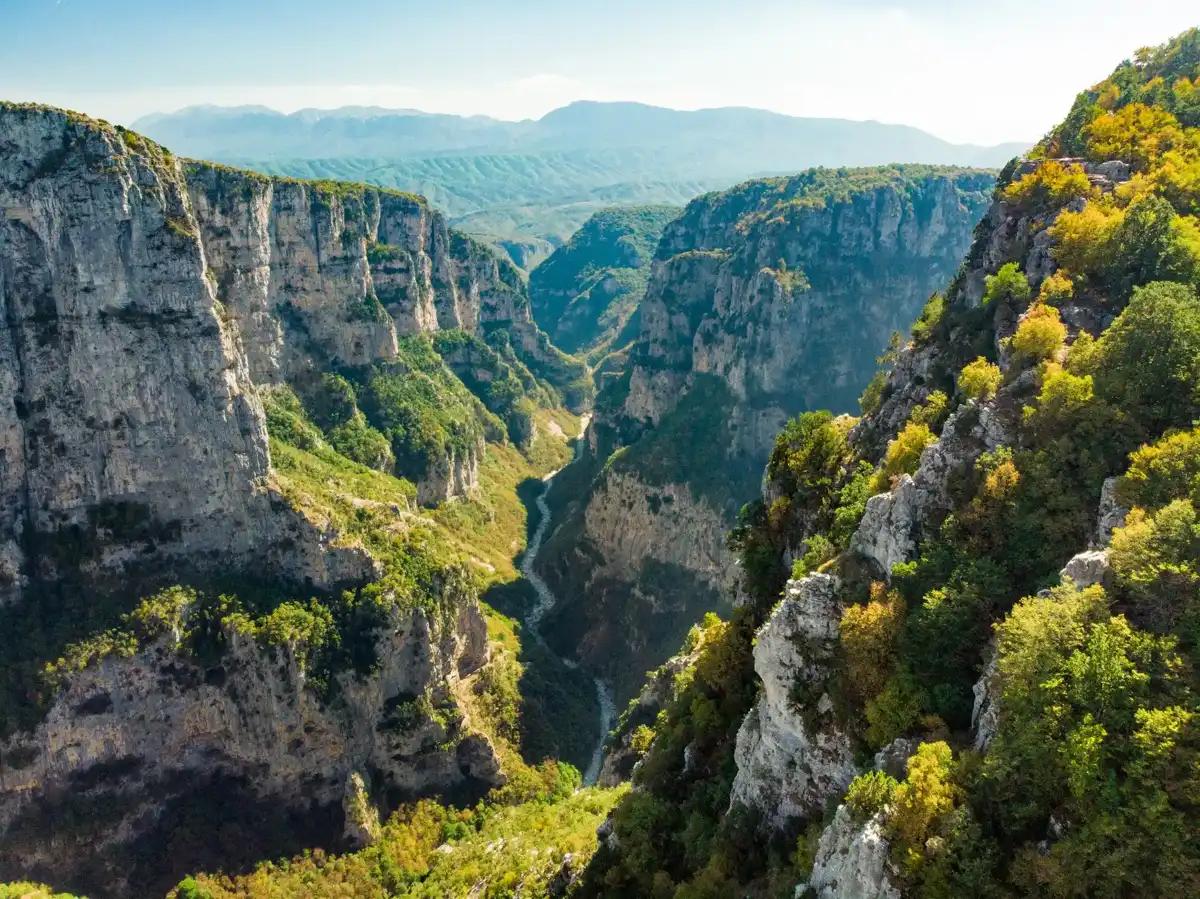
3 Vikos Gorge

limestone walls, wildflowers, panoramic lookouts

Traverse a remote canyon with steep descents, rare flora, and vantage points that reveal the full scale of this deep natural corridor.

greece-hike-vikos-gorge
© Google | Irina B

4 Corfu Trail

olive groves, coastal cliffs, rural hamlets

Cross the island from south to north, experiencing changing landscapes, remote beaches, and the agricultural rhythms of Corfiot countryside.

greece-hike-corfu-trail
© Google |

5 Meteora Monasteries Trail

sandstone pillars, suspended monasteries, winding stairways

Walk among towering rock formations, climbing staircases to reach monasteries perched high above the plain, with sweeping vistas at every turn.

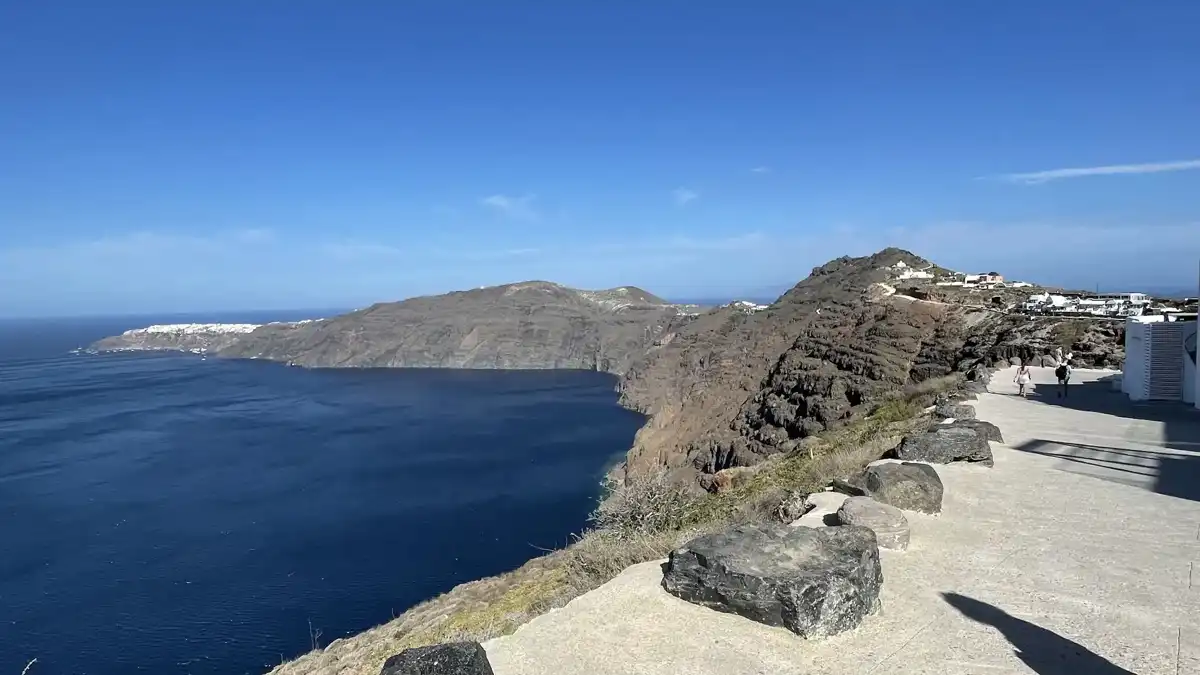
6 Santorini Caldera Trail

volcanic rim, whitewashed villages, sea views

Walk along the edge of a volcanic caldera, linking cliffside settlements and offering continuous views over the Aegean’s blue expanse.

greece-hike-santorini-caldera-trail
© Google | Randy G

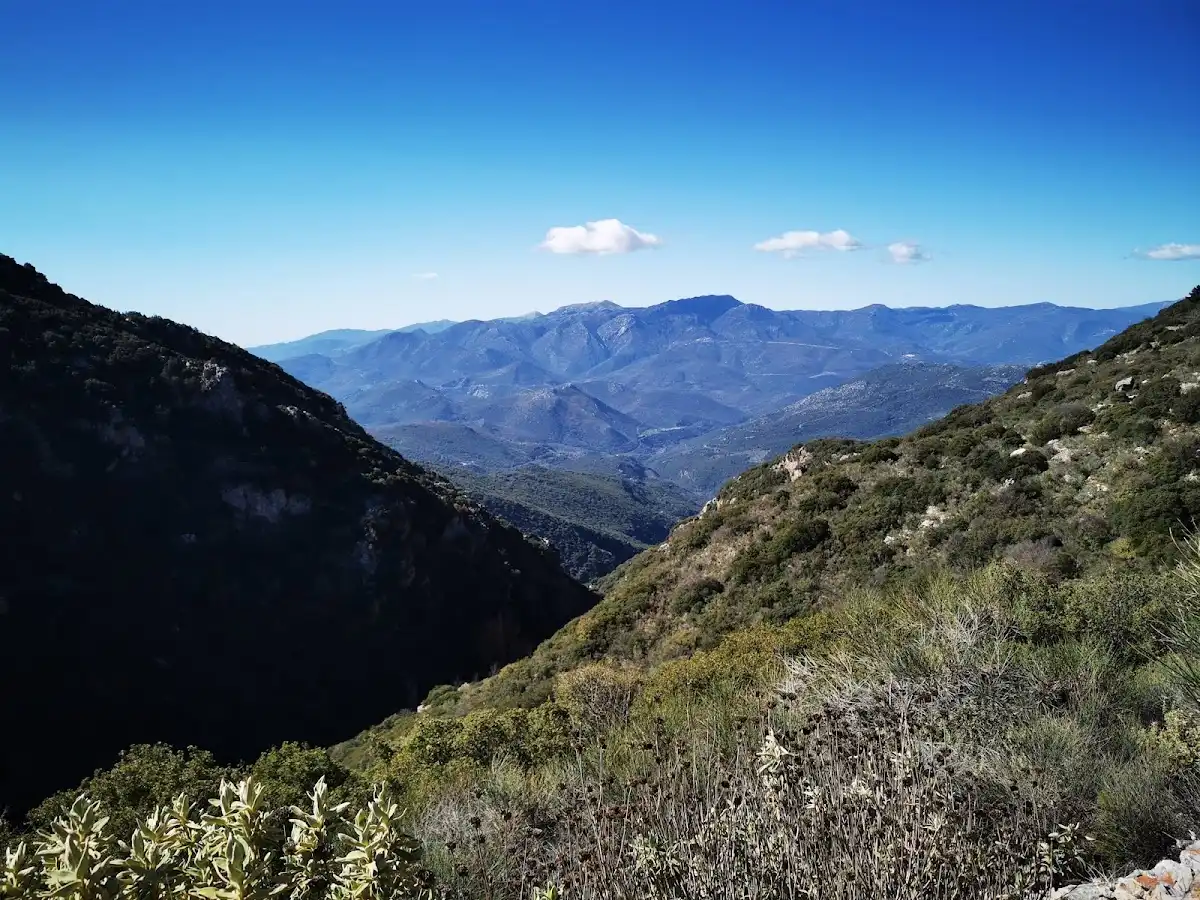
7 Menalon Trail

mountain villages, fir forests, riverside paths

Travel between traditional settlements on a marked route that weaves through dense woodland, open valleys, and quiet riverside stretches.

greece-hike-menalon-trail
© Google |

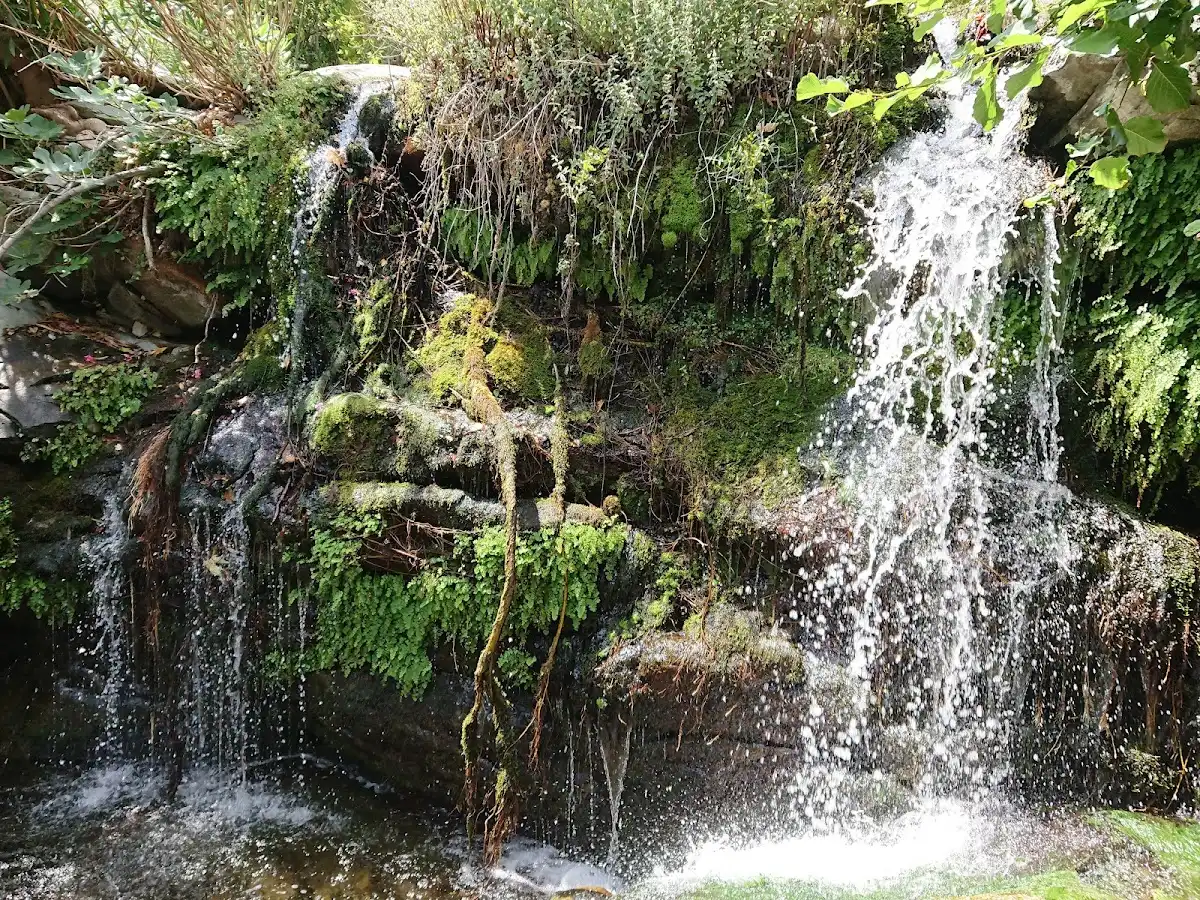
8 Andros Route

spring-fed valleys, stone-paved lanes, Byzantine ruins

Navigate a network of old mule tracks linking water-rich valleys, remote chapels, and the remnants of island civilization.

greece-hike-andros-route
© Google |

9 Mount Zas

rocky summit, Cycladic views, mythic cave

Ascend to the highest point in the Cyclades, passing a legendary cave and gaining wide views over the Aegean archipelago.

greece-hike-mount-zas
© Google |

10 Lousios Gorge

cliffside monasteries, river canyon, stone bridges

Descend through a dramatic ravine where centuries-old monasteries cling to limestone walls and footpaths cross ancient bridges above rushing water.

greece-hike-lousios-gorge
© Google | Yuval Cohen

11 Delphi to Kirra Trail

ancient footpath, olive terraces, sea approach

Descend from the slopes of Delphi through terraced groves, following a historic pilgrimage route that ends at the Gulf of Corinth.

greece-hike-delphi-to-kirra-trail
© Google |
Loading the map 🌍

Expert viewTips and Advice from Travelers

How Many Hikes to Plan: Four to six hikes is the number I advise for a two-week trip. That gives you one demanding day, a few moderate ones and space to recover. Greek hiking is hard on the feet: sharp limestone, loose scree and steep descents wear down knees faster than the distances suggest. More than that and you spend the trip in transit instead of on the trail.
Which Kind to Prioritize: For a first-timer or someone short on time, coastal and village-to-village paths give the most. They cost little in effort, you finish with a swim or a meal, and the gear is minimal. If you carry fitness and want solitude, pick high mountain routes: they cost more in time and comfort (refuge beds around €15 to 25, early starts, cold nights even in summer) but deliver empty ridges and clear air. Gorges sit … read more 👉
How Many Hikes to Plan: Four to six hikes is the number I advise for a two-week trip. That gives you one demanding day, a few moderate ones and space to recover. Greek hiking is hard on the feet: sharp limestone, loose scree and steep descents wear down knees faster than the distances suggest. More than that and you spend the trip in transit instead of on the trail.
Which Kind to Prioritize: For a first-timer or someone short on time, coastal and village-to-village paths give the most. They cost little in effort, you finish with a swim or a meal, and the gear is minimal. If you carry fitness and want solitude, pick high mountain routes: they cost more in time and comfort (refuge beds around €15 to 25, early starts, cold nights even in summer) but deliver empty ridges and clear air. Gorges sit between the two. They are spectacular and busy, so go early. Guided days run about €40 to 90 and make sense only on technical or poorly marked terrain, where they save you a day of route-finding.
Budget: A backpacker can manage on US$45 to 80 a day (about €40 to 75): dorm or basic room €20 to 45, a taverna meal €10 to 18, local buses €3 to 20 a leg. Entry fees to national parks and gorges are low, typically €2 to 10. Add €50 to 80 a day for a rental car, which is the best-value choice when trailheads lack buses and you share costs. Over a two-week trip, expect roughly US$700 to 1,300 on the ground, excluding flights.
Safety and Culture: Carry 2 to 3 liters of water per person in warm months and start early. Sun on bare rock and dehydration cause most rescues. Check forecasts for wind and thunderstorms, and do not enter gorges after heavy rain. Mobile signal fades in valleys, so download offline maps and note 112 as the emergency number. Wildfire risk peaks from July to September, and lighting fires is illegal in forests and often prohibited on mountains. Shepherd dogs can be aggressive near flocks. Stop, keep your distance and walk around calmly. In villages, greet people with kalimera, keep to paths across farmed terraces and close gates behind you. Dress modestly if the trail passes a monastery, where covered shoulders and knees are expected.

✈️ The backpacker research shortcutGreece Travel Guide

An offline-friendly backpacking guide with optimized travel routes, ranked highlights, transport advice, and the best areas to stay.
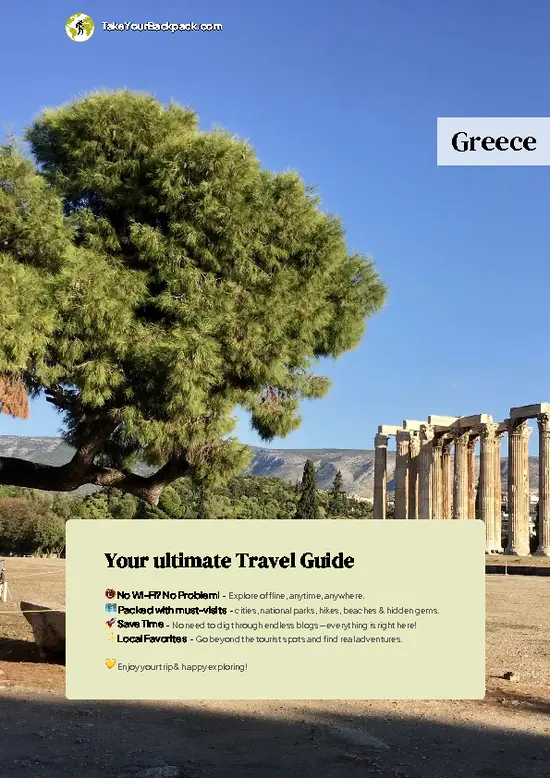
example page 0 from our offline Travel Guide for Greece
example page 1 from our offline Travel Guide for Greece
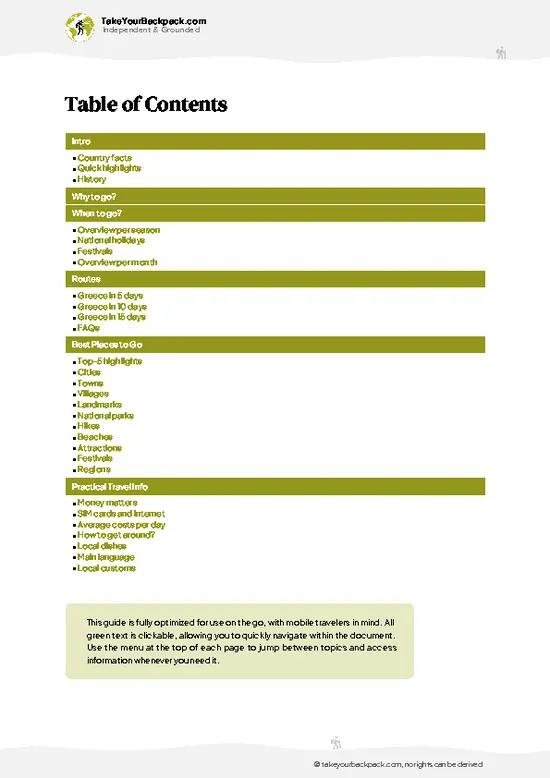
example page 2 from our offline Travel Guide for Greece
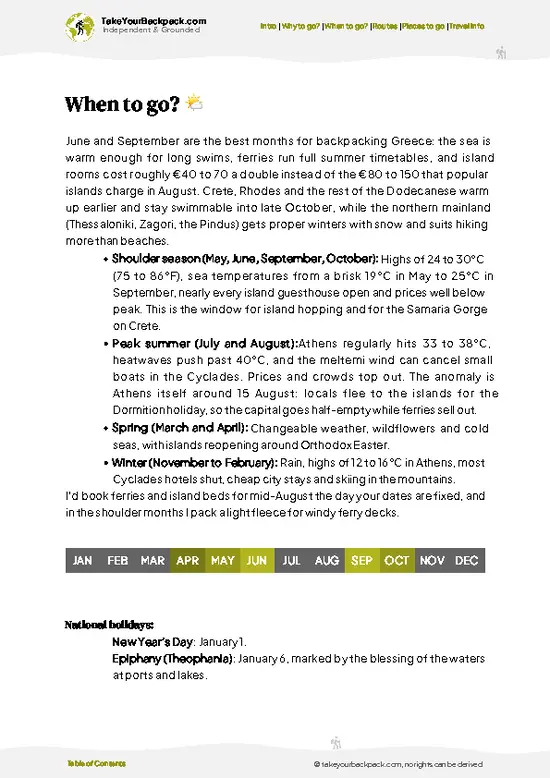
example page 3 from our offline Travel Guide for Greece
example page 4 from our offline Travel Guide for Greece
example page 5 from our offline Travel Guide for Greece
example page 6 from our offline Travel Guide for Greece
example page 7 from our offline Travel Guide for Greece
The digital guide (417 pages) contains:
✅ 114 highlights, ranked by travel appeal
✅ Optimized 5, 10 & 15-day travel routes
✅ Cities, national parks, landmarks, beaches
✅ How to get around
✅ Offline-friendly for travel without Wi-Fi
👉 Click to see all 30+ guide features

📅 Plan smarter in minutes, not weeks
✅ Month by month travel advice
✅ Festivals & national holidays
✅ Budget expectations

🗺️ Go to the right places, skip the overrated ones
✅ Honest pros & cons of destinations
✅ Top hikes, parks & viewpoints
✅ Lesser-known places most travelers miss
✅ Clear “worth it vs skip it” guidance

🛏️ Travel smoothly without rookie mistakes
✅ Best areas to stay
✅ Transport systems explained simply
✅ Common scams & safety advice
✅ SIM cards, money & practical tips

🌍 Understand the country, not just visit it
✅ Culture & traditions
✅ 52 Essential phrases & customs
✅ Festivals worth planning around
✅ Traveler-friendly historical context
✅ Insights that make places more meaningful

📱 Built for real travel conditions
✅ Fully downloadable PDF
✅ Works completely offline
✅ Optimized for phone use
✅ Useful in remote areas & buses
✅ Everything in one place
Stop searching, start planning
Get instant access to your full guide. 30‑day money-back guarantee.
+ Add another guide for just

By proceeding you agree to our terms.
Sent to your inbox immediately after payment • 100% Secure Checkout
Best Backpacking Travel Advisor 2025 tourism awardBest Backpacking
Travel Advisor
2025
What others say about Take Your Backpack Guides:
⭐⭐⭐⭐⭐
Fantastic, amazing amount of information!
⭐⭐⭐⭐⭐
My goodness this is amazing, it's what I've been looking for hats off too you!
⭐⭐⭐⭐⭐
I think this is absolutely BRILLIANT
⭐⭐⭐⭐
Very complete and informative. It's still missing places, but I gotta to commend you
⭐⭐⭐⭐⭐
This is truly amazing, thank you, can't wait to explore it with my kids!
⭐⭐⭐⭐⭐
Awesome resource, thank you!
⭐⭐⭐⭐⭐
This is amazing! Can't wait to explore the ones I haven't seen
⭐⭐⭐⭐
I love this! Well done, great idea.
⭐⭐⭐⭐⭐
Thanks for taking the time to make this gem!
⭐⭐⭐⭐⭐
This might be the best website I've ever seen.
⭐⭐⭐⭐⭐
Congratulations, and thank you so much for your work; it's incredibly valuable.
⭐⭐⭐⭐
In all seriousness I think you did a great job pointing out the important spots
⭐⭐⭐⭐⭐
10/10 very good
⭐⭐⭐⭐⭐
As someone who's only just starting to visit regularly this is awesome, thank you.
⭐⭐⭐⭐
Thank you very much! I'm going to visit my dad, it's going to be very useful!
⭐⭐⭐⭐⭐
This is really cool! We'll be travelling for the first time and this definitely come in handy.
⭐⭐⭐⭐⭐
You are now our minister of culture, congratulations 👨‍💼
⭐⭐⭐⭐⭐
Just wanted to tell you that this is a pearl! Going to follow your recommendations.
⭐⭐⭐⭐⭐
This is so cool. I'll definitely be using the resource for my travels soon.
⭐⭐⭐⭐⭐
This is very impressive! Good work.
⭐⭐⭐⭐⭐
This is an amazing and informative site. Very well done!

🛏️ Where to stay?Best Places to Stay in Greece

Greece has a solid spread of hostels, budget guesthouses and family-run rooms, with dorm beds in Athens typically running €18 to 35 in summer and the densest choice found in the capital, Thessaloniki and party-friendly islands like Ios and Corfu. In Athens, Psyri and Monastiraki put you a short walk from the Acropolis and the city’s busiest bar streets but stay loud until 3 a.m., Koukaki is calmer, residential and right below the Acropolis’ south slope, while Exarchia is the cheapest and most lively, though its late-night street scene can feel edgy. In Thessaloniki, Ladadika sits by the port with the best nightlife, and on the islands you’ll save money and ferry stress by staying in the main … read more 👉
Greece has a solid spread of hostels, budget guesthouses and family-run rooms, with dorm beds in Athens typically running €18 to 35 in summer and the densest choice found in the capital, Thessaloniki and party-friendly islands like Ios and Corfu. In Athens, Psyri and Monastiraki put you a short walk from the Acropolis and the city’s busiest bar streets but stay loud until 3 a.m., Koukaki is calmer, residential and right below the Acropolis’ south slope, while Exarchia is the cheapest and most lively, though its late-night street scene can feel edgy. In Thessaloniki, Ladadika sits by the port with the best nightlife, and on the islands you’ll save money and ferry stress by staying in the main port town rather than out at the beaches.

If you enjoy meeting fellow travelers, consider choosing hostels with high ratings for atmosphere. On the other hand, if you prefer having your own space, a hotel might be a better option.

GreeceExplore Greece

👋 Meet the founderWho’s Behind Take Your Backpack?

Johan, backpacker and founder of TakeYourBackpackHi, I’m Johan (Netherlands 🇳🇱), the creator of TakeYourBackpack. Over the past 3 decades, I’ve backpacked through 90+ countries across six continents, gaining extensive experience with independent travel, long-term trips, and overland routes.

This site is built on a combination of firsthand travel experience and carefully curated insights from other backpackers. Many guides are based on places I’ve personally visited, while others bring together tips, observations, and practical advice shared by trusted travelers I’ve met along the way.

The goal is to provide realistic, experience-driven guidance — not generic itineraries — so you can explore destinations with better context, clearer expectations, and more confidence.