×

Haiti🇭🇹 | best villagesExplore the Best villages in Haiti

In Haiti, villages are vibrant hubs of culture and tradition, each offering a unique slice of life shaped by geography and history. From the coastal charm of Jacmel to the mountainous serenity of the Central Plateau, the regional differences are striking. These variations impact everything from budget to safety and ease of travel. For backpackers, the right village can enhance your experience, providing deeper cultural immersion and authentic interactions. Seasonal activities, like local festivals or agricultural cycles, further influence the vibe, making timing crucial. Understanding these nuances will help you navigate Haiti’s rural landscape effectively, ensuring your journey is both enriching and memorable.

By Johan Kruseman 🇳🇱 | Updated June 14, 2026
Explore the best landmarks in Haiti

Why go?Why These village Stand Out

Haiti’s villages stand out as vibrant pockets of authenticity and tradition, offering a glimpse into a way of life that has largely remained unchanged despite the country’s tumultuous history. Unlike many other destinations, these villages are not just tourist stops; they are living communities where age-old practices thrive. Here, you’ll find artisans crafting goods using techniques passed down through generations, and local markets bustling with the energy of daily life.

However, accessing these villages can be a challenge. The rural infrastructure is often underdeveloped, with roads that can be rough and unreliable. This means that while the journey may take longer, the reward is a deeper connection to the culture and people. Travelers must weigh the trade-off between time spent traveling … read more 👉
Haiti’s villages stand out as vibrant pockets of authenticity and tradition, offering a glimpse into a way of life that has largely remained unchanged despite the country’s tumultuous history. Unlike many other destinations, these villages are not just tourist stops; they are living communities where age-old practices thrive. Here, you’ll find artisans crafting goods using techniques passed down through generations, and local markets bustling with the energy of daily life.

However, accessing these villages can be a challenge. The rural infrastructure is often underdeveloped, with roads that can be rough and unreliable. This means that while the journey may take longer, the reward is a deeper connection to the culture and people. Travelers must weigh the trade-off between time spent traveling and the richness of the experience.

Seasonal weather also plays a role; the rainy season can make some areas nearly inaccessible, while the dry months offer clearer paths but can lead to sweltering heat. This climatic variability means that planning is crucial.

Haiti’s unique blend of cultural, historical, and geographic factors creates a landscape that is both challenging and rewarding. Understanding these constraints will help travelers appreciate the true essence of Haiti’s villages, ensuring that the experience is not just about seeing but truly engaging with the heart of the nation.
How the List Was Created
The list of best villages in Haiti is created based on authenticity, scenic beauty, community spirit, traditions, and overall character. If you feel a village is missing in this list, please let us know.

When to go?When to Plan Your Trip

Seasonality and Village Life in Haiti


Haiti’s villages pulse with life, but the rhythm changes with the seasons. The dry season, typically from November to April, offers the best weather for exploring rural areas. Expect warm, sunny days and cooler nights. This is when agricultural activities peak, and local markets buzz with fresh produce.

The rainy season, from May to October, brings heavy downpours. While the landscape flourishes, accessibility can become an issue. Roads may wash out, and some villages become harder to reach. However, this season also showcases vibrant agricultural practices, with farmers busy planting and harvesting.

Shoulder seasons, like late April and early May or late October, can be a mixed bag. Fewer tourists mean a more authentic experience, but weather can … read more 👉

Seasonality and Village Life in Haiti


Haiti’s villages pulse with life, but the rhythm changes with the seasons. The dry season, typically from November to April, offers the best weather for exploring rural areas. Expect warm, sunny days and cooler nights. This is when agricultural activities peak, and local markets buzz with fresh produce.

The rainy season, from May to October, brings heavy downpours. While the landscape flourishes, accessibility can become an issue. Roads may wash out, and some villages become harder to reach. However, this season also showcases vibrant agricultural practices, with farmers busy planting and harvesting.

Shoulder seasons, like late April and early May or late October, can be a mixed bag. Fewer tourists mean a more authentic experience, but weather can be unpredictable. Prices may drop, but travelers should be prepared for potential disruptions due to rain.

Peak periods, particularly around holidays, can lead to crowded villages. Local festivals are lively but can also mean inflated prices and limited accommodations. Understanding these seasonal dynamics is crucial for planning a trip that maximizes both budget and experience. Prioritize timing to align with local life, ensuring a richer connection to Haiti’s vibrant rural culture.

village hoppingPlanning Your Route Efficiently

Start with Regional Clusters
Haiti’s villages are best explored in clusters. Focus on one region at a time. The North, for example, offers a rich tapestry of culture and history. Moving south, the Artibonite Valley presents a different vibe. This approach minimizes travel time and maximizes immersion.

Direction of Travel
Plan your route based on the natural flow of the landscape. The north-south axis is the most straightforward. Consider the terrain; some roads are rough, and travel can be slow. Prioritize villages that are close together to avoid wasting time on long drives.

Optimal Sequencing
Start with the larger villages to get your bearings. They often have better transport options and amenities. Then, venture into smaller, more remote spots. This sequence allows for a gradual deepening … read more 👉
Start with Regional Clusters
Haiti’s villages are best explored in clusters. Focus on one region at a time. The North, for example, offers a rich tapestry of culture and history. Moving south, the Artibonite Valley presents a different vibe. This approach minimizes travel time and maximizes immersion.

Direction of Travel
Plan your route based on the natural flow of the landscape. The north-south axis is the most straightforward. Consider the terrain; some roads are rough, and travel can be slow. Prioritize villages that are close together to avoid wasting time on long drives.

Optimal Sequencing
Start with the larger villages to get your bearings. They often have better transport options and amenities. Then, venture into smaller, more remote spots. This sequence allows for a gradual deepening of experience without overwhelming yourself.

Time Management
Allocate at least half a day per stop. This pacing allows for exploration without feeling rushed. Some villages may require more time, especially if there are local festivals or markets.

Common Mistakes
Travelers often underestimate travel times and overestimate their energy. Avoid cramming too many stops into a single day. Flexibility is key; be ready to adjust plans based on local conditions.

Trade-offs and Constraints
Speed can compromise depth. A rushed itinerary may lead to missed connections with locals. Balance comfort with budget; local transport is cheaper but can be less reliable. Prioritize experiences that resonate, even if they require more effort.

The ListTop villages of Haiti

1 Furcy

mountain trails, pine forests, cool air

Hike through highland paths shaded by pines, where the altitude brings crisp mornings and panoramic views over the valleys below.

Loading the map 🌍

Expert viewExpert Commentary on villages

Accessibility
Haiti’s villages are a patchwork of culture and life, but getting to them can be a challenge. Expect rough roads and limited public transport options. Renting a vehicle is often the best way to navigate, but be prepared for a bumpy ride. If you’re not comfortable driving, consider hiring a local guide. They know the ins and outs of the terrain and can help you avoid potential pitfalls. Aim to visit around three to five villages to get a genuine feel for the country. This allows you to soak in the local culture without feeling rushed.

Seasonal Variation
Timing is everything. The dry season, from November to March, is ideal for travel. Roads are more passable, and the weather is pleasant. However, visiting during the rainy season can offer a different perspective, with lush … read more 👉
Accessibility
Haiti’s villages are a patchwork of culture and life, but getting to them can be a challenge. Expect rough roads and limited public transport options. Renting a vehicle is often the best way to navigate, but be prepared for a bumpy ride. If you’re not comfortable driving, consider hiring a local guide. They know the ins and outs of the terrain and can help you avoid potential pitfalls. Aim to visit around three to five villages to get a genuine feel for the country. This allows you to soak in the local culture without feeling rushed.

Seasonal Variation
Timing is everything. The dry season, from November to March, is ideal for travel. Roads are more passable, and the weather is pleasant. However, visiting during the rainy season can offer a different perspective, with lush landscapes and fewer tourists. Just be aware that heavy rains can lead to flooding and road closures, which can derail your plans. If you choose to go during this time, have a flexible itinerary and be ready for some unexpected detours.

Authenticity
Haiti’s villages are rich in tradition, but authenticity comes with a price—your time and effort. Many villages have their own unique customs, crafts, and culinary delights. Engage with locals, but remember that not everyone speaks English. Learning a few basic Haitian Creole phrases can go a long way. It shows respect and opens doors to deeper interactions. However, be cautious about how you approach these experiences. Some locals may see tourists as a source of income, so be prepared for a bit of haggling or even some hard sells.

Pacing Between Rural Stops
Traveling between villages requires careful planning. Distances can be deceiving; what looks close on a map can take hours to traverse. Factor in travel time when scheduling your visits. A good rule of thumb is to allocate at least half a day for travel between stops. This pacing allows you to appreciate the journey and the changing landscapes. Don’t rush; the beauty of rural Haiti lies in its simplicity.

Safety & Cultural Considerations
Safety is paramount. While many areas are welcoming, it’s wise to stay informed about local conditions. Avoid traveling after dark and stick to well-populated areas. Be aware of your surroundings, and don’t flaunt valuables. Cultural sensitivity is crucial; dress modestly and respect local customs. Engaging with the community can be rewarding, but always approach with humility.

In summary, visiting Haiti’s villages is a rewarding experience, but it requires thoughtful planning. Prioritize your stops based on what resonates with you, whether it’s art, music, or food. Embrace the unpredictability of travel here; it’s part of the adventure. By being prepared and respectful, you’ll preserve your energy and budget for the moments that truly matter.

✈️ The backpacker research shortcutHaiti Travel Guide

An offline-friendly backpacking guide with optimized travel routes, ranked highlights, transport advice, and the best areas to stay.
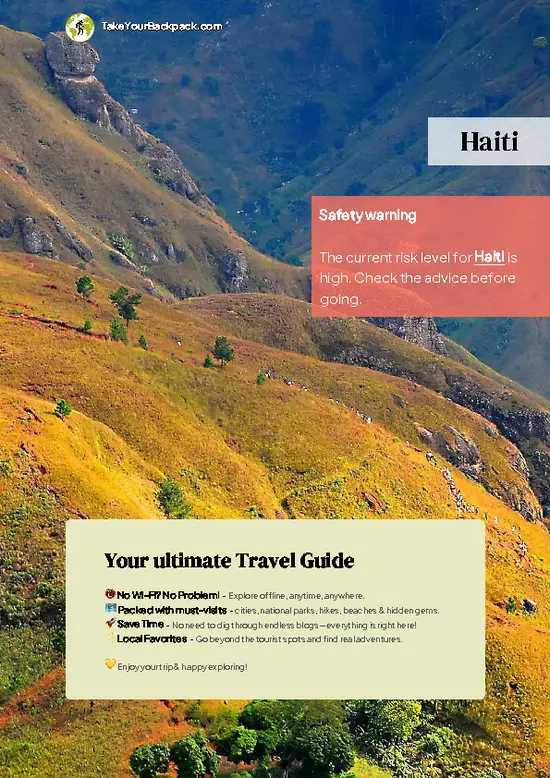
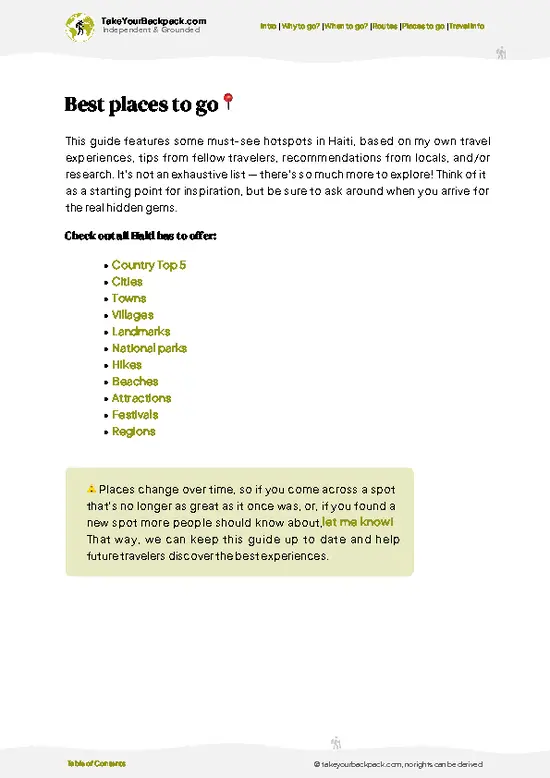
example page 0 from our offline Travel Guide for Haiti
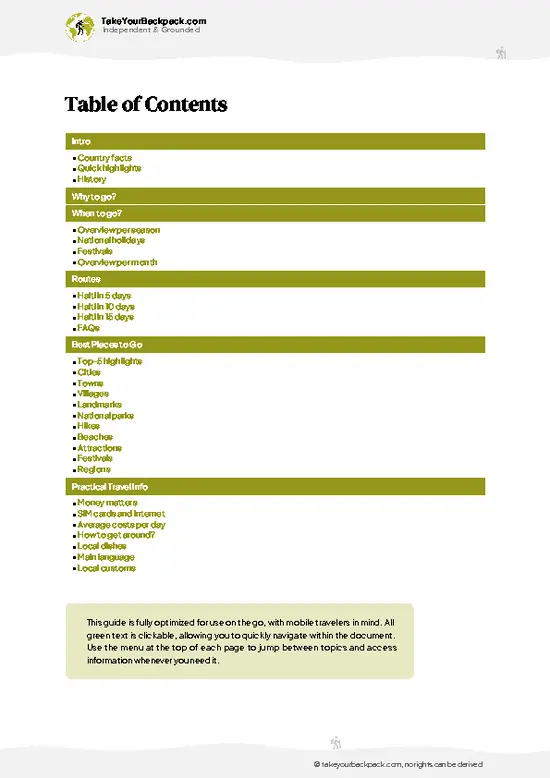
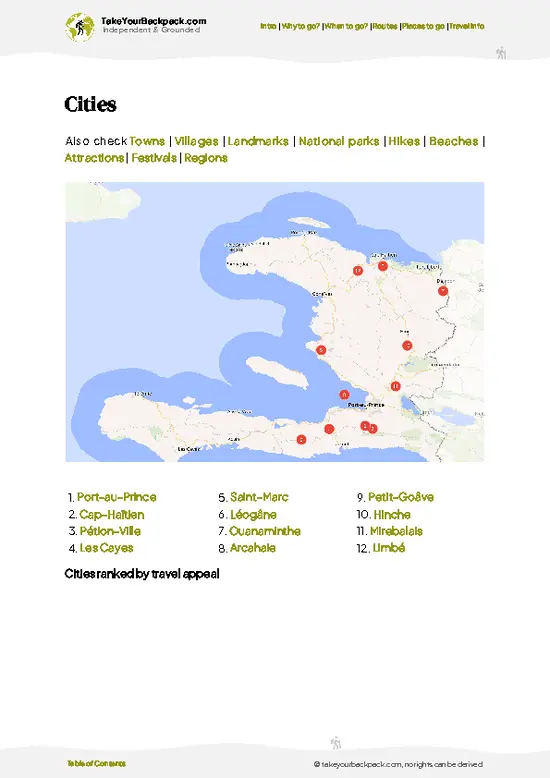
example page 1 from our offline Travel Guide for Haiti
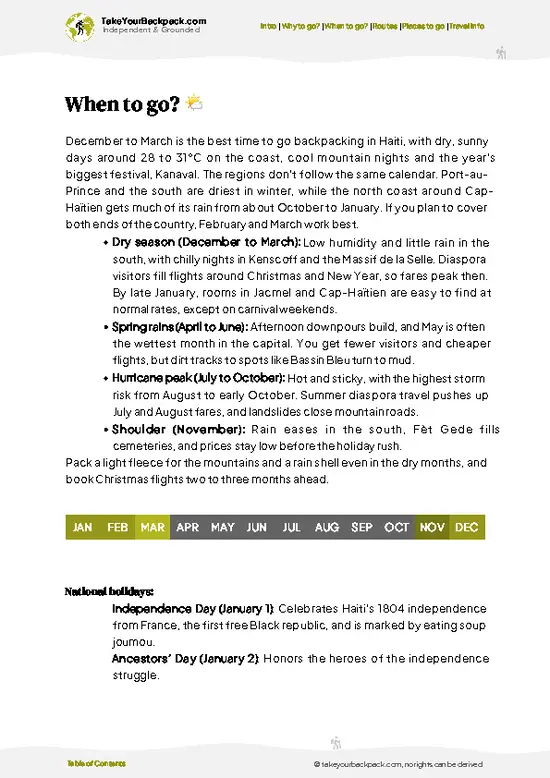
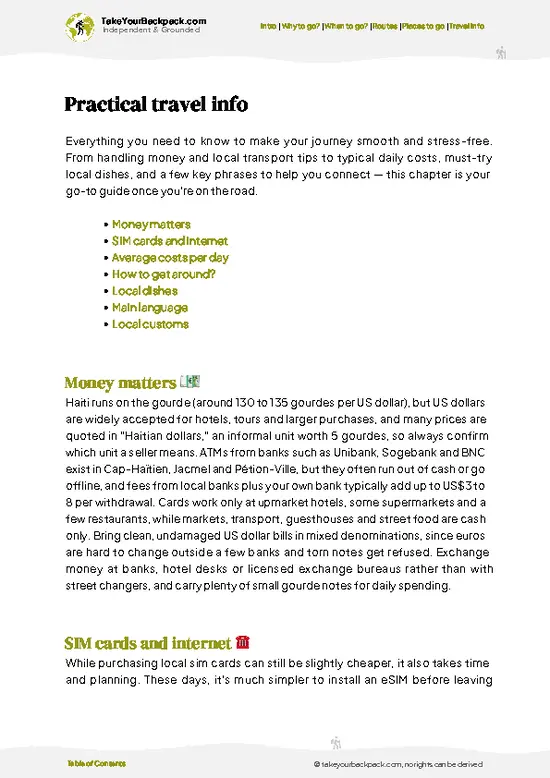
example page 2 from our offline Travel Guide for Haiti
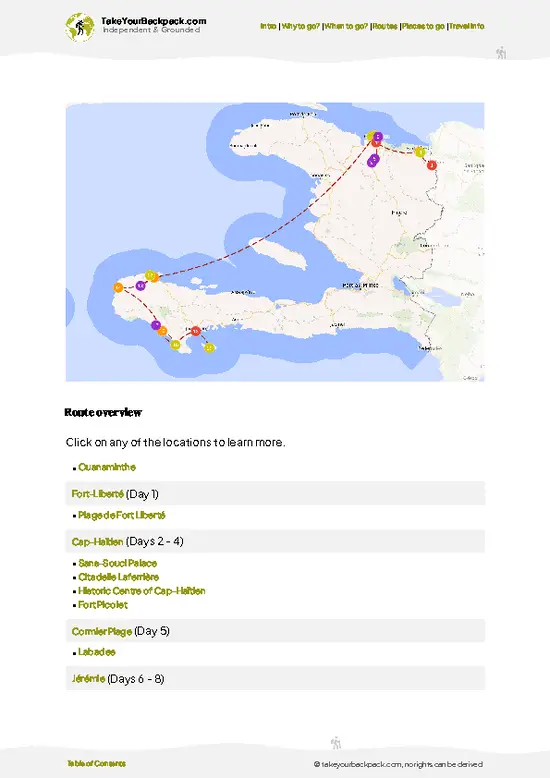
example page 3 from our offline Travel Guide for Haiti
example page 4 from our offline Travel Guide for Haiti
example page 5 from our offline Travel Guide for Haiti
example page 6 from our offline Travel Guide for Haiti
example page 7 from our offline Travel Guide for Haiti
The digital guide (371 pages) contains:
99 highlights, ranked by travel appeal
Optimized 5, 10 & 15-day travel routes
Cities, national parks, landmarks, beaches
How to get around
Offline-friendly for travel without Wi-Fi
👉 Click to see all 30+ guide features

📅 Plan smarter in minutes, not weeks
Month by month travel advice
Festivals & national holidays
Budget expectations

🗺️ Go to the right places, skip the overrated ones
Honest pros & cons of destinations
Top hikes, parks & viewpoints
Lesser-known places most travelers miss
Clear “worth it vs skip it” guidance

🛏️ Travel smoothly without rookie mistakes
Best areas to stay
Transport systems explained simply
Common scams & safety advice
SIM cards, money & practical tips

🌍 Understand the country, not just visit it
Culture & traditions
52 Essential phrases & customs
Festivals worth planning around
Traveler-friendly historical context
Insights that make places more meaningful

📱 Built for real travel conditions
Fully downloadable PDF
Works completely offline
Optimized for phone use
Useful in remote areas & buses
Everything in one place
Save weeks of stressful planning
Get instant access to your full guide. 30‑day money-back guarantee.


By proceeding you agree to our terms.
Sent to your inbox immediately after payment • 100% Secure Checkout
Best Backpacking Travel Advisor 2025 tourism awardBest Backpacking
Travel Advisor
2025
What others say about Take Your Backpack Guides:
⭐⭐⭐⭐⭐
Fantastic, amazing amount of information!
⭐⭐⭐⭐⭐
My goodness this is amazing, it's what I've been looking for hats off too you!
⭐⭐⭐⭐⭐
I think this is absolutely BRILLIANT
⭐⭐⭐⭐
Very complete and informative. It's still missing places, but I gotta to commend you
⭐⭐⭐⭐⭐
This is truly amazing, thank you, can't wait to explore it with my kids!
⭐⭐⭐⭐⭐
Awesome resource, thank you!
⭐⭐⭐⭐⭐
This is amazing! Can't wait to explore the ones I haven't seen
⭐⭐⭐⭐
I love this! Well done, great idea.
⭐⭐⭐⭐⭐
Thanks for taking the time to make this gem!
⭐⭐⭐⭐⭐
This might be the best website I've ever seen.
⭐⭐⭐⭐⭐
Congratulations, and thank you so much for your work; it's incredibly valuable.
⭐⭐⭐⭐
In all seriousness I think you did a great job pointing out the important spots
⭐⭐⭐⭐⭐
10/10 very good
⭐⭐⭐⭐⭐
As someone who's only just starting to visit regularly this is awesome, thank you.
⭐⭐⭐⭐
Thank you very much! I'm going to visit my dad, it's going to be very useful!
⭐⭐⭐⭐⭐
This is really cool! We'll be travelling for the first time and this definitely come in handy.
⭐⭐⭐⭐⭐
You are now our minister of culture, congratulations 👨‍💼
⭐⭐⭐⭐⭐
Just wanted to tell you that this is a pearl! Going to follow your recommendations.
⭐⭐⭐⭐⭐
This is so cool. I'll definitely be using the resource for my travels soon.
⭐⭐⭐⭐⭐
This is very impressive! Good work.
⭐⭐⭐⭐⭐
This is an amazing and informative site. Very well done!

🛏️ Where to stay?Top Places to Consider Staying

Yes—Haiti has hostels, guesthouses and budget hotels, though options are more limited than in major backpacking countries; most budget accommodation clusters around Port‑au‑Prince, Cap‑Haïtien and the coastal town of Jacmel.
In Port‑au‑Prince the best choices cluster in Pétion‑Ville (more amenities, nightlife, relatively safer but pricier) and Delmas (cheaper, closer to services, mixed safety), while downtown is cheaper but riskier after dark; in the north, Cap‑Haïtien offers budget stays near the waterfront and town center for easy access to the Citadelle and nearby beaches, and Jacmel has small guesthouses close to art venues and beaches with a quieter, walkable feel.
Expect basic facilities, … read more 👉
Yes—Haiti has hostels, guesthouses and budget hotels, though options are more limited than in major backpacking countries; most budget accommodation clusters around Port‑au‑Prince, Cap‑Haïtien and the coastal town of Jacmel.
In Port‑au‑Prince the best choices cluster in Pétion‑Ville (more amenities, nightlife, relatively safer but pricier) and Delmas (cheaper, closer to services, mixed safety), while downtown is cheaper but riskier after dark; in the north, Cap‑Haïtien offers budget stays near the waterfront and town center for easy access to the Citadelle and nearby beaches, and Jacmel has small guesthouses close to art venues and beaches with a quieter, walkable feel.
Expect basic facilities, intermittent hot water and power, few true dorm-style hostels, and prioritize places with secure compounds or arranged transport since safety and limited reliable transit are the main constraints outside tourist centers.

If you enjoy meeting fellow travelers, consider choosing hostels with high ratings for atmosphere. On the other hand, if you prefer having your own space, a hotel might be a better option.

HaitiMore Places Across Haiti

👋 Meet the founderWho’s Behind Take Your Backpack?

Johan, backpacker and founder of TakeYourBackpackHi, I’m Johan (Netherlands 🇳🇱), the creator of TakeYourBackpack. Over the past decade, I’ve backpacked through 80+ countries across six continents, gaining extensive experience with independent travel, long-term trips, and overland routes.

This site is built on a combination of firsthand travel experience and carefully curated insights from other backpackers. Many guides are based on places I’ve personally visited, while others bring together tips, observations, and practical advice shared by trusted travelers I’ve met along the way.

The goal is to provide realistic, experience-driven guidance — not generic itineraries — so you can explore destinations with better context, clearer expectations, and more confidence.

Get full Haiti guide •
Instant download • 99 highlights • Full Offline guide