How many regions to visit: I would advise
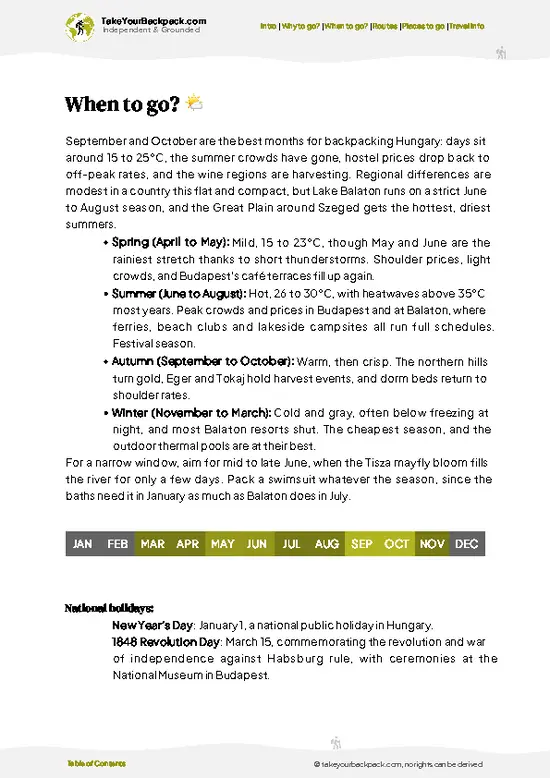
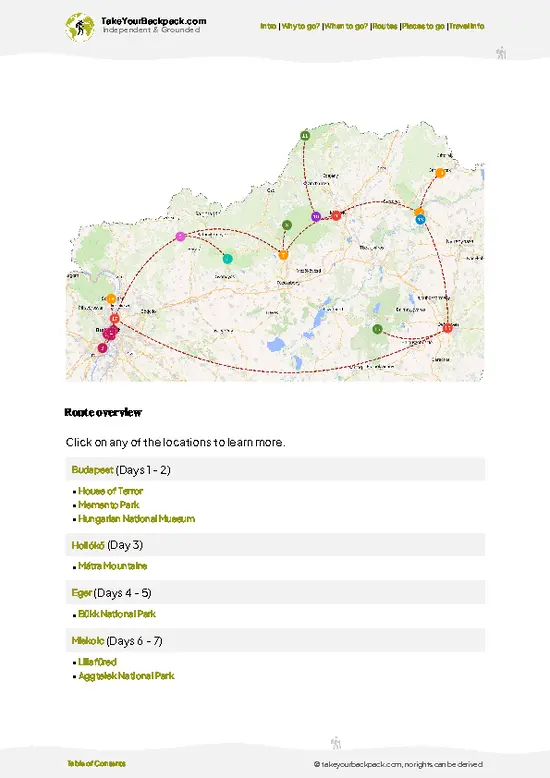
three regions on a trip of about two weeks, and two on a shorter one. Hungary’s distances look tiny on a map, yet slow connections and village timetables eat half-days. Three gives each place two or three nights, enough to walk its streets at dawn, eat its local food and settle into its pace. More than that, and you spend the trip in transit.
Choosing by travel style: If you want
nightlife, museums and easy logistics, prioritize the capital and its surroundings, where hostels, trams and English menus are plentiful. If you want
wine, hills and quiet, choose a wine area or the northern uplands, where days are spent on dirt tracks between cellars. If you want
thermal water and swimming, pick the lake or a spa-town region, and expect summer crowds. If …
read more 👉 How many regions to visit: I would advise three regions on a trip of about two weeks, and two on a shorter one. Hungary’s distances look tiny on a map, yet slow connections and village timetables eat half-days. Three gives each place two or three nights, enough to walk its streets at dawn, eat its local food and settle into its pace. More than that, and you spend the trip in transit.
Choosing by travel style: If you want nightlife, museums and easy logistics, prioritize the capital and its surroundings, where hostels, trams and English menus are plentiful. If you want wine, hills and quiet, choose a wine area or the northern uplands, where days are spent on dirt tracks between cellars. If you want thermal water and swimming, pick the lake or a spa-town region, and expect summer crowds. If you like open landscapes and rural tradition, the eastern plain offers horizon light, birdlife and slow villages, though it is hot and thinly served by transport.
Budget: Backpackers can manage on US$40 to 60 a day (roughly 14,000 to 22,000 HUF) outside Budapest, with dorm beds at US$15 to 25 and a hearty lunch menu at US$6 to 10. In Budapest and on Lake Balaton in summer, expect US$55 to 80. Thermal bath entry usually runs US$15 to 30, castle and museum tickets US$5 to 12, and a wine-cellar tasting US$8 to 20. Regional trains cost about US$5 to 15 per leg, with buses similar. Local guides for a half day typically charge US$40 to 80. Cash in forint is useful in villages, where card machines are not guaranteed, and exchange counters in tourist areas give poor rates.
Safety and etiquette: Hungary is generally safe, with petty theft such as pickpocketing on crowded trams and at bath entrances the main concern. Taxis hailed on the street in Budapest can overcharge, so use an app. Rural areas are calm, but unlit village roads at night are tricky for drivers. Heat in July and August is a real hazard on the plain, so carry water and cover your head. Thermal pools can be very hot, so limit soaks to 15 to 20 minutes.
Culturally, greet with a short “jó napot” and expect formal manners at first. At a wine cellar, clink glasses carefully. Many Hungarians avoid clinking beer glasses, a custom tied to a 19th-century event. Tipping 10 percent is normal, and check whether service is already added. Smoking is banned in enclosed public spaces, but terraces can be smoky.
The effort pays off in small, tangible moments: the smell of paprika frying in a village kitchen, steam curling above a stone pool in winter, and the creak of a cellar door opening onto cool, mossy air.
v2.webp)
 Best Backpacking
.jpg) Hi, I’m Johan (Netherlands 🇳🇱), the creator of TakeYourBackpack. Over the past 3 decades, I’ve backpacked through 90+ countries across six continents, gaining extensive experience with independent travel, long-term trips, and overland routes.
Hi, I’m Johan (Netherlands 🇳🇱), the creator of TakeYourBackpack. Over the past 3 decades, I’ve backpacked through 90+ countries across six continents, gaining extensive experience with independent travel, long-term trips, and overland routes.