×

Hungary🇭🇺 | best landmarksYour Guide to the 4 Best landmarks in Hungary

Landmarks in Hungary come in layers: Habsburg-era stone, Ottoman baths, Magyar plains and wine-cellar villages, each with its own pace. In Budapest you hear trams grinding over bridges, smell chimney cake sugar, and queue in the crowds around the Danube. Out west, in Transdanubia, hilltop abbeys and castle towns sit in quiet, wood-smoked air. The Great Plain is flat, big-skied and thinly visited. Costs fall sharply once you leave the capital, and trains reach most major towns, so independent travel here is easy. Expect crowds in Budapest, space everywhere else.

By Johan Kruseman 🇳🇱 | Updated October 19, 2026
Explore the best national parks in Hungary

Why go?Key Factors That Shape the Experience

Hungary sits at the crossroads of Central Europe, and the landmarks show it. Roman frontier towns, 150 years of Ottoman rule, and the long Habsburg era left stacked layers that you can read in a single street: a minaret base, a Baroque facade, a thermal bath fed by springs that were already hot when the Romans arrived. The country sits on a thin stretch of crust above hot water, which is why thermal bathing is a heritage tradition and not a spa gimmick. Scale also helps. Hungary is compact, with a radial rail network centered on Budapest, so most major sites are a few hours from the capital. Much of the history is also painful. The 20th century left bullet-scarred walls, memorials and museums that are heavy going, and some of the best-known castle ruins were rebuilt after wartime damage. Travelers … read more 👉
Hungary sits at the crossroads of Central Europe, and the landmarks show it. Roman frontier towns, 150 years of Ottoman rule, and the long Habsburg era left stacked layers that you can read in a single street: a minaret base, a Baroque facade, a thermal bath fed by springs that were already hot when the Romans arrived. The country sits on a thin stretch of crust above hot water, which is why thermal bathing is a heritage tradition and not a spa gimmick. Scale also helps. Hungary is compact, with a radial rail network centered on Budapest, so most major sites are a few hours from the capital. Much of the history is also painful. The 20th century left bullet-scarred walls, memorials and museums that are heavy going, and some of the best-known castle ruins were rebuilt after wartime damage. Travelers should know that Hungarian is unrelated to its neighbors, so signs take effort at smaller sites. English labels are common in Budapest and patchy in villages. Cash is still useful at rural entrances, and forint prices are modest next to Vienna or Prague. Winter closes some outdoor sites.
Evaluating the Top Choices
The list of best unique sites in Hungary is created based on history or culture, wow factor, atmosphere, quirks, and memorability. If you feel a unique site is missing in this list, please let us know.

When to go?Optimal Periods for Travel

Best months for landmarks: May, June and September are the best months for Hungary’s landmarks: daytime highs sit around 18 to 26°C, the light stays long into the evening, and outdoor sites are open. Rain falls in short, sharp bursts, typically 50 to 70 mm a month in late spring, so a light jacket is enough.Shoulder seasons and summer: April and October are cooler, at roughly 8 to 17°C, with golden leaves on the hillsides in October and fewer tour groups. Some seasonal sites open only from around April to October, so check dates. July and August are hot, often 28 to 35°C, and the stone courtyards of Budapest hold the heat. Queues build by 10 a.m., and prices for beds rise, often 20 to 40 percent over spring in the capital. Lake Balaton is the exception, with its beach crowds and booked-out … read more 👉
Best months for landmarks: May, June and September are the best months for Hungary’s landmarks: daytime highs sit around 18 to 26°C, the light stays long into the evening, and outdoor sites are open. Rain falls in short, sharp bursts, typically 50 to 70 mm a month in late spring, so a light jacket is enough.Shoulder seasons and summer: April and October are cooler, at roughly 8 to 17°C, with golden leaves on the hillsides in October and fewer tour groups. Some seasonal sites open only from around April to October, so check dates. July and August are hot, often 28 to 35°C, and the stone courtyards of Budapest hold the heat. Queues build by 10 a.m., and prices for beds rise, often 20 to 40 percent over spring in the capital. Lake Balaton is the exception, with its beach crowds and booked-out lodging in peak summer. Start early or go in the late afternoon.Winter: From December to February, expect 0 to 4°C, gray skies and wet pavement. Crowds thin, bed prices fall, and steaming thermal baths feel best in the cold. The trade-off is shorter opening hours, with daylight fading by about 4 p.m. in December, and some rural sites shut completely. Christmas markets in Budapest add mulled wine smoke and crowds in December.

unique site hoppingTips for Visiting Multiple Destinations

How long to allow: A trip combining several landmarks in Hungary works best in 7 to 10 days, which gives you time for Budapest plus two or three regions without constant packing.Which regions cluster: Budapest is the hub, and almost every line starts there. The Danube Bend (Esztergom, Visegrád, Szentendre) is 1 to 2 hours north by train, bus or boat. Western Transdanubia (Győr, Pannonhalma, Sopron) is 1.5 to 3 hours by train. The southwest (Pécs) takes about 3 hours from Budapest. The east, around Eger and Hortobágy on the plain, needs 2 to 3.5 hours. A sensible direction is a loop: start in Budapest, go north along the Danube, then west, and return through the south or east, so you do not repeat the same line twice.Time per stop: Give Budapest 3 to 4 days. Mid-sized towns need a full day … read more 👉
How long to allow: A trip combining several landmarks in Hungary works best in 7 to 10 days, which gives you time for Budapest plus two or three regions without constant packing.Which regions cluster: Budapest is the hub, and almost every line starts there. The Danube Bend (Esztergom, Visegrád, Szentendre) is 1 to 2 hours north by train, bus or boat. Western Transdanubia (Győr, Pannonhalma, Sopron) is 1.5 to 3 hours by train. The southwest (Pécs) takes about 3 hours from Budapest. The east, around Eger and Hortobágy on the plain, needs 2 to 3.5 hours. A sensible direction is a loop: start in Budapest, go north along the Danube, then west, and return through the south or east, so you do not repeat the same line twice.Time per stop: Give Budapest 3 to 4 days. Mid-sized towns need a full day or an overnight stay, and small village sites need 2 to 3 hours. Connections between regions often run through Budapest, so a trip from east to west can add 4 to 6 hours.Common planning mistakes: Travelers often cram three towns into a day, then spend it on platforms. Stay overnight in one base per region and make day trips from there. Another mistake is ignoring weekday timetables, since Sunday buses are sparse. Book a seat reservation on intercity trains in summer, and check closing days, which are often Monday.

The ListHighly Recommended landmarks of Hungary

1 Lillafüred

hanging gardens, forested hills, lakeside palace

Wander through terraced gardens, follow forest trails, and pause by a lakeside palace where mountain air and waterfalls set the pace.

hungary-unique-site-lillafured
© Google | Éva Ottófi

2 Tihany

lavender fields, Benedictine abbey, peninsula cliffs

Stroll through lavender-scented paths, visit a centuries-old abbey, and watch the sun set over cliffs above the lake’s calm surface.

3 Visegrád

Danube bend, royal citadel, Renaissance palace

Ascend to a hilltop fortress overlooking the river’s curve, then explore remnants of royal life and forested trails nearby.

hungary-unique-site-visegrad
© Google | Dileep Kumar

4 Szigliget

castle ruins, volcanic hills, Lake Balaton views

Climb to a medieval fortress for panoramic lake vistas, then descend into a landscape shaped by ancient volcanic activity and rural traditions.

hungary-unique-site-szigliget
© Google | Judit Hruska
Loading the map 🌍

Expert viewWhat You Should Know

How many landmarks to visit: Plan on one major landmark per day, with a second only if it is small or free. In Hungary that means roughly 6 to 10 sites in a week. Stone staircases, museum halls and heat-soaked courtyards tire you faster than the map suggests, and a full day in a castle district leaves a few good hours for wandering.Choosing by travel style: If you are on a tight budget, favor free or low-cost sites: churches, squares, riverbank promenades and hill viewpoints cost nothing and show the country at street level. History-minded travelers should prioritize museums and memorials, which are heavy and need pauses. If you want atmosphere, pick the thermal baths, where steam, sulfur smell and old tile make the visit itself the point. Nature-minded travelers should lean on rural and plains … read more 👉
How many landmarks to visit: Plan on one major landmark per day, with a second only if it is small or free. In Hungary that means roughly 6 to 10 sites in a week. Stone staircases, museum halls and heat-soaked courtyards tire you faster than the map suggests, and a full day in a castle district leaves a few good hours for wandering.Choosing by travel style: If you are on a tight budget, favor free or low-cost sites: churches, squares, riverbank promenades and hill viewpoints cost nothing and show the country at street level. History-minded travelers should prioritize museums and memorials, which are heavy and need pauses. If you want atmosphere, pick the thermal baths, where steam, sulfur smell and old tile make the visit itself the point. Nature-minded travelers should lean on rural and plains sites, which are quiet and need slower transport.What it costs: Budget US$40 to 70 a day for a mid-range independent trip in Hungary, or about 15,000 to 25,000 forints, and less in small towns. Entry to castles, museums and churches runs about 2,000 to 6,000 forints (US$6 to 17). Thermal baths cost roughly 6,000 to 10,000 forints (US$17 to 28), with weekend pricing higher. A guide or audio guide adds around US$10 to 25. Regional trains from Budapest usually cost US$5 to 15 each way. A 24 or 72-hour transit pass in Budapest keeps city sites cheap. Combined tickets and student discounts often save 20 to 50 percent, so carry ID. Some entrances still prefer cash, so keep a few thousand forints on hand.Safety and etiquette: Hungary is generally safe, but crowded tourist zones in Budapest attract pickpockets on trams and at busy gates. Keep phones in front pockets. Taxi overcharging is a known issue, so use a ride app or an official stand. Dress modestly in active churches, with shoulders covered, and keep your voice low during services. Memorials to the Holocaust and to 1956 call for quiet, and photography rules vary, so follow signs. In baths, a swimsuit is required, a cap is often needed in lap pools, and slippery tiles cause real injuries, so wear sandals. In summer, bring water and a hat, as shade at ruins is limited. Wet stone steps in winter are slick, so good soles matter.Why go anyway: Yes, Budapest’s headline sights get crowded, and queues in July are long. Even so, the details reward the effort: the cool, mineral smell of old bath halls, the sound of church bells over a quiet square, and the warm yellow stone at sunset. Go early, stay late, and spend your extra time away from the capital.

✈️ The backpacker research shortcutHungary Travel Guide

An offline-friendly backpacking guide with optimized travel routes, ranked highlights, transport advice, and the best areas to stay.
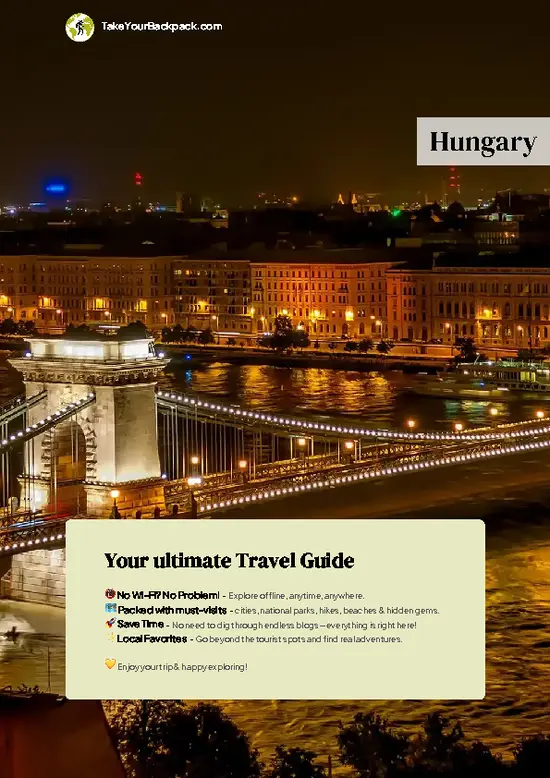
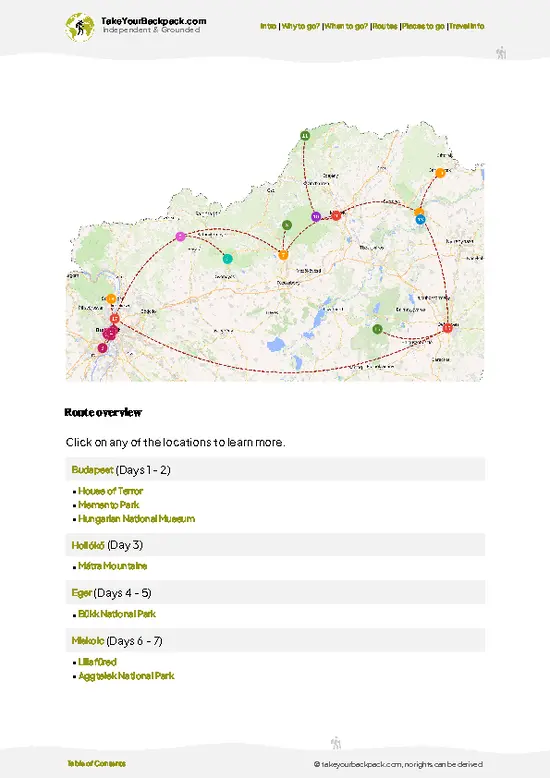
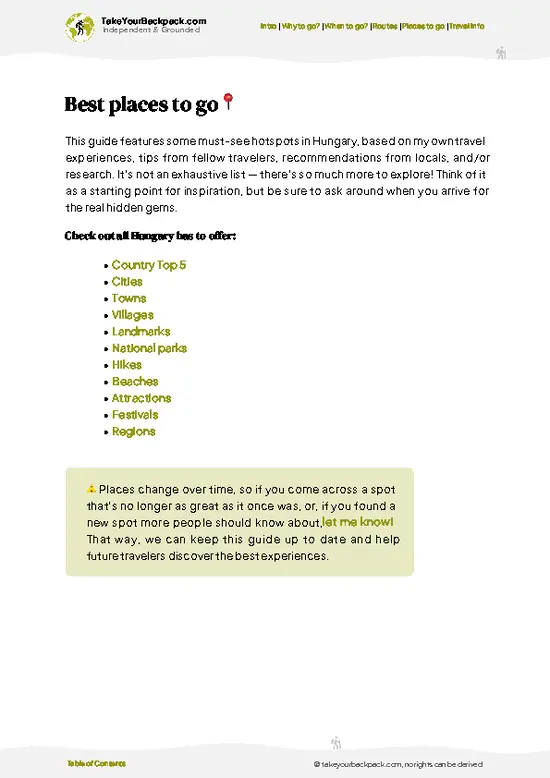
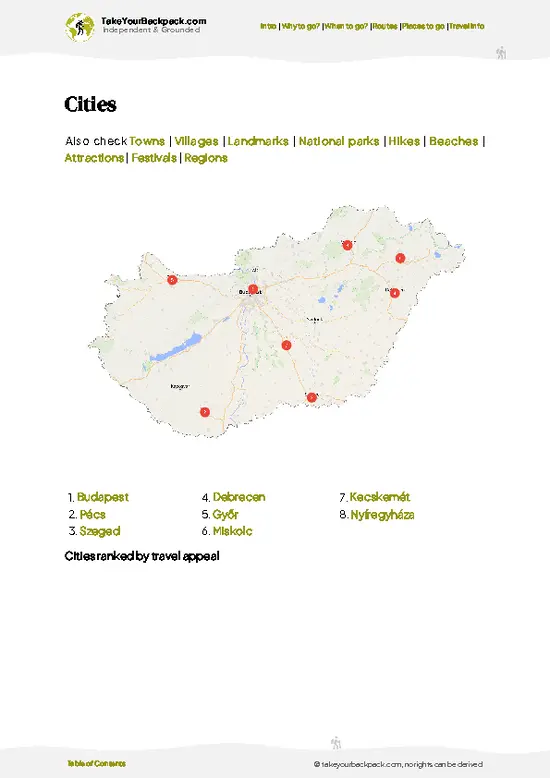
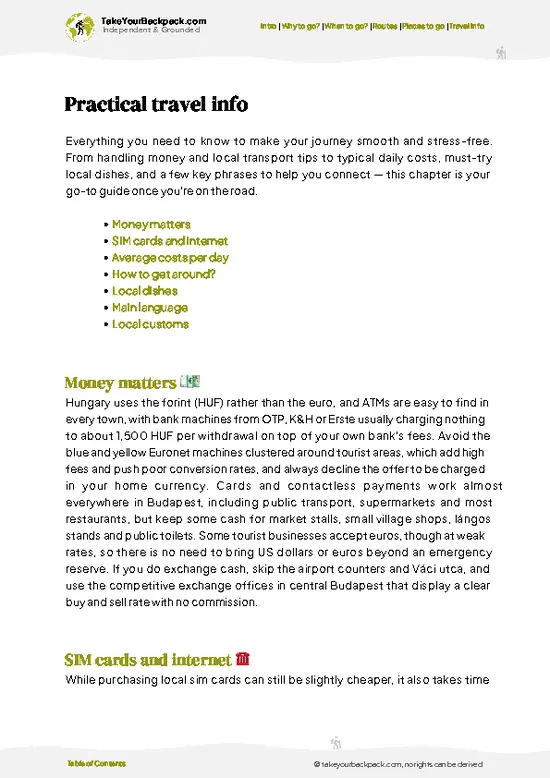
example page 0 from our offline Travel Guide for Hungary
example page 1 from our offline Travel Guide for Hungary
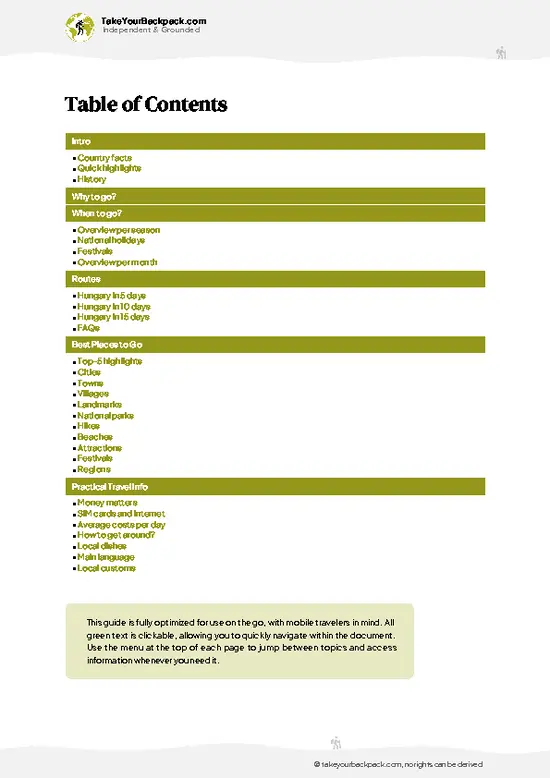
example page 2 from our offline Travel Guide for Hungary
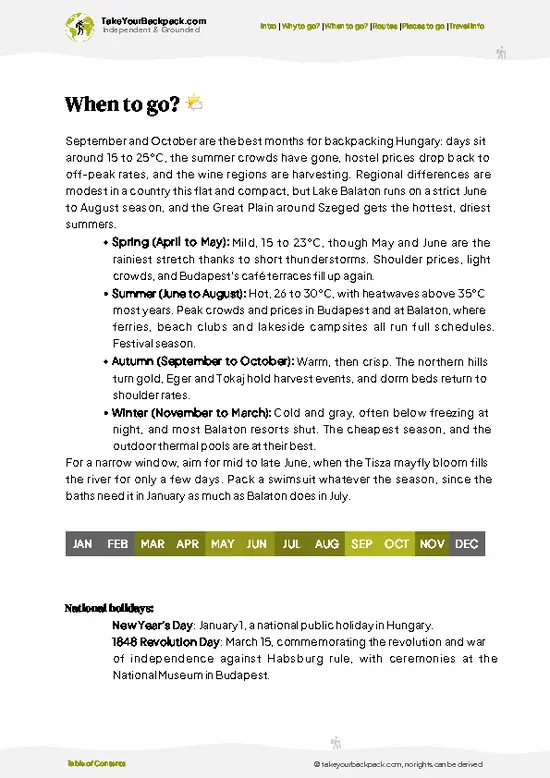
example page 3 from our offline Travel Guide for Hungary
example page 4 from our offline Travel Guide for Hungary
example page 5 from our offline Travel Guide for Hungary
example page 6 from our offline Travel Guide for Hungary
example page 7 from our offline Travel Guide for Hungary
The digital guide (334 pages) contains:
✅ 86 highlights, ranked by travel appeal
✅ Optimized 5, 10 & 15-day travel routes
✅ Cities, national parks, landmarks, beaches
✅ How to get around
✅ Offline-friendly for travel without Wi-Fi
👉 Click to see all 30+ guide features

📅 Plan smarter in minutes, not weeks
✅ Month by month travel advice
✅ Festivals & national holidays
✅ Budget expectations

🗺️ Go to the right places, skip the overrated ones
✅ Honest pros & cons of destinations
✅ Top hikes, parks & viewpoints
✅ Lesser-known places most travelers miss
✅ Clear “worth it vs skip it” guidance

🛏️ Travel smoothly without rookie mistakes
✅ Best areas to stay
✅ Transport systems explained simply
✅ Common scams & safety advice
✅ SIM cards, money & practical tips

🌍 Understand the country, not just visit it
✅ Culture & traditions
✅ 52 Essential phrases & customs
✅ Festivals worth planning around
✅ Traveler-friendly historical context
✅ Insights that make places more meaningful

📱 Built for real travel conditions
✅ Fully downloadable PDF
✅ Works completely offline
✅ Optimized for phone use
✅ Useful in remote areas & buses
✅ Everything in one place
Stop searching, start planning
Get instant access to your full guide. 30‑day money-back guarantee.
+ Add another guide for just

By proceeding you agree to our terms.
Sent to your inbox immediately after payment • 100% Secure Checkout
Best Backpacking Travel Advisor 2025 tourism awardBest Backpacking
Travel Advisor
2025
What others say about Take Your Backpack Guides:
⭐⭐⭐⭐⭐
Fantastic, amazing amount of information!
⭐⭐⭐⭐⭐
My goodness this is amazing, it's what I've been looking for hats off too you!
⭐⭐⭐⭐⭐
I think this is absolutely BRILLIANT
⭐⭐⭐⭐
Very complete and informative. It's still missing places, but I gotta to commend you
⭐⭐⭐⭐⭐
This is truly amazing, thank you, can't wait to explore it with my kids!
⭐⭐⭐⭐⭐
Awesome resource, thank you!
⭐⭐⭐⭐⭐
This is amazing! Can't wait to explore the ones I haven't seen
⭐⭐⭐⭐
I love this! Well done, great idea.
⭐⭐⭐⭐⭐
Thanks for taking the time to make this gem!
⭐⭐⭐⭐⭐
This might be the best website I've ever seen.
⭐⭐⭐⭐⭐
Congratulations, and thank you so much for your work; it's incredibly valuable.
⭐⭐⭐⭐
In all seriousness I think you did a great job pointing out the important spots
⭐⭐⭐⭐⭐
10/10 very good
⭐⭐⭐⭐⭐
As someone who's only just starting to visit regularly this is awesome, thank you.
⭐⭐⭐⭐
Thank you very much! I'm going to visit my dad, it's going to be very useful!
⭐⭐⭐⭐⭐
This is really cool! We'll be travelling for the first time and this definitely come in handy.
⭐⭐⭐⭐⭐
You are now our minister of culture, congratulations 👨‍💼
⭐⭐⭐⭐⭐
Just wanted to tell you that this is a pearl! Going to follow your recommendations.
⭐⭐⭐⭐⭐
This is so cool. I'll definitely be using the resource for my travels soon.
⭐⭐⭐⭐⭐
This is very impressive! Good work.
⭐⭐⭐⭐⭐
This is an amazing and informative site. Very well done!

🛏️ Where to stay?Best Stay Options in Hungary

Hungary has plenty of hostels and budget guesthouses, with dorm beds in Budapest typically running about 5,000 to 10,000 HUF (US$14 to 28) a night and private rooms starting around 15,000 HUF (US$42). The densest cluster sits in Erzsébetváros (District VII, the old Jewish Quarter), which puts you steps from the ruin bars and a short walk from most sights, though weekend noise can run past 3 am; Terézváros (District VI) along Andrássy út is nearly as central and a bit calmer. Belváros (District V) gets you closest to the river and Parliament at higher prices, while the inner Palace District of Józsefváros (District VIII) is cheaper and quieter, with streets that feel rougher the farther you go … read more 👉
Hungary has plenty of hostels and budget guesthouses, with dorm beds in Budapest typically running about 5,000 to 10,000 HUF (US$14 to 28) a night and private rooms starting around 15,000 HUF (US$42). The densest cluster sits in Erzsébetváros (District VII, the old Jewish Quarter), which puts you steps from the ruin bars and a short walk from most sights, though weekend noise can run past 3 am; Terézváros (District VI) along Andrássy út is nearly as central and a bit calmer. Belváros (District V) gets you closest to the river and Parliament at higher prices, while the inner Palace District of Józsefváros (District VIII) is cheaper and quieter, with streets that feel rougher the farther you go from the Museum Boulevard ring.

If you enjoy meeting fellow travelers, consider choosing hostels with high ratings for atmosphere. On the other hand, if you prefer having your own space, a hotel might be a better option.

HungaryWhere to Go Next

👋 Meet the founderWho’s Behind Take Your Backpack?

Johan, backpacker and founder of TakeYourBackpackHi, I’m Johan (Netherlands 🇳🇱), the creator of TakeYourBackpack. Over the past 3 decades, I’ve backpacked through 90+ countries across six continents, gaining extensive experience with independent travel, long-term trips, and overland routes.

This site is built on a combination of firsthand travel experience and carefully curated insights from other backpackers. Many guides are based on places I’ve personally visited, while others bring together tips, observations, and practical advice shared by trusted travelers I’ve met along the way.

The goal is to provide realistic, experience-driven guidance — not generic itineraries — so you can explore destinations with better context, clearer expectations, and more confidence.