×

Hungary🇭🇺 | best beachesYour Guide to the 5 Best beaches in Hungary

Beaches in Hungary are freshwater, landlocked and mostly flat-footed: a sandy or grassy shore, a lake that stays knee-deep for thirty meters, and the smell of fried langos and sunscreen drifting off the grill. The Lake Balaton shore runs about 200 km, with reedy southern strands and steeper, stonier northern coves. The Danube Bend and Tisza offer quieter river banks and sandbars. Balaton costs more and packs out in July; river and smaller lake spots are cheap and easy by train or bus. For backpackers, independent travel here is simple, with entry usually a few dollars.

By Johan Kruseman 🇳🇱 | Updated October 19, 2026
Explore the best attractions in Hungary

Why go?Key Factors That Shape the Experience

Hungary has no sea, so its beach culture grew around water that is warm, shallow and gentle. Lake Balaton, central Europe’s largest lake at roughly 600 square kilometers, averages only about 3 meters deep, and in summer the surface often reaches 25 to 27°C. That makes it forgiving for swimmers of every age, but it is not the turquoise, rolling-surf experience of the Mediterranean. Expect soft, slightly silty water, a faint green tint, reed edges and the occasional afternoon thunderstorm that sends everyone running from the shore.

History shaped the shoreline. Communist-era holiday homes, camps and ticketed strands (fenced, managed lakeside beach areas) still define much of the coast, so free, open shoreline is less common than paid access with changing cabins, lawns and snack bars. The thermal … read more 👉
Hungary has no sea, so its beach culture grew around water that is warm, shallow and gentle. Lake Balaton, central Europe’s largest lake at roughly 600 square kilometers, averages only about 3 meters deep, and in summer the surface often reaches 25 to 27°C. That makes it forgiving for swimmers of every age, but it is not the turquoise, rolling-surf experience of the Mediterranean. Expect soft, slightly silty water, a faint green tint, reed edges and the occasional afternoon thunderstorm that sends everyone running from the shore.

History shaped the shoreline. Communist-era holiday homes, camps and ticketed strands (fenced, managed lakeside beach areas) still define much of the coast, so free, open shoreline is less common than paid access with changing cabins, lawns and snack bars. The thermal water beneath the country also means many people pair lake days with spa baths, and some visitors choose spas over beaches entirely.

Before choosing Hungary for beaches, know that the season is short, roughly June to early September, and that weekends and school holidays fill the shore with Hungarian families, Austrian and German visitors and loud lakeside music. Public transport is good along the south shore rail line, but the north side demands more planning. Bring sandals for stony entries and rely on forecasts, since storms can flip a hot morning into a gray afternoon fast.
Why These Made the Cut
The list of best beaches in Hungary is created based on beauty, vibe, water quality, activities, and surrounding scenery. If you feel a beach is missing in this list, please let us know.

When to go?Optimal Periods for Travel

Best months: The best months for Hungary’s beaches are late June to late August, when Lake Balaton’s water typically sits around 23 to 27°C and daytime air reaches 27 to 32°C, with long light until about 8:45 pm. July and August can spike above 35°C during heat waves, and the sun on open lawns is strong, with the smell of hot reeds and grilled sausage hanging over the shore.
Shoulder seasons: The shoulder weeks of late May to mid-June and early to mid-September are the smartest choice if you want quieter lawns and lower prices. Water is cooler in May, often 17 to 21°C, but September stays pleasantly warm, around 20 to 23°C. Accommodation can run 20 to 40 percent cheaper than in peak weeks, and many smaller lakeside stands still operate until mid-September.
Peak and closures: Peak pressure lands … read more 👉
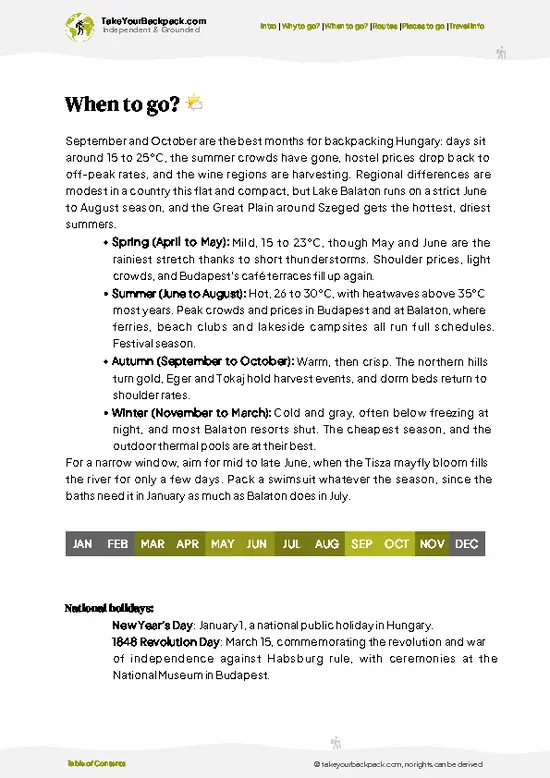
Best months: The best months for Hungary’s beaches are late June to late August, when Lake Balaton’s water typically sits around 23 to 27°C and daytime air reaches 27 to 32°C, with long light until about 8:45 pm. July and August can spike above 35°C during heat waves, and the sun on open lawns is strong, with the smell of hot reeds and grilled sausage hanging over the shore.
Shoulder seasons: The shoulder weeks of late May to mid-June and early to mid-September are the smartest choice if you want quieter lawns and lower prices. Water is cooler in May, often 17 to 21°C, but September stays pleasantly warm, around 20 to 23°C. Accommodation can run 20 to 40 percent cheaper than in peak weeks, and many smaller lakeside stands still operate until mid-September.
Peak and closures: Peak pressure lands on July to mid-August weekends, especially around Balaton towns, where beds fill early and trains get crowded. Summer storms are common, usually brief but sharp, with lightning that forces swimmers out of the water. From October to April most strands close, buffets shut and the lake is cold, gray and often windy, so beach plans should be left to summer.

beach hoppingTips for Visiting Multiple Destinations

Trip length: A trip combining several beaches in Hungary works best in 5 to 8 days, which leaves room for weather delays without turning the trip into a rushed run between lakes. Budapest is the natural arrival hub, with trains and buses running to the lakeshores and river towns.
Grouping and direction: Start with the Danube Bend or other river stops near Budapest, then head south-west to Lake Balaton, where the shore stretches long enough for a slow move along the coast. The direct trains from Budapest to Balaton’s south shore take roughly 1.5 to 2 hours, and buses to the north shore are often 2 to 2.5 hours. Moving along one side of the lake is simpler than switching sides, because the ferry across the narrows at Tihany is useful but not frequent in winter and can be crowded in summer.
Time … read more 👉
Trip length: A trip combining several beaches in Hungary works best in 5 to 8 days, which leaves room for weather delays without turning the trip into a rushed run between lakes. Budapest is the natural arrival hub, with trains and buses running to the lakeshores and river towns.
Grouping and direction: Start with the Danube Bend or other river stops near Budapest, then head south-west to Lake Balaton, where the shore stretches long enough for a slow move along the coast. The direct trains from Budapest to Balaton’s south shore take roughly 1.5 to 2 hours, and buses to the north shore are often 2 to 2.5 hours. Moving along one side of the lake is simpler than switching sides, because the ferry across the narrows at Tihany is useful but not frequent in winter and can be crowded in summer.
Time per stop: Allow 1 to 3 nights per base and a full day for swimming, since arrival days vanish into luggage, ticket lines and hot platforms. River stops can work as a half day.
Common mistakes: Travelers often try to pack too many shorelines into one weekend, then lose hours to crowded trains and packed parking areas. Another mistake is booking the north and south shores back to back without checking connections. Choose one main lakeshore, add one river stop, and keep a buffer day for storms.

The ListHighly Recommended beaches of Hungary

1 Siófok Beach

urban lakefront, nightlife, festival grounds

Experience a lively lakeside scene with music venues, late-night bars, and wide open spaces that fill with crowds during summer events.

2 Balatonfüred Beach

tree-shaded lawns, promenade, mineral springs

Relax under mature trees, sample local mineral water, and watch sailboats drift past from grassy banks just steps from the town’s historic center.

hungary-beach-balatonfured-beach
© Google |

3 Zamárdi Beach

open shoreline, camping, festival site

Pitch a tent steps from the lake, enjoy long stretches of open sand, and join crowds for major music festivals each summer.

hungary-beach-zamardi-beach
© Google |

4 Keszthely Beach

family pools, historic pier, shallow water

Swim in calm, shallow waters, let kids play in dedicated pools, and stroll a classic lakeside pier with views of distant hills.

hungary-beach-keszthely-beach
© Google |

5 Tihany Beach

volcanic peninsula, reed beds, monastery views

Swim near reed-fringed shores, spot rare birds, and gaze up at the centuries-old abbey perched above the water’s edge.

hungary-beach-tihany-beach
© Google |
Loading the map 🌍

Expert viewWhat You Should Know

How many beaches to visit: I would advise two to four beaches in Hungary, with most of that time spent around one section of Lake Balaton and perhaps one river or small-lake stop. The reason is simple: the main appeal is slow, warm, shallow-water days, not a checklist, and each swim is similar enough that more stops add transit time without much variety. Hungarian beaches reward lingering over lunch, a nap on the lawn and an evening swim when the light turns gold across the reeds.
Which kind suits you: For social travelers, choose a busy Balaton town strand with bars, music and late-night food; the water is warm and the crowd is mixed and friendly. For budget travelers, pick smaller lakeside villages, free public access points and river banks, where you can bring bread, cheese and local wine … read more 👉
How many beaches to visit: I would advise two to four beaches in Hungary, with most of that time spent around one section of Lake Balaton and perhaps one river or small-lake stop. The reason is simple: the main appeal is slow, warm, shallow-water days, not a checklist, and each swim is similar enough that more stops add transit time without much variety. Hungarian beaches reward lingering over lunch, a nap on the lawn and an evening swim when the light turns gold across the reeds.
Which kind suits you: For social travelers, choose a busy Balaton town strand with bars, music and late-night food; the water is warm and the crowd is mixed and friendly. For budget travelers, pick smaller lakeside villages, free public access points and river banks, where you can bring bread, cheese and local wine from a shop. For quiet seekers, go on weekdays, in June or September, and pick the northern shore or a smaller lake. Families and first-timers do best on the south shore, where the shallows stay gentle far out.
What it costs: Budget about US$35 to 60 a day for a backpacker in summer, including a hostel or campsite bed, simple meals and local transport. Entry to a ticketed strand usually costs around 1,500 to 3,500 HUF (US$4 to 10), and lakeside parking can add 1,000 to 3,000 HUF. Sun loungers often run 1,500 to 3,000 HUF a day. Langos, grilled fish and drinks on the shore are noticeably more expensive than in town, so shop for picnic supplies and carry water. Peak July and August beds can double in price.
Safety and etiquette: The main hazards are sudden storms, not waves. When the sky turns dark gray and the wind stiffens, leave the water immediately, because lightning over open flat lake is dangerous. Lifeguards are not guaranteed everywhere, so check the flag system and avoid swimming far out alone. Water quality is monitored in summer, but blue-green algae can appear in hot calm weeks, so heed posted notices. Rocky entries on some stretches are slippery, and water shoes help.
Local etiquette: Hungarians are relaxed at the beach, but the rules are real. Many strands expect swimwear in the water and cover-ups at food stands, and nude bathing is allowed only in designated areas. Keep valuables close, since bag theft happens on crowded summer lawns, and keep music low. Glass bottles and open fires are restricted in many places. Fishing zones and reeds are protected, so stay out of them. Tipping 10 percent at lakeside restaurants is customary, and card payment is common, though cash helps at small kiosks.

✈️ The backpacker research shortcutHungary Travel Guide

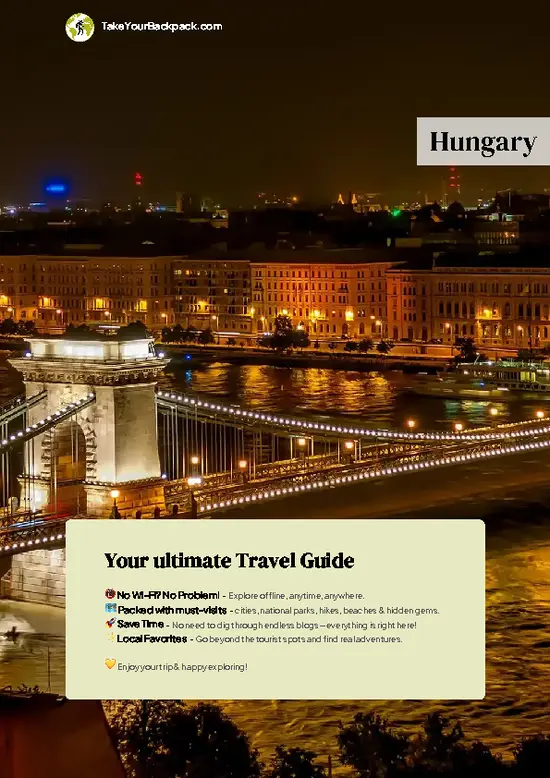
An offline-friendly backpacking guide with optimized travel routes, ranked highlights, transport advice, and the best areas to stay.
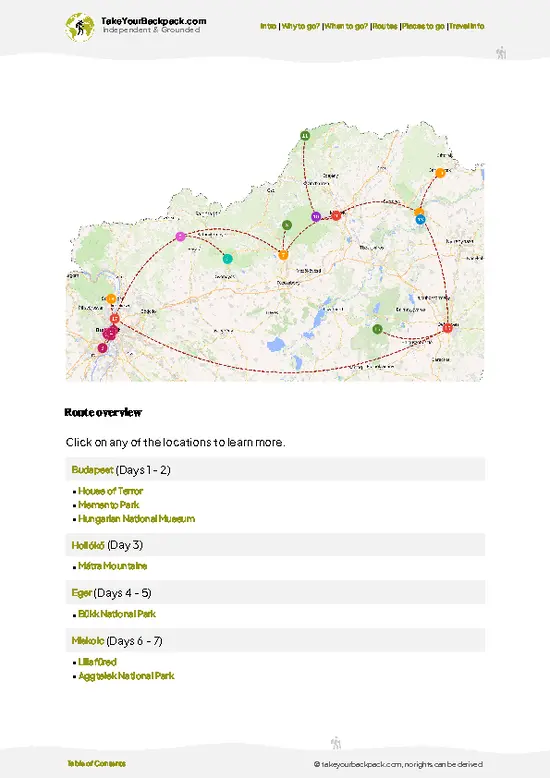
example page 0 from our offline Travel Guide for Hungary
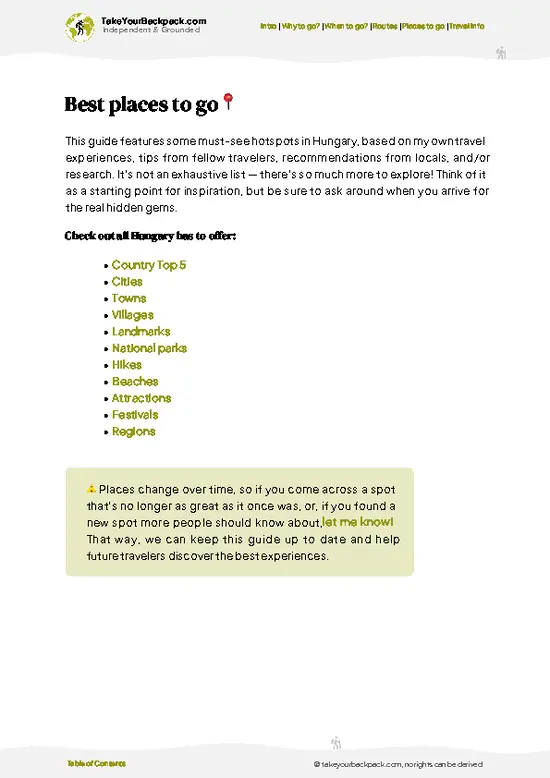
example page 1 from our offline Travel Guide for Hungary
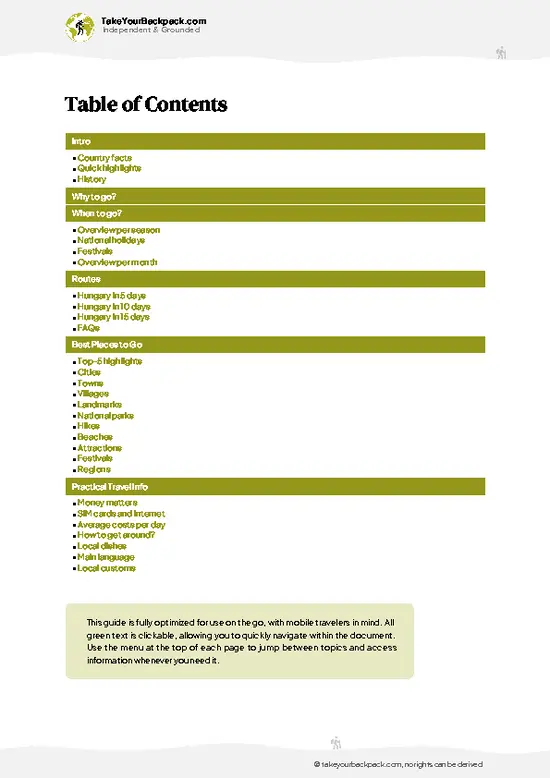
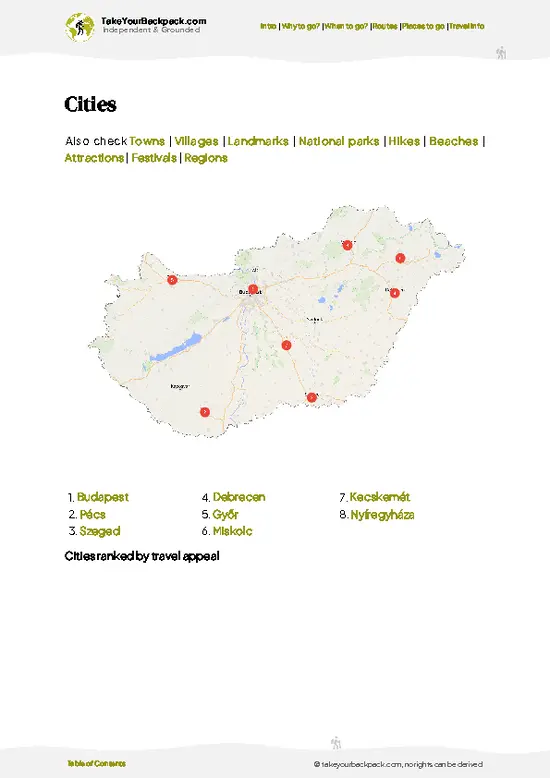
example page 2 from our offline Travel Guide for Hungary
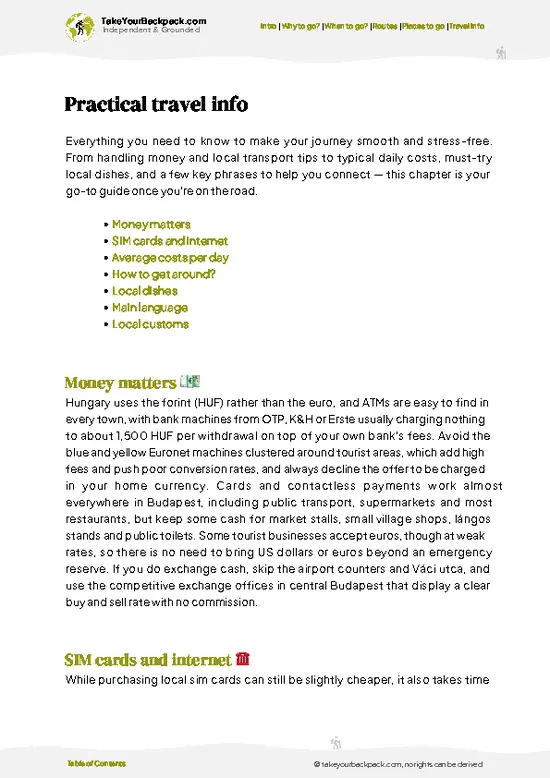
example page 3 from our offline Travel Guide for Hungary
example page 4 from our offline Travel Guide for Hungary
example page 5 from our offline Travel Guide for Hungary
example page 6 from our offline Travel Guide for Hungary
example page 7 from our offline Travel Guide for Hungary
The digital guide (334 pages) contains:
✅ 86 highlights, ranked by travel appeal
✅ Optimized 5, 10 & 15-day travel routes
✅ Cities, national parks, landmarks, beaches
✅ How to get around
✅ Offline-friendly for travel without Wi-Fi
👉 Click to see all 30+ guide features

📅 Plan smarter in minutes, not weeks
✅ Month by month travel advice
✅ Festivals & national holidays
✅ Budget expectations

🗺️ Go to the right places, skip the overrated ones
✅ Honest pros & cons of destinations
✅ Top hikes, parks & viewpoints
✅ Lesser-known places most travelers miss
✅ Clear “worth it vs skip it” guidance

🛏️ Travel smoothly without rookie mistakes
✅ Best areas to stay
✅ Transport systems explained simply
✅ Common scams & safety advice
✅ SIM cards, money & practical tips

🌍 Understand the country, not just visit it
✅ Culture & traditions
✅ 52 Essential phrases & customs
✅ Festivals worth planning around
✅ Traveler-friendly historical context
✅ Insights that make places more meaningful

📱 Built for real travel conditions
✅ Fully downloadable PDF
✅ Works completely offline
✅ Optimized for phone use
✅ Useful in remote areas & buses
✅ Everything in one place
Stop searching, start planning
Get instant access to your full guide. 30‑day money-back guarantee.
+ Add another guide for just

By proceeding you agree to our terms.
Sent to your inbox immediately after payment • 100% Secure Checkout
Best Backpacking Travel Advisor 2025 tourism awardBest Backpacking
Travel Advisor
2025
What others say about Take Your Backpack Guides:
⭐⭐⭐⭐⭐
Fantastic, amazing amount of information!
⭐⭐⭐⭐⭐
My goodness this is amazing, it's what I've been looking for hats off too you!
⭐⭐⭐⭐⭐
I think this is absolutely BRILLIANT
⭐⭐⭐⭐
Very complete and informative. It's still missing places, but I gotta to commend you
⭐⭐⭐⭐⭐
This is truly amazing, thank you, can't wait to explore it with my kids!
⭐⭐⭐⭐⭐
Awesome resource, thank you!
⭐⭐⭐⭐⭐
This is amazing! Can't wait to explore the ones I haven't seen
⭐⭐⭐⭐
I love this! Well done, great idea.
⭐⭐⭐⭐⭐
Thanks for taking the time to make this gem!
⭐⭐⭐⭐⭐
This might be the best website I've ever seen.
⭐⭐⭐⭐⭐
Congratulations, and thank you so much for your work; it's incredibly valuable.
⭐⭐⭐⭐
In all seriousness I think you did a great job pointing out the important spots
⭐⭐⭐⭐⭐
10/10 very good
⭐⭐⭐⭐⭐
As someone who's only just starting to visit regularly this is awesome, thank you.
⭐⭐⭐⭐
Thank you very much! I'm going to visit my dad, it's going to be very useful!
⭐⭐⭐⭐⭐
This is really cool! We'll be travelling for the first time and this definitely come in handy.
⭐⭐⭐⭐⭐
You are now our minister of culture, congratulations 👨‍💼
⭐⭐⭐⭐⭐
Just wanted to tell you that this is a pearl! Going to follow your recommendations.
⭐⭐⭐⭐⭐
This is so cool. I'll definitely be using the resource for my travels soon.
⭐⭐⭐⭐⭐
This is very impressive! Good work.
⭐⭐⭐⭐⭐
This is an amazing and informative site. Very well done!

🛏️ Where to stay?Where to Base Yourself

Hungary has plenty of hostels and budget guesthouses, with dorm beds in Budapest typically running about 5,000 to 10,000 HUF (US$14 to 28) a night and private rooms starting around 15,000 HUF (US$42). The densest cluster sits in Erzsébetváros (District VII, the old Jewish Quarter), which puts you steps from the ruin bars and a short walk from most sights, though weekend noise can run past 3 am; Terézváros (District VI) along Andrássy út is nearly as central and a bit calmer. Belváros (District V) gets you closest to the river and Parliament at higher prices, while the inner Palace District of Józsefváros (District VIII) is cheaper and quieter, with streets that feel rougher the farther you go … read more 👉
Hungary has plenty of hostels and budget guesthouses, with dorm beds in Budapest typically running about 5,000 to 10,000 HUF (US$14 to 28) a night and private rooms starting around 15,000 HUF (US$42). The densest cluster sits in Erzsébetváros (District VII, the old Jewish Quarter), which puts you steps from the ruin bars and a short walk from most sights, though weekend noise can run past 3 am; Terézváros (District VI) along Andrássy út is nearly as central and a bit calmer. Belváros (District V) gets you closest to the river and Parliament at higher prices, while the inner Palace District of Józsefváros (District VIII) is cheaper and quieter, with streets that feel rougher the farther you go from the Museum Boulevard ring.

If you enjoy meeting fellow travelers, consider choosing hostels with high ratings for atmosphere. On the other hand, if you prefer having your own space, a hotel might be a better option.

HungaryExpand Your Journey

👋 Meet the founderWho’s Behind Take Your Backpack?

Johan, backpacker and founder of TakeYourBackpackHi, I’m Johan (Netherlands 🇳🇱), the creator of TakeYourBackpack. Over the past 3 decades, I’ve backpacked through 90+ countries across six continents, gaining extensive experience with independent travel, long-term trips, and overland routes.

This site is built on a combination of firsthand travel experience and carefully curated insights from other backpackers. Many guides are based on places I’ve personally visited, while others bring together tips, observations, and practical advice shared by trusted travelers I’ve met along the way.

The goal is to provide realistic, experience-driven guidance — not generic itineraries — so you can explore destinations with better context, clearer expectations, and more confidence.