×

Iran🇮🇷 | best attractionsExplore the 10 Best attractions in Iran

Iran’s best attractions are defined by a complex interplay of geography, history, and culture that demands more than a casual glance. From the arid deserts of Yazd to the lush forests of the Caspian coast, each region offers a distinct vibe that shapes your backpacking experience. Independent travelers must weigh seasonal shifts carefully—harsh summers in the south contrast sharply with snowy winters in the north, directly affecting accessibility and comfort. Choosing the right attraction isn’t just about ticking off landmarks; it’s about aligning your itinerary with local rhythms, budget realities, and safety considerations, especially given Iran’s unique travel regulations and infrastructure. The difference between a rushed visit to Tehran’s sprawling bazaars and a slow exploration of Isfahan’s intricate tilework can define your cultural immersion. Understanding these nuances upfront preserves your energy and funds for moments that truly resonate, turning a trip into a meaningful journey rather than a checklist of sights.

By Johan Kruseman 🇳🇱 | Updated June 11, 2026
Explore the best festivals in Iran

Why go?Why These attraction Stand Out

Why These Attractions Matter

Iran’s attractions stand apart because they are not just sights to see—they are layers of history, culture, and geography compressed into tangible experiences. Unlike many countries where attractions are often isolated or commercialized, Iran’s sites demand a commitment to depth over convenience. The trade-off here is clear: you won’t find a quick, surface-level tourist circuit. Instead, you’re investing time to unravel millennia of Persian civilization, where every ruin, mosque, or bazaar carries stories that ripple through centuries. This makes Iran a destination where patience and curiosity pay off in ways few places can match.

The country’s vast geography and climatic extremes shape what’s possible and what’s not. From scorching deserts to snowy mountains, the … read more 👉
Why These Attractions Matter

Iran’s attractions stand apart because they are not just sights to see—they are layers of history, culture, and geography compressed into tangible experiences. Unlike many countries where attractions are often isolated or commercialized, Iran’s sites demand a commitment to depth over convenience. The trade-off here is clear: you won’t find a quick, surface-level tourist circuit. Instead, you’re investing time to unravel millennia of Persian civilization, where every ruin, mosque, or bazaar carries stories that ripple through centuries. This makes Iran a destination where patience and curiosity pay off in ways few places can match.

The country’s vast geography and climatic extremes shape what’s possible and what’s not. From scorching deserts to snowy mountains, the environment dictates travel seasons and accessibility. This means some attractions are best experienced in specific windows, and reaching them often involves long drives or rugged terrain. Infrastructure outside major cities can be basic, so travelers must weigh the desire for immersive, off-the-beaten-path encounters against the realities of slower transport and fewer amenities. This is not a destination for those who want everything handed to them on a silver platter.

Culturally, Iran offers a rare blend of hospitality and complexity. The attractions are embedded in living traditions, not just preserved relics. Visitors should be prepared for cultural nuances that affect how sites are accessed and experienced, including dress codes, gender-specific spaces, and local customs. These factors can feel restrictive but are essential to respecting the social fabric and unlocking authentic interactions.

In short, Iran’s attractions matter because they demand engagement beyond the superficial. The payoff is a profound connection to a civilization that shaped much of the world’s art, science, and governance. The catch is that this connection requires travelers to accept slower rhythms, logistical challenges, and cultural protocols. Those who do will find Iran’s attractions not just worth seeing, but transformative.
Behind the Scenes of Selection
The list of best attractions in Iran is created based on cultural significance or entertainment value. If you feel a attraction is missing in this list, please let us know.

When to go?When to Plan Your Trip

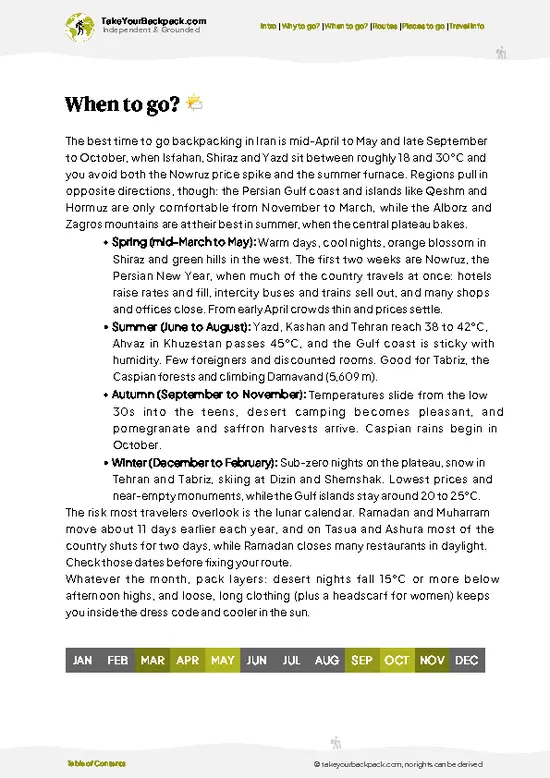
Seasonal Realities Shape Your Iran Experience


Iran’s climate swings hard between extremes, and that’s the first thing to lock in before you book. Winters can be brutal in the interior and mountainous regions, with temperatures plunging well below freezing. This isn’t just a chill in the air; it can mean snow-blocked roads and limited access to some attractions. If you’re aiming to explore beyond the urban centers, winter’s grip can seriously crimp your plans.

Summers, on the other hand, are scorchers—especially in the lowlands and desert areas. Expect relentless heat that can sap your energy and make daytime sightseeing a slog. This isn’t just uncomfortable; it can be unsafe if you’re not prepared for dehydration and heat exhaustion. The high temperatures also mean many locals retreat indoors … read more 👉

Seasonal Realities Shape Your Iran Experience


Iran’s climate swings hard between extremes, and that’s the first thing to lock in before you book. Winters can be brutal in the interior and mountainous regions, with temperatures plunging well below freezing. This isn’t just a chill in the air; it can mean snow-blocked roads and limited access to some attractions. If you’re aiming to explore beyond the urban centers, winter’s grip can seriously crimp your plans.

Summers, on the other hand, are scorchers—especially in the lowlands and desert areas. Expect relentless heat that can sap your energy and make daytime sightseeing a slog. This isn’t just uncomfortable; it can be unsafe if you’re not prepared for dehydration and heat exhaustion. The high temperatures also mean many locals retreat indoors during the day, which can dull the vibrancy of street life and markets.

Spring and autumn are the sweet spots, but they come with their own trade-offs. These shoulder seasons offer milder temperatures that make wandering through Iran’s rich tapestry of attractions far more enjoyable. However, spring can bring sudden rain showers and dust storms, while autumn edges toward cooler nights that require packing layers. These seasons also attract more visitors, so expect higher prices and busier sites compared to winter or summer.

Peak travel periods align with national holidays and festivals, which can swell crowds and inflate costs. While these moments offer cultural immersion, they demand early bookings and patience. Avoiding peak times means smoother logistics and better deals but might mean missing out on some local celebrations.

In short, timing your visit to Iran is a balancing act. Prioritize your tolerance for heat or cold, your appetite for crowds, and your budget flexibility. Getting this right preserves your energy and wallet for the experiences that truly matter, rather than wrestling with weather or crowds that steal the show.

attraction hoppingHow to Combine attractions Into One Trip

Mapping Out Iran’s Attractions Without Burning Out


Think Regions, Not Random Stops: Iran’s vastness demands a regional approach. Group your destinations by province or cultural zone—north, central, south, east, and west. Jumping back and forth across the country is a guaranteed energy and budget drain. Start with a cluster of sites in one area, then move logically to the next. This reduces travel fatigue and maximizes time soaking in each place rather than staring out a bus window.

Direction Matters: Iran’s geography and transport networks favor a circular or linear route rather than zigzagging. For example, moving from Tehran southwards or from the Caspian coast eastwards keeps travel efficient. Avoid doubling back unless you have a compelling reason. This saves hours and prevents the … read more 👉

Mapping Out Iran’s Attractions Without Burning Out


Think Regions, Not Random Stops: Iran’s vastness demands a regional approach. Group your destinations by province or cultural zone—north, central, south, east, and west. Jumping back and forth across the country is a guaranteed energy and budget drain. Start with a cluster of sites in one area, then move logically to the next. This reduces travel fatigue and maximizes time soaking in each place rather than staring out a bus window.

Direction Matters: Iran’s geography and transport networks favor a circular or linear route rather than zigzagging. For example, moving from Tehran southwards or from the Caspian coast eastwards keeps travel efficient. Avoid doubling back unless you have a compelling reason. This saves hours and prevents the frustration of rushed visits.

Time Is Your Best Currency: Allocate realistic time blocks: major cities and historical hubs deserve at least two full days, while smaller towns or natural sites can often be appreciated in a day. Trying to cram too many stops into a tight schedule turns exploration into a checklist. Slow down enough to absorb the atmosphere, or you’ll leave with a blur of photos and no real connection.

Common Pitfalls to Dodge: Overambition is the enemy. Many travelers underestimate distances and overestimate transport speed. Iran’s roads and public transit can be slower than expected, especially outside major cities. Also, don’t underestimate the time needed for cultural immersion—rushing through bazaars or museums kills the experience. Lastly, avoid packing your itinerary with only “must-see” tourist spots; sprinkle in lesser-known places to balance crowds and gain fresh perspectives.

Balancing Speed, Comfort, and Depth: Faster travel means less depth. If budget allows, opt for private transfers or domestic flights to save time, but weigh this against the cost. Budget travelers should embrace slower, local transport and fewer stops to avoid exhaustion. Remember, the effort to reach remote sites often pays off with unique rewards, but only if you’re prepared for the journey. Flexibility is key—build in buffer days to adjust plans based on local conditions or newfound interests.

Strategic Planning Over Rigid Itineraries: The best trips in Iran come from a flexible framework, not a minute-by-minute schedule. Prioritize clusters of attractions, allow breathing room, and be ready to pivot. This approach preserves your energy and budget for the moments that truly matter—those rare encounters with Iran’s rich history, vibrant culture, and breathtaking landscapes.

The ListMust-Visit attractions in Iran

1 Golestan Palace

Mirror hall, royal court, tilework mosaics

Step into a former royal residence filled with mirrored ceilings, ceremonial halls, and decorative tilework from the Qajar period.

2 Chehel Sotoun Palace

Reflecting pool, wooden columns, garden pavilion

Wander through frescoed halls and mirrored rooms, then pause by the pool to see the palace’s columns doubled in water.

3 Ali Qapu Palace

Safavid architecture, music balcony, miniature frescoes

Ascend through echoing halls and painted staircases to overlook Naqsh-e Jahan Square from the palace’s elevated terrace.

4 Tabriz Historic Bazaar Complex

Vaulted corridors, trading domes, merchant caravanserais

Navigate a labyrinth of interconnected halls where local commerce, crafts, and social life converge under brick arches.

5 Vakil Bazaar and Vakil Bath

Stone arcades, traditional shops, historic bathhouse

Shop for textiles and spices in covered market lanes, then visit the restored bathhouse to see original tilework and domed chambers.

6 Eram Garden

Botanical collection, cypress trees, Qajar-era mansion

Stroll shaded paths lined with rare plants and admire the tiled mansion set among pools and flowerbeds.

7 Treasury of National Jewels

Crown jewels, gemstone-encrusted thrones, royal regalia

Marvel at a dazzling array of historic treasures, including ornate crowns and ceremonial objects displayed in secure vaults.

8 Azadi Tower

White marble, geometric arches, city gateway

Stand beneath the soaring monument and trace the evolution of modern Tehran through its symbolic design and underground museum.

9 Milad Tower

Observation deck, panoramic views, telecommunications spire

Ride the elevator to the top for sweeping city vistas, then explore exhibition spaces and restaurants high above Tehran.

10 Tabiat Bridge

Multi-level walkway, steel structure, urban park connector

Cross between city parks on a pedestrian bridge designed for lingering, with seating areas and cityscape views.

11 National Museum of Iran

Archaeological finds, ancient artifacts, pre-Islamic relics

Follow the timeline of Iranian civilization through curated objects, from Paleolithic tools to early Islamic manuscripts.

12 Tehran Museum of Contemporary Art

Modernist galleries, international collection, sculpture garden

View works by Iranian and global artists in a building that blends traditional motifs with contemporary design.

13 Niavaran Palace Complex

Modernist palace, royal library, landscaped grounds

Tour the last Shah’s residence, view personal collections, and walk through gardens designed for privacy and leisure.

14 Sa’dabad Historical Complex

Expansive parkland, multiple museums, royal mansions

Explore a sprawling estate dotted with palaces, art collections, and wooded trails once reserved for royalty.

15 Carpet Museum of Iran

Persian carpets, weaving techniques, textile patterns

Survey centuries of craftsmanship by examining intricate rugs and learning about regional weaving traditions in a purpose-built gallery.

16 Moghadam Museum

Private residence, antique ceramics, courtyard pools

Discover a collector’s home where historic artifacts and traditional architecture blend around tranquil gardens and water features.

17 Cinema Museum of Iran

Film memorabilia, vintage cameras, director portraits

Trace the development of Iranian cinema through curated exhibits, original posters, and artifacts from landmark productions.

18 Music Museum of Isfahan

Traditional instruments, performance space, audio exhibits

Listen to live demonstrations and explore displays of regional instruments in a restored house dedicated to musical heritage.

19 Iranian Artists Forum

Contemporary galleries, sculpture garden, creative workshops

Browse rotating exhibitions, join art events, and relax in a leafy courtyard frequented by local artists.

20 City Theater Complex

Circular stage, modernist façade, performance venue

Experience Tehran’s performing arts scene in a distinctive building known for its acoustics and rotating schedule of live shows.

Think you know Iran?

Prove you’re a true local — uncover 10 lesser-known attractions in Iran that locals tend to keep to themselves.
Loading the map 🌍

Expert viewExpert Commentary on attractions

Expert Commentary


Iran is a country where the sheer volume of attractions can overwhelm even the most seasoned traveler. The first hard truth: you won’t see everything worth your time in one trip. Aim for a handful of key sites—think somewhere between five and ten—to avoid burnout and actually absorb what you’re witnessing. Trying to cram more will leave you exhausted, skimming the surface rather than diving deep. This isn’t a checklist race; it’s about quality over quantity.

Budgeting here is a balancing act. Entrance fees to major sites are generally modest, but travel costs between them can balloon quickly. Distances are vast, and infrastructure outside major hubs can be patchy. Public transport options exist but often require patience and flexibility. Private taxis or hired drivers offer … read more 👉

Expert Commentary


Iran is a country where the sheer volume of attractions can overwhelm even the most seasoned traveler. The first hard truth: you won’t see everything worth your time in one trip. Aim for a handful of key sites—think somewhere between five and ten—to avoid burnout and actually absorb what you’re witnessing. Trying to cram more will leave you exhausted, skimming the surface rather than diving deep. This isn’t a checklist race; it’s about quality over quantity.

Budgeting here is a balancing act. Entrance fees to major sites are generally modest, but travel costs between them can balloon quickly. Distances are vast, and infrastructure outside major hubs can be patchy. Public transport options exist but often require patience and flexibility. Private taxis or hired drivers offer speed and convenience but at a premium that can eat into your budget faster than you expect. Factor in that some attractions are remote, demanding extra time and money to reach. If you’re on a tight budget, prioritize sites clustered in accessible regions to maximize what you see without draining your wallet on transit.

Time is your most precious currency. Many travelers underestimate how long it takes to truly appreciate Iran’s cultural and historical layers. A quick glance at a site’s facade won’t cut it. You need hours, sometimes a full day, to soak in the architecture, the stories etched in stone, and the local atmosphere. Rushing through multiple attractions in a single day is a recipe for frustration and missed details. Plan your itinerary with realistic travel times and downtime. Remember, the roads can be slow, and unexpected delays are part of the experience. Overpacking your schedule is the fastest way to burn out.

Cultural context is non-negotiable. Iran’s rich heritage is inseparable from its social norms and religious customs. Dress codes, gender interactions, and behavior expectations vary and are strictly enforced in many places. Ignoring these can lead to uncomfortable encounters or even denied entry. Respect is your best tool for smooth navigation. This means modest clothing, especially for women, and a readiness to adapt to local customs without complaint. It’s not about stifling your freedom but about engaging respectfully with a culture that’s proud and protective of its traditions. This respect opens doors—literally and figuratively—and enriches your experience beyond the surface.

Safety concerns often get blown out of proportion. Iran is generally safe for travelers who stay alert and respect local laws. Petty crime is rare, but political sensitivities mean you must avoid certain topics and public demonstrations. Keep your passport and valuables secure, and be cautious with photography—some sites and government buildings are off-limits. Trust your instincts and err on the side of discretion. The locals are often warm and curious, but your best protection is blending in and showing cultural awareness. This isn’t a place for loud tourists or those expecting a Western-style party scene.

Infrastructure varies dramatically. In major cities and popular tourist areas, you’ll find decent accommodations, reliable internet, and English-speaking guides. Venture beyond these zones, and the landscape changes. Roads can be rough, signage sparse, and English less common. This means your travel pace will slow, and you’ll need to rely more on local help and your own resourcefulness. It’s part of the charm but also a constraint. If you’re not comfortable with uncertainty or improvisation, stick closer to well-trodden paths. For the adventurous, this is where Iran’s soul reveals itself, but it demands patience and a flexible mindset.

One of the biggest hidden costs is underestimating the time and effort required for border crossings and internal checkpoints. Visa procedures can be bureaucratic and time-consuming. Internal travel sometimes involves security checks that disrupt schedules. Factor these into your planning to avoid frustration. It’s not just about money; it’s about preserving your energy for the moments that truly matter—the quiet courtyards, the intricate tilework, the conversations with locals who offer perspectives no guidebook can capture.

Food and hospitality are highlights but come with their own considerations. Street food is tempting and affordable but requires caution if you have a sensitive stomach. Dining in traditional settings offers a window into local life but can be slower paced and less predictable than Western standards. This is part of the experience, not a flaw. Embrace the slower rhythm, and you’ll find it rewarding. Hydration is critical, especially if you’re trekking or exploring in hotter regions. Bottled water is widely available but can add up, so plan accordingly.

Finally, the emotional and sensory overload can be intense. Iran’s attractions are not just visual spectacles; they engage all your senses and challenge your preconceptions. This can be exhilarating but also draining. Give yourself permission to step back, rest, and process. The best experiences come when you’re mentally present, not just physically ticking boxes. Pace yourself, prioritize what resonates most with you, and prepare to be surprised by the depth beneath the surface.

In short, the secret to enjoying Iran’s attractions is strategic restraint combined with cultural humility. Choose fewer sites, allocate enough time, respect local norms, and prepare for logistical quirks. This approach preserves your energy and budget for the moments that transform a trip into a lasting memory.

✈️ The backpacker research shortcutIran Travel Guide

An offline-friendly backpacking guide with optimized travel routes, ranked highlights, transport advice, and the best areas to stay.
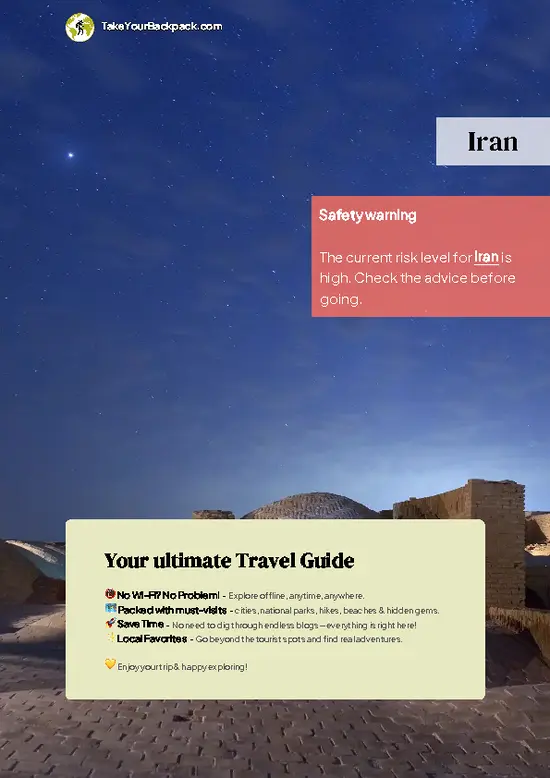
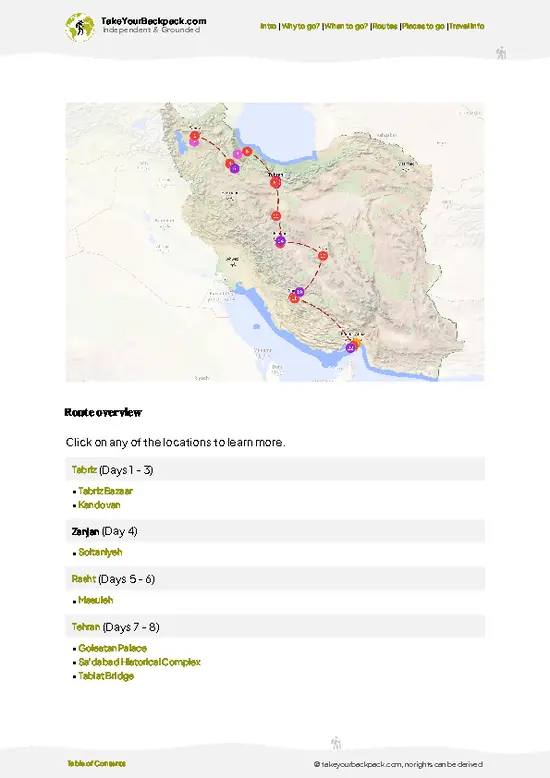
example page 0 from our offline Travel Guide for Iran
example page 1 from our offline Travel Guide for Iran
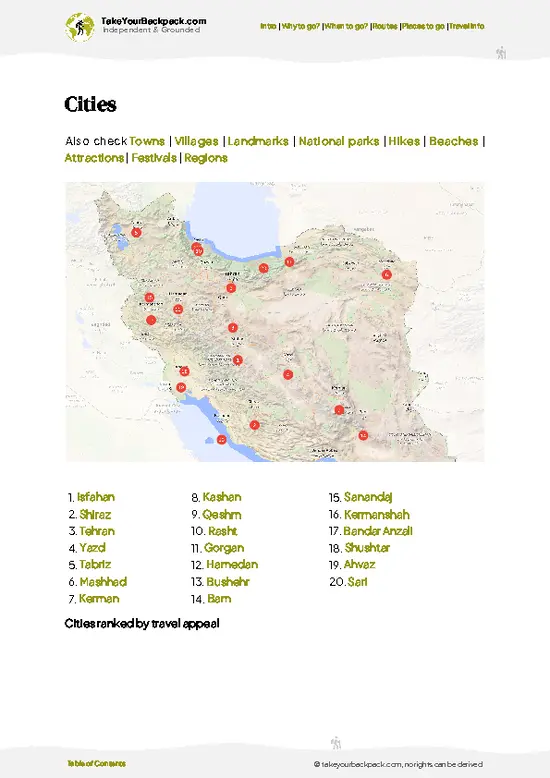
example page 2 from our offline Travel Guide for Iran
example page 3 from our offline Travel Guide for Iran
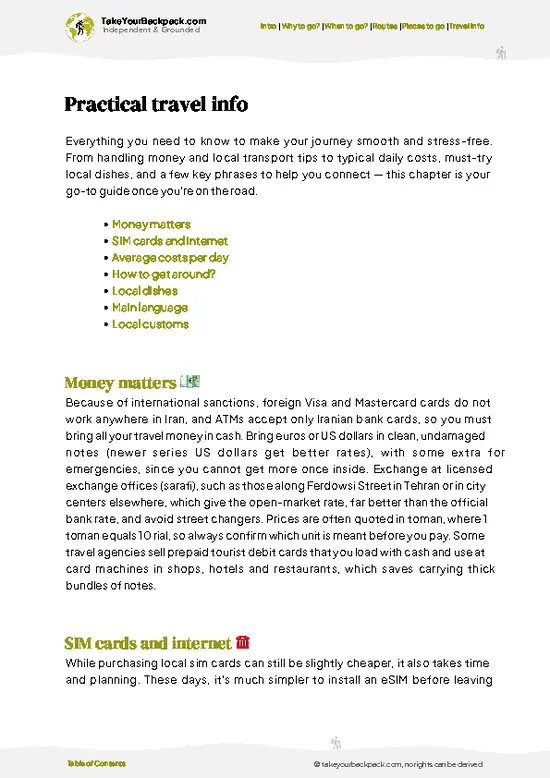
example page 4 from our offline Travel Guide for Iran
example page 5 from our offline Travel Guide for Iran
example page 6 from our offline Travel Guide for Iran
example page 7 from our offline Travel Guide for Iran
The digital guide (419 pages) contains:
121 highlights, ranked by travel appeal
Optimized 7, 14 & 21-day travel routes
Cities, national parks, landmarks, beaches
How to get around
Offline-friendly for travel without Wi-Fi
👉 Click to see all 30+ guide features

📅 Plan smarter in minutes, not weeks
Month by month travel advice
Festivals & national holidays
Budget expectations

🗺️ Go to the right places, skip the overrated ones
Honest pros & cons of destinations
Top hikes, parks & viewpoints
Lesser-known places most travelers miss
Clear “worth it vs skip it” guidance

🛏️ Travel smoothly without rookie mistakes
Best areas to stay
Transport systems explained simply
Common scams & safety advice
SIM cards, money & practical tips

🌍 Understand the country, not just visit it
Culture & traditions
52 Essential phrases & customs
Festivals worth planning around
Traveler-friendly historical context
Insights that make places more meaningful

📱 Built for real travel conditions
Fully downloadable PDF
Works completely offline
Optimized for phone use
Useful in remote areas & buses
Everything in one place
Save weeks of stressful planning
Get instant access to your full guide. 30‑day money-back guarantee.


By proceeding you agree to our terms.
Sent to your inbox immediately after payment • 100% Secure Checkout
Best Backpacking Travel Advisor 2025 tourism awardBest Backpacking
Travel Advisor
2025
What others say about Take Your Backpack Guides:
⭐⭐⭐⭐⭐
Fantastic, amazing amount of information!
⭐⭐⭐⭐⭐
My goodness this is amazing, it's what I've been looking for hats off too you!
⭐⭐⭐⭐⭐
I think this is absolutely BRILLIANT
⭐⭐⭐⭐
Very complete and informative. It's still missing places, but I gotta to commend you
⭐⭐⭐⭐⭐
This is truly amazing, thank you, can't wait to explore it with my kids!
⭐⭐⭐⭐⭐
Awesome resource, thank you!
⭐⭐⭐⭐⭐
This is amazing! Can't wait to explore the ones I haven't seen
⭐⭐⭐⭐
I love this! Well done, great idea.
⭐⭐⭐⭐⭐
Thanks for taking the time to make this gem!
⭐⭐⭐⭐⭐
This might be the best website I've ever seen.
⭐⭐⭐⭐⭐
Congratulations, and thank you so much for your work; it's incredibly valuable.
⭐⭐⭐⭐
In all seriousness I think you did a great job pointing out the important spots
⭐⭐⭐⭐⭐
10/10 very good
⭐⭐⭐⭐⭐
As someone who's only just starting to visit regularly this is awesome, thank you.
⭐⭐⭐⭐
Thank you very much! I'm going to visit my dad, it's going to be very useful!
⭐⭐⭐⭐⭐
This is really cool! We'll be travelling for the first time and this definitely come in handy.
⭐⭐⭐⭐⭐
You are now our minister of culture, congratulations 👨‍💼
⭐⭐⭐⭐⭐
Just wanted to tell you that this is a pearl! Going to follow your recommendations.
⭐⭐⭐⭐⭐
This is so cool. I'll definitely be using the resource for my travels soon.
⭐⭐⭐⭐⭐
This is very impressive! Good work.
⭐⭐⭐⭐⭐
This is an amazing and informative site. Very well done!

🛏️ Where to stay?Top Places to Consider Staying

Yes — hostels, budget guesthouses and traditional homestay-style accommodations are widely available in Iran’s main tourist cities, especially Tehran, Isfahan, Shiraz, Yazd, Tabriz, Kashan and Mashhad.
In Tehran look around Valiasr/Vanak and Tajrish for best transport links and more nightlife but expect traffic and higher rates; in Isfahan stay by the historic center for walking access to major sights though it’s busier and quieter at night; Shiraz’s bazaar/Vakil area puts you by gardens and markets but can be sleepy after dark; Yazd’s old town (Fahadan) offers atmospheric traditional houses with narrow alleys that feel quieter; Tabriz clusters around the historic bazaar with good budget supply … read more 👉
Yes — hostels, budget guesthouses and traditional homestay-style accommodations are widely available in Iran’s main tourist cities, especially Tehran, Isfahan, Shiraz, Yazd, Tabriz, Kashan and Mashhad.
In Tehran look around Valiasr/Vanak and Tajrish for best transport links and more nightlife but expect traffic and higher rates; in Isfahan stay by the historic center for walking access to major sights though it’s busier and quieter at night; Shiraz’s bazaar/Vakil area puts you by gardens and markets but can be sleepy after dark; Yazd’s old town (Fahadan) offers atmospheric traditional houses with narrow alleys that feel quieter; Tabriz clusters around the historic bazaar with good budget supply but colder winters; Kashan’s historic quarter is ideal for traditional houses and desert trips but has limited nightlife.
Expect some hostels to offer gender‑segregated dorms or women‑only rooms, observe strict public dress codes in common areas, and book ahead at peak times (Nowruz and summer) or take a private room for more flexibility.

If you enjoy meeting fellow travelers, consider choosing hostels with high ratings for atmosphere. On the other hand, if you prefer having your own space, a hotel might be a better option.

IranMore Places Across Iran

👋 Meet the founderWho’s Behind Take Your Backpack?

Johan, backpacker and founder of TakeYourBackpackHi, I’m Johan (Netherlands 🇳🇱), the creator of TakeYourBackpack. Over the past decade, I’ve backpacked through 80+ countries across six continents, gaining extensive experience with independent travel, long-term trips, and overland routes.

This site is built on a combination of firsthand travel experience and carefully curated insights from other backpackers. Many guides are based on places I’ve personally visited, while others bring together tips, observations, and practical advice shared by trusted travelers I’ve met along the way.

The goal is to provide realistic, experience-driven guidance — not generic itineraries — so you can explore destinations with better context, clearer expectations, and more confidence.

Get full Iran guide •
Instant download • 121 highlights • Full Offline guide