×

Iraq🇮🇶 | best national parksEssential 10 national parks to Explore in Iraq

Iraq’s national parks offer a unique blend of landscapes, wildlife, and adventure opportunities that cater to diverse travel styles. Defined by their rich ecosystems and historical significance, these parks vary significantly across regions, impacting your backpacking experience. For instance, the rugged mountains of the north contrast sharply with the arid expanses of the south, affecting accessibility and seasonal exploration. Choosing the right park influences not just the vibe and pace of your journey, but also your budget, safety, and level of cultural immersion. Understanding these nuances is key to maximizing your adventure while navigating Iraq’s hidden treasures.

By Johan Kruseman 🇳🇱 | Updated June 8, 2026
Explore the best hikes in Iraq

Why go?Understanding Their Importance

National parks in Iraq offer a unique blend of landscapes, biodiversity, and cultural significance that set them apart from other countries. The rugged mountains, expansive deserts, and lush river valleys create a diverse backdrop for exploration. Iraq’s parks are not just about natural beauty; they are steeped in historical context, often located near ancient civilizations that add layers of meaning to the experience.

However, accessibility can be a double-edged sword. While some parks are relatively easy to reach, others require significant travel time, which can detract from the depth of exploration. The trade-off here is clear: a longer journey might lead to a more immersive experience, but it can also drain your energy and budget.

The infrastructure in Iraq varies widely. Some areas … read more 👉
National parks in Iraq offer a unique blend of landscapes, biodiversity, and cultural significance that set them apart from other countries. The rugged mountains, expansive deserts, and lush river valleys create a diverse backdrop for exploration. Iraq’s parks are not just about natural beauty; they are steeped in historical context, often located near ancient civilizations that add layers of meaning to the experience.

However, accessibility can be a double-edged sword. While some parks are relatively easy to reach, others require significant travel time, which can detract from the depth of exploration. The trade-off here is clear: a longer journey might lead to a more immersive experience, but it can also drain your energy and budget.

The infrastructure in Iraq varies widely. Some areas are well-equipped for visitors, while others lack basic amenities, making preparation essential. Travelers should be aware that climatic conditions can also impact their experience; the summer heat can be intense, limiting outdoor activities.

Ultimately, Iraq’s national parks are a treasure trove for those willing to navigate these challenges. The rewards lie in the chance to witness biodiversity and landscapes that are both breathtaking and historically rich, making the effort worthwhile for the adventurous spirit.
Behind the Scenes of Selection
The list of best national parks in Iraq is created based on landscapes, wildlife, adventure opportunities, facilities, and overall experience. If you feel a national park is missing in this list, please let us know.

When to go?Best Time to Visit Iraq for national parks

Weather Patterns

Iraq’s national parks experience a range of weather conditions that significantly affect wildlife visibility and trail conditions. Summers can be brutal, with temperatures soaring above 40°C (104°F). This heat can drive animals into hiding and make hiking strenuous. The best time to explore is during the cooler months, typically from late autumn to early spring.

Optimal Months

The months of October to April offer the most favorable conditions. Wildlife is more active, and trails are generally in better shape. Rainfall is minimal during this period, allowing for clearer skies and more enjoyable hikes.

Shoulder Seasons

Visiting during shoulder seasons—late spring and early autumn—can be a double-edged sword. While you may encounter fewer crowds and lower costs, temperatures … read more 👉

Weather Patterns

Iraq’s national parks experience a range of weather conditions that significantly affect wildlife visibility and trail conditions. Summers can be brutal, with temperatures soaring above 40°C (104°F). This heat can drive animals into hiding and make hiking strenuous. The best time to explore is during the cooler months, typically from late autumn to early spring.

Optimal Months

The months of October to April offer the most favorable conditions. Wildlife is more active, and trails are generally in better shape. Rainfall is minimal during this period, allowing for clearer skies and more enjoyable hikes.

Shoulder Seasons

Visiting during shoulder seasons—late spring and early autumn—can be a double-edged sword. While you may encounter fewer crowds and lower costs, temperatures can still be high, and occasional rain may muddy trails.

Peak Periods

Peak tourist seasons can lead to crowded trails and diminished wildlife sightings. If solitude and immersion in nature are priorities, aim for the edges of peak periods.

Seasonal Constraints

Travelers should be aware of the extreme summer heat and potential winter rains. Planning around these constraints will preserve energy and budget for the experiences that truly matter.

national park hoppingSuggested Travel Strategies

To efficiently combine multiple national parks in Iraq, start by clustering parks regionally. Focus on the northern parks like Duhok and the southern ones like Al-Qadisiyyah. This approach minimizes travel time and maximizes exploration. Aim for a logical route that flows from one park to the next, reducing backtracking and allowing for a smoother journey.

Typical time spent in each park should be around two to three days. This allows for adequate hiking, wildlife observation, and cultural experiences without feeling rushed. However, adjust based on personal interests; some parks may warrant more time, especially if they offer unique trails or historical sites.

A common mistake is trying to cram too many parks into a short timeframe. This leads to fatigue and missed opportunities. Prioritize read more 👉
To efficiently combine multiple national parks in Iraq, start by clustering parks regionally. Focus on the northern parks like Duhok and the southern ones like Al-Qadisiyyah. This approach minimizes travel time and maximizes exploration. Aim for a logical route that flows from one park to the next, reducing backtracking and allowing for a smoother journey.

Typical time spent in each park should be around two to three days. This allows for adequate hiking, wildlife observation, and cultural experiences without feeling rushed. However, adjust based on personal interests; some parks may warrant more time, especially if they offer unique trails or historical sites.

A common mistake is trying to cram too many parks into a short timeframe. This leads to fatigue and missed opportunities. Prioritize depth over speed. Spending longer in fewer parks often yields richer experiences than a whirlwind tour.

Consider trade-offs carefully. Budget constraints might push for quicker visits, but comfort and enjoyment often come from taking the time to immerse in the surroundings. Flexibility is key; be prepared to adjust plans based on weather or local conditions. Strategic planning will enhance the overall experience, ensuring that each park visit is rewarding and memorable.

The ListTop national parks of Iraq

1 Halgurd Sakran National Park

alpine meadows, rugged peaks, Kurdish villages

Ascend through wildflower fields and remote highlands, where mountain air and traditional life shape a landscape rarely seen by outsiders.

2 Rawanduz Canyon

sheer cliffs, river gorge, suspension bridge

Stand above dramatic chasms carved by water, then descend to riverside trails and cross narrow bridges suspended between rock faces.

3 Amedi Valley

hilltop town, ancient gate, panoramic plateau

Climb to a plateau town encircled by mountains, where stone relics and sweeping views reveal layers of history and daily life.

4 Hawraman Mountain Range

terraced slopes, stone villages, ancient footpaths

Hike steep trails linking centuries-old settlements, with panoramic views and a distinct cultural identity rooted in the mountains.

iraq-national-park-hawraman-mountain-range
© Google |

5 Mount Korek

summit views, cable car, alpine plateau

Ride up to high elevations for sweeping vistas, then explore open plateaus where the air is crisp and the horizon feels close.

6 Lake Dukan

deep blue water, picnic sites, boat rides

Swim or paddle in clear lake water, then relax at shaded spots popular with families and groups escaping summer heat.

7 Darbandikhan Dam

reservoir lake, fishing spots, lakeside villages

Spend time along a vast reservoir, where anglers gather and small communities line the shore with boats and simple cafes.

8 Zawita Forest

oak woodland, shaded trails, spring wildflowers

Wander beneath dense tree cover, especially in spring when the forest floor bursts with color and bird calls echo through the canopy.

iraq-national-park-zawita-forest
© Google |

9 Mount Qandil

remote massif, wildlife habitat, border peaks

Venture into a rugged mountain stronghold, known for its biodiversity and challenging terrain near the frontier.

10 Bradost Mountain

rocky summit, ancient petroglyphs, panoramic ridge

Scramble up exposed rock to discover carvings and wide ridgelines, with far-reaching views across valleys and distant ranges.

iraq-national-park-bradost-mountain
© Google |

11 Choman Valley

mountain passes, grazing flocks, remote settlements

Traverse high passes dotted with sheep and goats, encountering isolated villages that remain closely tied to seasonal rhythms.

iraq-national-park-choman-valley
© Google |

12 Barzan Valley

broad river, forested slopes, tribal lands

Travel along a wide river bordered by wooded hills, where the landscape reflects deep-rooted tribal presence and local customs.

13 Soran Valley

river bends, fertile farmland, village markets

Follow winding watercourses past cultivated fields, with opportunities to visit local markets and observe rural routines.

14 Kani Masi

mountain springs, pine groves, borderland scenery

Pause at cool springs and shaded pine forests, with views stretching toward the distant border and a sense of quiet isolation.

15 Khurmal Valley

orchards, mineral springs, quiet hamlets

Relax among fruit groves and natural springs, where small settlements offer a slower pace and a glimpse of agricultural traditions.

16 Pira Delal

stone bridge, river crossing, local legend

Cross a centuries-old bridge spanning a clear river, with stories and traditions still alive in the surrounding community.

17 Mount Azmar

limestone ridges, city overlook, hiking routes

Climb rocky ridges above Sulaymaniyah for a perspective over city and countryside, with accessible trails and changing light.

18 Qara Dagh

limestone hills, wild herbs, open grassland

Walk across rolling hills scented with wild thyme, where open grasslands attract herders and offer unobstructed sunset views.

iraq-national-park-qara-dagh
© Google |

Think you know Iraq?

Prove you’re a true local — uncover 8 lesser-known national parks in Iraq that locals tend to keep to themselves.
Loading the map 🌍

Expert viewPro Tips for Exploring the Best

Terrain
Iraq’s national parks offer a diverse array of landscapes, from rugged mountains to expansive deserts. The terrain can be unforgiving, especially in places like the Zagros Mountains, where steep trails demand good footwear and stamina. If you’re not prepared for altitude changes and rocky paths, you’ll waste energy and time. The flatlands, while easier to navigate, can be scorching in the summer. Choose your season wisely; spring and fall are ideal for most parks, allowing you to enjoy the outdoors without the oppressive heat.

Park Infrastructure
The infrastructure in Iraq’s national parks varies significantly. Some parks have basic facilities, while others are more developed. Expect limited amenities like restrooms and water sources, particularly in remote areas. This means you … read more 👉
Terrain
Iraq’s national parks offer a diverse array of landscapes, from rugged mountains to expansive deserts. The terrain can be unforgiving, especially in places like the Zagros Mountains, where steep trails demand good footwear and stamina. If you’re not prepared for altitude changes and rocky paths, you’ll waste energy and time. The flatlands, while easier to navigate, can be scorching in the summer. Choose your season wisely; spring and fall are ideal for most parks, allowing you to enjoy the outdoors without the oppressive heat.

Park Infrastructure
The infrastructure in Iraq’s national parks varies significantly. Some parks have basic facilities, while others are more developed. Expect limited amenities like restrooms and water sources, particularly in remote areas. This means you need to come equipped with your own supplies. If you’re planning to camp, check if permits are required and whether there are designated camping areas. The lack of well-marked trails can lead to confusion, so a reliable map or GPS is essential. Don’t underestimate the importance of local guides; they can provide invaluable insights and help you navigate the less-traveled paths.

Wildlife Activity
Wildlife is a major draw, but it requires patience and timing. Early mornings and late afternoons are prime for spotting animals like ibex and various bird species. However, the activity can be unpredictable. If you’re keen on wildlife photography, be prepared to spend extra time in specific areas. This can mean sacrificing visits to other parks, so prioritize your interests. If you’re more into hiking or cultural experiences, you might want to skip the wildlife-heavy parks altogether.

Time Management
Realistically, you should aim to visit two to three parks in a week. This allows you to soak in the unique characteristics of each without feeling rushed. However, travel times can be deceptive. Roads may be in poor condition, and distances can take longer than expected. Factor in extra time for unforeseen delays. If you’re pressed for time, focus on one region to minimize travel and maximize exploration.

Budget Considerations
Costs can vary widely depending on your plans. Entrance fees are generally low, but transportation can eat into your budget quickly. If you’re renting a vehicle, consider fuel costs and potential repairs. Local guides can also add to your expenses, but they’re often worth it for the knowledge and safety they provide. If you’re on a tight budget, consider traveling with a group to share costs.

Safety & Cultural Considerations
Safety is paramount. Always check local advisories and be aware of cultural sensitivities. Dress modestly and respect local customs, especially in rural areas. Engaging with locals can enrich your experience, but approach with respect and openness. Language barriers can be a challenge, so learning a few basic phrases in Arabic can go a long way.

In summary, Iraq’s national parks are a treasure trove of natural beauty and cultural richness, but they require careful planning and a willingness to adapt. Prioritize your interests, manage your time wisely, and stay aware of your surroundings. The rewards are well worth the effort.

✈️ The backpacker research shortcutIraq Travel Guide

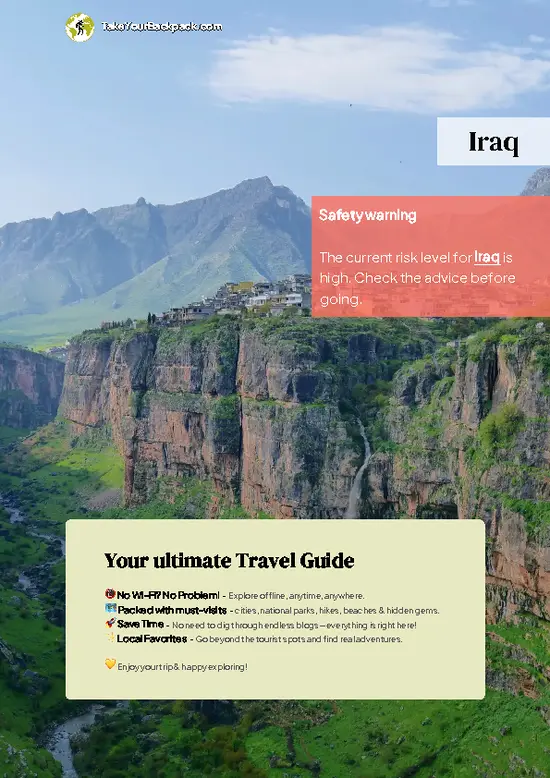
An offline-friendly backpacking guide with optimized travel routes, ranked highlights, transport advice, and the best areas to stay.
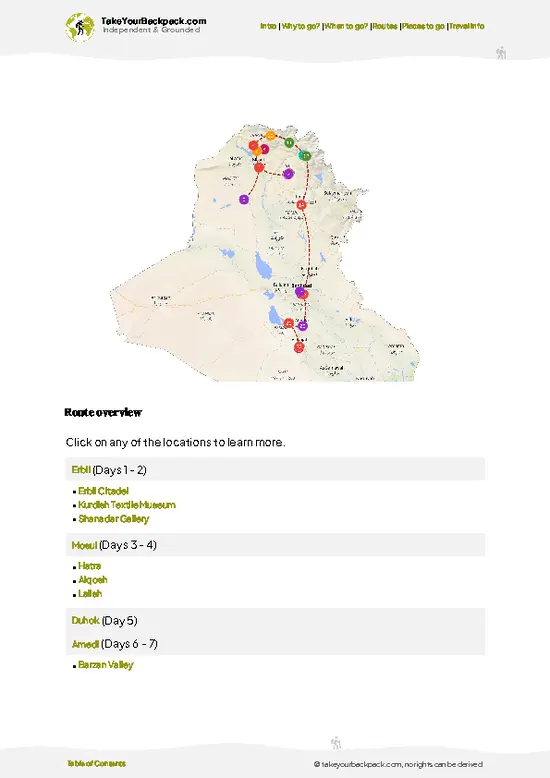
example page 0 from our offline Travel Guide for Iraq
example page 1 from our offline Travel Guide for Iraq
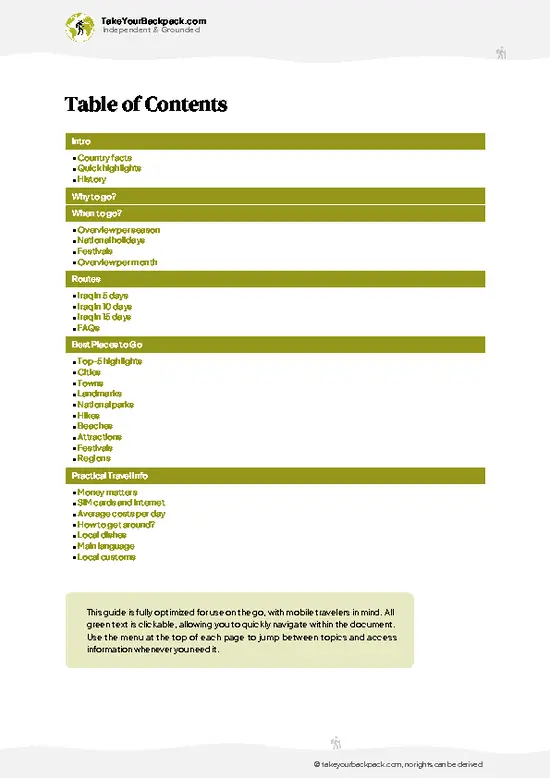
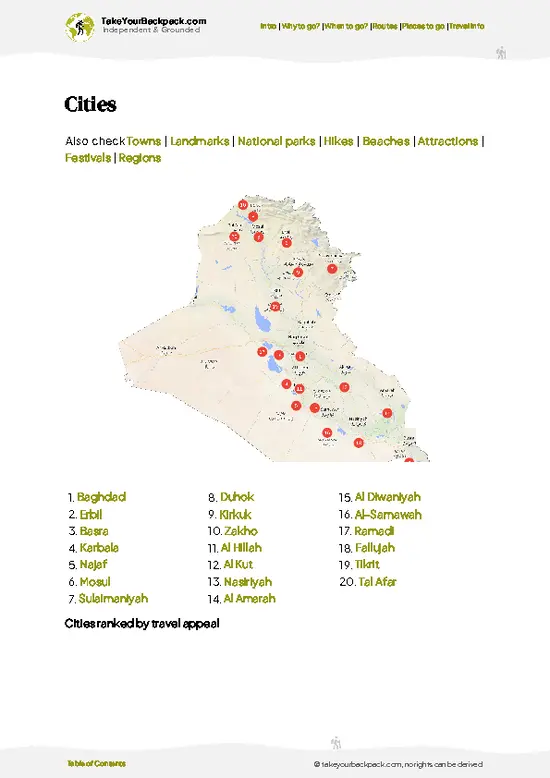
example page 2 from our offline Travel Guide for Iraq
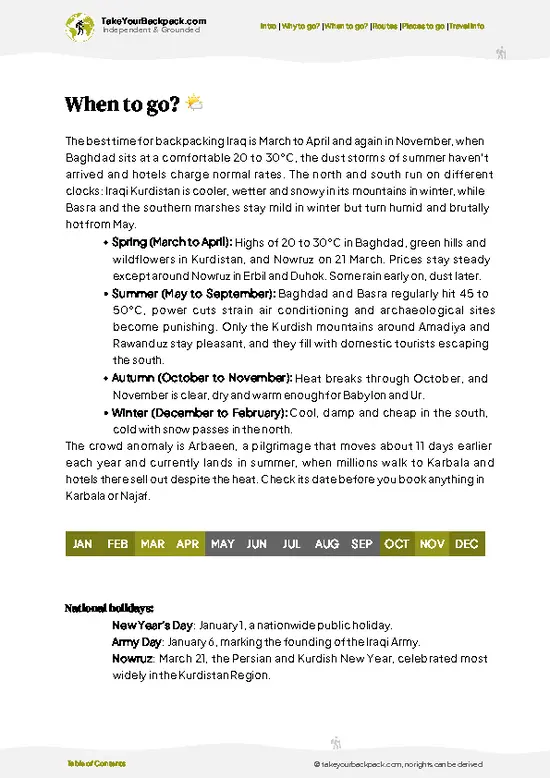
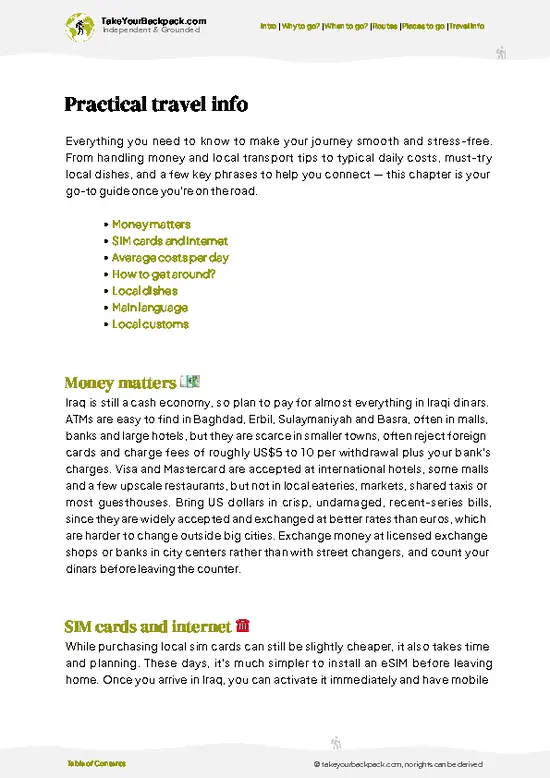
example page 3 from our offline Travel Guide for Iraq
example page 4 from our offline Travel Guide for Iraq
example page 5 from our offline Travel Guide for Iraq
example page 6 from our offline Travel Guide for Iraq
example page 7 from our offline Travel Guide for Iraq
The digital guide (375 pages) contains:
107 highlights, ranked by travel appeal
Optimized 5, 10 & 15-day travel routes
Cities, national parks, landmarks, beaches
How to get around
Offline-friendly for travel without Wi-Fi
👉 Click to see all 30+ guide features

📅 Plan smarter in minutes, not weeks
Month by month travel advice
Festivals & national holidays
Budget expectations

🗺️ Go to the right places, skip the overrated ones
Honest pros & cons of destinations
Top hikes, parks & viewpoints
Lesser-known places most travelers miss
Clear “worth it vs skip it” guidance

🛏️ Travel smoothly without rookie mistakes
Best areas to stay
Transport systems explained simply
Common scams & safety advice
SIM cards, money & practical tips

🌍 Understand the country, not just visit it
Culture & traditions
52 Essential phrases & customs
Festivals worth planning around
Traveler-friendly historical context
Insights that make places more meaningful

📱 Built for real travel conditions
Fully downloadable PDF
Works completely offline
Optimized for phone use
Useful in remote areas & buses
Everything in one place
Save weeks of stressful planning
Get instant access to your full guide. 30‑day money-back guarantee.


By proceeding you agree to our terms.
Sent to your inbox immediately after payment • 100% Secure Checkout
Best Backpacking Travel Advisor 2025 tourism awardBest Backpacking
Travel Advisor
2025
What others say about Take Your Backpack Guides:
⭐⭐⭐⭐⭐
Fantastic, amazing amount of information!
⭐⭐⭐⭐⭐
My goodness this is amazing, it's what I've been looking for hats off too you!
⭐⭐⭐⭐⭐
I think this is absolutely BRILLIANT
⭐⭐⭐⭐
Very complete and informative. It's still missing places, but I gotta to commend you
⭐⭐⭐⭐⭐
This is truly amazing, thank you, can't wait to explore it with my kids!
⭐⭐⭐⭐⭐
Awesome resource, thank you!
⭐⭐⭐⭐⭐
This is amazing! Can't wait to explore the ones I haven't seen
⭐⭐⭐⭐
I love this! Well done, great idea.
⭐⭐⭐⭐⭐
Thanks for taking the time to make this gem!
⭐⭐⭐⭐⭐
This might be the best website I've ever seen.
⭐⭐⭐⭐⭐
Congratulations, and thank you so much for your work; it's incredibly valuable.
⭐⭐⭐⭐
In all seriousness I think you did a great job pointing out the important spots
⭐⭐⭐⭐⭐
10/10 very good
⭐⭐⭐⭐⭐
As someone who's only just starting to visit regularly this is awesome, thank you.
⭐⭐⭐⭐
Thank you very much! I'm going to visit my dad, it's going to be very useful!
⭐⭐⭐⭐⭐
This is really cool! We'll be travelling for the first time and this definitely come in handy.
⭐⭐⭐⭐⭐
You are now our minister of culture, congratulations 👨‍💼
⭐⭐⭐⭐⭐
Just wanted to tell you that this is a pearl! Going to follow your recommendations.
⭐⭐⭐⭐⭐
This is so cool. I'll definitely be using the resource for my travels soon.
⭐⭐⭐⭐⭐
This is very impressive! Good work.
⭐⭐⭐⭐⭐
This is an amazing and informative site. Very well done!

🛏️ Where to stay?Accommodation Highlights

Yes — hostels and cheap guesthouses exist in Iraq but they’re concentrated and limited: the best and safest budget options are in Iraqi Kurdistan (Erbil city centre and the Ankawa suburb, and Sulaymaniyah centre), pilgrim hubs (Najaf and Karbala) offer many low-cost guesthouses, while Baghdad (Karrada and Mansour) and Basra tend to have a few budget hotels rather than backpacker hostels.

Erbil/Ankawa — safer and more tourist-friendly with cafes, nightlife and easier hostel availability but slightly pricier and routine ID/security checks; Sulaymaniyah — lively, affordable local guesthouses with fewer international services; Najaf/Karbala — very cheap and abundant near shrines but often overcrowded … read more 👉
Yes — hostels and cheap guesthouses exist in Iraq but they’re concentrated and limited: the best and safest budget options are in Iraqi Kurdistan (Erbil city centre and the Ankawa suburb, and Sulaymaniyah centre), pilgrim hubs (Najaf and Karbala) offer many low-cost guesthouses, while Baghdad (Karrada and Mansour) and Basra tend to have a few budget hotels rather than backpacker hostels.

Erbil/Ankawa — safer and more tourist-friendly with cafes, nightlife and easier hostel availability but slightly pricier and routine ID/security checks; Sulaymaniyah — lively, affordable local guesthouses with fewer international services; Najaf/Karbala — very cheap and abundant near shrines but often overcrowded during pilgrimage seasons and socially conservative; Baghdad (Karrada/Mansour) — central access to museums and restaurants but sparse hostel options and visible security measures; Basra — limited, basic hotels and variable conditions.

If you enjoy meeting fellow travelers, consider choosing hostels with high ratings for atmosphere. On the other hand, if you prefer having your own space, a hotel might be a better option.

IraqSee More of Iraq

👋 Meet the founderWho’s Behind Take Your Backpack?

Johan, backpacker and founder of TakeYourBackpackHi, I’m Johan (Netherlands 🇳🇱), the creator of TakeYourBackpack. Over the past decade, I’ve backpacked through 80+ countries across six continents, gaining extensive experience with independent travel, long-term trips, and overland routes.

This site is built on a combination of firsthand travel experience and carefully curated insights from other backpackers. Many guides are based on places I’ve personally visited, while others bring together tips, observations, and practical advice shared by trusted travelers I’ve met along the way.

The goal is to provide realistic, experience-driven guidance — not generic itineraries — so you can explore destinations with better context, clearer expectations, and more confidence.

Get full Iraq guide •
Instant download • 107 highlights • Full Offline guide