×

Ireland🇮🇪 | best townsWhere to Find the 10 Best towns in Ireland

Ireland has towns the way other countries have weather: constantly, and in every mood. Most are one main street, a church, a bank that closes at lunch and at least three pubs, one of which is somehow always the best. The west coast runs wilder, pricier in summer and harder to reach without a car. The east and south are denser, better connected by train and bus, and busier. The north and the midlands cost less and see far fewer visitors. For backpacking or any independent trip, the real choice is between easy and atmospheric, and you rarely get both before noon.

By Johan Kruseman 🇳🇱 | Updated October 18, 2026
Explore the best villages in Ireland

Why go?Understanding Their Importance

Ireland is built for towns in a way few countries are. Centuries of monastic settlement, Norman garrisons and plantation-era market charters left a dense grid of small market towns, usually one wide main street or a triangular square, a church at one end and a pub roughly every fourth doorway. With about five million people on the island and no megacities beyond Dublin, the town is where life happens, and it shows in the live music sessions, the butcher who also sells hardware, and the shop that closes for a funeral.

Geography does the rest. The island is small enough that you can cross it in about five hours by road, yet the Atlantic edge and the flatter east feel like different countries. Western towns are smaller, wetter and further apart. Eastern and southern ones sit on better rail and … read more 👉
Ireland is built for towns in a way few countries are. Centuries of monastic settlement, Norman garrisons and plantation-era market charters left a dense grid of small market towns, usually one wide main street or a triangular square, a church at one end and a pub roughly every fourth doorway. With about five million people on the island and no megacities beyond Dublin, the town is where life happens, and it shows in the live music sessions, the butcher who also sells hardware, and the shop that closes for a funeral.

Geography does the rest. The island is small enough that you can cross it in about five hours by road, yet the Atlantic edge and the flatter east feel like different countries. Western towns are smaller, wetter and further apart. Eastern and southern ones sit on better rail and bus lines.

Before choosing Ireland for its towns, know that public transport thins sharply once you leave the main corridors. Rural buses can run once or twice a day, sometimes not on Sundays, and the timetable is more a polite suggestion. Weather changes four times before lunch, so plans need a waterproof layer and a flexible attitude. Accommodation is pricier than in most of Europe, and small towns can be fully booked in summer. Pack patience and you will be fine.
Why These Made the Cut
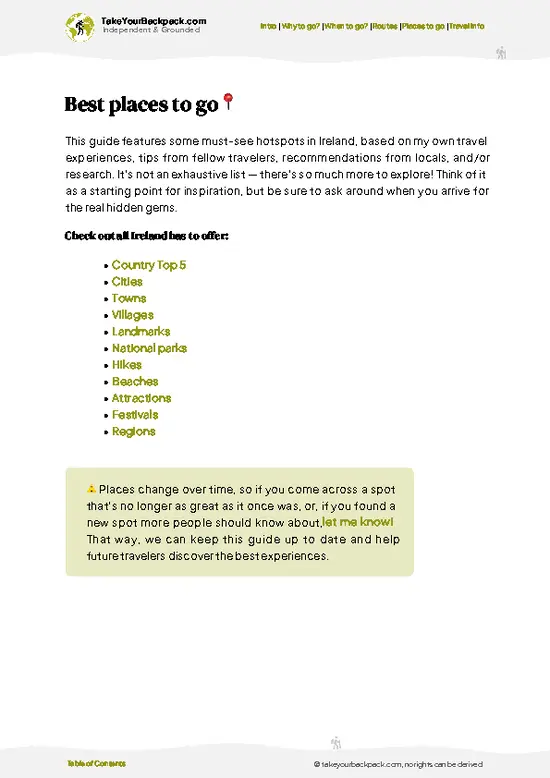
The list of best towns in Ireland is created based on charm, local culture, atmosphere, hidden gems, and visitor appeal. If you feel a town is missing in this list, please let us know.

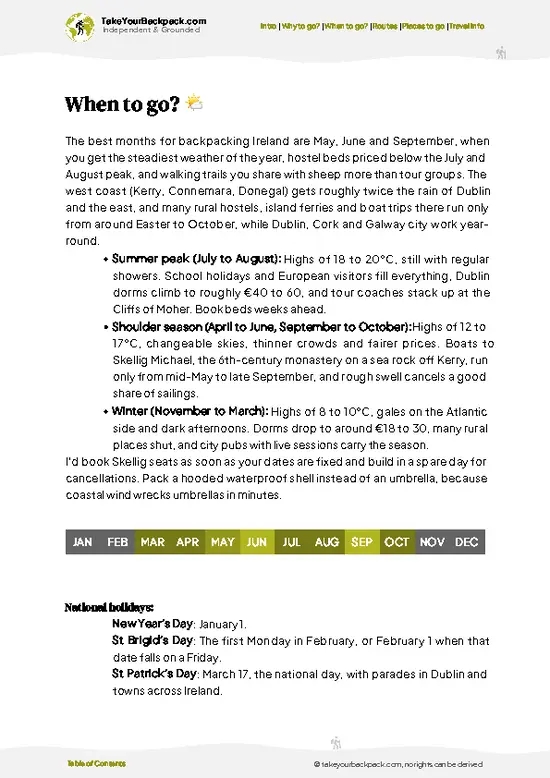
When to go?Best Time to Visit Ireland for towns

Best months for towns: May to September is the best window for Ireland’s towns, with daytime highs of about 15 to 20°C, daylight until 9:30 or 10 p.m. in midsummer, and the full set of buses, ferries, festivals and attractions running. June is usually the driest month in much of the country, though “dry” in Ireland is a relative term and rain falls roughly one day in two on the west coast.

Shoulder seasons: April, May, late September and October are the sensible compromise. Temperatures sit around 9 to 15°C, crowds thin out, and hostels and B&Bs often cost 15 to 30 percent less than in July and August. Some seasonal tours and island ferries start late or end early, so check before building plans around them.

Peak and winter: July and August bring the highest prices, and the west and southwest … read more 👉
Best months for towns: May to September is the best window for Ireland’s towns, with daytime highs of about 15 to 20°C, daylight until 9:30 or 10 p.m. in midsummer, and the full set of buses, ferries, festivals and attractions running. June is usually the driest month in much of the country, though “dry” in Ireland is a relative term and rain falls roughly one day in two on the west coast.

Shoulder seasons: April, May, late September and October are the sensible compromise. Temperatures sit around 9 to 15°C, crowds thin out, and hostels and B&Bs often cost 15 to 30 percent less than in July and August. Some seasonal tours and island ferries start late or end early, so check before building plans around them.

Peak and winter: July and August bring the highest prices, and the west and southwest (Kerry, Clare, Galway, Donegal) fill up first. Bank holiday weekends in early May, June and August push rates up nationwide, and festival weekends can double a bed price in smaller places. From November to February, highs fall to 6 to 9°C, days shrink to about eight hours of light, and rain is frequent. Many seasonal cafés, guesthouses and attractions in coastal towns close, though cities and larger inland towns keep going, with cheaper beds and turf fires doing a lot of the work.

town hoppingTips for Visiting Multiple Destinations

How long to allow: A trip linking several Irish towns needs 7 to 14 days, and 10 is comfortable for most people. The country is small, but narrow roads and sparse buses turn 150 kilometers into half a day.

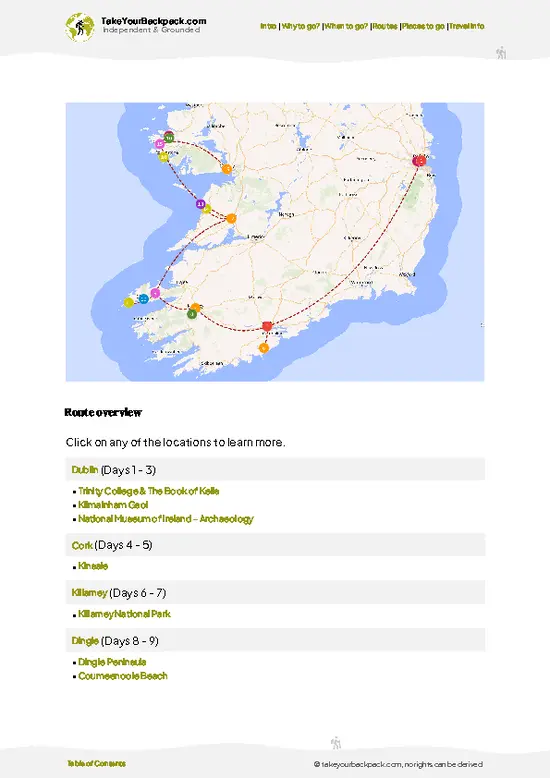
Grouping and direction: The regions cluster naturally. Dublin and the east link easily with the south, since rail and fast buses fan out from Dublin Heuston and Connolly stations. The southwest and the Wild Atlantic Way along the west fit together as a second block, and the north and northwest form a third. A loop that goes down the east, up the west and finishes in Dublin or Belfast avoids doubling back. Traveling clockwise or counterclockwise is up to you, but the west is easier to enjoy heading north in the afternoon with the sun behind you.

Pace and transfers: Allow two nights per … read more 👉
How long to allow: A trip linking several Irish towns needs 7 to 14 days, and 10 is comfortable for most people. The country is small, but narrow roads and sparse buses turn 150 kilometers into half a day.

Grouping and direction: The regions cluster naturally. Dublin and the east link easily with the south, since rail and fast buses fan out from Dublin Heuston and Connolly stations. The southwest and the Wild Atlantic Way along the west fit together as a second block, and the north and northwest form a third. A loop that goes down the east, up the west and finishes in Dublin or Belfast avoids doubling back. Traveling clockwise or counterclockwise is up to you, but the west is easier to enjoy heading north in the afternoon with the sun behind you.

Pace and transfers: Allow two nights per stop as a minimum, one night only if the town is a pass-through. Transfers between regions typically take 2 to 4 hours by bus or train, and cross-country links such as the west to the north can take 5 to 6.

Common planning mistakes: The classic error is cramming one town per night, which leaves a trip made of bus stations and soggy sandwiches. Another is assuming Sunday service matches weekdays when it often does not. Build in a spare half day for weather and book beds early for July, August and weekends.

The ListMust-Visit towns in Ireland

1 Killarney

National park, lakes, Victorian estate

Cycle past mirror-like lakes, explore woodland trails, and visit stately homes set against a backdrop of distant mountains.

ireland-city-killarney
© Google |

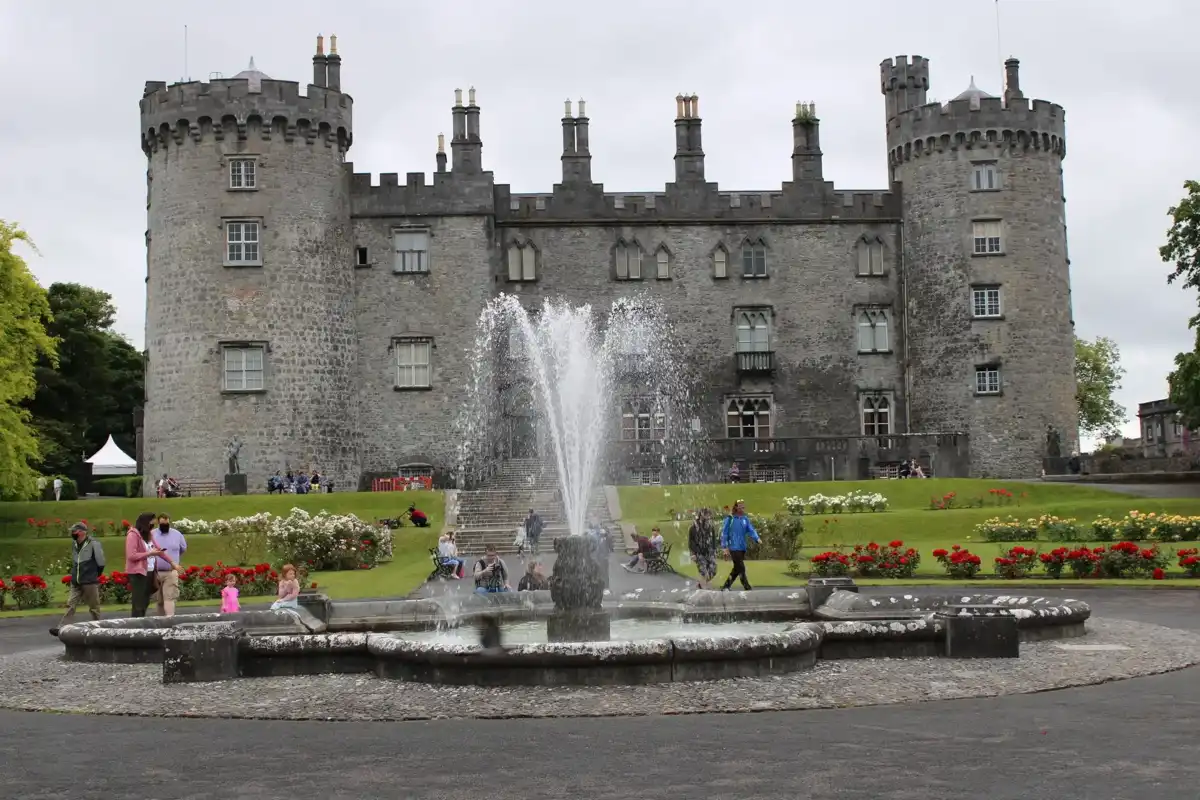
2 Kilkenny

Medieval castle, craft workshops, narrow lanes

Wander through stone alleys, browse artisan studios, and pause in quiet courtyards beneath the shadow of a centuries-old fortress.

ireland-city-kilkenny
© Google | Mark

3 Kinsale

Harbor town, seafood restaurants, 17th-century fort

Dine on fresh catch by the waterfront, stroll winding streets lined with galleries, and climb to a star-shaped fort above the bay.

4 Cobh

Harbourfront, Titanic history, colorful terraces

Walk steep streets overlooking a busy port, discover maritime stories, and watch ferries come and go beneath pastel facades.

ireland-city-cobh
© Google | Wojtek P

5 Westport

Georgian town, Croagh Patrick views, tree-lined mall

Cycle along greenways, relax in leafy squares, and watch the sun set behind a mountain that draws pilgrims and hikers alike.

ireland-city-westport
© Google |

6 Sligo

Benbulben, surf beaches, Yeats connections

Surf Atlantic waves, hike beneath dramatic cliffs, and explore landscapes that inspired poetry and art for generations.

ireland-city-sligo
© Google |

7 Ennis

Traditional music, winding streets, friary ruins

Listen for fiddles in snug pubs, get lost in a maze of medieval lanes, and find quiet corners among ancient stonework.

ireland-city-ennis
© Google |

8 Wexford

Opera house, quayside, Norman lanes

Attend a performance in a modern venue, wander medieval streets, and sample seafood along a lively waterfront.

ireland-city-wexford
© Google |

9 Bantry

Bay shoreline, weekly market, stately house gardens

Absorb coastal life where fishing boats share space with market stalls and a grand estate overlooks the shifting tides.

ireland-city-bantry
© Google |

10 Dungarvan

Harbour square, Greenway trail, seafood market

Cycle a coastal path, sample fresh catch at the market, and linger in a lively square overlooking the bay.

ireland-city-dungarvan
© Google |

11 Tralee

Rose Garden, museum, Blennerville windmill

Stroll through public parks, learn local stories in interactive exhibits, and watch sails turn slowly on the edge of town.

12 Ballina

River Moy, salmon fishing, Belleek woods

Follow the rhythm of a town where anglers cast lines at dawn, forest trails wind quietly, and local pubs fill with music after dark.

ireland-city-ballina
© Google |

13 Youghal

Town walls, clock gate, sandy strand

Climb ancient towers, stroll along a long beach, and find traces of old trade routes in narrow streets.

14 Carrick-on-Shannon

River cruising, arts centre, marina

Rent a boat for slow travel, catch a show in a riverside venue, and enjoy evenings by the water’s edge.

15 Trim

Norman castle, Boyne river, medieval walls

Walk grassy ramparts, cross stone bridges, and explore a riverside town shaped by centuries of conflict and trade.

16 Birr

Georgian architecture, science heritage, landscaped demesne

Stroll among stately facades and tree-lined avenues, then discover a legacy of invention in a town shaped by curiosity and design.

ireland-city-birr
© Google |

17 Letterkenny

Market town, cathedral, Donegal gateway

Stock up at local shops, admire stained glass in a hilltop church, and set out for wild landscapes just beyond the town limits.

18 Shannon

airport gateway, estuary views, business parks

Experience a practical stopover with easy airport access, modern amenities, and quick connections to the west of Ireland.

Think you know Ireland?

Prove you’re a true local — uncover 8 lesser-known towns in Ireland that locals tend to keep to themselves.
Loading the map 🌍

Expert viewTips and Advice from Travelers

How many towns to visit: Four to six towns is the right number for a trip of one to two weeks. Fewer than that and you miss the contrast between regions. More and you spend the days waiting for buses and the nights re-packing a damp bag. At two nights each, you have time to walk the main street twice, find the pub where locals actually sit and still get a proper morning breakfast.

Which kind to prioritize: If music and nightlife matter, favor the larger, livelier towns with several pubs and regular sessions, where a pint and a fiddle fill the evening. If you want walking, coast and quiet, pick smaller west-coast and northwestern places, where the street ends in a headland and the soundtrack is wind. For history, choose the old walled and market towns of the east and south, where a castle … read more 👉
How many towns to visit: Four to six towns is the right number for a trip of one to two weeks. Fewer than that and you miss the contrast between regions. More and you spend the days waiting for buses and the nights re-packing a damp bag. At two nights each, you have time to walk the main street twice, find the pub where locals actually sit and still get a proper morning breakfast.

Which kind to prioritize: If music and nightlife matter, favor the larger, livelier towns with several pubs and regular sessions, where a pint and a fiddle fill the evening. If you want walking, coast and quiet, pick smaller west-coast and northwestern places, where the street ends in a headland and the soundtrack is wind. For history, choose the old walled and market towns of the east and south, where a castle or a ruined abbey sits a few minutes from a coffee. Mixing one of each keeps the trip from feeling samey.

What it costs: Ireland is expensive. A backpacker can manage on about €60 to 90 a day, with a hostel dorm at €25 to 45 (more in summer), a pub meal at €14 to 22, a pint at €5.50 to 7 and a cafe breakfast at €8 to 12. Local buses between towns usually run €8 to 25 per ride, and booking ahead can trim that. Entry fees for castles, heritage sites and museums run roughly €5 to 20, and a guided walk or tour typically adds €10 to 30. Budget around €15 to 40 per attraction visit, including transport to reach it, and the Heritage Card (about €40) pays for itself after a few state-run sites.

Safety and etiquette: Towns here are very safe, and violent crime against visitors is rare. Petty theft from cars and unattended bags happens, so leave nothing visible in a parked vehicle. Rural roads are narrow, with no shoulder and fast local drivers, so walk facing traffic and wear something bright after dusk.

Culturally, buying a round is a real custom, so join in or politely say you will get the next one. Pubs run on conversation, and a friendly comment about the weather will start one. Tipping is modest, about 10 percent for table service, and Sunday closures and early shop hours are normal in small places. A waterproof jacket, which you will wear, is the one item worth spending money on.

✈️ The backpacker research shortcutIreland Travel Guide

An offline-friendly backpacking guide with optimized travel routes, ranked highlights, transport advice, and the best areas to stay.
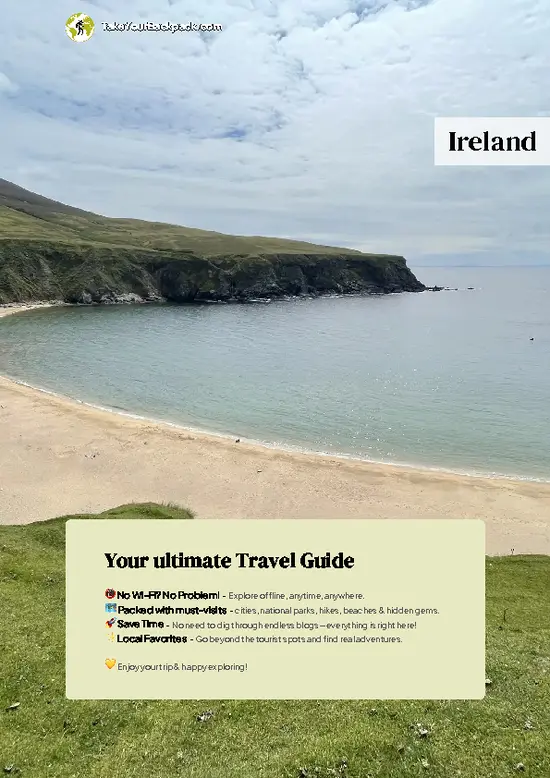
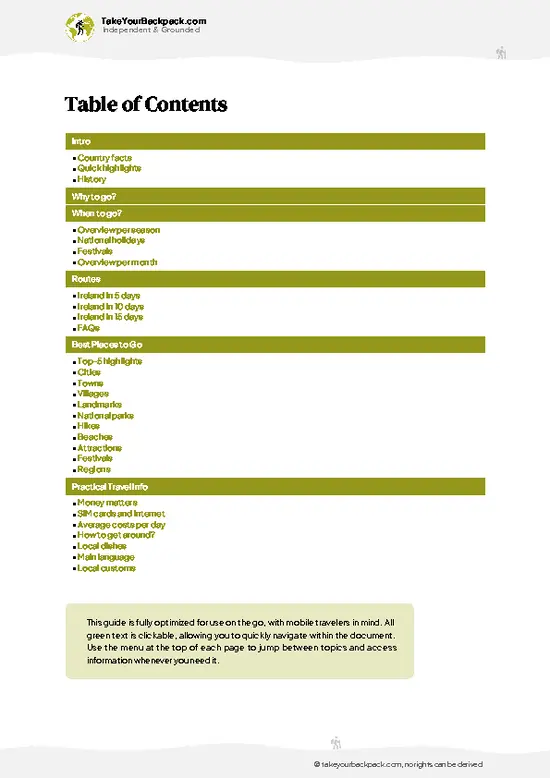
example page 0 from our offline Travel Guide for Ireland
example page 1 from our offline Travel Guide for Ireland
example page 2 from our offline Travel Guide for Ireland
example page 3 from our offline Travel Guide for Ireland
example page 4 from our offline Travel Guide for Ireland
example page 5 from our offline Travel Guide for Ireland
example page 6 from our offline Travel Guide for Ireland
example page 7 from our offline Travel Guide for Ireland
The digital guide (366 pages) contains:
✅ 103 highlights, ranked by travel appeal
✅ Optimized 5, 10 & 15-day travel routes
✅ Cities, national parks, landmarks, beaches
✅ How to get around
✅ Offline-friendly for travel without Wi-Fi
👉 Click to see all 30+ guide features

📅 Plan smarter in minutes, not weeks
✅ Month by month travel advice
✅ Festivals & national holidays
✅ Budget expectations

🗺️ Go to the right places, skip the overrated ones
✅ Honest pros & cons of destinations
✅ Top hikes, parks & viewpoints
✅ Lesser-known places most travelers miss
✅ Clear “worth it vs skip it” guidance

🛏️ Travel smoothly without rookie mistakes
✅ Best areas to stay
✅ Transport systems explained simply
✅ Common scams & safety advice
✅ SIM cards, money & practical tips

🌍 Understand the country, not just visit it
✅ Culture & traditions
✅ Local customs
✅ Festivals worth planning around
✅ Traveler-friendly historical context
✅ Insights that make places more meaningful

📱 Built for real travel conditions
✅ Fully downloadable PDF
✅ Works completely offline
✅ Optimized for phone use
✅ Useful in remote areas & buses
✅ Everything in one place
Stop searching, start planning
Get instant access to your full guide. 30‑day money-back guarantee.
+ Add another guide for just

By proceeding you agree to our terms.
Sent to your inbox immediately after payment • 100% Secure Checkout
Best Backpacking Travel Advisor 2025 tourism awardBest Backpacking
Travel Advisor
2025
What others say about Take Your Backpack Guides:
⭐⭐⭐⭐⭐
Fantastic, amazing amount of information!
⭐⭐⭐⭐⭐
My goodness this is amazing, it's what I've been looking for hats off too you!
⭐⭐⭐⭐⭐
I think this is absolutely BRILLIANT
⭐⭐⭐⭐
Very complete and informative. It's still missing places, but I gotta to commend you
⭐⭐⭐⭐⭐
This is truly amazing, thank you, can't wait to explore it with my kids!
⭐⭐⭐⭐⭐
Awesome resource, thank you!
⭐⭐⭐⭐⭐
This is amazing! Can't wait to explore the ones I haven't seen
⭐⭐⭐⭐
I love this! Well done, great idea.
⭐⭐⭐⭐⭐
Thanks for taking the time to make this gem!
⭐⭐⭐⭐⭐
This might be the best website I've ever seen.
⭐⭐⭐⭐⭐
Congratulations, and thank you so much for your work; it's incredibly valuable.
⭐⭐⭐⭐
In all seriousness I think you did a great job pointing out the important spots
⭐⭐⭐⭐⭐
10/10 very good
⭐⭐⭐⭐⭐
As someone who's only just starting to visit regularly this is awesome, thank you.
⭐⭐⭐⭐
Thank you very much! I'm going to visit my dad, it's going to be very useful!
⭐⭐⭐⭐⭐
This is really cool! We'll be travelling for the first time and this definitely come in handy.
⭐⭐⭐⭐⭐
You are now our minister of culture, congratulations 👨‍💼
⭐⭐⭐⭐⭐
Just wanted to tell you that this is a pearl! Going to follow your recommendations.
⭐⭐⭐⭐⭐
This is so cool. I'll definitely be using the resource for my travels soon.
⭐⭐⭐⭐⭐
This is very impressive! Good work.
⭐⭐⭐⭐⭐
This is an amazing and informative site. Very well done!

🛏️ Where to stay?Top Areas to Stay

Hostels are easy to find in Ireland, with dorm beds running roughly €30 to €60 a night in Dublin and €20 to €35 in smaller cities, plus a network of independent hostels along the west coast. In Dublin, Temple Bar puts you on top of the pubs and walkable to Trinity College, though weekend noise and premium prices are part of the deal, while the area around O’Connell Street and Smithfield north of the Liffey costs less and sits near the Busáras coach station but feels rougher late at night. Galway’s Latin Quarter is compact, lively and full of live music until late, and central Cork around St Patrick’s Street keeps you close to the English Market and the pubs without Dublin prices.

If you enjoy … read more 👉
Hostels are easy to find in Ireland, with dorm beds running roughly €30 to €60 a night in Dublin and €20 to €35 in smaller cities, plus a network of independent hostels along the west coast. In Dublin, Temple Bar puts you on top of the pubs and walkable to Trinity College, though weekend noise and premium prices are part of the deal, while the area around O’Connell Street and Smithfield north of the Liffey costs less and sits near the Busáras coach station but feels rougher late at night. Galway’s Latin Quarter is compact, lively and full of live music until late, and central Cork around St Patrick’s Street keeps you close to the English Market and the pubs without Dublin prices.

If you enjoy meeting fellow travelers, consider choosing hostels with high ratings for atmosphere. On the other hand, if you prefer having your own space, a hotel might be a better option.

IrelandDiscover the Country

👋 Meet the founderWho’s Behind Take Your Backpack?

Johan, backpacker and founder of TakeYourBackpackHi, I’m Johan (Netherlands 🇳🇱), the creator of TakeYourBackpack. Over the past 3 decades, I’ve backpacked through 90+ countries across six continents, gaining extensive experience with independent travel, long-term trips, and overland routes.

This site is built on a combination of firsthand travel experience and carefully curated insights from other backpackers. Many guides are based on places I’ve personally visited, while others bring together tips, observations, and practical advice shared by trusted travelers I’ve met along the way.

The goal is to provide realistic, experience-driven guidance — not generic itineraries — so you can explore destinations with better context, clearer expectations, and more confidence.