×

Laos🇱🇦 | best festivalsDiscover the 10 Best festivals Across Laos

Festivals in Laos pulse with life, weaving together ancient traditions and vibrant community spirit. Each region boasts its own unique celebrations, from the Lantern Festival in Luang Prabang, where the night sky ignites with floating lights, to the Boun Pi Mai (Lao New Year), celebrated nationwide with water fights that cool the sweltering April heat. Timing is crucial; festivals often align with the lunar calendar, affecting crowds and travel logistics. Choosing the right festival can transform your backpacking experience, influencing everything from budget to cultural immersion. Expect varying atmospheres—some are intimate and reflective, while others erupt in joyous chaos, making your journey through Laos a rich tapestry of local life.

By Johan Kruseman 🇳🇱 | Updated June 12, 2026
Explore the best regions in Laos

Why go?Why These festival Stand Out

Festivals in Laos are a vibrant tapestry of cultural significance and community spirit, deeply rooted in the country’s Buddhist traditions and agricultural cycles. Unlike many other countries, Laos offers a unique blend of spirituality and celebration, where each festival serves as a communal gathering that strengthens social ties and honors ancestral customs. The timing of these festivals often aligns with the lunar calendar, creating a rhythm that resonates with the natural world.

The geographic landscape of Laos, with its mountainous terrain and lush river valleys, adds a layer of atmospheric beauty to these events. However, accessibility can be a challenge. Many festivals occur in remote areas, requiring travelers to navigate winding roads and sometimes endure long travel times. This … read more 👉
Festivals in Laos are a vibrant tapestry of cultural significance and community spirit, deeply rooted in the country’s Buddhist traditions and agricultural cycles. Unlike many other countries, Laos offers a unique blend of spirituality and celebration, where each festival serves as a communal gathering that strengthens social ties and honors ancestral customs. The timing of these festivals often aligns with the lunar calendar, creating a rhythm that resonates with the natural world.

The geographic landscape of Laos, with its mountainous terrain and lush river valleys, adds a layer of atmospheric beauty to these events. However, accessibility can be a challenge. Many festivals occur in remote areas, requiring travelers to navigate winding roads and sometimes endure long travel times. This trade-off can lead to a more immersive experience, as the journey itself often reveals the heart of Lao culture.

Crowd sizes can vary significantly, with some festivals attracting large numbers of locals and tourists, while others remain intimate and personal. The larger gatherings may offer a more dynamic atmosphere but can dilute the authenticity of the experience. Conversely, smaller festivals provide a deeper connection to local traditions but may lack the spectacle that draws many visitors.

Understanding these nuances is essential for travelers seeking to engage meaningfully with Laos’s rich festival culture.
Our Approach to Ranking
The list of best festivals in Laos is created based on energy, traditions, crowd experience, activities, and overall excitement. If you feel a festival is missing in this list, please let us know.

When to go?Optimal Periods for Travel

Seasonality plays a crucial role in the festival landscape of Laos. The dry season, from November to April, is the prime time for festivals. During these months, the weather is cooler and more comfortable, making it easier to immerse in the vibrant celebrations. The air is crisp, and the skies are often clear, enhancing the festive atmosphere. However, this peak season also attracts larger crowds, leading to higher costs for accommodations and travel.

Shoulder seasons, particularly late October and early May, offer a different experience. The weather can be unpredictable, with occasional rain, but the crowds are thinner. This can lead to a more authentic experience, allowing for deeper connections with locals and their traditions. The trade-off here is the potential for less predictable weather, … read more 👉
Seasonality plays a crucial role in the festival landscape of Laos. The dry season, from November to April, is the prime time for festivals. During these months, the weather is cooler and more comfortable, making it easier to immerse in the vibrant celebrations. The air is crisp, and the skies are often clear, enhancing the festive atmosphere. However, this peak season also attracts larger crowds, leading to higher costs for accommodations and travel.

Shoulder seasons, particularly late October and early May, offer a different experience. The weather can be unpredictable, with occasional rain, but the crowds are thinner. This can lead to a more authentic experience, allowing for deeper connections with locals and their traditions. The trade-off here is the potential for less predictable weather, which might dampen outdoor festivities.

Peak periods during major festivals can be exhilarating yet overwhelming. The energy is palpable, but navigating through throngs of tourists can detract from the experience. Conversely, visiting during quieter times means fewer distractions but may limit the number of events available.

Understanding these seasonal dynamics is essential for planning a trip that balances the thrill of vibrant celebrations with the desire for a more intimate cultural experience.

festival hoppingSuggested Travel Strategies

Festival Routing Logic
Start in the north with the vibrant celebrations of Luang Prabang. The city hosts the famous Pi Mai (Lao New Year) in April, a riot of water fights and traditional ceremonies. From there, head south to Vang Vieng for the annual Vang Vieng Festival in July, where music and adventure blend seamlessly. This route keeps travel efficient, allowing for a natural flow from one cultural hotspot to another.

Timing and Pacing
Allocate at least three days in each location. This allows for festival immersion and recovery. Festivals can be exhausting, with crowds and activities that stretch into the night. Balance high-energy days with downtime to recharge.

Common Mistakes
Travelers often underestimate travel times between festivals. Roads can be winding and slow, especially … read more 👉
Festival Routing Logic
Start in the north with the vibrant celebrations of Luang Prabang. The city hosts the famous Pi Mai (Lao New Year) in April, a riot of water fights and traditional ceremonies. From there, head south to Vang Vieng for the annual Vang Vieng Festival in July, where music and adventure blend seamlessly. This route keeps travel efficient, allowing for a natural flow from one cultural hotspot to another.

Timing and Pacing
Allocate at least three days in each location. This allows for festival immersion and recovery. Festivals can be exhausting, with crowds and activities that stretch into the night. Balance high-energy days with downtime to recharge.

Common Mistakes
Travelers often underestimate travel times between festivals. Roads can be winding and slow, especially in rural areas. Avoid cramming too many events into a short period; it leads to burnout and missed experiences.

Trade-offs and Constraints
Consider the trade-off between speed and depth. Rushing through festivals may save time but sacrifices the rich cultural experiences. Budget for comfortable transport options, as the journey can be part of the adventure. Flexibility is key; be ready to adapt plans based on local conditions or personal energy levels.

The ListMust-Visit festivals in Laos

1 Boun Pi Mai

New Year, sand stupas, street celebrations

Join in multi-day festivities with sand stupa building, water rituals, and communal gatherings that mark the start of the Lao calendar year.

2 Boun That Luang

Golden stupa, candle processions, national gathering

Witness thousands converging at the capital’s iconic stupa for processions and ceremonies that unite diverse communities from across Laos.

3 Boun Wat Phou

Khmer ruins, incense rituals, mountain sunrise

Join locals at dawn as offerings and prayers fill the ancient temple grounds, blending spiritual tradition with dramatic archaeological scenery.

4 Boun Bang Fai

Rocket launches, village fields, thunderous crowds

Stand among villagers as homemade rockets soar skyward, signaling hopes for rain and a good harvest in a festival of noise and anticipation.

5 Boun Songkran

Water splashing, street parades, floral scents

Celebrate the Lao New Year by joining water fights, temple visits, and processions where cleansing rituals meet festive street gatherings.

6 Boun Ok Phansa

End of Buddhist Lent, illuminated boats, temple chanting

Mark the close of Buddhist Lent with illuminated boat processions and temple ceremonies, as communities gather to release offerings onto the water.

7 Boun Suang Heua

River races, dragon boats, cheering crowds

Watch teams paddle longboats through muddy waters while riverside communities gather for a day of competition, music, and communal feasting.

8 Boun Khao Padabdin

Ancestor rites, riverbank lanterns, night ceremonies

Participate in nighttime rituals where families send offerings and candle-lit floats downstream, honoring departed relatives in a quiet, reflective setting.

9 Boun That Inhang

Sacred stupa, candlelit processions, regional pilgrims

Observe pilgrims circling the revered stupa with candles and offerings, marking a spiritual highlight for communities in southern Laos.

10 Boun Khao Salak

Monk offerings, temple courtyards, food baskets

Experience families preparing detailed food parcels for monks, reflecting a deep-rooted Buddhist practice centered on merit and remembrance.

Loading the map 🌍

Expert viewExpert Commentary on festivals

Festival Timing
Laos is a country that pulses with life during its festivals, and timing is everything. The major celebrations often align with the lunar calendar, so planning around these dates is crucial. The biggest events, like Pi Mai (Lao New Year) in April, draw massive crowds. Expect a vibrant atmosphere filled with water fights, traditional dances, and the scent of incense wafting through the air. But with the excitement comes chaos. Streets can be packed, and accommodations fill up fast. If you’re looking for a more intimate experience, consider smaller festivals like Boun That Luang in November, which, while still lively, offer a chance to engage more deeply with local customs without the overwhelming crowds.

Cultural Context
Understanding the cultural significance of these festivals … read more 👉
Festival Timing
Laos is a country that pulses with life during its festivals, and timing is everything. The major celebrations often align with the lunar calendar, so planning around these dates is crucial. The biggest events, like Pi Mai (Lao New Year) in April, draw massive crowds. Expect a vibrant atmosphere filled with water fights, traditional dances, and the scent of incense wafting through the air. But with the excitement comes chaos. Streets can be packed, and accommodations fill up fast. If you’re looking for a more intimate experience, consider smaller festivals like Boun That Luang in November, which, while still lively, offer a chance to engage more deeply with local customs without the overwhelming crowds.

Cultural Context
Understanding the cultural significance of these festivals enhances the experience. Each celebration is steeped in history and local traditions. For instance, Boun Bang Fai, or the Rocket Festival, is a raucous event that celebrates the agricultural cycle. Locals launch homemade rockets into the sky, hoping for a bountiful harvest. The energy is infectious, but be prepared for a boisterous crowd and a fair amount of noise. This isn’t just a spectacle; it’s a communal event that reflects the heart of Lao culture.

Energy and Atmosphere
The energy at these festivals can be electric, but it varies widely. During Pi Mai, the atmosphere is jubilant, with laughter and splashes of water everywhere. The streets transform into a playground, but navigating through the throngs can be a challenge. If you’re not keen on the chaos, consider attending during the quieter times of the year. Festivals like Boun Khao Phansa in July focus on reflection and merit-making, offering a more subdued yet equally meaningful experience.

Budget and Comfort
Budgeting for festivals in Laos requires some flexibility. While many events are free to attend, costs can add up quickly with food, drinks, and transportation. Street food stalls offer delicious options at low prices, but be cautious about hygiene. If you’re looking for comfort, consider splurging on a nicer hotel during peak festival times, as prices can spike. However, if you’re willing to rough it, hostels and guesthouses often have a communal vibe that enhances the festival experience.

Crowd Management
Crowd management is essential, especially during peak festivals. Arrive early to secure a good spot for viewing parades or ceremonies. If you’re not a fan of large crowds, consider attending events on the outskirts of major cities where locals gather. These smaller gatherings often provide a more authentic experience, allowing you to connect with the community.

Safety and Cultural Considerations
Safety is paramount. While Laos is generally safe, be aware of your surroundings, especially in crowded areas. Respect local customs and dress modestly, particularly during religious ceremonies. Engaging with locals can enrich your experience, but approach with respect and an open mind.

Final Thoughts
Aim to experience at least two to three festivals during your visit to truly grasp the cultural tapestry of Laos. Each festival offers a unique lens into the local way of life, and the effort you put into navigating the crowds and planning your trip will pay off in unforgettable memories. Whether you’re dancing in the streets during Pi Mai or quietly reflecting during Boun Khao Phansa, the essence of Laos will resonate long after the celebrations end.

✈️ The backpacker research shortcutLaos Travel Guide

An offline-friendly backpacking guide with optimized travel routes, ranked highlights, transport advice, and the best areas to stay.
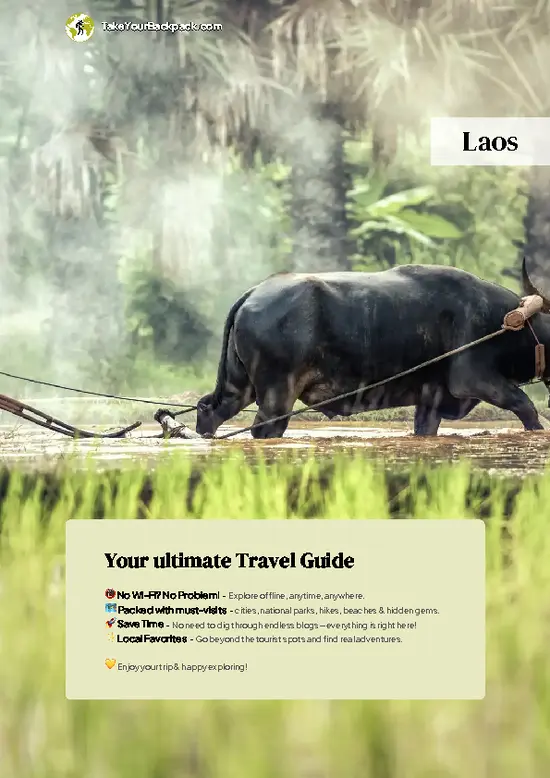
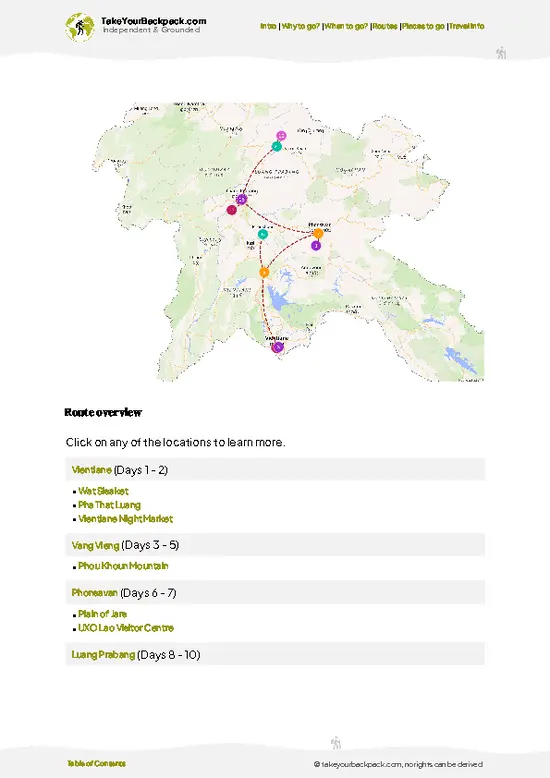
example page 0 from our offline Travel Guide for Laos
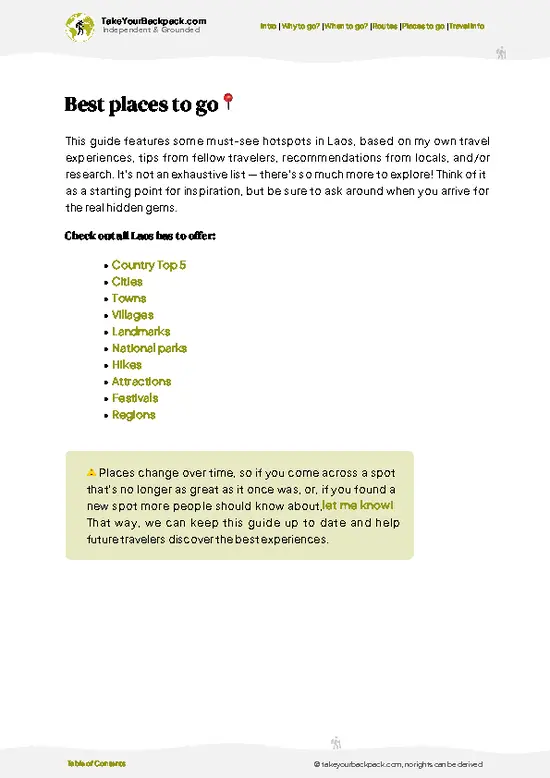
example page 1 from our offline Travel Guide for Laos
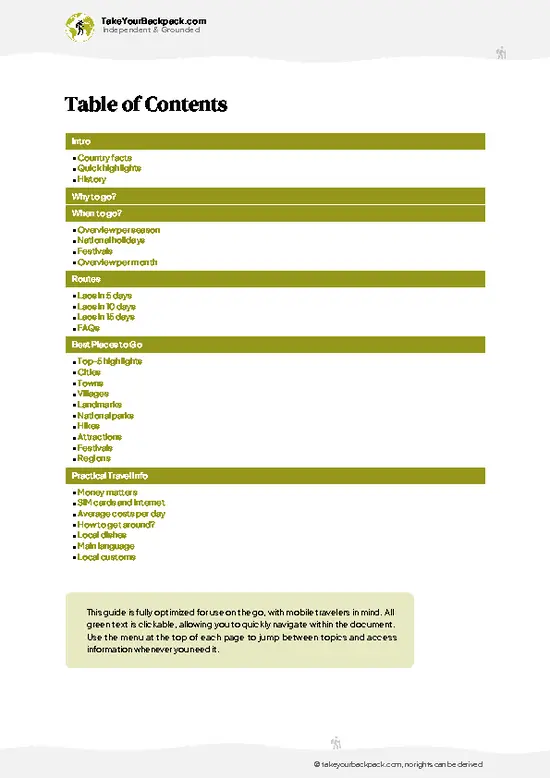
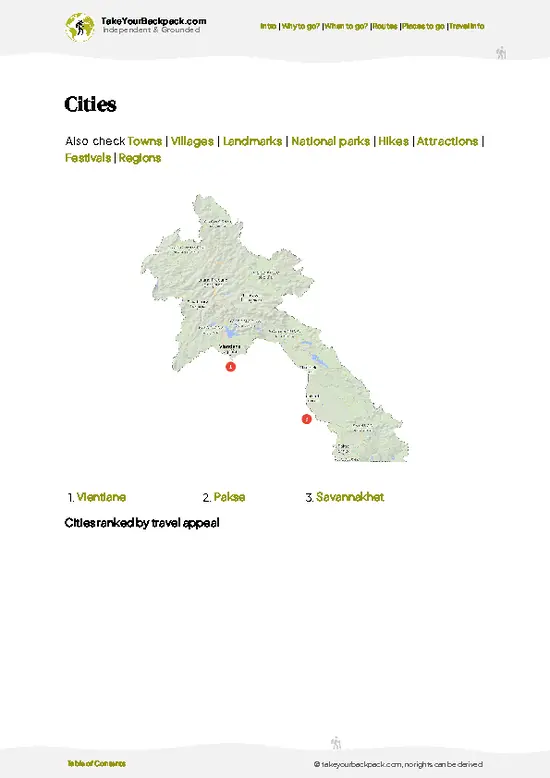
example page 2 from our offline Travel Guide for Laos
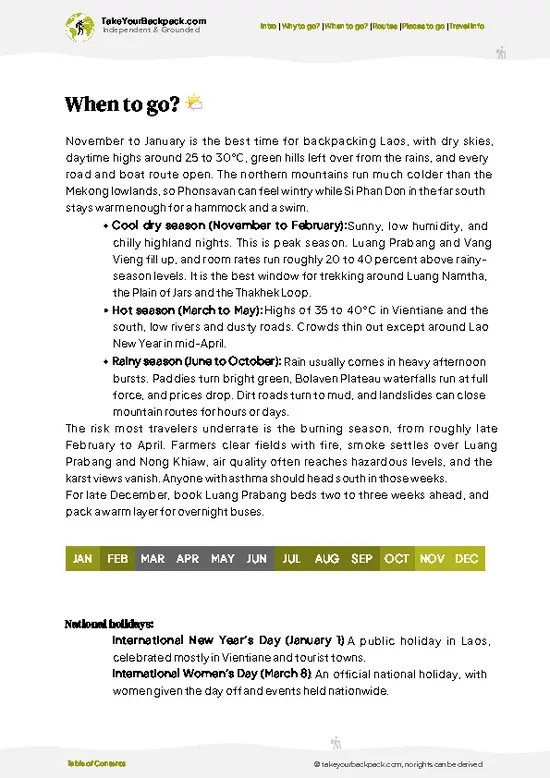
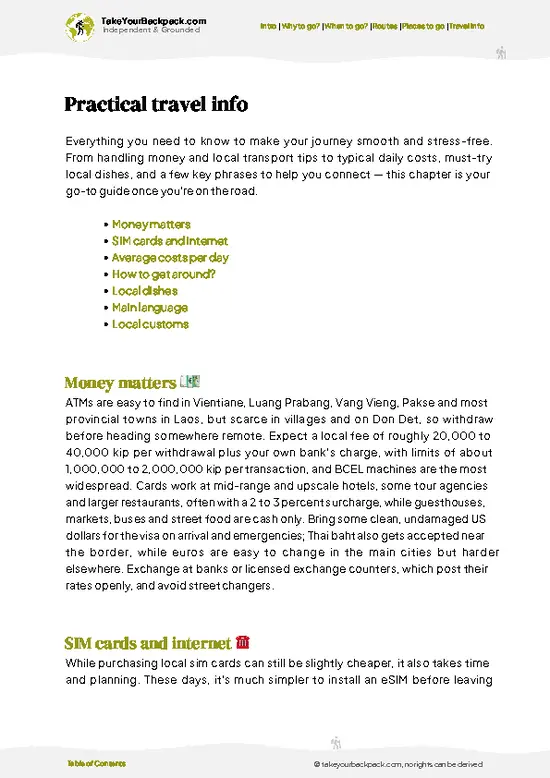
example page 3 from our offline Travel Guide for Laos
example page 4 from our offline Travel Guide for Laos
example page 5 from our offline Travel Guide for Laos
example page 6 from our offline Travel Guide for Laos
example page 7 from our offline Travel Guide for Laos
The digital guide (313 pages) contains:
80 highlights, ranked by travel appeal
Optimized 5, 10 & 15-day travel routes
Cities, national parks, landmarks, beaches
How to get around
Offline-friendly for travel without Wi-Fi
👉 Click to see all 30+ guide features

📅 Plan smarter in minutes, not weeks
Month by month travel advice
Festivals & national holidays
Budget expectations

🗺️ Go to the right places, skip the overrated ones
Honest pros & cons of destinations
Top hikes, parks & viewpoints
Lesser-known places most travelers miss
Clear “worth it vs skip it” guidance

🛏️ Travel smoothly without rookie mistakes
Best areas to stay
Transport systems explained simply
Common scams & safety advice
SIM cards, money & practical tips

🌍 Understand the country, not just visit it
Culture & traditions
52 Essential phrases & customs
Festivals worth planning around
Traveler-friendly historical context
Insights that make places more meaningful

📱 Built for real travel conditions
Fully downloadable PDF
Works completely offline
Optimized for phone use
Useful in remote areas & buses
Everything in one place
Save weeks of stressful planning
Get instant access to your full guide. 30‑day money-back guarantee.


By proceeding you agree to our terms.
Sent to your inbox immediately after payment • 100% Secure Checkout
Best Backpacking Travel Advisor 2025 tourism awardBest Backpacking
Travel Advisor
2025
What others say about Take Your Backpack Guides:
⭐⭐⭐⭐⭐
Fantastic, amazing amount of information!
⭐⭐⭐⭐⭐
My goodness this is amazing, it's what I've been looking for hats off too you!
⭐⭐⭐⭐⭐
I think this is absolutely BRILLIANT
⭐⭐⭐⭐
Very complete and informative. It's still missing places, but I gotta to commend you
⭐⭐⭐⭐⭐
This is truly amazing, thank you, can't wait to explore it with my kids!
⭐⭐⭐⭐⭐
Awesome resource, thank you!
⭐⭐⭐⭐⭐
This is amazing! Can't wait to explore the ones I haven't seen
⭐⭐⭐⭐
I love this! Well done, great idea.
⭐⭐⭐⭐⭐
Thanks for taking the time to make this gem!
⭐⭐⭐⭐⭐
This might be the best website I've ever seen.
⭐⭐⭐⭐⭐
Congratulations, and thank you so much for your work; it's incredibly valuable.
⭐⭐⭐⭐
In all seriousness I think you did a great job pointing out the important spots
⭐⭐⭐⭐⭐
10/10 very good
⭐⭐⭐⭐⭐
As someone who's only just starting to visit regularly this is awesome, thank you.
⭐⭐⭐⭐
Thank you very much! I'm going to visit my dad, it's going to be very useful!
⭐⭐⭐⭐⭐
This is really cool! We'll be travelling for the first time and this definitely come in handy.
⭐⭐⭐⭐⭐
You are now our minister of culture, congratulations 👨‍💼
⭐⭐⭐⭐⭐
Just wanted to tell you that this is a pearl! Going to follow your recommendations.
⭐⭐⭐⭐⭐
This is so cool. I'll definitely be using the resource for my travels soon.
⭐⭐⭐⭐⭐
This is very impressive! Good work.
⭐⭐⭐⭐⭐
This is an amazing and informative site. Very well done!

🛏️ Where to stay?Accommodation Highlights

Yes — Laos has plenty of hostels and budget accommodation concentrated in Luang Prabang (Old Quarter/riverside), Vang Vieng (riverfront/main strip), Vientiane (city centre/riverside), Pakse (central/market area) and the 4000 Islands (Don Det/Don Khone).
Choose Luang Prabang for the best selection of guesthouses, direct access to temples and a safe, quiet night scene though prices can be higher; pick Vang Vieng for outdoor activities and a lively riverside strip but expect noisy, party-oriented hostels; use Vientiane as a calm transport hub with basic-budget options near the Mekong; opt for Pakse when you need a base for the Bolaven Plateau and onward buses despite fewer choices; and head to … read more 👉
Yes — Laos has plenty of hostels and budget accommodation concentrated in Luang Prabang (Old Quarter/riverside), Vang Vieng (riverfront/main strip), Vientiane (city centre/riverside), Pakse (central/market area) and the 4000 Islands (Don Det/Don Khone).
Choose Luang Prabang for the best selection of guesthouses, direct access to temples and a safe, quiet night scene though prices can be higher; pick Vang Vieng for outdoor activities and a lively riverside strip but expect noisy, party-oriented hostels; use Vientiane as a calm transport hub with basic-budget options near the Mekong; opt for Pakse when you need a base for the Bolaven Plateau and onward buses despite fewer choices; and head to Don Det/Don Khone for the cheapest bungalows, very slow island life and limited facilities or transport.
Book ahead for Luang Prabang in high season and plan extra time for transfers to and from the islands or Pakse because schedules and amenities are often basic.

If you enjoy meeting fellow travelers, consider choosing hostels with high ratings for atmosphere. On the other hand, if you prefer having your own space, a hotel might be a better option.

LaosSee More of Laos

👋 Meet the founderWho’s Behind Take Your Backpack?

Johan, backpacker and founder of TakeYourBackpackHi, I’m Johan (Netherlands 🇳🇱), the creator of TakeYourBackpack. Over the past decade, I’ve backpacked through 80+ countries across six continents, gaining extensive experience with independent travel, long-term trips, and overland routes.

This site is built on a combination of firsthand travel experience and carefully curated insights from other backpackers. Many guides are based on places I’ve personally visited, while others bring together tips, observations, and practical advice shared by trusted travelers I’ve met along the way.

The goal is to provide realistic, experience-driven guidance — not generic itineraries — so you can explore destinations with better context, clearer expectations, and more confidence.

Get full Laos guide •
Instant download • 80 highlights • Full Offline guide