×

Malaysia🇲🇾 | best regionsBest 10 regions in Malaysia

Malaysia splits into two halves separated by 600 kilometers of South China Sea, and the gap matters more than the map suggests. Peninsular Malaysia is the easy half, with buses, trains, cheap hostels and a food scene that makes meals the daily highlight. Malaysian Borneo (Sabah and Sarawak) runs on flights, boat transfers and wildlife permits, so costs climb and spontaneity shrinks. Beyond that, regions differ by coast, highland and city, each with its own crowds and price tag. Backpacking here means choosing which trade you prefer: convenience or jungle. Either way, rice is always nearby.

By Johan Kruseman 🇳🇱 | Updated October 18, 2026
Explore the best cities in Malaysia

Why go?Understanding Their Importance

Malaysia is unusually good for region-hopping because it was stitched together from distinct cultural pockets. Malay, Chinese, Indian and Indigenous communities live side by side, so a few hours of travel can change the language on shop signs, the religion on the skyline and what is on your plate. English is widely understood, which takes much of the guesswork out of independent travel.

Geography does the rest. A mountainous, rainforest-covered spine runs through the peninsula, two coastlines face different seas, and Borneo sits across the water with its own state governments and separate immigration control. Expect a passport check when flying between the peninsula and Sabah or Sarawak, even though it is the same country. Few visitors anticipate that.

Infrastructure is a real strength. … read more 👉
Malaysia is unusually good for region-hopping because it was stitched together from distinct cultural pockets. Malay, Chinese, Indian and Indigenous communities live side by side, so a few hours of travel can change the language on shop signs, the religion on the skyline and what is on your plate. English is widely understood, which takes much of the guesswork out of independent travel.

Geography does the rest. A mountainous, rainforest-covered spine runs through the peninsula, two coastlines face different seas, and Borneo sits across the water with its own state governments and separate immigration control. Expect a passport check when flying between the peninsula and Sabah or Sarawak, even though it is the same country. Few visitors anticipate that.

Infrastructure is a real strength. Highways, long-distance buses, a growing rail network and budget airlines (AirAsia is based here) keep transport inexpensive. The weakness is heat and humidity, which stay high all year, and a monsoon cycle that closes some islands and coastal areas for months. Public transport inside cities can be patchy, and ride-hailing apps often fill the gap.

Before committing, know that Malaysia rewards a focused plan better than a frantic one. The country is bigger than it looks, and trying to see everything usually ends with a lot of time on buses and a lot of sweat.
Why These Made the Cut
The list of best regions in Malaysia is created based on landscapes, local culture, attractions, vibes, and overall appeal. If you feel a region is missing in this list, please let us know.

When to go?Seasonal Guide to Visiting

Best months and the monsoon problem: March to September is the most dependable window for Malaysia’s regions, because the west coast of the peninsula and most of Borneo see lower rainfall and calmer seas. Temperatures sit at 30 to 33°C by day almost everywhere on the lowlands, with humidity that makes a shirt a negotiable concept.

Where the calendar flips: The peninsula’s east coast follows a different script. The northeast monsoon runs roughly November to February, bringing heavy rain and rough seas, and many island ferries and resorts there shut down or run limited service. West coast islands are happier then. Sabah and Sarawak get their heaviest rain from around November to February too, often 250 to 400 mm a month, which can flood river access and make jungle trails muddy.

Shoulder seasons … read more 👉
Best months and the monsoon problem: March to September is the most dependable window for Malaysia’s regions, because the west coast of the peninsula and most of Borneo see lower rainfall and calmer seas. Temperatures sit at 30 to 33°C by day almost everywhere on the lowlands, with humidity that makes a shirt a negotiable concept.

Where the calendar flips: The peninsula’s east coast follows a different script. The northeast monsoon runs roughly November to February, bringing heavy rain and rough seas, and many island ferries and resorts there shut down or run limited service. West coast islands are happier then. Sabah and Sarawak get their heaviest rain from around November to February too, often 250 to 400 mm a month, which can flood river access and make jungle trails muddy.

Shoulder seasons and crowds: October and early March are shoulder months, with showers that often arrive in late-afternoon bursts rather than all-day downpours. Prices dip by 10 to 30 percent at some guesthouses, though discounts are less dramatic than in Europe because backpacker rooms are already cheap.

Peak crowding hits during school holidays in June and July, Chinese New Year (January or February), Hari Raya Aidilfitri and year-end. Domestic travel surges, buses sell out and room rates can jump 30 to 100 percent. Book transport early and accept that highland roads will be slow.

region hoppingHow to Combine regions Into One Trip

How many days to allow: A trip combining several regions in Malaysia needs 14 to 21 days, and anything under 10 turns into an airport tour with sticky souvenirs.

Grouping and direction: The peninsula clusters naturally along its west coast, where Kuala Lumpur is the hub for buses, trains and flights. Heading north from KL toward Penang and then crossing to the east coast, or looping back, works better than zigzagging. Borneo should be treated as a separate block, reached by a 2.5 to 3 hour flight from KL to Kota Kinabalu or Kuching (US$30 to 90 if booked ahead). Fly in at one end and out at the other, ideally Kota Kinabalu to Kuching or the reverse, to avoid backtracking.

Time per stop and transfers: Plan 3 to 5 nights in each major region, and 2 nights at minimum in anywhere that needs … read more 👉
How many days to allow: A trip combining several regions in Malaysia needs 14 to 21 days, and anything under 10 turns into an airport tour with sticky souvenirs.

Grouping and direction: The peninsula clusters naturally along its west coast, where Kuala Lumpur is the hub for buses, trains and flights. Heading north from KL toward Penang and then crossing to the east coast, or looping back, works better than zigzagging. Borneo should be treated as a separate block, reached by a 2.5 to 3 hour flight from KL to Kota Kinabalu or Kuching (US$30 to 90 if booked ahead). Fly in at one end and out at the other, ideally Kota Kinabalu to Kuching or the reverse, to avoid backtracking.

Time per stop and transfers: Plan 3 to 5 nights in each major region, and 2 nights at minimum in anywhere that needs a half day just to arrive. Typical intercity buses run 3 to 5 hours between peninsula hubs, such as KL to Penang (about 4 to 5 hours) or KL to the east coast (5 to 7 hours). Trains, such as the ETS to the north, are faster and comfortable.

Common planning errors: The classic mistake is judging distances by the map. A 250 kilometer hop can swallow a whole day once traffic, ferries and waiting are counted. Instead, limit moves to one major transfer every 2 to 3 days, and schedule long journeys for mornings, before afternoon storms and highway congestion. Also leave a buffer day before international flights.

The ListMust-Visit regions in Malaysia

1 Perhentian Islands

coral reefs, snorkeling spots, rustic chalets, clear shallow water

Swim among tropical fish, sleep steps from the shore, and move between beaches by water taxi in a place built for simple pleasures.

malaysia-region-perhentian-islands
© Google |

2 Langkawi

limestone islands, mangrove forests, duty-free towns

Sail between islands with dramatic cliffs, kayak through tangled mangroves, and find local life in markets away from the main resorts.

3 Redang Island

marine park, powdery beaches, turquoise lagoons, resort stays

Dive into protected waters, walk long stretches of pale sand, and find clear swimming spots surrounded by healthy coral gardens.

4 Cameron Highlands

tea terraces, misty hills, colonial-era towns

Walk through cool uplands where tea plantations stretch to the horizon, mossy forests invite exploration, and local markets reflect a blend of cultures.

5 Labuan

duty-free port, offshore finance, WWII sites, island beaches

Experience a blend of maritime trade, wartime relics, and relaxed island life, with easy access to Brunei and coral reefs offshore.

6 Sipadan Island

marine sanctuary, steep drop-offs, turtle nesting

Dive among swirling barracuda, spot sea turtles on sandy slopes, and witness pristine reefs protected by strict visitor limits.

7 Sabah

rainforest reserves, mountain peaks, coastal cities

Trek beneath ancient canopies, climb Southeast Asia’s highest summit, and encounter wildlife in protected parks and bustling port towns.

8 Terengganu

traditional villages, coastal mosques, island ferries

Travel along quiet coastlines, visit markets shaped by fishing culture, and cross to islands where local crafts and slow rhythms endure.

9 Penang

heritage quarters, street art, spice gardens

Wander through neighborhoods rich in history, discover hidden murals, and visit gardens that reveal the island’s botanical legacy.

10 Janda Baik

forest retreats, riverside villages, cool streams

Unwind in a quiet valley where clear streams cut through rainforest, homestays offer local hospitality, and trails lead to hidden waterfalls.

Loading the map 🌍

Expert viewInsights from Locals and Experts

How many regions to visit: Three is the number I would advise for a trip of two to three weeks, and four if you have a month. Each added region costs a transfer day, usually 4 to 7 hours on a bus or in an airport queue, plus a night spent recovering. Three regions leaves time to settle in, find the good food stalls and still have a day for rain. Borneo counts as its own commitment, because flights and permits make it the priciest add-on in both money and time.

Choosing between kinds of regions: City and heritage areas give the best return for money and comfort. Dorm beds run US$7 to 14, meals US$2 to 5 at hawker stalls, and everything is close by, so the time cost is small. Highlands and rainforest cost more in time, since roads are winding and journeys slow, but they bring cooler air, which … read more 👉
How many regions to visit: Three is the number I would advise for a trip of two to three weeks, and four if you have a month. Each added region costs a transfer day, usually 4 to 7 hours on a bus or in an airport queue, plus a night spent recovering. Three regions leaves time to settle in, find the good food stalls and still have a day for rain. Borneo counts as its own commitment, because flights and permits make it the priciest add-on in both money and time.

Choosing between kinds of regions: City and heritage areas give the best return for money and comfort. Dorm beds run US$7 to 14, meals US$2 to 5 at hawker stalls, and everything is close by, so the time cost is small. Highlands and rainforest cost more in time, since roads are winding and journeys slow, but they bring cooler air, which is a real comfort when lowland humidity sits near 80 percent. Islands and coast are the weakest value for a tight budget: boats, park fees and resort-priced food push spending up, and monsoon closures can make the trip pointless in the wrong month. Borneo wildlife and trekking is the splurge worth making if you want something you cannot do elsewhere, though expect to pay.

What it costs: A frugal backpacker spends about US$25 to 40 a day on the peninsula, covering a dorm, hawker meals, local buses and a few sights. In Borneo, budget US$45 to 80 a day because internal flights, guided treks and boat transfers are unavoidable. Park and attraction entry fees typically run US$2 to 15 for locals’ rates, but foreigners often pay more, and guides for jungle or mountain trips range from US$20 to 60 a day. Mountain climbing with a mandatory guide and permit can reach US$100 to 200 for a package.

Safety and culture: Malaysia is generally safe, and the main risks are petty ones: bag snatching from motorbikes in cities, so carry your daypack on the side away from the road. Tap water is not reliably drinkable in many places, so use filtered or bottled water. Jungle and sea carry their own risks, so hire licensed guides and respect swimming warnings for jellyfish seasons and currents.

Culturally, dress modestly at mosques and temples, with covered shoulders and knees, and remove shoes at doorways. Use your right hand for giving and eating. Alcohol is pricey and restricted in more conservative states, and public displays of affection draw frowns. Friday is the main prayer day, and some shops on the east coast close for midday. Overall, a little modesty goes a long way in a country where politeness is the norm.

✈️ The backpacker research shortcutMalaysia Travel Guide

An offline-friendly backpacking guide with optimized travel routes, ranked highlights, transport advice, and the best areas to stay.
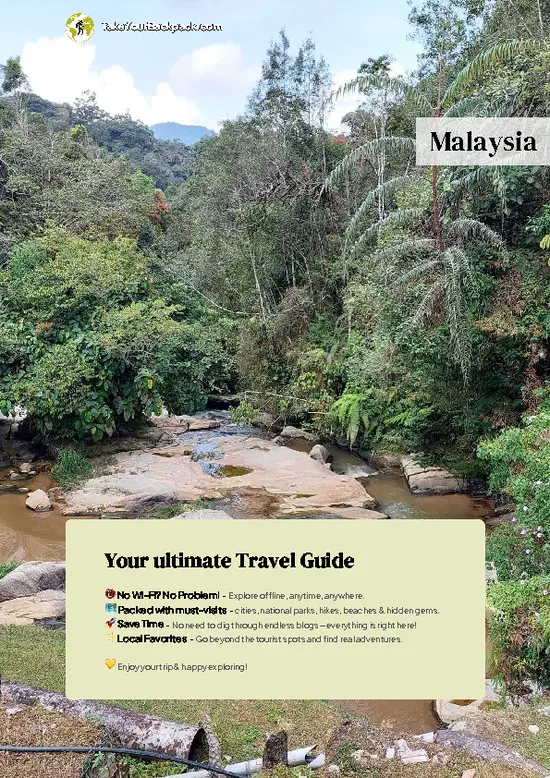
example page 0 from our offline Travel Guide for Malaysia
example page 1 from our offline Travel Guide for Malaysia
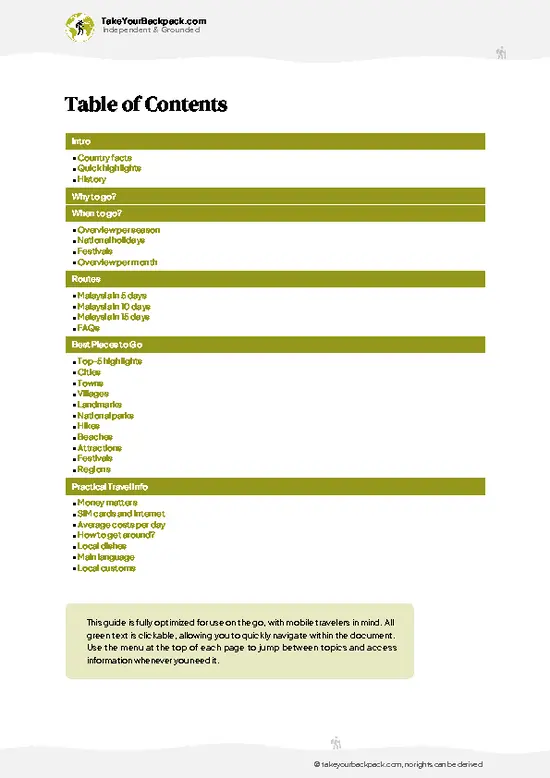
example page 2 from our offline Travel Guide for Malaysia
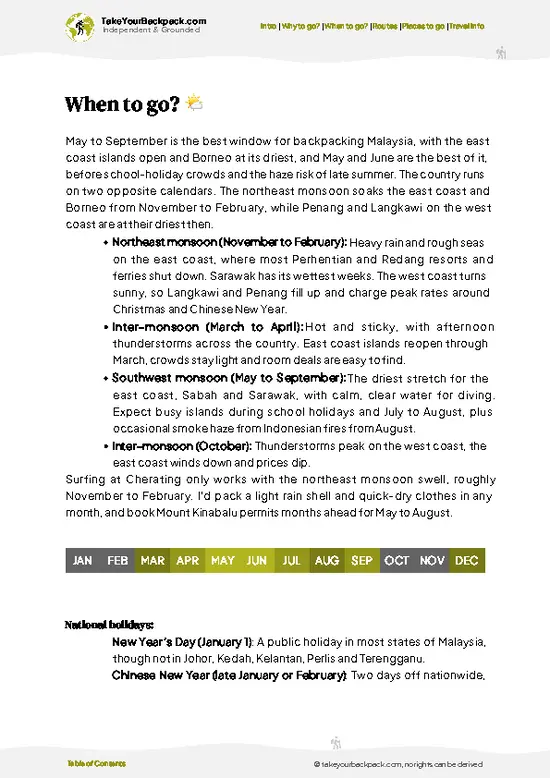
example page 3 from our offline Travel Guide for Malaysia
example page 4 from our offline Travel Guide for Malaysia
example page 5 from our offline Travel Guide for Malaysia
example page 6 from our offline Travel Guide for Malaysia
example page 7 from our offline Travel Guide for Malaysia
The digital guide (400 pages) contains:
✅ 106 highlights, ranked by travel appeal
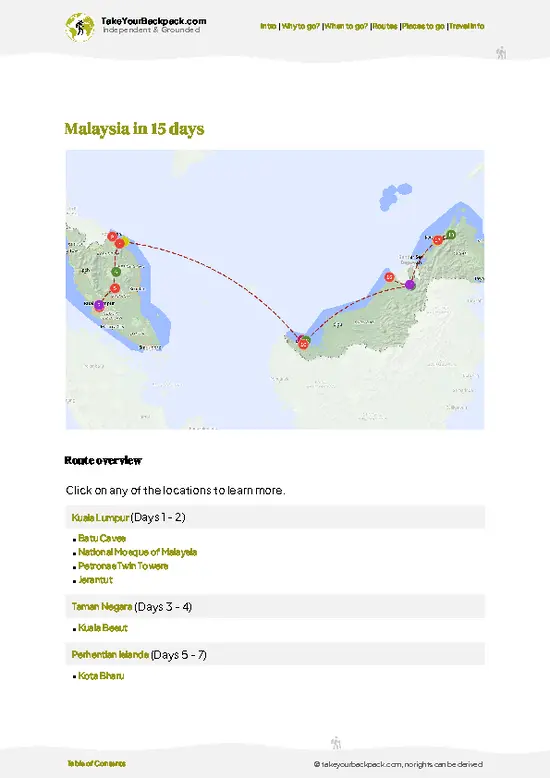
✅ Optimized 5, 10 & 15-day travel routes
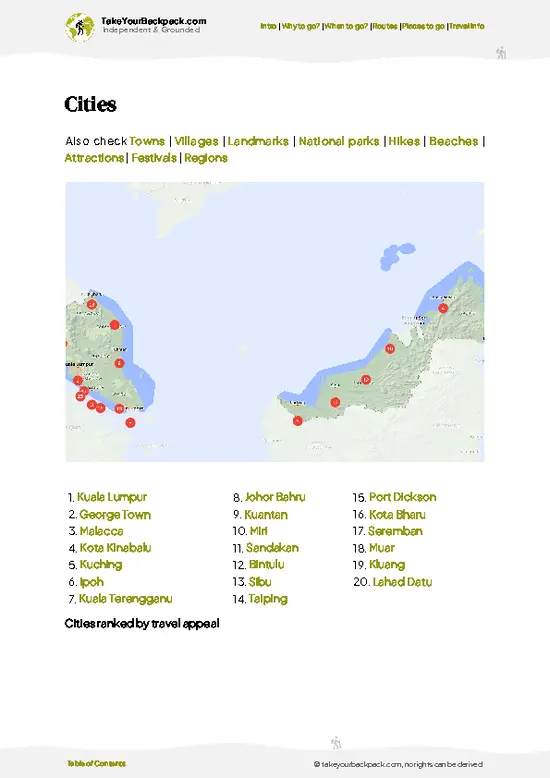
✅ Cities, national parks, landmarks, beaches
✅ How to get around
✅ Offline-friendly for travel without Wi-Fi
👉 Click to see all 30+ guide features

📅 Plan smarter in minutes, not weeks
✅ Month by month travel advice
✅ Festivals & national holidays
✅ Budget expectations

🗺️ Go to the right places, skip the overrated ones
✅ Honest pros & cons of destinations
✅ Top hikes, parks & viewpoints
✅ Lesser-known places most travelers miss
✅ Clear “worth it vs skip it” guidance

🛏️ Travel smoothly without rookie mistakes
✅ Best areas to stay
✅ Transport systems explained simply
✅ Common scams & safety advice
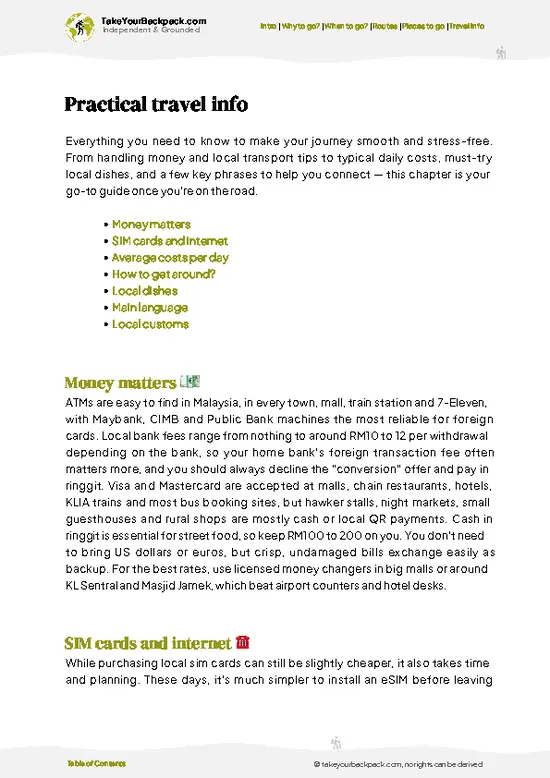
✅ SIM cards, money & practical tips

🌍 Understand the country, not just visit it
✅ Culture & traditions
✅ 52 Essential phrases & customs
✅ Festivals worth planning around
✅ Traveler-friendly historical context
✅ Insights that make places more meaningful

📱 Built for real travel conditions
✅ Fully downloadable PDF
✅ Works completely offline
✅ Optimized for phone use
✅ Useful in remote areas & buses
✅ Everything in one place
Stop searching, start planning
Get instant access to your full guide. 30‑day money-back guarantee.
+ Add another guide for just

By proceeding you agree to our terms.
Sent to your inbox immediately after payment • 100% Secure Checkout
Best Backpacking Travel Advisor 2025 tourism awardBest Backpacking
Travel Advisor
2025
What others say about Take Your Backpack Guides:
⭐⭐⭐⭐⭐
Fantastic, amazing amount of information!
⭐⭐⭐⭐⭐
My goodness this is amazing, it's what I've been looking for hats off too you!
⭐⭐⭐⭐⭐
I think this is absolutely BRILLIANT
⭐⭐⭐⭐
Very complete and informative. It's still missing places, but I gotta to commend you
⭐⭐⭐⭐⭐
This is truly amazing, thank you, can't wait to explore it with my kids!
⭐⭐⭐⭐⭐
Awesome resource, thank you!
⭐⭐⭐⭐⭐
This is amazing! Can't wait to explore the ones I haven't seen
⭐⭐⭐⭐
I love this! Well done, great idea.
⭐⭐⭐⭐⭐
Thanks for taking the time to make this gem!
⭐⭐⭐⭐⭐
This might be the best website I've ever seen.
⭐⭐⭐⭐⭐
Congratulations, and thank you so much for your work; it's incredibly valuable.
⭐⭐⭐⭐
In all seriousness I think you did a great job pointing out the important spots
⭐⭐⭐⭐⭐
10/10 very good
⭐⭐⭐⭐⭐
As someone who's only just starting to visit regularly this is awesome, thank you.
⭐⭐⭐⭐
Thank you very much! I'm going to visit my dad, it's going to be very useful!
⭐⭐⭐⭐⭐
This is really cool! We'll be travelling for the first time and this definitely come in handy.
⭐⭐⭐⭐⭐
You are now our minister of culture, congratulations 👨‍💼
⭐⭐⭐⭐⭐
Just wanted to tell you that this is a pearl! Going to follow your recommendations.
⭐⭐⭐⭐⭐
This is so cool. I'll definitely be using the resource for my travels soon.
⭐⭐⭐⭐⭐
This is very impressive! Good work.
⭐⭐⭐⭐⭐
This is an amazing and informative site. Very well done!

🛏️ Where to stay?Where to Stay in Malaysia

Malaysia has plenty of hostels and budget guesthouses, with dorm beds typically running RM30 to 70 (about US$7 to 16) and basic private rooms from around RM80 (US$18). In Kuala Lumpur, Chinatown around Petaling Street is the cheapest central base and sits a short walk from Pasar Seni and Merdeka Square, though some older buildings feel worn, while Bukit Bintang puts you next to Jalan Alor’s night food stalls and the city’s best nightlife at the cost of street noise until late. In George Town on Penang, the hostels cluster around Chulia Street and Love Lane, steps from the heritage core and backpacker bars, and in Melaka the area around Jonker Street keeps you close to the old town but gets crowded … read more 👉
Malaysia has plenty of hostels and budget guesthouses, with dorm beds typically running RM30 to 70 (about US$7 to 16) and basic private rooms from around RM80 (US$18). In Kuala Lumpur, Chinatown around Petaling Street is the cheapest central base and sits a short walk from Pasar Seni and Merdeka Square, though some older buildings feel worn, while Bukit Bintang puts you next to Jalan Alor’s night food stalls and the city’s best nightlife at the cost of street noise until late. In George Town on Penang, the hostels cluster around Chulia Street and Love Lane, steps from the heritage core and backpacker bars, and in Melaka the area around Jonker Street keeps you close to the old town but gets crowded and loud during the weekend night market.

If you enjoy meeting fellow travelers, consider choosing hostels with high ratings for atmosphere. On the other hand, if you prefer having your own space, a hotel might be a better option.

MalaysiaMore of Malaysia

👋 Meet the founderWho’s Behind Take Your Backpack?

Johan, backpacker and founder of TakeYourBackpackHi, I’m Johan (Netherlands 🇳🇱), the creator of TakeYourBackpack. Over the past 3 decades, I’ve backpacked through 90+ countries across six continents, gaining extensive experience with independent travel, long-term trips, and overland routes.

This site is built on a combination of firsthand travel experience and carefully curated insights from other backpackers. Many guides are based on places I’ve personally visited, while others bring together tips, observations, and practical advice shared by trusted travelers I’ve met along the way.

The goal is to provide realistic, experience-driven guidance — not generic itineraries — so you can explore destinations with better context, clearer expectations, and more confidence.