×

Mexico🇲🇽 | best beachesWhere to Find the 9 Best beaches in Mexico

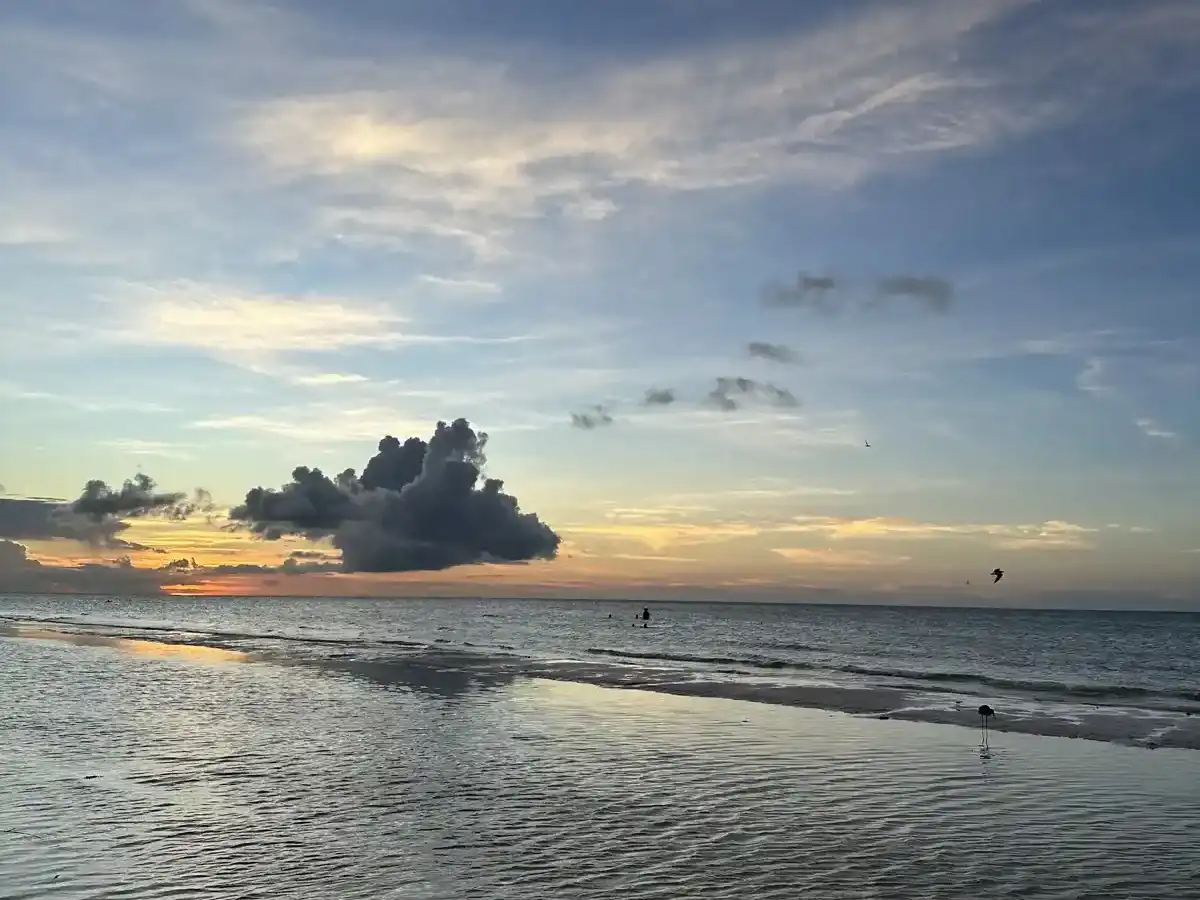
Mexico has two coasts that behave like different countries. The Caribbean side gives you powder-white sand, turquoise water and prices that make your wallet flinch. The Pacific coast offers surf, darker sand, fish tacos at plastic tables and a dollar that stretches much further. The Baja Peninsula adds a third act: desert meeting sea, with whales in winter and long drives between everything. Access varies just as much. Cancún-area beaches connect by cheap, frequent buses, while some Oaxaca coves need a colectivo truck and a little faith. Crowds follow the same split, with all-inclusive resort strips on one end and hammock-and-palapa villages on the other. For backpackers and independent travelers, that means picking a coast by mood and budget before picking a beach, because Mexico will happily sell you either a US$12 hostel bunk or a US$600 villa, sometimes within one walkable block.

By Johan Kruseman 🇳🇱 | Updated October 20, 2026
Explore the best attractions in Mexico

Why go?Why Travelers Love These Spots

Mexico is one of the few countries with two oceans and a sea in between. The Pacific and the Gulf of California deliver big swell, cooler water in the north and dramatic mountain-to-sea coastlines. The Caribbean side sits on a flat limestone shelf, which explains the pale sand, the clear water and the cenotes inland. The same geology means few rivers dump sediment into the sea, so visibility stays high.

The second reason is infrastructure. Mexico has spent decades building a tourism machine, with international airports at nearly every major coast, long-distance buses that are comfortable and punctual, and a hostel scene stretching from Baja to Chiapas. Getting to the sand is rarely the hard part. Choosing which version of it you want is.

Then there is culture. Mexican beaches are social … read more 👉
Mexico is one of the few countries with two oceans and a sea in between. The Pacific and the Gulf of California deliver big swell, cooler water in the north and dramatic mountain-to-sea coastlines. The Caribbean side sits on a flat limestone shelf, which explains the pale sand, the clear water and the cenotes inland. The same geology means few rivers dump sediment into the sea, so visibility stays high.

The second reason is infrastructure. Mexico has spent decades building a tourism machine, with international airports at nearly every major coast, long-distance buses that are comfortable and punctual, and a hostel scene stretching from Baja to Chiapas. Getting to the sand is rarely the hard part. Choosing which version of it you want is.

Then there is culture. Mexican beaches are social spaces. Families arrive with coolers and stay all day, vendors circulate with fruit cups and cold beer, and the palapa restaurant is the living room. Weekends and national holidays, especially Semana Santa, fill even quiet shores, so a deserted beach on a Sunday in April is a rumor.

Before choosing Mexico, know a few things. Hurricane season runs roughly June through November on both coasts, and sargassum seaweed can blanket parts of the Caribbean shoreline from spring through late summer. Many Pacific beaches have strong rip currents and heavy shore break, so swimming is not guaranteed even when the sun is. Some stretches have private-resort frontage, though beaches in Mexico are federal property and public access is legally required. Finally, the country is huge. Distances between coasts are measured in days, not hours, so plan around one region rather than a greatest-hits sprint.
Evaluating the Top Choices
The list of best beaches in Mexico is created based on beauty, vibe, water quality, activities, and surrounding scenery. If you feel a beach is missing in this list, please let us know.

When to go?Timing Your Visit for the Best Experience

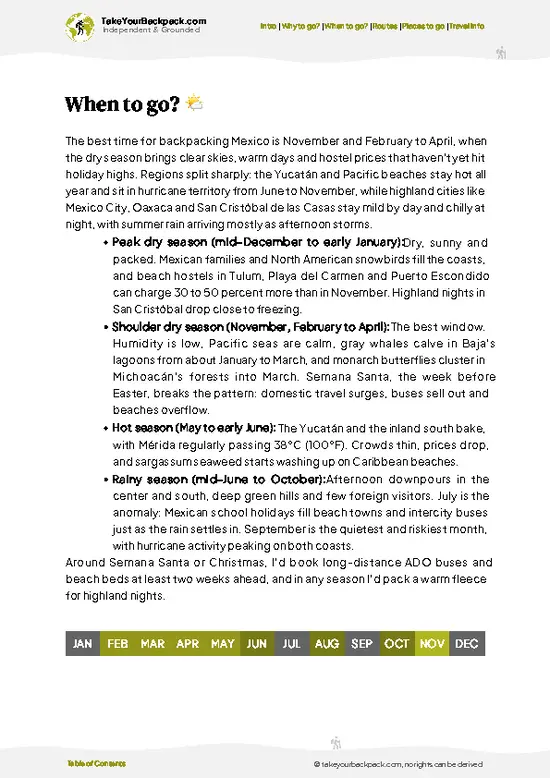
Best months by coast: The best months for beaches in Mexico are December through April, when most coasts have dry weather, low humidity, and daytime highs of roughly 25 to 32°C (77 to 90°F). That is also when everyone else has the same idea, so the sunshine comes with a surcharge.
Peak, shoulder and wet seasons: Peak pricing hits from mid-December to early January and again around Semana Santa (the week before Easter), when beach hotels can charge 30 to 100 percent above low-season rates and domestic travelers fill buses weeks ahead. Book those travel dates early, or accept a floor mattress and a good attitude.

The shoulder months of November, late April, and May are a smart play. Crowds thin, dorm beds and rooms often drop 20 to 40 percent, and the weather is mostly dry, though May gets hot … read more 👉
Best months by coast: The best months for beaches in Mexico are December through April, when most coasts have dry weather, low humidity, and daytime highs of roughly 25 to 32°C (77 to 90°F). That is also when everyone else has the same idea, so the sunshine comes with a surcharge.
Peak, shoulder and wet seasons: Peak pricing hits from mid-December to early January and again around Semana Santa (the week before Easter), when beach hotels can charge 30 to 100 percent above low-season rates and domestic travelers fill buses weeks ahead. Book those travel dates early, or accept a floor mattress and a good attitude.

The shoulder months of November, late April, and May are a smart play. Crowds thin, dorm beds and rooms often drop 20 to 40 percent, and the weather is mostly dry, though May gets hot and sticky, with highs near 33 to 35°C (91 to 95°F) on the Pacific side.

From roughly June to October, the rainy season brings afternoon downpours, high humidity and lush green hills. Rain is usually short and heavy rather than all-day, so mornings can be excellent. The catch is storms. The Atlantic hurricane season on the Caribbean and Gulf coasts peaks August to October, and the Pacific season runs May to November, with the worst risk often in September and October.

Regional quirks: On the Caribbean coast, sargassum tends to be heaviest from about May to August, so winter and early spring are clearer. In Baja, Los Cabos stays sunny nearly all year, but the Sea of Cortez water turns very warm in late summer and cold in winter. Surfers on the Pacific coast chase the summer swell, while whale watchers in Baja aim for roughly December to March.

beach hoppingTips for Visiting Multiple Destinations

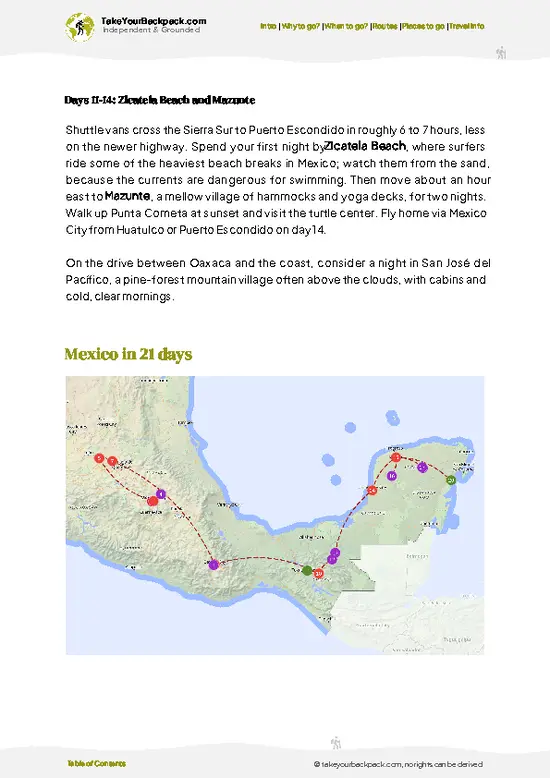
How many days and which regions: A trip combining several beaches in Mexico needs 10 to 21 days, and the sweet spot for most backpackers sits around two weeks. The country is too big to sample everything, so choose one cluster. Combining the Yucatán Peninsula's Caribbean coast is the easiest, since Cancún, Playa del Carmen, Tulum and Bacalar sit along one highway with frequent buses. The Oaxaca and Chiapas Pacific coast makes a second cluster, with Oaxaca City or Huatulco and Puerto Escondido as natural hubs.

Direction, timing and transfers: On the Yucatán side, travel north to south or the reverse, starting and finishing at Cancún airport, which has the cheapest international flights. Cancún to Tulum by bus takes roughly 2.5 to 3 hours, and Tulum to Bacalar about 2.5 hours. Allow 3 to 4 … read more 👉
How many days and which regions: A trip combining several beaches in Mexico needs 10 to 21 days, and the sweet spot for most backpackers sits around two weeks. The country is too big to sample everything, so choose one cluster. Combining the Yucatán Peninsula's Caribbean coast is the easiest, since Cancún, Playa del Carmen, Tulum and Bacalar sit along one highway with frequent buses. The Oaxaca and Chiapas Pacific coast makes a second cluster, with Oaxaca City or Huatulco and Puerto Escondido as natural hubs.

Direction, timing and transfers: On the Yucatán side, travel north to south or the reverse, starting and finishing at Cancún airport, which has the cheapest international flights. Cancún to Tulum by bus takes roughly 2.5 to 3 hours, and Tulum to Bacalar about 2.5 hours. Allow 3 to 4 nights per stop, which gives you a couple of beach days and one excursion without feeling like you live on a bus.

On the Pacific, Oaxaca City to the coast is the long leg. The mountain road to Puerto Escondido takes about 8 to 10 hours by bus, or around 45 minutes by small plane, and Huatulco is about 7 to 8 hours by road. Coastal buses between Puerto Escondido and Huatulco run 2.5 to 4 hours. Linking the Pacific and the Caribbean means a flight through Mexico City, and budget airlines such as Viva Aerobus and Volaris make that affordable.

Planning mistakes: The classic error is trying to cover both coasts in ten days. You will spend more time in airports than in the water. Pick one coast and go deeper.

Another is stacking overnight buses on consecutive nights. They save a hotel bill and cost you a day of consciousness. Alternate with daytime rides.

Finally, travelers book flights home from the farthest stop without a buffer. Leave a night near the departure airport, because mountain roads close in storms and the hurricane season does not care about your return fare.

The ListMust-Visit beaches in Mexico

1 Cancún Beach

Playa Delfines sign, El Rey ruins, MUSA sculptures, Hotel Zone clubs

Ride the Kukulcán bus past the resorts to open-sea sand, a small Maya site, calm bay water and sculptures on the sea floor.

mexico-beach-cancun-beach
© Google | Volkods

2 Paradise Beach Tulum

Ruins above the cove, white sand, reef edge, jungle bike road

Approach the clifftop Castillo from the shoreline, swim in the cove below it, and cycle the jungle road toward Sian Ka’an.

3 Playa Norte

Knee-deep shallows, ferry-dock walk, paddleboards, beach parties

Wade far out over soft sand, rent a kayak on flat water, and stay for sunset drinks and fire shows after dark.

mexico-beach-playa-norte
© Google | Pablo Gaona

4 Playa Holbox

Car-free sand streets, whale sharks, low-tide flats, lobster pizza

Stroll shallow, warm flats at low tide, join seasonal whale shark boats, and end evenings at the plaza food stalls.

mexico-beach-playa-holbox
© Google | Photos Are Copyrighted By Their Owners

5 Zicatela Beach

Mexican Pipeline, La Punta lessons, surfer sunsets, taco lane

Watch heavy barrels break from a beachfront terrace, book a beginner lesson at La Punta, and graze tacos along the evening lane.

mexico-beach-zicatela-beach
© Google | Daniel

6 Mazunte

Turtle center, Punta Cometa sunsets, steep surf, yoga palapas

Walk from your hostel to a crescent bay, then climb the rocky headland at dusk and visit the turtle research center.

7 Playa Zipolite

Clothing-optional sand, Playa del Amor cove, bioluminescence, undertow

Settle into a relaxed, clothing-optional strip, swim only in the sheltered western cove, and watch the surf glow on dark nights.

mexico-beach-playa-zipolite
© Google | Ave Sanchez

8 Playa Mismaloya

Iguana film ruins, Los Arcos boats, river path, cove palapas

Visit the crumbling 1964 movie set above the river mouth, snorkel the rock arches by boat, and finish with fried fish on the sand.

mexico-beach-playa-mismaloya
© Google |

9 Playa Blanca

Empty Pacific sand, palapa grills, Potosí lagoon, heavy waves

Wander a broad palm-backed beach with room to spare, eat grilled fish at family shacks, and take a boat into the mangroves.

Loading the map 🌍

Expert viewInsights from Locals and Experts

How many beaches to visit: I advise four to six beaches on a two-week trip, spread over one coast, and no more. Mexico's beach towns reward lingering, and the good stuff sits between swims: the taco stand that closes at 2 p.m., the lagoon you reach by bike, the sunset that happens at a different beach bar each night. Each move eats half a day, so every extra beach costs you roughly an afternoon of actually being on one.

Which kind for which traveler: Match the type of beach to your travel style instead of ticking off a list. Social travelers and first-timers do well on the Caribbean coast, where hostels cluster, English is common, and snorkeling, cenotes and ruins are close by. Surfers and slow travelers should lean Pacific, especially Oaxaca, where waves are serious, beach towns are small … read more 👉
How many beaches to visit: I advise four to six beaches on a two-week trip, spread over one coast, and no more. Mexico's beach towns reward lingering, and the good stuff sits between swims: the taco stand that closes at 2 p.m., the lagoon you reach by bike, the sunset that happens at a different beach bar each night. Each move eats half a day, so every extra beach costs you roughly an afternoon of actually being on one.

Which kind for which traveler: Match the type of beach to your travel style instead of ticking off a list. Social travelers and first-timers do well on the Caribbean coast, where hostels cluster, English is common, and snorkeling, cenotes and ruins are close by. Surfers and slow travelers should lean Pacific, especially Oaxaca, where waves are serious, beach towns are small and nights end early. Travelers who want quiet should look to Baja's Sea of Cortez coast or lesser-known Pacific stretches, but need a car or patience with long bus rides. Families and holiday-minded couples often prefer sheltered bays with calm water over open surf beaches.

What it costs: Budget US$35 to 60 a day on the Pacific coast in Oaxaca, covering a dorm bed (about US$10 to 18), street and market meals (US$8 to 15), and local transport. The Yucatán Caribbean runs higher, around US$50 to 90 a day, because dorms in Tulum and Playa del Carmen can reach US$18 to 30 and a beach club lunch easily hits US$15 to 25. Baja resort areas such as Los Cabos are the priciest, and many backpackers treat them as a short stop.

Per visit costs are modest. Most beaches are free, but some protected areas and beach clubs charge entry. Expect roughly 50 to 500 pesos (about US$3 to 28) for park fees, loungers with a minimum spend, or boat rides. Boat tours to snorkel or see wildlife typically run US$20 to 60. Sun loungers are usually free if you buy a drink, which is a negotiating position, not a scam.

Safety on the sand: The biggest beach danger is the water itself. Rip currents and heavy shore break hit many Pacific beaches, and drownings happen to confident swimmers. Look for flags, swim where locals swim, and never go in after drinking. Jellyfish and sea lice appear seasonally, so a rash guard helps. In the Caribbean, ignore unlicensed boat touts and book snorkel trips through established operators with life vests.

Theft is usually opportunistic. Keep valuables out of your beach bag, use a dry bag or hostel locker, and avoid walking isolated stretches after dark. Use official taxis or ride apps in resort areas, and check your government's current travel advisories for the state you are visiting, since conditions vary a lot between regions.

Culture and manners: Beaches in Mexico are public by law, so you can walk to the water even past a fancy hotel, though access paths can be unmarked. Cover up when you leave the sand for town. Bikinis are fine at the beach but not at the market. Topless sunbathing is tolerated at some resort beaches and frowned on elsewhere, so watch what locals do. Bargaining with vendors is normal but friendly, and a firm no, gracias with a smile ends most pitches. Tip 10 to 15 percent at palapa restaurants, and carry small pesos because many beach spots do not take cards.

Crowds are real. Expect packed sand on weekends and holidays, and some of the best-known beach towns feel like a theme park by midday. The trick is simple: arrive early, stay past the tour buses, and walk 15 minutes further than everyone else. That small effort is usually the difference between a postcard and a parking lot.

✈️ The backpacker research shortcutMexico Travel Guide

An offline-friendly backpacking guide with optimized travel routes, ranked highlights, transport advice, and the best areas to stay.
example page 0 from our offline Travel Guide for Mexico
example page 1 from our offline Travel Guide for Mexico
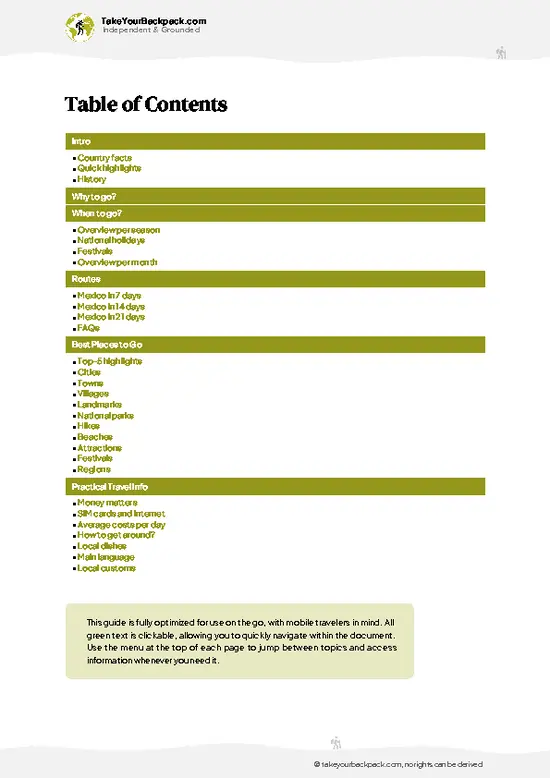
example page 2 from our offline Travel Guide for Mexico
example page 3 from our offline Travel Guide for Mexico
example page 4 from our offline Travel Guide for Mexico
example page 5 from our offline Travel Guide for Mexico
example page 6 from our offline Travel Guide for Mexico
example page 7 from our offline Travel Guide for Mexico
The digital guide (402 pages) contains:
✅ 138 highlights, ranked by travel appeal
✅ Optimized 7, 14 & 21-day travel routes
✅ Cities, national parks, landmarks, beaches
✅ How to get around
✅ Offline-friendly for travel without Wi-Fi
👉 Click to see all 30+ guide features

📅 Plan smarter in minutes, not weeks
✅ Month by month travel advice
✅ Festivals & national holidays
✅ Budget expectations

🗺️ Go to the right places, skip the overrated ones
✅ Honest pros & cons of destinations
✅ Top hikes, parks & viewpoints
✅ Lesser-known places most travelers miss
✅ Clear “worth it vs skip it” guidance

🛏️ Travel smoothly without rookie mistakes
✅ Best areas to stay
✅ Transport systems explained simply
✅ Common scams & safety advice
✅ SIM cards, money & practical tips

🌍 Understand the country, not just visit it
✅ Culture & traditions
✅ 52 Essential phrases & customs
✅ Festivals worth planning around
✅ Traveler-friendly historical context
✅ Insights that make places more meaningful

📱 Built for real travel conditions
✅ Fully downloadable PDF
✅ Works completely offline
✅ Optimized for phone use
✅ Useful in remote areas & buses
✅ Everything in one place
Stop searching, start planning
Get instant access to your full guide. 30‑day money-back guarantee.
+ Add another guide for just

By proceeding you agree to our terms.
Sent to your inbox immediately after payment • 100% Secure Checkout
Best Backpacking Travel Advisor 2025 tourism awardBest Backpacking
Travel Advisor
2025
What others say about Take Your Backpack Guides:
⭐⭐⭐⭐⭐
Fantastic, amazing amount of information!
⭐⭐⭐⭐⭐
My goodness this is amazing, it's what I've been looking for hats off too you!
⭐⭐⭐⭐⭐
I think this is absolutely BRILLIANT
⭐⭐⭐⭐
Very complete and informative. It's still missing places, but I gotta to commend you
⭐⭐⭐⭐⭐
This is truly amazing, thank you, can't wait to explore it with my kids!
⭐⭐⭐⭐⭐
Awesome resource, thank you!
⭐⭐⭐⭐⭐
This is amazing! Can't wait to explore the ones I haven't seen
⭐⭐⭐⭐
I love this! Well done, great idea.
⭐⭐⭐⭐⭐
Thanks for taking the time to make this gem!
⭐⭐⭐⭐⭐
This might be the best website I've ever seen.
⭐⭐⭐⭐⭐
Congratulations, and thank you so much for your work; it's incredibly valuable.
⭐⭐⭐⭐
In all seriousness I think you did a great job pointing out the important spots
⭐⭐⭐⭐⭐
10/10 very good
⭐⭐⭐⭐⭐
As someone who's only just starting to visit regularly this is awesome, thank you.
⭐⭐⭐⭐
Thank you very much! I'm going to visit my dad, it's going to be very useful!
⭐⭐⭐⭐⭐
This is really cool! We'll be travelling for the first time and this definitely come in handy.
⭐⭐⭐⭐⭐
You are now our minister of culture, congratulations 👨‍💼
⭐⭐⭐⭐⭐
Just wanted to tell you that this is a pearl! Going to follow your recommendations.
⭐⭐⭐⭐⭐
This is so cool. I'll definitely be using the resource for my travels soon.
⭐⭐⭐⭐⭐
This is very impressive! Good work.
⭐⭐⭐⭐⭐
This is an amazing and informative site. Very well done!

🛏️ Where to stay?Where to Stay: Mexico Edition

Mexico has one of the deepest hostel scenes in Latin America, with dorm beds typically running MXN 250 to 500 (about US$13 to 28) and private rooms in guesthouses from roughly MXN 700 (US$38). In Mexico City, the Centro Histórico puts you steps from the main museums and is the cheapest, though some blocks empty out after dark, while Roma and Condesa cost a bit more but give you leafy, walkable streets, good bars and a safer feel at night. Elsewhere, San Cristóbal de las Casas and central Oaxaca offer quiet, cheap stays within walking distance of everything, and Playa del Carmen and Tulum pack in party hostels near the beach at noticeably higher prices.

If you enjoy meeting fellow travelers, consider … read more 👉
Mexico has one of the deepest hostel scenes in Latin America, with dorm beds typically running MXN 250 to 500 (about US$13 to 28) and private rooms in guesthouses from roughly MXN 700 (US$38). In Mexico City, the Centro Histórico puts you steps from the main museums and is the cheapest, though some blocks empty out after dark, while Roma and Condesa cost a bit more but give you leafy, walkable streets, good bars and a safer feel at night. Elsewhere, San Cristóbal de las Casas and central Oaxaca offer quiet, cheap stays within walking distance of everything, and Playa del Carmen and Tulum pack in party hostels near the beach at noticeably higher prices.

If you enjoy meeting fellow travelers, consider choosing hostels with high ratings for atmosphere. On the other hand, if you prefer having your own space, a hotel might be a better option.

MexicoExplore Beyond This Category

👋 Meet the founderWho’s Behind Take Your Backpack?

Johan, backpacker and founder of TakeYourBackpackHi, I’m Johan (Netherlands 🇳🇱), the creator of TakeYourBackpack. Over the past 3 decades, I’ve backpacked through 90+ countries across six continents, gaining extensive experience with independent travel, long-term trips, and overland routes.

This site is built on a combination of firsthand travel experience and carefully curated insights from other backpackers. Many guides are based on places I’ve personally visited, while others bring together tips, observations, and practical advice shared by trusted travelers I’ve met along the way.

The goal is to provide realistic, experience-driven guidance — not generic itineraries — so you can explore destinations with better context, clearer expectations, and more confidence.