×

Mexico🇲🇽 | best national parksWhere to Find the 10 Best national parks in Mexico

Mexico has more than 60 national parks, and they refuse to behave like a set. Some are desert and sierra parks in the north where the nearest town is a long, dusty drive away and the crowds are mostly lizards. Others sit on the Caribbean and Pacific coasts, where reef, lagoon and snorkel boat share the same real estate and the entry fee is a rounding error next to the boat fare. Then there are the central volcanic parks, an hour or two from Mexico City, which fill up with weekend families, vendors and speakers playing something cheerful at 8 a.m. Many parks charge small entry fees, often under US$5 (about 90 pesos), but guides, transport and permits are where the money goes. Independent travel works best near big cities with frequent buses. Remote parks reward a rental car, patience and a tolerance for roads described as “paved” in a generous spirit. Pick the kind first, then the park.

By Johan Kruseman 🇳🇱 | Updated October 20, 2026
Explore the best hikes in Mexico

Why go?Why Travelers Love These Spots

Mexico sits where the tropics meet the desert, and where two great biogeographic regions overlap, so a single country holds cloud forest, pine-clad volcanoes, coral reef, mangrove, canyon and cactus scrubland. Few countries make you pack for snow and sunburn in the same week. That range is the main argument for coming here for protected areas, and it is a bigger one than any single landscape.

The second thing to understand is land ownership. Large stretches of Mexico belong to ejidos and indigenous communities, a legacy of the land reform that followed the revolution. Many national parks therefore are not empty wilderness with a ranger hut. People live in and around them, farm, run campsites, guide, and sell tamales at the trailhead. That makes for warmer, more human visits, and it also means … read more 👉
Mexico sits where the tropics meet the desert, and where two great biogeographic regions overlap, so a single country holds cloud forest, pine-clad volcanoes, coral reef, mangrove, canyon and cactus scrubland. Few countries make you pack for snow and sunburn in the same week. That range is the main argument for coming here for protected areas, and it is a bigger one than any single landscape.

The second thing to understand is land ownership. Large stretches of Mexico belong to ejidos and indigenous communities, a legacy of the land reform that followed the revolution. Many national parks therefore are not empty wilderness with a ranger hut. People live in and around them, farm, run campsites, guide, and sell tamales at the trailhead. That makes for warmer, more human visits, and it also means rules vary from park to park. Some are well staffed, others have a gate, a sign and a person who may or may not be present.

Infrastructure is uneven. The parks near major cities have paved access, toilets and public transport, sometimes even a snack stand with opinions about your sunscreen. Remote ones may need a vehicle with clearance, cash in small bills and a plan for fuel, since stations thin out quickly. Cards are rarely accepted at entrances.

Before choosing Mexico for its parks, know that funding is modest, so trails can be rough, signage sparse and facilities basic. Spanish helps enormously. Many areas also depend on seasonal conditions such as hurricanes and rains, which close roads and cancel boats without ceremony. Go with flexible plans, small cash and the expectation that the interesting part is often a few hours past where the bus stops.
Why These Made the Cut
The list of best national parks in Mexico is created based on landscapes, wildlife, adventure opportunities, facilities, and overall experience. If you feel a national park is missing in this list, please let us know.

When to go?Timing Your Visit for the Best Experience

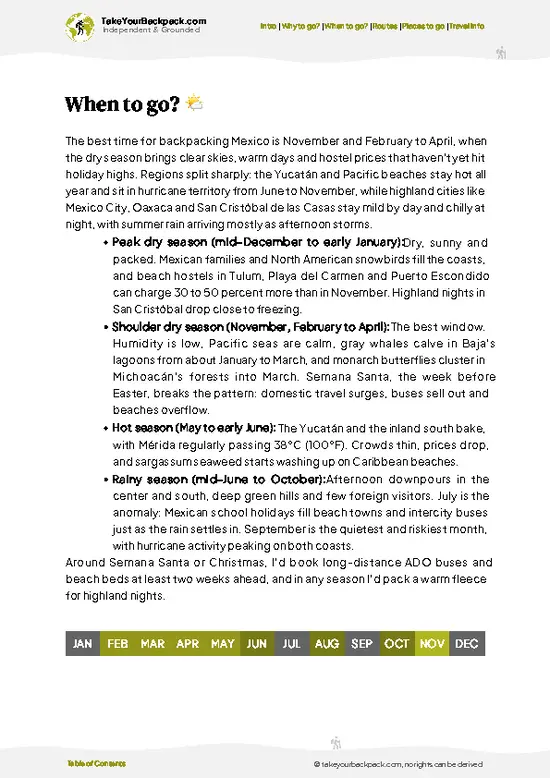
The dry season wins: The best months for national parks in Mexico are November to April, when most of the country is dry, skies are clear and trails and roads are passable. Rainy season runs roughly June to October across most regions, with afternoon downpours that arrive almost on schedule, like a bus that is only punctual when you do not need it.

Region by region: In the central highlands, including the volcanic belt around Mexico City, days are pleasant at 18 to 24°C in winter, but nights at altitude drop to near or below freezing, and summit areas can be icy. Clear mornings are best, because clouds build by midday from May onward. On the Caribbean coast, dry season brings calm seas at 26 to 28°C and the best visibility for snorkeling. Hurricane season runs June to November, with the highest … read more 👉
The dry season wins: The best months for national parks in Mexico are November to April, when most of the country is dry, skies are clear and trails and roads are passable. Rainy season runs roughly June to October across most regions, with afternoon downpours that arrive almost on schedule, like a bus that is only punctual when you do not need it.

Region by region: In the central highlands, including the volcanic belt around Mexico City, days are pleasant at 18 to 24°C in winter, but nights at altitude drop to near or below freezing, and summit areas can be icy. Clear mornings are best, because clouds build by midday from May onward. On the Caribbean coast, dry season brings calm seas at 26 to 28°C and the best visibility for snorkeling. Hurricane season runs June to November, with the highest risk from August to October. The Pacific coast follows a similar pattern, with heavy rains and humid heat from July to October. In the north and the deserts, summers are punishing, often 38°C or more, so winter and early spring are far kinder, though nights can dip toward freezing. In Baja, the whale season runs roughly January to March.

Crowds and prices: Peak periods that matter are Christmas to New Year, Semana Santa (the week before Easter) and the weeks of July and August when Mexican families are on vacation. Coastal lodging can climb 30 to 100 percent in these windows, and parks near cities become very busy on weekends. Shoulder months, October to early November and May, offer lower prices, thinner crowds and a gamble on weather. Mid-week visits are noticeably quieter nearly everywhere.

national park hoppingTips for Visiting Multiple Destinations

How long a multi-park trip takes: A trip combining several national parks in Mexico needs 10 to 21 days, and the lower end only works if you stick to one or two neighboring regions. Mexico is large, and the map has a way of making 800 kilometers look like a short walk.

Which regions pair well: The most natural clusters are the central highlands around Mexico City, Puebla and the Mexico State volcanic belt, the Yucatán Peninsula and Caribbean coast reached from Cancún or Mérida, and the southern states of Oaxaca and Chiapas. Baja California and the northern deserts form a separate world best treated as its own trip. A sensible direction is to start high and cool, then finish low and warm, so you acclimatize at altitude before any long hikes and end on a beach rather than a bus terminal. Mexico … read more 👉
How long a multi-park trip takes: A trip combining several national parks in Mexico needs 10 to 21 days, and the lower end only works if you stick to one or two neighboring regions. Mexico is large, and the map has a way of making 800 kilometers look like a short walk.

Which regions pair well: The most natural clusters are the central highlands around Mexico City, Puebla and the Mexico State volcanic belt, the Yucatán Peninsula and Caribbean coast reached from Cancún or Mérida, and the southern states of Oaxaca and Chiapas. Baja California and the northern deserts form a separate world best treated as its own trip. A sensible direction is to start high and cool, then finish low and warm, so you acclimatize at altitude before any long hikes and end on a beach rather than a bus terminal. Mexico City is the best hub for the highlands, with frequent buses to nearby parks in 1 to 3 hours.

Time per stop and between regions: Allow 1 to 2 days for parks close to a city and 2 to 4 days for remote or coastal ones where boats, guides or long drives eat the first day. Between regions, first-class buses from Mexico City take roughly 6 to 8 hours to Oaxaca or Veracruz and 18 hours or more to the Yucatán, where a domestic flight of 2 hours is usually worth the fare.

Common planning mistakes: The classic error is cramming too many parks into too few days, then spending the trip looking out of a bus window. Choose fewer stops. Another is relying on night buses to save on lodging, which costs you the next day. Travel in daylight where possible. Many people also ignore rainy-season road closures and hurricane windows on the coasts, so keep a spare day in each region. Finally, book boats and permits ahead, since showing up with enthusiasm alone seldom works.

The ListMust-Visit national parks in Mexico

1 Copper Canyon

Chepe railway, Divisadero rim, Creel, Batopilas descent

Ride the Chepe line across bridges and tunnels, then stop at the rim, the pine plateau around Creel or the warm canyon floor.

Mexico - Copper Canyon

2 Calakmul

45-meter pyramid, Kaan stelae, howler monkeys, jungle road

Climb steep stone stairs above an unbroken canopy, then wander shaded plazas and carved stelae while howler monkeys roar from the forest.

mexico-national-park-calakmul
© Google |

3 Cabo Pulmo

Hard-coral reef, wade-in snorkeling, bull sharks, East Cape desert

Wade in from the beach to a protected coral reef, dive for jacks and seasonal bull sharks, or hike cactus-lined tracks behind the bay.

mexico-national-park-cabo-pulmo
© Google |

4 El Pinacate y Gran Desierto de Altar

Elegante maar crater, lava fields, orange dunes, saguaro desert

Circle the rim of a deep round crater, climb black volcanic peaks and look out over rust-colored dunes toward the Gulf of California.

5 Sumidero Canyon

1,000-meter canyon walls, Chiapa de Corzo launches, crocodile sandbars, rim miradors

Ride an open launch up the Grijalva between sheer cliffs, passing crocodiles, spider monkeys and the Christmas Tree waterfall.

6 Huatulco National Park

Pacific bays, La Entrega snorkeling, Maguey seafood shacks, boat-only coves

Hop between calm Pacific bays by boat or trail, snorkel shallow coral and eat grilled fish at beachfront palapas.

mexico-national-park-huatulco-national-park
© Google |

7 Sian Ka’an

Muyil lagoons, Maya canal, Punta Allen, Boca Paila track

Float a Maya-built canal by life jacket, bounce down the coastal track to a lobster village and snorkel the reef.

mexico-national-park-sian-kaan
© Google | Jeremy Sander

8 El Vizcaíno

Gray whale lagoons, Sierra de San Francisco rock art, salt works, boojum trees

Board small boats in winter to meet gray whales and calves up close, and pair it with cave paintings and desert flora.

mexico-national-park-el-vizcaino
© Google |

9 El Cielo Biosphere Reserve

Cloud forest, Puente de Dios, guided birding, Gómez Farías

Walk misty oak forest hung with orchids and bromeliads, watch for trogons and parrots, then swim in turquoise spring pools.

mexico-national-park-el-cielo-biosphere-reserve
© Google |

10 Lagunas de Montebello

59 lakes, color shifts, Tziscao border shore, Cinco Lagos

Hop between lakes that shift from turquoise to deep green, using short flat paths, kayaks and a few roadside viewpoints.

mexico-national-park-lagunas-de-montebello
© Google |

11 Nevado de Toluca

Twin crater lakes, 4,680-meter rim, volcanic gravel, drive-in summit

Drive a rough road into a caldera, descend to two lakes at 4,200 meters and scramble the rim peaks above them.

mexico-national-park-nevado-de-toluca
© Google | Emanuel Charcas

12 La Malinche

4,461-meter summit, pine belt, alpine grass, volcano views

Push from the forest cabins through bunchgrass slopes to a rocky crest facing Popocatépetl, best started in the dark for sunrise.

13 Desierto de los Leones

Carmelite monastery, fir forest, Los Dinamos route, weekend picnics

Trade Mexico City traffic for resinous fir shade, a 17th-century monastery with crypts and tunnels, and wide trails shared with cyclists.

14 Grutas de Cacahuamilpa

Guided cave tour, Gran Salón, giant stalagmites, river exits

Follow a lit two-hour route through huge chambers of towering stalagmites, then cool off in the clear shallows near the entrance.

15 Isla Contoy

Bird sanctuary, Ixlaché reef, turtle nesting, capped daily visits

Take a licensed boat to a car-free island of frigatebirds and pelicans, with a lookout tower, reef snorkeling and a beach fish grill.

mexico-national-park-isla-contoy
© Google | Chenut Marc

16 Barranca del Cupatitzio

Rodilla del Diablo spring, river stairs, trout ponds, Uruapan edge

Follow a paved path from the spring where the river erupts from volcanic rock, past waterfalls, footbridges and fern-lined trout pools.

17 Basaseachic Falls

246-meter drop, rim lookouts, plunge-pool descent, Candameña gorge

Walk to the rim for a straight-on view of the falls, then take the steep stepped trail down through pine and oak to the pool.

18 Tulum National Park

Cliffside El Castillo, walled port, Playa Paraíso, iguanas

Walk the limestone city wall above the Caribbean, then take the staircase down to a small cove for a swim.

mexico-national-park-tulum-national-park
© Google |

19 Pantanos de Centla

Usumacinta wetlands, launch trips, manatee habitat, howler monkeys

Board a launch through mangrove channels and lagoons to spot herons, spoonbills, crocodiles and howlers from a lookout tower or the water.

20 Lagunas de Chacahua

Mangrove channels, point surf, crocodile nursery, glowing lagoon

Glide by boat through red-mangrove tunnels, learn to surf mellow waves, and look for blue bioluminescence on dark nights.

21 Sierra de San Pedro Mártir

Picacho del Diablo, dark-sky observatory, Vallecitos meadow, Jeffrey pines

Camp in high pine meadows, scramble toward Baja's tallest peak and watch the Milky Way over the observatory plateau.

mexico-national-park-sierra-de-san-pedro-martir
© Google |

22 El Chico

Peña del Cuervo, rock windows, trout lakeside, mining village

Climb to a crag above the pines, scramble to weathered rock windows, then finish with trout by the reservoir or a stroll through stone-street Mineral del Chico.

mexico-national-park-el-chico
© Google | Cristhian Rosillo

23 Sierra de Manantlán

Teosinte fields, Las Joyas forest, Cuzalapa falls, Nahua highlands

Visit wild-maize patches with a local guide, then climb into oak and magnolia cloud forest or swim below the Cuzalapa cascades.

24 Sierra de Huautla

Dry tropical forest, Cerro Frío ridge, Balsas endemics, rainy-season green

Walk dry-forest ridges among copal trees and columnar cacti, with local guides from the villages and birds at dawn.

25 Sierra de Órganos

Organ-pipe rock spires, Los Frailes, western film sets, Sombrerete

Walk short paths beneath rust-colored rock columns that glow in low sun, with lookouts and a colonial mining town nearby.

26 Isla Isabel

Blue-footed boobies, frigatebird colony, crater lakes, camping island

Step among nesting boobies and frigatebirds at head height, then snorkel around rock stacks or walk to a crater lake.

27 Sierra de Quila

Oak-pine forest, Cerro El Chapulín, Las Tarjeas waterfall, boulder fields

Hike unsigned forest tracks to a lookout above the oaks, a seasonal waterfall and rounded boulders, watching for deer and coatis.

28 Volcán Nevado de Colima

4,260-meter summit, Fuego smoke views, La Joya camp, crater lake

Camp at La Joya meadow, hike through fir forest and alpine grass to the summit, and watch the neighboring volcano smoke.

29 Arrecifes de Cozumel

Palancar coral walls, drift dives, Paradise Reef snorkeling, Santa Rosa Wall

Drop into current-swept coral walls and swim-throughs on small-group dives, or snorkel the shallow reefs off Chankanaab beach.

Think you know Mexico?

Prove you’re a true local — uncover 19 lesser-known national parks in Mexico that locals tend to keep to themselves.
Loading the map 🌍

Expert viewInsights from Locals and Experts

How many parks to visit: I would advise three to five national parks on a trip of two to three weeks. Fewer than three and you miss how different the country’s landscapes are. More than five and you spend more time in transit than outdoors, because access roads, boat departures and early starts consume whole days. Give each park enough time to walk its trails at an unhurried pace rather than ticking it off.

Choosing between the kinds: Pick by travel style. If you want easy independent travel and cool air, the volcanic and forest parks near Mexico City are the simplest, reachable by bus and colectivo for a few dollars. If you want wildlife and water, the Caribbean and Pacific coastal parks and reef areas deliver, but they cost more, because the real experience happens on a boat. If you want … read more 👉
How many parks to visit: I would advise three to five national parks on a trip of two to three weeks. Fewer than three and you miss how different the country’s landscapes are. More than five and you spend more time in transit than outdoors, because access roads, boat departures and early starts consume whole days. Give each park enough time to walk its trails at an unhurried pace rather than ticking it off.

Choosing between the kinds: Pick by travel style. If you want easy independent travel and cool air, the volcanic and forest parks near Mexico City are the simplest, reachable by bus and colectivo for a few dollars. If you want wildlife and water, the Caribbean and Pacific coastal parks and reef areas deliver, but they cost more, because the real experience happens on a boat. If you want solitude and big skies, the desert, sierra and canyon parks are the answer, though they usually need a car, camping gear and self-sufficiency. A sensible mix is one of each kind, so you are not repeating the same day in different outfits.

What it costs: Entry fees are low at most parks, typically US$2 to 8 (about 40 to 150 pesos), with some marine and reef zones adding separate fees or conservation charges. Guides, which are often required or strongly advisable for volcano routes, caves and wildlife trips, run US$15 to 60 depending on group size and duration. Boat trips can cost US$30 to 100 per person. Simple camping is often US$5 to 15 a night, and hostel dorms nearby are about US$10 to 20. On a budget with buses and street food, expect US$35 to 60 a day in highland areas, and US$60 to 100 on the Caribbean coast. Per park, budget US$20 to 40 for a day visit near a city and US$80 to 200 for a multi-day remote or marine visit with guide and transport. Carry cash in small bills, since entrance booths and village shops often cannot break large notes and card readers are optimistic at best.

Crowds, honestly: Parks near big cities and famous coastlines are crowded on weekends and holidays, with queues, loud music and vendors. Arrive at opening, which is usually 8 or 9 a.m., or visit mid-week and the difference is large. Remote parks stay quiet almost year-round, but quiet comes with rough roads, basic facilities and little cell signal. The reward is real: clear air, birdsong, ridgelines and the odd moment when you are the only person on a trail.

Safety and cultural considerations: Most park visits are uneventful, and the greater risks are altitude, heat, sun and weather rather than crime. At elevations above 3,000 meters, ascend gradually, drink water and turn back if headaches build. On the coast, respect red-flag warnings, since rip currents are real and lifeguards are sparse. Check conditions before driving remote roads, avoid driving at night, and use toll roads where possible. Government travel advisories vary by state, so read the current one for any region you plan to enter, and tell your accommodation where you are going.

Culturally, many parks sit on communal or indigenous land. Pay local fees and hire local guides, who are often the people with the best knowledge of the terrain. Ask before photographing people, and treat ceremonial or sacred sites with the quiet you would show in a church. Pack out all trash, because collection is thin or absent. A few Spanish phrases go a long way and change how you are received. Greeting people with “buenos días” before asking a question is a small courtesy with outsized effect.

What to bring: A refillable bottle, reef-safe sunscreen, a warm layer even for sunny days at altitude, rain gear, and a paper copy of your bookings. Reliable bus companies and a flexible plan matter more than any single piece of gear.

✈️ The backpacker research shortcutMexico Travel Guide

An offline-friendly backpacking guide with optimized travel routes, ranked highlights, transport advice, and the best areas to stay.
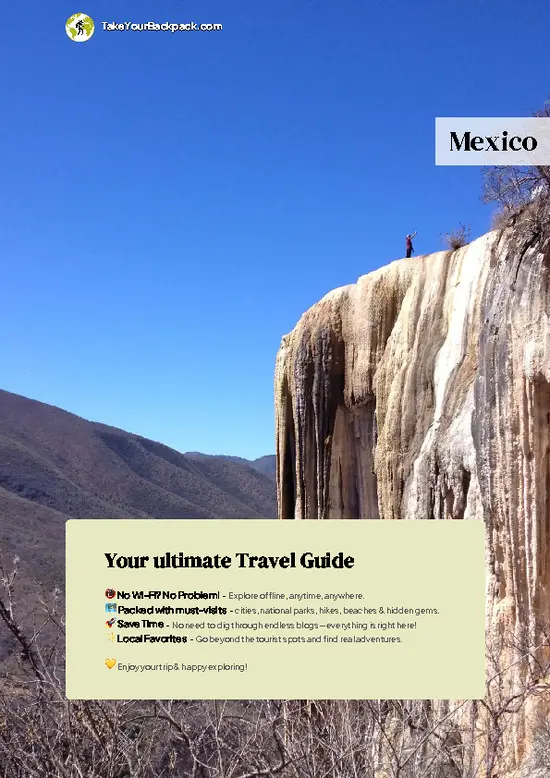
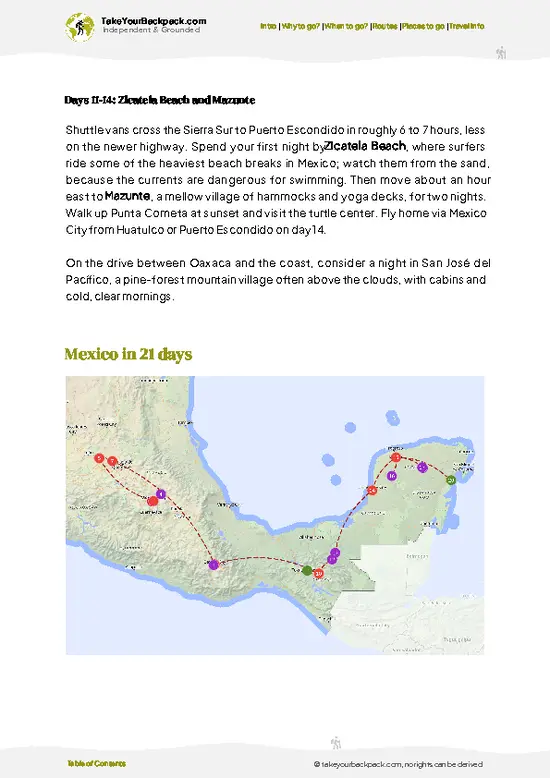
example page 0 from our offline Travel Guide for Mexico
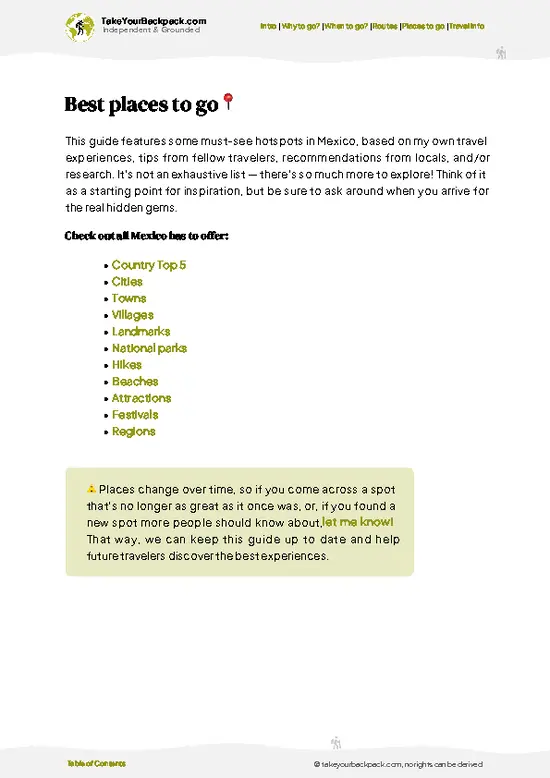
example page 1 from our offline Travel Guide for Mexico
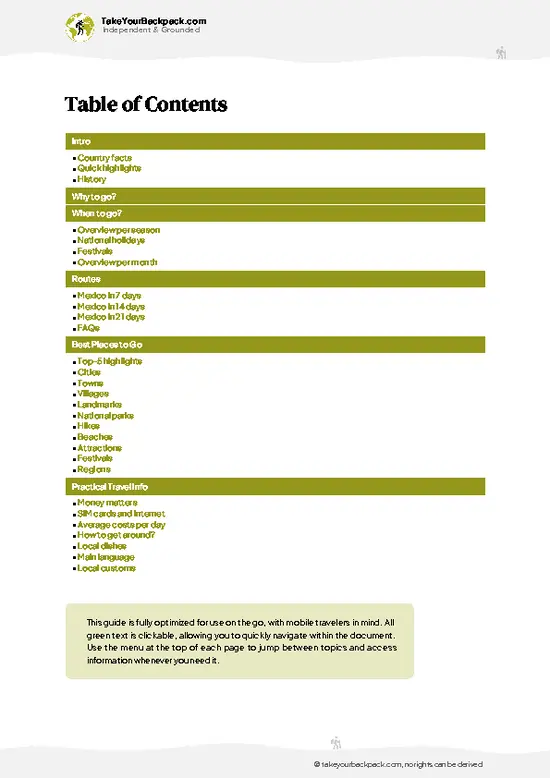
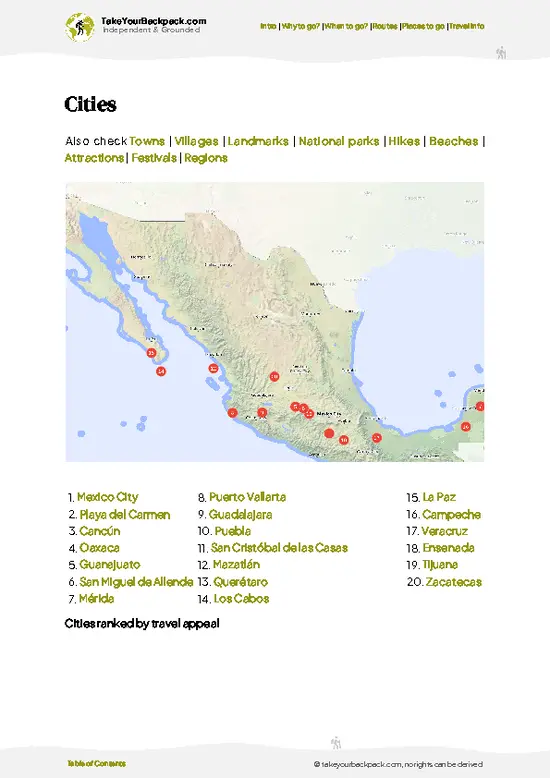
example page 2 from our offline Travel Guide for Mexico
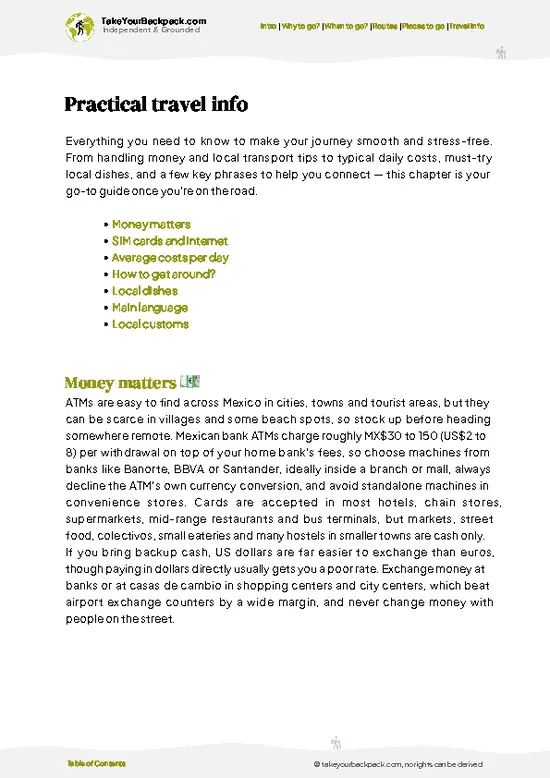
example page 3 from our offline Travel Guide for Mexico
example page 4 from our offline Travel Guide for Mexico
example page 5 from our offline Travel Guide for Mexico
example page 6 from our offline Travel Guide for Mexico
example page 7 from our offline Travel Guide for Mexico
The digital guide (402 pages) contains:
✅ 138 highlights, ranked by travel appeal
✅ Optimized 7, 14 & 21-day travel routes
✅ Cities, national parks, landmarks, beaches
✅ How to get around
✅ Offline-friendly for travel without Wi-Fi
👉 Click to see all 30+ guide features

📅 Plan smarter in minutes, not weeks
✅ Month by month travel advice
✅ Festivals & national holidays
✅ Budget expectations

🗺️ Go to the right places, skip the overrated ones
✅ Honest pros & cons of destinations
✅ Top hikes, parks & viewpoints
✅ Lesser-known places most travelers miss
✅ Clear “worth it vs skip it” guidance

🛏️ Travel smoothly without rookie mistakes
✅ Best areas to stay
✅ Transport systems explained simply
✅ Common scams & safety advice
✅ SIM cards, money & practical tips

🌍 Understand the country, not just visit it
✅ Culture & traditions
✅ 52 Essential phrases & customs
✅ Festivals worth planning around
✅ Traveler-friendly historical context
✅ Insights that make places more meaningful

📱 Built for real travel conditions
✅ Fully downloadable PDF
✅ Works completely offline
✅ Optimized for phone use
✅ Useful in remote areas & buses
✅ Everything in one place
Stop searching, start planning
Get instant access to your full guide. 30‑day money-back guarantee.
+ Add another guide for just

By proceeding you agree to our terms.
Sent to your inbox immediately after payment • 100% Secure Checkout
Best Backpacking Travel Advisor 2025 tourism awardBest Backpacking
Travel Advisor
2025
What others say about Take Your Backpack Guides:
⭐⭐⭐⭐⭐
Fantastic, amazing amount of information!
⭐⭐⭐⭐⭐
My goodness this is amazing, it's what I've been looking for hats off too you!
⭐⭐⭐⭐⭐
I think this is absolutely BRILLIANT
⭐⭐⭐⭐
Very complete and informative. It's still missing places, but I gotta to commend you
⭐⭐⭐⭐⭐
This is truly amazing, thank you, can't wait to explore it with my kids!
⭐⭐⭐⭐⭐
Awesome resource, thank you!
⭐⭐⭐⭐⭐
This is amazing! Can't wait to explore the ones I haven't seen
⭐⭐⭐⭐
I love this! Well done, great idea.
⭐⭐⭐⭐⭐
Thanks for taking the time to make this gem!
⭐⭐⭐⭐⭐
This might be the best website I've ever seen.
⭐⭐⭐⭐⭐
Congratulations, and thank you so much for your work; it's incredibly valuable.
⭐⭐⭐⭐
In all seriousness I think you did a great job pointing out the important spots
⭐⭐⭐⭐⭐
10/10 very good
⭐⭐⭐⭐⭐
As someone who's only just starting to visit regularly this is awesome, thank you.
⭐⭐⭐⭐
Thank you very much! I'm going to visit my dad, it's going to be very useful!
⭐⭐⭐⭐⭐
This is really cool! We'll be travelling for the first time and this definitely come in handy.
⭐⭐⭐⭐⭐
You are now our minister of culture, congratulations 👨‍💼
⭐⭐⭐⭐⭐
Just wanted to tell you that this is a pearl! Going to follow your recommendations.
⭐⭐⭐⭐⭐
This is so cool. I'll definitely be using the resource for my travels soon.
⭐⭐⭐⭐⭐
This is very impressive! Good work.
⭐⭐⭐⭐⭐
This is an amazing and informative site. Very well done!

🛏️ Where to stay?Accommodation Highlights

Mexico has one of the deepest hostel scenes in Latin America, with dorm beds typically running MXN 250 to 500 (about US$13 to 28) and private rooms in guesthouses from roughly MXN 700 (US$38). In Mexico City, the Centro Histórico puts you steps from the main museums and is the cheapest, though some blocks empty out after dark, while Roma and Condesa cost a bit more but give you leafy, walkable streets, good bars and a safer feel at night. Elsewhere, San Cristóbal de las Casas and central Oaxaca offer quiet, cheap stays within walking distance of everything, and Playa del Carmen and Tulum pack in party hostels near the beach at noticeably higher prices.

If you enjoy meeting fellow travelers, consider … read more 👉
Mexico has one of the deepest hostel scenes in Latin America, with dorm beds typically running MXN 250 to 500 (about US$13 to 28) and private rooms in guesthouses from roughly MXN 700 (US$38). In Mexico City, the Centro Histórico puts you steps from the main museums and is the cheapest, though some blocks empty out after dark, while Roma and Condesa cost a bit more but give you leafy, walkable streets, good bars and a safer feel at night. Elsewhere, San Cristóbal de las Casas and central Oaxaca offer quiet, cheap stays within walking distance of everything, and Playa del Carmen and Tulum pack in party hostels near the beach at noticeably higher prices.

If you enjoy meeting fellow travelers, consider choosing hostels with high ratings for atmosphere. On the other hand, if you prefer having your own space, a hotel might be a better option.

MexicoSee More of Mexico

👋 Meet the founderWho’s Behind Take Your Backpack?

Johan, backpacker and founder of TakeYourBackpackHi, I’m Johan (Netherlands 🇳🇱), the creator of TakeYourBackpack. Over the past 3 decades, I’ve backpacked through 90+ countries across six continents, gaining extensive experience with independent travel, long-term trips, and overland routes.

This site is built on a combination of firsthand travel experience and carefully curated insights from other backpackers. Many guides are based on places I’ve personally visited, while others bring together tips, observations, and practical advice shared by trusted travelers I’ve met along the way.

The goal is to provide realistic, experience-driven guidance — not generic itineraries — so you can explore destinations with better context, clearer expectations, and more confidence.