×

Mexico🇲🇽 | best hikesWhere to Find the 8 Best hikes in Mexico

Hiking in Mexico rarely means a single national template. You get volcano summits above 5,000 meters near Mexico City, canyon country in Chihuahua, cloud forest in Chiapas, and jungle trails that end at ruins you pay a few dollars to enter. Altitude is the plot twist: your lungs will have opinions before your legs do. The central highlands are easy to reach by bus but busy on weekends, when whole families climb with speakers. The north and the Pacific coast are emptier and need more patience with transport. The south mixes Indigenous villages, community-run trails and the occasional rooster alarm at 4 a.m. Independent travel works well here, because buses are frequent and a day hike seldom costs more than a taxi ride. Mexico also prices by access: a famous trail near a big city is cheap but crowded, while a remote one costs more in transport and time than in fees.

By Johan Kruseman 🇳🇱 | Updated October 20, 2026
Explore the best beaches in Mexico

Why go?Why Travelers Love These Spots

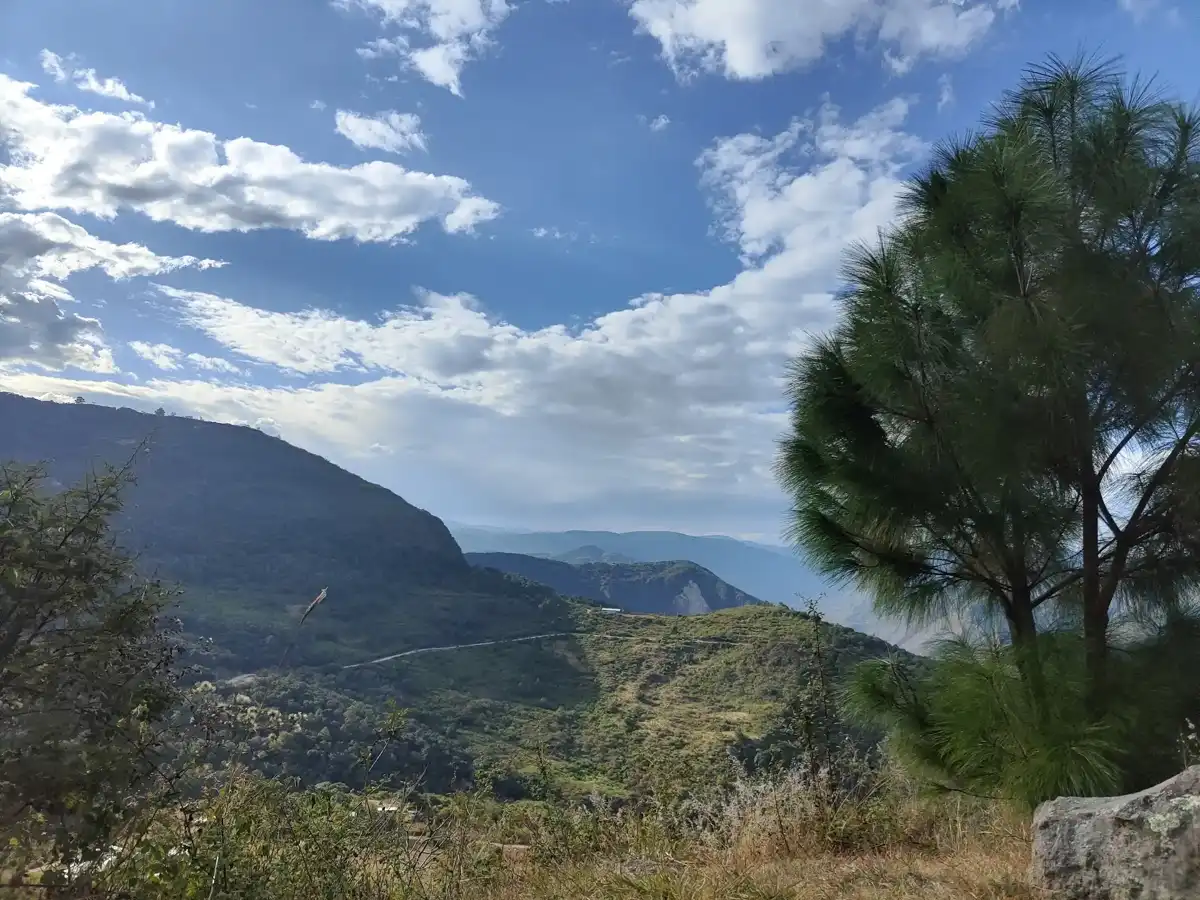
Mexico is built for hiking by geography, and the geography is awkward in exactly the right ways. The Trans-Mexican Volcanic Belt lifts the center of the country into a string of high peaks, while the Sierra Madre ranges run down both coasts and carve out deep barrancas in the northwest. Few countries stack desert, pine forest, glaciated summit and tropical lowland within a day’s drive of each other. Add a long human history and many trails are older than the maps: pilgrim routes, Indigenous footpaths and paths that end at pre-Hispanic sites are common, so a walk often has a reason beyond the view.

Before choosing Mexico, know that altitude is the main physical hurdle. Mexico City sits above 2,200 meters, and many popular trailheads start higher, so arriving and climbing on the same day is … read more 👉
Mexico is built for hiking by geography, and the geography is awkward in exactly the right ways. The Trans-Mexican Volcanic Belt lifts the center of the country into a string of high peaks, while the Sierra Madre ranges run down both coasts and carve out deep barrancas in the northwest. Few countries stack desert, pine forest, glaciated summit and tropical lowland within a day’s drive of each other. Add a long human history and many trails are older than the maps: pilgrim routes, Indigenous footpaths and paths that end at pre-Hispanic sites are common, so a walk often has a reason beyond the view.

Before choosing Mexico, know that altitude is the main physical hurdle. Mexico City sits above 2,200 meters, and many popular trailheads start higher, so arriving and climbing on the same day is a bad plan. Know too that infrastructure is uneven. Trail marking is often thin, maps are patchy, and many routes are managed by ejidos and community cooperatives that charge small fees and sometimes require a local guide. That is a feature, not a flaw, because the money stays in the village. Rescue services are limited outside major parks, so a charged phone and a downloaded offline map matter more than fancy boots.

The climate also sets the rules: afternoon storms in summer, cold dry mornings in winter, and a hot lowland that punishes midday starts. Mexico rewards travelers who like improvising and speaking a little Spanish. It disappoints anyone expecting a signposted national trail network with a visitor center every few kilometers. Bring cash in small bills, because the person collecting the entrance fee will not have change for a 500-peso note.
Evaluating the Top Choices
The list of best hikes in Mexico is created based on scenery, challenge, trail quality, landmarks, and overall enjoyment. If you feel a hike is missing in this list, please let us know.

When to go?Timing Your Visit for the Best Experience

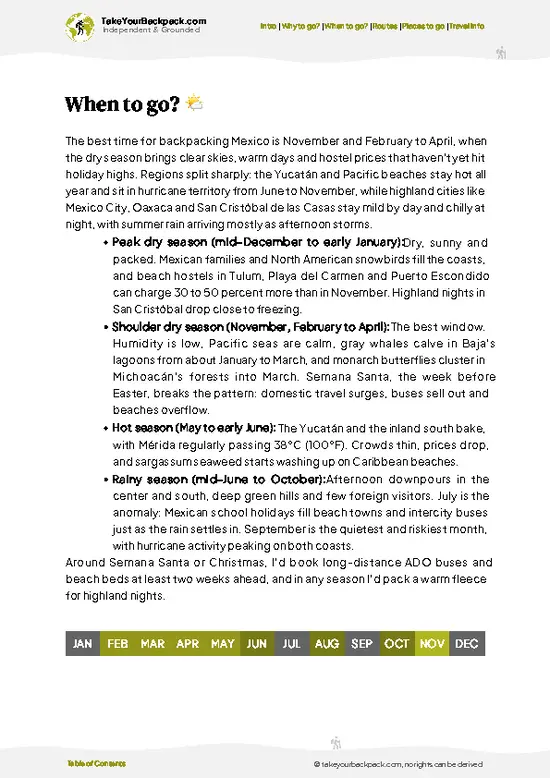
Best Months for Hiking: The best months for hiking in Mexico are November to April, when the dry season brings clear skies, stable trails and the best summit visibility across the central highlands and most of the country. Daytime temperatures in highland towns sit around 18 to 25°C, but nights at altitude drop to near or below freezing, and volcano summits above 4,000 meters can stay well under 0°C before sunrise. Rain barely appears in these months, which means dust, crisp light and the pleasant surprise of dry socks.
Rainy Season and Shoulder Months: From June to September the rainy season delivers near-daily afternoon storms in the center, south and Pacific coast, often with lightning on exposed ridges. Mornings are usually clear, so early starts matter, and many hikers finish by noon. … read more 👉
Best Months for Hiking: The best months for hiking in Mexico are November to April, when the dry season brings clear skies, stable trails and the best summit visibility across the central highlands and most of the country. Daytime temperatures in highland towns sit around 18 to 25°C, but nights at altitude drop to near or below freezing, and volcano summits above 4,000 meters can stay well under 0°C before sunrise. Rain barely appears in these months, which means dust, crisp light and the pleasant surprise of dry socks.
Rainy Season and Shoulder Months: From June to September the rainy season delivers near-daily afternoon storms in the center, south and Pacific coast, often with lightning on exposed ridges. Mornings are usually clear, so early starts matter, and many hikers finish by noon. Trails turn muddy, rivers rise and some jungle routes get closed or become unpleasant. In return, the hills turn green and crowds thin. May and October are shoulder months, with May hot and dry before the rains and October drying out and often excellent in the highlands.
Regional Differences and Peak Periods: The Copper Canyon region in Chihuahua is best in October to November and March to April, because the canyon floors can exceed 35°C in summer, while the rim gets cold and snowy in winter. The Yucatán Peninsula and other lowland jungles are best from December to March, when heat and humidity ease slightly. Baja California is pleasant in spring and autumn.
Crowds and Prices: Peak pressure comes around Christmas, New Year and Semana Santa (the week before Easter), when Mexican families fill trailheads and rooms in mountain towns can cost 30 to 50 percent more. Long weekends bring the same effect on a smaller scale. Midweek hikes in the dry season are the calmest and the cheapest.

hike hoppingTips for Visiting Multiple Destinations

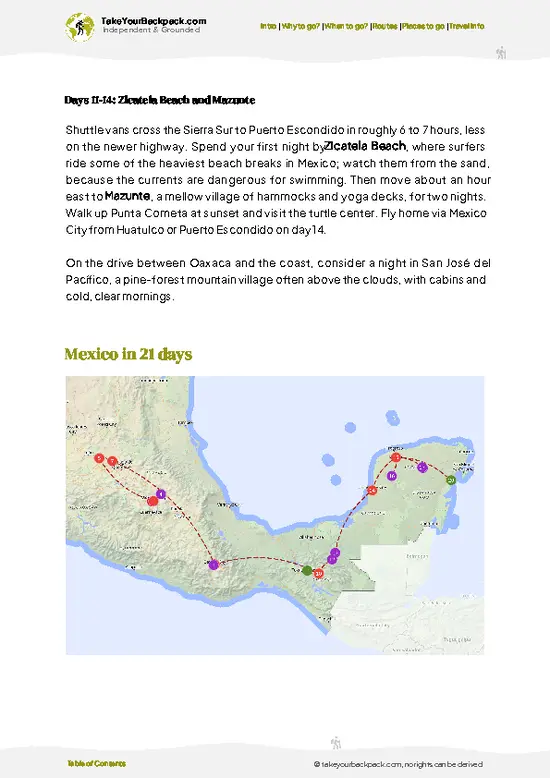
How Many Days to Plan: A trip combining several hikes in Mexico needs 14 to 21 days, and 10 days is the practical minimum if you stick to one or two regions. Mexico is large, and the main mistake is treating it like a small country where everything is a quick hop. The map lies, politely.
Which Regions Group Well: The central highlands make the easiest cluster: Mexico City, Puebla, Toluca and Morelos sit within 1 to 3.5 hours of each other by bus, with frequent departures from the capital’s terminals. The south pairs Oaxaca and Chiapas, but the road between Oaxaca City and San Cristóbal de las Casas takes roughly 10 to 12 hours by bus, or a short flight via Mexico City or direct regional services. The Yucatán region links well with Chiapas by overnight bus or flight. The northwest (Chihuahua … read more 👉
How Many Days to Plan: A trip combining several hikes in Mexico needs 14 to 21 days, and 10 days is the practical minimum if you stick to one or two regions. Mexico is large, and the main mistake is treating it like a small country where everything is a quick hop. The map lies, politely.
Which Regions Group Well: The central highlands make the easiest cluster: Mexico City, Puebla, Toluca and Morelos sit within 1 to 3.5 hours of each other by bus, with frequent departures from the capital’s terminals. The south pairs Oaxaca and Chiapas, but the road between Oaxaca City and San Cristóbal de las Casas takes roughly 10 to 12 hours by bus, or a short flight via Mexico City or direct regional services. The Yucatán region links well with Chiapas by overnight bus or flight. The northwest (Chihuahua and Copper Canyon) is its own project, since reaching it from the center usually means a flight to Chihuahua City or Los Mochis.
Direction and Pacing: Start in the highlands to acclimatize, then move to lower regions rather than the reverse. Starting with a 4,000-meter day after landing at sea level is a sure way to spend your night regretting your life choices. Allow 2 to 4 days per stop, including a rest day, since altitude and long bus rides cost more energy than the hike itself. Overland legs between regions can take 6 to 14 hours, so plan to treat them as half or full travel days.
Planning Mistakes: The classic errors are scheduling a hard hike the morning after an overnight bus, ignoring the rainy-season afternoon storms, and stacking three high-altitude days in a row. Instead, alternate big days with easy ones, travel in daylight when possible, and book flights for the longest hops. Buying bus tickets a day ahead for weekend departures also saves you from standing in a terminal at 6 p.m. wondering where it all went wrong.

The ListMust-Visit hikes in Mexico

1 Pico de Orizaba

5,636 m crater rim, Jamapa Glacier, Piedra Grande hut, crampon climb

Start from a basic hut at 4,200 meters, cross black boulders in the dark, then rope up for the glacier to the crater rim.

mexico-hike-pico-de-orizaba
© Google |

2 Iztaccíhuatl

5,230 m ridge, lava scrambling, zacatón grassland, Popocatépetl views

Climb from the grassy slopes at La Joya over lava rock and loose scree to El Pecho, with Popocatépetl smoking across the saddle.

mexico-hike-iztaccihuatl
© Google |

3 Volcán Paricutín

Buried church, black cinder cone, lava malpaís, Angahuan trailhead

Cross forest and jagged basalt toward a church tower rising from lava, then scramble the loose cinders of the cone for crater views.

mexico-hike-volcan-paricutin
© Google |

4 Sierra Norte

Zapotec villages, cabin-to-cabin trails, cloud forest, 3,000 m ridges

Trek between community cabins along pine ridges and mossy cloud forest, finishing days with trout, tortillas, and a temazcal steam bath.

mexico-hike-sierra-norte
© Google | Elena Petrov

5 Peña de Bernal

350 m monolith, base trail, plaza church, hilltop ruin

Walk steep stone steps to a lookout at the foot of a sheer rock wall that towers above the village plaza.

mexico-hike-pena-de-bernal
© Google |

6 Cañón de Guadalupe

Geothermal pools, fan palms, desert boulders, rock art

Wander upstream past stone-lined hot pools and palm shade to a seasonal waterfall, with pre-Hispanic paintings tucked among the granite boulders.

7 Sierra de San Francisco Cave Paintings

Great Murals, guided canyon days, mule approach, ranch stays

Ride and walk with a local guide through palm canyons to rock shelters crowded with red and black human and animal figures.

mexico-hike-sierra-de-san-francisco-cave-paintings
© Google |

8 El Chorro Waterfall Trail

Seasonal cascade, plunge pools, palm creek bed, thornscrub foothills

Follow a gradual path through dry thornscrub to a rock-ringed pool, where the waterfall runs loud after rain and thin in dry months.

Loading the map 🌍

Expert viewInsights from Locals and Experts

How Many Hikes to Do: Three to five serious hikes is the number I advise for a typical backpacking trip of two to three weeks. That count leaves room for acclimatization, weather delays and rest days, which Mexico demands more than most countries because of altitude, heat and long bus rides. Pack in more and you spend the trip recovering instead of walking. Add easy half-day walks around towns and villages as fillers.
Which Kind to Prioritize: First-timers and anyone short on time should favor highland day hikes near big cities, since transport is cheap and frequent and no guide is needed for most of them. Travelers who want culture should prioritize community-run trails in Oaxaca and Chiapas, where local guides and village homestays are part of the experience. Adventure seekers can choose … read more 👉
How Many Hikes to Do: Three to five serious hikes is the number I advise for a typical backpacking trip of two to three weeks. That count leaves room for acclimatization, weather delays and rest days, which Mexico demands more than most countries because of altitude, heat and long bus rides. Pack in more and you spend the trip recovering instead of walking. Add easy half-day walks around towns and villages as fillers.
Which Kind to Prioritize: First-timers and anyone short on time should favor highland day hikes near big cities, since transport is cheap and frequent and no guide is needed for most of them. Travelers who want culture should prioritize community-run trails in Oaxaca and Chiapas, where local guides and village homestays are part of the experience. Adventure seekers can choose high-altitude volcano climbs or canyon treks, which need more planning, better gear and sometimes a guide. Anyone chasing solitude should look to the north and the Pacific side, where trails are quieter but logistics are slower.
What It Costs: Budget about US$35 to 60 a day (roughly 650 to 1,100 pesos) for a hiking-focused trip with hostels or simple guesthouses, local buses and street food. Dorm beds usually cost 250 to 450 pesos, and a good meal at a market runs 70 to 150 pesos. Entry fees to protected areas and community trails typically range from 40 to 250 pesos per person. Local guides charge about 500 to 1,500 pesos for a half-day and 1,500 to 3,000 pesos for a full day, often split among a group. Volcano or canyon climbs that need transport to remote trailheads can add 300 to 1,000 pesos for a shared taxi or colectivo. A realistic cost per hike including transport, fees and a guide when needed is US$15 to 60. The splurge worth making is a licensed local guide on high or remote routes. The one to skip is a private tour from a big city hotel, which often costs three or four times the same trip booked locally.
Safety and Practical Watch-Outs: Altitude sickness is the real risk. Spend at least two nights above 2,000 meters before attempting anything above 4,000, drink plenty of water and turn around at the first signs of a severe headache or confusion. Start early, because afternoon thunderstorms in summer make exposed ridges dangerous, and carry layers, a headlamp and a physical or offline map. Cell coverage is unreliable on many trails.

For personal security, check current government advisories and local advice for the state you are visiting, avoid night travel on rural highways and choose first-class buses over cheap ones for long legs. Hike with others or with a guide in remote areas.
Cultural Considerations: Many trails cross Indigenous community land, and fees, guides and rules are set by the community, not a distant agency. Pay the fee in cash, ask before photographing people or ceremonies and keep to marked paths around sacred sites. Learn a few Spanish phrases, since a simple “buenos días” on the trail goes a long way. Pack out all trash, because collection in remote villages is limited.
Why It Is Worth the Journey: Crowds are real on weekends near Mexico City, and entrance fees and transport add up, but the payoff is a country where one trip can take you from a snow-streaked summit to a canyon floor and then a cloud forest, with a plate of tamales waiting at the end.

✈️ The backpacker research shortcutMexico Travel Guide

An offline-friendly backpacking guide with optimized travel routes, ranked highlights, transport advice, and the best areas to stay.
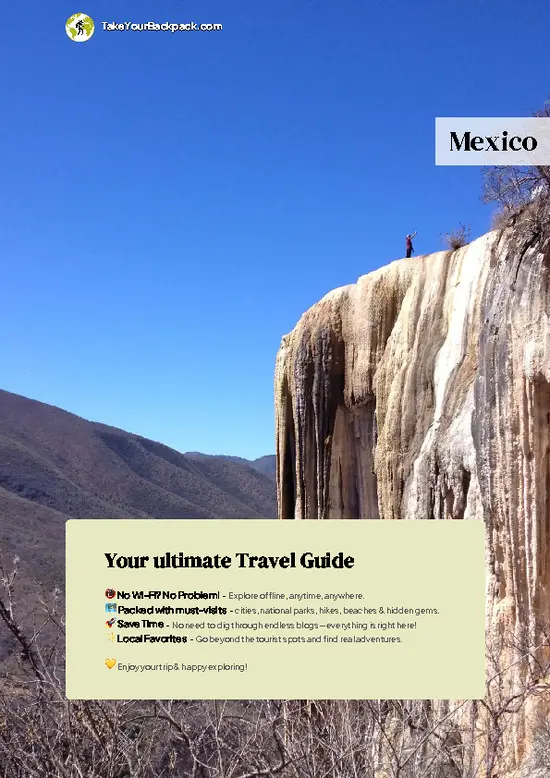
example page 0 from our offline Travel Guide for Mexico
example page 1 from our offline Travel Guide for Mexico
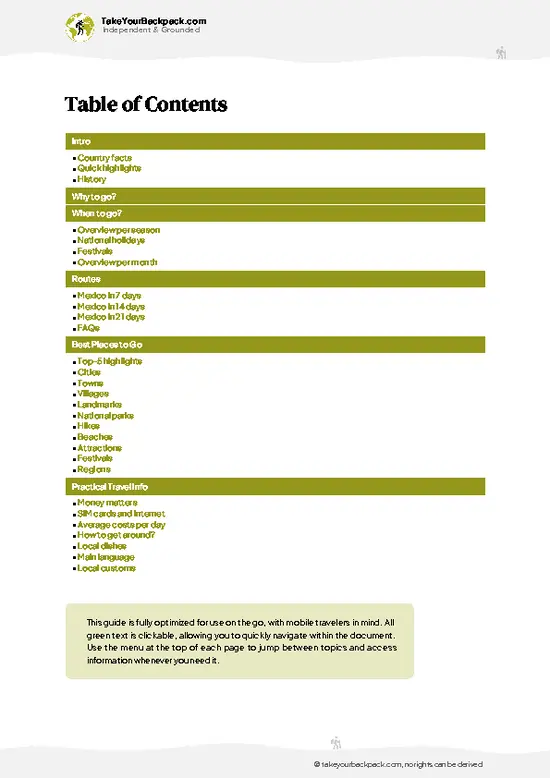
example page 2 from our offline Travel Guide for Mexico
example page 3 from our offline Travel Guide for Mexico
example page 4 from our offline Travel Guide for Mexico
example page 5 from our offline Travel Guide for Mexico
example page 6 from our offline Travel Guide for Mexico
example page 7 from our offline Travel Guide for Mexico
The digital guide (402 pages) contains:
✅ 138 highlights, ranked by travel appeal
✅ Optimized 7, 14 & 21-day travel routes
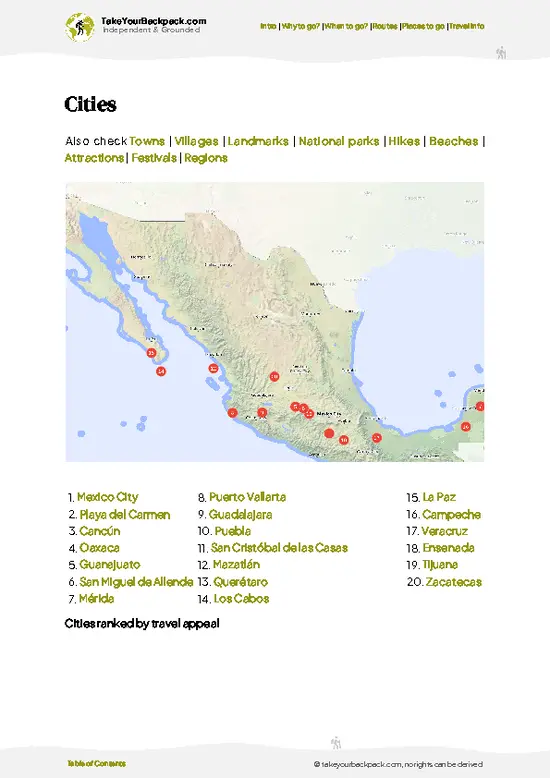
✅ Cities, national parks, landmarks, beaches
✅ How to get around
✅ Offline-friendly for travel without Wi-Fi
👉 Click to see all 30+ guide features

📅 Plan smarter in minutes, not weeks
✅ Month by month travel advice
✅ Festivals & national holidays
✅ Budget expectations

🗺️ Go to the right places, skip the overrated ones
✅ Honest pros & cons of destinations
✅ Top hikes, parks & viewpoints
✅ Lesser-known places most travelers miss
✅ Clear “worth it vs skip it” guidance

🛏️ Travel smoothly without rookie mistakes
✅ Best areas to stay
✅ Transport systems explained simply
✅ Common scams & safety advice
✅ SIM cards, money & practical tips

🌍 Understand the country, not just visit it
✅ Culture & traditions
✅ 52 Essential phrases & customs
✅ Festivals worth planning around
✅ Traveler-friendly historical context
✅ Insights that make places more meaningful

📱 Built for real travel conditions
✅ Fully downloadable PDF
✅ Works completely offline
✅ Optimized for phone use
✅ Useful in remote areas & buses
✅ Everything in one place
Stop searching, start planning
Get instant access to your full guide. 30‑day money-back guarantee.
+ Add another guide for just

By proceeding you agree to our terms.
Sent to your inbox immediately after payment • 100% Secure Checkout
Best Backpacking Travel Advisor 2025 tourism awardBest Backpacking
Travel Advisor
2025
What others say about Take Your Backpack Guides:
⭐⭐⭐⭐⭐
Fantastic, amazing amount of information!
⭐⭐⭐⭐⭐
My goodness this is amazing, it's what I've been looking for hats off too you!
⭐⭐⭐⭐⭐
I think this is absolutely BRILLIANT
⭐⭐⭐⭐
Very complete and informative. It's still missing places, but I gotta to commend you
⭐⭐⭐⭐⭐
This is truly amazing, thank you, can't wait to explore it with my kids!
⭐⭐⭐⭐⭐
Awesome resource, thank you!
⭐⭐⭐⭐⭐
This is amazing! Can't wait to explore the ones I haven't seen
⭐⭐⭐⭐
I love this! Well done, great idea.
⭐⭐⭐⭐⭐
Thanks for taking the time to make this gem!
⭐⭐⭐⭐⭐
This might be the best website I've ever seen.
⭐⭐⭐⭐⭐
Congratulations, and thank you so much for your work; it's incredibly valuable.
⭐⭐⭐⭐
In all seriousness I think you did a great job pointing out the important spots
⭐⭐⭐⭐⭐
10/10 very good
⭐⭐⭐⭐⭐
As someone who's only just starting to visit regularly this is awesome, thank you.
⭐⭐⭐⭐
Thank you very much! I'm going to visit my dad, it's going to be very useful!
⭐⭐⭐⭐⭐
This is really cool! We'll be travelling for the first time and this definitely come in handy.
⭐⭐⭐⭐⭐
You are now our minister of culture, congratulations 👨‍💼
⭐⭐⭐⭐⭐
Just wanted to tell you that this is a pearl! Going to follow your recommendations.
⭐⭐⭐⭐⭐
This is so cool. I'll definitely be using the resource for my travels soon.
⭐⭐⭐⭐⭐
This is very impressive! Good work.
⭐⭐⭐⭐⭐
This is an amazing and informative site. Very well done!

🛏️ Where to stay?Top Places to Consider Staying

Mexico has one of the deepest hostel scenes in Latin America, with dorm beds typically running MXN 250 to 500 (about US$13 to 28) and private rooms in guesthouses from roughly MXN 700 (US$38). In Mexico City, the Centro Histórico puts you steps from the main museums and is the cheapest, though some blocks empty out after dark, while Roma and Condesa cost a bit more but give you leafy, walkable streets, good bars and a safer feel at night. Elsewhere, San Cristóbal de las Casas and central Oaxaca offer quiet, cheap stays within walking distance of everything, and Playa del Carmen and Tulum pack in party hostels near the beach at noticeably higher prices.

If you enjoy meeting fellow travelers, consider … read more 👉
Mexico has one of the deepest hostel scenes in Latin America, with dorm beds typically running MXN 250 to 500 (about US$13 to 28) and private rooms in guesthouses from roughly MXN 700 (US$38). In Mexico City, the Centro Histórico puts you steps from the main museums and is the cheapest, though some blocks empty out after dark, while Roma and Condesa cost a bit more but give you leafy, walkable streets, good bars and a safer feel at night. Elsewhere, San Cristóbal de las Casas and central Oaxaca offer quiet, cheap stays within walking distance of everything, and Playa del Carmen and Tulum pack in party hostels near the beach at noticeably higher prices.

If you enjoy meeting fellow travelers, consider choosing hostels with high ratings for atmosphere. On the other hand, if you prefer having your own space, a hotel might be a better option.

MexicoMore Places Across Mexico

👋 Meet the founderWho’s Behind Take Your Backpack?

Johan, backpacker and founder of TakeYourBackpackHi, I’m Johan (Netherlands 🇳🇱), the creator of TakeYourBackpack. Over the past 3 decades, I’ve backpacked through 90+ countries across six continents, gaining extensive experience with independent travel, long-term trips, and overland routes.

This site is built on a combination of firsthand travel experience and carefully curated insights from other backpackers. Many guides are based on places I’ve personally visited, while others bring together tips, observations, and practical advice shared by trusted travelers I’ve met along the way.

The goal is to provide realistic, experience-driven guidance — not generic itineraries — so you can explore destinations with better context, clearer expectations, and more confidence.