×

Mexico🇲🇽 | best villagesWhere to Find the 4 Best villages in Mexico

Mexico does not have one kind of village, it has about five, and they behave nothing like each other. In the central highlands, colonial towns of cobblestone and bougainvillea come with good buses and prices that climb with every tour group. Oaxaca and Chiapas offer Indigenous mountain communities, cheaper and slower, where the schedule is set by market day, not by your app. The Yucatán Peninsula brings Maya hamlets and coastal fishing towns, hot enough to turn a stroll into a negotiation with your own sweat. Baja and the Pacific coast run to dusty outposts where a bus is more of a rumor. Independent travel works well here, because the colectivos (shared vans) go almost everywhere and cost a few dollars. Pick by what you can tolerate: crowds and comfort in the center, patience and altitude in the south, heat and distance in the north.

By Johan Kruseman 🇳🇱 | Updated October 20, 2026
Explore the best landmarks in Mexico

Why go?Why Travelers Love These Spots

Mexico is unusually good at villages because it layered several civilizations on one rugged map and never fully erased any of them. Pre-Hispanic communities, Spanish colonial silver and farming towns, and Indigenous groups who still speak more than 60 languages all left settlements that function as living places, not preserved ones. The mountains did the rest. Two great ranges, the Sierra Madre ranges and the volcanic belt across the center, kept valleys isolated enough to hold onto their own crafts, food and festival calendars. A pottery village and a weaving village can sit two hours apart and feel like different countries.

Climate adds another layer. Highlands sit at roughly 1,500 to 2,500 meters, so nights are cool and mornings come with a jacket and a regrettable amount of altitude breathlessness. … read more 👉
Mexico is unusually good at villages because it layered several civilizations on one rugged map and never fully erased any of them. Pre-Hispanic communities, Spanish colonial silver and farming towns, and Indigenous groups who still speak more than 60 languages all left settlements that function as living places, not preserved ones. The mountains did the rest. Two great ranges, the Sierra Madre ranges and the volcanic belt across the center, kept valleys isolated enough to hold onto their own crafts, food and festival calendars. A pottery village and a weaving village can sit two hours apart and feel like different countries.

Climate adds another layer. Highlands sit at roughly 1,500 to 2,500 meters, so nights are cool and mornings come with a jacket and a regrettable amount of altitude breathlessness. Lowland and coastal communities live in humidity, which shapes everything from architecture to when anyone does anything.

Infrastructure is the quiet advantage. Long-distance buses are comfortable, frequent and reach most regional hubs, and shared vans carry you the final stretch. Costs stay moderate outside the headline destinations, and Spanish gets you much further than English in the smaller places.

Before choosing Mexico for villages, know that the famous ones are famous for a reason and can feel crowded at weekends and during holidays, while the lesser-known ones may have a single guesthouse and cash-only everything. Cash matters, since many small places have no card machines and ATMs can be a long ride away. Plan around local festivals, which can fill every bed or shut every shop. Also accept that the best village here is the one where you stay long enough for someone to learn your order.
Why These Made the Cut
The list of best villages in Mexico is created based on authenticity, scenic beauty, community spirit, traditions, and overall character. If you feel a village is missing in this list, please let us know.

When to go?Timing Your Visit for the Best Experience

Best months and why: The best months for villages in Mexico are November through April, when the dry season brings clear skies, little rain and comfortable road conditions across most of the country. Highland areas such as the central plateau, Oaxaca and Chiapas are at their best then, with daytime highs of about 22 to 28°C and chilly nights that can drop to 3 to 8°C at higher elevations. Pack a sweater. Mexico will not remind you, it will simply let you shiver.
Rainy season and shoulders: From roughly June to October the rains arrive, usually as heavy afternoon downpours instead of all-day gloom, with monthly rainfall often 100 to 250 mm in the southern highlands. Mornings are often fine, mountain roads can turn muddy or slide, and the countryside goes green. Prices drop, crowds thin, and … read more 👉
Best months and why: The best months for villages in Mexico are November through April, when the dry season brings clear skies, little rain and comfortable road conditions across most of the country. Highland areas such as the central plateau, Oaxaca and Chiapas are at their best then, with daytime highs of about 22 to 28°C and chilly nights that can drop to 3 to 8°C at higher elevations. Pack a sweater. Mexico will not remind you, it will simply let you shiver.
Rainy season and shoulders: From roughly June to October the rains arrive, usually as heavy afternoon downpours instead of all-day gloom, with monthly rainfall often 100 to 250 mm in the southern highlands. Mornings are often fine, mountain roads can turn muddy or slide, and the countryside goes green. Prices drop, crowds thin, and guesthouses tend to negotiate. May and October are good shoulder months, though May is brutally hot in lowland regions and on the Yucatán Peninsula, where 35 to 40°C is normal.
Regional differences: The Yucatán and Gulf coast are best from December to March, before the heat and humidity become oppressive. Hurricane season runs June to November on both coasts, with the Caribbean and Pacific peaks in August to October, so coastal villages are riskier then. Baja is pleasant from October to May but searing in summer.
Peak periods: Christmas through New Year, Semana Santa (the week before Easter) and the Day of the Dead around November 1 to 2 are the periods that change decisions. Rooms in popular villages can sell out weeks ahead, and rates may rise 30 to 100 percent. Book early or arrive midweek, and expect transport to be packed.

village hoppingTips for Visiting Multiple Destinations

How many days to plan: A trip combining several villages in Mexico needs 10 to 21 days, with two weeks being the practical center. Less than that and you spend your holiday as a parcel. Villages here are spread across a very large country, so the smartest approach is to pick one or two regions instead of the entire map.
Regions that cluster well: The central highlands group together easily around Mexico City, Querétaro and Guanajuato, with buses of 2 to 5 hours between hubs. The south pairs Oaxaca with Chiapas, though the mountain bus between them takes 10 to 12 hours, usually overnight. The Yucatán Peninsula works as its own loop from Mérida or Cancún, with 2 to 4 hour rides. Baja and the northern Pacific are better treated as separate trips.
Direction and pacing: Travel from the busier center … read more 👉
How many days to plan: A trip combining several villages in Mexico needs 10 to 21 days, with two weeks being the practical center. Less than that and you spend your holiday as a parcel. Villages here are spread across a very large country, so the smartest approach is to pick one or two regions instead of the entire map.
Regions that cluster well: The central highlands group together easily around Mexico City, Querétaro and Guanajuato, with buses of 2 to 5 hours between hubs. The south pairs Oaxaca with Chiapas, though the mountain bus between them takes 10 to 12 hours, usually overnight. The Yucatán Peninsula works as its own loop from Mérida or Cancún, with 2 to 4 hour rides. Baja and the northern Pacific are better treated as separate trips.
Direction and pacing: Travel from the busier center outward, ending in the quieter south or the coast. That way your budget and your patience are both spent in the sensible order, and the final days are slow. Allow 2 to 3 nights per village. One night is enough to unpack, get lost and leave, and little else. Villages around market days, usually a weekly event, deserve a night on each side of it.
Planning mistakes: The classic error is stacking too many stops on a map that looks smaller than it is. Distances on paper hide winding mountain roads where 150 km can take 4 hours. Instead, cap long transfers at one per three days and keep a buffer day. Another is relying on last-mile transport after dark. Colectivos thin out by late afternoon, so arrive before about 4 pm. A third is booking a tight flight home from a remote area. Leave a night in the nearest big city. First-class buses have fixed schedules, so book popular overnight routes a day ahead.

The ListMust-Visit villages in Mexico

1 Holbox

Car-free sand lanes, whale shark boats, Punta Cocos sandbar

Wade through sandy lanes to a western sandbar at sunset, then join small boat groups heading out to swim with whale sharks in summer.

2 Sayulita

Surf lessons, taco stools, cove cemetery path, plaza evenings

Paddle out on gentle Pacific waves, hike over to a quiet cove past a colorful cemetery, and finish evenings among plaza vendors and elote.

mexico-city-sayulita
© Google |

3 Real de Catorce

Ogarrio Tunnel, silver-mine ruins, high-desert cobbles

Walk the 2.3-kilometer tunnel into a mountain village, then climb to roofless stone houses and an old bullring above the cobbled streets.

mexico-city-real-de-catorce
© Google |

4 Tapijulapa

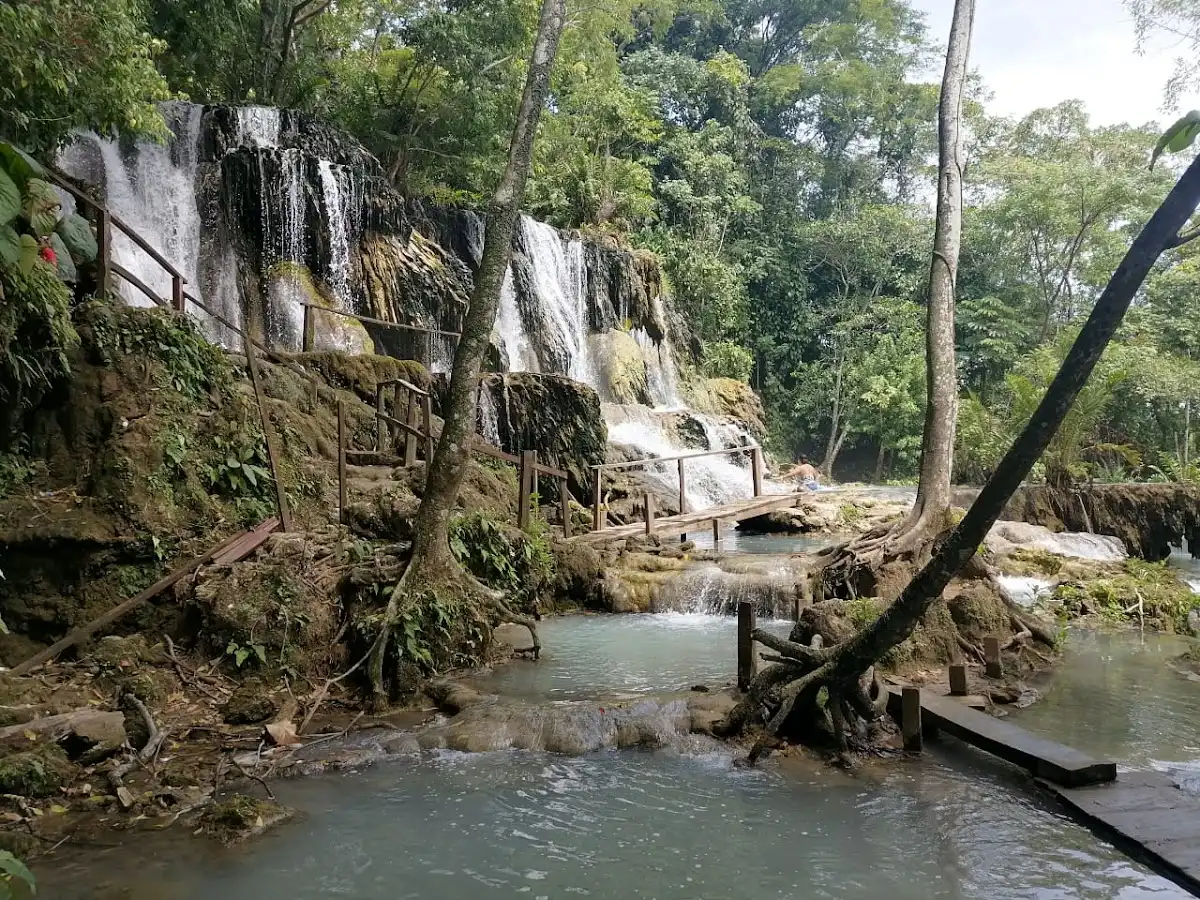
Sulfur springs, red-tile roofs, river-bend church, jungle waterfall

Swim in milky turquoise thermal pools beside a cave, then climb a hillside church for views over the red roofs and river.

mexico-city-tapijulapa
© Google |
Loading the map 🌍

Expert viewInsights from Locals and Experts

How many villages to visit: Five to eight villages is the number I would advise for a two-week trip, and four to six for ten days. Villages here reward lingering, and each one takes a half day just to get to, reorient and learn where the good tortillas are. Past eight, you are collecting photos instead of places. Three nights in one spot beats three villages in three days every time.
Choosing between the kinds: Colonial highland towns suit first-timers and anyone who wants reliable hostels, ATMs and restaurants with menus in two languages. They are also the most crowded, especially at weekends. Indigenous mountain communities in Oaxaca and Chiapas suit travelers who want textiles, markets and local ritual, and do not mind basic rooms and little English. Coastal and Yucatán villages suit those … read more 👉
How many villages to visit: Five to eight villages is the number I would advise for a two-week trip, and four to six for ten days. Villages here reward lingering, and each one takes a half day just to get to, reorient and learn where the good tortillas are. Past eight, you are collecting photos instead of places. Three nights in one spot beats three villages in three days every time.
Choosing between the kinds: Colonial highland towns suit first-timers and anyone who wants reliable hostels, ATMs and restaurants with menus in two languages. They are also the most crowded, especially at weekends. Indigenous mountain communities in Oaxaca and Chiapas suit travelers who want textiles, markets and local ritual, and do not mind basic rooms and little English. Coastal and Yucatán villages suit those who want heat, water and seafood, but accept humidity, mosquitoes and hurricane-season risk. Desert and Baja outposts suit people with their own wheels and a taste for emptiness. If your Spanish is thin, start in the highlands and graduate.
What it costs: A comfortable backpacker budget is US$35 to 60 a day, or roughly 650 to 1,100 pesos. Hostel dorms run about 200 to 450 pesos, simple private rooms 500 to 1,000 pesos in smaller places and well above that in the famous ones. Meals at markets and fondas cost 60 to 120 pesos, and a set lunch is the best value on the menu. Colectivos between nearby villages cost 20 to 80 pesos, while long-distance buses run about 300 to 900 pesos for 4 to 10 hours. Archaeological sites and church or museum entries typically cost 50 to 100 pesos, sometimes more for the big ones, and local guides run 300 to 800 pesos for a few hours. Some Indigenous communities charge a small entry or photo fee, often 20 to 50 pesos. Carry plenty of small bills and coins, since change is a currency of its own.
Crowds and where the money goes: The famous villages are noticeably busier from Friday to Sunday, when day-trippers from nearby cities arrive and prices on food and rooms rise. Go midweek and you get the same plaza at half the volume. The splurge worth making is a good local guide in communities where history, weaving or ritual is the point, because 500 pesos buys context you cannot read off a sign. The overpriced move is the packaged tour that crams a village into a 40-minute photo stop.
Safety and local etiquette: Most villages are calm, and petty crime is lower than in big cities, but conditions vary by state, so check current government travel advisories before choosing a region. Travel by day, use first-class buses and avoid driving rural roads at night, when livestock, potholes and unlit curves cause more trouble than people do. Carry cash discreetly. Tap water is not safe to drink, so use filtered water, and treat street food by the simple rule of picking busy stalls.

Cultural manners matter more here than anywhere with a ticket booth. Ask before photographing people, especially in Indigenous communities, where some residents refuse photos entirely and church interiors often forbid them. Dress modestly for churches and ceremonies, and keep quiet during festivals and funerals, which are not performances. A greeting of “buenos días” on entering a shop or street goes further than any phrasebook. Buy crafts directly from makers and pay the asking price, since haggling over a 150 peso item that took days to weave is poor form. A few words of Spanish turn a transaction into a conversation, and that is the real reason the journey is worth the bus ride.

✈️ The backpacker research shortcutMexico Travel Guide

An offline-friendly backpacking guide with optimized travel routes, ranked highlights, transport advice, and the best areas to stay.
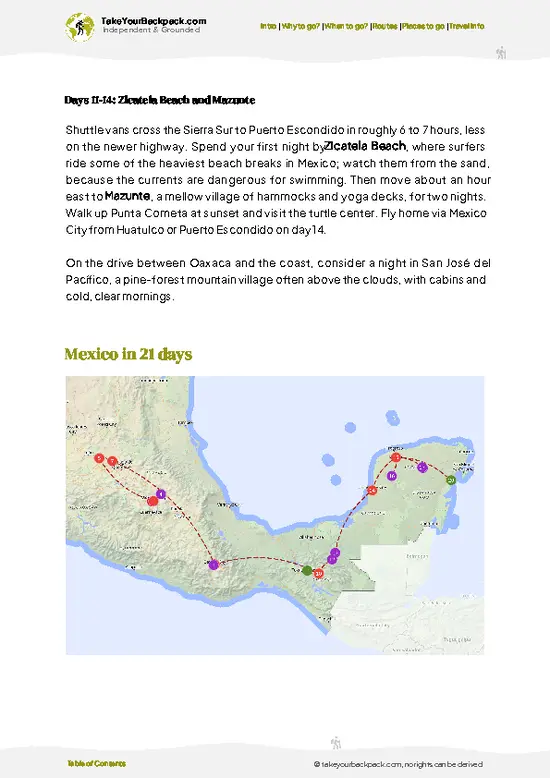
example page 0 from our offline Travel Guide for Mexico
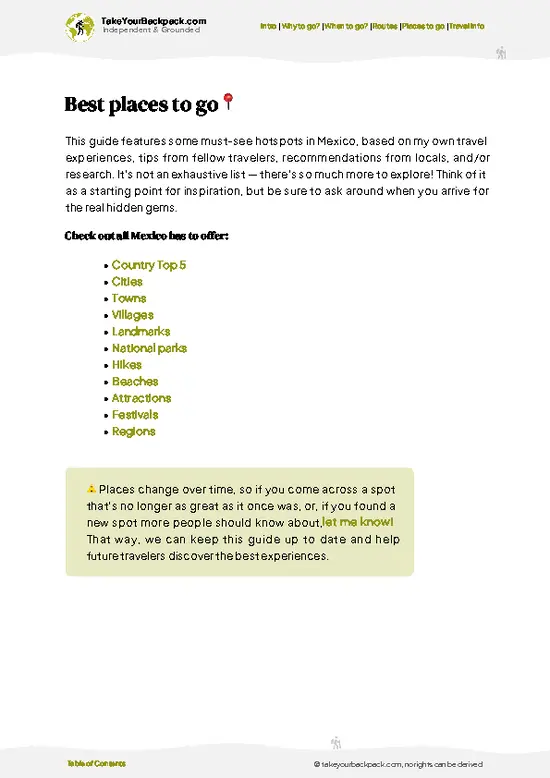
example page 1 from our offline Travel Guide for Mexico
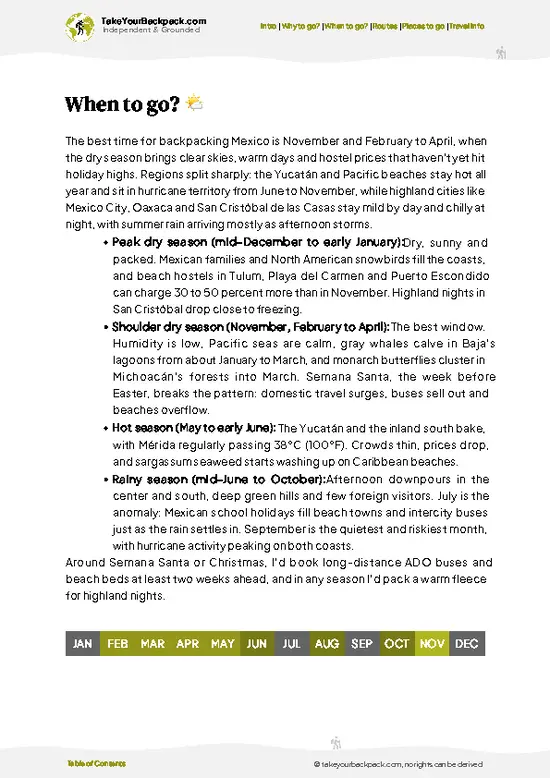
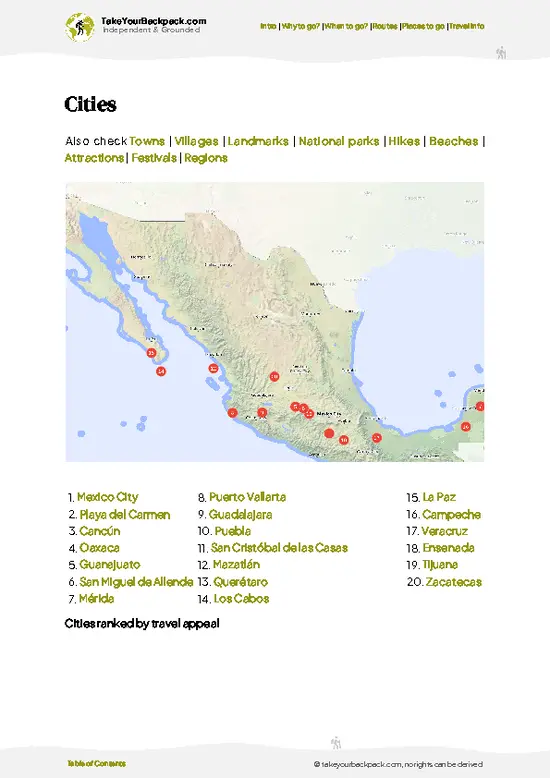
example page 2 from our offline Travel Guide for Mexico
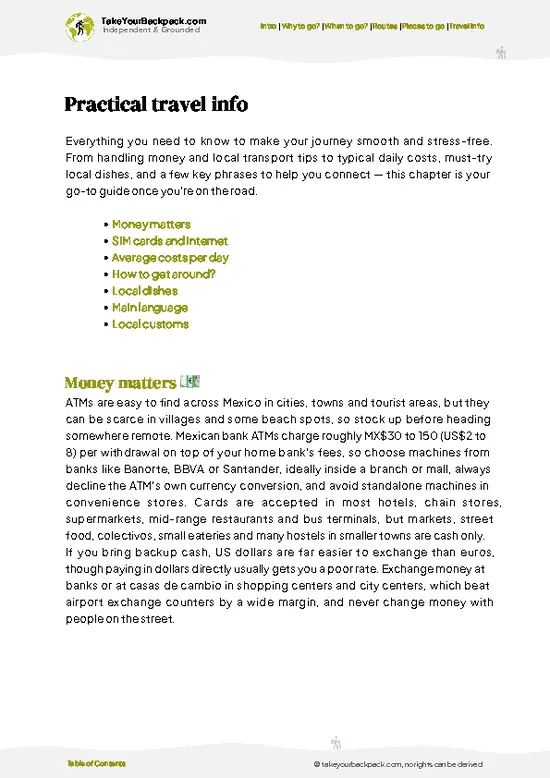
example page 3 from our offline Travel Guide for Mexico
example page 4 from our offline Travel Guide for Mexico
example page 5 from our offline Travel Guide for Mexico
example page 6 from our offline Travel Guide for Mexico
example page 7 from our offline Travel Guide for Mexico
The digital guide (402 pages) contains:
✅ 138 highlights, ranked by travel appeal
✅ Optimized 7, 14 & 21-day travel routes
✅ Cities, national parks, landmarks, beaches
✅ How to get around
✅ Offline-friendly for travel without Wi-Fi
👉 Click to see all 30+ guide features

📅 Plan smarter in minutes, not weeks
✅ Month by month travel advice
✅ Festivals & national holidays
✅ Budget expectations

🗺️ Go to the right places, skip the overrated ones
✅ Honest pros & cons of destinations
✅ Top hikes, parks & viewpoints
✅ Lesser-known places most travelers miss
✅ Clear “worth it vs skip it” guidance

🛏️ Travel smoothly without rookie mistakes
✅ Best areas to stay
✅ Transport systems explained simply
✅ Common scams & safety advice
✅ SIM cards, money & practical tips

🌍 Understand the country, not just visit it
✅ Culture & traditions
✅ 52 Essential phrases & customs
✅ Festivals worth planning around
✅ Traveler-friendly historical context
✅ Insights that make places more meaningful

📱 Built for real travel conditions
✅ Fully downloadable PDF
✅ Works completely offline
✅ Optimized for phone use
✅ Useful in remote areas & buses
✅ Everything in one place
Stop searching, start planning
Get instant access to your full guide. 30‑day money-back guarantee.
+ Add another guide for just

By proceeding you agree to our terms.
Sent to your inbox immediately after payment • 100% Secure Checkout
Best Backpacking Travel Advisor 2025 tourism awardBest Backpacking
Travel Advisor
2025
What others say about Take Your Backpack Guides:
⭐⭐⭐⭐⭐
Fantastic, amazing amount of information!
⭐⭐⭐⭐⭐
My goodness this is amazing, it's what I've been looking for hats off too you!
⭐⭐⭐⭐⭐
I think this is absolutely BRILLIANT
⭐⭐⭐⭐
Very complete and informative. It's still missing places, but I gotta to commend you
⭐⭐⭐⭐⭐
This is truly amazing, thank you, can't wait to explore it with my kids!
⭐⭐⭐⭐⭐
Awesome resource, thank you!
⭐⭐⭐⭐⭐
This is amazing! Can't wait to explore the ones I haven't seen
⭐⭐⭐⭐
I love this! Well done, great idea.
⭐⭐⭐⭐⭐
Thanks for taking the time to make this gem!
⭐⭐⭐⭐⭐
This might be the best website I've ever seen.
⭐⭐⭐⭐⭐
Congratulations, and thank you so much for your work; it's incredibly valuable.
⭐⭐⭐⭐
In all seriousness I think you did a great job pointing out the important spots
⭐⭐⭐⭐⭐
10/10 very good
⭐⭐⭐⭐⭐
As someone who's only just starting to visit regularly this is awesome, thank you.
⭐⭐⭐⭐
Thank you very much! I'm going to visit my dad, it's going to be very useful!
⭐⭐⭐⭐⭐
This is really cool! We'll be travelling for the first time and this definitely come in handy.
⭐⭐⭐⭐⭐
You are now our minister of culture, congratulations 👨‍💼
⭐⭐⭐⭐⭐
Just wanted to tell you that this is a pearl! Going to follow your recommendations.
⭐⭐⭐⭐⭐
This is so cool. I'll definitely be using the resource for my travels soon.
⭐⭐⭐⭐⭐
This is very impressive! Good work.
⭐⭐⭐⭐⭐
This is an amazing and informative site. Very well done!

🛏️ Where to stay?Where to Stay in Mexico

Mexico has one of the deepest hostel scenes in Latin America, with dorm beds typically running MXN 250 to 500 (about US$13 to 28) and private rooms in guesthouses from roughly MXN 700 (US$38). In Mexico City, the Centro Histórico puts you steps from the main museums and is the cheapest, though some blocks empty out after dark, while Roma and Condesa cost a bit more but give you leafy, walkable streets, good bars and a safer feel at night. Elsewhere, San Cristóbal de las Casas and central Oaxaca offer quiet, cheap stays within walking distance of everything, and Playa del Carmen and Tulum pack in party hostels near the beach at noticeably higher prices.

If you enjoy meeting fellow travelers, consider … read more 👉
Mexico has one of the deepest hostel scenes in Latin America, with dorm beds typically running MXN 250 to 500 (about US$13 to 28) and private rooms in guesthouses from roughly MXN 700 (US$38). In Mexico City, the Centro Histórico puts you steps from the main museums and is the cheapest, though some blocks empty out after dark, while Roma and Condesa cost a bit more but give you leafy, walkable streets, good bars and a safer feel at night. Elsewhere, San Cristóbal de las Casas and central Oaxaca offer quiet, cheap stays within walking distance of everything, and Playa del Carmen and Tulum pack in party hostels near the beach at noticeably higher prices.

If you enjoy meeting fellow travelers, consider choosing hostels with high ratings for atmosphere. On the other hand, if you prefer having your own space, a hotel might be a better option.

MexicoMore of Mexico

👋 Meet the founderWho’s Behind Take Your Backpack?

Johan, backpacker and founder of TakeYourBackpackHi, I’m Johan (Netherlands 🇳🇱), the creator of TakeYourBackpack. Over the past 3 decades, I’ve backpacked through 90+ countries across six continents, gaining extensive experience with independent travel, long-term trips, and overland routes.

This site is built on a combination of firsthand travel experience and carefully curated insights from other backpackers. Many guides are based on places I’ve personally visited, while others bring together tips, observations, and practical advice shared by trusted travelers I’ve met along the way.

The goal is to provide realistic, experience-driven guidance — not generic itineraries — so you can explore destinations with better context, clearer expectations, and more confidence.