×

Myanmar🇲🇲 | best hikesTop-Rated 10 hikes in Myanmar

In Myanmar (previously Burma), hiking is more than just a physical challenge; it’s a gateway to understanding the country’s diverse landscapes and rich culture. The best hikes vary significantly across regions, influenced by altitude, season, and local customs. For instance, the trails in the Shan State offer stunning views but can be steep and require careful planning for daylight and recovery. In contrast, the Bagan area features gentler paths that allow for cultural immersion among ancient temples. Choosing the right hike shapes your overall experience, affecting your budget, safety, and the vibe of your journey, especially for those pursuing backpacking or independent travel.

By Johan Kruseman 🇳🇱 | Updated June 12, 2026
Explore the best beaches in Myanmar

Why go?Key Factors That Shape the Experience

Hiking in Myanmar offers a unique blend of terrain variety and cultural richness that sets it apart from other countries. The landscape ranges from lush hills to rugged mountains, providing a diverse backdrop for trekkers. However, the altitude can be a double-edged sword; while higher elevations offer breathtaking views, they also demand a higher level of fitness and acclimatization.

Trail infrastructure varies significantly. Some paths are well-marked and maintained, while others can be challenging, requiring navigational skills and a sense of adventure. This inconsistency means that hikers must weigh the difficulty of a trail against its scenic rewards. For instance, a strenuous hike may lead to stunning vistas, but it can also drain energy reserves needed for subsequent explorations.
read more 👉
Hiking in Myanmar offers a unique blend of terrain variety and cultural richness that sets it apart from other countries. The landscape ranges from lush hills to rugged mountains, providing a diverse backdrop for trekkers. However, the altitude can be a double-edged sword; while higher elevations offer breathtaking views, they also demand a higher level of fitness and acclimatization.

Trail infrastructure varies significantly. Some paths are well-marked and maintained, while others can be challenging, requiring navigational skills and a sense of adventure. This inconsistency means that hikers must weigh the difficulty of a trail against its scenic rewards. For instance, a strenuous hike may lead to stunning vistas, but it can also drain energy reserves needed for subsequent explorations.

Seasonal considerations are crucial. The best hiking months typically fall between November and February, when temperatures are cooler and rainfall is minimal. However, even during this period, weather can be unpredictable, impacting trail conditions and safety.

Travel time is another factor. Longer treks may provide deeper cultural immersion but can also lead to fatigue and logistical challenges. Accessibility varies, with some regions being remote and requiring careful planning to reach. Understanding these trade-offs is essential for maximizing the hiking experience in Myanmar.
Behind the Scenes of Selection
The list of best hikes in Myanmar is created based on scenery, challenge, trail quality, landmarks, and overall enjoyment. If you feel a hike is missing in this list, please let us know.

When to go?Timing Your Visit for the Best Experience

Seasonality and Hiking Conditions


Myanmar’s hiking conditions vary significantly throughout the year, influenced by altitude, rainfall, and daylight hours. The dry season, typically from November to February, offers the most favorable weather for hiking. During these months, temperatures are cooler, and trails are more accessible, allowing for longer hikes without the risk of mudslides or flooding.

As the dry season progresses into March and April, temperatures can soar, especially in lower altitudes. Hikers should be prepared for heat and ensure adequate hydration. The shoulder months of October and March can provide a balance; however, they may also bring unpredictable weather. Rainfall can begin in late April, leading into the monsoon season, which lasts until September. Trails can … read more 👉

Seasonality and Hiking Conditions


Myanmar’s hiking conditions vary significantly throughout the year, influenced by altitude, rainfall, and daylight hours. The dry season, typically from November to February, offers the most favorable weather for hiking. During these months, temperatures are cooler, and trails are more accessible, allowing for longer hikes without the risk of mudslides or flooding.

As the dry season progresses into March and April, temperatures can soar, especially in lower altitudes. Hikers should be prepared for heat and ensure adequate hydration. The shoulder months of October and March can provide a balance; however, they may also bring unpredictable weather. Rainfall can begin in late April, leading into the monsoon season, which lasts until September. Trails can become treacherous during this time, with heavy rains causing landslides and making paths impassable.

While the monsoon season may deter some, it can also mean fewer crowds and lower costs. However, the trade-off is significant: hiking during this period requires careful planning and a willingness to adapt to changing conditions.

Daylight hours are also a factor. In the dry season, longer days allow for extended hikes, while shorter days in the monsoon can limit options. Understanding these seasonal patterns is crucial for maximizing both safety and enjoyment on the trails.

hike hoppingOptimizing Your Multi-Stop Itinerary

General routing logic

Travelers should cluster hikes regionally to minimize travel time and maximize exploration. Start in the north, where the cooler climate and stunning landscapes of places like Hkakabo Razi and Putao await. Then, move southward through the central plains, hitting iconic spots like Bagan and Kalaw. This route allows for a gradual acclimatization to altitude while keeping the energy levels manageable.

Typical time needed

Allocate at least two to three days per major hiking area. This timeframe allows for recovery and exploration without feeling rushed. For example, after a challenging trek, a day of rest or light walking can help rejuvenate muscles and enhance the overall experience.

Common planning mistakes

One frequent pitfall is over-scheduling. Attempting to cram … read more 👉

General routing logic

Travelers should cluster hikes regionally to minimize travel time and maximize exploration. Start in the north, where the cooler climate and stunning landscapes of places like Hkakabo Razi and Putao await. Then, move southward through the central plains, hitting iconic spots like Bagan and Kalaw. This route allows for a gradual acclimatization to altitude while keeping the energy levels manageable.

Typical time needed

Allocate at least two to three days per major hiking area. This timeframe allows for recovery and exploration without feeling rushed. For example, after a challenging trek, a day of rest or light walking can help rejuvenate muscles and enhance the overall experience.

Common planning mistakes

One frequent pitfall is over-scheduling. Attempting to cram too many hikes into a short period can lead to exhaustion and missed opportunities for deeper engagement with the local culture. Prioritize quality over quantity; a few well-chosen hikes will yield richer experiences than a packed itinerary.

Trade-offs and constraints

Consider the balance between speed and depth of experience. While it may be tempting to cover more ground, the most rewarding moments often come from lingering in a place. Budget constraints can also affect comfort levels; opting for local accommodations can enhance the experience without breaking the bank. Ultimately, flexibility in planning allows for adjustments based on energy levels and weather conditions, ensuring a more enjoyable adventure.

The ListTop hikes of Myanmar

1 Kalaw to Inle Lake

multi-day trek, Pa-O communities, lakeside arrival

Walk through patchwork fields and forested hills, staying in village homes before descending to the stilted settlements on Inle Lake’s edge.

2 Hsipaw to Kyaukme

tea plantations, Shan villages, rolling hills

Traverse undulating farmland and remote hamlets, meeting Shan villagers and experiencing rural life far from main roads and tourist infrastructure.

3 Chin State Trek

remote highlands, tattooed elders, mountain villages

Navigate rugged paths linking isolated Chin villages, where traditional facial tattoos and animist customs remain part of daily life.

4 Golden Rock

pilgrimage route, mountain ridge, Buddhist shrine

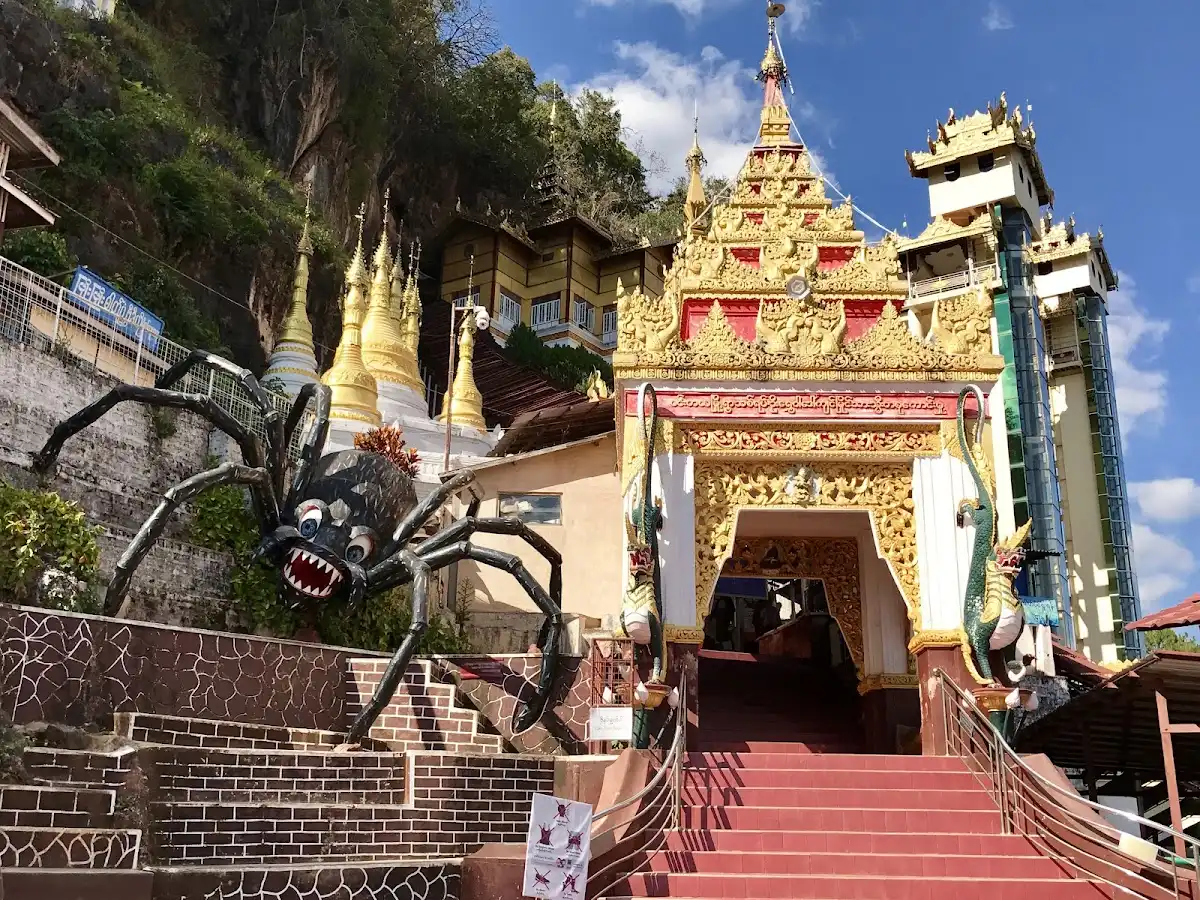
Ascend a steep, bustling trail alongside local pilgrims, passing tea stalls and forested slopes before reaching the gravity-defying Golden Rock pagoda.

5 Mrauk U to Chin Villages

archaeological ruins, river journey, Chin riverbanks

Combine ancient temple exploration with a boat trip upriver, reaching Chin villages where matriarchs display intricate facial tattoos.

6 Loikaw to Pan Pet

Kayah hills, long-neck Kayan, traditional weaving

Follow quiet trails through Kayah countryside, visiting Kayan villages where brass neck rings and handwoven textiles are part of everyday life.

myanmar-hike-loikaw-to-pan-pet
© Google |

7 Putao to Namhti

northern rainforest, Himalayan foothills, ethnic Rawang

Venture deep into Myanmar’s far north, crossing suspension bridges and dense jungle to reach Rawang settlements beneath snow-dusted peaks.

8 Pindaya to Ywangan

limestone caves, Danu villages, tea terraces

Start at Pindaya’s cave shrines, then trek through tea-covered hills and quiet Danu settlements, ending in the fertile Ywangan valley.

myanmar-hike-pindaya-to-ywangan
© Google |

9 Indawgyi Lake Circuit

wetland sanctuary, stilt villages, migratory birds

Circle Myanmar’s largest lake, encountering floating gardens, birdlife, and Buddhist monasteries set among peaceful waterside communities.

10 Mogok Trek

ruby mines, Shan plateau, ethnic diversity

Hike across mineral-rich hills, passing gem markets and villages home to Shan, Lisu, and Palaung communities, with sweeping views over the plateau.

Loading the map 🌍

Expert viewInsights from Locals and Experts

Trail Logistics

Myanmar offers a diverse range of hikes, but planning is essential. Aim for three to five hikes to get a well-rounded experience. Each trail varies in difficulty and length, so consider your fitness level and time constraints. Most hikes can take anywhere from a few hours to several days, depending on the terrain and your pace.

Expect to encounter steep ascents, especially in the northern regions. Altitude can be a factor, particularly if you’re venturing into the higher elevations. Acclimatization is crucial; give yourself a day or two at altitude before tackling the more strenuous trails. This isn’t just about avoiding headaches; it’s about enjoying the journey without gasping for breath.

Recovery and Pacing

Recovery is often overlooked but vital. After a long day on … read more 👉

Trail Logistics

Myanmar offers a diverse range of hikes, but planning is essential. Aim for three to five hikes to get a well-rounded experience. Each trail varies in difficulty and length, so consider your fitness level and time constraints. Most hikes can take anywhere from a few hours to several days, depending on the terrain and your pace.

Expect to encounter steep ascents, especially in the northern regions. Altitude can be a factor, particularly if you’re venturing into the higher elevations. Acclimatization is crucial; give yourself a day or two at altitude before tackling the more strenuous trails. This isn’t just about avoiding headaches; it’s about enjoying the journey without gasping for breath.

Recovery and Pacing

Recovery is often overlooked but vital. After a long day on the trail, allow yourself ample time to rest. This isn’t just about physical recovery; it’s also about soaking in the local culture and scenery. Many trails lead through villages where you can experience local hospitality. Pace yourself accordingly. If you rush through hikes, you’ll miss the subtle beauty of the landscape and the warmth of the people.

Consider your daily mileage. A comfortable range is about 8 to 12 kilometers per day for moderate hikes. This allows you to enjoy the surroundings without overexerting yourself. If you’re tackling more challenging trails, scale back your distance. It’s better to finish a hike feeling energized than exhausted.

Difficulty and Terrain

The difficulty of hikes in Myanmar can be deceptive. What looks easy on a map may involve rocky paths, slippery slopes, or unexpected weather changes. Always check local conditions before heading out. Some trails may be well-marked, while others require navigation skills. Carry a reliable map or GPS device, and don’t hesitate to ask locals for guidance. They often have invaluable insights into trail conditions and safety.

Be prepared for variable weather. The dry season is generally the best time for hiking, but even then, sudden rain can make trails treacherous. Bring appropriate gear, including sturdy footwear and rain protection. It’s not just about comfort; it’s about safety.

Budget and Costs

Budgeting for hikes in Myanmar can vary widely. While some trails are free, others may require permits or fees, especially in protected areas. Factor in transportation costs to trailheads, which can be significant if you’re traveling from major hubs. Local transport options are often limited, so plan for potential delays.

Food and accommodation can also add up, particularly in remote areas. While you can find budget options, they may not always meet your expectations for comfort or hygiene. Prioritize where you spend your money. Investing in a good guide can enhance your experience and provide safety, especially on less-traveled paths.

Safety and Cultural Considerations

Safety should always be a priority. While Myanmar is generally safe for hikers, be aware of your surroundings and respect local customs. Dress modestly, especially in rural areas, and be mindful of cultural sensitivities. Engaging with locals can enrich your experience, but always approach interactions with respect.

Wildlife encounters are possible, so stay alert. Carry a first-aid kit and know basic first-aid procedures. In case of emergencies, having a local contact or guide can be invaluable.

Planning your hikes in Myanmar requires a blend of adventure and caution. By understanding the logistics, pacing yourself, and respecting local culture, you’ll not only preserve your energy and budget but also create lasting memories on the trails.

✈️ The backpacker research shortcutMyanmar Travel Guide

An offline-friendly backpacking guide with optimized travel routes, ranked highlights, transport advice, and the best areas to stay.
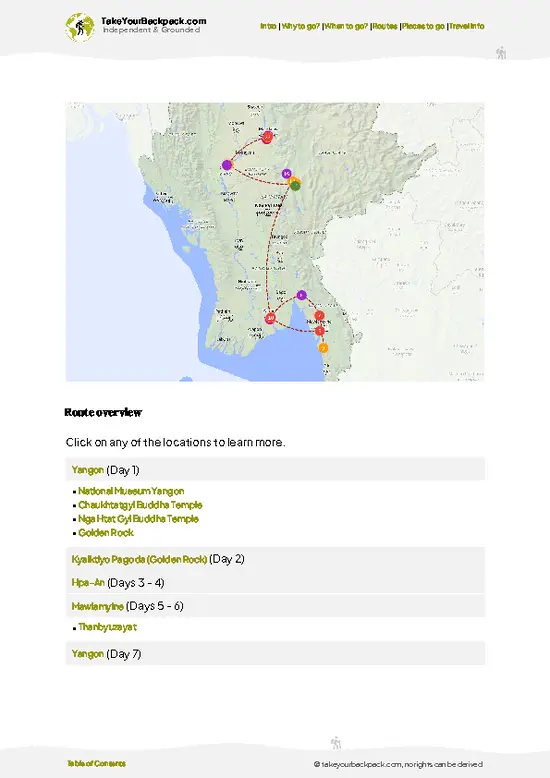
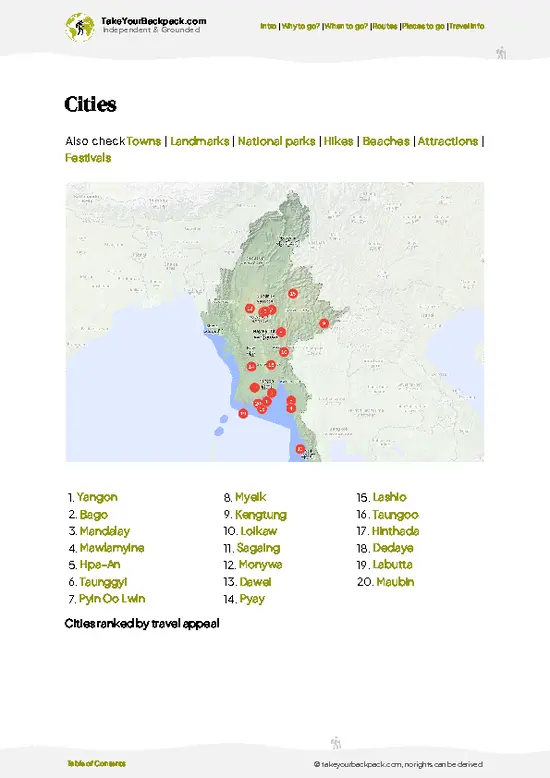
example page 0 from our offline Travel Guide for Myanmar
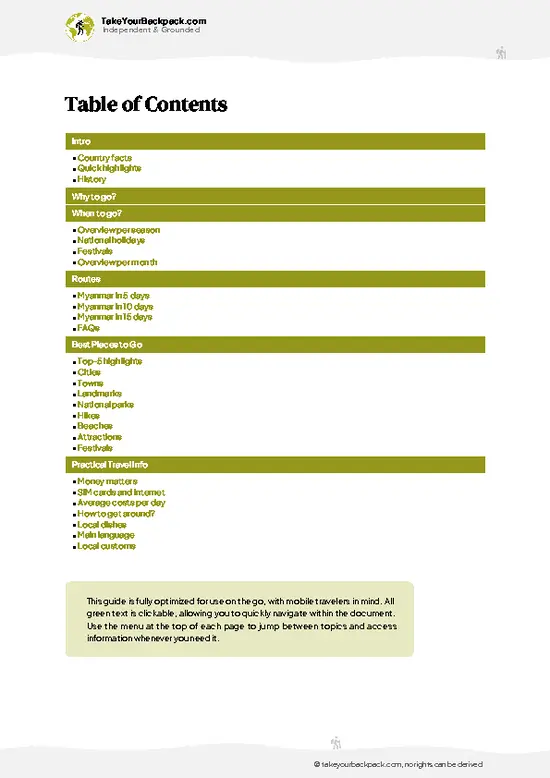
example page 1 from our offline Travel Guide for Myanmar
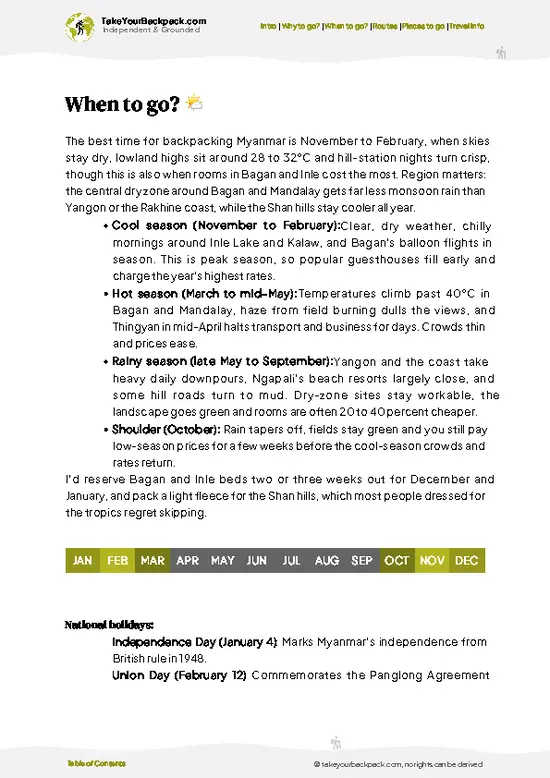
example page 2 from our offline Travel Guide for Myanmar
example page 3 from our offline Travel Guide for Myanmar
example page 4 from our offline Travel Guide for Myanmar
example page 5 from our offline Travel Guide for Myanmar
example page 6 from our offline Travel Guide for Myanmar
example page 7 from our offline Travel Guide for Myanmar
The digital guide (405 pages) contains:
110 highlights, ranked by travel appeal
Optimized 5, 10 & 15-day travel routes
Cities, national parks, landmarks, beaches
How to get around
Offline-friendly for travel without Wi-Fi
👉 Click to see all 30+ guide features

📅 Plan smarter in minutes, not weeks
Month by month travel advice
Festivals & national holidays
Budget expectations

🗺️ Go to the right places, skip the overrated ones
Honest pros & cons of destinations
Top hikes, parks & viewpoints
Lesser-known places most travelers miss
Clear “worth it vs skip it” guidance

🛏️ Travel smoothly without rookie mistakes
Best areas to stay
Transport systems explained simply
Common scams & safety advice
SIM cards, money & practical tips

🌍 Understand the country, not just visit it
Culture & traditions
52 Essential phrases & customs
Festivals worth planning around
Traveler-friendly historical context
Insights that make places more meaningful

📱 Built for real travel conditions
Fully downloadable PDF
Works completely offline
Optimized for phone use
Useful in remote areas & buses
Everything in one place
Save weeks of stressful planning
Get instant access to your full guide. 30‑day money-back guarantee.


By proceeding you agree to our terms.
Sent to your inbox immediately after payment • 100% Secure Checkout
Best Backpacking Travel Advisor 2025 tourism awardBest Backpacking
Travel Advisor
2025
What others say about Take Your Backpack Guides:
⭐⭐⭐⭐⭐
Fantastic, amazing amount of information!
⭐⭐⭐⭐⭐
My goodness this is amazing, it's what I've been looking for hats off too you!
⭐⭐⭐⭐⭐
I think this is absolutely BRILLIANT
⭐⭐⭐⭐
Very complete and informative. It's still missing places, but I gotta to commend you
⭐⭐⭐⭐⭐
This is truly amazing, thank you, can't wait to explore it with my kids!
⭐⭐⭐⭐⭐
Awesome resource, thank you!
⭐⭐⭐⭐⭐
This is amazing! Can't wait to explore the ones I haven't seen
⭐⭐⭐⭐
I love this! Well done, great idea.
⭐⭐⭐⭐⭐
Thanks for taking the time to make this gem!
⭐⭐⭐⭐⭐
This might be the best website I've ever seen.
⭐⭐⭐⭐⭐
Congratulations, and thank you so much for your work; it's incredibly valuable.
⭐⭐⭐⭐
In all seriousness I think you did a great job pointing out the important spots
⭐⭐⭐⭐⭐
10/10 very good
⭐⭐⭐⭐⭐
As someone who's only just starting to visit regularly this is awesome, thank you.
⭐⭐⭐⭐
Thank you very much! I'm going to visit my dad, it's going to be very useful!
⭐⭐⭐⭐⭐
This is really cool! We'll be travelling for the first time and this definitely come in handy.
⭐⭐⭐⭐⭐
You are now our minister of culture, congratulations 👨‍💼
⭐⭐⭐⭐⭐
Just wanted to tell you that this is a pearl! Going to follow your recommendations.
⭐⭐⭐⭐⭐
This is so cool. I'll definitely be using the resource for my travels soon.
⭐⭐⭐⭐⭐
This is very impressive! Good work.
⭐⭐⭐⭐⭐
This is an amazing and informative site. Very well done!

🛏️ Where to stay?Where to Base Yourself

Yes — Myanmar has hostels and budget accommodation concentrated in major tourist hubs: Yangon (downtown/Sule/Chinatown), Mandalay (near the palace/Zegyo market), Bagan (Nyaung-U), Inle Lake (Nyaung Shwe), Ngapali (Thandwe), and trekking towns like Hsipaw.
Yangon is cheapest and best for transport, markets and nightlife but can be noisy and crowded; Mandalay gives easy access to the palace and onward transport but has fewer hostel options; Nyaung-U/Bagan puts you closest to temples and bike rental but is touristy and dusty; Nyaung Shwe/Inle offers lakeside access and boat tours yet is more remote with limited nightlife; Ngapali means beach quiet and higher prices with fewer true hostels; Hsipawread more 👉
Yes — Myanmar has hostels and budget accommodation concentrated in major tourist hubs: Yangon (downtown/Sule/Chinatown), Mandalay (near the palace/Zegyo market), Bagan (Nyaung-U), Inle Lake (Nyaung Shwe), Ngapali (Thandwe), and trekking towns like Hsipaw.
Yangon is cheapest and best for transport, markets and nightlife but can be noisy and crowded; Mandalay gives easy access to the palace and onward transport but has fewer hostel options; Nyaung-U/Bagan puts you closest to temples and bike rental but is touristy and dusty; Nyaung Shwe/Inle offers lakeside access and boat tours yet is more remote with limited nightlife; Ngapali means beach quiet and higher prices with fewer true hostels; Hsipaw is small, safe and ideal for treks with basic guesthouses rather than full-service hostels.

If you enjoy meeting fellow travelers, consider choosing hostels with high ratings for atmosphere. On the other hand, if you prefer having your own space, a hotel might be a better option.

MyanmarExpand Your Journey

👋 Meet the founderWho’s Behind Take Your Backpack?

Johan, backpacker and founder of TakeYourBackpackHi, I’m Johan (Netherlands 🇳🇱), the creator of TakeYourBackpack. Over the past decade, I’ve backpacked through 80+ countries across six continents, gaining extensive experience with independent travel, long-term trips, and overland routes.

This site is built on a combination of firsthand travel experience and carefully curated insights from other backpackers. Many guides are based on places I’ve personally visited, while others bring together tips, observations, and practical advice shared by trusted travelers I’ve met along the way.

The goal is to provide realistic, experience-driven guidance — not generic itineraries — so you can explore destinations with better context, clearer expectations, and more confidence.

Get full Myanmar guide •
Instant download • 110 highlights • Full Offline guide