×

Paraguay🇵🇾 | best national parksTop-Rated 10 national parks in Paraguay

Paraguay’s national parks offer a unique blend of landscapes, wildlife, and adventure opportunities that cater to various travel styles, especially for those embracing backpacking or independent travel. Defined by their rich biodiversity and distinct ecosystems, these parks vary significantly across regions. For instance, the Chaco region presents arid landscapes and elusive wildlife, while the Atlantic Forest teems with lush vegetation and vibrant birdlife. Seasonal nuances also play a crucial role; the wet season can transform trails into muddy challenges, affecting accessibility and safety. Choosing the right park influences your pace of exploration, budget considerations, and the depth of cultural immersion you’ll experience.

By Johan Kruseman 🇳🇱 | Updated October 1, 2026
Explore the best hikes in Paraguay

Why go?Key Factors That Shape the Experience

National parks in Paraguay stand out for their biodiversity and unique ecosystems. Unlike many countries, Paraguay’s parks are often less commercialized, offering a raw and authentic experience. This means travelers can encounter wildlife and landscapes that feel untouched, from dense subtropical forests to expansive wetlands. However, this lack of development can also mean limited infrastructure. Roads may be rough, and facilities sparse, which can deter some visitors but rewards those willing to embrace the challenge.

The geographic layout of Paraguay plays a significant role in park accessibility. Many parks are located in remote areas, requiring time and effort to reach. This trade-off can lead to deeper exploration and a more intimate connection with nature, but it also demands a commitment … read more 👉
National parks in Paraguay stand out for their biodiversity and unique ecosystems. Unlike many countries, Paraguay’s parks are often less commercialized, offering a raw and authentic experience. This means travelers can encounter wildlife and landscapes that feel untouched, from dense subtropical forests to expansive wetlands. However, this lack of development can also mean limited infrastructure. Roads may be rough, and facilities sparse, which can deter some visitors but rewards those willing to embrace the challenge.

The geographic layout of Paraguay plays a significant role in park accessibility. Many parks are located in remote areas, requiring time and effort to reach. This trade-off can lead to deeper exploration and a more intimate connection with nature, but it also demands a commitment to travel. The climate varies, with hot, humid summers and cooler winters, influencing the best times to visit and the types of activities available.

Culturally, Paraguay’s parks reflect the country’s rich history and diverse influences, from indigenous heritage to colonial legacies. This context adds layers to the experience, making each visit not just about the scenery but also about understanding the land’s story. Ultimately, while accessibility may be a hurdle, the immersive experiences and profound connections to nature make Paraguay’s national parks a compelling choice for those seeking authenticity over convenience.
Why These Made the Cut
The list of best national parks in Paraguay is created based on landscapes, wildlife, adventure opportunities, facilities, and overall experience. If you feel a national park is missing in this list, please let us know.

When to go?Seasonal Guide to Visiting

Seasonality plays a crucial role in experiencing Paraguay’s national parks. The subtropical climate means distinct wet and dry seasons, which significantly affect wildlife visibility and trail conditions.

Optimal months for exploration generally fall between May and September. During this period, rainfall is minimal, making trails more accessible and wildlife more active. Temperatures are milder, allowing for comfortable hiking and wildlife watching. This is when many animals are easier to spot, as they venture out in search of food and water.

Shoulder seasons—April and October—offer a mixed bag. Rainfall begins to increase in October, which can lead to muddy trails and less visibility for wildlife. However, these months often see fewer crowds, which can enhance the experience. Costs may … read more 👉
Seasonality plays a crucial role in experiencing Paraguay’s national parks. The subtropical climate means distinct wet and dry seasons, which significantly affect wildlife visibility and trail conditions.

Optimal months for exploration generally fall between May and September. During this period, rainfall is minimal, making trails more accessible and wildlife more active. Temperatures are milder, allowing for comfortable hiking and wildlife watching. This is when many animals are easier to spot, as they venture out in search of food and water.

Shoulder seasons—April and October—offer a mixed bag. Rainfall begins to increase in October, which can lead to muddy trails and less visibility for wildlife. However, these months often see fewer crowds, which can enhance the experience. Costs may also be lower, making it an appealing option for budget-conscious travelers.

Peak periods coincide with the dry season, drawing larger crowds. While the scenery is at its best, the trails can feel congested. This trade-off between peak beauty and solitude is essential to consider.

Seasonal constraints include the intense heat from December to February, which can deter outdoor activities. Planning around these factors ensures a more rewarding experience in Paraguay’s national parks.

national park hoppingOptimizing Your Multi-Stop Itinerary

Traveling through Paraguay’s national parks requires a strategic approach to maximize the experience. Start by clustering parks regionally. The eastern parks, like Ybycuí and Ñacunday, are relatively close, making them ideal for a multi-stop trip. Head west to the more remote parks, such as Defensores del Chaco, which demands more travel time but offers unique wildlife experiences.

Plan for at least two to three days in each park to truly absorb the environment. This pacing allows for hiking, wildlife watching, and enjoying the local flora. However, if time is tight, prioritize one or two parks that align with specific interests, whether it’s hiking trails or birdwatching.

Common mistakes include underestimating travel times and over-scheduling. Roads can be rough, and distances may appear … read more 👉
Traveling through Paraguay’s national parks requires a strategic approach to maximize the experience. Start by clustering parks regionally. The eastern parks, like Ybycuí and Ñacunday, are relatively close, making them ideal for a multi-stop trip. Head west to the more remote parks, such as Defensores del Chaco, which demands more travel time but offers unique wildlife experiences.

Plan for at least two to three days in each park to truly absorb the environment. This pacing allows for hiking, wildlife watching, and enjoying the local flora. However, if time is tight, prioritize one or two parks that align with specific interests, whether it’s hiking trails or birdwatching.

Common mistakes include underestimating travel times and over-scheduling. Roads can be rough, and distances may appear shorter on a map than they are in reality. Flexibility is key; allow for spontaneous stops or detours that can enhance the journey.

Consider trade-offs carefully. A faster itinerary might mean missing out on deeper experiences, while a slower pace can lead to richer interactions with nature and local culture. Balancing budget and comfort is also essential; some parks have basic facilities, while others offer more amenities. Ultimately, the reward lies in the moments spent in nature, whether it’s a breathtaking view or the tranquility of the trails.

The ListMust-Visit national parks in Paraguay

1 Cerro Cora National Park

historic battlefield, river crossings, savanna

Visit sites of national significance and explore open grasslands intersected by rivers, where history and nature meet.

2 Defensores del Chaco National Park

Chaco wilderness, dry forest, giant armadillo

Cross arid scrub and open savanna where jaguars and armadillos roam, experiencing the remote heart of the Paraguayan Chaco.

paraguay-national-park-defensores-del-chaco-national-park
© Google |

3 Mbaracayú Forest Reserve

subtropical forest, biodiversity hotspot, eco-lodge

Stay overnight in a forest reserve supporting research and conservation, with trails revealing rich plant and animal life.

4 San Rafael National Park

Atlantic Forest, rare birds, dense canopy

Walk beneath tangled forest cover and listen for elusive tanagers and bellbirds in one of Paraguay’s last Atlantic Forest refuges.

5 Ybycui National Park

waterfalls, humid forest, iron foundry ruins

Swim beneath cascading falls and explore remnants of 19th-century industry hidden among lush forest trails.

paraguay-national-park-ybycui-national-park
© Google |

6 Ñacunday National Park

waterfall, Paraná River, basalt cliffs

Stand at the base of Ñacunday Falls and watch the river plunge over black rock, surrounded by subtropical forest.

paraguay-national-park-nacunday-national-park
© Google | Hugo Cesar

7 Ypoá National Park

wetlands, floating islands, aquatic plants

Paddle through a maze of water channels and spot capybaras among floating vegetation in this vast, seasonally flooded landscape.

8 Itaipu Nature Reserve

reservoir edge, reforested zones, wildlife corridors

Cycle or walk along protected greenways that link forest fragments and support diverse animal populations near the Itaipu Dam.

9 Caazapá National Park

humid forest, medicinal plants, rolling hills

Hike gentle slopes shaded by tall trees and discover native flora used by local communities for generations.

10 Paso Bravo National Park

gallery forest, riverbanks, tapir habitat

Follow riverside trails through thick forest, watching for tapirs and monkeys in a park shaped by water and wildlife.

11 Teniente Agripino Enciso National Park

thorn forest, dry lagoons, Chaco wildlife

Travel through spiny forests and seasonal lagoons, watching for peccaries and raptors in a challenging Chaco environment.

12 Tinfunque National Park

floodplain, marshes, migratory waterfowl

Observe seasonal wetlands teeming with birds and amphibians, shaped by the Paraguay River’s annual floods.

13 Cerro Tres Kandú Nature Reserve

highest peak, rocky outcrops, panoramic vistas

Reach Paraguay’s highest point for sweeping views and a landscape shaped by wind, rock, and sparse vegetation.

14 Cerro Akatí Nature Reserve

forest patches, steep slopes, orchid species

Climb forested slopes dotted with orchids and enjoy quiet trails that wind through varied terrain.

15 Cerro Koi and Chororí Hill Nature Reserve

sandstone hills, fossil beds, unique geology

Climb unusual rock formations and examine ancient fossils embedded in stone, revealing the area’s geological story.

16 Cerro León Nature Reserve

Chaco hills, dry scrub, endemic flora

Trek across rugged hills in the Chaco, where tough plants and rare species adapt to harsh, dry conditions.

17 Lago Ypacaraí National Park

lakeshore, reed beds, migratory birds

Stroll along the lake’s edge, watching herons and ibises gather in reeds, with distant hills framing the horizon.

Think you know Paraguay?

Prove you’re a true local — uncover 7 lesser-known national parks in Paraguay that locals tend to keep to themselves.
Loading the map 🌍

Expert viewWhat You Should Know

Terrain
Paraguay’s national parks offer a diverse range of terrains, from the rugged hills of the Atlantic Forest to the wetlands of the Gran Chaco. Each park has its own character shaped by the local geography. Expect steep trails in places like Ybycuí National Park, where the effort is rewarded with cascading waterfalls and lush greenery. In contrast, the flat expanses of Defensores del Chaco National Park provide a different kind of challenge, where the heat can be oppressive and the wildlife elusive. The key is to match your physical readiness with the terrain; some parks demand more stamina than others.

Park Infrastructure
Infrastructure varies significantly across the parks. Some, like Ñacunday National Park, have well-maintained trails and basic facilities, making them accessible … read more 👉
Terrain
Paraguay’s national parks offer a diverse range of terrains, from the rugged hills of the Atlantic Forest to the wetlands of the Gran Chaco. Each park has its own character shaped by the local geography. Expect steep trails in places like Ybycuí National Park, where the effort is rewarded with cascading waterfalls and lush greenery. In contrast, the flat expanses of Defensores del Chaco National Park provide a different kind of challenge, where the heat can be oppressive and the wildlife elusive. The key is to match your physical readiness with the terrain; some parks demand more stamina than others.

Park Infrastructure
Infrastructure varies significantly across the parks. Some, like Ñacunday National Park, have well-maintained trails and basic facilities, making them accessible for families and casual hikers. Others, such as the more remote areas of the Chaco, lack marked paths and amenities. This can be a double-edged sword: while you might find solitude and a raw experience, you also need to be self-sufficient. Bring enough water, food, and navigation tools if you venture into less developed areas. The trade-off here is between comfort and adventure; choose wisely based on your experience level.

Wildlife Activity
Wildlife encounters can be hit or miss, depending on the time of year and the park you choose. In the humid months, expect more activity in the Atlantic Forest parks, where birds and mammals are more visible. The dry season in the Chaco, however, can lead to better visibility of larger animals like capybaras and jaguars, but you’ll need to be patient. The best strategy is to plan your visits around the seasons; this can mean sacrificing time in one park for better wildlife experiences in another.

Time and Budget
Visiting multiple parks in Paraguay requires careful planning. Ideally, aim for three to four parks to get a well-rounded experience. Each park can take anywhere from a day to several days, depending on your interests and the trails available. Budget-wise, expect to spend on park entry fees, transportation, and basic accommodations. While some parks have affordable options, others may require a bit more investment for a comfortable stay. The trade-off here is between depth and breadth; focusing on fewer parks allows for a richer experience, while trying to cover more ground can dilute your time and energy.

Planning and Prioritizing
When planning your itinerary, consider the proximity of parks to each other and the travel time involved. Some parks are more accessible than others, which can save you valuable time. Factor in local culture and travel constraints; public transport can be limited, and renting a vehicle may be necessary for reaching remote areas. Prioritize parks based on what you want to experience—whether it’s hiking, wildlife watching, or simply soaking in the natural beauty.

Safety and Cultural Considerations
Safety is paramount, especially in less populated areas. Always inform someone of your plans, carry a first-aid kit, and be aware of your surroundings. Cultural respect is equally important; engage with local communities thoughtfully and be mindful of their customs. This adds depth to your experience and fosters goodwill.

In summary, Paraguay’s national parks offer a rich tapestry of experiences, but they require thoughtful planning and a willingness to adapt. Balancing your time, budget, and energy will lead to a rewarding adventure in this often-overlooked corner of South America.

✈️ The backpacker research shortcutParaguay Travel Guide

An offline-friendly backpacking guide with optimized travel routes, ranked highlights, transport advice, and the best areas to stay.
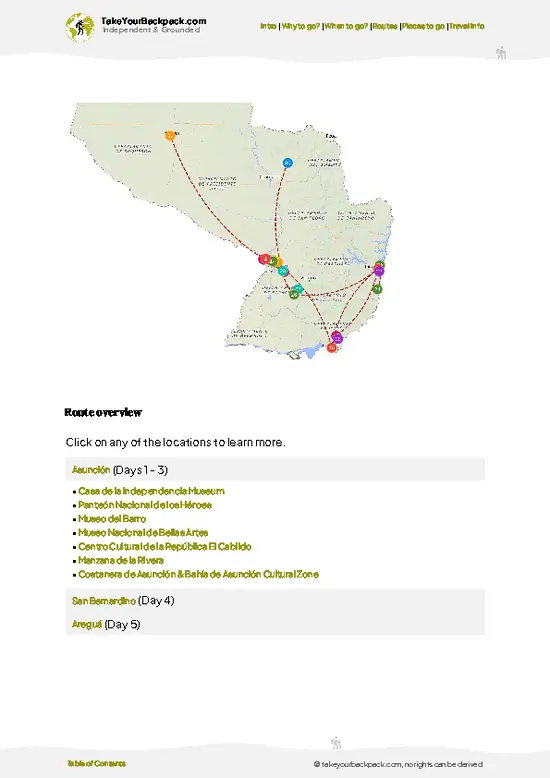
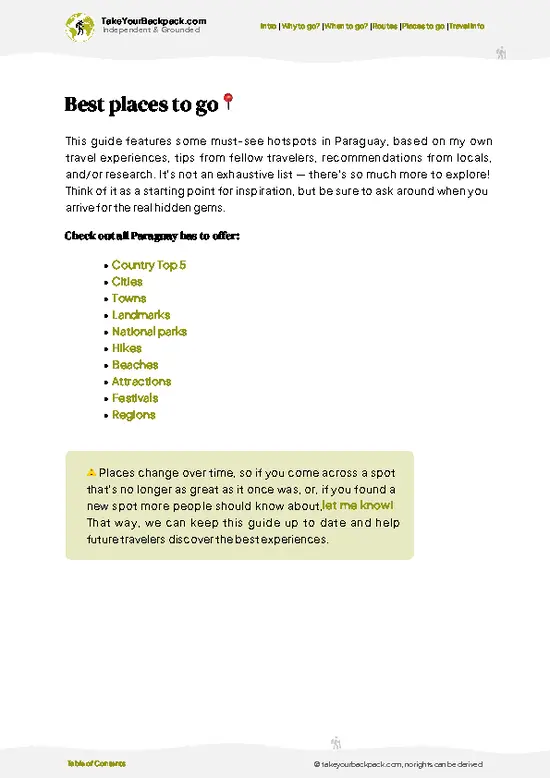
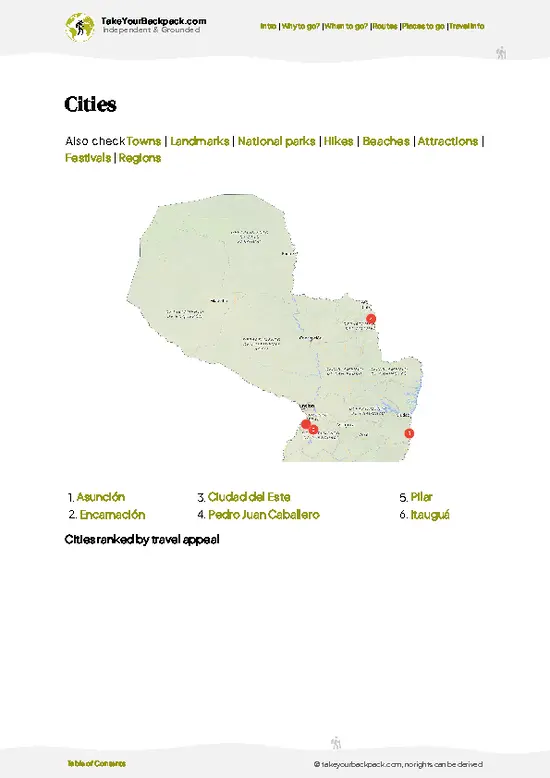
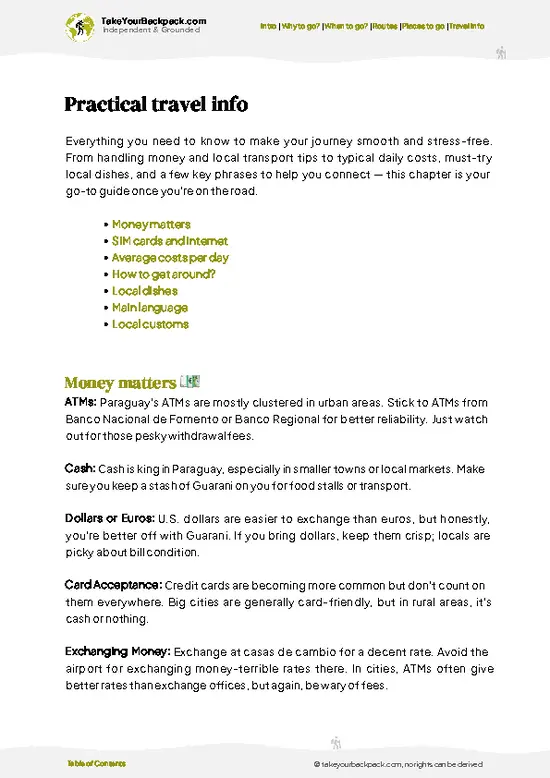
example page 0 from our offline Travel Guide for Paraguay
example page 1 from our offline Travel Guide for Paraguay
example page 2 from our offline Travel Guide for Paraguay
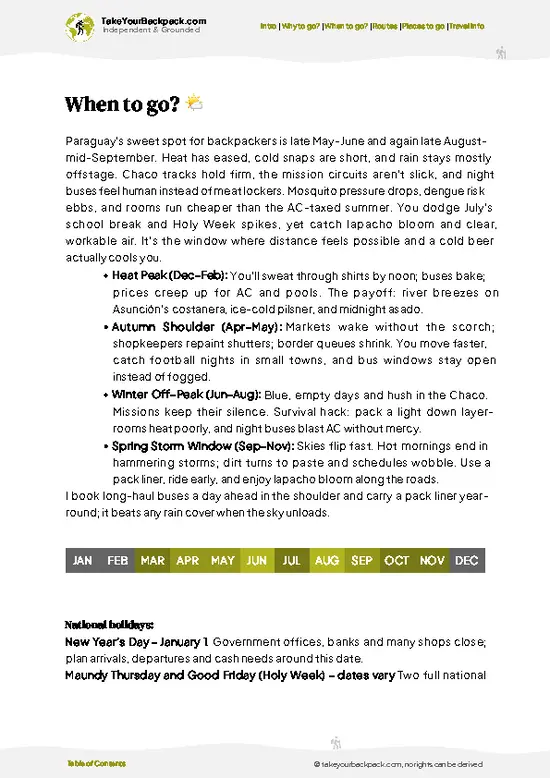
example page 3 from our offline Travel Guide for Paraguay
example page 4 from our offline Travel Guide for Paraguay
example page 5 from our offline Travel Guide for Paraguay
example page 6 from our offline Travel Guide for Paraguay
example page 7 from our offline Travel Guide for Paraguay
The digital guide (309 pages) contains:
✅ 80 highlights, ranked by travel appeal
✅ Optimized 5, 10 & 15-day travel routes
✅ Cities, national parks, landmarks, beaches
✅ How to get around
✅ Offline-friendly for travel without Wi-Fi
👉 Click to see all 30+ guide features

📅 Plan smarter in minutes, not weeks
✅ Month by month travel advice
✅ Festivals & national holidays
✅ Budget expectations

🗺️ Go to the right places, skip the overrated ones
✅ Honest pros & cons of destinations
✅ Top hikes, parks & viewpoints
✅ Lesser-known places most travelers miss
✅ Clear “worth it vs skip it” guidance

🛏️ Travel smoothly without rookie mistakes
✅ Best areas to stay
✅ Transport systems explained simply
✅ Common scams & safety advice
✅ SIM cards, money & practical tips

🌍 Understand the country, not just visit it
✅ Culture & traditions
✅ 52 Essential phrases & customs
✅ Festivals worth planning around
✅ Traveler-friendly historical context
✅ Insights that make places more meaningful

📱 Built for real travel conditions
✅ Fully downloadable PDF
✅ Works completely offline
✅ Optimized for phone use
✅ Useful in remote areas & buses
✅ Everything in one place
Save weeks of stressful planning
Get instant access to your full guide. 30‑day money-back guarantee.
+ Add another guide for just

By proceeding you agree to our terms.
Sent to your inbox immediately after payment • 100% Secure Checkout
Best Backpacking Travel Advisor 2025 tourism awardBest Backpacking
Travel Advisor
2025
What others say about Take Your Backpack Guides:
⭐⭐⭐⭐⭐
Fantastic, amazing amount of information!
⭐⭐⭐⭐⭐
My goodness this is amazing, it's what I've been looking for hats off too you!
⭐⭐⭐⭐⭐
I think this is absolutely BRILLIANT
⭐⭐⭐⭐
Very complete and informative. It's still missing places, but I gotta to commend you
⭐⭐⭐⭐⭐
This is truly amazing, thank you, can't wait to explore it with my kids!
⭐⭐⭐⭐⭐
Awesome resource, thank you!
⭐⭐⭐⭐⭐
This is amazing! Can't wait to explore the ones I haven't seen
⭐⭐⭐⭐
I love this! Well done, great idea.
⭐⭐⭐⭐⭐
Thanks for taking the time to make this gem!
⭐⭐⭐⭐⭐
This might be the best website I've ever seen.
⭐⭐⭐⭐⭐
Congratulations, and thank you so much for your work; it's incredibly valuable.
⭐⭐⭐⭐
In all seriousness I think you did a great job pointing out the important spots
⭐⭐⭐⭐⭐
10/10 very good
⭐⭐⭐⭐⭐
As someone who's only just starting to visit regularly this is awesome, thank you.
⭐⭐⭐⭐
Thank you very much! I'm going to visit my dad, it's going to be very useful!
⭐⭐⭐⭐⭐
This is really cool! We'll be travelling for the first time and this definitely come in handy.
⭐⭐⭐⭐⭐
You are now our minister of culture, congratulations 👨‍💼
⭐⭐⭐⭐⭐
Just wanted to tell you that this is a pearl! Going to follow your recommendations.
⭐⭐⭐⭐⭐
This is so cool. I'll definitely be using the resource for my travels soon.
⭐⭐⭐⭐⭐
This is very impressive! Good work.
⭐⭐⭐⭐⭐
This is an amazing and informative site. Very well done!

🛏️ Where to stay?Top Areas to Stay

Yes — hostels and budget accommodation exist across Paraguay, concentrated in Asunción, Encarnación and Ciudad del Este, with additional options in other regional centres.
In Asunción most budget choices cluster in Centro/Microcentro (cheapest and best connected to buses and sights but noisy and mixed safety), Villa Morra/Carmelitas (better restaurants, safer evenings, slightly pricier) and Recoleta or near the botanical area (quieter, good for daytime parks but fewer hostels).
Encarnación’s downtown and costanera offer riverside budget stays handy for beaches and nightlife in high season but crowded during festivals, while Ciudad del Este has very cheap, convenient options near the bus … read more 👉
Yes — hostels and budget accommodation exist across Paraguay, concentrated in Asunción, Encarnación and Ciudad del Este, with additional options in other regional centres.
In Asunción most budget choices cluster in Centro/Microcentro (cheapest and best connected to buses and sights but noisy and mixed safety), Villa Morra/Carmelitas (better restaurants, safer evenings, slightly pricier) and Recoleta or near the botanical area (quieter, good for daytime parks but fewer hostels).
Encarnación’s downtown and costanera offer riverside budget stays handy for beaches and nightlife in high season but crowded during festivals, while Ciudad del Este has very cheap, convenient options near the bus terminal and border for shopping and transfers yet is best avoided on foot at night due to petty crime and limited tourist services.

If you enjoy meeting fellow travelers, consider choosing hostels with high ratings for atmosphere. On the other hand, if you prefer having your own space, a hotel might be a better option.

ParaguayDiscover the Country

👋 Meet the founderWho’s Behind Take Your Backpack?

Johan, backpacker and founder of TakeYourBackpackHi, I’m Johan (Netherlands 🇳🇱), the creator of TakeYourBackpack. Over the past 3 decades, I’ve backpacked through 90+ countries across six continents, gaining extensive experience with independent travel, long-term trips, and overland routes.

This site is built on a combination of firsthand travel experience and carefully curated insights from other backpackers. Many guides are based on places I’ve personally visited, while others bring together tips, observations, and practical advice shared by trusted travelers I’ve met along the way.

The goal is to provide realistic, experience-driven guidance — not generic itineraries — so you can explore destinations with better context, clearer expectations, and more confidence.

Get full Paraguay guide •
Instant download • 80 highlights • Full Offline guide