×

Russia🇷🇺 | best villagesEssential villages to Explore in Russia

Exploring the best villages in Russia offers a unique glimpse into the heart of this vast country. Russian villages, or ”derevnya,” vary widely in character, shaped by regional traditions, climates, and histories. From the wooden architecture of Siberia to the colorful houses of the Golden Ring, each village tells its own story.

When backpacking through Russia, understanding these regional differences is crucial. Villages in the north, like Kizhi, are often isolated and best visited in summer when the weather is mild and festivals abound. In contrast, southern villages, such as those in Dagestan, offer a rich tapestry of culture and hospitality, but may present challenges in terms of safety and accessibility.

Choosing the right village impacts your travel experience significantly. It affects the vibe, from tranquil rural life to bustling market days, and can influence your budget based on local amenities and tourist infrastructure. Seasonal activities, like winter sledding or summer berry picking, enhance immersion but require careful planning.

For independent travelers, the right village can mean the difference between a seamless adventure and a logistical headache. Prioritize your choices based on what you seek—authenticity, scenic beauty, or cultural depth—and prepare to navigate the nuances that make each village a unique destination.

By Johan Kruseman 🇳🇱 | Updated June 11, 2026
Explore the best landmarks in Russia

Why go?What Makes Them Special

Villages in Russia offer a unique window into the country’s soul, showcasing authenticity and traditional practices that are often overshadowed by its urban centers. These rural areas are steeped in history, reflecting centuries of cultural evolution and local customs. Unlike many other countries, where villages may cater primarily to tourism, Russian villages often maintain a genuine connection to their agricultural roots and communal lifestyles. This authenticity is not just a backdrop; it’s a living, breathing part of daily life.

Geographically, Russia’s vast expanse means that its villages are often set against breathtaking landscapes, from the rolling hills of the countryside to the serene banks of rivers. However, this beauty comes with trade-offs. Many villages are remote, which can … read more 👉
Villages in Russia offer a unique window into the country’s soul, showcasing authenticity and traditional practices that are often overshadowed by its urban centers. These rural areas are steeped in history, reflecting centuries of cultural evolution and local customs. Unlike many other countries, where villages may cater primarily to tourism, Russian villages often maintain a genuine connection to their agricultural roots and communal lifestyles. This authenticity is not just a backdrop; it’s a living, breathing part of daily life.

Geographically, Russia’s vast expanse means that its villages are often set against breathtaking landscapes, from the rolling hills of the countryside to the serene banks of rivers. However, this beauty comes with trade-offs. Many villages are remote, which can make access challenging. The infrastructure in rural areas can be underdeveloped, with limited public transport options and basic amenities. Travelers should be prepared for longer travel times, which can detract from the overall experience if not planned carefully. The payoff, however, is a deeper exploration of local culture and traditions that urban settings simply cannot replicate.

Seasonal accessibility is another crucial factor. Winters can be harsh, with heavy snowfall making some villages nearly inaccessible. Conversely, summer months bring vibrant life, with festivals and local markets showcasing the best of regional crafts and cuisine. Understanding the climate is essential for planning a visit, as it directly impacts both accessibility and the richness of the experience.

Culturally, Russia’s villages are repositories of folklore, music, and art that have been passed down through generations. Engaging with local artisans or participating in traditional festivals can provide insights that are often lost in more commercialized tourist experiences. However, this level of immersion requires a willingness to adapt to slower-paced rural life, which may not suit every traveler.

In summary, while Russian villages offer a profound connection to the country’s heritage, they also present challenges that require careful consideration. The trade-offs between accessibility and depth of exploration are significant. Travelers must weigh the desire for authentic experiences against the realities of rural infrastructure and seasonal limitations. Understanding these factors will not only preserve energy and budget but also enhance the overall journey through Russia’s rich tapestry of village life.
Why These Made the Cut
The list of best villages in Russia is created based on authenticity, scenic beauty, community spirit, traditions, and overall character. If you feel a village is missing in this list, please let us know.

When to go?Timing Your Visit for the Best Experience

Seasonality plays a crucial role in experiencing the villages of Russia. The country’s vast geography means that weather conditions can vary significantly from one region to another. Generally, summer offers the most favorable conditions for visiting. From late May to early September, temperatures are milder, and the days are long. This is when rural life is in full swing, with farmers tending to crops and local festivals celebrating the harvest.

However, summer also attracts more tourists. Popular villages can feel crowded, and accommodations may be pricier. If budget is a concern, consider the shoulder seasons. Late spring and early autumn can provide a more intimate experience. In these months, the weather is still pleasant, but the crowds thin out. Travelers can enjoy the beauty of blooming … read more 👉
Seasonality plays a crucial role in experiencing the villages of Russia. The country’s vast geography means that weather conditions can vary significantly from one region to another. Generally, summer offers the most favorable conditions for visiting. From late May to early September, temperatures are milder, and the days are long. This is when rural life is in full swing, with farmers tending to crops and local festivals celebrating the harvest.

However, summer also attracts more tourists. Popular villages can feel crowded, and accommodations may be pricier. If budget is a concern, consider the shoulder seasons. Late spring and early autumn can provide a more intimate experience. In these months, the weather is still pleasant, but the crowds thin out. Travelers can enjoy the beauty of blooming flowers in spring or the vibrant colors of autumn foliage without the hustle and bustle.

Winter presents a different picture. The cold can be harsh, especially in northern regions. Snow transforms the landscape, creating a serene atmosphere. However, accessibility can be an issue. Some villages may become difficult to reach due to snow-covered roads. Activities are limited, but winter sports and traditional celebrations can offer unique insights into local culture.

Rainy seasons can also affect travel plans. In many areas, late spring and early autumn can bring heavy rainfall. This can lead to muddy paths and less-than-ideal conditions for exploring. Travelers should be prepared for wet weather and consider waterproof gear.

Peak periods for cultural events, such as harvest festivals, can significantly influence travel decisions. These events often occur in late summer and early autumn, showcasing local traditions and food. However, they can also lead to increased prices and limited availability of accommodations.

Understanding these seasonal patterns is essential for planning an effective trip. Each season offers distinct advantages and challenges. By aligning travel plans with the right time of year, visitors can immerse themselves in the authentic rural life of Russia while avoiding potential pitfalls.

village hoppingHow to Combine villages Into One Trip

Combining villages in Russia requires a strategic approach that respects the vastness of the country and the unique character of each destination. Start by clustering villages regionally. For instance, focus on the Golden Ring for a rich tapestry of history and culture, or explore the remote beauty of Siberia for a more rugged experience. This regional clustering not only saves time but also enhances the depth of your experience.

When planning your route, consider the direction of travel. Moving from west to east or vice versa can help streamline your journey. For example, starting in Moscow and heading northeast toward villages like Suzdal and Vladimir allows for a natural progression through the Golden Ring. Each stop can typically warrant a day or two, depending on the activities available read more 👉
Combining villages in Russia requires a strategic approach that respects the vastness of the country and the unique character of each destination. Start by clustering villages regionally. For instance, focus on the Golden Ring for a rich tapestry of history and culture, or explore the remote beauty of Siberia for a more rugged experience. This regional clustering not only saves time but also enhances the depth of your experience.

When planning your route, consider the direction of travel. Moving from west to east or vice versa can help streamline your journey. For example, starting in Moscow and heading northeast toward villages like Suzdal and Vladimir allows for a natural progression through the Golden Ring. Each stop can typically warrant a day or two, depending on the activities available and the pace you wish to maintain. This pacing allows for immersion without feeling rushed.

A common mistake is underestimating travel times between villages. While distances may seem short on a map, rural transport options can be limited. Trains and buses may not run frequently, and road conditions can vary. Always check schedules in advance and build in buffer time for delays. This flexibility is crucial for maintaining your energy and budget, allowing for spontaneous detours or extended stays in places that capture your interest.

Trade-offs are inevitable. Speed may come at the cost of depth; a whirlwind tour through multiple villages can leave little room for genuine connection. Conversely, lingering in one spot might mean missing out on others. Budget considerations also play a role. More comfortable transport options, like private taxis or guided tours, can significantly increase costs. Weigh these factors carefully against the experiences you value most.

Lastly, be mindful of seasonal accessibility. Some villages may be more vibrant in summer, while others shine in winter. Research local festivals or events that could enrich your visit, but also be prepared for the possibility of closures or limited services during off-peak times. This awareness will help you craft a trip that balances adventure with authenticity, ensuring that each village contributes meaningfully to your overall journey.

The ListHighly Recommended villages of Russia

1 Listvyanka

Baikal shore, wooden houses, fish market

Experience Siberian lake life by wandering between ice-blue water, smoked omul stalls, and steep lanes lined with weathered timber homes.

Loading the map 🌍

Expert viewTips and Advice from Travelers

Accessibility
Traveling to Russia’s villages can be a rewarding experience, but accessibility varies widely. Major cities have decent transport links, but rural areas often require more effort. Expect to rely on regional trains, buses, or even shared taxis. Some villages are well-connected, while others may feel like they’re on the edge of the world. If you’re planning to visit multiple villages, aim for about three to five. This allows you to immerse yourself without feeling rushed. Keep in mind that travel times can be unpredictable; a journey that looks short on a map can take much longer due to road conditions or delays.

Seasonal Variation
The seasons in Russia can dramatically alter your experience. Summer offers long days and vibrant local festivals, making it the prime time for … read more 👉
Accessibility
Traveling to Russia’s villages can be a rewarding experience, but accessibility varies widely. Major cities have decent transport links, but rural areas often require more effort. Expect to rely on regional trains, buses, or even shared taxis. Some villages are well-connected, while others may feel like they’re on the edge of the world. If you’re planning to visit multiple villages, aim for about three to five. This allows you to immerse yourself without feeling rushed. Keep in mind that travel times can be unpredictable; a journey that looks short on a map can take much longer due to road conditions or delays.

Seasonal Variation
The seasons in Russia can dramatically alter your experience. Summer offers long days and vibrant local festivals, making it the prime time for village visits. However, this is also when prices can spike, and accommodations may fill up quickly. Winter, on the other hand, transforms the landscape into a snowy wonderland, but be prepared for extreme cold and limited daylight. Some villages may become nearly inaccessible due to snow. Spring and fall can be a mixed bag; you might catch beautiful foliage or blooming flowers, but also unpredictable weather. Plan your visits around local events or harvest seasons for a more authentic experience, but be ready for the trade-off of fluctuating weather conditions.

Authenticity
Authenticity is often found in the less-traveled paths. Villages that are off the typical tourist radar tend to offer a more genuine glimpse into local life. However, this comes with its own set of challenges. Language barriers can be significant, as English is not widely spoken in rural areas. Learning a few basic phrases in Russian can go a long way. Additionally, be prepared for a slower pace of life. Villagers may not be accustomed to tourists, and their hospitality can be both warm and overwhelming. Embrace the local customs, but also be respectful of their space. This balance will enrich your experience and help you connect with the community.

Pacing Between Rural Stops
When planning your itinerary, consider the distances between villages. Russia is vast, and while it’s tempting to cram in as many stops as possible, this can lead to fatigue and missed opportunities. Instead, focus on a few key areas and allow yourself the time to explore each one thoroughly. A good rule of thumb is to spend at least two to three days in each village. This gives you the chance to engage with locals, participate in activities, and truly absorb the culture. Factor in travel time between stops, which can vary greatly. Some routes may take longer than expected due to road conditions or weather, so build in some buffer time.

Local Culture
Understanding local culture is essential for a meaningful experience. Each region has its own customs, traditions, and even dialects. Researching these aspects beforehand can enhance your interactions. For example, in some villages, you might be invited to share a meal, which is a significant gesture of hospitality. Accepting such invitations can lead to memorable experiences, but be mindful of dietary restrictions or preferences. Additionally, be aware of cultural sensitivities. Some areas may have specific customs regarding dress or behavior, especially in religious sites. Observing these norms not only shows respect but can also deepen your connection to the community.

Infrastructure
Infrastructure in rural Russia can be hit or miss. While some villages have made strides in improving facilities, others may lack basic amenities. Accommodations can range from cozy guesthouses to more rustic options, and it’s wise to book in advance, especially during peak seasons. Internet access may be limited, so prepare for a digital detox. This can be liberating, but it also means you should download maps and information ahead of time. Transportation options might not always align with your schedule, so flexibility is key. If you’re relying on public transport, check schedules in advance, as they can change without notice.

Safety Considerations
Safety is generally not a major concern in rural areas, but it’s wise to stay vigilant. Be cautious when exploring remote areas, especially if you’re hiking or venturing off the beaten path. Carry a basic first-aid kit and know how to contact local authorities in case of emergencies. It’s also a good idea to inform someone of your travel plans, especially if you’re heading to less populated areas. Additionally, be aware of wildlife, particularly in more remote regions. While encounters are rare, understanding your surroundings can help you avoid potential issues.

Budgeting
Budgeting for village visits requires a nuanced approach. While accommodations and food can be affordable, transportation costs can add up, especially if you’re traveling between multiple villages. Factor in the cost of local experiences, which can vary widely. Some villages may offer free or low-cost activities, while others might have pricier guided tours. Always have some cash on hand, as not all places accept cards. Additionally, consider setting aside a small emergency fund for unexpected expenses, like last-minute transport changes or local festivals that might catch your interest.

Planning and Prioritizing
When planning your village visits, prioritize based on your interests. If you’re drawn to traditional crafts, seek out villages known for their artisans. For nature lovers, focus on areas with hiking trails or natural beauty. Research local festivals or events that align with your travel dates, as these can provide unique insights into the culture. Keep in mind that some villages may have limited tourist infrastructure, so be prepared for a more rustic experience. This can be a rewarding trade-off for those seeking authenticity, but it requires a willingness to adapt and embrace the unexpected.

In summary, exploring Russia’s villages offers a rich tapestry of experiences, but it requires thoughtful planning and a flexible mindset. By understanding accessibility, seasonal variations, and local culture, you can navigate the complexities of rural travel while preserving your energy and budget for the moments that truly matter.

✈️ The backpacker research shortcutRussia Travel Guide

An offline-friendly backpacking guide with optimized travel routes, ranked highlights, transport advice, and the best areas to stay.
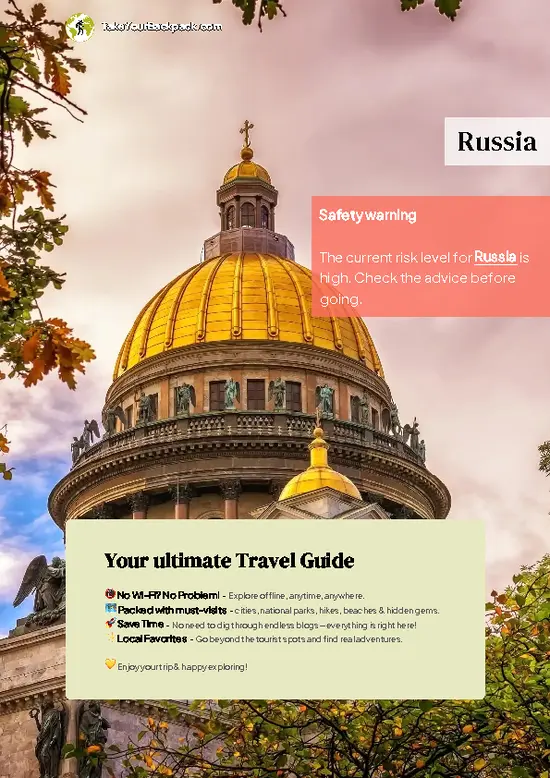
example page 0 from our offline Travel Guide for Russia
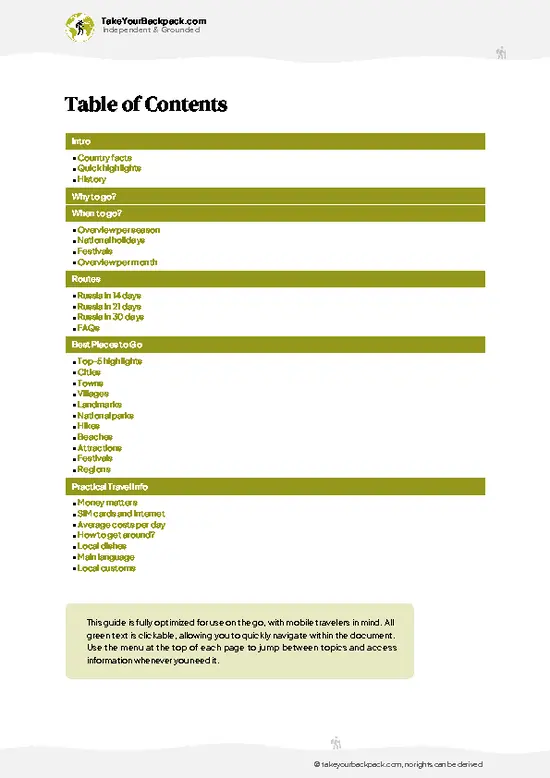
example page 1 from our offline Travel Guide for Russia
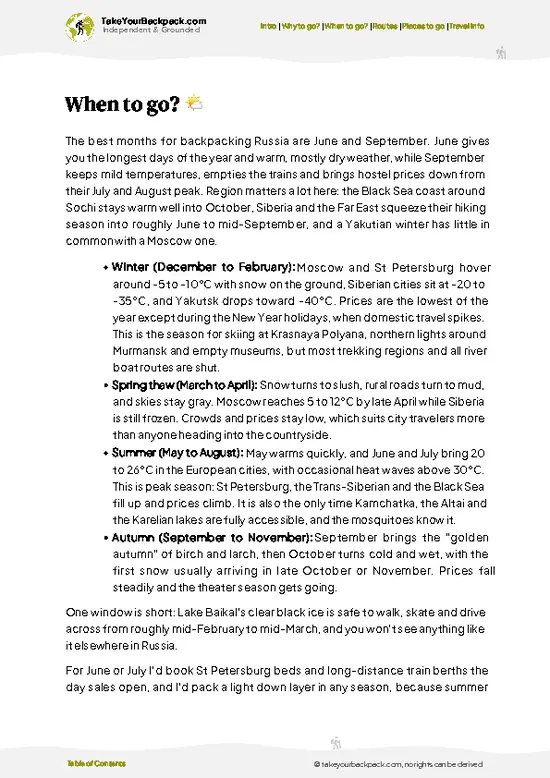
example page 2 from our offline Travel Guide for Russia
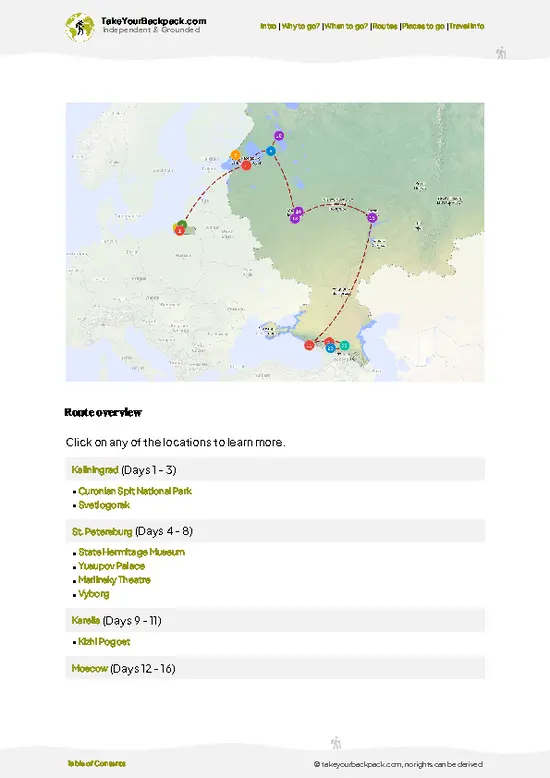
example page 3 from our offline Travel Guide for Russia
example page 4 from our offline Travel Guide for Russia
example page 5 from our offline Travel Guide for Russia
example page 6 from our offline Travel Guide for Russia
example page 7 from our offline Travel Guide for Russia
The digital guide (425 pages) contains:
115 highlights, ranked by travel appeal
Optimized 14, 21 & 30-day travel routes
Cities, national parks, landmarks, beaches
How to get around
Offline-friendly for travel without Wi-Fi
👉 Click to see all 30+ guide features

📅 Plan smarter in minutes, not weeks
Month by month travel advice
Festivals & national holidays
Budget expectations

🗺️ Go to the right places, skip the overrated ones
Honest pros & cons of destinations
Top hikes, parks & viewpoints
Lesser-known places most travelers miss
Clear “worth it vs skip it” guidance

🛏️ Travel smoothly without rookie mistakes
Best areas to stay
Transport systems explained simply
Common scams & safety advice
SIM cards, money & practical tips

🌍 Understand the country, not just visit it
Culture & traditions
52 Essential phrases & customs
Festivals worth planning around
Traveler-friendly historical context
Insights that make places more meaningful

📱 Built for real travel conditions
Fully downloadable PDF
Works completely offline
Optimized for phone use
Useful in remote areas & buses
Everything in one place
Save weeks of stressful planning
Get instant access to your full guide. 30‑day money-back guarantee.


By proceeding you agree to our terms.
Sent to your inbox immediately after payment • 100% Secure Checkout
Best Backpacking Travel Advisor 2025 tourism awardBest Backpacking
Travel Advisor
2025
What others say about Take Your Backpack Guides:
⭐⭐⭐⭐⭐
Fantastic, amazing amount of information!
⭐⭐⭐⭐⭐
My goodness this is amazing, it's what I've been looking for hats off too you!
⭐⭐⭐⭐⭐
I think this is absolutely BRILLIANT
⭐⭐⭐⭐
Very complete and informative. It's still missing places, but I gotta to commend you
⭐⭐⭐⭐⭐
This is truly amazing, thank you, can't wait to explore it with my kids!
⭐⭐⭐⭐⭐
Awesome resource, thank you!
⭐⭐⭐⭐⭐
This is amazing! Can't wait to explore the ones I haven't seen
⭐⭐⭐⭐
I love this! Well done, great idea.
⭐⭐⭐⭐⭐
Thanks for taking the time to make this gem!
⭐⭐⭐⭐⭐
This might be the best website I've ever seen.
⭐⭐⭐⭐⭐
Congratulations, and thank you so much for your work; it's incredibly valuable.
⭐⭐⭐⭐
In all seriousness I think you did a great job pointing out the important spots
⭐⭐⭐⭐⭐
10/10 very good
⭐⭐⭐⭐⭐
As someone who's only just starting to visit regularly this is awesome, thank you.
⭐⭐⭐⭐
Thank you very much! I'm going to visit my dad, it's going to be very useful!
⭐⭐⭐⭐⭐
This is really cool! We'll be travelling for the first time and this definitely come in handy.
⭐⭐⭐⭐⭐
You are now our minister of culture, congratulations 👨‍💼
⭐⭐⭐⭐⭐
Just wanted to tell you that this is a pearl! Going to follow your recommendations.
⭐⭐⭐⭐⭐
This is so cool. I'll definitely be using the resource for my travels soon.
⭐⭐⭐⭐⭐
This is very impressive! Good work.
⭐⭐⭐⭐⭐
This is an amazing and informative site. Very well done!

🛏️ Where to stay?Accommodation Highlights

Yes — hostels and budget guesthouses are common in Russia’s main cities and tourist hubs such as Moscow, St. Petersburg, Kazan, Irkutsk (for Baikal) and Sochi, so backpackers can usually find cheap beds in city centres and near train stations.
In Moscow the densest options sit around Arbat, Kitai‑Gorod, Tverskaya and the rail‑terminal area near Komsomolskaya; in St. Petersburg most budget places cluster on Nevsky Prospekt, in Admiralteysky district and on Vasilievsky / Petrogradsky islands, while regional cities concentrate choices in central districts and beside main stations.
Pros and cons: Arbat/Kitai = best for Red Square access and tourist services but crowded and pricier; Tverskayaread more 👉
Yes — hostels and budget guesthouses are common in Russia’s main cities and tourist hubs such as Moscow, St. Petersburg, Kazan, Irkutsk (for Baikal) and Sochi, so backpackers can usually find cheap beds in city centres and near train stations.
In Moscow the densest options sit around Arbat, Kitai‑Gorod, Tverskaya and the rail‑terminal area near Komsomolskaya; in St. Petersburg most budget places cluster on Nevsky Prospekt, in Admiralteysky district and on Vasilievsky / Petrogradsky islands, while regional cities concentrate choices in central districts and beside main stations.
Pros and cons: Arbat/Kitai = best for Red Square access and tourist services but crowded and pricier; Tverskaya = excellent transport and nightlife, busier and less quiet; Komsomolskaya = cheapest and ideal for train connections but noisy; Nevsky/Admiralteysky = immediate museum/nightlife access yet very touristy; Vasilievsky/Petrogradsky = calmer and more local but a bit farther from flagship sights; central/station areas in regional towns = economical and practical for transit but often noisy and lower on atmosphere.

If you enjoy meeting fellow travelers, consider choosing hostels with high ratings for atmosphere. On the other hand, if you prefer having your own space, a hotel might be a better option.

RussiaSee More of Russia

👋 Meet the founderWho’s Behind Take Your Backpack?

Johan, backpacker and founder of TakeYourBackpackHi, I’m Johan (Netherlands 🇳🇱), the creator of TakeYourBackpack. Over the past decade, I’ve backpacked through 80+ countries across six continents, gaining extensive experience with independent travel, long-term trips, and overland routes.

This site is built on a combination of firsthand travel experience and carefully curated insights from other backpackers. Many guides are based on places I’ve personally visited, while others bring together tips, observations, and practical advice shared by trusted travelers I’ve met along the way.

The goal is to provide realistic, experience-driven guidance — not generic itineraries — so you can explore destinations with better context, clearer expectations, and more confidence.

Get full Russia guide •
Instant download • 115 highlights • Full Offline guide