×

Russia🇷🇺 | best hikesEssential 10 hikes to Explore in Russia

Hiking in Russia offers a diverse tapestry of experiences shaped by its vast geography and rich cultural landscape. From the rugged Caucasus Mountains to the serene Altai Range, each region presents unique challenges and rewards. The difficulty of trails can vary significantly; some paths are well-marked and accessible, while others demand technical skills and endurance.

Seasonal nuances play a crucial role in planning your hike. Summer months provide extended daylight, perfect for long treks, but can also bring swarms of insects in certain areas. Conversely, winter hikes offer breathtaking snowy vistas but require specialized gear and heightened safety awareness due to avalanches and extreme cold.

Choosing the right hike impacts not just your budget but also your overall experience. More remote trails may require additional travel time and costs, while popular routes often come with crowded conditions. This can dilute the sense of cultural immersion you seek as a backpacker.

Understanding these factors will help you navigate the complexities of hiking in Russia, ensuring that your independent travel experience is both rewarding and safe. Prioritize your choices wisely to preserve your energy and budget for the moments that truly matter.

By Johan Kruseman 🇳🇱 | Updated June 10, 2026
Explore the best beaches in Russia

Why go?What Makes Them Special

Hiking in Russia offers a unique blend of terrain variety and cultural depth that sets it apart from other countries. The vast landscapes range from the rugged peaks of the Caucasus to the expansive taiga forests and breathtaking coastlines of Kamchatka. This diversity means that hikers can experience everything from alpine meadows to volcanic craters, each with its own ecological and geological significance.

However, the altitude and trail infrastructure present both opportunities and challenges. While some regions boast well-maintained paths and facilities, others require navigating less developed trails that may lack clear markings or adequate signage. This inconsistency can lead to unexpected difficulties, especially for those unaccustomed to remote hiking. Understanding the logisticsread more 👉
Hiking in Russia offers a unique blend of terrain variety and cultural depth that sets it apart from other countries. The vast landscapes range from the rugged peaks of the Caucasus to the expansive taiga forests and breathtaking coastlines of Kamchatka. This diversity means that hikers can experience everything from alpine meadows to volcanic craters, each with its own ecological and geological significance.

However, the altitude and trail infrastructure present both opportunities and challenges. While some regions boast well-maintained paths and facilities, others require navigating less developed trails that may lack clear markings or adequate signage. This inconsistency can lead to unexpected difficulties, especially for those unaccustomed to remote hiking. Understanding the logistics of each hike is crucial; some areas may require permits or local guides, while others might be accessible without much preparation.

The climatic conditions in Russia also play a significant role in hiking experiences. The best hiking seasons vary widely across the country. In Siberia, for example, summer offers milder weather, but the short window for optimal hiking can lead to crowded trails. Conversely, winter hiking can be stunning but demands a higher level of skill and preparation due to extreme temperatures and potential hazards like avalanches.

Travelers must weigh the trade-offs between difficulty and scenic reward. Some of the most visually stunning hikes may also be the most challenging, requiring a solid fitness level and experience. Conversely, easier trails might not provide the same level of immersion in Russia’s dramatic landscapes.

Accessibility is another critical factor. While major cities may offer easy access to nearby trails, venturing deeper into Russia often requires significant travel time. This can lead to a dilemma: spend more time in transit for a richer experience or stick to more accessible hikes that may lack the same depth.

In summary, hiking in Russia is not just about the trails; it’s about understanding the interplay of cultural, historical, and geographic factors that shape each experience. The country’s vastness means that every hike can be a journey into its diverse soul, but it also demands careful planning and respect for the elements. Being aware of these considerations will help preserve both energy and budget for the moments that truly matter.
Our Approach to Ranking
The list of best hikes in Russia is created based on scenery, challenge, trail quality, landmarks, and overall enjoyment. If you feel a hike is missing in this list, please let us know.

When to go?Timing Your Visit for the Best Experience

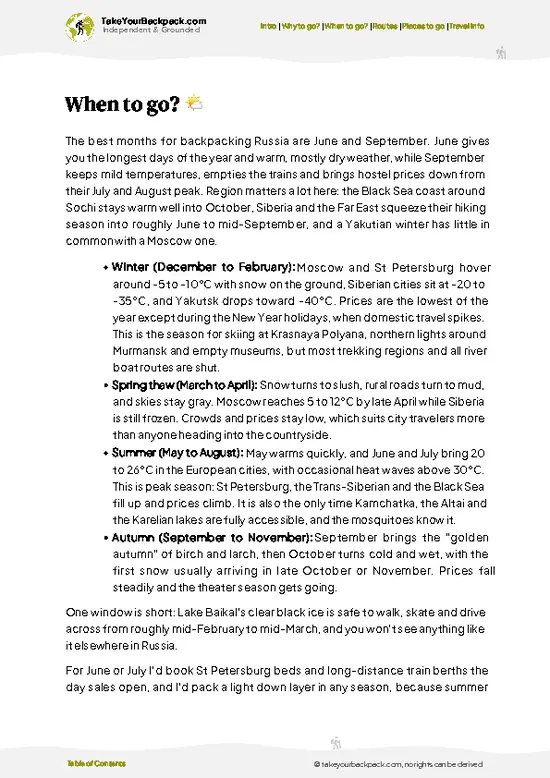
Seasonality and Hiking Conditions in Russia


Hiking in Russia is a rewarding experience, but understanding the seasonal variations is crucial for safety and enjoyment. The country’s vastness means that conditions can differ dramatically from one region to another.

Spring, typically from late March to May, brings a mix of melting snow and emerging greenery. Early spring can still be chilly, with trails often muddy or icy. As temperatures rise, access to higher-altitude trails improves, but be prepared for unpredictable weather. Rainfall increases in May, which can make trails slippery and challenging.

Summer, from June to August, is the peak hiking season. Temperatures are generally mild, and daylight hours are long, allowing for extended hikes. However, this is also when trails can be … read more 👉

Seasonality and Hiking Conditions in Russia


Hiking in Russia is a rewarding experience, but understanding the seasonal variations is crucial for safety and enjoyment. The country’s vastness means that conditions can differ dramatically from one region to another.

Spring, typically from late March to May, brings a mix of melting snow and emerging greenery. Early spring can still be chilly, with trails often muddy or icy. As temperatures rise, access to higher-altitude trails improves, but be prepared for unpredictable weather. Rainfall increases in May, which can make trails slippery and challenging.

Summer, from June to August, is the peak hiking season. Temperatures are generally mild, and daylight hours are long, allowing for extended hikes. However, this is also when trails can be crowded, especially in popular areas. Rainfall is common, particularly in July, so waterproof gear is essential. Altitude hikes may require acclimatization, as sudden weather changes can occur even in summer.

Autumn, spanning September to October, offers a stunning display of fall colors. Early autumn is ideal for hiking, with cooler temperatures and less rainfall. However, as the season progresses, trails can become muddy and visibility may decrease due to fog. Wildlife is often more active during this time, but shorter daylight hours mean planning hikes carefully is necessary.

Winter, from November to March, presents a different set of challenges. Snow can blanket trails, making them inaccessible or requiring specialized gear like snowshoes or crampons. Temperatures can drop significantly, especially in northern regions. While winter hikes can be serene, they demand careful preparation and awareness of avalanche risks in mountainous areas.

Shoulder seasons, particularly late spring and early autumn, offer a balance between fewer crowds and reasonable weather. However, these periods can also bring unpredictable conditions. Travelers should weigh the benefits of lower costs and quieter trails against the potential for variable weather and trail accessibility.

In summary, understanding the seasonal dynamics of hiking in Russia is essential. Each season offers unique challenges and rewards, and planning accordingly can enhance the experience while preserving energy and budget for the moments that truly matter.

hike hoppingHow to Combine hikes Into One Trip

General Routing Logic

Travelers should cluster hikes by region to minimize travel time and maximize scenic variety. Start in the Caucasus for rugged peaks, then move to Siberia for vast wilderness, and finish in the Altai Mountains for stunning landscapes. This directional flow not only conserves energy but also allows for a gradual acclimatization to varying altitudes.

Typical Time Needed

Allocate at least three to five days per major hiking area. This includes time for recovery, as altitude can sap energy. Each hike may take anywhere from a few hours to a full day, depending on difficulty and distance. Factor in rest days, especially after strenuous hikes, to avoid burnout.

Common Planning Mistakes

One frequent pitfall is underestimating travel times between regions. Russia is vast, … read more 👉

General Routing Logic

Travelers should cluster hikes by region to minimize travel time and maximize scenic variety. Start in the Caucasus for rugged peaks, then move to Siberia for vast wilderness, and finish in the Altai Mountains for stunning landscapes. This directional flow not only conserves energy but also allows for a gradual acclimatization to varying altitudes.

Typical Time Needed

Allocate at least three to five days per major hiking area. This includes time for recovery, as altitude can sap energy. Each hike may take anywhere from a few hours to a full day, depending on difficulty and distance. Factor in rest days, especially after strenuous hikes, to avoid burnout.

Common Planning Mistakes

One frequent pitfall is underestimating travel times between regions. Russia is vast, and distances can be deceptive. Plan for longer transit times than expected, especially when using public transport. Another mistake is cramming too many hikes into a short timeframe. This often leads to fatigue and missed experiences. Prioritize quality over quantity; it’s better to fully enjoy a few hikes than to rush through many.

Trade-offs and Constraints

Balancing speed with depth of experience is crucial. While it may be tempting to cover more ground quickly, this often sacrifices the richness of the journey. Budget constraints can also impact comfort levels. Opting for cheaper accommodations may save money but can lead to less restful nights, affecting energy levels for hikes.

Pacing Strategies

Pacing is key. Start with easier hikes to build stamina before tackling more challenging routes. Incorporate shorter hikes between longer ones to maintain energy levels. Flexibility in planning allows for adjustments based on weather or personal energy. If a hike feels too daunting, don’t hesitate to swap it for a less strenuous option.

Sequencing Hikes

Consider the elevation gain and trail conditions when sequencing hikes. Begin with lower-altitude trails and gradually ascend to higher elevations. This helps acclimatize the body and reduces the risk of altitude sickness. Scenic rewards often come with effort, so plan to tackle the more demanding hikes when energy levels are highest, typically early in the day.

By strategically combining hikes across Russia, travelers can create a fulfilling experience that balances adventure with recovery, ensuring that each moment spent on the trail is rewarding.

The ListHighly Recommended hikes of Russia

1 Klyuchevskaya Sopka Trek

active volcano, ash fields, alpine tundra, remote ascent

Ascend through shifting volcanic landscapes and stark tundra, navigating loose scree and snowfields beneath Russia’s highest and most active volcano.

2 Kamchatka Volcanoes Trek

lava flows, geothermal vents, wild river crossings, bear territory

Traverse a region where steaming earth and raw rivers shape the route, with frequent wildlife sightings and unpredictable weather demanding careful preparation.

3 Putorana Plateau Trek

basalt canyons, tundra plateaus, waterfalls, Arctic isolation

Cross vast, treeless expanses broken by deep canyons and waterfalls, where navigation is challenging and self-sufficiency is essential for days at a time.

russia-hike-putorana-plateau-trek v1
© Google |

4 Ergaki Mountains Trek

granite spires, alpine lakes, Siberian taiga, technical passes

Navigate between jagged peaks and mirrored lakes, crossing dense forests and exposed ridges that require both stamina and route-finding skills.

russia-hike-ergaki-mountains-trek v1
© Google |

5 Sayan Mountains Trek

glacial valleys, larch forests, rugged ridgelines, mountain lakes

Move between broad valleys and sharp ridges, with frequent river crossings and changing weather requiring flexibility and solid backcountry skills.

russia-hike-sayan-mountains-trek
© Google |

6 Khibiny Mountains Trek

polar circle, rocky plateaus, mineral deposits, short summer

Experience Arctic conditions with long daylight hours, exposed rock fields, and sudden weather shifts that define trekking above the polar circle.

russia-hike-khibiny-mountains-trek
© Google |

7 Shumak Trail

mineral springs, sacred valleys, river crossings, Buryat culture

Follow a pilgrimage route deep into the Eastern Sayan, where mineral waters and spiritual sites punctuate a demanding multi-day trek through wild terrain.

russia-hike-shumak-trail
© Google |

8 Lena Pillars Trail

limestone towers, taiga forest, river cliffs, UNESCO site

Walk along the Lena River’s edge, where ancient stone pillars rise from dense forest and riverbanks, offering unique geology and limited infrastructure.

russia-hike-lena-pillars-trail v1
© Google |

9 Caucasian Mineral Waters

spa towns, gentle hills, mineral springs, parkland trails

Stroll through rolling landscapes dotted with historic spa resorts and natural springs, with easy access to marked trails and local amenities.

russia-hike-caucasian-mineral-waters
© Google | Zinaida Igorevna

10 Golden Ring

medieval towns, onion domes, rural landscapes, heritage routes

Travel between centuries-old settlements and open countryside, exploring Russia’s architectural and religious heritage along a well-established circuit.

Loading the map 🌍

Expert viewTips and Advice from Travelers

Trail Logistics

Navigating Russia’s vast wilderness requires a solid understanding of trail logistics. The country boasts a range of hikes, from the rugged Altai Mountains to the serene shores of Lake Baikal. Aim to tackle around three to five hikes to get a well-rounded experience without overwhelming yourself. Each region has its own character, and the logistics can vary significantly.

In the Altai, for instance, trails can be steep and rocky, demanding a good level of fitness. Expect to spend anywhere from three to seven hours on the trail daily, depending on your chosen hike. The terrain can shift rapidly, so be prepared for everything from dense forests to open ridges. In contrast, hikes around Lake Baikal often offer gentler paths, but the weather can be unpredictable. Always check … read more 👉

Trail Logistics

Navigating Russia’s vast wilderness requires a solid understanding of trail logistics. The country boasts a range of hikes, from the rugged Altai Mountains to the serene shores of Lake Baikal. Aim to tackle around three to five hikes to get a well-rounded experience without overwhelming yourself. Each region has its own character, and the logistics can vary significantly.

In the Altai, for instance, trails can be steep and rocky, demanding a good level of fitness. Expect to spend anywhere from three to seven hours on the trail daily, depending on your chosen hike. The terrain can shift rapidly, so be prepared for everything from dense forests to open ridges. In contrast, hikes around Lake Baikal often offer gentler paths, but the weather can be unpredictable. Always check local forecasts and be ready for sudden changes.

Budget-wise, consider that while some trails are free, others may require permits or fees for guided tours. Allocate funds for transportation, as getting to trailheads can involve long drives or even flights. The cost of food and accommodation can also vary widely, especially in remote areas where options are limited.

Altitude

Altitude can be a significant factor in your hiking experience. In the Altai, for example, you might find yourself at elevations exceeding 3,000 meters. This can lead to altitude sickness if you’re not acclimatized. Spend a day or two at lower elevations before tackling higher trails to allow your body to adjust.

In contrast, hikes around the Ural Mountains generally stay below 2,000 meters, making them more accessible for those concerned about altitude. However, don’t underestimate the physical demands of these hikes. Even at lower elevations, the rugged terrain can be challenging.

Always listen to your body. If you start feeling dizzy or unusually fatigued, it’s wise to descend to a lower elevation. Hydration is key; drink plenty of water, especially if you’re at altitude.

Recovery

Recovery is often overlooked but is crucial for enjoying your hikes. After a long day on the trail, give yourself time to rest and recharge. In Russia, the culture of outdoor activities often includes communal meals and shared stories, which can be a great way to unwind.

Plan for at least one rest day after every two or three hiking days. This allows your muscles to recover and gives you a chance to explore the local culture. In areas like Kamchatka, you might find hot springs that can aid recovery, but don’t rely solely on these. Stretching and proper nutrition are equally important.

If you’re hiking in a group, be mindful of varying fitness levels. Some may need more recovery time than others. Adjust your pace accordingly to ensure everyone enjoys the experience.

Difficulty

Difficulty levels can vary widely across Russia’s hiking trails. Some paths are well-marked and suitable for beginners, while others are challenging even for seasoned hikers. Always assess your skill level honestly before choosing a hike.

In the Caucasus, for example, you’ll encounter trails that require scrambling and navigating rocky outcrops. These hikes can be exhilarating but also demand a higher level of physical fitness and mental focus. Conversely, the trails around the Golden Ring are generally easier, making them ideal for families or those new to hiking.

Consider the time of year as well. Spring and fall can bring mud and slippery conditions, increasing the difficulty of even moderate trails. Summer offers the best conditions, but be prepared for crowds on popular routes.

Pacing

Pacing is essential for a successful hiking experience. In Russia, the vast distances can lead to a temptation to rush through hikes to see as much as possible. Resist that urge. Instead, focus on quality over quantity.

A good rule of thumb is to plan for about 3 to 5 kilometers per hour on average, factoring in breaks for food, water, and enjoying the scenery. Some trails may require slower pacing due to steep inclines or challenging terrain.

If you’re hiking with a group, establish a comfortable pace that accommodates everyone. Frequent, short breaks can help maintain energy levels and keep spirits high. Use these moments to soak in the surroundings; the landscapes are often as rewarding as the hike itself.

Regional Variation

Understanding regional variations is key to planning your hikes. Russia’s geography is diverse, and each area offers unique challenges and rewards. The Siberian wilderness, for instance, is remote and requires careful planning regarding supplies and navigation.

In contrast, the European part of Russia tends to have better infrastructure, with more established trails and facilities. However, this can also mean more tourists, especially in the summer months. If solitude is what you seek, consider hiking in less-traveled areas, but be prepared for limited resources.

Local culture plays a role too. In some regions, you may find hospitality in the form of local guesthouses or homestays, while in others, you might need to camp. Always respect local customs and be aware of any cultural sensitivities, especially in indigenous areas.

Safety & Cultural Considerations

Safety should always be a priority. Carry a first-aid kit, know basic navigation skills, and inform someone of your plans. In remote areas, cell service can be spotty, so consider a GPS device or a map.

Cultural considerations are equally important. Be respectful of local traditions and practices. In some regions, certain areas may be sacred, and it’s essential to honor these spaces.

Wildlife encounters are also a possibility. In areas like Kamchatka, be bear-aware. Carry bear spray and know how to react in an encounter.

Ultimately, the key to enjoying Russia’s hiking trails lies in preparation and respect—both for the land and its people. By understanding the nuances of each region and planning accordingly, you’ll preserve your energy and budget for the moments that truly matter.

✈️ The backpacker research shortcutRussia Travel Guide

An offline-friendly backpacking guide with optimized travel routes, ranked highlights, transport advice, and the best areas to stay.
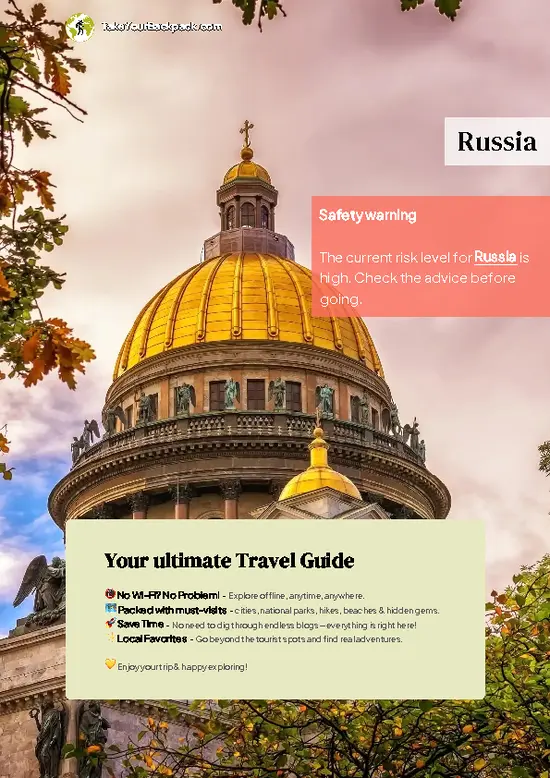
example page 0 from our offline Travel Guide for Russia
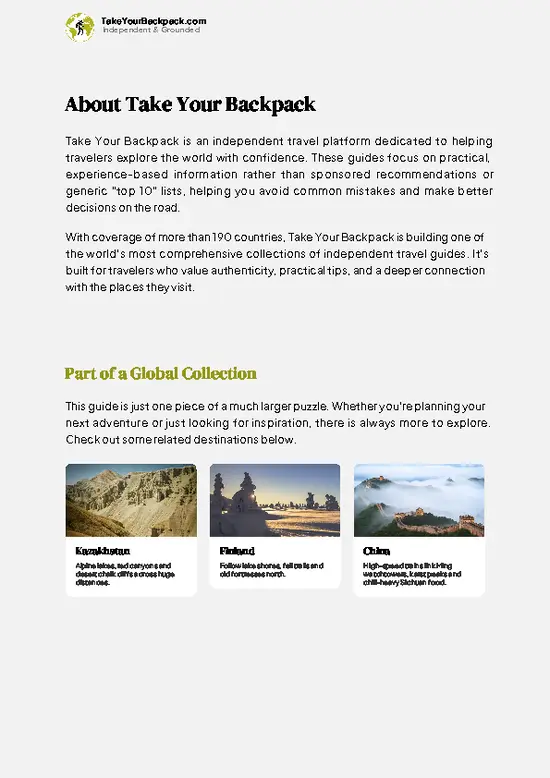
example page 1 from our offline Travel Guide for Russia
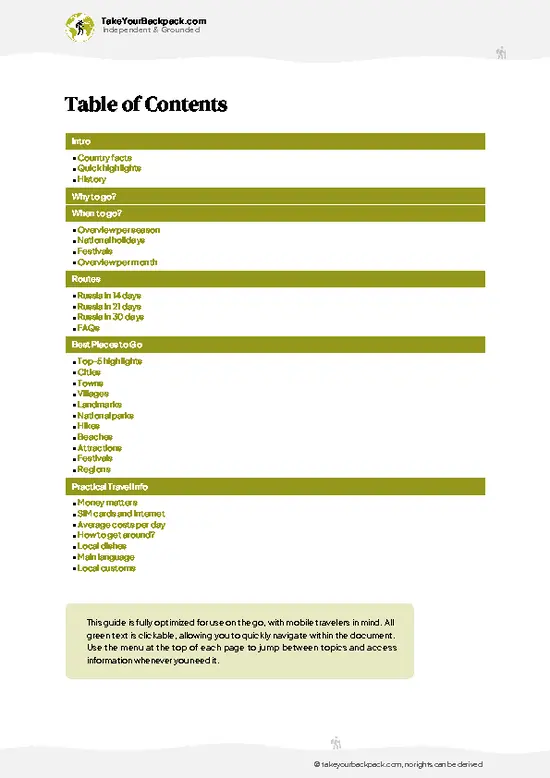
example page 2 from our offline Travel Guide for Russia
example page 3 from our offline Travel Guide for Russia
example page 4 from our offline Travel Guide for Russia
example page 5 from our offline Travel Guide for Russia
example page 6 from our offline Travel Guide for Russia
example page 7 from our offline Travel Guide for Russia
The digital guide (425 pages) contains:
115 highlights, ranked by travel appeal
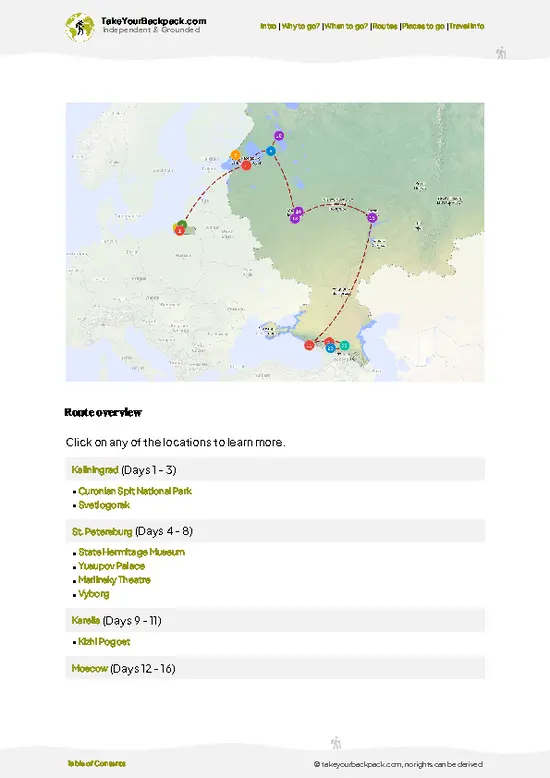
Optimized 14, 21 & 30-day travel routes
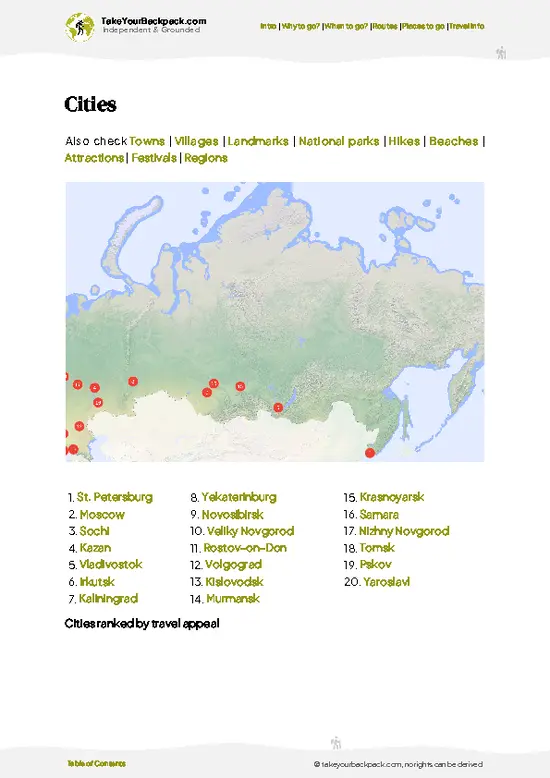
Cities, national parks, landmarks, beaches
How to get around
Offline-friendly for travel without Wi-Fi
👉 Click to see all 30+ guide features

📅 Plan smarter in minutes, not weeks
Month by month travel advice
Festivals & national holidays
Budget expectations

🗺️ Go to the right places, skip the overrated ones
Honest pros & cons of destinations
Top hikes, parks & viewpoints
Lesser-known places most travelers miss
Clear “worth it vs skip it” guidance

🛏️ Travel smoothly without rookie mistakes
Best areas to stay
Transport systems explained simply
Common scams & safety advice
SIM cards, money & practical tips

🌍 Understand the country, not just visit it
Culture & traditions
52 Essential phrases & customs
Festivals worth planning around
Traveler-friendly historical context
Insights that make places more meaningful

📱 Built for real travel conditions
Fully downloadable PDF
Works completely offline
Optimized for phone use
Useful in remote areas & buses
Everything in one place
Save weeks of stressful planning
Get instant access to your full guide. 30‑day money-back guarantee.


By proceeding you agree to our terms.
Sent to your inbox immediately after payment • 100% Secure Checkout
Best Backpacking Travel Advisor 2025 tourism awardBest Backpacking
Travel Advisor
2025
What others say about Take Your Backpack Guides:
⭐⭐⭐⭐⭐
Fantastic, amazing amount of information!
⭐⭐⭐⭐⭐
My goodness this is amazing, it's what I've been looking for hats off too you!
⭐⭐⭐⭐⭐
I think this is absolutely BRILLIANT
⭐⭐⭐⭐
Very complete and informative. It's still missing places, but I gotta to commend you
⭐⭐⭐⭐⭐
This is truly amazing, thank you, can't wait to explore it with my kids!
⭐⭐⭐⭐⭐
Awesome resource, thank you!
⭐⭐⭐⭐⭐
This is amazing! Can't wait to explore the ones I haven't seen
⭐⭐⭐⭐
I love this! Well done, great idea.
⭐⭐⭐⭐⭐
Thanks for taking the time to make this gem!
⭐⭐⭐⭐⭐
This might be the best website I've ever seen.
⭐⭐⭐⭐⭐
Congratulations, and thank you so much for your work; it's incredibly valuable.
⭐⭐⭐⭐
In all seriousness I think you did a great job pointing out the important spots
⭐⭐⭐⭐⭐
10/10 very good
⭐⭐⭐⭐⭐
As someone who's only just starting to visit regularly this is awesome, thank you.
⭐⭐⭐⭐
Thank you very much! I'm going to visit my dad, it's going to be very useful!
⭐⭐⭐⭐⭐
This is really cool! We'll be travelling for the first time and this definitely come in handy.
⭐⭐⭐⭐⭐
You are now our minister of culture, congratulations 👨‍💼
⭐⭐⭐⭐⭐
Just wanted to tell you that this is a pearl! Going to follow your recommendations.
⭐⭐⭐⭐⭐
This is so cool. I'll definitely be using the resource for my travels soon.
⭐⭐⭐⭐⭐
This is very impressive! Good work.
⭐⭐⭐⭐⭐
This is an amazing and informative site. Very well done!

🛏️ Where to stay?Accommodation Highlights

Yes — hostels and budget guesthouses are common in Russia’s main cities and tourist hubs such as Moscow, St. Petersburg, Kazan, Irkutsk (for Baikal) and Sochi, so backpackers can usually find cheap beds in city centres and near train stations.
In Moscow the densest options sit around Arbat, Kitai‑Gorod, Tverskaya and the rail‑terminal area near Komsomolskaya; in St. Petersburg most budget places cluster on Nevsky Prospekt, in Admiralteysky district and on Vasilievsky / Petrogradsky islands, while regional cities concentrate choices in central districts and beside main stations.
Pros and cons: Arbat/Kitai = best for Red Square access and tourist services but crowded and pricier; Tverskayaread more 👉
Yes — hostels and budget guesthouses are common in Russia’s main cities and tourist hubs such as Moscow, St. Petersburg, Kazan, Irkutsk (for Baikal) and Sochi, so backpackers can usually find cheap beds in city centres and near train stations.
In Moscow the densest options sit around Arbat, Kitai‑Gorod, Tverskaya and the rail‑terminal area near Komsomolskaya; in St. Petersburg most budget places cluster on Nevsky Prospekt, in Admiralteysky district and on Vasilievsky / Petrogradsky islands, while regional cities concentrate choices in central districts and beside main stations.
Pros and cons: Arbat/Kitai = best for Red Square access and tourist services but crowded and pricier; Tverskaya = excellent transport and nightlife, busier and less quiet; Komsomolskaya = cheapest and ideal for train connections but noisy; Nevsky/Admiralteysky = immediate museum/nightlife access yet very touristy; Vasilievsky/Petrogradsky = calmer and more local but a bit farther from flagship sights; central/station areas in regional towns = economical and practical for transit but often noisy and lower on atmosphere.

If you enjoy meeting fellow travelers, consider choosing hostels with high ratings for atmosphere. On the other hand, if you prefer having your own space, a hotel might be a better option.

RussiaSee More of Russia

👋 Meet the founderWho’s Behind Take Your Backpack?

Johan, backpacker and founder of TakeYourBackpackHi, I’m Johan (Netherlands 🇳🇱), the creator of TakeYourBackpack. Over the past decade, I’ve backpacked through 80+ countries across six continents, gaining extensive experience with independent travel, long-term trips, and overland routes.

This site is built on a combination of firsthand travel experience and carefully curated insights from other backpackers. Many guides are based on places I’ve personally visited, while others bring together tips, observations, and practical advice shared by trusted travelers I’ve met along the way.

The goal is to provide realistic, experience-driven guidance — not generic itineraries — so you can explore destinations with better context, clearer expectations, and more confidence.

Get full Russia guide •
Instant download • 115 highlights • Full Offline guide