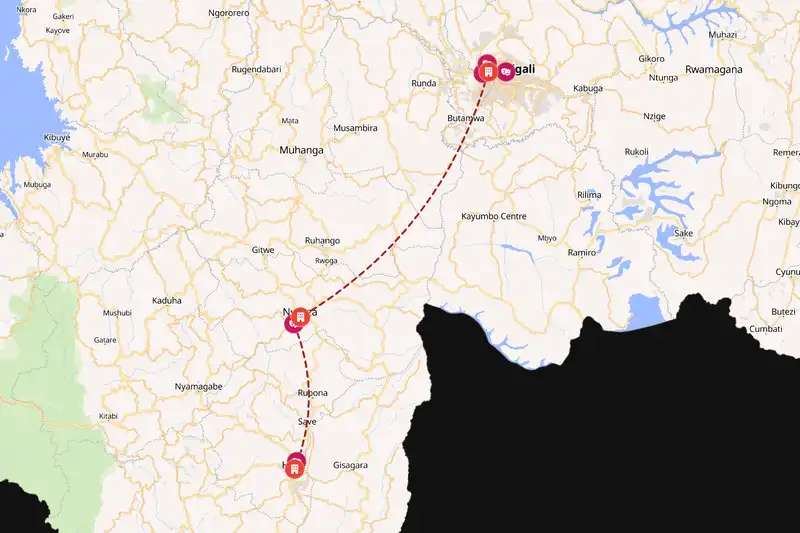
Short version: yes, Rwanda is one of the easiest countries in East Africa to backpack independently, as long as you’re comfortable with minibus chaos and planning your big-ticket activities in advance.
Why it’s backpacker-friendly:
- It’s small and compact, so travel days are short and you’re rarely more than a few hours from the next town.
- It’s generally safe, even after dark in central areas of Kigali and larger towns, as long as you use normal city sense (no flashy gear, keep your phone close, use registered motos or taxis).
- People are used to visitors and usually helpful; English is widely spoken in Kigali and tourist areas, and you’ll see plenty of French and Kinyarwanda too.
What makes it trickier:
- Rwanda is not a rock-bottom-budget destination compared with, say, Uganda or Tanzania. Park fees and activities (especially gorilla trekking) are expensive, even if you sleep in dorms and eat local food.
- Gorilla and chimp permits, plus some national park activities, must be booked and paid in advance through tour operators or the park authorities; you can’t just show up and wing it.
- Some rural areas have limited accommodation options, so you need to know your overnight stop before dark.
How to keep it smooth as an independent backpacker:
- Use Kigali as your hub: arrive, get your bearings, pull cash, buy a local SIM, and plan your loops to Volcanoes, Lake Kivu, and Nyungwe from there.
- Mix DIY and short tours: travel between towns on your own, but use local operators for specific activities (treks, safaris, boat trips) to avoid logistical headaches.
- Book at least your first and last nights plus any park-related stays; leave the rest flexible so you can adjust if you fall in love with a place like Gisenyi or Kibuye.
If you’ve backpacked anywhere in East or Southeast Asia, Rwanda will feel more organized and calmer than you expect, just with higher prices for nature experiences.
For a budget traveler, the sweet spot is 10–14 days. You can do less, but you’ll be rushing and spending more per day.
Rough timing by style:
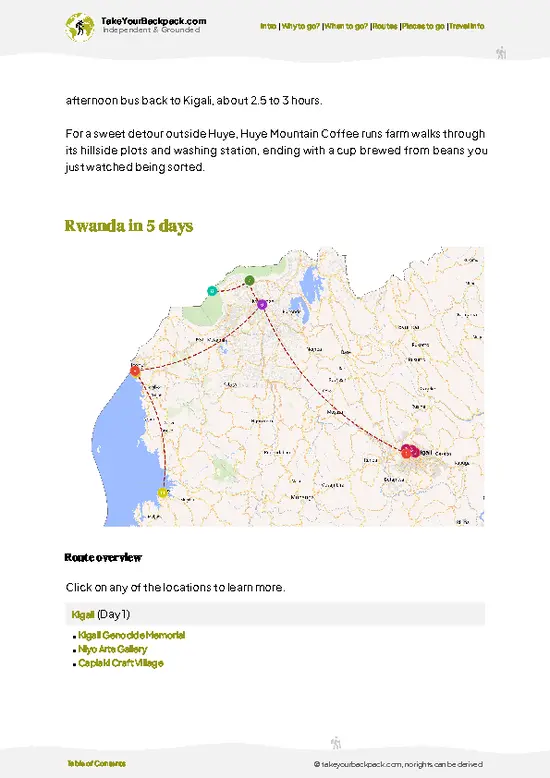
- 5–7 days (fast track): Kigali + Volcanoes National Park area + one Lake Kivu town.
- Day 1–2: Kigali (Genocide Memorial, Nyamirambo, markets, café hopping).
- Day 3–4: Musanze/Volcanoes NP for gorillas (if your budget allows) or cheaper hikes and village walks.
- Day 5–6: Gisenyi or Kibuye on Lake Kivu for recovery and cheap lakeside time.
- Day 7: Back to Kigali and out.
- 10–14 days (ideal backpacker loop): Kigali + Volcanoes + Lake Kivu + Nyungwe.
- 2–3 days Kigali.
- 2–3 days Musanze/Volcanoes NP.
- 3–4 days Lake Kivu (split between Gisenyi and Kibuye, or Kibuye and Cyangugu).
- 3–4 days Nyungwe Forest (hikes, canopy walk, maybe chimp trekking if you can afford it).
- 3+ weeks (slow and deep): Add extra time in Kigali’s neighborhoods, smaller towns like Huye (Butare), and more hiking days in Nyungwe or the Congo Nile Trail.
Time vs. budget trade-offs:
- Gorilla trekking eats both time and money; if you do it, anchor your itinerary around that permit date.
- If you skip gorillas, you can still fill 10 days easily with lakes, forests, and cultural stops at a much lower cost.
- Travel days are short but still eat half a day each; don’t stack too many moves or you’ll spend your whole trip in minibuses.
If you’re flying in from far away, anything under a week feels rushed; 10–12 days lets you see the highlights without burning out or blowing your budget on last-minute transfers.
You can absolutely get around Rwanda without renting a car; most backpackers do. The country is built for public transport and short hops.
Main options:
- Intercity minibuses and buses: Cheap, frequent, and the backbone of backpacker travel.
- Kigali to Musanze, Gisenyi, Kibuye, Huye, and Rusizi all have regular services.
- Buy tickets at the bus station; some companies assign seats, others just fill and go.
- Expect tight seating but relatively organized departures compared with many neighboring countries.
- Moto-taxis: The kings of short-distance travel.
- Great for getting from bus stations to hostels or around town.
- Always wear the provided helmet; agree on the price before you hop on.
- Regular taxis and ride-hailing: More expensive but useful at night or with luggage.
- In Kigali, ride-hailing apps and phone-based services are common and safer than random street taxis.
- Tours and transfers: For specific park activities.
- Many lodges and guesthouses near Volcanoes and Nyungwe can arrange shared or private transfers to trailheads.
- This is where you might pay more, but it saves you from trying to line up a 5 a.m. moto in the dark.
When you might want a car (but don’t strictly need one):
- If you’re traveling as a group of 3–4 and want to hit multiple parks quickly, a rented car with driver can be cost-effective.
- If you’re carrying a lot of camping gear or planning to explore remote side roads.
For a solo or couple on a budget, public transport plus the occasional arranged transfer is the best balance of cost, safety, and sanity.
For a budget traveler, the must-visits are the places that give you Rwanda’s nature and history without forcing you into luxury pricing.
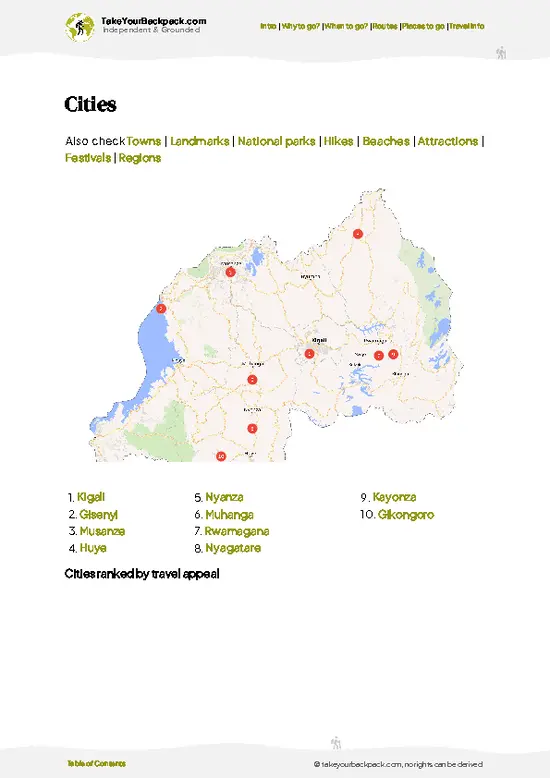
1. Kigali (at least 2 days)
- Kigali Genocide Memorial: Heavy but essential context for everything else you’ll see in the country.
- Nyamirambo neighborhood: Street food, local bars, and everyday city life; great for walking tours.
- Cafés and markets: Good coffee, cheap local lunches, and a feel for modern Rwanda.
2. Musanze / Volcanoes National Park area
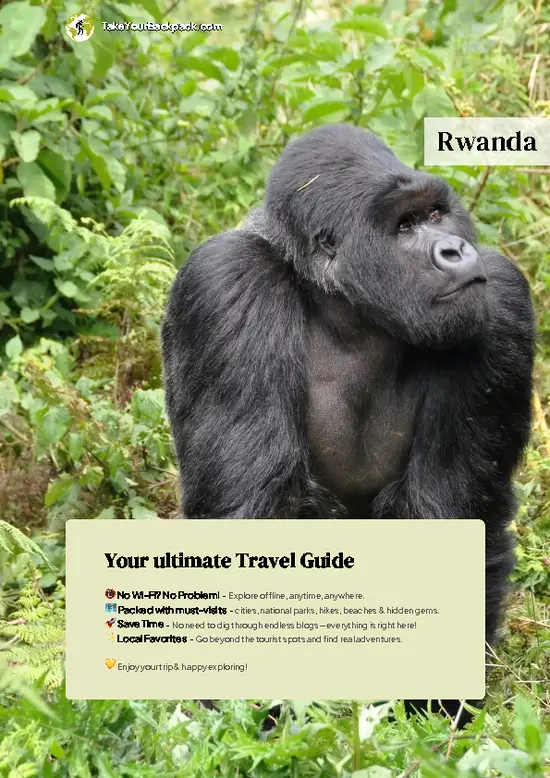
- If you can afford gorilla trekking, this is the global-level experience that actually deserves the hype.
- If you can’t, you can still:
- Hike lower-cost trails (like Mount Bisoke or other volcano day hikes).
- Visit local villages, caves, or community projects.
- Enjoy the mountain scenery without staying in luxury lodges by using simple guesthouses in Musanze.
3. Lake Kivu (Gisenyi and/or Kibuye)
- Gisenyi: Easy to reach from Musanze, with a laid-back lakeside strip, cheap guesthouses, and sunset beers.
- Kibuye: Quieter and more scenic, with islands, boat trips, and good spots to just read a book and reset.
- Both towns offer budget rooms, local restaurants, and a chance to slow down between bus days.
4. Nyungwe Forest National Park (if you have time and some budget)
- One of the best places in the region for dense, ancient forest.
- Canopy walk: The most budget-friendly “wow” activity in the park.
- Hiking trails: Range from short walks to full-day treks; guides are usually mandatory but can be shared with other travelers.
5. Huye (Butare) and nearby cultural sites (if you like history)
- National Ethnographic Museum: Strong overview of Rwandan culture and history beyond the genocide.
- Easy to add as a stop between Kigali and the south/west if you’re not in a rush.
If you’re tight on cash, prioritize: Kigali + Volcanoes region (even without gorillas) + at least one Lake Kivu town. That combo gives you history, mountains, and water without forcing you into top-end spending every day.
If you’re short on time or money, skip anything that eats a full day and a big chunk of your budget without adding much beyond what you’re already seeing.
1. Multiple Lake Kivu towns
- Pick Gisenyi or Kibuye, not both, if you’re rushed.
- They’re both lovely in similar ways: lakeside views, boat trips, chill time. Doubling up adds more bus rides than new experiences.
2. Extra nights in Kigali
- Kigali is comfortable and easy to linger in, but if you only have a week, don’t spend more than 2–3 nights total.
- After the memorial, a neighborhood walk, and a couple of meals out, the marginal value of more city time drops compared with another day in the mountains or forest.
3. High-end lodge experiences
- If you’re on a backpacker budget, don’t stretch to stay in luxury lodges near Volcanoes or Nyungwe just because they look good online.
- Sleep in town guesthouses and spend your money on the actual activities (treks, walks, boat trips) instead.
4. Doing both gorilla and chimp trekking if you’re on a tight budget
- Both are expensive; doing both can blow your entire trip budget.
- If you’re short on cash or days, pick one marquee wildlife experience and then fill the rest of your time with cheaper hikes and cultural visits.
5. Very remote corners just for the map tick
- Long detours to small towns with no specific draw (beyond saying you went) are not worth it on a short trip.
- Focus on the main arc: Kigali → Volcanoes → Lake Kivu → Nyungwe (or a shorter slice of that), rather than zigzagging to every dot on the map.
If you only have 5–7 days, a lean, smart route is: 2 days Kigali, 2–3 days Musanze/Volcanoes, 2 days Lake Kivu. Everything else is optional seasoning, not the core meal.