Short version: yes, but it’s not “Southeast Asia easy.” It’s more like Oman or UAE with training wheels off. Independent backpacking works well if you’re comfortable with long distances, limited hostels, and a bit of cultural homework.
The good news:
- The e-visa system for many nationalities is straightforward, and airport arrivals are usually smooth.
- Safety is generally excellent; violent crime against tourists is rare, and people are often curious and helpful.
- English is common in cities, on transport apps, and with younger Saudis.
- Digital life is strong: maps, ride-hailing, food delivery, and hotel apps all work well and make solo travel easier.
The frictions for backpackers:
- Classic hostels and dorms are still limited, so you’ll lean on budget hotels, apartments, and occasional Couchsurfing-style stays. This can nudge costs above “shoestring,” especially in smaller towns.
- Walkability is low in many areas; cities are built for cars, so you’ll use ride-hailing a lot if you don’t rent.
- Hitchhiking exists but is inconsistent and can be awkward given cultural norms and language gaps.
- Some remote natural areas (deserts, canyons, volcano craters) are hard to reach without a car or a tour.
Culturally, it’s easier than many expect if you’re respectful: dress modestly, avoid public affection, skip alcohol, and be patient with prayer-time closures. Solo women can and do travel, but should expect more attention, occasional overprotectiveness, and a bit more planning around accommodation and late-night movement.
If you’ve backpacked in the Middle East, Central Asia, or rural Latin America, Saudi will feel very manageable. If this is your first non-Western trip, it’s still doable, but you’ll enjoy it more if you plan your route, pre-book key legs, and accept that “winging it” has limits here.
For a budget traveler, the sweet spot is 10–14 days. That’s enough to see a mix of old towns, desert, and Red Sea without racing or spending a fortune on internal flights.
Rough time guidelines:
- 5–7 days: Focus trip. Pick either:
- Riyadh + AlUla, or
- Jeddah + Red Sea coast, or
- AlUla + Medina (with a quick city stop).
You’ll get a taste, but you’ll be moving fast and paying more for last-minute or one-way flights.
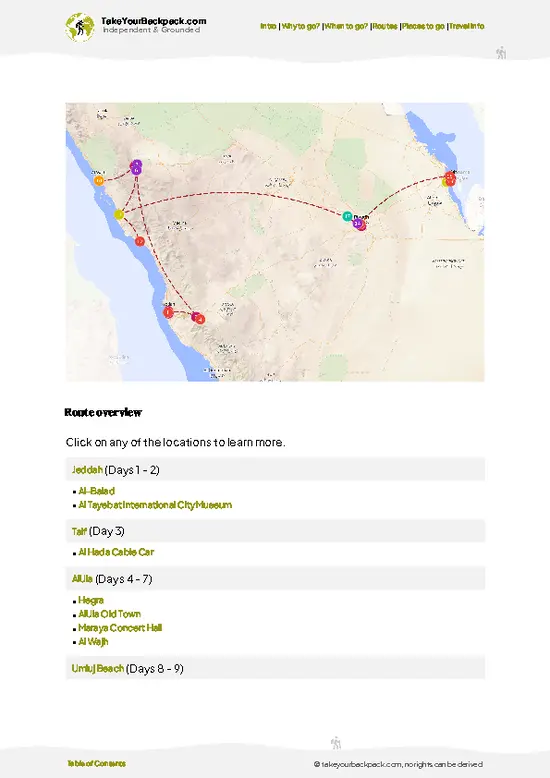
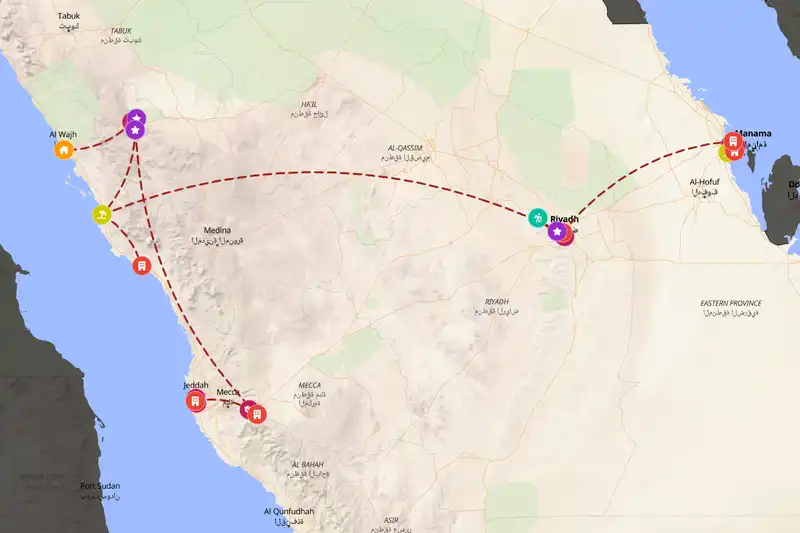
- 10–14 days: Balanced backpacker route. For example:
- Riyadh (2–3 days) – old Diriyah, edge-of-the-world style escarpments.
- AlUla (3–4 days) – rock formations, Nabatean tombs, desert hikes.
- Medina or Jeddah (3–4 days) – historic cores, food, coastal sunsets.
- 1–2 flex days for buses, delays, or a side trip (e.g., Taif or a Red Sea beach town).
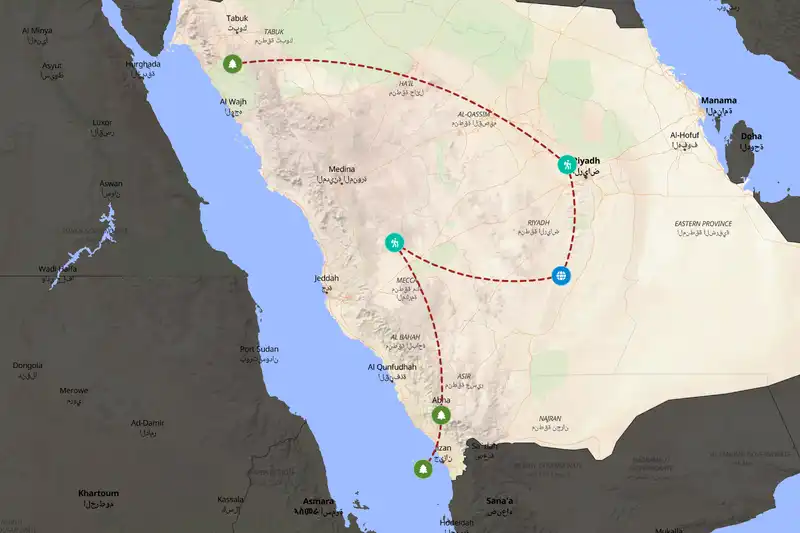
- 3+ weeks: Deep dive. You can add:
- Abha and the Asir mountains (cooler climate, villages, terraces).
- Farasan Islands (if ferries and schedules line up).
- Extra time in smaller towns or for trekking and camping.
Saudi is huge; underestimating distances is the classic mistake. Internal flights save time but eat budget. Overland buses are cheaper but slow and not always daily on secondary routes. For most backpackers, it’s better to do fewer regions well than to try to “do the whole country.”
You can, but you’ll need patience, flexibility, and a bit of money for ride-hailing. Think of it as “car-optional,” not “car-free paradise.”
What works without a car:
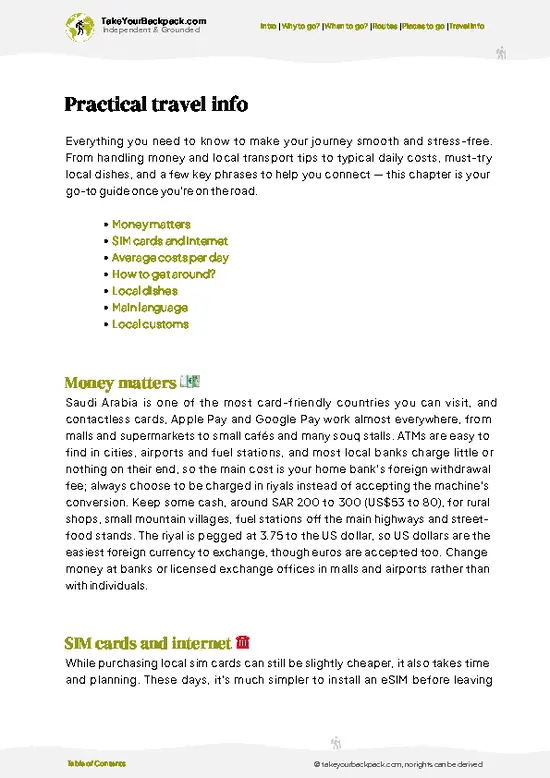
- Between major cities: Intercity buses and domestic flights cover the main corridors (Riyadh–Jeddah–Medina–Dammam and routes to AlUla). Buses are cheaper but slower; flights are faster but can chew up your budget.
- Within big cities: Ride-hailing apps (like Uber and local equivalents) are your best friend. They’re widely used, reasonably priced by Gulf standards, and safer and easier than haggling with random taxis.
- Trains: Some routes (e.g., Riyadh–Dammam, and the high-speed line between Jeddah–Medina via KAEC) are comfortable and backpacker-friendly, but the network is limited.
Where it gets tricky:
- Natural sights near cities: Places like escarpments near Riyadh, desert viewpoints, or remote canyons around AlUla are hard to reach by public transport. You’ll often need a tour, a private driver, or a rental car for a day.
- Smaller towns and villages: Public transport can be infrequent or nonexistent. Hitchhiking is possible but not something to rely on, especially if you’re on a tight schedule or traveling solo.
If you absolutely don’t want to drive, build your itinerary around cities and hubs with known transport links, and accept that you’ll join a few group tours for the “out there” landscapes. If you’re comfortable renting a car for just a few days, combining that with buses and flights gives you the best balance of cost, freedom, and access.
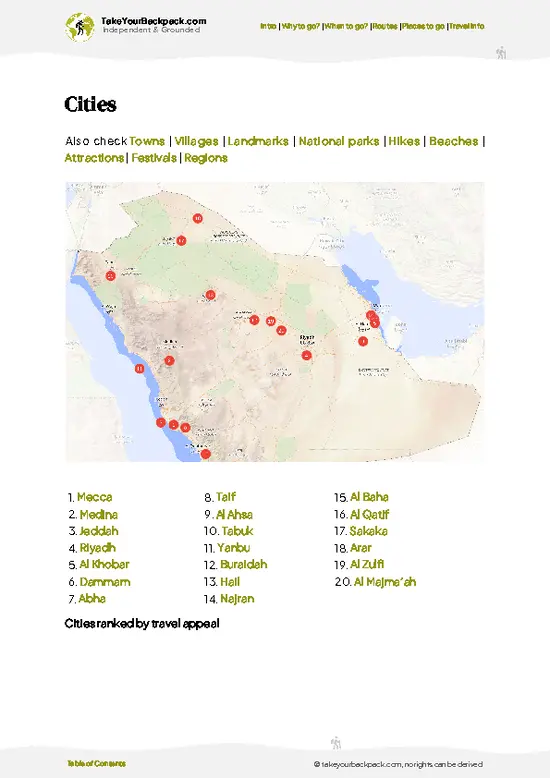
For a budget traveler, “must-visit” means high impact for your time and money. These are the places that usually deliver:
1. AlUla
If you see only one region beyond a big city, make it this. Think sandstone canyons, rock arches, and Nabatean tombs carved into cliffs. It’s not cheap, but you can trim costs by:
- Staying in simple guesthouses instead of luxury camps.
- Prioritizing one or two paid archaeological sites plus free or low-cost hikes and viewpoints.
2. Jeddah’s Historic District (Al-Balad)
This is where the country feels most “walkable” in an old-world way: narrow lanes, coral-stone houses with wooden balconies, street food, and evening buzz. It’s easy to explore on foot, and you can eat very well on a budget. Combine it with the Jeddah Corniche for cheap sunset walks and people-watching.
3. Riyadh + Edge-of-the-World–type Escarpments
Riyadh itself is modern and spread out, but it’s your gateway to dramatic cliffs and desert plateaus outside the city. The classic move is a half- or full-day trip to a big escarpment viewpoint with hiking and sunset views. In the city, add:
- The National Museum area for context.
- Old Diriyah (if open and accessible within your budget) for history and architecture.
4. Medina (for history and atmosphere, even if you’re not religious)
Non-Muslims can’t enter the Prophet’s Mosque itself, but the city around it has a unique energy, especially in the evenings. It’s a good stop on a Jeddah–AlUla–Riyadh route, with plenty of budget food and midrange stays.
5. Asir Mountains (Abha and surrounds), if you have extra time
Cooler weather, mountain views, and traditional villages make this region feel very different from the desert stereotype. It’s more effort to reach and explore, but for long trips it adds real variety and is often cheaper day-to-day than the big-name tourist zones.
If your trip is short, prioritize one big city (Riyadh or Jeddah) plus AlUla. If you have longer, add Medina and either the Asir mountains or extra time along the Red Sea coast.
If you’re short on time or cash, skip anything that eats days without adding much beyond what you’ve already seen. For most backpackers, that means:
1. Overdoing the big malls and generic modern districts
Every major city has huge malls, chain restaurants, and wide highways. One quick look is enough to understand the modern side of the country; after that, your time is better spent in old quarters, markets, and natural areas.
2. Multiple similar desert tours
You don’t need three different “dune + 4x4 + campfire” experiences. Pick one good desert or escarpment trip (near Riyadh or AlUla) and skip the rest. Your budget and your patience for sand in your shoes will thank you.
3. Far-flung coastal or island trips on a short itinerary
Places like the Farasan Islands or very remote Red Sea resorts can be great, but they require extra flights, ferries, and time buffers for delays. If you have under two weeks, that time is usually better spent deepening your experience in AlUla, Jeddah, or the mountains instead of chasing one more beach.
4. Trying to “collect” too many cities
Riyadh, Jeddah, Dammam, and other big cities share a lot of modern features. If you’re on a tight schedule, focus on one or two that fit your route and use the saved days for nature or historic areas instead of another round of highways and coffee chains.
5. Expensive, highly packaged experiences that duplicate cheaper options
Helicopter rides, ultra-luxury desert camps, and top-tier fine dining can be impressive, but they burn through a backpacker budget fast. You can get a strong sense of the landscapes and culture through public viewpoints, simple guesthouses, local eateries, and one or two carefully chosen paid sites.
When in doubt, prioritize:
- One or two historic cores (Al-Balad, Diriyah, old quarters in smaller cities).
- One standout natural area (AlUla or a major escarpment).
- One city base that’s easy and cheap to feed yourself in.
Everything that doesn’t clearly add a new flavor to that mix is safe to skip on a short trip.