×

Serbia🇷🇸 | best beachesYour Guide to the 2 Best beaches in Serbia

Serbia has no coastline, which makes the phrase “Serbian beach” a small act of optimism. The country compensates with river and lake beaches along the Danube, Sava and Tisa, plus gravel-and-sand strips on reservoirs and artificial lakes. Expect cheap, loud, sociable places where grilled fish, folk-pop and cold beer arrive faster than a sun lounger. City beaches in Belgrade and Novi Sad are easy to reach by bus or tram, while lakes in the west and south need a bit more planning. For backpacking on a budget, that means swimming without a resort bill, if you accept that the sea is a long way off.

By Johan Kruseman 🇳🇱 | Updated October 18, 2026
Explore the best attractions in Serbia

Why go?What Makes Them Special

Serbia is landlocked, so its beaches are a product of rivers, reservoirs and a continental climate rather than tides and surf. That shapes everything. Water is fresh, calm and usually warm by midsummer, and the Pannonian Plain in the north delivers long, hot, dry stretches that suit swimming better than most visitors expect. Tradition helps too. Serbs have long treated the riverbank as a social space, so beach culture means picnic tables, floating restaurants, volleyball and music, not quiet solitude.

Before choosing Serbia for beaches, know what you are getting. Water quality varies, and rivers carry currents that make some stretches unsuitable for casual swimming, so look for beaches with marked swimming zones. Sand is rarer than gravel, grass or concrete platforms, and facilities range … read more 👉
Serbia is landlocked, so its beaches are a product of rivers, reservoirs and a continental climate rather than tides and surf. That shapes everything. Water is fresh, calm and usually warm by midsummer, and the Pannonian Plain in the north delivers long, hot, dry stretches that suit swimming better than most visitors expect. Tradition helps too. Serbs have long treated the riverbank as a social space, so beach culture means picnic tables, floating restaurants, volleyball and music, not quiet solitude.

Before choosing Serbia for beaches, know what you are getting. Water quality varies, and rivers carry currents that make some stretches unsuitable for casual swimming, so look for beaches with marked swimming zones. Sand is rarer than gravel, grass or concrete platforms, and facilities range from tidy municipal sites with showers to a plank and a kiosk. Infrastructure is strongest near big cities and weakest on remote lakes, where public transport thins out. Prices are low by European standards, which softens the lack of a sea. Treat the country as a summer river-and-lake destination, not a substitute for the Adriatic, and it will pleasantly overdeliver.
Behind the Scenes of Selection
The list of best beaches in Serbia is created based on beauty, vibe, water quality, activities, and surrounding scenery. If you feel a beach is missing in this list, please let us know.

When to go?Seasonal Guide to Visiting

Best months for Serbian beaches: The best months are June to August, when daytime highs usually run 27 to 34°C (81 to 93°F) and river and lake water is warm enough for comfortable swimming. Serbia has a continental climate, so summer is reliably hot and fairly dry, with occasional short thunderstorms rather than long wet spells. July and early August can push past 35°C, which is when a riverbank starts to look like a sensible life choice.
Shoulder seasons and peak periods: Late May and September are the shoulder seasons. Days are around 20 to 26°C, water is cooler, and swimming is for the hardy, though terraces and promenades are pleasant and quieter. Many seasonal kiosks, floating bars and lifeguard services open around late May or June and close by early September, so outside July and August … read more 👉
Best months for Serbian beaches: The best months are June to August, when daytime highs usually run 27 to 34°C (81 to 93°F) and river and lake water is warm enough for comfortable swimming. Serbia has a continental climate, so summer is reliably hot and fairly dry, with occasional short thunderstorms rather than long wet spells. July and early August can push past 35°C, which is when a riverbank starts to look like a sensible life choice.
Shoulder seasons and peak periods: Late May and September are the shoulder seasons. Days are around 20 to 26°C, water is cooler, and swimming is for the hardy, though terraces and promenades are pleasant and quieter. Many seasonal kiosks, floating bars and lifeguard services open around late May or June and close by early September, so outside July and August expect fewer facilities. April and October are too cool for most swimmers.
Crowds and prices: Peak crowds arrive on weekends in July and August, especially near Belgrade and Novi Sad, where locals pour in after work. Weekdays are noticeably calmer. Prices stay modest all season, though lakeside accommodation in the west and south can rise 20 to 40 percent in high summer. The north (Vojvodina) is hottest and flattest, while mountain-fringed lakes stay a few degrees cooler.

beach hoppingPlanning Your Route Efficiently

How many days to plan: A trip combining several beaches in Serbia works best in 5 to 8 days, because distances are short but transport is not always frequent. Serbia is small, yet buses to lakes and reservoirs can run only a few times a day.
Grouping regions and direction: Group the north (Novi Sad and the Danube and Tisa valleys) with Belgrade, since the two cities are about 1 to 1.5 hours apart by train or bus. Then head south or west toward the lakes and mountains, which usually means 2.5 to 4 hours by bus from Belgrade. Travel from the flat, hot north toward cooler highlands so the trip ends in fresher air, and finish in Belgrade for onward connections.
Time per stop and common mistakes: Allow 1 to 2 days for each city beach area and 2 to 3 nights for a lake region, since a half-day swim … read more 👉
How many days to plan: A trip combining several beaches in Serbia works best in 5 to 8 days, because distances are short but transport is not always frequent. Serbia is small, yet buses to lakes and reservoirs can run only a few times a day.
Grouping regions and direction: Group the north (Novi Sad and the Danube and Tisa valleys) with Belgrade, since the two cities are about 1 to 1.5 hours apart by train or bus. Then head south or west toward the lakes and mountains, which usually means 2.5 to 4 hours by bus from Belgrade. Travel from the flat, hot north toward cooler highlands so the trip ends in fresher air, and finish in Belgrade for onward connections.
Time per stop and common mistakes: Allow 1 to 2 days for each city beach area and 2 to 3 nights for a lake region, since a half-day swim does not justify four hours of bus. The classic mistake is cramming three or four stops into a weekend and spending the holiday on a bus station bench. Another is relying on last-minute connections to remote lakes, where the final bus may leave mid-afternoon. Check timetables a day ahead, book a seat on summer weekends, and travel on weekdays when possible. Fewer stops, longer swims.

The ListThe Best beaches of Serbia

1 Ada Ciganlija

urban peninsula, sports facilities, shaded lawns

Spend a day among locals cycling, swimming, or relaxing under trees, with easy access to food stalls and recreational rentals.

serbia-beach-ada-ciganlija
© Google | Adelin Bechianu

2 Lido Beach

island setting, sandy stretch, seasonal ferry

Catch a short boat ride to a quieter riverside spot where you can unwind, sunbathe, and watch city life from a distance.

serbia-beach-lido-beach
© Google |
Loading the map 🌍

Expert viewInsights from Locals and Experts

How many beaches to visit: I advise three to four beaches in a trip, no more. Serbia’s swimming spots are about atmosphere, not ticking off a list, and after a few you will have seen the pattern: water, grass, grill, music. Three to four lets you taste a city riverbank, a lake and one quieter spot without spending your holiday in transit. The reward is a long afternoon with a cold drink and a slow river drifting past.
Choosing a kind for your style: For social travelers, city riverside beaches give you company, nightlife and easy buses, and you can swim, eat and be back in a hostel in minutes. For nature seekers, lakes and reservoirs in the western and southern uplands offer calmer water and pine-fringed shores, though you trade convenience for a quieter day. For families or first-timers, choose … read more 👉
How many beaches to visit: I advise three to four beaches in a trip, no more. Serbia’s swimming spots are about atmosphere, not ticking off a list, and after a few you will have seen the pattern: water, grass, grill, music. Three to four lets you taste a city riverbank, a lake and one quieter spot without spending your holiday in transit. The reward is a long afternoon with a cold drink and a slow river drifting past.
Choosing a kind for your style: For social travelers, city riverside beaches give you company, nightlife and easy buses, and you can swim, eat and be back in a hostel in minutes. For nature seekers, lakes and reservoirs in the western and southern uplands offer calmer water and pine-fringed shores, though you trade convenience for a quieter day. For families or first-timers, choose municipal beaches with marked swimming zones and lifeguards. You get safe water and a shower, and nobody has to guess at currents.
What it costs: Budget US$25 to 45 a day including a hostel bed, local food and transport. Entry to managed beaches is often free or about 200 to 600 RSD (US$2 to 6), and a sun lounger can add a similar amount in summer. City tram or bus rides are cheap, usually under US$2, while intercity buses to lakes run roughly US$5 to 15 each way. A grilled fish or burger lunch runs about US$6 to 12, and a beer on the shore costs US$2 to 4. You pay for shade and a seat, then spend the afternoon watching the water.
Safety and etiquette: The main risk is river currents, especially on the Danube and Sava, where boat traffic and sudden drop-offs catch swimmers out. Swim only in marked zones, never alone after drinking, and respect red flags or closed signs. Sun is intense in July and August, so carry water and shade, since many natural shores have none. Beaches are relaxed, and swimwear is normal, though nude sunbathing is limited to designated areas. Keep your valuables on you, because crowded city beaches attract the occasional opportunist. Music tends to be loud and cheerful, so earplugs help if you want a nap. In return you get warm water, friendly chatter and an easy introduction to how Serbs actually spend summer.

✈️ The backpacker research shortcutSerbia Travel Guide

An offline-friendly backpacking guide with optimized travel routes, ranked highlights, transport advice, and the best areas to stay.
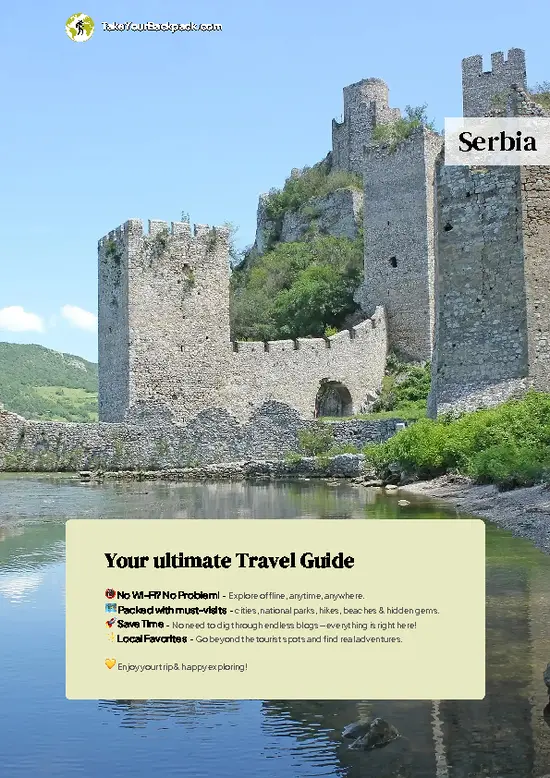
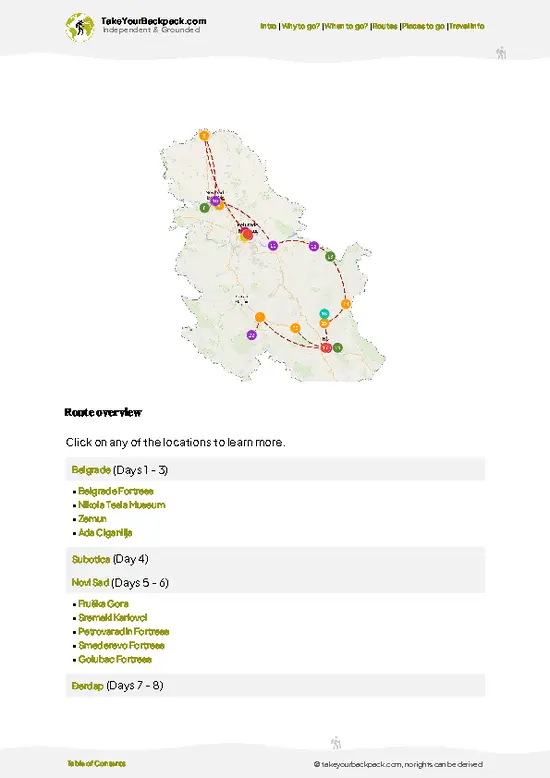
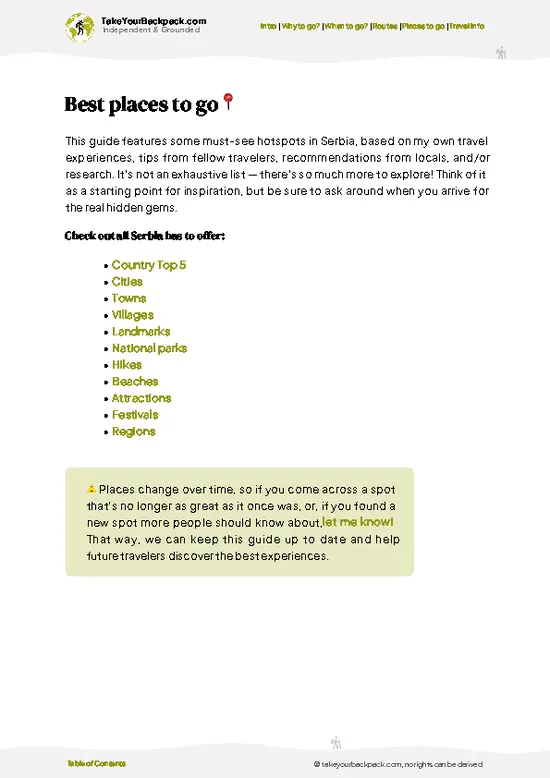
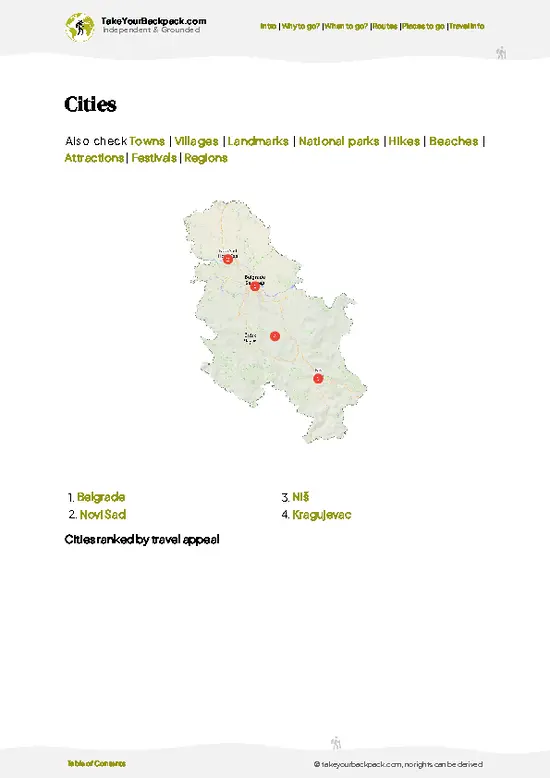
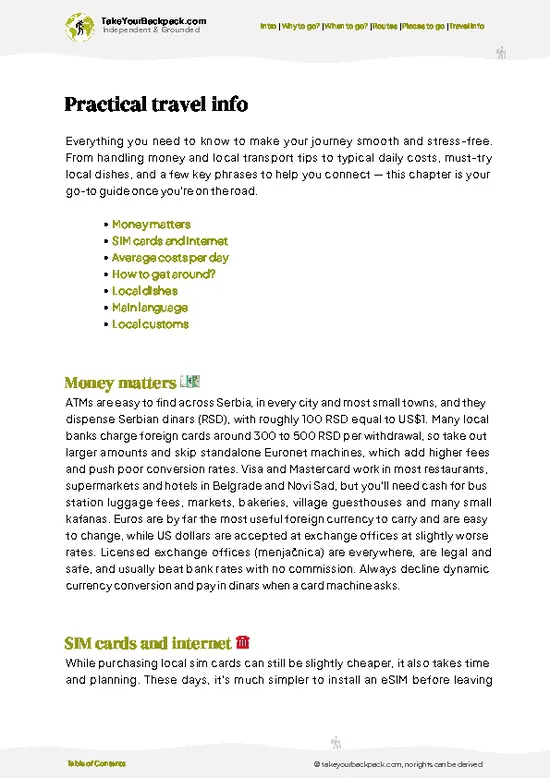
example page 0 from our offline Travel Guide for Serbia
example page 1 from our offline Travel Guide for Serbia
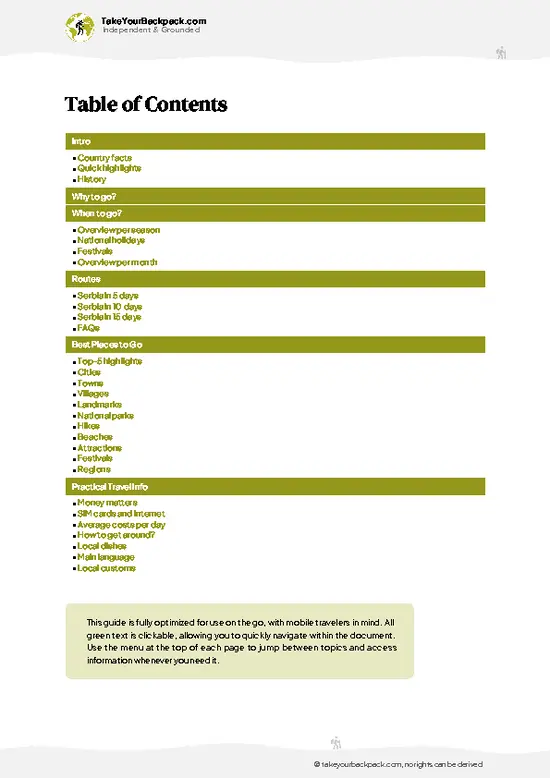
example page 2 from our offline Travel Guide for Serbia
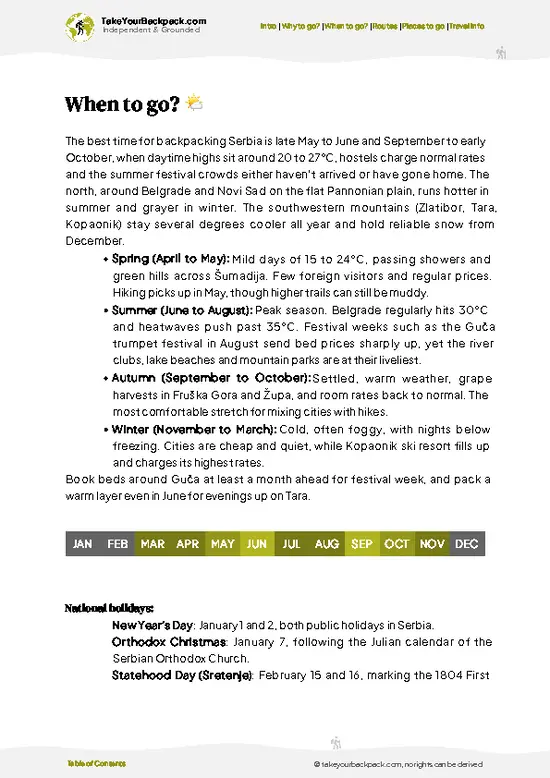
example page 3 from our offline Travel Guide for Serbia
example page 4 from our offline Travel Guide for Serbia
example page 5 from our offline Travel Guide for Serbia
example page 6 from our offline Travel Guide for Serbia
example page 7 from our offline Travel Guide for Serbia
The digital guide (309 pages) contains:
✅ 80 highlights, ranked by travel appeal
✅ Optimized 5, 10 & 15-day travel routes
✅ Cities, national parks, landmarks, beaches
✅ How to get around
✅ Offline-friendly for travel without Wi-Fi
👉 Click to see all 30+ guide features

📅 Plan smarter in minutes, not weeks
✅ Month by month travel advice
✅ Festivals & national holidays
✅ Budget expectations

🗺️ Go to the right places, skip the overrated ones
✅ Honest pros & cons of destinations
✅ Top hikes, parks & viewpoints
✅ Lesser-known places most travelers miss
✅ Clear “worth it vs skip it” guidance

🛏️ Travel smoothly without rookie mistakes
✅ Best areas to stay
✅ Transport systems explained simply
✅ Common scams & safety advice
✅ SIM cards, money & practical tips

🌍 Understand the country, not just visit it
✅ Culture & traditions
✅ 52 Essential phrases & customs
✅ Festivals worth planning around
✅ Traveler-friendly historical context
✅ Insights that make places more meaningful

📱 Built for real travel conditions
✅ Fully downloadable PDF
✅ Works completely offline
✅ Optimized for phone use
✅ Useful in remote areas & buses
✅ Everything in one place
Stop searching, start planning
Get instant access to your full guide. 30‑day money-back guarantee.
+ Add another guide for just

By proceeding you agree to our terms.
Sent to your inbox immediately after payment • 100% Secure Checkout
Best Backpacking Travel Advisor 2025 tourism awardBest Backpacking
Travel Advisor
2025
What others say about Take Your Backpack Guides:
⭐⭐⭐⭐⭐
Fantastic, amazing amount of information!
⭐⭐⭐⭐⭐
My goodness this is amazing, it's what I've been looking for hats off too you!
⭐⭐⭐⭐⭐
I think this is absolutely BRILLIANT
⭐⭐⭐⭐
Very complete and informative. It's still missing places, but I gotta to commend you
⭐⭐⭐⭐⭐
This is truly amazing, thank you, can't wait to explore it with my kids!
⭐⭐⭐⭐⭐
Awesome resource, thank you!
⭐⭐⭐⭐⭐
This is amazing! Can't wait to explore the ones I haven't seen
⭐⭐⭐⭐
I love this! Well done, great idea.
⭐⭐⭐⭐⭐
Thanks for taking the time to make this gem!
⭐⭐⭐⭐⭐
This might be the best website I've ever seen.
⭐⭐⭐⭐⭐
Congratulations, and thank you so much for your work; it's incredibly valuable.
⭐⭐⭐⭐
In all seriousness I think you did a great job pointing out the important spots
⭐⭐⭐⭐⭐
10/10 very good
⭐⭐⭐⭐⭐
As someone who's only just starting to visit regularly this is awesome, thank you.
⭐⭐⭐⭐
Thank you very much! I'm going to visit my dad, it's going to be very useful!
⭐⭐⭐⭐⭐
This is really cool! We'll be travelling for the first time and this definitely come in handy.
⭐⭐⭐⭐⭐
You are now our minister of culture, congratulations 👨‍💼
⭐⭐⭐⭐⭐
Just wanted to tell you that this is a pearl! Going to follow your recommendations.
⭐⭐⭐⭐⭐
This is so cool. I'll definitely be using the resource for my travels soon.
⭐⭐⭐⭐⭐
This is very impressive! Good work.
⭐⭐⭐⭐⭐
This is an amazing and informative site. Very well done!

🛏️ Where to stay?Best Stay Options in Serbia

Serbia has plenty of hostels and budget guesthouses, with dorm beds typically running €10 to €18 a night and private rooms in family-run guesthouses from about €25. In Belgrade, Stari Grad and Dorćol put you within walking distance of Kalemegdan and Knez Mihailova, with lively bars and late-night noise to match, while Savamala sits closer to the riverfront clubs and the Sava waterfront but feels rougher around the edges after dark, and Vračar is quieter and leafier yet still a 20-minute walk from the old town. In Novi Sad the pedestrian Old Town around Zmaj Jovina is the easy pick for cafés and safe evening strolls, and in Niš the streets around the fortress and Kopitareva are compact, cheap … read more 👉
Serbia has plenty of hostels and budget guesthouses, with dorm beds typically running €10 to €18 a night and private rooms in family-run guesthouses from about €25. In Belgrade, Stari Grad and Dorćol put you within walking distance of Kalemegdan and Knez Mihailova, with lively bars and late-night noise to match, while Savamala sits closer to the riverfront clubs and the Sava waterfront but feels rougher around the edges after dark, and Vračar is quieter and leafier yet still a 20-minute walk from the old town. In Novi Sad the pedestrian Old Town around Zmaj Jovina is the easy pick for cafés and safe evening strolls, and in Niš the streets around the fortress and Kopitareva are compact, cheap and close to the nightlife.

If you enjoy meeting fellow travelers, consider choosing hostels with high ratings for atmosphere. On the other hand, if you prefer having your own space, a hotel might be a better option.

SerbiaWhere to Go Next

👋 Meet the founderWho’s Behind Take Your Backpack?

Johan, backpacker and founder of TakeYourBackpackHi, I’m Johan (Netherlands 🇳🇱), the creator of TakeYourBackpack. Over the past 3 decades, I’ve backpacked through 90+ countries across six continents, gaining extensive experience with independent travel, long-term trips, and overland routes.

This site is built on a combination of firsthand travel experience and carefully curated insights from other backpackers. Many guides are based on places I’ve personally visited, while others bring together tips, observations, and practical advice shared by trusted travelers I’ve met along the way.

The goal is to provide realistic, experience-driven guidance — not generic itineraries — so you can explore destinations with better context, clearer expectations, and more confidence.