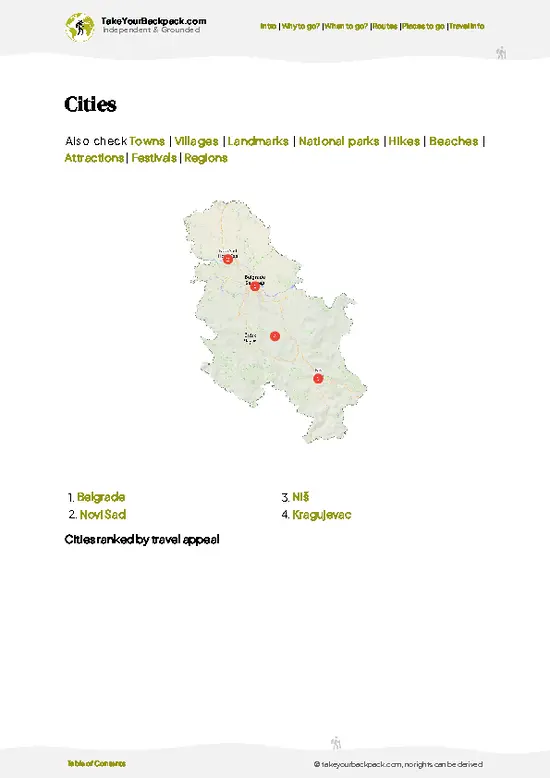
How many cities to visit: Three or four cities is the number I advise for a trip of two weeks, five at the outside. Serbia’s cities sit a few hours apart by bus, but each one takes a full day to get a feel for, and the tenth kebab stop blurs into the ninth. Fewer stops means you linger at a riverside café until the waiter stops pretending you might order again, and that is where the country’s pace shows. Cramming in more leaves you with a camera roll of bus stations.
Choosing between kinds of cities: Serbia offers three broad flavors: the big-river capital with its nightlife, the Habsburg-flavored northern towns with pastel squares and flat bike-friendly streets, and the smaller southern and central towns with Ottoman bones, monasteries and mountain air. Nightlife seekers should give the …
read more 👉 How many cities to visit: Three or four cities is the number I advise for a trip of two weeks, five at the outside. Serbia’s cities sit a few hours apart by bus, but each one takes a full day to get a feel for, and the tenth kebab stop blurs into the ninth. Fewer stops means you linger at a riverside café until the waiter stops pretending you might order again, and that is where the country’s pace shows. Cramming in more leaves you with a camera roll of bus stations.
Choosing between kinds of cities: Serbia offers three broad flavors: the big-river capital with its nightlife, the Habsburg-flavored northern towns with pastel squares and flat bike-friendly streets, and the smaller southern and central towns with Ottoman bones, monasteries and mountain air. Nightlife seekers should give the capital a full two nights, because the floating river clubs (splavovi) barely warm up before midnight and run until dawn. Slow travelers and cyclists get more from the north, where you can pedal along the Danube and finish at a terrace with a glass of local wine. Hikers and culture hunters should lean south and east, where the streets are steeper, the coffee is thick and strong, and a ten-minute bus ride puts you among orchards and medieval frescoes. You get the meal, the view and the conversation at each, only in different proportions.
What it costs: Plan on roughly US$30 to 50 a day (about 3,000 to 5,000 Serbian dinars) for a mid-range backpacker budget. Dorm beds run about US$10 to 20 a night, and private rooms in guesthouses US$25 to 45. A hearty meal of grilled meat, bread and salad at a local restaurant costs US$6 to 12, and a bakery burek with yogurt for breakfast under US$3. Coffee is around US$1.50 to 2.50, and you can nurse it for an hour without anyone hurrying you. Intercity buses typically run US$5 to 15 per leg, and trains are cheaper but slower. City transport is a few dollars at most, and many centers are walkable. Per visit, fortress and museum entries are usually US$2 to 8, free walking tours work on tips, and a local guide for a half day costs US$40 to 80. Plan about US$10 to 20 extra per night out if you hit the clubs, where drinks cost far less than in Western Europe.
Safety and local etiquette: City centers are generally safe, with petty theft the main concern around major bus stations and crowded events, so keep your phone off café tables. Taxis should be booked through an app or a dispatcher, since hailed cabs near stations sometimes inflate fares. Carry some cash, as small cafés, bakeries and market stalls often prefer dinars. Smoking indoors is still common in many cafés and bars, so expect a haze, and ask for a terrace seat if that bothers you. Politics is a heated subject, especially recent history and Kosovo, so let locals raise it before offering opinions, and listen more than you talk. Hospitality is real: an invitation to a coffee or a glass of rakija is meant sincerely, and declining the first round gracefully is easier than refusing outright. Tipping around 10 percent is customary in restaurants. Cyrillic and Latin scripts both appear on signs, so a few minutes learning the Cyrillic alphabet pays off at bus stations. Pedestrians should watch for drivers who treat zebra crossings as suggestions. Finally, rounding up at a kafana lets you hear live brass or folk music, which is the sound of the evening whether you ordered it or not.


 Best Backpacking
 Hi, I’m Johan (Netherlands 🇳🇱), the creator of TakeYourBackpack. Over the past 3 decades, I’ve backpacked through 90+ countries across six continents, gaining extensive experience with independent travel, long-term trips, and overland routes.