×

Serbia🇷🇸 | best festivalsYour Guide to the 11 Best festivals in Serbia

Festivals in Serbia come in two moods: enormous and loud, or small and very, very hospitable. The big electronic and music events sit on the Danube at Novi Sad, where crowds are huge, camping is basic and the bar queue becomes a social event. Farther south and east, village gatherings and brass band meetups run on rakija, grilled meat and relatives who insist you sit down. Belgrade sits between the two, with urban events that cost less than Western Europe and still end at sunrise. For independent travelers, the rule is simple: pick the crowd you want, then pick the city.

By Johan Kruseman 🇳🇱 | Updated October 18, 2026
Explore the best regions in Serbia

Why go?What Makes Them Special

Serbia suits festivals because public life happens outdoors, often late, and nobody finds a 2 a.m. dinner strange. Centuries of Ottoman, Habsburg and Yugoslav influence left a country where Orthodox feast days, Balkan brass, Roma music traditions and a serious club culture coexist, sometimes in the same week. The geography helps too. The Danube and Sava rivers give cities open waterfront space, the Pannonian plain in the north is flat enough for big fields, and the hills of the center and south suit smaller, rural events.

Infrastructure is the part to plan for. Roads and buses between major cities are workable, but village events may have no public transport after dark, and signage can be optimistic. Prices are low by European standards, yet the largest events charge international rates for … read more 👉
Serbia suits festivals because public life happens outdoors, often late, and nobody finds a 2 a.m. dinner strange. Centuries of Ottoman, Habsburg and Yugoslav influence left a country where Orthodox feast days, Balkan brass, Roma music traditions and a serious club culture coexist, sometimes in the same week. The geography helps too. The Danube and Sava rivers give cities open waterfront space, the Pannonian plain in the north is flat enough for big fields, and the hills of the center and south suit smaller, rural events.

Infrastructure is the part to plan for. Roads and buses between major cities are workable, but village events may have no public transport after dark, and signage can be optimistic. Prices are low by European standards, yet the largest events charge international rates for tickets. Many smaller gatherings follow the Orthodox calendar, so dates shift from year to year against the Gregorian one, and a few traditions involve fasting rules that change what is on the table. Cash in dinars is still useful, since small organizers and food stalls often skip cards. Arrive curious, accept every second plate, and the logistics sort themselves out.
Our Approach to Ranking
The list of best festivals in Serbia is created based on energy, traditions, crowd experience, activities, and overall excitement. If you feel a festival is missing in this list, please let us know.

When to go?Seasonal Guide to Visiting

Best months for festivals: The best months are June to September, when the north and center sit around 24 to 31°C by day and open-air stages can actually run on schedule. July and August are the peak, with highs often reaching 33 to 38°C in the Vojvodina plain and Belgrade, and accommodation in Novi Sad and Belgrade can cost 30 to 60 percent more than in the shoulder months. Bring a hat, because shade at a field site is a rumor.
Shoulder seasons: May and late September to October bring 15 to 24°C, fewer crowds and more reasonable room rates. May can be wet, with showers on a good number of days, so a light rain jacket earns its place. Autumn is calmer, and harvest-themed events in wine and food regions around Vrsac and the Fruska Gora hills come with warm afternoons and cool evenings.
Winter: … read more 👉
Best months for festivals: The best months are June to September, when the north and center sit around 24 to 31°C by day and open-air stages can actually run on schedule. July and August are the peak, with highs often reaching 33 to 38°C in the Vojvodina plain and Belgrade, and accommodation in Novi Sad and Belgrade can cost 30 to 60 percent more than in the shoulder months. Bring a hat, because shade at a field site is a rumor.
Shoulder seasons: May and late September to October bring 15 to 24°C, fewer crowds and more reasonable room rates. May can be wet, with showers on a good number of days, so a light rain jacket earns its place. Autumn is calmer, and harvest-themed events in wine and food regions around Vrsac and the Fruska Gora hills come with warm afternoons and cool evenings.
Winter: From December to February, temperatures hover around 0 to 5°C and can drop lower, with snow common in the mountains of the south and west. Events move indoors or shrink, and some rural guesthouses close. Winter does bring the cheapest beds and the quietest trains, and the cold is cured with hot rakija and a stove.

festival hoppingPlanning Your Route Efficiently

How many days to plan: A trip combining several festivals in Serbia works best at 10 to 14 days, since the key stops are far enough apart that cramming them gets silly. Serbia is small, but buses are slower than the map suggests.
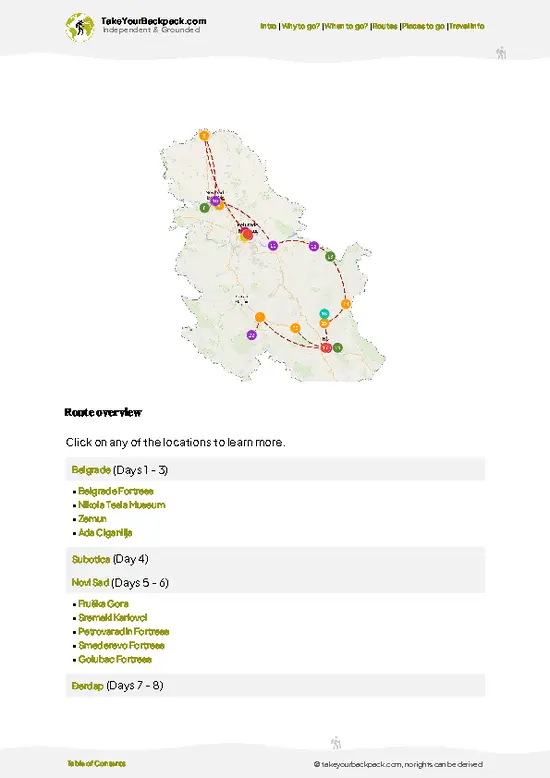
Which regions group well: Start in Belgrade, the main transport hub, and give it 2 to 3 days. Then head north to Novi Sad, about 1.5 hours by train and 1 to 1.5 hours by bus, and stay 2 to 3 days. From there, the Fruska Gora hills and Sremski Karlovci are a short hop. Then loop south to central and western Serbia, around Guca and Kragujevac, which takes 3 to 4 hours by bus from Belgrade. Southern cities like Nis are a 3 to 4 hour train or bus ride from the capital, and make a logical final leg before flying out or crossing into North Macedonia or Bulgaria.
Planning … read more 👉
How many days to plan: A trip combining several festivals in Serbia works best at 10 to 14 days, since the key stops are far enough apart that cramming them gets silly. Serbia is small, but buses are slower than the map suggests.
Which regions group well: Start in Belgrade, the main transport hub, and give it 2 to 3 days. Then head north to Novi Sad, about 1.5 hours by train and 1 to 1.5 hours by bus, and stay 2 to 3 days. From there, the Fruska Gora hills and Sremski Karlovci are a short hop. Then loop south to central and western Serbia, around Guca and Kragujevac, which takes 3 to 4 hours by bus from Belgrade. Southern cities like Nis are a 3 to 4 hour train or bus ride from the capital, and make a logical final leg before flying out or crossing into North Macedonia or Bulgaria.
Planning mistakes: The classic error is stacking two festivals on consecutive nights in different regions. Overnight buses leave you arriving damp, hungry and with a tent still in your bag. Leave a rest day between big events. Another mistake is assuming village events have a bus home. Check return times, or book a local transfer or a room nearby. Finally, book beds early for peak dates, because the good hostels vanish weeks ahead.

The ListThe Best festivals of Serbia

1 EXIT

fortress stages, electronic acts, multi-genre lineup

Attend one of Europe’s largest music festivals, set inside a historic fortress, where diverse crowds gather for days of nonstop performances.

2 Guča Trumpet Festival

brass bands, rural village, street parades

Immerse yourself in Serbia’s trumpet tradition as musicians compete and celebrate with spontaneous performances, food stalls, and late-night revelry.

3 Belgrade Beer Fest

open-air concerts, craft breweries, festival grounds

Join crowds for live music and a wide selection of beers, with both domestic and international brewers pouring in a lively riverside setting.

4 Nisville Jazz Festival

jazz fusion, fortress amphitheater, global artists

Hear jazz and crossover acts from around the world in an open-air amphitheater, with late-night jam sessions and a welcoming crowd.

5 Lovefest

lakeside venue, electronic music, summer nights

Dance by the water to sets from international DJs, with a relaxed atmosphere and a focus on electronic subgenres in a small-town setting.

6 Belgrade Dance Festival

contemporary choreography, international troupes, city theaters

Watch acclaimed dance companies perform new works across Belgrade’s main venues, offering a window into evolving trends in movement and stagecraft.

7 Kustendorf Film and Music Festival

mountain village, auteur cinema, Balkan music

Experience film screenings and live performances in a handcrafted hilltop village, where directors and musicians mingle with travelers in intimate settings.

8 Belgrade Fashion Week

runway shows, Serbian designers, urban venues

See new collections from local and regional designers in a series of shows and pop-up events that highlight Belgrade’s evolving fashion scene.

9 Rakija Fest

fruit brandy, tasting halls, local producers

Sample dozens of regional spirits and learn about distilling traditions while meeting small-batch makers and exploring Serbia’s deep connection to rakija.

10 Belgrade Documentary and Short Film Festival

short films, non-fiction cinema, emerging directors

Discover fresh perspectives through a curated selection of short and documentary films, often followed by discussions with filmmakers and critics.

11 International Ethno Food and Drink Fair

regional cuisine, artisanal products, tasting stalls

Taste traditional recipes and specialty foods from across Serbia and neighboring countries, with opportunities to meet producers and attend culinary workshops.

Loading the map 🌍

Expert viewInsights from Locals and Experts

How many festivals to attend: Two to three festivals is the right number for one trip. That gives you one big event and one or two smaller ones, with recovery days between. More than that and the trip becomes a series of sunburns and sleep debts. With three, you still have time to eat properly, wander a market and find out why everyone keeps saying “polako” (slowly).
Choosing by travel style: If you want nightlife and lineups, go for the large music events in Novi Sad or Belgrade, where the crowd is international and English is easy. If you want culture and food, choose a regional brass, folk or harvest gathering, where you may be the only foreigner and someone will teach you the dance steps whether you asked or not. Budget travelers can mix both: one big ticket, then free or low-cost town … read more 👉
How many festivals to attend: Two to three festivals is the right number for one trip. That gives you one big event and one or two smaller ones, with recovery days between. More than that and the trip becomes a series of sunburns and sleep debts. With three, you still have time to eat properly, wander a market and find out why everyone keeps saying “polako” (slowly).
Choosing by travel style: If you want nightlife and lineups, go for the large music events in Novi Sad or Belgrade, where the crowd is international and English is easy. If you want culture and food, choose a regional brass, folk or harvest gathering, where you may be the only foreigner and someone will teach you the dance steps whether you asked or not. Budget travelers can mix both: one big ticket, then free or low-cost town events with plenty of grilled meat and live music in the street.
What it costs: Plan on US$30 to 55 a day outside the big-ticket events: dorm bed US$12 to 25, meals US$6 to 12, local transport US$3 to 10. Tickets for large festivals typically run US$60 to 200 for multi-day passes, while smaller events are often free or under US$10. Camping at big sites costs roughly US$10 to 30 for the stay. Add US$15 to 30 for a taxi or shuttle to rural sites. A festival visit usually lands between US$60 and 150 per event, excluding the ticket at the largest ones. Beer at a field stage is pricey for Serbia but still cheaper than in Western Europe.
Safety and etiquette: Serbia is generally safe for festival goers, and the main risks are heat, dehydration and pickpocketing in dense crowds. Keep your phone in a front pocket, drink water between rounds of rakija, and agree a meeting point with friends in advance. Use licensed taxis or ride apps rather than unmarked cars outside venues. Rural events are warm and loud, but respect religious customs, cover shoulders and knees at feast-day gatherings near monasteries, and ask before photographing people, especially older relatives at a table. Politics, the 1990s and Kosovo are topics best left alone unless a local raises them first. Refusing a drink is fine if you do it with a smile and a hand on the heart. Refusing food is harder, so pace yourself.

✈️ The backpacker research shortcutSerbia Travel Guide

An offline-friendly backpacking guide with optimized travel routes, ranked highlights, transport advice, and the best areas to stay.
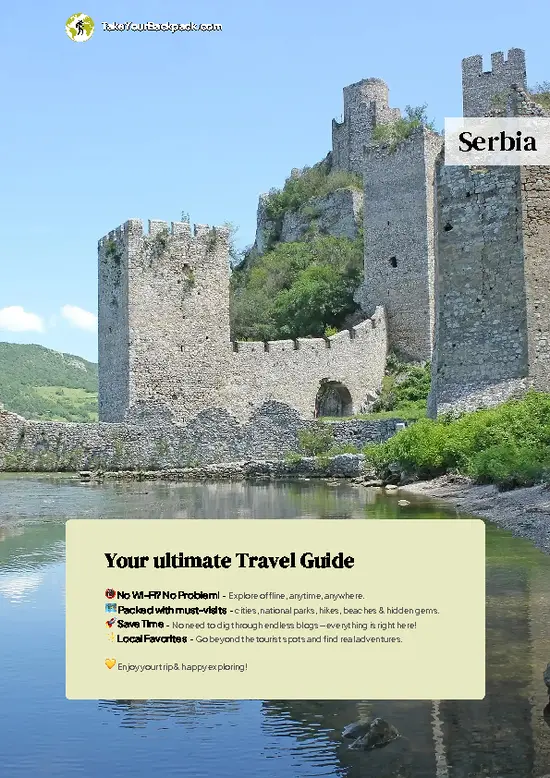
example page 0 from our offline Travel Guide for Serbia
example page 1 from our offline Travel Guide for Serbia
example page 2 from our offline Travel Guide for Serbia
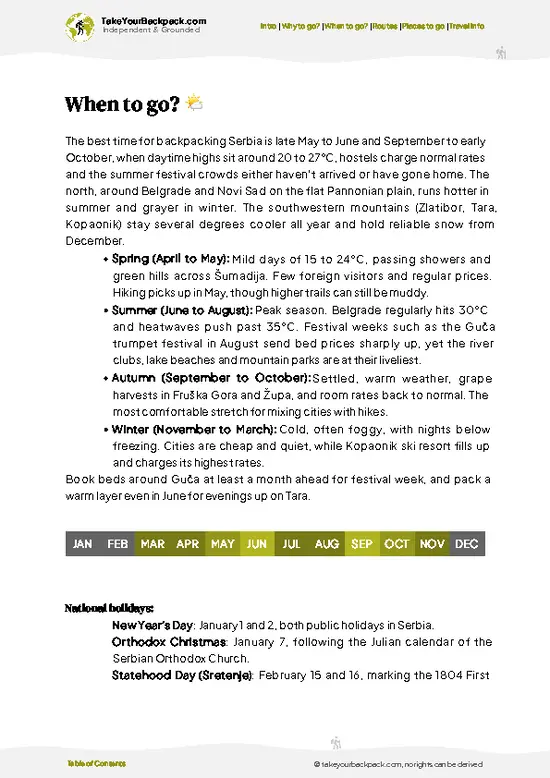
example page 3 from our offline Travel Guide for Serbia
example page 4 from our offline Travel Guide for Serbia
example page 5 from our offline Travel Guide for Serbia
example page 6 from our offline Travel Guide for Serbia
example page 7 from our offline Travel Guide for Serbia
The digital guide (309 pages) contains:
✅ 80 highlights, ranked by travel appeal
✅ Optimized 5, 10 & 15-day travel routes
✅ Cities, national parks, landmarks, beaches
✅ How to get around
✅ Offline-friendly for travel without Wi-Fi
👉 Click to see all 30+ guide features

📅 Plan smarter in minutes, not weeks
✅ Month by month travel advice
✅ Festivals & national holidays
✅ Budget expectations

🗺️ Go to the right places, skip the overrated ones
✅ Honest pros & cons of destinations
✅ Top hikes, parks & viewpoints
✅ Lesser-known places most travelers miss
✅ Clear “worth it vs skip it” guidance

🛏️ Travel smoothly without rookie mistakes
✅ Best areas to stay
✅ Transport systems explained simply
✅ Common scams & safety advice
✅ SIM cards, money & practical tips

🌍 Understand the country, not just visit it
✅ Culture & traditions
✅ 52 Essential phrases & customs
✅ Festivals worth planning around
✅ Traveler-friendly historical context
✅ Insights that make places more meaningful

📱 Built for real travel conditions
✅ Fully downloadable PDF
✅ Works completely offline
✅ Optimized for phone use
✅ Useful in remote areas & buses
✅ Everything in one place
Stop searching, start planning
Get instant access to your full guide. 30‑day money-back guarantee.
+ Add another guide for just

By proceeding you agree to our terms.
Sent to your inbox immediately after payment • 100% Secure Checkout
Best Backpacking Travel Advisor 2025 tourism awardBest Backpacking
Travel Advisor
2025
What others say about Take Your Backpack Guides:
⭐⭐⭐⭐⭐
Fantastic, amazing amount of information!
⭐⭐⭐⭐⭐
My goodness this is amazing, it's what I've been looking for hats off too you!
⭐⭐⭐⭐⭐
I think this is absolutely BRILLIANT
⭐⭐⭐⭐
Very complete and informative. It's still missing places, but I gotta to commend you
⭐⭐⭐⭐⭐
This is truly amazing, thank you, can't wait to explore it with my kids!
⭐⭐⭐⭐⭐
Awesome resource, thank you!
⭐⭐⭐⭐⭐
This is amazing! Can't wait to explore the ones I haven't seen
⭐⭐⭐⭐
I love this! Well done, great idea.
⭐⭐⭐⭐⭐
Thanks for taking the time to make this gem!
⭐⭐⭐⭐⭐
This might be the best website I've ever seen.
⭐⭐⭐⭐⭐
Congratulations, and thank you so much for your work; it's incredibly valuable.
⭐⭐⭐⭐
In all seriousness I think you did a great job pointing out the important spots
⭐⭐⭐⭐⭐
10/10 very good
⭐⭐⭐⭐⭐
As someone who's only just starting to visit regularly this is awesome, thank you.
⭐⭐⭐⭐
Thank you very much! I'm going to visit my dad, it's going to be very useful!
⭐⭐⭐⭐⭐
This is really cool! We'll be travelling for the first time and this definitely come in handy.
⭐⭐⭐⭐⭐
You are now our minister of culture, congratulations 👨‍💼
⭐⭐⭐⭐⭐
Just wanted to tell you that this is a pearl! Going to follow your recommendations.
⭐⭐⭐⭐⭐
This is so cool. I'll definitely be using the resource for my travels soon.
⭐⭐⭐⭐⭐
This is very impressive! Good work.
⭐⭐⭐⭐⭐
This is an amazing and informative site. Very well done!

🛏️ Where to stay?Accommodation Highlights

Serbia has plenty of hostels and budget guesthouses, with dorm beds typically running €10 to €18 a night and private rooms in family-run guesthouses from about €25. In Belgrade, Stari Grad and Dorćol put you within walking distance of Kalemegdan and Knez Mihailova, with lively bars and late-night noise to match, while Savamala sits closer to the riverfront clubs and the Sava waterfront but feels rougher around the edges after dark, and Vračar is quieter and leafier yet still a 20-minute walk from the old town. In Novi Sad the pedestrian Old Town around Zmaj Jovina is the easy pick for cafés and safe evening strolls, and in Niš the streets around the fortress and Kopitareva are compact, cheap … read more 👉
Serbia has plenty of hostels and budget guesthouses, with dorm beds typically running €10 to €18 a night and private rooms in family-run guesthouses from about €25. In Belgrade, Stari Grad and Dorćol put you within walking distance of Kalemegdan and Knez Mihailova, with lively bars and late-night noise to match, while Savamala sits closer to the riverfront clubs and the Sava waterfront but feels rougher around the edges after dark, and Vračar is quieter and leafier yet still a 20-minute walk from the old town. In Novi Sad the pedestrian Old Town around Zmaj Jovina is the easy pick for cafés and safe evening strolls, and in Niš the streets around the fortress and Kopitareva are compact, cheap and close to the nightlife.

If you enjoy meeting fellow travelers, consider choosing hostels with high ratings for atmosphere. On the other hand, if you prefer having your own space, a hotel might be a better option.

SerbiaSee More of Serbia

👋 Meet the founderWho’s Behind Take Your Backpack?

Johan, backpacker and founder of TakeYourBackpackHi, I’m Johan (Netherlands 🇳🇱), the creator of TakeYourBackpack. Over the past 3 decades, I’ve backpacked through 90+ countries across six continents, gaining extensive experience with independent travel, long-term trips, and overland routes.

This site is built on a combination of firsthand travel experience and carefully curated insights from other backpackers. Many guides are based on places I’ve personally visited, while others bring together tips, observations, and practical advice shared by trusted travelers I’ve met along the way.

The goal is to provide realistic, experience-driven guidance — not generic itineraries — so you can explore destinations with better context, clearer expectations, and more confidence.